
First, let’s talk about the latest news around the drugs themselves. In a recent article in The Atlantic titled “Ozempic Killed Diet and Exercise,” Daniel Engber refutes the long-held premise that weight loss is simply a matter of eating less and moving more. Engber speaks with Dr. Tom Wadden, an obesity expert at the University of Pennsylvania, who argues that diet and exercise should remain the standard therapy for people with moderate obesity. However, for those with significant weight to lose (BMIs over 35), he concedes, “I don’t think lifestyle modification is any longer the cornerstone of obesity treatment.” To which—and I think I speak for many of us who have struggled with obesity and tried to lose weight—I respectfully say, duh. https://www.theatlantic.com/health/archive/2024/12/diet-exercise-ozempic/680909/
The Rise of GLP-1 Medications
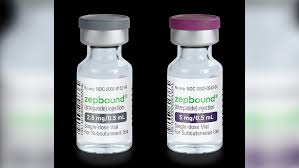
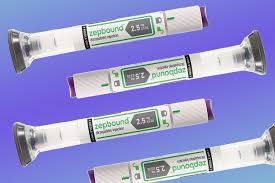
What has worked are GLP-1 receptor agonist medications, such as Trulicity, Mounjaro and Zepbound, manufactured by Eli Lily; and Ozempic and Wegovy, manufactured by Novo Nordisk. (Based on how they work, Ozempic and Wegovy are classified as semaglutides; Mounjaro and Zepbound are tirzepatides, and Trulicity is a dulaglutide.) While each medication has been proven effective to varying degrees, paying full price for them can be prohibitively expensive. Generic versions are available online at significantly lower costs, but these often come in vials rather than injection pens, requiring users to administer shots with syringes.

Today, Eli Lilly announced a partnership with the direct-to-consumer service Ro to provide more affordable vials of Zepbound. This move is likely a response to competition from compounding pharmacies, which sell vials at around 70% less than the full price of Zepbound. Compounding pharmacies can do this because they mix the medications themselves rather than just sell mass-produced drugs ordered from companies like Eli Lily–like conventional pharmacies do. A one-month vial of Semaglutide costs $249 through compound pharmacies, compared to $600 or more for brand-name versions. https://www.cnbc.com/2024/12/11/ro-to-offer-weight-loss-drug-zepbound-vials-by-working-with-eli-lilly.html
The Shortage and Big Pharma’s Response: The Plot Thickens
Over the last two years, Eli Lilly and its main competitor Novo Nordisk have struggled to keep up with the skyrocketing demand for GLP-1 drugs. Once word got out about their effectiveness for weight loss, everyone with pounds to shed wanted in. Public figures like Elon Musk famously used Wegovy, and the internet exploded with people scrambling to fill prescriptions. Without insurance coverage, the full price of Zepbound is around $1,200 per month. Using Lily’s discount card, I paid $600 per month. In case you are wondering, it was worth every penny.
Then I discovered OrderlyMeds, which works with compounding pharmacies to offer generic vials of the meds for a fraction of the price. Get ready for this: a one-month vial of Semaglutide is $249; Zepbound is $350. 70% cheaper than full price. There’s a catch: The FDA will only allow compounding pharmacies to manufacture during drug shortages.
Suddenly–shock–Lily and Novo Nordisk declared the shortage over! Citing issues of safety and principle, they petitioned the FDA to order compounding to stop. But as University of California law professor Robin Feldman quipped in an NPR report, “When someone tells you, ‘it’s not the money, it’s the principles,’ [it’s] the money.” Shocking. Ro to offer lower-price vials of weight loss drug Zepbound by teaming up with Eli Lilly.
What Comes Next?
The FDA has allowed compounding pharmacies to continue production while reviewing the shortage designation. However, most experts anticipate that compounding will soon be prohibited. This leaves patients with four options, as I see it:
1. Hope for Insurance Coverage: Many insurers only cover GLP-1 medications for Type II diabetes, but not for obesity treatment. My insurance through the State of South Carolina will not cover any kind of bariatric treatment (surgery or GLP-1 drugs). Instead, they provide diet and exercise lifestyle coaches to promote the diet and exercise option. See above–it still doesn’t work.
2. Pay Full Price: $1,200 is higher than most mortgages.
3. Use Discount Cards from the Manufacturer: Lilly’s 50% off coupon lowers costs to around $600 per month. These cards have expiration dates and can be discontinued at any time.
4. Wait for competition among drug companies to result in lower prices for the GLP-1 meds. This will happen, but it could take a decade. https://www.protectourcare.org/wp-content/uploads/2024/02/greedwatch2023.pdf
The Bigger Picture
The pharmaceutical giants’ resistance to compounding reveals their priorities. In 2023, Eli Lilly and Novo Nordisk each reported revenues of over $34 billion. I understand profit margins, but c’mon—let’s think about affordability and access here.
Adding insult to injury, the upcoming administration’s appointment of Robert F. Kennedy Jr. as Secretary of Health and Human Services raises further concerns. Kennedy’s dismissive stance on GLP-1 medications—advocating instead for “three meals of good food for every man, woman, and child”—shows a lack of understanding about the challenges of obesity. Again, please see above: diet and exercise do not work.
For those of us who have lived with this struggle, the idea that better food alone can solve obesity not only feels both naive and dismissive, it makes me mad! If I could regulate three healthy meals a day, I wouldn’t have spent most of my adult life clinically obese. But, said Dr. Jody Dushay, an assistant professor of medicine at Harvard Medical School and an attending physician in endocrinology at Beth Israel Deaconess Medical Center, declared to CNN, “It is wrong to assume that people with high body weight and BMI just sit around and eat low-quality food.”

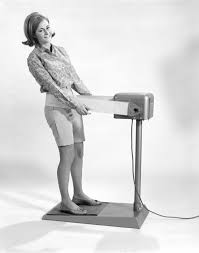
To be honest, I have eaten my share of high caloric junk food. Over the last 50 years (I was overweight by the time I was in 3rd grade),I have also tried Weight Watchers, Nutri System, Slim Fast, Alli (with gross results,IYKYK), low-carb diets, Keto, and old-fashioned calorie counting. That doesn’t include going with my mom to the Elaine Powers Studio when I was 10 years old (remember the old belt machines that were supposed to melt the fat away?). The only other time in my life, before GLP-1, that I lost a significant amount of weight, 40 pounds before plateauing, was when I counted Weight Watcher “points” and walked 30-minutes every day. When I stopped, all the weight came back plus more. This is life for millions of people like me. “Serves you right,” you may be saying, “for stopping your healthy lifestyle!” Blaming folks like me supports insurance companies’ refusal to pay for treatments–other than, you guessed it, healthy lifestyle programs. https://www.cnn.com/2024/11/17/health/rfk-jr-ozempic/index.html
As we move into a new year, the battle over GLP-1 medications—and the broader issue of healthcare affordability—is far from over. Patients like me deserve solutions that prioritize health over profit. Until then, we’re left navigating a system where greed and ideology often outweigh the needs of the people. Those of us clinging to GLP-1 medications as a lifeline will keep scrambling to find ways to stay on them as long as we can, fully aware of what will happen if we can’t.

 The Front Porch Professor