The Leisure to Become

For my friend, John Weaver

John Weaver recently published an essay entitled “My Reading Life” (International Review of Qualitative Research, 2025). What follows is neither a review nor a critique of his essay. Instead, it is a conversation with it–much like conversations we had at Bergamo while sitting around that old portable television with rabbit ears, usually about football. John’s essay has stayed with me because it gave me language for something I had been sensing for a long time without quite knowing how to name it.

John’s essay has a prophetic urgency I couldn’t help but detect as I read it. He laments a university that too often substitutes busyness for thought, productivity for intellectual life, and protocol for genuine reading. He writes as one who has devoted himself to what he calls a “monastic” life of reading. His essay is a call to wake from our sleepwalking.

My own reflections are quieter. They’re less about rescuing the university than about discovering that aging has invited me into a different relationship with work itself.

One passage stopped me in my tracks. John quotes Edmund White, who writes that if a writer can “shore up an eroding coastline for a decade or two,” that may be the closest thing to immortality any of us can hope for. When I first read those words, they unsettled me, and I told him so in an email I quickly composed to him.

Like many academics, I had spent years asking myself what I was contributing. Was I writing enough? Reading enough? Staying current enough? Was I still part of the conversation? My last (only, if you don’t count the collected edition, which I don’t really) book appeared in 2007. It has had a good life, especially among those interested in Southern place and curriculum studies, but books age, just as we do. I would be disingenuous if I said I hadn’t wondered when the invitations would stop coming—when I would be left out of the panel on place, when my book would be cited for the last time.

I don’t think those questions were really about scholarship. They were about belonging.

For much of my career, I mistook achievement for identity. Promotion. Conferences. Networking. The next project. The next publication. I don’t say that critically. It’s simply a big part of the culture of the academy. Looking back, I realize that I didn’t have the leisure to ask different questions.

That’s the surprising thing about leisure. I don’t mean retirement. I don’t mean afternoons spent napping or scrolling endlessly through social media. I mean having enough interior space to write because I want to write. To read because I’m curious. To pick up a French horn after years away. To join the church choir and somehow end up in the handbell choir. To ride an e-trike through my neighborhood. To linger over a meal in sobremesa—the beautiful Puerto Rican tradition I learned from Sarah’s family, where the best part of dinner isn’t the food but the unhurried conversation after the plates have been cleared (although the food is most often spectacular). To notice the cicadas beginning their evening chorus from the front porch, celebrating their return after seventeen years underground. Maybe that’s why their song sounded different to me this year.

In other words, the leisure to become.

I had sworn off almost all scholarly writing. Last year I told myself that blogging would be enough. After Bergamo, I was ready to take my ball and go home. I was disappointed in my own paper and convinced that perhaps my time had simply passed. I even considered withdrawing from two invited book chapters because I couldn’t imagine fitting them into my life. Then something unexpected happened.

During a AAACS panel on Laura Jewett’s Tasting Education, people wanted to continue talking—not about curriculum in the abstract, but about aging, taste, memory, and becoming. A friend encouraged me to develop those ideas into something larger. Around the same time, colleagues invited me to be on a panel and to work up a book proposal. Looking back, they weren’t invitations to do more. They were the road home.

That’s the difference.

Years ago, writing often felt like the proverbial monkey on my back. It lived there through tenure, promotion, administration, annual reviews, and deadlines. Every November, for reasons I still can’t quite explain, I would feel what I can only describe as the academic equivalent of Sunday afternoon dread. One November, sitting in my parents’ home, I finally said aloud, “I hate this job because of the pressure.” Looking back, I realize the pressure wasn’t coming from the university or from pending deadlines.It was coming from me.

Life had happened too. Administration occupied nearly a decade. Relationships demanded my attention. People I loved needed me. My own life was asking questions that no conference paper could answer. None of those were interruptions to my scholarly life. They were my scholarly life. Today the work itself hasn’t become lighter. I’ve become lighter in the way I carry it.

I still have two book chapters due. I’m sketching conference proposals and even thinking about another book. The remarkable thing isn’t that I’m doing those things. It’s that I want to. The monkey is gone. In its place is something that feels like an old quilt—familiar, comforting, waiting patiently until I pick it up again.

As I’ve watched mentors and friends retire—giants in curriculum studies whose work shaped generations of scholars—I have also watched some of them wrestle with questions of legacy. That has made me unexpectedly sad. I don’t think they were chasing fame. I think, like many of us, they were asking whether they had been enough. In case they need to hear it, they have been.

John’s image of shoring up an eroding coastline has stayed with me because I have begun to read it differently. Perhaps the coastline isn’t our reputation. Perhaps it is our humanity. Perhaps the work was never meant to keep the sea from coming in forever. Perhaps it was simply meant to help us tend faithfully to the small stretch of shoreline entrusted to us in our little corner of Canaan. If that is true, then the question is no longer whether I will be remembered, whether I will or won’t–should or shouldn’t–write.

I’m content to let those questions rest for awhile. What I know is that for the first time in a very long time, I think I finally have the leisure to find out.

Weaver, J. A. (2025). My reading life. International Review of Qualitative Research. https://doi.org/10.1177/19408447251319426


My New Journal Article IS Published!

I’m honored to share that my new article, A Field in Flux: Notes from an Administrative Escapee, has been published in the Journal of the American Association for the Advancement of Curriculum Studies (JAAACS). While its title suggests a personal confessional, the piece ultimately offers a broader reflection on the evolving and embattled state of Curriculum Studies/Theory—shaped as much by political and ideological pressures as by institutional shifts in teacher education. Drawing on recent scholarship and personal experience, I explore what it means to “come back to theory” in a moment when the field itself feels fragmented yet urgently needed.

You can read the full article here: A Field in Flux: Notes from an Administrative Escapee – JAAACS, 2025.

Sojourners Together: Supporting Students Through the Struggle

Image of boats adrift

Title: Sojourners Together: Supporting Students Through the Struggle

In my last post, I shared how online teaching has rekindled my passion for the classroom. I’m enjoying the challenge of engaging students in new ways, and I’ve found it fulfilling to build connections through messages, stories, and shared experiences. But as much as I’m finding this fresh approach to teaching rewarding, I’m also deeply aware that many of my students are struggling.

Image of boat adrift
A Boat Adrift

Recently, I sent out a weekly check-in message—something simple, just to touch base. While many students voiced their overall enjoyment of the class, several also let me know they’re having a hard time. These aren’t typical undergraduate students juggling part-time jobs and coursework. These are working professionals, members of a cohort in our Master’s in Applied Learning and Instruction program. They teach in local partner school districts. They’re educators, spouses, parents, coaches, community members. They’re churchgoers, pet owners, and caregivers. And yet, despite all these roles, they’ve committed to taking two graduate classes each semester for two years.

They do this not just for a much-needed pay raise, but for their professional growth—to become better teachers for their students. Our children. And that humbles me. It’s not easy.

These students took a heavy blow during COVID-19. They were asked to be miracle workers, juggling the impossible demands of remote learning while supporting students, families, and their communities. If there was one silver lining to the pandemic, it’s that thousands of parents who had their children learning from home gained a newfound appreciation for teachers. They saw firsthand just how challenging this work is.

And yet, despite all of this, my students show up. They’re willing to do the hard work every day. But I know—and they know—that time is scarce. They probably don’t have six extra hours a week to devote to their studies, yet that’s the general guideline for graduate coursework. They’re balancing it all, and their struggle deepens my sense of responsibility as their instructor.

If I expect them to make time for this class, I have to make it worth their while. I owe them my best. If I want them to give of themselves, I need to give of myself.

Is the reading dry this week? Then I’ll record a discussion to bring it to life. Is the assignment complicated? I’ll walk them through it, step by step. Are assignments feeling routine and uninspired? I’ll revise them to appeal to different learning styles and spark engagement. Do they need more time to complete an assignment? I’ll do my best to accommodate that. Are they feeling overwhelmed? Then I’ll be present—showing up in the class, personalizing my feedback, and ensuring they don’t feel adrift in the online world.

I’ve practiced social-emotional learning long before it had a name. I know the value of a supportive learning environment, and yes, sometimes that means sharing pictures of our five pets to give them a chuckle. It’s about reminding them that I’m here, on the other side of the screen, rooting for them.

Image of boats adrift
Boats, together

As hokey as it might sound, caring is part of the classroom culture I want to cultivate—a culture of care and connection. Teaching can be a lonely profession. Being a professor can be just as isolating. But this online space offers a chance to bridge that gap, to connect people who might otherwise feel alone in their struggles.

It is important that I keep asking them to check in—asking how they’re doing, beyond just the coursework. These check-ins aren’t just about staying informed; they’re about fostering trust and reminding them they’re not alone in this. We are sojourners together this semester. Yes, they will struggle. That’s part of the journey. But the most important assurance I can give them is that I am here. And sometimes, that’s enough to make all the difference.

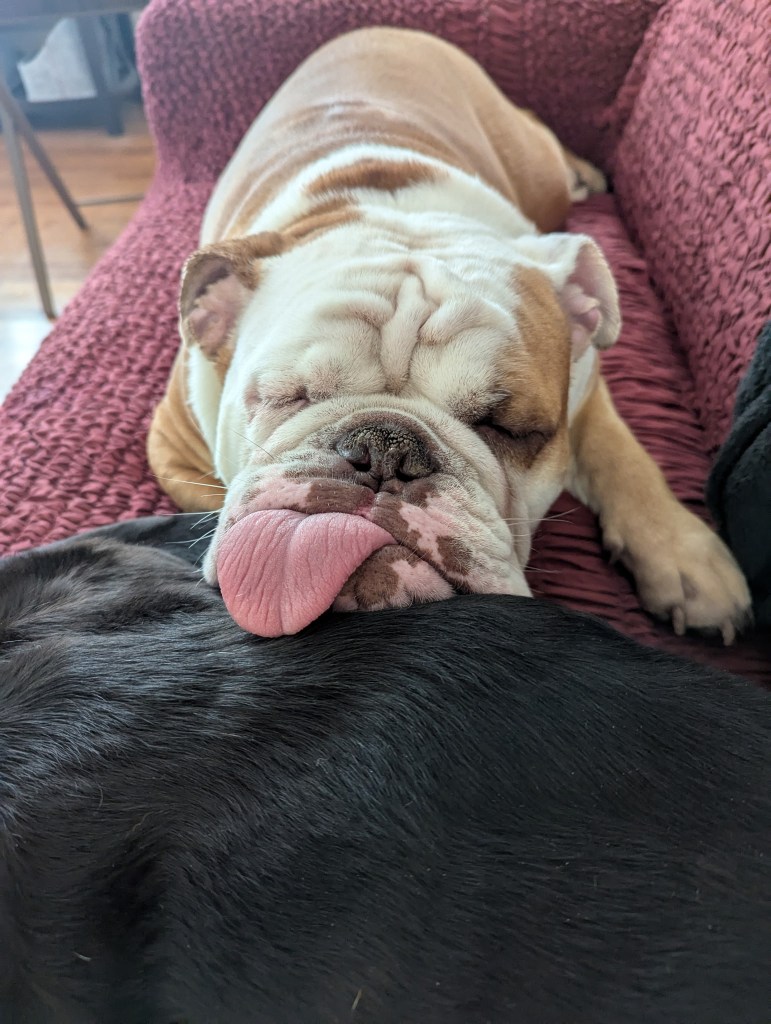
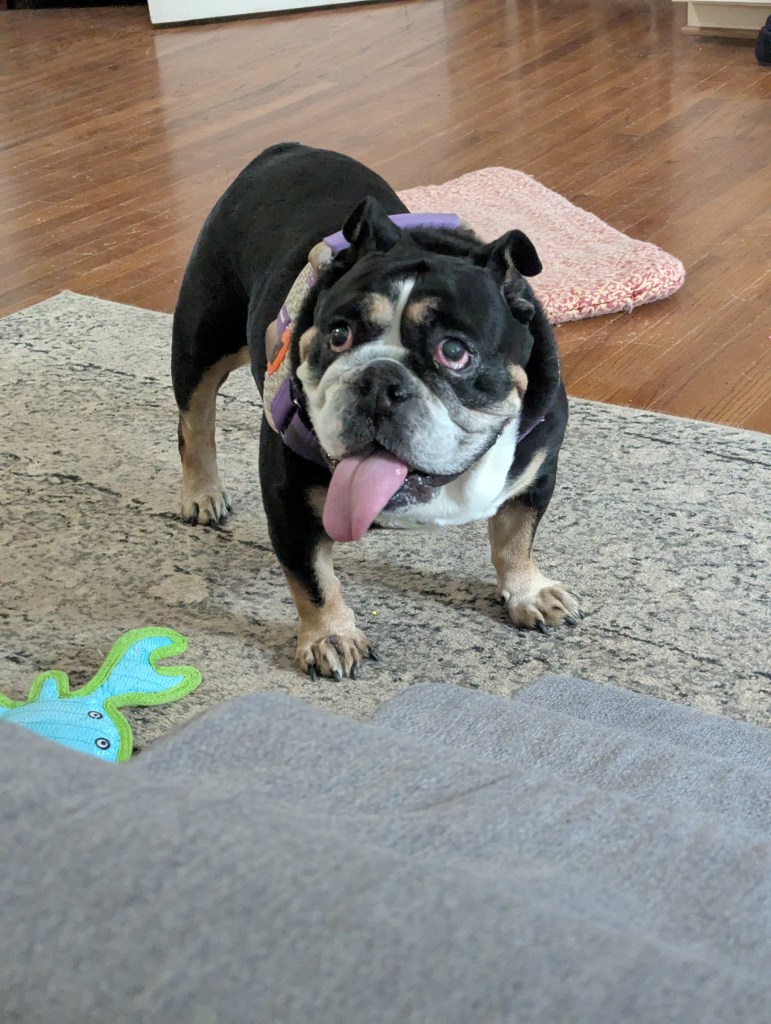
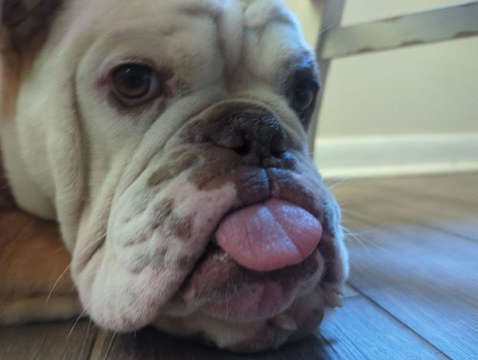
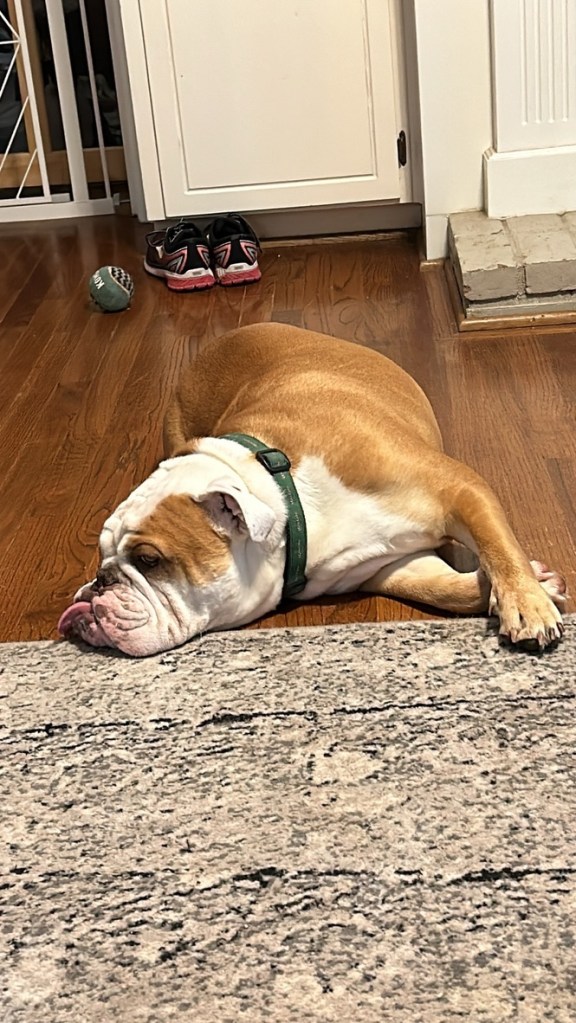
Image of English Bulldog sleeping with tongue out.
Bruno knows the struggle is real.

Old Dog, New Tricks: How Online Teaching Rekindled My Passion for Teaching

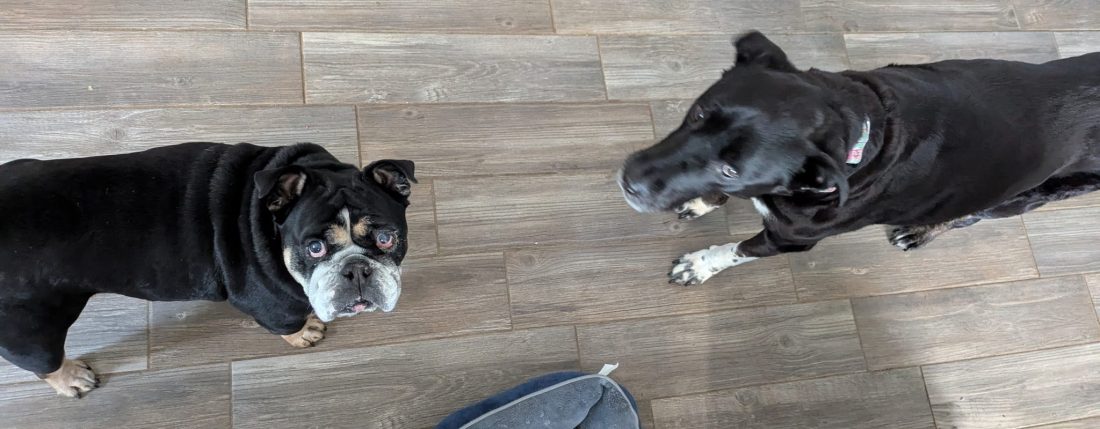
Image of senior dogs, one English Bulldog and one lab mix.

Old Dog, New Tricks: How Online Teaching Rekindled My Passion for Teaching

When I decided to step back into online teaching after nearly a decade, I thought the biggest draw would be the freedom to work from anywhere—maybe even while spending time with family in Alabama. The idea of crafting lessons with location flexibility sounded like the kind of balance I needed in this season of my life. But as it turns out, the freedom to work from anywhere is just the icing on the cake. What I didn’t expect was how much I’d reconnect with the heart of teaching itself.

It turns out, all of my classes are online this semester. My institution uses Blackboard Ultra—a platform that’s more advanced than the clunky tools I remember from my last online teaching experience. Back then, fostering real connection in an asynchronous class felt nearly impossible. I remember the difficulty setting up video calls and lectures, for example. This time around, though, something clicked. I’m not just uploading assignments and grading papers. I’m building relationships, one announcement, one message, one shared story at a time.

Finding Connection in an Self-Paced World

Online classes can roll along on autopilot if you let them. I could easily pop in, grade assignments, and call it a day. But that’s not how I’m wired. I need to feel connected—to know there are real people on the other side of the screen. I’m also a texter—I have been since the advent of smartphones. Messaging appeals to my introverted nature, the one that has an aversion to phone calls. This same preference drives how I approach my students. So, I make it a point to check in regularly with my students. I send out announcements throughout the week, not just about deadlines and assignments, but to share something about myself and encourage them to do the same—something that reminds us we’re people, that we’re travelers together, not just consumers of virtual learning, detached and mechanical.

One week, I sent out a simple message: “Time to check in. How’s the course going? How are you doing?” I wasn’t sure what to expect, but the responses both caught me off guard and moved me. Students didn’t just give me feedback on the course—they shared snippets of their lives, their challenges, their small victories. A few thanked me for asking about their well-being, calling it “refreshing” to have that kind of interaction in an online class. That’s when it hit me: this wasn’t just about teaching content. It was about building community. (They also mentioned how they struggled with balancing all of their responsibilities with their coursework. That’s coming up in my next post.)

Bruno, Bulldogs, and Building Community

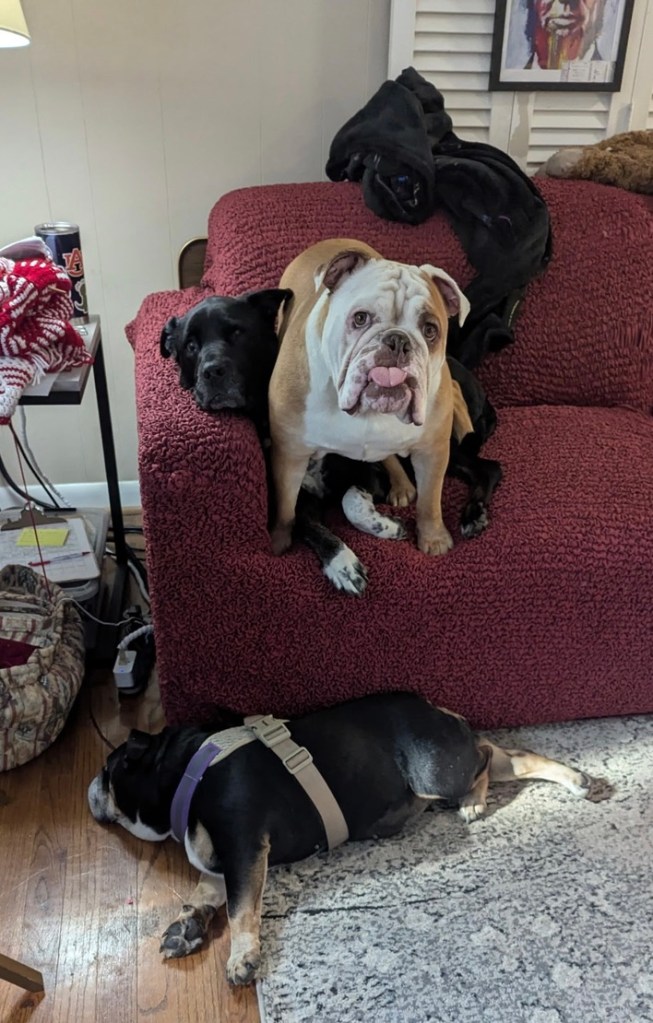
Stories have always been the glue that holds people together. I started sharing little anecdotes about my life—like tales of my dog, Bruno, and our recent adventure adopting an older bulldog, a lady named Marley. I didn’t think much of it at first, but the response was immediate and heartfelt. Students shared stories about their own pets, adding humor and warmth to our digital space. Today, I even shared a picture of “the pack,” and the flood of responses made me realize that even in a virtual space, we could connect as people.

Image of two English Bulldogs and a lab mix.
Our Pack: Bruno, Caroline, and “new” Old Dog, Marley

Adapting While in Progress: Revising the Syllabus Mid-Course

Not everything has been smooth sailing. One of my classes didn’t feel as rigorous as it should’ve been. The material wasn’t pushing students to engage deeply, and I could tell it wasn’t encouraging them to read as much as they needed to. So, two weeks into the course, I did something I’ve never done before: I updated the syllabus mid-stream, knowing it could disrupt the flow of the class.

I rebalanced the points on existing assignments and added lightweight quizzes as reading guides. It took me about three days to get everything in order, and then I let the students know what I’d done and, more importantly, why I’d done it. Transparency matters. For a while, no one complained, and I breathed a sigh of relief, thinking the transition had been smooth. But today, I received my first piece of critical feedback.

One student reached out, expressing how overwhelmed he felt juggling work and two classes. Most of my master’s students work in local districts, and I could sense the stress in his message. I assured him that the quizzes were designed as reading guides—more of a nudge than a test—and if he read the chapters, he should be able to complete them as he went along. To ease the pressure, I removed the time limit on the quizzes. It may not have solved all his concerns, but it was important to me that he knew I was attentive to his feedback.

Why insist on these low-stakes checks of reading? Because they signal that the reading matters—not just to pass the class but to engage with the material meaningfully. It’s a gentle reminder that what’s in those chapters is essential, and I want them to take it seriously.

Grading as a Conversation, Not a Chore

I’ll be honest here. I say “reconnect,” but what I really mean is connect for the first time. I went into the teaching profession in 1985 because it was convenient. I had a challenging marriage, a young daughter, and was homesick and lonely. I just didn’t have the time to do the homework to pursue a career in law or chemistry—which I discovered I really liked in college. I went into the field whose subjects of English and history were easiest for me: education. It has sometimes felt as though I have been in a profession not of my freewill choosing for almost 40 years. This made me hold a resentment toward it. I resisted and rebelled against national standards, for example, through curriculum theory writing, taking a cue from other scholars in the field. I had missed—because it never appealed to me in the first place—the only valid reason to become a teacher: students.

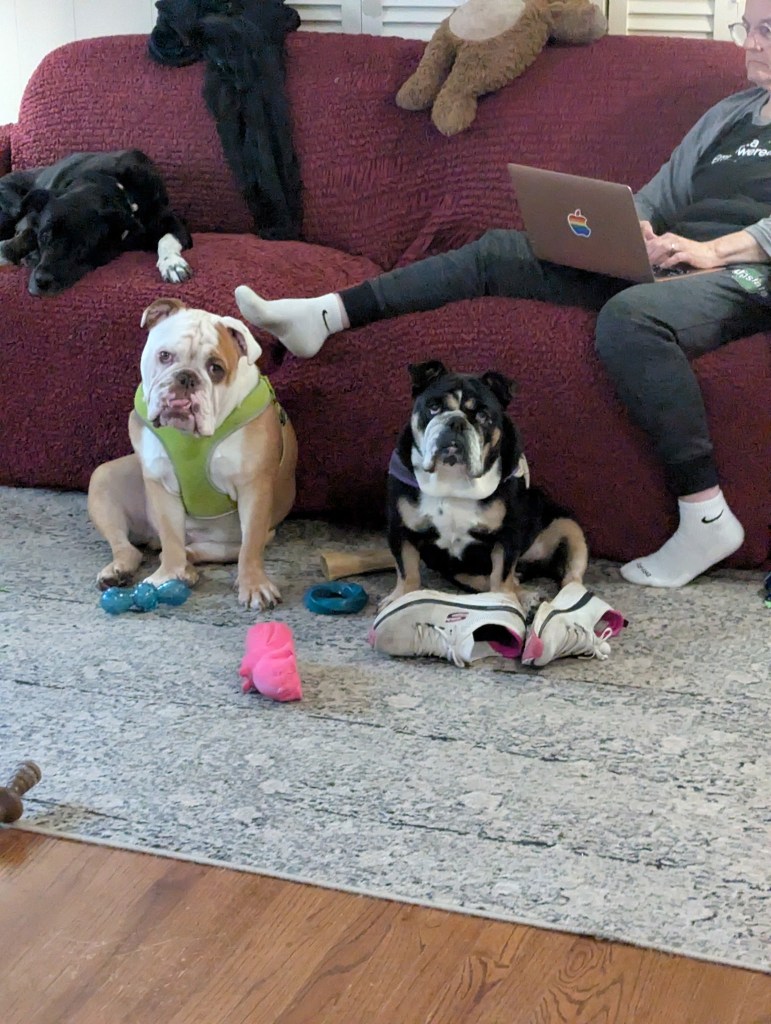
Image of Ugena Whitlock working on Apple computer with two English Bulldogs and a lab mix.
Me, working on my online classes with the Pack in place

As I think about it, I love nothing more than being a student, and I have felt respect and fondness for teachers who truly cared about me. Yet I was not this kind of teacher to my students. This is not to say that I mistreated them—quite the contrary. I was the fun teacher for most of my career—the easy grader and the one who drew a little outside of the box. When I arrived at my current institution, a recurring theme that people actually spoke out loud was putting students first. I envied this and knew that I seemed a few steps removed from students. Now, as a non-administrative faculty member, I have a unique opportunity for a second chance—not to reconnect with a passion, but to form one. I find great hope in this—not just for second chances to find something I feel something for, but for redemption itself. This online platform of words—and blessed words are my seeds of connection—allow me to connect to my students and develop a relationship with them and teaching that, for me, is new.

Embracing AI and Lifelong Learning

Another unexpected twist in this journey has been my dive into AI. I’m realistic about it. I use AI tools, and I know my students will too—as will their own students one day. Instead of policing its use, I’m teaching them how to use AI as a tool, not a crutch. It’s part of preparing them for the future, and honestly, it’s been fascinating to explore.

Image representing AI as a learning tool.
AI As Learning Tool

I’ve been attending workshops, like the one put on by USC Upstate’s CAIFS last week, and I’m signing up for mini-courses through ACUE. There’s something deeply satisfying about being an “old dog” excited to learn new tricks. It’s reminded me that teaching isn’t just about imparting knowledge—it’s about staying curious, staying engaged, and always being willing to grow.

The Puzzle of Online Teaching: Finding My Niche

Part of what’s made this experience so fulfilling is how it taps into different parts of who I am. I’m an introverted Virgo and a bit of a gadget enthusiast. Online teaching feels like solving a puzzle, finding new ways to innovate, communicate, and engage. I don’t often get so absorbed in something that I lose track of time and forget to eat, but when I’m working on my classes, that’s exactly what happens. It’s a sign that I’m not just doing this because I have to—I’m doing it because I really, really enjoy it.

I’m drawing from my background in curriculum design and integrating best practices for online learning. One of the challenges I’ve set for myself is to create personalized video lectures for all my classes. Right now, I’m using pre-loaded videos from previous iterations of the courses, but I’m excited to make them my own—to bring more of my voice and personality into the mix.

Conclusion: More Than I Expected

When I first agreed to teach online again, I thought it would be a practical move—a way to work from anywhere and stay connected to my family in Alabama. But it’s become so much more than that. It’s sparked a passion for teaching, blending the challenge of engaging pedagogy with the joy of connecting with students. Serendipitously, it has opened up new avenues for growth and exploration.

Online teaching isn’t just a job for me now. It’s a space where I’m learning, innovating, and building community in ways I never expected. And as it turns out, this “old dog” has plenty of new tricks left to learn—and plenty of stories left to share from the front porch, whether real or virtual.

Image of small English Bulldog
Marley

The Playlist of me: Forgotten iPod, Rediscovered Self (Power of Music, Part 1)

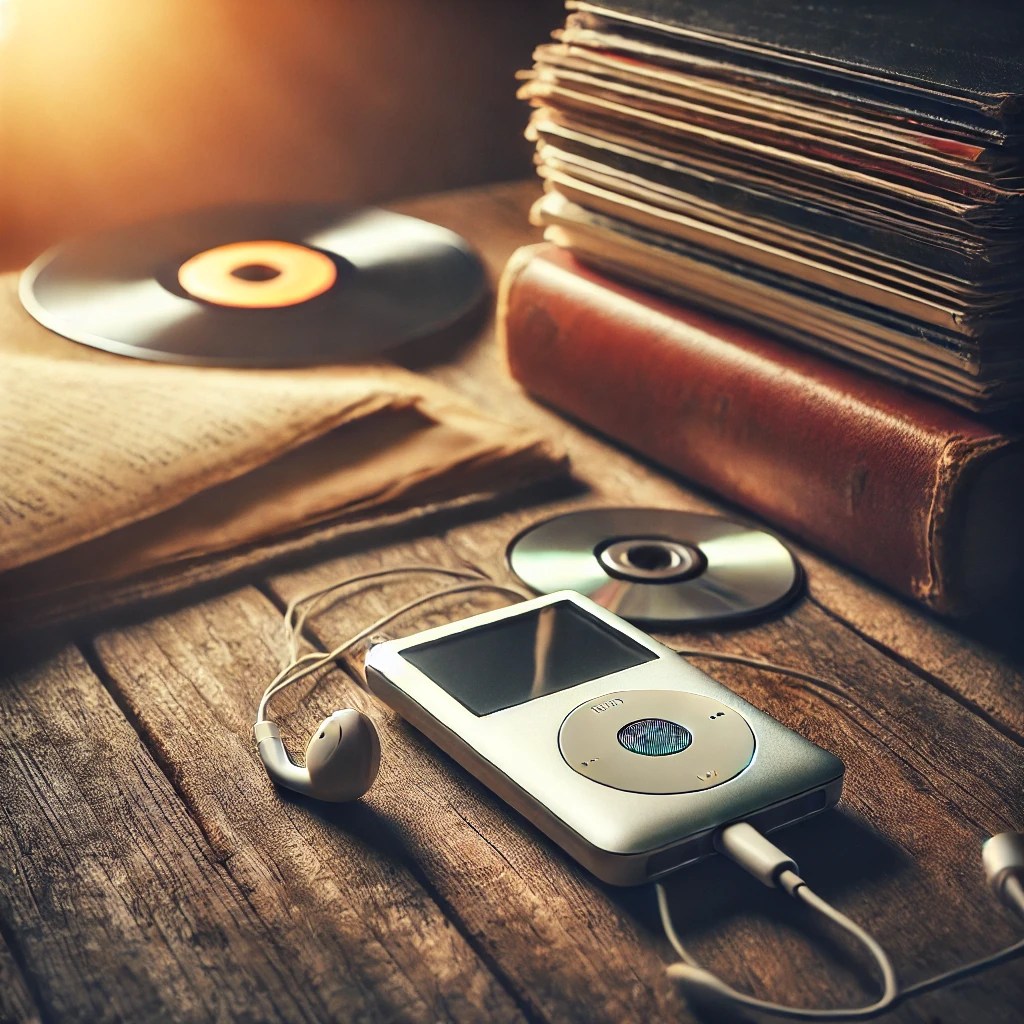
A warm, nostalgic scene featuring a vintage iPod with earbuds resting on a wooden table. Surrounding the iPod are a stack of old CDs and vinyl records, symbolizing a love for music across different eras. Soft, ambient lighting creates a cozy and reflective atmosphere, with a hint of a worn journal and handwritten notes in the background, evoking a sense of personal rediscovery and connection through music.

I Found My iPod: Rediscovering Happiness Through Music, Part 1

Last year, I completed an End of Life (Death) Doula program with INELDA, the International End of Life Doula Association. The experience itself deserves its own post, but one lesson from the program keeps coming back to me: the role of music in creating peace during life’s final moments.

Image of International End of Life Doula Association, INELDA, logo

As the person in our care begins their end-of-life journey, we were advised not to play their favorite songs as background music. At first, this advice seemed strange to me. After all, wouldn’t a familiar melody bring comfort? It sure does for me! But then it was explained: favorite songs are deeply personal and emotionally charged. They can evoke strong memories, longings, or attachments that might not be conducive to a peaceful transition. Instead, we were taught to choose ambient tones or tranquil soundscapes to foster an atmosphere of calm and rest.

Not being a doula or having experienced end-of-life caregiving firsthand, this suggestion went against my intuition. The more I thought about it, though, the more sense it made. If it were me, I could imagine holding off my own passing just to hear my favorite song finish! The idea stayed with me: music is powerful, not just for its personal connections but for its ability to transcend memory and emotion, helping us navigate transitions when we need it most.

This thought was still on my mind when I stumbled across something I hadn’t seen in years—my old iPod.

From Records to iPods: A Musical Journey

As a Generation Jones Boomer, I’ve collected music in just about every format imaginable. I started with records and CDs, eventually amassing hundreds of them. Many of my favorite records were handed down from my parents when they got rid of their stereo. I didn’t have a record player either by then, but I kept the albums for the memories. Over time, I replaced many of those records with CDs, though I had to replace some of those twice after accidentally leaving my CD holder in a car I sold.

Then came the 2000s and the rise of digital music. When Apple introduced the iPod in 2001, I thought it was the pinnacle of technological advancement. I was as excited about it then as I am about AI now–granted for different reasons. I finally got one in 2005, and that summer, I spent two weeks downloading every CD I owned onto it. I painstakingly created playlists for every mood and occasion, collecting songs I thought I’d never hear again.

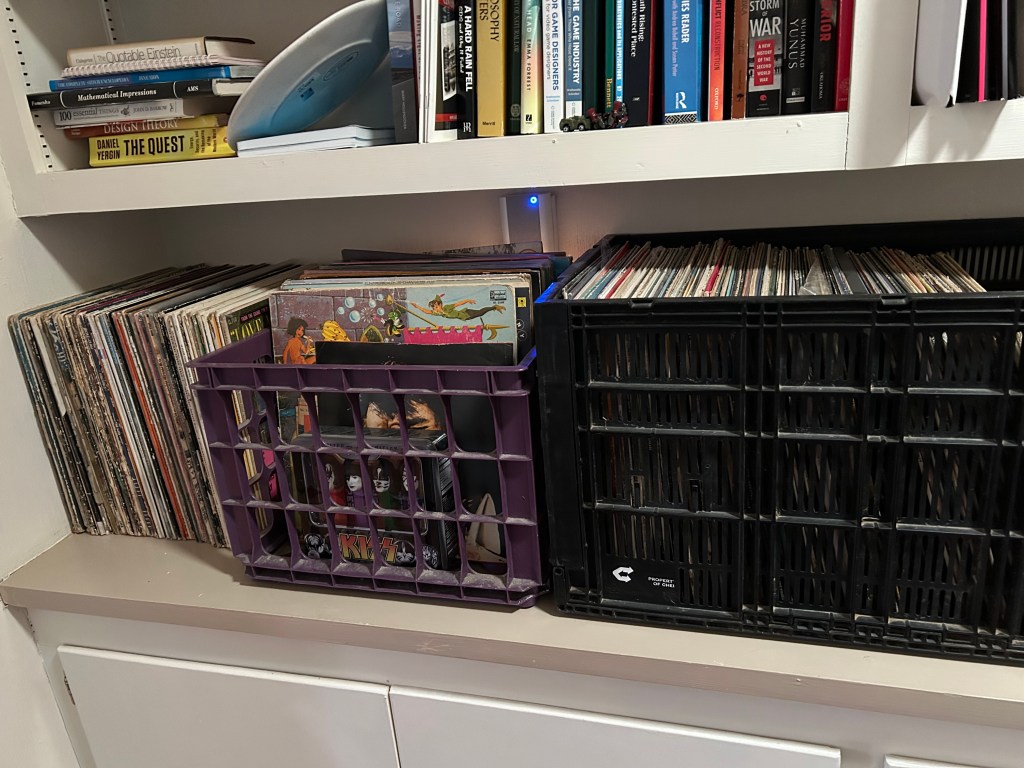
Image of record albums in crates. Disney's Merriest Melodies album.
My record album collection

By 2012, I had curated over 3,000 songs. I refused to sync my iPod with updated iTunes software because it wouldn’t preserve my playlists exactly as I had arranged them. They were perfect, and I wasn’t about to mess with perfection.

But as MP3s, smartphones, and streaming services like Spotify and SiriusXM gained popularity, iPods started to feel outdated. I used mine occasionally for chores around the house, but even that became less frequent. By 2022, Apple officially discontinued the iPod, and mine had long since stopped holding a charge. Eventually, it wouldn’t turn on at all. But I couldn’t bring myself to discard it permanently—it still held my songs.

Rediscovering My iPod

Last week, while searching for batteries in a drawer, I came across my old iPod again. Out of habit, I plugged it in, hoping for the best. The Apple logo flickered to life for a moment, and then… nothing. “Ugena,” Sarah said, “we live two minutes from a computer repair shop. Take it over there and see if they can fix it.”

The tech guy at the shop popped the back plate off, took one look, and said, “It’s your battery. See how it’s puffed up like a pillow? It should be flat. That’s an easy fix.” I was overjoyed.

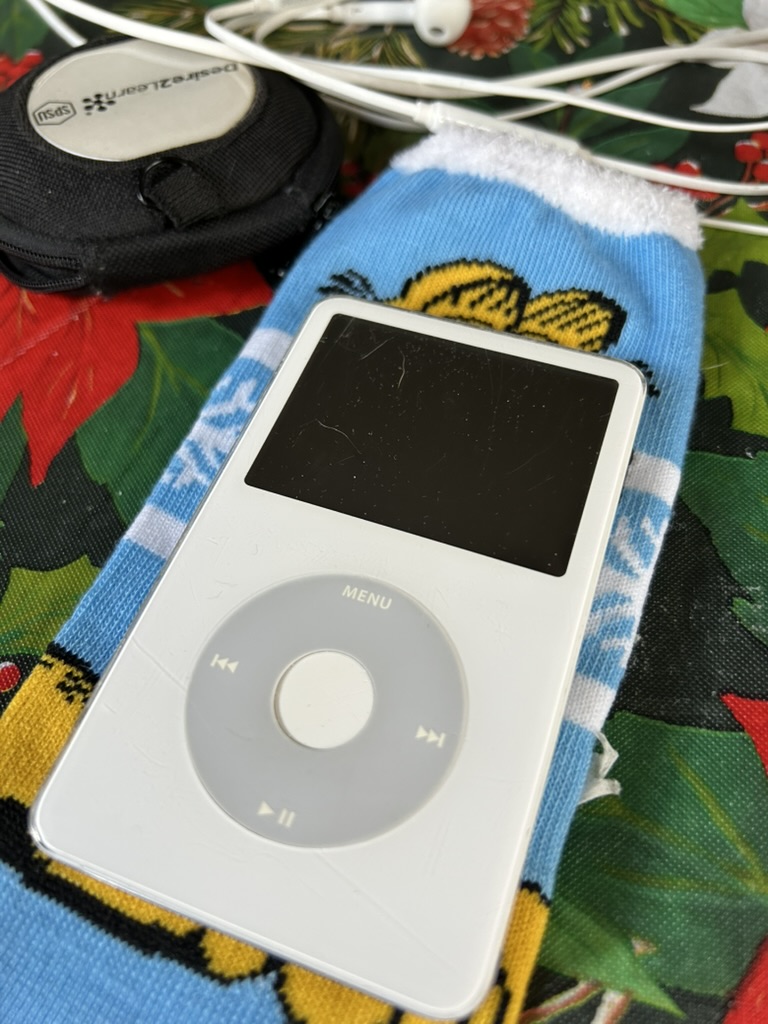
Image of iPod Classic 5.5 gen laying on a Garfield cartoon sock.
My iPod

When I picked it up a week later, I could hardly contain my excitement. After nearly a decade, I saw my playlists on the screen again. I navigated the wheel (nothing like the sound of those clicks as it turns!) to find the perfect song for the moment, and when “Love Grows (Where My Rosemary Goes)” by Edison Lighthouse began to play, I felt an overwhelming sense of contentment. I was home.

More Than Memories

For me, music isn’t just about nostalgia. While certain songs remind me of people or moments—like Elvis always bringing my mom to mind—it’s the music itself that moves me. The key changes, the minor chords, the walls of sound (a la Phil Spector) all stir something in me that feels bigger than words.

And yet, sometimes it is the words. A perfectly turned phrase can be so compelling, so beautifully crafted, that it draws me in completely. It stirs a visceral reaction, and I can’t help but sing along. And yes I do grab a hairbrush for a makeshift microphone. At that moment, the three of us–mind, body, and spirit–are in sync with the melody and words. During my free concerts, whether in the shower, the car, or empty house, my old romantic self rises to the surface, caught up in the sheer power of the lyrics.

This emotional connection reminds me of Howard Gardner’s theory of Multiple Intelligences from his 1983 book Frames of Mind. One of these intelligences, musical intelligence, refers to the ability to recognize, create, and emotionally connect with music. Though the theory is considered pseudoscience by some, it resonates with me. It helps me explain feelings that go far beyond simply liking music. What I feel is deeper, more profound—something that connects to the core of who I am.

Rediscovering my iPod wasn’t just about finding old favorites. It was about reconnecting with a part of myself—a good and strong piece of myself that, during my distractions with job advancement and the trappings of success, had been suppressed. During those times, I was lost, adrift, unaware of how much I had let go of what truly anchored me. But when the music is back in my life, it’s as if I’ve found my way home—a reminder of who I am and what brings me joy. In the words of the old song, “Was blind, but now I see.”

The last 5 random songs played on my iPod while I’m writing this:

  1. Bad Romance, Lady Gaga
  2. My Heart Skips a Beat, Buck Owens
  3. Silver Wings, Merle Haggard
  4. On the Street Where You Live, Bill Shirley dubbed for My Fair Lady
  5. Livin’ in the Sunlight, Lovin’ in the Moonlight, Tiny Tim (from Spongebob Movie)https://youtu.be/hERIZmJpwTI?si=JSKnB7XR5_rwbiHq
A warm, nostalgic scene featuring a vintage iPod with earbuds resting on a wooden table. Surrounding the iPod are a stack of old CDs and vinyl records, symbolizing a love for music across different eras. Soft, ambient lighting creates a cozy and reflective atmosphere, with a hint of a worn journal and handwritten notes in the background, evoking a sense of personal rediscovery and connection through music.

Being Human When AI Works Almost As Well, Sort Of

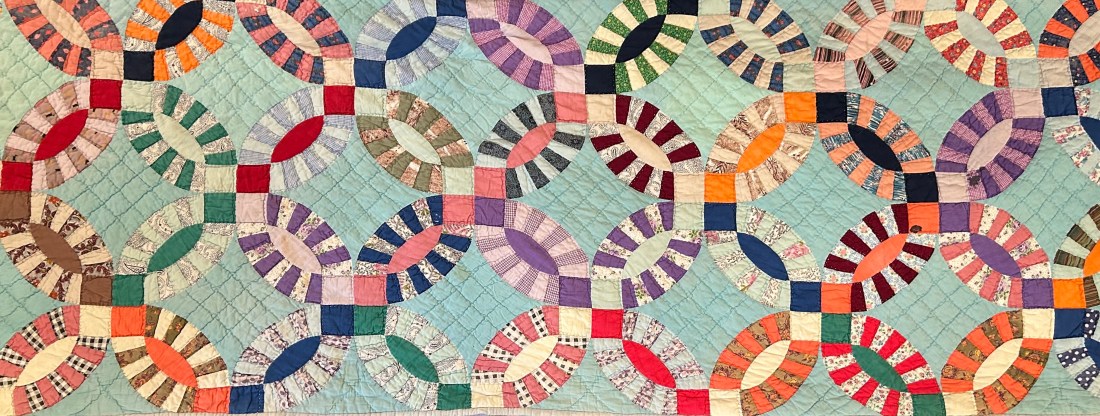
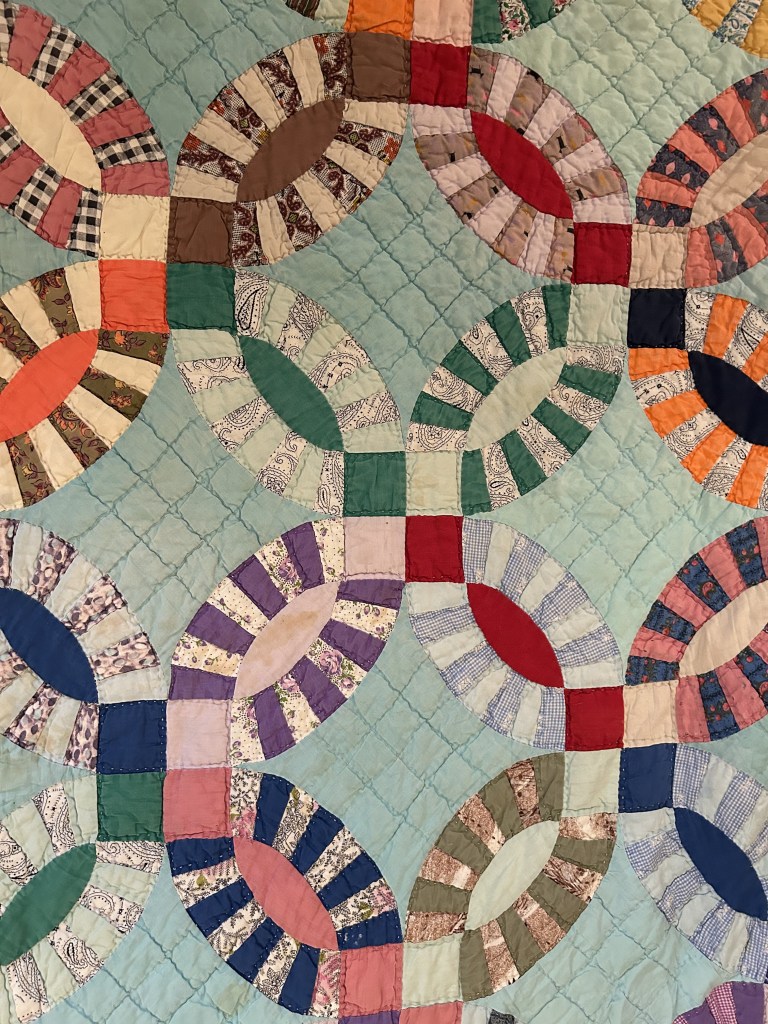
Image of a handmade double wedding band quilt featuring interlocking circular patterns in vibrant colors on a light background. The intricate stitching and carefully pieced fabric showcase the craftsmanship and artistry of traditional quilting.
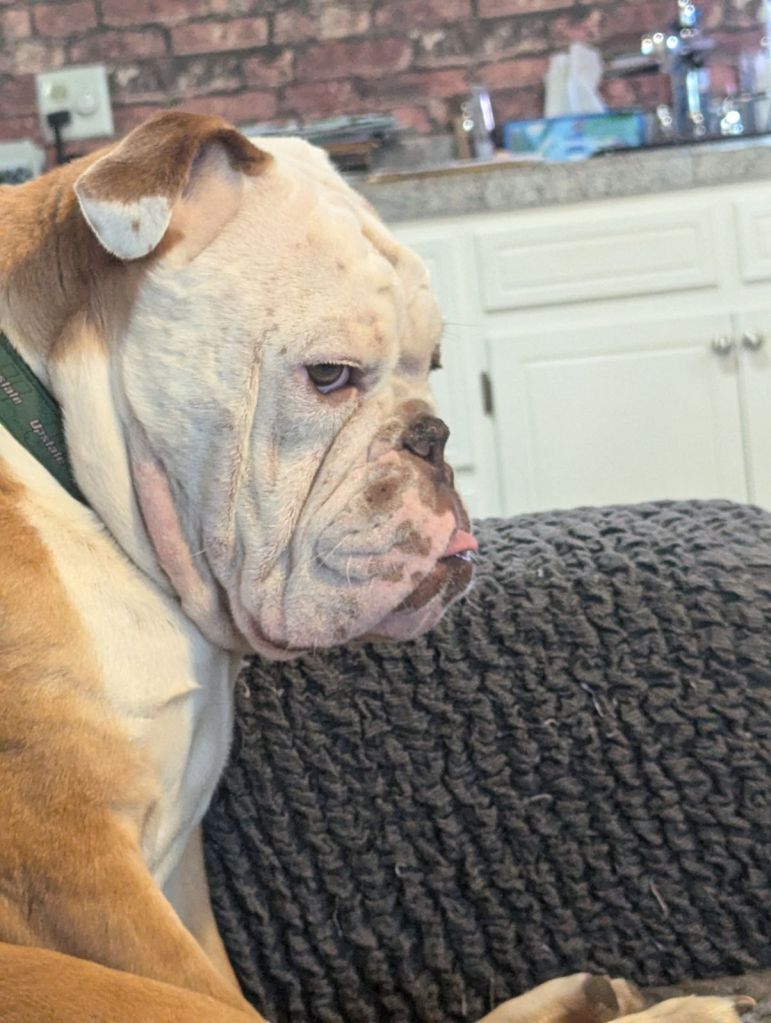
Image of brown and white English Bulldog showing side profile sitting on gray furniture
Bruno displaying AI (Actual Intelligence)

I added a page to my Homepage to explain my thoughts and personal policy regarding Artificial Intelligence. Here it is as a post.

Within 20 years (perhaps 10, probably 5), this message will no longer be necessary. Within a generation, content producers and consumers will have figured out the ethics of using Artificial Intelligence to generate all kinds of content–from graphic designs, to music, to work documents for all professions, to classroom coursework, to, yes, blogs. We will have found the balance between using AI as a tool to enhance our work and relying on it to do the work for us. We will have figured out the survival–celebration, value–of artists, academics, and writers (human anythings) so that we will not have been replaced, which is a current concern. With a nod to Faulkner, I believe when it comes to AI, we will do more than survive. We will prevail, but we are not there yet.

My institution has three options regarding AI usage in the classroom that we faculty can incorporate into our syllabi–“Generative Artificial Intelligence Use Prohibited,” “Generative Artificial Intelligence Use Allowed with Attribution,” and “Generative Artificial Intelligence Use Encouraged with Attribution.” That pretty well captures the options for use in most settings. We can prohibit the use of AI, allow its use with care, and/or encourage its use. I would argue that the first option is not only unrealistic, but it would also put users at a disadvantage. Option 3 sounds to me like it could turn into a party–a free for all for beginners and professionals alike without boundaries and guardrails. Option 2 is a reasonable place to start, as it insists upon using the creative brain first and primarily, allowing us to form a relationship with AI–which we will do, one way or another, but that is another story–where it is the tool, not us. We humans must stay in the game, after all. (To the people reading this in 20 years–I know you are laughing and shaking your heads. Enjoy!)

I think of AI like quilts. You can purchase pre-printed quilting material at Walmart or any fabric store. To make your quilt, you only have to put stuffing (called batting or wading) between the printed side and the backing, and outline the printed design with thread, and viola, a quilt. I have one or two of these that my sweet mother and aunt have given me. They are treasures, but they are nothing like the quilts they used to make before their hands got tired and bent from arthritis. Designs were intricate and colorful, made from generations old patterns. Some patterns were made with hundreds of small pieces of cloth, which were stitched painstakingly, creating a “double wedding band,” for example, on the colorful front and plain-cloth backing. These quilts are heirlooms, works of art that are lovingly protected and stored to preserve their beauty. The difference between AI generated content and human generated content is like the difference between the printed quilt and the pieced quilt.

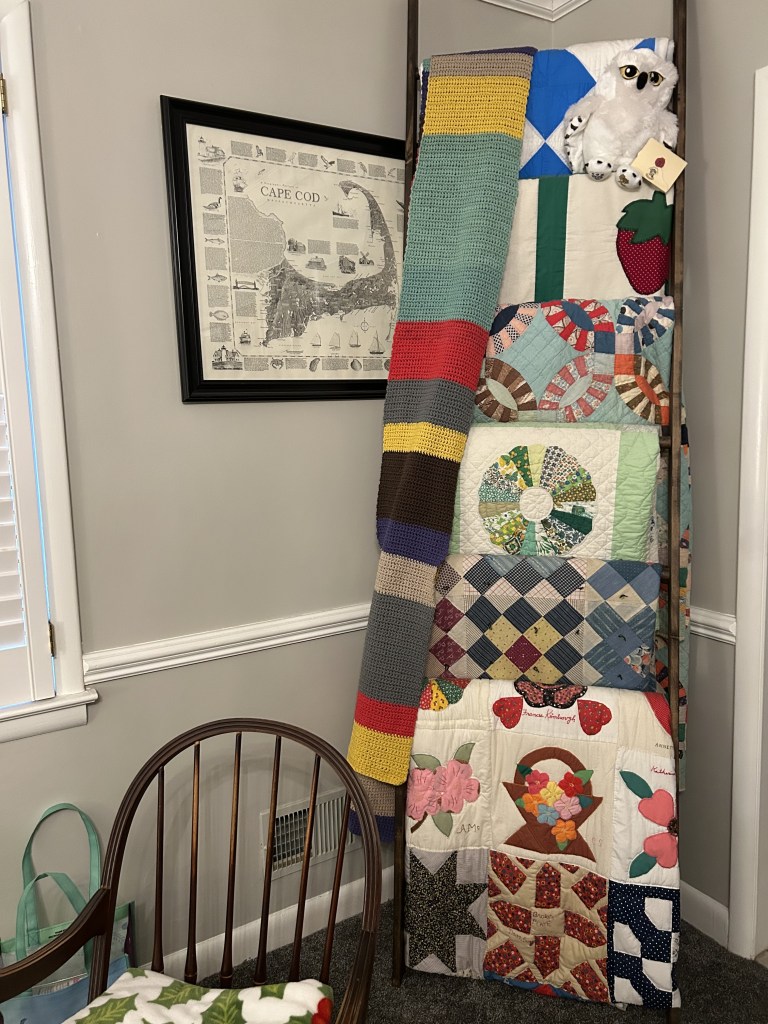
Image of a quilt ladder displayed in a cozy room. The ladder holds a collection of colorful handmade quilts, including a double wedding band quilt, a basket design, and others with intricate patterns. A crocheted striped blanket hangs alongside them. At the top of the ladder is a plush white owl. A framed Cape Cod map hangs on the wall, with a wooden chair and a tote bag visible in the foreground.
A collection of family heirlooms! Quilt ladder displaying several hand pieced quilts.

But, you may ask, how is that a valid comparison, since AI content is sometimes indistinguishable, often superior to human generated content? The attributes of beauty, of quality—even, maybe especially, messiness and flaws—are the human elements. Our challenge is not to attempt to catch up to what AI can do–we can’t. Our challenge is what the poets have always sought to evoke in humanity. It reminds me of what Ashley Wilkes tried in vain to express to Scarlett O’Hara: “I do mind, very much, the loss of the beauty of the old life I loved. Scarlett, before the war, life was beautiful. There was a glamour to it, a perfection and a completeness and a symmetry to it like Grecian art.” Ashley, though, mourned for the lost grace and perfection (that never existed), and in so doing, sadly missed the point…and the opportunity. Human completeness and symmetry are not going anywhere; we just have to be intentional about keeping them—us—alive. Aliveness is the pearl that makes Artificial Intelligence artificial.

At the beginning of my classes, my students and I talk about the ethics of using AI for course assignments. We look at the University’s options, above, and I talk to them about Google’s standards for evaluating web content (Google will not publish just anything), the E-E-A-T Guidelines. E-E-A-T stands for expertise, experience, authoritativeness, and trust. Google holds content to this standard in part to screen content that is generated to “manipulate search rankings.” Google uses its automated ranking system to focus on “high-quality, reliable, people-first content” https://developers.google.com/search/docs/fundamentals/creating-helpful-content. I’m sure that me and my little blog and my academic writing were not what Google had in mind when it developed its regulatory content standards. My blog has 4 readers, one of whom is my sweet Mother, and the academic writing has even fewer. But just as AI reaches broadly toward various fields and modalities, so too must the ethics that guide its use.

I try to persuade my students that I would rather read work full of their own emotions, originality, and creativity than a perfectly crafted AI-generated response paper. I’m not naive—AI is too easy to use—so we talk a lot about treating it more as an editor than a creator. I encourage them to maintain and strengthen their sense of creator-ness while learning to use AI responsibly as a tool to enhance their ideas, not replace them. I want them to see themselves as authors of their own thoughts, capable of crafting their work like a beautiful, hand-pieced quilt, rather than relying on AI to assemble their ideas for them.

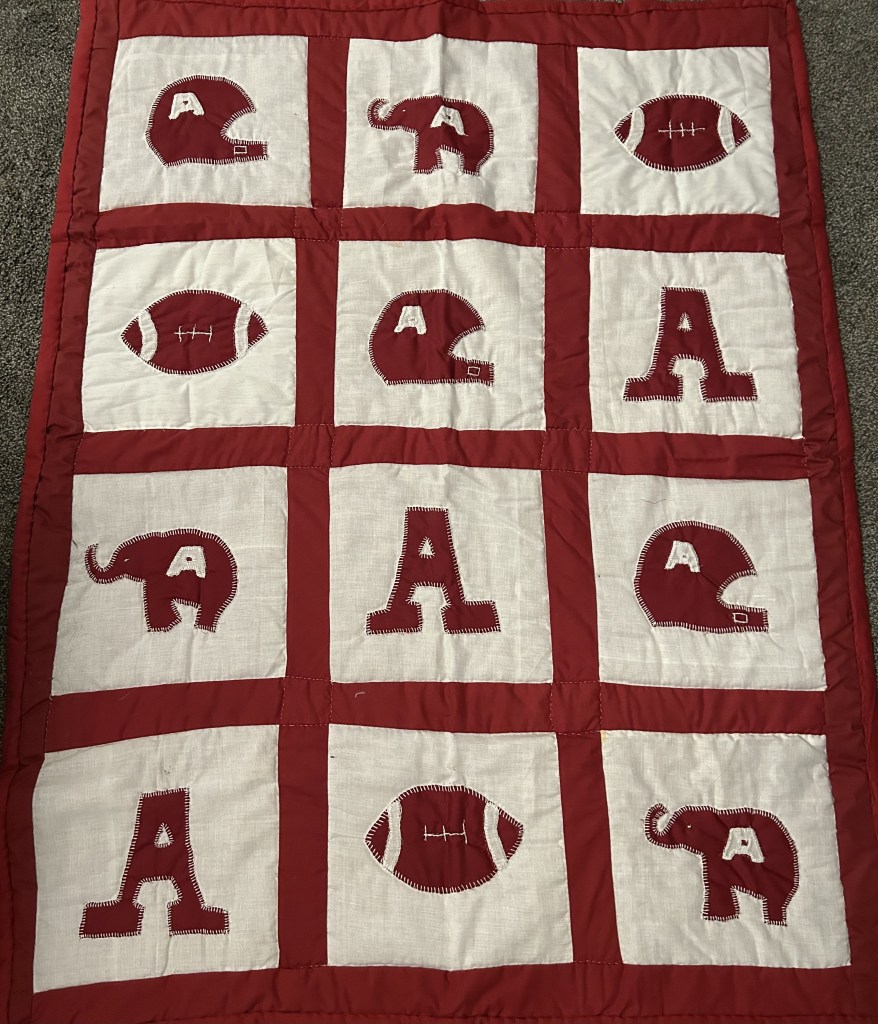
Image of a handmade quilt with a crimson and white Alabama football theme. The quilt features appliqué designs of football helmets, footballs, the letter 'A,' and elephants in alternating squares. Each design is outlined with visible stitching, and the quilt is bordered with a crimson edge, showcasing school spirit and craftsmanship.
Lovingly made Alabama Quilt from my Mother

Some academics will prohibit the use of AI in their courses, focusing on catching students who use it. These are likely the same individuals who hold their peers to a higher standard when it comes to leveraging AI. Over time, these attitudes will adapt. For instance, I was encouraged to find that a Google search for ‘Scholars and academics who use AI’ yielded results emphasizing the responsible and ethical use of AI in research and writing. Just today, Tom’s Guide published an article, ’12 Days of OpenAI,’ reporting on OpenAI’s release of the new Pro More subscription, designed for advanced scientific research and complex mathematical problem-solving, at a cost of $200 per month. I’m old enough to remember when personal calculators were banned in math classrooms out of fear that students wouldn’t learn to calculate on their own. Eventually, we realized that without understanding the underlying concepts, a calculator wouldn’t help a student much. Similarly, while AI has historically struggled with math, it’s improving—and for $200 a month, you can see its progress. Advances like Pro More will inevitably become irresistible and indispensable for researchers. I suspect that as AI continues to evolve, the ethics of its use in academia will become increasingly situational.

For my blog and academic writing, I drafted a disclosure to include with my work. The following is the only AI-generated content in the post. ChatGPT spit this first one out in less than 10 seconds. It’s well-organized and pretty comprehensive, and with my found time I folded a load of laundry. Scroll to the bottom to see the human-created, much simpler finished product:

Personal Ethical Policy for AI Use in Writing

As a writer, I recognize the value of artificial intelligence as a tool to enhance creativity, efficiency, and quality in my work. To maintain integrity and uphold ethical standards, I commit to the following principles:

  1. Transparency:
  • I will disclose the use of AI tools in the creation of any content where its contribution significantly impacts the final product, especially in professional, academic, or published works.
  1. Originality:
  • I will ensure that the core ideas, voice, and creative expression in my writing remain my own. AI will serve as an aid, not a replacement, for my unique perspective and narrative.
  1. Accuracy and Verification:
  • I will verify any AI-generated information, ideas, or suggestions to ensure factual accuracy, avoid misinformation, and maintain credibility in my writing.
  1. Plagiarism Prevention:
  • I will not use AI to produce content that could be considered plagiarized or misrepresented as entirely original. Proper attribution will be given where AI outputs are directly used.
  1. Mindful Usage:
  • I will use AI tools for appropriate tasks such as brainstorming, editing, and administrative writing assistance, while refraining from over-reliance that could diminish my skill development or creative input.
  1. Respect for Context:
  • In collaborative projects, I will adhere to agreed-upon policies regarding AI use and respect any ethical or legal guidelines specific to the context of my work.
  1. Commitment to Growth:
  • I will continuously evaluate the role of AI in my writing practice, striving to balance innovation with authenticity, and learning how to responsibly adapt to emerging technologies.

That’s way too much information, and notice how Chat GPT numbered each item in its own list #1, a fitting reminder that although AI organizes information with precision at light speed, creativity and meaning-making is and will continue to be a human enterprise.

AI went on to ask me: “Would you like adjustments to tailor this for a specific audience, such as professional peers, readers, or students?” I declined the offer, and here is my human version:

The work presented here is original to me. I have used AI tools such as ChatGPT sparingly and ethically for tasks such as identifying trending topics, proofreading, suggesting key words for search engine optimization. I have carefully reviewed AI-generated suggestions to ensure they align with my authentic voice and unique style, thereby preserving the creativity and integrity of the work and myself.

Image of a handmade double wedding band quilt featuring interlocking circular patterns in vibrant colors on a light background. The intricate stitching and carefully pieced fabric showcase the craftsmanship and artistry of traditional quilting.
Hand pieced Double Wedding Band Quilt

A Letter To My Students, From Their “New” Professor

Image of Dr. Ugena Whitlock at USC Upstate
Dr. Ugena Whitlock

Dear Students,

Welcome to the new semester and to our class! As your professor, I want you to know how excited I am to be back in the classroom after several years in administration. It’s been a while since I last taught a full course load—2007, to be exact. Since then, I taught an occasional class until stepping fully into administration in 2016. Now, here I am, rejoining the classroom and rediscovering the rewards of working with students like you.

Image of a brown and white English Bulldog with his tongue out. He is playing with 6 hippopotamus squeak toys lined up on a dog bed.
Bruno is ready for school

A lot has changed since I last taught full-time. We’ve experienced a global pandemic, witnessed national and global unrest, navigated four presidential elections, endured economic turbulence, and just generally undergone shifts in our society. Schools and classrooms have changed over the years, too. Teachers have left the field in significant numbers and fewer people are entering the profession. Those who stay report that their students have changed. Actually, we’ve all changed.

But amid all this change, some things remain constant—our innate human capacity for love and acceptance, and our nature as social creatures who need each other. We are curious about the world and about one another. We can laugh at ourselves. These are foundations that inspire me as a teacher, ones I hope will inspire you, too. Our humanness fills me with faith. I have faith in you and in the value of this class. We are going to explore some very interesting topics together, which I hope you will carry into your own classrooms. I hope you will also pass on to your students the faith, hope, and inspiration that I hold for you.

Close up image of brown and white English Bulldog with his tongue out.
Bruno contemplating beginning of semester

I’ll be honest with you: I feel a mix of anticipation and vulnerability as I return to the classroom. I want to create a dynamic, engaging space that feels welcoming and worthwhile for each of you. Even though it’s been a while since I’ve facilitated learning experiences for students–either online or in person–I see it as a challenge worth embracing. Why? I still believe in the power of education to make a difference—not just for your students but for you, too. I believe that we can change the world one student at a time.

Our time together will be about more than standards, objectives, and theory (though we’ll cover plenty of that stuff). It will be about understanding ourselves as educators, examining the world through a critical yet hopeful lens, and preparing for the deeply human work of teaching. I have great hope that you will find this class meaningful and empowering as you move closer to realizing your dreams—both personally and professionally.

Let’s begin our journey with curiosity, openness, and mutual respect. I’m here to support you every step of the way.

Warm regards,
Dr. Ugena Whitlock
Your “New” Professor

Image of a brown and white English Bulldog with his tongue out lying on a rug
Bruno after a long day at school

Gratitude, Anyway: A Christmas Message for Finding Happiness

Image of Little Debbie Christmas Tree Cakes, one standing and one cross section showing cake icing.

I got stuck while writing this post. I knew I wanted to write about being grateful for my life and everything and everybody in it. I knew I wanted to frame it around having gratitude when those blessings might be blurred by shiny objects, such as ambition and wanderlust. I had most of it completed, but I couldn’t decided how to wrap it up without it having a rosy, yet empty, ending. Not too much as seen from the front porch is rosy; there are cobwebs and dust on my front porch. Then I took a walk on a frosty December night and the ending found me.

Does this ever happen to you? You come up with a brilliant idea—something you think is groundbreaking—only to find someone else has already beaten you to it. I suspect it happens to most writers. A blog idea I thought would be perfect was already taken. I began exploring memoir writing, only to discover someone else has already captured the same experiences with the same folksy charm! I have thought of an ideas for a book, and as I begin doing research for it, there it is–already published by somebody else! Even academic journal articles I’ve envisioned writing often already exist, in forms eerily close to what I had in mind. And every time it happens, it stings. These aren’t rare occurrences—they’ve happened more than just once or twice in my life. Here’s one that happened today: A very fine post by Jim Wallis called “Singing the Lord’s Song in a Strange Land” discusses thoughts I’ve had as an Armchair Quarterback for years—even before the election. It’s title even sounds like something I would have thought of. It’s beautiful. You should read it. Dang it. Singing the Lord’s Song in a Strange Land.

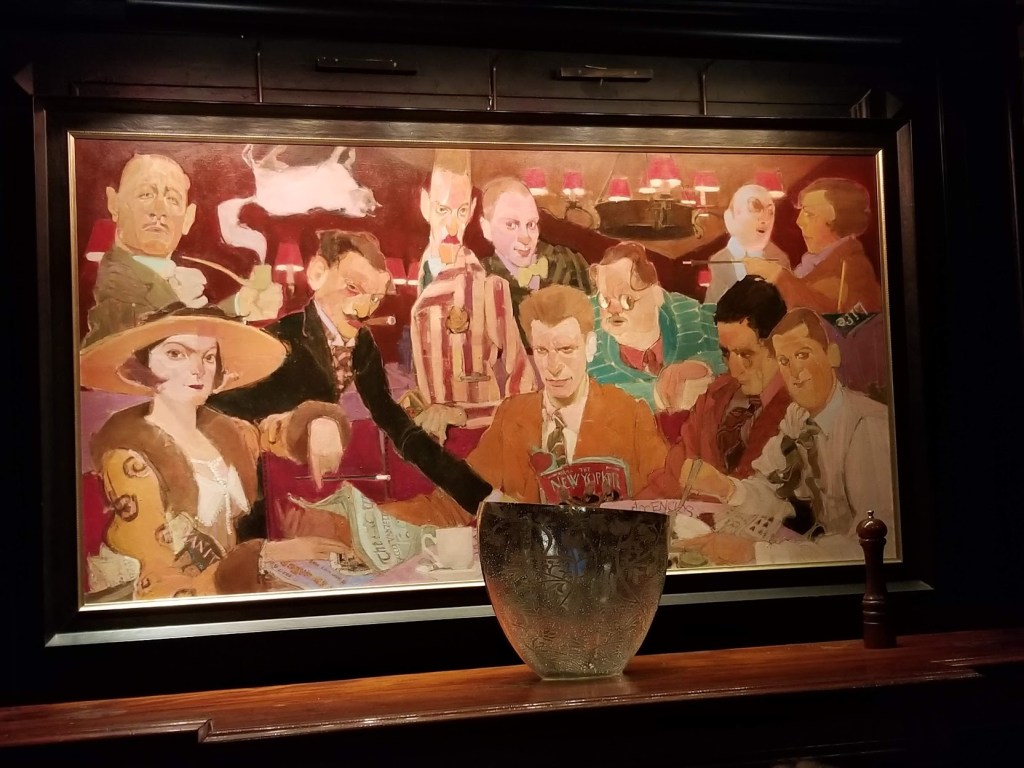
Image of painting of the Round Table at the Algonquin Hotel in New York City
The Round Table at the Algonquin Hotel

And then there’s the yearning. I can’t deny feeling a twinge of envy when I see friends and colleagues celebrating their achievements on Facebook. It’s a humbling reminder of my own aspirations and the work I still want to accomplish. A dear friend recently mentioned seeing several plays on a trip to New York City. She misses New York very deeply, and I’m happy that she makes regular visits; it does her soul good. Now, I’ve been fortunate to see my share of Broadway musicals—I even saw Bette Midler in Hello, Dolly!—an experience I still count as one of the best of my life. But life changes, as it always does, and I don’t have those same opportunities now. Sarah prefers camping with the dogs, and while I finally convinced her to upgrade tent to a pop-up camper, our adventures now involve hoisting Bruno the Bulldog up the steps to his bed.

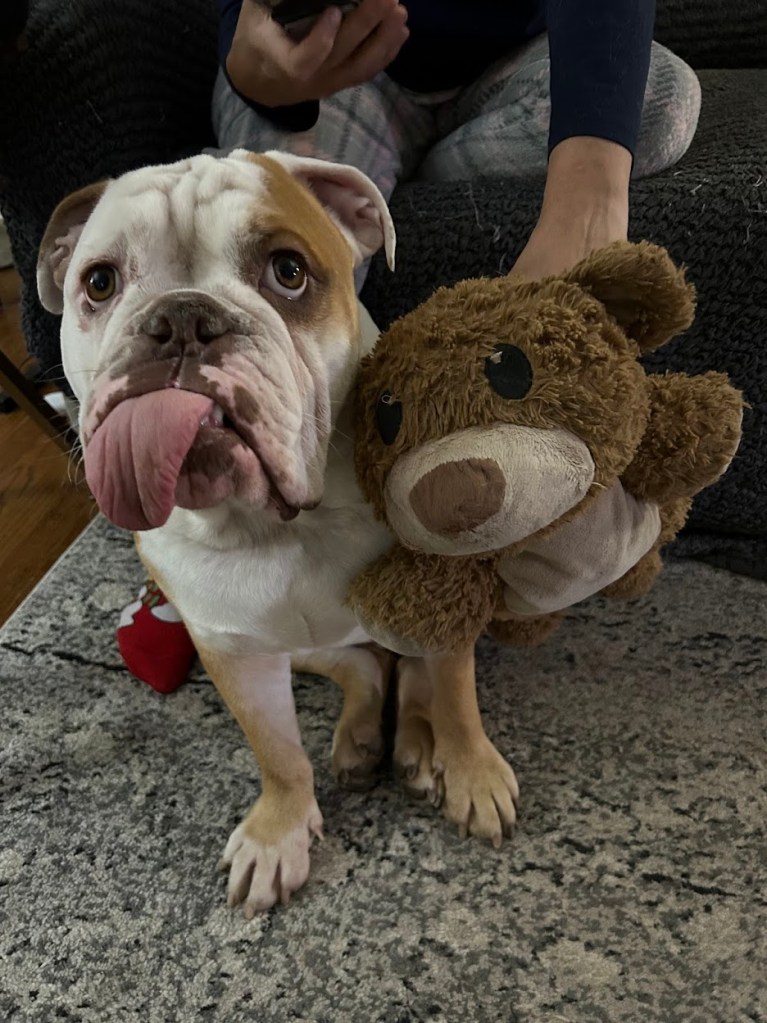
Image of English Bulldog and stuffed bear.
Bruno and Snugs Baby

I don’t want to be a globetrotter, and I don’t long for the lifestyle of the rich and famous. I admit, though, when I’m out in the woods at midnight with a flashlight, waiting for Bruno to finish his business, it can feel like a bit of a step down from the lights on Broadway. Travel, especially to historically rich locales, thrills me. I relish every minute of it. I soak up the salty air and sea breezes of beaches from New England to Miami. And yes, theater makes me breathless. Euphoria has its place, and I appreciate it when I have it.

But adventures are the in-between spaces. The wholeness of life, for me, is found in simple joys. The whole fabric of life takes place in Spartanburg, feeding the dogs and cats—and in Alabama at my childhood homeplace. Whether tending to dogs and cats or listening to the stories my mother tells about pictures and treasures we sort through-both of us aware of time pressing down upon us—these are the things I am fiercely grateful for.

I think back to how I grew up, a child of hardworking people in Alabama. My parents taught me to be proud of where I came from, to appreciate the simple joys of home and family. They have always begun and ended every prayer by giving thanks to God. Even now, my heart remains etched with gratitude that I learned from them. I look around and see a life I love—a cozy old house in a picturesque neighborhood, my quirky cars in the driveway, my family within a few hours’ drive, and my pets curled up with Sarah and me on the couch. I’m comfortable in my own skin, grateful for work that fulfills me, and thankful for the profound blessing of having stability in my life. I’m blessed not to face food or housing insecurity, unlike so many others on this earth. I do a quick check and confirm that the reason I blog in the first place is to find joy and fulfillment–which I do.

Here’s the thing I’ve noticed: life is full of moments like these. No matter what you achieve or experience, there will always be someone smarter, more accomplished, more traveled, or more adventurous. It’s easy to let envy creep in or to feel like I’ve missed out. But at this stage in my life, I’ve learned to lean into a different perspective: gratitude, anyway. Choosing gratitude is a practice, and I have to practice it. Being grateful is as simple as the adage: It’s not having what you want but wanting what you have. I didn’t say it was an easy practice.

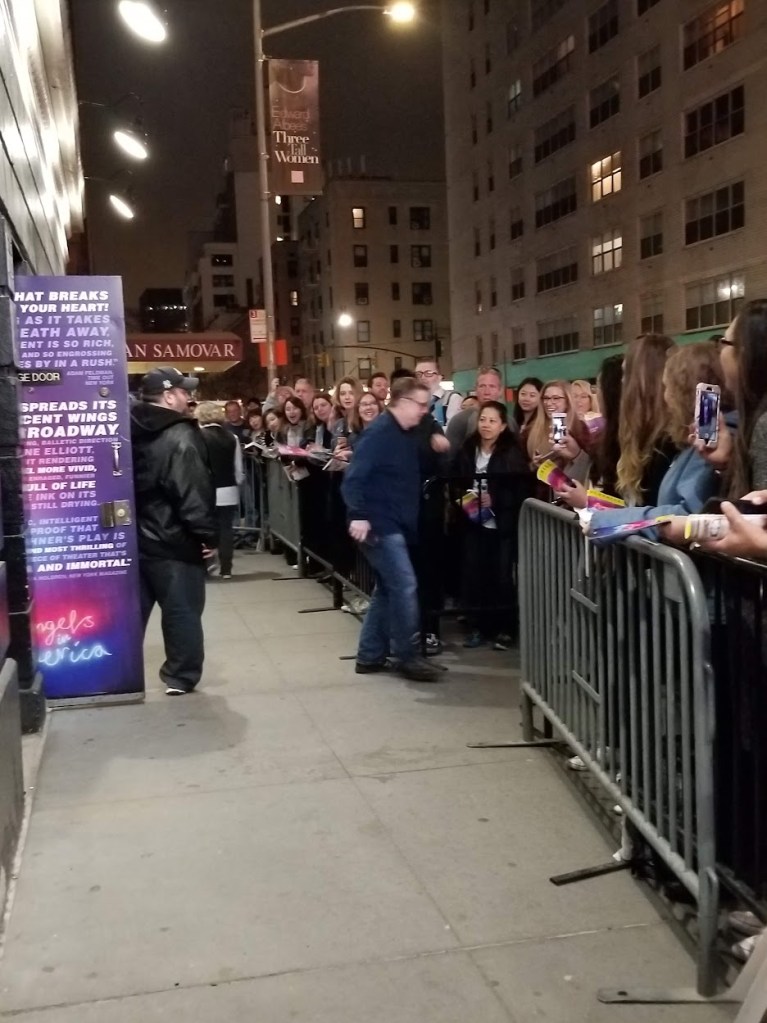
Image of actor Nathan Lane leaving Broadway theater after the play Angels in America
Nathan Lane Leaving Theater After Angels in America

Yes, I would really like an occasional New York weekend getaway. I’d love to see my name on the cover of a groundbreaking book or a memoir about a girl from a working-class family in the South–kind of like “The View from Rural Missouri by Jess Piper, which is a terrific collection by a Renaissance Woman from Missouri, at https://jesspiper.substack.com/. Dang it. But I also find happiness in where I am, not just in those imagined greener pastures. There’s a profound joy and relief in realizing that life isn’t a race or competition. I take satisfaction in setting my own goals and working toward them at my own pace—leaving room for reflection and leisure along the way. I will get where I get when I get there. I wonder why it has taken me so long to be at peace with this. I am grateful that I am.

Image of the Statue of Liberty
Statue of Liberty

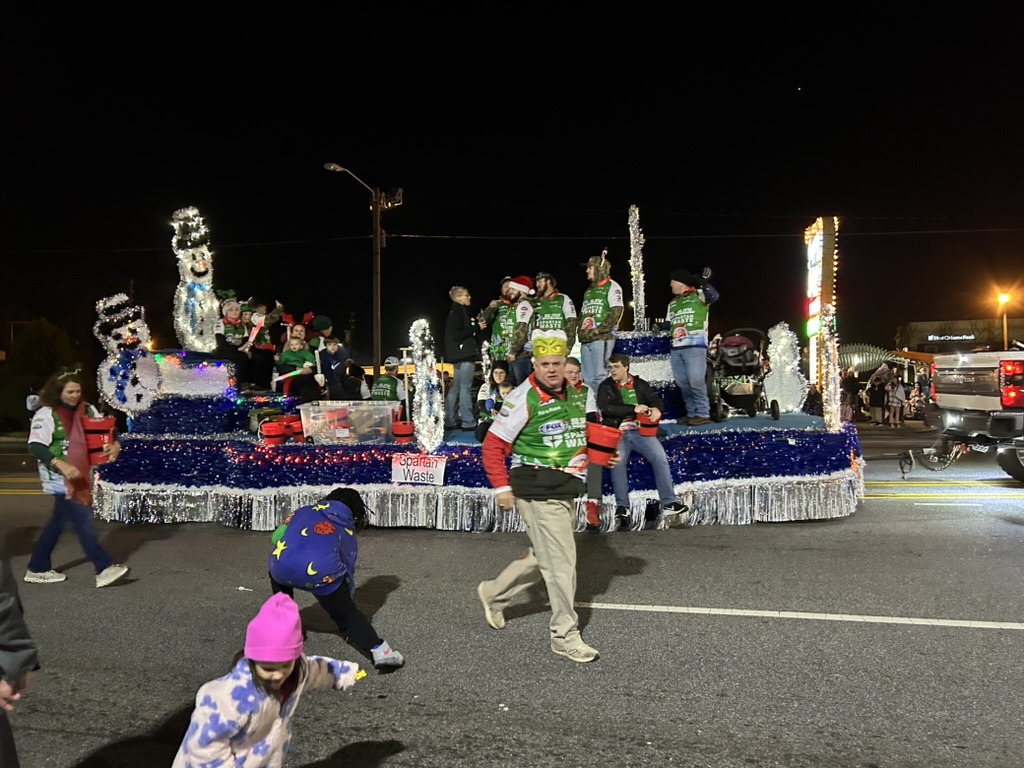
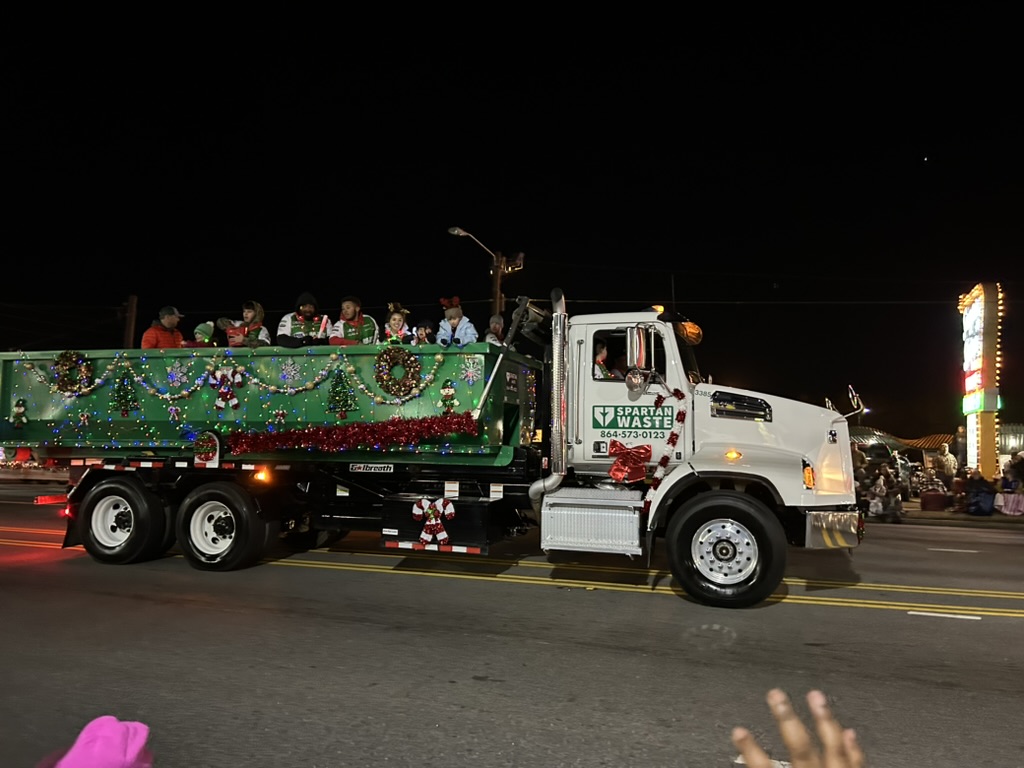
Here is where I had trouble sticking the ending. So I set it aside and went to the Spartanburg Christmas Parade. We live in a neighborhood that looks like Bedford Falls in It’s A Wonderful Life, and we can walk the two blocks to the parade route. We walked arm-in-arm to Main Street, got hot chocolate, and found a spot among the crowd to watch the parade. If you’ve ever been to a hometown Christmas parade, you know exactly what it was like. There were fire engines driven by Grinches, lights strung from cars and trucks and tractors, local beauty queens wearing Santa hats instead of tiaras, and marching bands. Oh, the marching bands. One of my most wonderful experiences was marching in my high school band. Memories of it fill me with happiness and exhilaration. As soon as I heard the drum cadence marking the band’s approach, I felt that feeling again. Then they began to play. It was at that moment the meaning of what I had been trying to capture in my writing became physically real to me. I began to cry as they marched by, joyful in the present and in jubilant memories. This, I knew, was gratitude.

Image of parade float and parade walkers in Spartanburg Christmas Parade.
Spartanburg Christmas Parade Float

While I’ve been struggling with disappointment at the parade passing me by, I just needed the reminder that parades don’t pass a person by—we experience them, marching right alongside. So, I’ll keep dreaming and working toward new goals, and I’ll keep finding happiness right here, in this moment. Gratitude, I understand, is not to be approached as “anyway.” Gratitude is an attitude–a mindset of unwavering, ongoing appreciation, regardless of the circumstance. Although I won’t always be successful, and although some days will be easier than others, I choose Gratitude, always.

Image of Spartanburg School for the Deaf and Blind Bus in Spartanburg Christmas Parade
Spartanburg School for the Deaf and Blind Bus in Spartanburg Christmas Parade
Image of Spartanburg Waste Truck in Christmas Parade
Spartanburg Waste Co. Truck in Christmas Parade

Exciting News: A New Chapter for the Blog!

Image of Logo for Blog The Front Porch Professor with rocking chair, typewriter, and Mazda Miata..

Hello, friends! I’m thrilled to share that my blog is getting a fresh start under a new name: “The Front Porch Professor.” This new space will continue to feature the reflections, stories, and observations you’ve enjoyed, with a renewed focus on life, learning, and the journey ahead—all with a touch of Southern charm.

I’m currently working on exporting all my posts from Just Keep Swimming to the new blog, so nothing will be lost. If you’ve been following here, I hope you’ll join me on this new adventure! With any luck, your subscription will carry over seamlessly, but if not, I’ll share the link to the new blog soon so you can continue following along.

Thank you for your support and encouragement—stay tuned for updates and more from “The Front Porch Professor.”

My Long, Strange Curriculum Journey

Note: The following essay was submitted in draft form for a collection to which I was invited to contribute called “Letters to the Field” (of curriculum studies). The call was in 2021, and the theme of the book was to be reflections on the dumpster fire that was the year 2020. Each piece was to be handwritten in the author’s preferred style and format. The book may be in production. If so, here’s what my entry will be. If not, here’s what it would have been. Enjoy.

Hello, Field.

I hope you are well. As I write, we are mid-way through 2021, which seems incredible. Time has been “out of joint” since March 2020. I sat in my office and watch seasons pass; each time I stepped outside, I was stepping into a different season. It was nearly a year and a half before I traveled to see my family, and I still have not seen my grandchildren. How did I fare? Well, I’m introverted, so for a long while, the virtual/remote situation was ideal. Like most everyone, I enjoyed pajama Zooms and working at my own pace. After 15 months, I found myself searching for webinars to join during the day, just to feel plugged in professionally. This was most unusual for me. And you? I noticed several calls for works about Covid and race in the U.S. I see that your various conferences made valiant virtual attempts as did others. I suppose, then, it was not an ideal situation for most of us.

Truthfully, I was a spectator to the last two years. Being at home made it easy to self-isolate. And I did not write a word about either pandemic–Covid 19 or Black Lives. I’ve thought about why not. During 2020 I was finishing a Master of Divinity degree from seminary. From March 2020 to March 2021, I followed nothing but Covid until I got my vaccines. I tracked the death toll. In late spring and summer, I watched cities burn as we paid a collective price for the sin of racism. It was also an election year–after 4 years of having Donald J. Trump as the U.S. president. I watched as a dispicable, weak, narcissistic emperor with no clothes attempted a coup–aided and abetted by dispicable, weak, narcissistic congressional and state legislative sycophants.On January 6, I watched, jaw dropped, the coup attempt unfold, when the U.S. Capitol was stormed on live tv as Congress was about to certify the election results anyway. I was weary and suffering from media overload. I tuned in and cried on an Inauguration Day, which was blessedly uneventful.

I cried two other times in 2020. Both took place the first weekend I visited my parents in over a year. We were sitting around having coffee when my daddy–dismissing Mother’s cautioning against it–brought up politics. It’s important to him that we find common ground in his conservative worldview. “The US isn’t a democracy any more. We’re somewhere in the middle of Socialism and Communism.” Now, I’m not going to unpack any of that or sort out the concepts. I replied as long as we have free elections, we have something of a Republic still. Then my mom drove home the point. She said the election was rigged. That was it. I had a meltdown, which I won’t describe, other than to say I began to cry. The conversation, thankfully, ended. Daddy moved on.

The following day, Sunday, I was moved to tears again; however, the context and feeling were entirely different. My parent’s church, the one I grew up in, was still distancing for Covid. A handful went inside the building, yet there was still a “drive-in” option in the parking lot. The Elders had purchased a transmitter, and people were directed to tune their radios to 92.5, where they could hear the service. The rest of my family worshipped inside, but I, now feeling like a full-fledged outsider, changed my dial. Daddy gave the welcome and announcement, and I smiled as his voice came from my car’s speakers. Then the congregation turned in their hymnals to the opening song. Then the old, familiar hymns began, songs for which I did not need a song book. I knew all the verses of all the songs. Then the contentment and peace that comes from losing oneself in music came over me. I didn’t care how I might have looked to those driving in or driving by.

I am sure you’ve received plenty of letters i that are emphatic about our field never having been as relevant and necessary (!) as it is now. We are poised, they will say, to address the contexts of the Age of Pandemics. I know this because at every crisis point since Curriculum Theory has existed, we have made those proclamations. And we are not wrong. Yet, here we are again. So, Field, what are your intentions? I’m reading over my stories above, and have a “more things change more they stay the same” moment. In the years that I’ve worked as an administrator and stepped back from curriculum theory writing, convictions of white Southerners (whites everywhere?) have deepened. As time has passed, the difference is that now they are sanctioned by politicians who court them as their voting base. The implications of radical conservative politics ranges promoting the Big Lie of voter fraud to the All Lives Matter refrain to righteous, nationalistic indignation at being directed to wear a mask to prevent the spread of a highly contaigous and deadly disease. This week, parents are protesting our local school district because a white school board member sent them a video link that features a video with the “real truth” about masks: they don’t work (and neither does the vaccine). The danger, then, of curriculum studies of Southern place is more discernable for me. But so is the necessity of doing it.

Don’t I have anything positive to contribute in terms of being central to the present moment? Same old, same old, I guess. I will continue going to the conferences and publishing in the journals. After all, we have to put our work somewhere. At those conferences, we will continue to look for ways to put our theorizing into activism. I suspect we will write very sternly worded letters and post them on our websites. We will do what we can to advance the field so that there is a place to post the letters. Mostly, we will tell ourselves that ours is the New Fresh Next Voice that will change the world and make it more equitable and inclusive. Why so negative, you ask. I suppose it’s because we’ve been telling ourselves this for all these years. Truth is, I stepped back for 6 years in part because I could not see that I was making any difference with you, dear Field. The biggest difference has been in me. I am changed from the writing and from the politics and social untethering. I am changed by COVID-19. Administration has changed me and so has studying for the ministry. I’m older, more seasoned, and yes, resigned to the way the world keeps turning.

Writing curriculum theory is not so unlike studying for ministry in that both look for ways to connect with the human spirit in a world that cares very little for the spirit. So in the end, the real question for me is not whether there is a place for my curriculum theory at your table but rather for your table in my curriculum theory. Really, it’s not me it’s you.

And that, in the end, is what my divine nudger whispers to me.

Yours(?)

Ugena