Title: Sojourners Together: Supporting Students Through the Struggle
In my last post, I shared how online teaching has rekindled my passion for the classroom. I’m enjoying the challenge of engaging students in new ways, and I’ve found it fulfilling to build connections through messages, stories, and shared experiences. But as much as I’m finding this fresh approach to teaching rewarding, I’m also deeply aware that many of my students are struggling.
A Boat Adrift
Recently, I sent out a weekly check-in message—something simple, just to touch base. While many students voiced their overall enjoyment of the class, several also let me know they’re having a hard time. These aren’t typical undergraduate students juggling part-time jobs and coursework. These are working professionals, members of a cohort in our Master’s in Applied Learning and Instruction program. They teach in local partner school districts. They’re educators, spouses, parents, coaches, community members. They’re churchgoers, pet owners, and caregivers. And yet, despite all these roles, they’ve committed to taking two graduate classes each semester for two years.
They do this not just for a much-needed pay raise, but for their professional growth—to become better teachers for their students. Our children. And that humbles me. It’s not easy.
These students took a heavy blow during COVID-19. They were asked to be miracle workers, juggling the impossible demands of remote learning while supporting students, families, and their communities. If there was one silver lining to the pandemic, it’s that thousands of parents who had their children learning from home gained a newfound appreciation for teachers. They saw firsthand just how challenging this work is.
And yet, despite all of this, my students show up. They’re willing to do the hard work every day. But I know—and they know—that time is scarce. They probably don’t have six extra hours a week to devote to their studies, yet that’s the general guideline for graduate coursework. They’re balancing it all, and their struggle deepens my sense of responsibility as their instructor.
If I expect them to make time for this class, I have to make it worth their while. I owe them my best. If I want them to give of themselves, I need to give of myself.
Is the reading dry this week? Then I’ll record a discussion to bring it to life. Is the assignment complicated? I’ll walk them through it, step by step. Are assignments feeling routine and uninspired? I’ll revise them to appeal to different learning styles and spark engagement. Do they need more time to complete an assignment? I’ll do my best to accommodate that. Are they feeling overwhelmed? Then I’ll be present—showing up in the class, personalizing my feedback, and ensuring they don’t feel adrift in the online world.
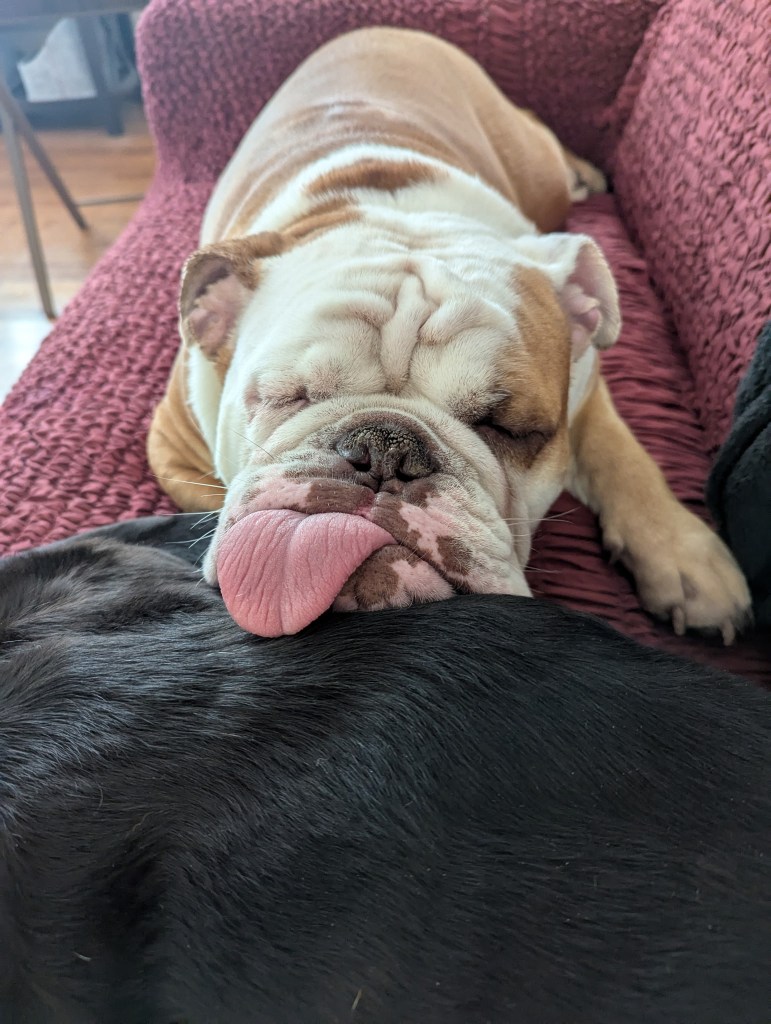
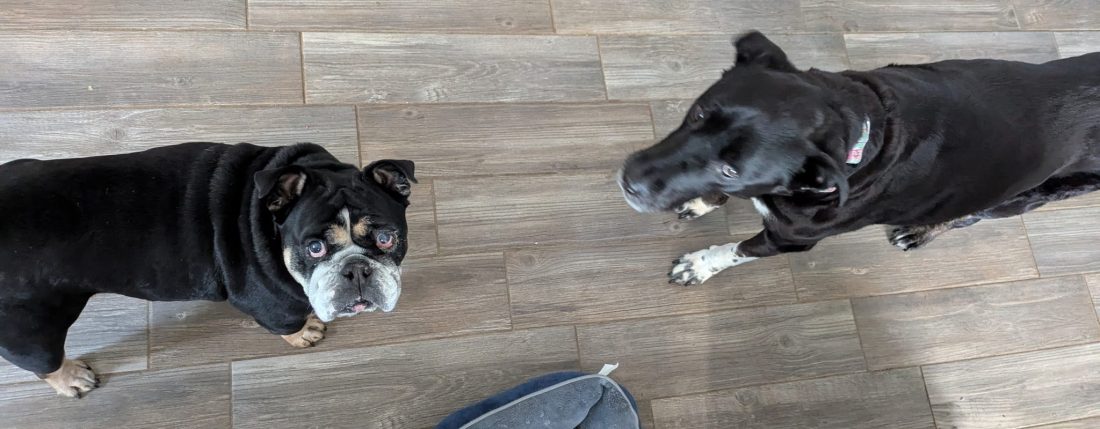
I’ve practiced social-emotional learning long before it had a name. I know the value of a supportive learning environment, and yes, sometimes that means sharing pictures of our five pets to give them a chuckle. It’s about reminding them that I’m here, on the other side of the screen, rooting for them.
Boats, together
As hokey as it might sound, caring is part of the classroom culture I want to cultivate—a culture of care and connection. Teaching can be a lonely profession. Being a professor can be just as isolating. But this online space offers a chance to bridge that gap, to connect people who might otherwise feel alone in their struggles.
It is important that I keep asking them to check in—asking how they’re doing, beyond just the coursework. These check-ins aren’t just about staying informed; they’re about fostering trust and reminding them they’re not alone in this. We are sojourners together this semester. Yes, they will struggle. That’s part of the journey. But the most important assurance I can give them is that I am here. And sometimes, that’s enough to make all the difference.
Old Dog, New Tricks: How Online Teaching Rekindled My Passion for Teaching
When I decided to step back into online teaching after nearly a decade, I thought the biggest draw would be the freedom to work from anywhere—maybe even while spending time with family in Alabama. The idea of crafting lessons with location flexibility sounded like the kind of balance I needed in this season of my life. But as it turns out, the freedom to work from anywhere is just the icing on the cake. What I didn’t expect was how much I’d reconnect with the heart of teaching itself.
It turns out, all of my classes are online this semester. My institution uses Blackboard Ultra—a platform that’s more advanced than the clunky tools I remember from my last online teaching experience. Back then, fostering real connection in an asynchronous class felt nearly impossible. I remember the difficulty setting up video calls and lectures, for example. This time around, though, something clicked. I’m not just uploading assignments and grading papers. I’m building relationships, one announcement, one message, one shared story at a time.
Finding Connection in an Self-Paced World
Online classes can roll along on autopilot if you let them. I could easily pop in, grade assignments, and call it a day. But that’s not how I’m wired. I need to feel connected—to know there are real people on the other side of the screen. I’m also a texter—I have been since the advent of smartphones. Messaging appeals to my introverted nature, the one that has an aversion to phone calls. This same preference drives how I approach my students. So, I make it a point to check in regularly with my students. I send out announcements throughout the week, not just about deadlines and assignments, but to share something about myself and encourage them to do the same—something that reminds us we’re people, that we’re travelers together, not just consumers of virtual learning, detached and mechanical.
One week, I sent out a simple message: “Time to check in. How’s the course going? How are you doing?” I wasn’t sure what to expect, but the responses both caught me off guard and moved me. Students didn’t just give me feedback on the course—they shared snippets of their lives, their challenges, their small victories. A few thanked me for asking about their well-being, calling it “refreshing” to have that kind of interaction in an online class. That’s when it hit me: this wasn’t just about teaching content. It was about building community. (They also mentioned how they struggled with balancing all of their responsibilities with their coursework. That’s coming up in my next post.)
Bruno, Bulldogs, and Building Community
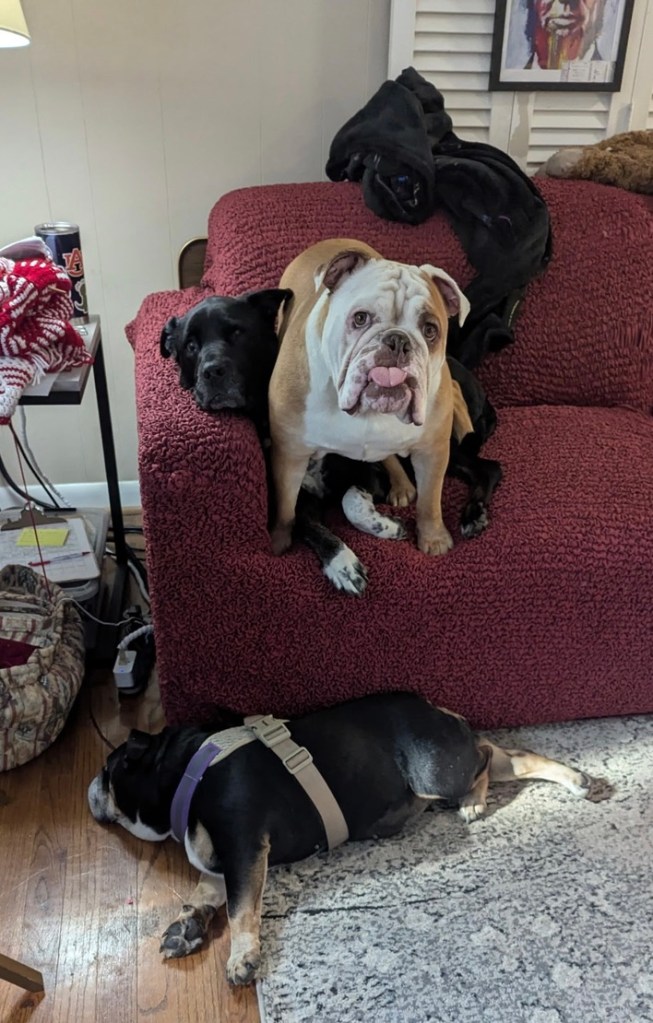
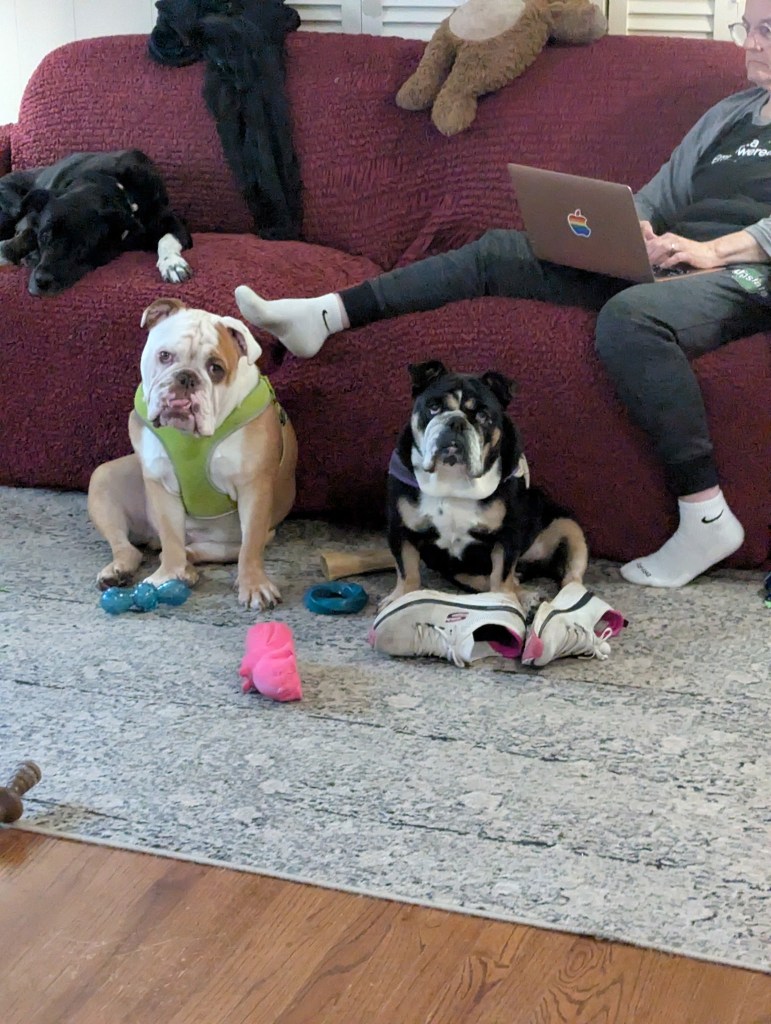
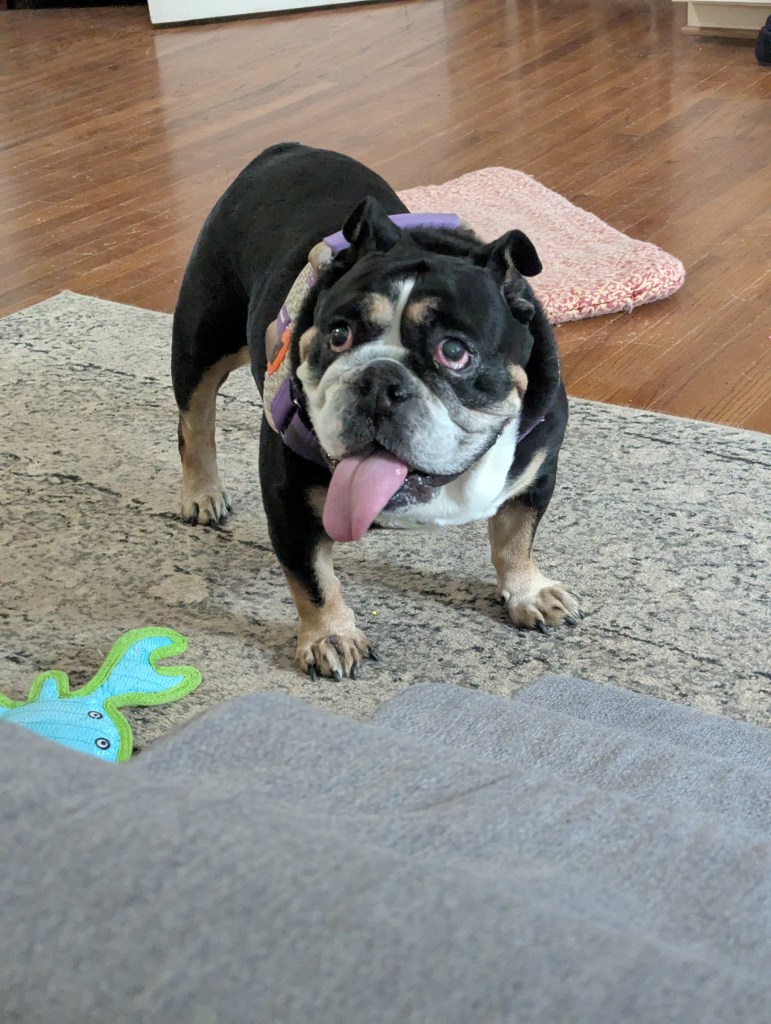
Stories have always been the glue that holds people together. I started sharing little anecdotes about my life—like tales of my dog, Bruno, and our recent adventure adopting an older bulldog, a lady named Marley. I didn’t think much of it at first, but the response was immediate and heartfelt. Students shared stories about their own pets, adding humor and warmth to our digital space. Today, I even shared a picture of “the pack,” and the flood of responses made me realize that even in a virtual space, we could connect as people.
Our Pack: Bruno, Caroline, and “new” Old Dog, Marley
Adapting While in Progress: Revising the Syllabus Mid-Course
Not everything has been smooth sailing. One of my classes didn’t feel as rigorous as it should’ve been. The material wasn’t pushing students to engage deeply, and I could tell it wasn’t encouraging them to read as much as they needed to. So, two weeks into the course, I did something I’ve never done before: I updated the syllabus mid-stream, knowing it could disrupt the flow of the class.
I rebalanced the points on existing assignments and added lightweight quizzes as reading guides. It took me about three days to get everything in order, and then I let the students know what I’d done and, more importantly, why I’d done it. Transparency matters. For a while, no one complained, and I breathed a sigh of relief, thinking the transition had been smooth. But today, I received my first piece of critical feedback.
One student reached out, expressing how overwhelmed he felt juggling work and two classes. Most of my master’s students work in local districts, and I could sense the stress in his message. I assured him that the quizzes were designed as reading guides—more of a nudge than a test—and if he read the chapters, he should be able to complete them as he went along. To ease the pressure, I removed the time limit on the quizzes. It may not have solved all his concerns, but it was important to me that he knew I was attentive to his feedback.
Why insist on these low-stakes checks of reading? Because they signal that the reading matters—not just to pass the class but to engage with the material meaningfully. It’s a gentle reminder that what’s in those chapters is essential, and I want them to take it seriously.
Grading as a Conversation, Not a Chore
I’ll be honest here. I say “reconnect,” but what I really mean is connect for the first time. I went into the teaching profession in 1985 because it was convenient. I had a challenging marriage, a young daughter, and was homesick and lonely. I just didn’t have the time to do the homework to pursue a career in law or chemistry—which I discovered I really liked in college. I went into the field whose subjects of English and history were easiest for me: education. It has sometimes felt as though I have been in a profession not of my freewill choosing for almost 40 years. This made me hold a resentment toward it. I resisted and rebelled against national standards, for example, through curriculum theory writing, taking a cue from other scholars in the field. I had missed—because it never appealed to me in the first place—the only valid reason to become a teacher: students.
Me, working on my online classes with the Pack in place
As I think about it, I love nothing more than being a student, and I have felt respect and fondness for teachers who truly cared about me. Yet I was not this kind of teacher to my students. This is not to say that I mistreated them—quite the contrary. I was the fun teacher for most of my career—the easy grader and the one who drew a little outside of the box. When I arrived at my current institution, a recurring theme that people actually spoke out loud was putting students first. I envied this and knew that I seemed a few steps removed from students. Now, as a non-administrative faculty member, I have a unique opportunity for a second chance—not to reconnect with a passion, but to form one. I find great hope in this—not just for second chances to find something I feel something for, but for redemption itself. This online platform of words—and blessed words are my seeds of connection—allow me to connect to my students and develop a relationship with them and teaching that, for me, is new.
Embracing AI and Lifelong Learning
Another unexpected twist in this journey has been my dive into AI. I’m realistic about it. I use AI tools, and I know my students will too—as will their own students one day. Instead of policing its use, I’m teaching them how to use AI as a tool, not a crutch. It’s part of preparing them for the future, and honestly, it’s been fascinating to explore.
AI As Learning Tool
I’ve been attending workshops, like the one put on by USC Upstate’s CAIFS last week, and I’m signing up for mini-courses through ACUE. There’s something deeply satisfying about being an “old dog” excited to learn new tricks. It’s reminded me that teaching isn’t just about imparting knowledge—it’s about staying curious, staying engaged, and always being willing to grow.
The Puzzle of Online Teaching: Finding My Niche
Part of what’s made this experience so fulfilling is how it taps into different parts of who I am. I’m an introverted Virgo and a bit of a gadget enthusiast. Online teaching feels like solving a puzzle, finding new ways to innovate, communicate, and engage. I don’t often get so absorbed in something that I lose track of time and forget to eat, but when I’m working on my classes, that’s exactly what happens. It’s a sign that I’m not just doing this because I have to—I’m doing it because I really, really enjoy it.
I’m drawing from my background in curriculum design and integrating best practices for online learning. One of the challenges I’ve set for myself is to create personalized video lectures for all my classes. Right now, I’m using pre-loaded videos from previous iterations of the courses, but I’m excited to make them my own—to bring more of my voice and personality into the mix.
Conclusion: More Than I Expected
When I first agreed to teach online again, I thought it would be a practical move—a way to work from anywhere and stay connected to my family in Alabama. But it’s become so much more than that. It’s sparked a passion for teaching, blending the challenge of engaging pedagogy with the joy of connecting with students. Serendipitously, it has opened up new avenues for growth and exploration.
Online teaching isn’t just a job for me now. It’s a space where I’m learning, innovating, and building community in ways I never expected. And as it turns out, this “old dog” has plenty of new tricks left to learn—and plenty of stories left to share from the front porch, whether real or virtual.
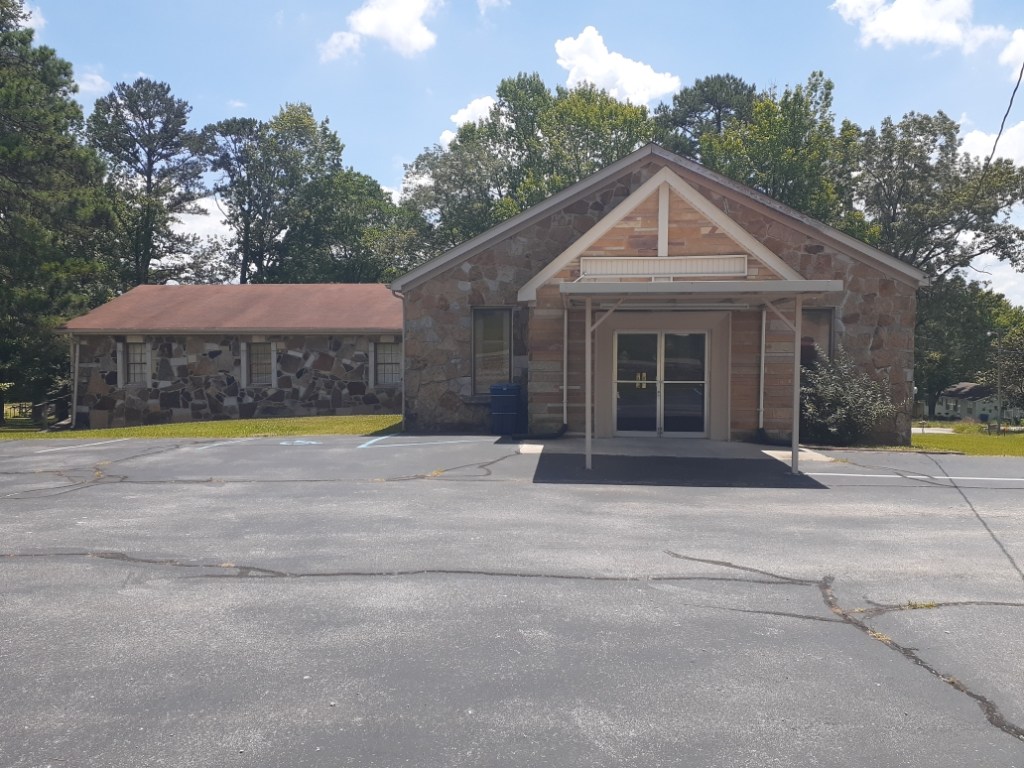
Music has always been more than just entertainment for me; it’s a pathway to the deepest parts of myself, a way to explore the complicated emotions that shape my inner being. Growing up, singing hymns a cappella in our small church was an unforgettable experience. I still recall sitting on a pew in the third row, right behind the song leader’s wife, with my friends Lynne and Susan. Our young voices would blend together in harmony, and Mrs. Greenhill would turn around, a twinkle in her eyes, to compliment our singing. “I heard you girls singing that alto,” she’d say. Those words of encouragement still resonate with me today.
My home church, Littleville Church of Christ, Littleville, Alabama
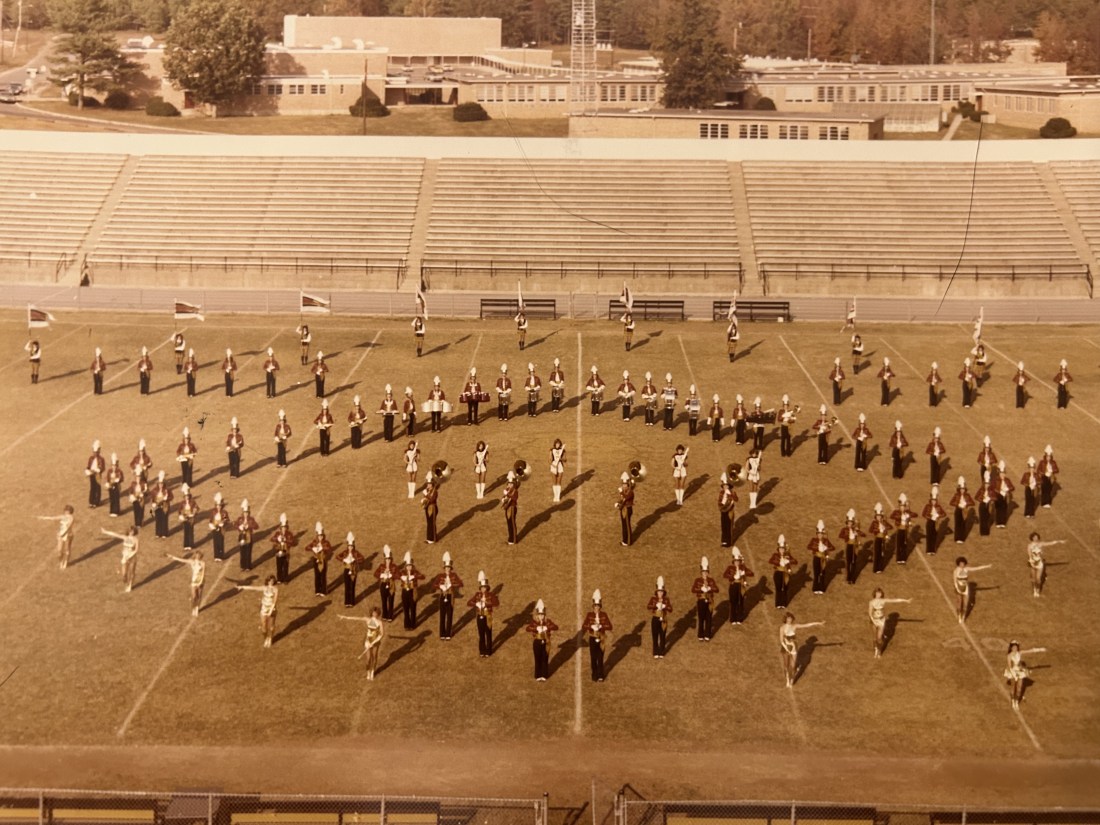
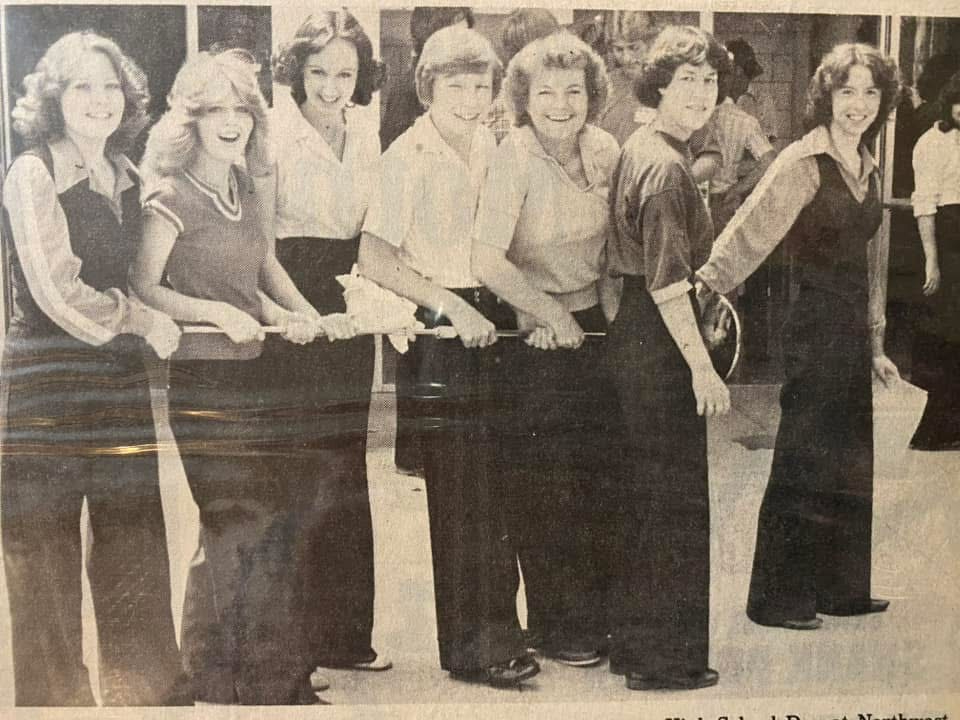
High school choir–the RHS Singers–was an incredible experience. We developed our singing abilities and musical knowledge as we discovered the pure joy of making music together, especially when we got to perform. I remember how proud I was when I wore the stage choir outfit made from gaberdine with matching rayon scarf that my Mom had sewn on her Singer sewing machine. I still remember the songs. And, as I’ve previously explored in my reflection on the RHS Marching 100, music has always held a significant place in my life. These experiences deeply shaped my love for music and continue to influence me today.
This strong connection to music was reaffirmed by my recent rediscovery of my old iPod. As I wrote in “The Playlist of Me: Forgotten iPod, Rediscovered Self,” my iPod held a collection of songs carefully chosen over time, each a reflection of a specific mood or memory. Listening to that forgotten playlist for the first time in a decade felt like uncovering a long-lost piece of myself. It was a powerful reminder of the abiding impact music has on my spirit.
Joyful times! A group of RHS Singers being silly. We were “setting up” the microphone stand. I am third from right.
Darker Days
During my junior year, my boyfriend, who later became my husband, began to increasingly feel threatened by the time I spent with my classmates and the joyous importance of music in my life. Through subtle and not-so-subtle manipulations, he pressured me to miss choir and band gigs, culminating in his attempts to prevent me from going on an upcoming band trip to Washington D.C., a dream of mine. Heartbroken but worn down from struggling, I quit both. Losing these creative and social outlets devastated me, leaving a dark hole in my life where music and my connection with my classmates had once been.
After I graduated and we married, I began to have recurring dreams, vivid and unsettling. In these dreams, I would find myself transported back to my high school days, immersed in the music, the joy of playing my instrument washing over me. But the comfort of the dream would always be shattered by the harsh reality of waking, leaving me with a profound sense of loss and longing.
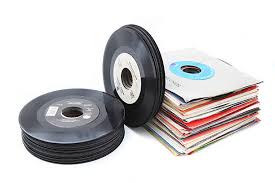
My marriage, unfortunately and unsurprisingly, amplified the unhealthy power dynamic between us. When we divorced, I finally felt free, but the loss of my 45s—taken from my belongings while I was packing—left me angry and heartbroken. Those records, collected during cherished weekly trips to town with my mom from as far back as I can remember until I got married, traced and preserved the years of my life growing up. Their disappearance wasn’t just a loss of possessions; it was a loss of something irreplaceable. I’ve been trying to rebuild that collection ever since, but those original records will always be gone. My only solace was that I no longer had the homesick dreams.
A similar blue plastic record holder to mine.
Looking back now, I see how, over time, I had become disconnected from vital parts of myself—choir, band, and even my cherished collection of 45s, all tangible links to my teenage years. The impact of the loss extended beyond the immediate. At this point, you may be thinking, “Well, lady, why didn’t you just play the radio or go to a concert? Why so dramatic?”
I continued to listen to music, of course, but it wasn’t the same. It was as if I was merely going through the motions, like a writer who stares at a blank page, unable to truly engage with the creative process. I didn’t realize how much I had distanced myself from the deep connection I once felt with music until I reconnected with it recently.
Rediscovering the Magic
The silencing of my musical expression that had been made complete during my marriage left a void in my life. However, the yearning for music never truly subsided. Years later, I found myself drawn back to the familiar comfort of church choir. The initial hesitation soon gave way to a renewed sense of joy as I rediscovered the power of music to uplift and connect. My voice, once silenced, found itself again. People would remark, “I’ve never seen anyone as happy as you look when you’re singing.” These simple observations resonated deeply, confirming that I had found my way back to a source of profound happiness and fulfillment.
Rediscovering the magic of music has brought unexpected joys. Sharing my father’s love for the music of his youth has been a deeply rewarding experience. As he hummed a long-forgotten tune for me, I would embark on a digital treasure hunt, searching for that elusive melody.
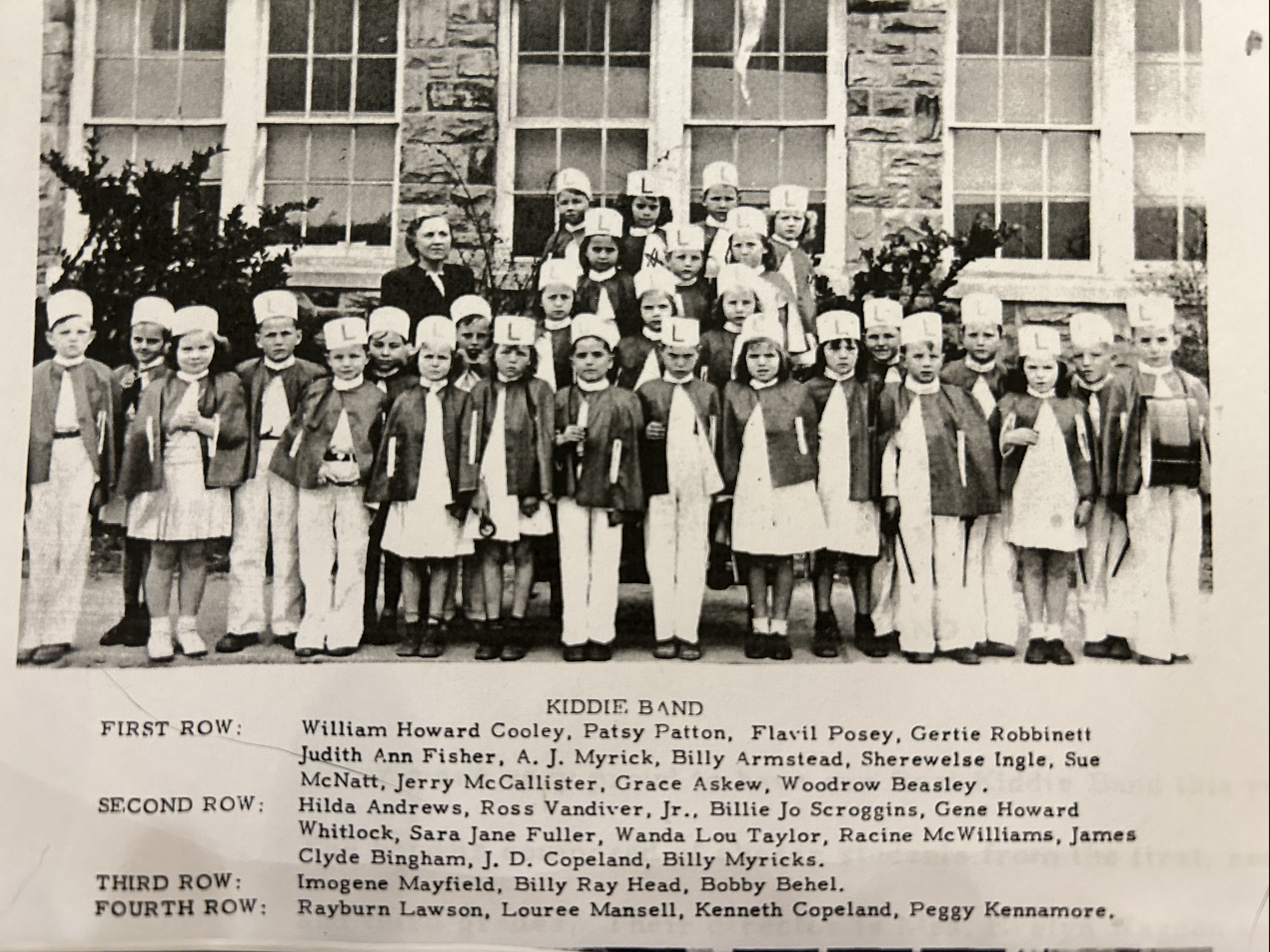
Littleville School Kiddie Band, 1949. Daddy, Gene Howard Whitlock, is in the second row.
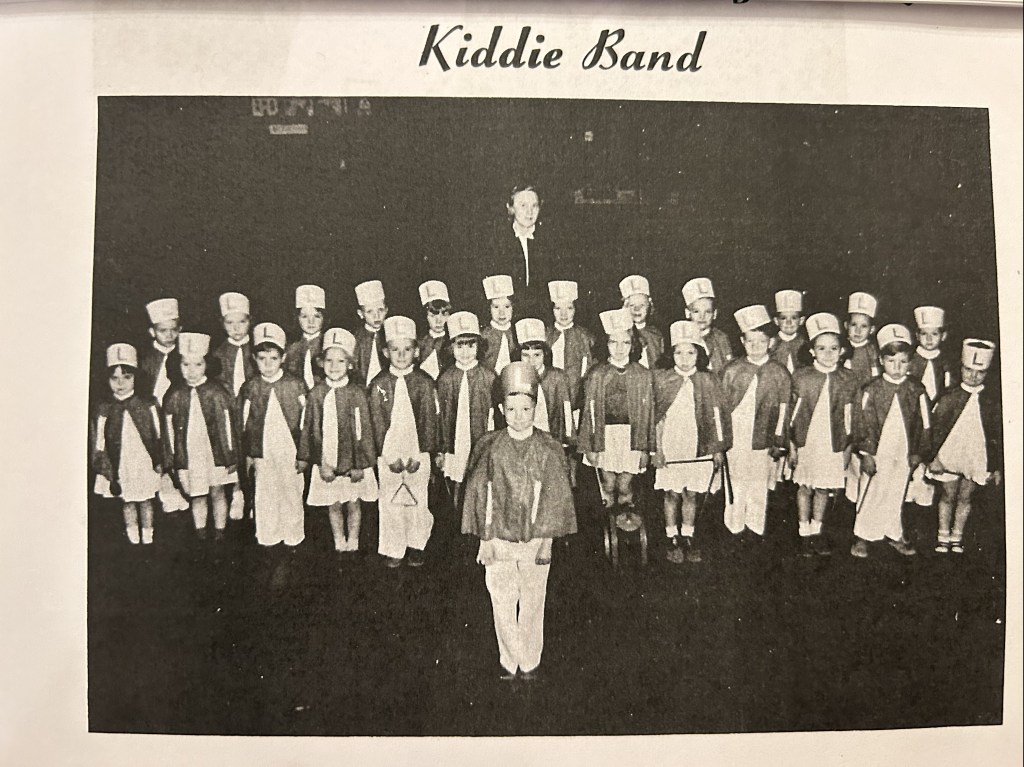
1950 Kiddie Band. My Mother, Wonell Fisher, is in the back row, third from left.
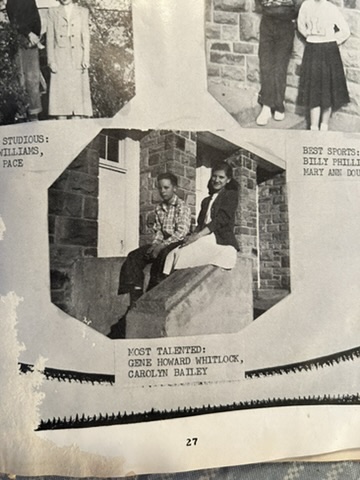
Downloading and burning CDs for him became a treasured ritual, a way to bridge the gap between generations and share a piece of his past. Both my parents fondly remember their days at Littleville School, where they had both been members of the Kiddie Band – a cherished program that sadly did not exist by the time I arrived. My father, a natural performer, particularly enjoyed his time in the band, relishing the opportunity to entertain the crowd. While looking through old yearbooks, my son and I discovered that Daddy had been voted Littleville School’s Most Talented in 1953–based mostly on his performance of Mr. Sandman–when he was in seventh grade. Mother had been a cheerleader, but that is another story.
Littleville School 1953 Most Talented, Gene Howard Whitlock
The resurgence of vinyl, with its emphasis on the warmth and character of analog sound, has also brought a new dimension to my musical journey. Listening to records again evokes vivid memories of my childhood and hours spent browsing records at TG&Y with Mom, while also connecting me to the music that shaped me. Growing up a lonely kid in a small town, I spent many Saturday nights sitting in the dark listening to Wolfman Jack on my folks’ RCA console stereo. For years, I didn’t have a record player, but Sarah found one on Facebook Marketplace and encouraged me to buy it, convinced it would bring me peace and happiness. The reality, however, has been more complex, stirring emotions and reflections I hadn’t expected.
Listening to old hymns like those I sang in the little brick church house evoked a flood of powerful feelings. The harmonies, the raw emotion, the memories of singing alongside Lynne and Susan on the church pew, all come rushing back. After witnessing me tearfully singing along with the Chuck Wagon Gang, Sarah gently noticed that while she had anticipated a sense of peace and happiness, she had not expected the tears.
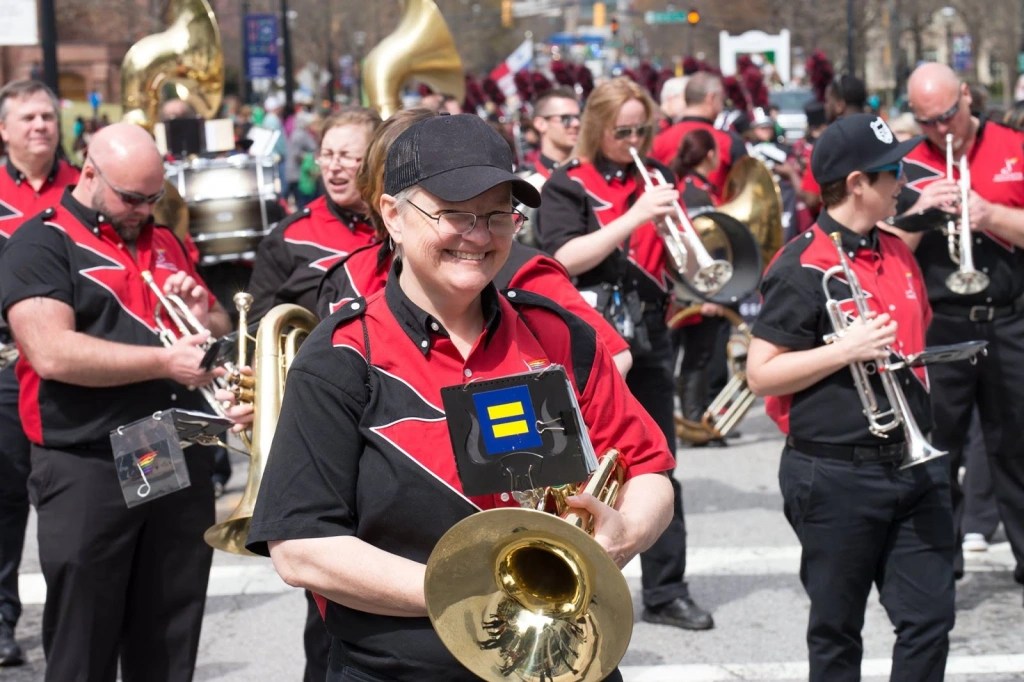
Ready to march in a parade with the Atlanta Freedom Bands with my mellophone
In addition to church choir, joining the Atlanta Freedom Bands provided a powerful outlet for my musical expression. The first time I marched in a parade after more than 40 years, the music surged through me, a wave of joy and liberation washing over me. It was as if a dormant part of my soul had finally awakened. Community band serves as a poignant reminder that it’s never too late to rediscover and nurture our passions. Even if it harder to march a mile uphill forty years when I’m older.
Looking back, the unhappiness of that earlier period cast a long shadow over my understanding of music’s role in my life. It seemed to be a casualty of that tumultuous time. Yet, amid the pain and regret, an innocent, peaceful memory emerges. In stage choir performances way back in 1979, I can still see Robert, his guy’s choir costume accented with a 1920s white straw boater hat, dancing the routine with his partner (I, a product of my fundamentalist upbringing, was decidedly not a dancer!). They were performing to the choral version of “Close to You” by The Carpenters. Robert, a good boy from a troubled background, died a few years ago. I wrote about it in a previous blog post: For Bob.
I can’t hear “Close to You” today without that sweet memory, and sometimes its poignancy is so powerful, I cry. For him, for us, for episodes of happiness amid the turmoil of two people who married far too young – the passage of time allows me to see without the lingering pain. This, in the end, is what music truly means to me: its magic, mysterious, and soul-stirring power to bring me to gentleness and peace. It helps me to heal by reminding me of the beauty and fragility of life. Through music, I cherish the precious moments of joy from even the darkest times. And, I must admit, even though I have been to the nation’s capital many times, I still regret not going to D.C. with the band.
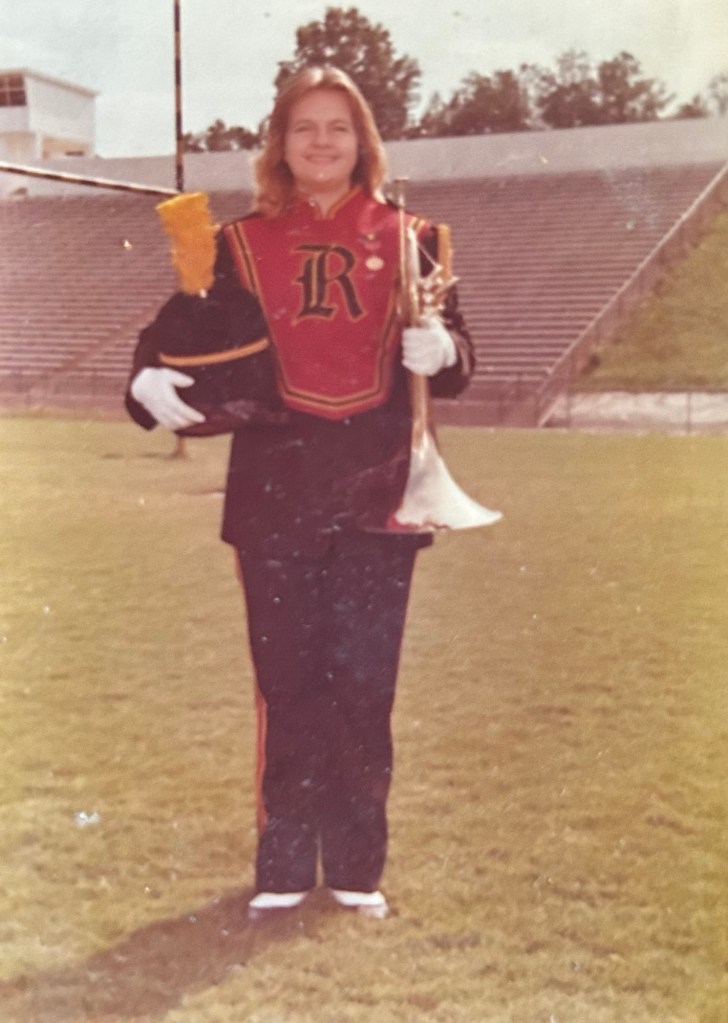
The first time I saw a Russellville Marching 100 band uniform, my young life’s goal was to wear one! Here I am, complete with gloves, spats, and mellophone. Notice the old shaker hat with plume and the medal for winning the Greatest Bands in Dixie Competition in New Orleans.
I Found My iPod: Rediscovering Happiness Through Music, Part 1
Last year, I completed an End of Life (Death) Doula program with INELDA, the International End of Life Doula Association. The experience itself deserves its own post, but one lesson from the program keeps coming back to me: the role of music in creating peace during life’s final moments.
As the person in our care begins their end-of-life journey, we were advised not to play their favorite songs as background music. At first, this advice seemed strange to me. After all, wouldn’t a familiar melody bring comfort? It sure does for me! But then it was explained: favorite songs are deeply personal and emotionally charged. They can evoke strong memories, longings, or attachments that might not be conducive to a peaceful transition. Instead, we were taught to choose ambient tones or tranquil soundscapes to foster an atmosphere of calm and rest.
Not being a doula or having experienced end-of-life caregiving firsthand, this suggestion went against my intuition. The more I thought about it, though, the more sense it made. If it were me, I could imagine holding off my own passing just to hear my favorite song finish! The idea stayed with me: music is powerful, not just for its personal connections but for its ability to transcend memory and emotion, helping us navigate transitions when we need it most.
This thought was still on my mind when I stumbled across something I hadn’t seen in years—my old iPod.
From Records to iPods: A Musical Journey
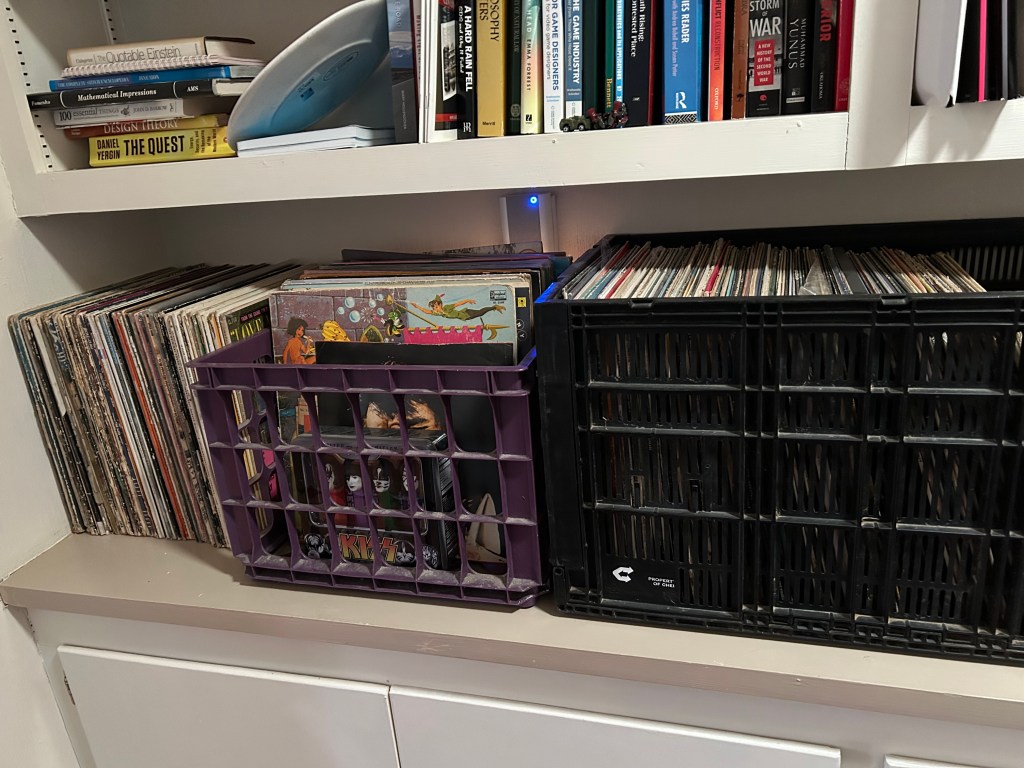
As a Generation Jones Boomer, I’ve collected music in just about every format imaginable. I started with records and CDs, eventually amassing hundreds of them. Many of my favorite records were handed down from my parents when they got rid of their stereo. I didn’t have a record player either by then, but I kept the albums for the memories. Over time, I replaced many of those records with CDs, though I had to replace some of those twice after accidentally leaving my CD holder in a car I sold.
Then came the 2000s and the rise of digital music. When Apple introduced the iPod in 2001, I thought it was the pinnacle of technological advancement. I was as excited about it then as I am about AI now–granted for different reasons. I finally got one in 2005, and that summer, I spent two weeks downloading every CD I owned onto it. I painstakingly created playlists for every mood and occasion, collecting songs I thought I’d never hear again.
My record album collection
By 2012, I had curated over 3,000 songs. I refused to sync my iPod with updated iTunes software because it wouldn’t preserve my playlists exactly as I had arranged them. They were perfect, and I wasn’t about to mess with perfection.
But as MP3s, smartphones, and streaming services like Spotify and SiriusXM gained popularity, iPods started to feel outdated. I used mine occasionally for chores around the house, but even that became less frequent. By 2022, Apple officially discontinued the iPod, and mine had long since stopped holding a charge. Eventually, it wouldn’t turn on at all. But I couldn’t bring myself to discard it permanently—it still held my songs.
Rediscovering My iPod
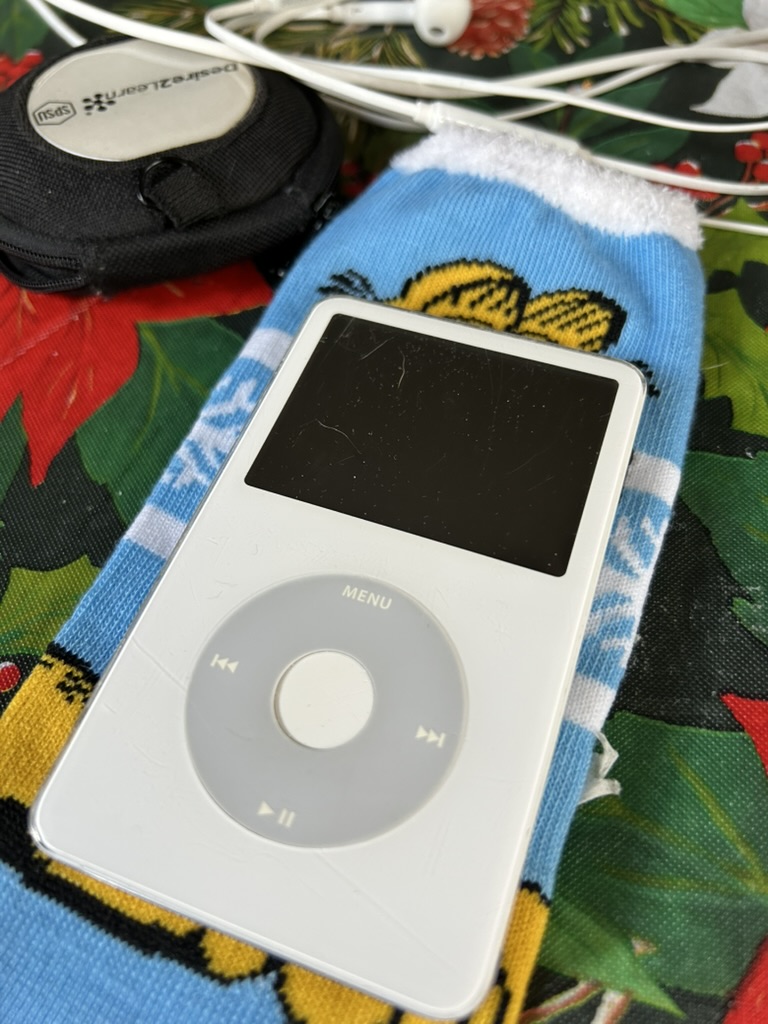
Last week, while searching for batteries in a drawer, I came across my old iPod again. Out of habit, I plugged it in, hoping for the best. The Apple logo flickered to life for a moment, and then… nothing. “Ugena,” Sarah said, “we live two minutes from a computer repair shop. Take it over there and see if they can fix it.”
The tech guy at the shop popped the back plate off, took one look, and said, “It’s your battery. See how it’s puffed up like a pillow? It should be flat. That’s an easy fix.” I was overjoyed.
My iPod
When I picked it up a week later, I could hardly contain my excitement. After nearly a decade, I saw my playlists on the screen again. I navigated the wheel (nothing like the sound of those clicks as it turns!) to find the perfect song for the moment, and when “Love Grows (Where My Rosemary Goes)” by Edison Lighthouse began to play, I felt an overwhelming sense of contentment. I was home.
More Than Memories
For me, music isn’t just about nostalgia. While certain songs remind me of people or moments—like Elvis always bringing my mom to mind—it’s the music itself that moves me. The key changes, the minor chords, the walls of sound (a la Phil Spector) all stir something in me that feels bigger than words.
And yet, sometimes it is the words. A perfectly turned phrase can be so compelling, so beautifully crafted, that it draws me in completely. It stirs a visceral reaction, and I can’t help but sing along. And yes I do grab a hairbrush for a makeshift microphone. At that moment, the three of us–mind, body, and spirit–are in sync with the melody and words. During my free concerts, whether in the shower, the car, or empty house, my old romantic self rises to the surface, caught up in the sheer power of the lyrics.
This emotional connection reminds me of Howard Gardner’s theory of Multiple Intelligences from his 1983 book Frames of Mind. One of these intelligences, musical intelligence, refers to the ability to recognize, create, and emotionally connect with music. Though the theory is considered pseudoscience by some, it resonates with me. It helps me explain feelings that go far beyond simply liking music. What I feel is deeper, more profound—something that connects to the core of who I am.
Rediscovering my iPod wasn’t just about finding old favorites. It was about reconnecting with a part of myself—a good and strong piece of myself that, during my distractions with job advancement and the trappings of success, had been suppressed. During those times, I was lost, adrift, unaware of how much I had let go of what truly anchored me. But when the music is back in my life, it’s as if I’ve found my way home—a reminder of who I am and what brings me joy. In the words of the old song, “Was blind, but now I see.”
The last 5 random songs played on my iPod while I’m writing this:
Bad Romance, Lady Gaga
My Heart Skips a Beat, Buck Owens
Silver Wings, Merle Haggard
On the Street Where You Live, Bill Shirley dubbed for My Fair Lady






 The Front Porch Professor