Down Home Stories of Life, Learning, and the Road Less Traveled
Author: Ugena Whitlock
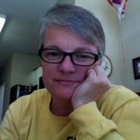
Welcome to The Front Porch Professor, a space where life’s reflections, stories, and lessons come together with a touch of Southern charm. I’m a professor, curriculum theorist, and lifelong storyteller. This blog is my front porch—a place to share essays and musings about the journey of life, learning, and the road less traveled.
As someone in the late stages of my academic career, I’m embracing the transition to what’s next, finding joy in the simple pleasures: driving my Miata down winding roads, collecting antique typewriters, playing the ukulele, and soaking up the beauty of the South.
Here, you’ll find thoughtful observations, a dash of humor, and reflections on the moments that shape us as learners, teachers, and human beings. Pull up a chair, grab a cup of coffee, and let’s share this journey together.
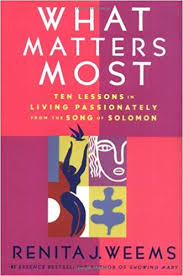
My Spiritual Formation this week is from What Matters Most: Ten Lessons in Living Passionately from the Song of Solomon by Renita Weems. She takes takes the “ten lessons” from the Shulammite woman’s fearless living and loving in the Song. Interestingly, I’ve heard the Song of Solomon called “The Porn Book of the Bible,” which reinforces masculine patriarchal dominance of Scripture. Weems allows the Shulammite woman to claim her identity through characteristics of liberation. Three quotations from this week’s reading on Choice stood out to me. Here they are with my reflections: The Shulammite risked ridicule, criticism, challenge, failure, and embarrassment for the possibility of living a bigger life than the one society assigned to her as a woman (Kindle, p. 80).
Societal rules are powerful, so powerful that we internalize them and regulate ourselves. Growing up, I wanted to be a CIA agent or a lawyer. It was inconceivable to me, my parents, my friends—everyone who knew me—that I would not go to college on a scholarship straight out of high school. But gender role norms are deeply embedded in how we think and act and move about in the world. By my junior year I was “engaged,” in a relationship just like the other girls. I was married at age 18 and had a baby when I was 19. I look at those numbers and shudder—so young! I gave up my own bigger life.
Being passionate means living your life fearlessly. What if I make a mistake? What if something goes horribly wrong? What if I lose more than I gain? What if I make a fool of myself? (p. 83).
Before age 35, I had never lived outside of Alabama. That year, I got divorced, came out to myself, got a job at the Louisiana Department of Education, enrolled in a doctoral program at LSU, and moved to Louisiana. After escaping with my identity—which I had fought for 16 years to hold onto—I did not once ask myself these questions. Like the Shulammite, I was living fearlessly. However, and this is important, my communing with God was a one-way conversation. Although God was ever-present with me, I continued to press through under the delusion that I was accomplishing these things by myself. I give thanks now in retrospect.
But what if the path you’re about to take leads you off the beaten path and falls outside the norm of what others deem acceptable? (p. 87).
On the day I moved to Louisiana, my mother was seeing me off. It was a poignant moment. Two women whose love for one another most often went unspoken, said goodbye. “Mother,” I said, “I’m sorry. It’s hard. I just…” trailing off, not knowing how to speak the things that were in my heart about my life, about her, about all the years I felt I had lost. She thought for a minute, trying hard to blink back tears so that I would not see them—something I learned years later she had often done. “You go ahead. I know you need to. We always knew you’d leave one day.” The beaten path, my parents knew, was not for me, no matter how hard they had tried—through church, modeling, instructing, shaping—to guide me along it. That day, when the strongest women I have ever known blinked back tears and let me leave, was the day I began to live without a net, yes, but in vivid color.
Even though this is one of the happiest moments of my life, I never published this photo because of how I looked. Doing so now is an act of love, kindness, and prayer.
Two words concerning prayer life resonate with me this week: intention and attention. I sometimes fret about my prayer life, especially when I hear my fellow seminarians openly talking about theirs; I even have a professor outside of this class who returns our attention to prayer life. This week’s reading reminds us that naming our longing to be always in relationship with diving (intention) and by paying attention to where we see God in our daily life (attention) remind us of divine presence and grace.
Reflecting this week, I sought connections between my praying self and embodied self. I realized that an important connection is the esteem in which I hold my spiritual and physical being–or the regrettable lack thereof. So I would like now to discuss body issues and return to embodied praying.
I came across two pictures of myself a few months ago. The first was of myself on my wedding day, taken by my new husband. It was a snapshot, and I was looking at him over my shoulder. My first thought was how young and beautiful I was–and at the time I did not realize it. I was never not weight conscious. Realizing the many gaps of pertinent information here, I will say that my husband, who struggled with his sexuality throughout our marriage, had no words to express his inner turmoil; however, he did have words to turn his issues around toward me. One example: I never fixed a plate of food for myself in sixteen years that he did not look at and comment about my weight. As you can imagine, this affected me deeply. I have apologized to the girl in the first photo.
The second photo is of me at about age 37. I am bloated and look unhealthy. No longer married, working on my doctorate, in a new relationship, starting a great adventure in a new state–my body tells a deeper tale. It is one of insecurity, uncertainty, and a different kind of unhappiness. More gaps, I know, but I was struck by this picture in which I looked like a completely different person, one who was dancing–and apparently eating–as fast as she could. I apologized to the beautiful woman in that picture, too.
Reaching middle age–I am 55–has forced me to communicate with my body. I am aware of new aches and pains; it takes me a few seconds of walking before the muscles catch up (I call it having a “hitch in my getalong'”); and I am having to become acquainted with the grayed and wrinkling woman in the mirror. Thing is, I know this body has fewer days left than it has experienced, and that’s ok. When I do see that lady in the mirror, I assure her that she is beautiful and that I appreciate her–that face, that body. I promise her to live in such a way that I will mindfully value her now, in this moment, so that I never look back with regret at failing to do so.
This is what praying with my body feels like–gratefulness to God for my body as a presence in God’s divine creation–no fear of scales or mirrors or photos. Just thankfulness for this familiar likeness.
Coda: I read somewhere that 65% of women report that they have cancelled a doctor appointment because they do not want to step on the scale at check in. I myself have done this. Yes, read that again because it is in fact incredulous. Last week I had my check up. In I walked with the nurse who held my chart and directed me to the scale. “We have to do this,” she said, “but don’t worry, it’ll be over in a minute.” I boldly stepped up on the scale, keeping my shoes and jacket on this time. “It’s ok,” I replied, “I’m good.”
As I write this, another heinous mass shooting has taken place by white supremacists, this time in New Zealand. Almost 50 of our Muslim neighbors were murdered and 20 seriously injured, killed while they were praying. This attack is on my mind and heart as I contemplate this week’s Core Forum on prayer. As one public figure tweeted this morning, “Whether it is antisemitism in Pittsburgh, racism in Charlottesville, or the xenophobia and Islamophobia to day, violent hate is on the march at home and abroad….Silence is complicity.” I include this because the connection is made to multiple groups that are targeted for no other reason than hatred of any particular difference. The city where this atrocity occurred is called, ironically or not, Christchurch.
I have a chaplet that has inspired my prayer this week. If any of you are like I was and do not know what a chaplet is, it is a kind of small rosary–a prayer object–that usually has a saint medallion/object attached to the beads. Mine has two medallions. The first is St. Francis, whose prayer I have always loved, and the other, newer one is Julian of Norwich, whose mystical experiences inspire me. Julian’s words also comfort me like a gentle voice and touch soothes a child: All shall be well, and all shall be well, and all manner of thing shall be well. I also made this quote my phone wallpaper–a postmodern engagement with the 15th century mystic. Still, when I see the words, I pray them. I’m thinking Fundamentalist Evangelicals do not a rule pray chaplets or contemplate icons in our prayer life. That’s unfortunate because for me it has deepened my prayers. Henri Nouwen says, “Icons…lead us into the inner room of prayer and bring us close to the heart of God” (p. 61). Whether icons are kinesthetic like mine, or natural, they open us to the Mystery of God’s presence.
The politician’s quote, above, suggests to us that the end to hatred and violence–peace–comes at a great price: our psychological, emotional, and embodied engagement. I am reminded that when the messages of MLK, JFK, and RFK turned from civil rights to peace, their lives were extinguished. The work of peace is a work of justice, and justice is the nature of God. Thoughts and prayers are not acts of peace in the world; prayer is that place of mystery where we might know that all will be well. Prayer is the interior castle (Teresa of Avila) where we are lost with and strengthened by our Beloved. Prayer is not what we do for the oppressed; prayer is what we do for ourselves so that we can have the strength to do the hard work of justice. God waits for us.
Coda: When John Lennon’s “Imagine” was released in 1971, it scared people–Christians who feared the new peaceful, global social order it suggested. In an interview with Playboy magazine, Lennon said that Dick Gregory had given Ono and him a Christian prayer book, which inspired the concept behind “Imagine.” A prayer book. He said,
The concept of positive prayer … If you can imagine a world at peace, with no denominations of religion – not without religion but without this my God-is-bigger-than-your-God thing – then it can be true … the World Church called me once and asked, “Can we use the lyrics to ‘Imagine’ and just change it to ‘Imagine one religion’?” That showed [me] they didn’t understand it at all. It would defeat the whole purpose of the song, the whole idea. (Wikipedia).
They were right to be scared, for it calls for an end of systems of domination, by definition the domain of the dominant culture. I wonder if we are any more willing to pray it today.
Maybe at some point in your life you have been called by God for some purpose. If you have and you realize it, all I can say is wow. How did you know? Did you hear a voice? Did you have a feeling around your heart or stomach area? Was there only circumstantial evidence?
A call is different from a calling. I’ve heard teachers and nurses say that that they felt a calling toward their profession; a calling is a strong urge toward a particular thing, usually a vocation. A call is a divine summons. Let that sink in.
I grew up in a church that did not believe in divine summons or of being led by the Spirit. We were fundamentalist Christians who believe that the Bible is literal, mostly, unless it isn’t. People who talked about being called by God to the ministry were obviously Jesus freaks, most likely Baptists. And then, again, God laughs. Yeah, I was called. I’m not sure if I can stress how hard it is to understand that a call is a call when you don’t believe in calls at all. I think I would compare it to a dog being leashed for a walk for the first time. At first, it’s like, “Hey, wow, what is this I’m feeling?” And then, “Wait a minute….what is this thing?” Next, is pulling back and tugging, followed by flailing around from side to side. Until finally, you’re completely worn out from fighting it. Then you’re ready to walk. This is the first part of a process that is known as discernment.
Have you ever felt like God was just putting things in your way? Not obstacles, more like lit up “Entrance” signs in strange dark rooms. In that situation, what are you going to do but go in? That’s what happened to me. It started when I read the liturgy at church one Sunday morning (nope, I’m not fundamentalist anymore, nor Baptist either). I felt that leash for the first time. I’ll just take a course on Progressive Christianity, I said. I like this course; I’ll see if I can find a really good online program. Then, if the M.A. in Christian Ministry is this rewarding, I want to pursue the twice-the-credit-hours Master of Divinity. What was God putting in the way? Time, opportunity, scholarship support, people who kept saying, “Oh! You’d be so great at ministry!”
So what about the pulling back and flailing around part of this walk? It’s pretty much been ongoing to this point. I mean, I have a job, a doctorate, and an established writing presence in my academic field. I’m at the place where people usually arrive, not where they jump off from. Luckily, the first class you take in seminary is called Spiritual Formation, where you learn that discernment is being still and listening for God. It’s ok not to know what to do, just don’t get tied up in knots over it, which is my default. When I got serious about listening to God, I settled down and started walking.
So here I am: MDiv student at the McAfee School of Theology. I’m still working full-time at a job that is truly not bad. I’ve put academic writing on pause until the next page is revealed to me, no pun intended. That’s the background of it, and I think it’s sufficient for now.
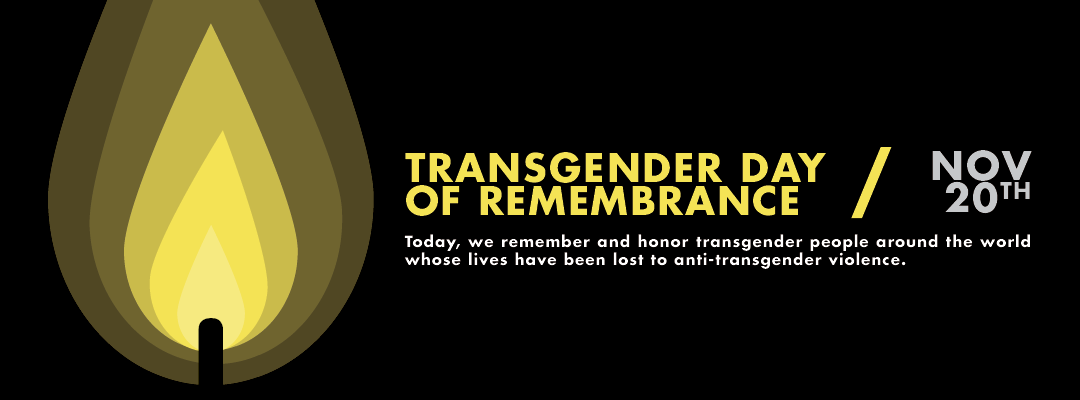
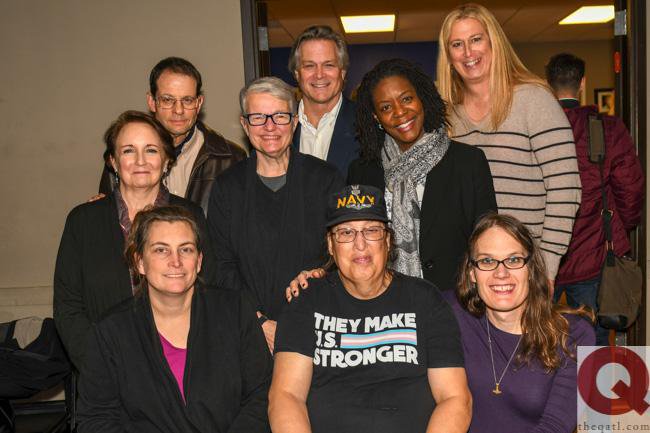
This week a group of us from Pilgrimage United Church of Christ (PUCC) went to the 20th Transgender Day of Remembrance ceremony in Atlanta. Transgender Day of Remembrance (TDOR) is an observance every year on November 20 that honors the memory of those whose lives were lost in acts of anti-transgender violence. We went to pay respect and to support two of our members, Monica and Darlene. Darlene organized the ceremony and is a strong presence in Atlanta’s transgender community. Her wife Monica is a Navy Vet who served on a submarine. Monica is extremely proud to be a veteran. She wore her USN cap when she was recognized at Atlanta Braves games–and when she was an Atlanta Pride Parade Grand Marshall this year. Monica designed the Transgender flag, below. The original is in the Smithsonian in D.C.
Transgender Flag, Designed by Monica Helms, USN, Ret.
The first thing you should know is trans people are murdered, and when they are, they are victims of trans-related hate crimes.
These are persons who often leave homes so that they can live their true identities, their true selves, often at great cost to themselves. And when they die, as I learned at the Atlanta observance, that identity is stripped away from them. How? Families, obituaries, police reports, newspapers refer to them by their “dead names,” their name before transition. What difference does that make? Well, after having fought so hard for true self, dead naming erases that self in a final, crushing blow. Still not clear? Ok, when cis-people (those of us whose gender identity matches the one we were assigned at birth–e.g., I am a woman, who was assigned female at birth) drop dead in a parking lot, our drivers license matches our reality–both our name and our gender would be the same. The paper reports that “Ugena, female, 55, Marietta” was found, etc., etc. If I have been living my true self as Eugene for the last decade or so, guess what? The paper would probably still report Ugena’s death. My funeral service–if my family were not too ashamed to have one–would be a farewell to Ugena. Would anyone remember Eugene? Would anyone notice or mourn me? That is what TDOR is for–to remember and remind us why it is important to remember.
The Transgender Day of Remembrance seeks to highlight the losses we face due to anti-transgender bigotry and violence. I am no stranger to the need to fight for our rights, and the right to simply exist is first and foremost. With so many seeking to erase transgender people — sometimes in the most brutal ways possible — it is vitally important that those we lose are remembered, and that we continue to fight for justice.”
– Transgender Day of Remembrance founder Gwendolyn Ann Smith
The TDOR service is, as are most funerals really, for the living. For members of the transgender community, it provides critical space for both joy and lament, laughter and tears–that for all the struggle and turmoil and oppression, they live. Not just live, but prevail. As an outsider–an ally but still an outsider–I observed these persons comfort and lift one another up. Those of us there as friends, family, and allies needed to see the strength and vibrance of a community that asks only a life of liberty, justice, and dignity. We needed to laugh and break bread together–which we did Atlanta style with Fox Brothers Barbecue. When you think about it, there are a few times in life that an opportunity for justice, hospitality, and compassion–an “integrity moment”–taps you on the shoulder. This is one of them.
Every Transgender Day of Remembrance observance concludes with a Reading of Names to honor each victim (that’s the word used at the GLAAD TDOR link). This was done, followed by a tolling of the bell, for each of the twenty-five U.S. dead and for the unnamed trans people who died violently while incarcerated. Here are their names, and if you scroll to the end of this post, there is a screenshot of the TDOR program with their photos.
Brooklyn BreYanna Stevenson
Rhiannon Layendecker
Christa Leigh Steel-Knudslien
Viccky Gutierrez
Celine Walker
Tonya Harvey
Zakaria Fry
Phylicia Mitchell
Amia Tyrae Berryman
Sasha Wall
Carla Patricia Flores-Pavon
Nicole Hall
Nino Fortson
Gigi Pierce
Antash’a English
Diamond Stephens
Keisha Wells
Cathalina Christina James
Sasha Garden
Vontashia Bell
Dejanay Stanton
Shantee Tucker
Londonn Moore
Nikki Enriquez
Ciara Minaj Carter Frazier
Those Unnamed
Another of the photos below shows the number of deaths by state. Georgia has one: Nino Fortson was killed in Atlanta on May 13. Here is a description of Nino from the HRC web site:
Fortson, 36, also went by names Nino Starr and Nino Blahnik, and was a gender-expansive individual…An active participant in Atlanta’s ballroom scene, Fortson was a member of the House of Blahnik, a national organization serving LGBTQ performers of color. Fortson was known for walking in the “Butch Realness” category.
A “gender expansive individual”–I wonder why it is that more of us don’t understand this as a gift, or a superpower? The last photo shows the number of known violent deaths of transgender persons, worldwide. There are 309. The U.S. ranks third. I would really like to live in a world where we don’t need to have another TDOR, but sadly, we seem to be moving in the other direction. Step back and think about why there is such a violent need to legislate gender. I can’t think of a reason. Yet, see articles like this one and look up #WontBeErased:
I’m finding whenever it gets really discouraging to contemplate how humanity treats one another, it is helpful to turn to Mister Rogers and Dr. Seuss. Ever since Tuesday evening, I’ve been thinking of an elephant named Horton, who heard a small noise.
“Mr. Mayor! Mr. Mayor!” Horton called. “Mr. Mayor! You’ve got to prove now that you really are there! So call a big meeting. Get everyone out. Make every Who holler! Make every Who shout! Make every Who scream! If you don’t, every Who is going to end up in a beezle-nut stew!”
And, down on the dust speck, the scared little mayor quickly called a big meeting in Who-ville Town Square. And his people cried loudly. They cried out in fear:
“We are here! We are here! We are here! We are here!”
“Because a person’s a person, no matter how small.” We will remember.
Members of Pilgrimage United Church of Christ attend Atlanta’s Transgender Day of Remembrance observance at the Philip Rush Center, November 20, 2018 (Photo by Russ Youngblood)
Good company in a journey makes the way seem shorter. — Izaak Walton
This is a place for peaceful contemplation inspired by story.
What is spiritual mindfulness? For me, it is remembering to feed my spirit. This blog is a spiritual practice~~storying the soul, if you will.
Most sites I find on either one of these topics focuses on meditative and wellness practices. Maybe that’s what you are expecting here. I hope you’ll be pleasantly surprised as instead you find a narrative approach to exploring spirituality, mindful of the everyday. That’s what I do–I write. For almost two decades I dedicated my time and energies (a lot of mental energy, i.e. worry) to academic writing. Here’s how I did it: I would write my narrative essays about place, religion, gender, sexuality, white privilege, etc., and then cite the requisite sources (that’s the academic part). But a funny thing kept happening. People would approach me after a panel presentation and say, “You know, you really ought to write a book with just your stories.” Which is exactly what I wanted to be doing. The problem is, I am an academic; thus, the academic writing.
This is a period of discernment and transformation in my life. Of course, that’s part of what you’ll find here too. I started to seminary and had to make some life choices. One was to step back from academic writing and do the kind of writing I really do enjoy–and that’s what you are reading now. I invite you to come along on my journey as I nourish my own spirit through story telling, being mindful of every, every minute, as Emily in Our Town would say. It is my hope that my stories offer you nourishment of some kind too.
The writing here comes from observations that dawn on me as I go about living life with as much intentionality as I can muster. That’s the mindfulness part. What makes it spiritual? Well, that’s the part of me where the words come from—the part that hopes to connect us to, as Paul Tillich would put it, the ground of our being. One.
Yesterday I was reminded by two different folks of my blog, which is the first item put on hold when life gets really busy. Blog writing–reflective essays, really–is my favorite kind of writing, and I always mean to do better about not neglecting it. If I could do this for a living, I believe I would. So here’s something for today.
When I opened the page to start an entry, I found the following two paragraphs that I had begun last year. Let me tell you, I was in a really different place then than I am now, so it is not the same entry I would do today. Still, as I read it, I thought it was important to show the contrast and reflect on that for a minute. The original title was Minding Mortality. I felt like that needed to change too, so I changed it slightly as you can see.
One unexpected realization of practicing mindfulness has been that I am more mindful now of my own mortality. That’s probably due to my coming to the practice at this particular age; I’m fifty-five. I used to tell people that weight, not age, was my worrisome number. There have seldom been days in my life when I did not think about how much I weigh. Still do. I am happy to report that with the discernment that has come with getting older–and with having a generous life-partner–I now have a more peace-full relationship with my body. I have healthier reasons for wanting there to be less of me. But, age. I didn’t mind turning 50; in fact, I was proud that I didn’t mind. I was traveling, meeting people, enjoying life. That year I had an extended episode of cognitive dissonance–a mid-life crisis, if you will–about the meaning of life. Not just “the meaning of life,” but the meaning of my life. That is why the title of this blog is so important to me. It indicates a moment at the crossroads when focused, deliberate thinking was imperative. I remember distinctly the day when I took a different path that led to here. I didn’t know then that it had to do with thinking about mortality, but I see now that it does. If I had been content that my life had been meaningfully well spent, the dissonance would have been a lot less jarring. Three years later, at fifty-three, I began grappling with the awareness of not having as many years left as I have lived. I started expressing my consciousness of it in small ways at first~making joking references to being put in a nursing home by my kids as my parents had done. Confirming my beneficiaries. Then one day I told Sarah that I would really like to get a diy project done so that I could enjoy it before I was dead. And it wasn’t a figure of speech. So that was last year. Since then, some imbalances have righted themselves after a good deal of grieving, and I had a bit of re-adjusting to life to do. Once again, I felt like I was emerging from a cocoon to a new day of opportunity that beamed the question, Who do you want to be? Except this time, the question was not out there alone in the universe for me to orchestrate a response to it. The question that settled on me like a warm sweater is, Who does God want me to be? I gotta tell you–when a question like this is put in the way it was put to me–well, I commenced to find the answer. Trust me, I’ll work through more of it here; the way the path opened up is, at least to me, fascinating–sometimes a little scary.
What is a good ending for the post from a year ago? As with most things, age and one’s location on the continuum of birth-to-death depends on how you frame it. And for me, it’s the difference between the two questions, above. Lived for myself, each day, each week, each month would be “one less.” On the other hand, resting–existing, thriving, living–in what Marcus Borg might call the more-ness of God illuminates the moreness of life.
Prompt from Mindfulness: A Journal (Price, 2016) Make a list of ten everyday activities that you find relaxing or soothing–even those as small as calling a friend or making a cup of your favorite tea. Try it! Do one of the activities on your list and write about your experience. The List, in no particular order:
1. read–theology, queer theology, JFK assassination theories
2. watch television–documentaries, period pieces, docu-dramas, biographies
3. having my afternoon cup of espresso made with my luxury-item coffee maker
4. playing piano
5. tidying up
6. singing
7. listening to music, which kind of music depends on my mood
8. reverie, including porch time with close friends
9. meditating with my Calm app
I realize this is probably a sad little list for many people. I can’t even think of a last item offhand. But I think my simple list hints at my capacity for finding joy in the simplest of experiences, noticing a blue bird, for example. This capacity, in turn, points to my state of being generally, happy. I have, though, always had a facial expression that belies this inner state; I found out it has a name: bitchy- or angry-resting face. Challenge enough, without the surly-resting face that Bells Palsy begat. These days I have to work to put my best face forward.
It has almost been a year since Bell’s Palsy took over the left side of my face. I’ve written about it~the depression and frustration and then hope-full-ness. So, after a year I realize that I have some important takeaways from the experience. The most important is when God wants to get your attention, God finds a way.
What else have I learned? Well first, people look instinctively at the face for a clue as to how any given interaction is going to go, whether it is saying hello or engaging in conversation. I have learned to flex my smile muscles when I’m walking down the hall or into someone’s office or into a meeting. Otherwise, I can see in their eyes that they’re bracing themselves. This is different than before the BP~~now I can actually feel the muscles pull when I try to look pleasant, or when I smile. If, as the author of The Surprising Psychology of Smiling, below, is correct and smiles tell you something important about the wearer, I must intentionally craft a message of authentic friendliness if I expect folks to tell my important thing!
I don’t have a poker face; I cannot remain neutral whether I am pleased or aggravated. The other day I learned the term for this: microexpressions. A microexpression is an involuntary facial expression that occurs in around 1/25 of a second and exposes one’s true emotions. Wikipedia tells us that they occur when a person is trying to conceal all signs of how they feel about an interaction or situation. Microexpressions seem to be universal; everybody has them. People with good social skills learn how to recover from them faster than others. Still, I am not sure there is much “micro” about my expressions. They go directly to macro. Now I actively practice relaxing my face so that it can achieve a neutral expression, and I savor the feeling of the muscles at peace.
My face isn’t always doing what I think it is. This is particularly noticeable in the morning when my face is waking up with the rest of me. It takes a second of extra effort to raise my left eye completely. One morning I looked at myself in the mirror while I was singing. The sound was coming out as usual–I sounded like myself. But only one side of my face was animated and expressive; the left side was still lagging behind. My mouth looked more like a “D” than an “O.” I’ve really had to practice this one. During choir, I have to work those same smile muscles in both my mouth and my eye while singing. And while it feels from the inside like I have a pageant smile on my face, it’s actually forming my old singing face. This reminds me of how you have to exaggerate expressions and voice on the stage during a play. It may feel like over acting, but it comes out sounding natural.
I have learned to take cues from my face. When I become frustrated or irritated, I can feel the large muscle in my cheek–the one that runs from my eye to my mouth, which makes it a serendipitous mindfulness check. Stress almost certainly triggered the BP in the first place, so I use its manifestation to my advantage. And, I continue to search for a spiritual meaning in it all. For example, one charge to Christians is to see the face of Christ in everyone we meet, which is another kind of mindfulness cue~~one toward compassionate service, of love. I like the thought of this, of seeing the face of Christ in ourselves and others, but Jesus’s expressions were not just happy ones. He suffered from emotional, psychological, and physical wounds. Jesus got mad; he too was under stress. I guess that is really an important lesson I had not thought of~~to accept my new natural face. If ultimately this is the most muscle control I ever recover, which I reckon to be around 87% (when I can whistle properly, I’ll round it up to 90%), then I must lovingly cherish my face, deliberately, as I have not had to do before. I mean, of course I used to wish that my nose were pointer and my smile bigger, but it was my face and I loved it. I am learning to love it again now, and in the process I am learning so much more.
I don’t blog as much as I would like, so when I return to this site, I read the last post I’ve written. I did that today and thought it wasn’t half bad. I remember writing it, I had intended it to mark the beginning of my commitment toward mindfulness. That was April; this is January. I feel like I’ve failed at it miserably. I get anxious and angry. I get dejected and forget to meditate. I don’t follow through well on activities, such as this one, that are good for me and make me happy.
One of the tenets of mindfulness training is that practicing is succeeding. There is no failure, and so you should be gentle with yourself, compassionate to yourself, when you don’t meet your own expectation. That’s a hard one for me. In a weird way, when I’m disappointed in myself, rather than letting negative thoughts go and moving on, I run the script of–whatever it is–an argument, an embarrassing moment, a disappointment of some sort, over and over in my head. I keep myself in my low place, allow myself to return to it when I get busy doing something else. It is as though by punishing myself like this I am taking an action on whatever the matter is. That thinking is dangerously deceptive for me. So I get the importance of mindfulness. Today is a day of self-compassion as I turn back to it.
At Christmas, Sarah gave me mindfulness: a journal (Price, 2016). You don’t write enough, she said. I replied, yeah, I resolve to be more productive this year (Not exactly lying, but not exactly resolved)! That’s not what I meant. You don’t write enough and you like it, she said. I realize it’s true; I like this kind of writing, reflective essays. I do not like sterile, intellectual-overlaid academic writing–and this kind is not that kind. So I think it is a good idea to every so often take a prompt from the journal and write my reflection here. That way I’m writing and practicing mindfulness. The writing is the practice, and I like the thought of that.
Prompt: What is your intention for this journal? Why are you interested in practicing mindfulness? Between this post and the previous one, I’ve shown why I’ve turned to mindfulness, my hope for what I can accomplish. Thich Nhat Hanh teaches the heart of the Buddha: The wave does not have to die to become water. When I consider these two prompts, my mind turns to water, so to speak. The thought of engaging with myself via this journal feels like putting my hands in a running creek and feeling the water run through and past my outstretched fingers. I can’t think of a more peaceful image, and for the moment, I am the water.
There’s a line in the Indigo Girls song Watershed that goes, Every five years or so I look back on my life, and I have a good laugh. Absolutely worth pausing to enjoy:
The line reminds me of a therapy session I had a little less than a decade ago. I’m a firm believer in therapy. Every few years or so I look at my life, and decide that a little more therapy wouldn’t hurt. Anyway, after hearing me narrate my stories and give account of my life as I understood it, the therapist paused and suggested, Well, you might ask yourself two questions: 1. what do you want? and 2. what do you need? Since then I’ve come to call these the two existential questions. Because when I come to crossroads in my life—when I take an assessment of it—I come back to these questions. Every time—what do I want, and what do I need. Considering them helps me clear away the clutter. And often, I find that clearing away the clutter, all the superfluous options, the unimportant details, all the non-options, all the false urgencies, all the manufactured drama~~ if I can do this, I can get a little clarity.
Now while at least temporarily I have only one good eye with which to look back upon my life, my timeline has been sped up. Thanks to the Bell’s Palsy I went ahead and turned to my existential questions early. As Sarah chauffeured me through Atlanta traffic~~a whole other kind of existential question, and that was pre-I-85 collapse!~~I expressed my hope that my two questions~~what do I want and what do I need~~might come in handy now to remind me to be mindful and set peace-full goals for my home and professional life. Sarah asked, Shouldn’t you also ask, What do you have? I mean, don’t you need to know what you have to start with?
And then I realized something: want and need are words that aim me toward the future. Have is grounded in the present. To be mindful of the present moment, in other words, my existential questions are literally getting me ahead of myself. I started making a mental note of when I continued a conversation with, Yeah, and I need to….or ok, and when we finish this, I want to… They really added up. To start with what I have indicates not only mindfulness but also gratitude for the present moment. It is not about possessions; rather, it is about being. For example, when we were house shopping two years ago, Sarah and I had very different ideas about what sort of home we wanted. I was looking for low maintenance, newish, bells-and-whistles, upgrades—I wanted as much house as we could afford. Sarah, on the other hand wanted a house that wanted our TLC, one that had projects that we could really dig into. She wanted us to live beneath our means in case I decided to stop being a department chair and bum around as a professor writing blogs and books all day.
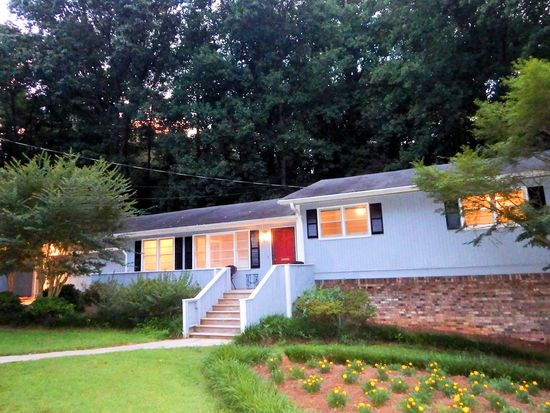
I was not a project person. I’d rather read or travel. We ended up with a 1973 house that I call the Brady Bunch house. It has a basement that I call the Hot Tub Time Machine Basement—circa 1970s. We ended up with it because it makes her happy, and that makes me happy. She can see the possibilities it holds, and she can see the finished products of our DIY labors. I, on the other hand, approached—I raced through—the projects with a fury. Hurrying to get them done, shopping for new things to replace the old—as often as I could I would bring in a handyman to do them. Look at how great the mudding on the ceiling looks, honey. Yeah, and we need to…..This went on until on day, Sarah helped me understand that working on projects brings her relaxation and joy. That she looks at them as something we can do together. When I hire a handyman, it robs her of some of her joy. When I would looked at the house and saw only years of impossible work—and be not insignificantly depressed by it—I was rejecting opportunities for being—being together, being mindful, being grateful.
In the following jewel of mindfulness teaching, Thich Nhat Hanh, pretty much sums up my perpetual state of mind over the last 50 years: If while washing dishes, we think only of the cup of tea that awaits us, thus hurrying to get the dishes out of the way as if they were a nuisance, then we are not “washing the dishes to wash the dishes.” What’s more, we are not alive during the time we are washing the dishes. In fact we are completely incapable of realizing the miracle of life while standing at the sink. If we can’t wash the dishes, the chances are we won’t be able to drink our tea either. While drinking the cup of tea, we will only be thinking of other things, barely aware of the cup in our hands. Thus we are sucked away into the future -and we are incapable of actually living one minute of life.
― Thich Nhat Hanh, The Miracle of Mindfulness
When I have already moved on to the next activity, or item to purchase, or place to go, or meal—then I am not mindfully grateful for the blessing of being present. Life in the present is gratitude for the miracle of life while standing at the sink. I take on our projects now and work on them in the moment; stirring paint is stirring paint. When I’m sanding a desk, I feel the wood grain and the flecks of paint. When we demolish a portion of the porch, I do not panic to plan exact dates and details of when it will be put back together.
No doubt~~knowing me~~I will have to remind myself of this regularly. Old states of being are hard to move past. I like to have something to look forward to, a curiosity deserving of its own unpacking. But the old tools weren’t working; pushing forward was not working through. I have to work at it, at mindfulness, and it is so much more difficult than I thought. For example, I spent one whole day looking at web sites for mindfulness trainings and retreats–one was in IRELAND!~~I downloaded three mindfulness meditation apps on my phone. Found an online mindfulness course. I was obsessing over mindfulness, an irony Sarah kindly but pointedly noted with a grin. And when you’re learning to face the path at your pace, every choice is worth your while (Watershed). Every choice is the opportunity to actually live one minute of life at a time. And that’s jaw-droppingly incredible to me.






 This is a place for peaceful contemplation inspired by story.
What is spiritual mindfulness? For me, it is remembering to feed my spirit. This blog is a spiritual practice~~storying the soul, if you will.
Most sites I find on either one of these topics focuses on meditative and wellness practices. Maybe that’s what you are expecting here. I hope you’ll be pleasantly surprised as instead you find a narrative approach to exploring spirituality, mindful of the everyday. That’s what I do–I write. For almost two decades I dedicated my time and energies (a lot of mental energy, i.e. worry) to academic writing. Here’s how I did it: I would write my narrative essays about place, religion, gender, sexuality, white privilege, etc., and then cite the requisite sources (that’s the academic part). But a funny thing kept happening. People would approach me after a panel presentation and say, “You know, you really ought to write a book with just your stories.” Which is exactly what I wanted to be doing. The problem is, I am an academic; thus, the academic writing.
This is a period of discernment and transformation in my life. Of course, that’s part of what you’ll find here too. I started to seminary and had to make some life choices. One was to step back from academic writing and do the kind of writing I really do enjoy–and that’s what you are reading now. I invite you to come along on my journey as I nourish my own spirit through story telling, being mindful of every, every minute, as Emily in Our Town would say. It is my hope that my stories offer you nourishment of some kind too.
The writing here comes from observations that dawn on me as I go about living life with as much intentionality as I can muster. That’s the mindfulness part. What makes it spiritual? Well, that’s the part of me where the words come from—the part that hopes to connect us to, as Paul Tillich would put it, the ground of our being. One.
This is a place for peaceful contemplation inspired by story.
What is spiritual mindfulness? For me, it is remembering to feed my spirit. This blog is a spiritual practice~~storying the soul, if you will.
Most sites I find on either one of these topics focuses on meditative and wellness practices. Maybe that’s what you are expecting here. I hope you’ll be pleasantly surprised as instead you find a narrative approach to exploring spirituality, mindful of the everyday. That’s what I do–I write. For almost two decades I dedicated my time and energies (a lot of mental energy, i.e. worry) to academic writing. Here’s how I did it: I would write my narrative essays about place, religion, gender, sexuality, white privilege, etc., and then cite the requisite sources (that’s the academic part). But a funny thing kept happening. People would approach me after a panel presentation and say, “You know, you really ought to write a book with just your stories.” Which is exactly what I wanted to be doing. The problem is, I am an academic; thus, the academic writing.
This is a period of discernment and transformation in my life. Of course, that’s part of what you’ll find here too. I started to seminary and had to make some life choices. One was to step back from academic writing and do the kind of writing I really do enjoy–and that’s what you are reading now. I invite you to come along on my journey as I nourish my own spirit through story telling, being mindful of every, every minute, as Emily in Our Town would say. It is my hope that my stories offer you nourishment of some kind too.
The writing here comes from observations that dawn on me as I go about living life with as much intentionality as I can muster. That’s the mindfulness part. What makes it spiritual? Well, that’s the part of me where the words come from—the part that hopes to connect us to, as Paul Tillich would put it, the ground of our being. One.