Embracing Life Before Retirement: A Personal Journey

When I told Sarah I was thinking of titling this post Embracing Life Before Retirement, I could practically hear the pearl-clutching. Let me say right here at the start: I’m not counting down the days to stop working. I’m not slacking off. I don’t have too much time on my hands. In fact, I’m working hard — joyfully so. This isn’t about stepping back; it’s about growing into myself. At my age, the question of who am I becoming? carries a certain urgency.

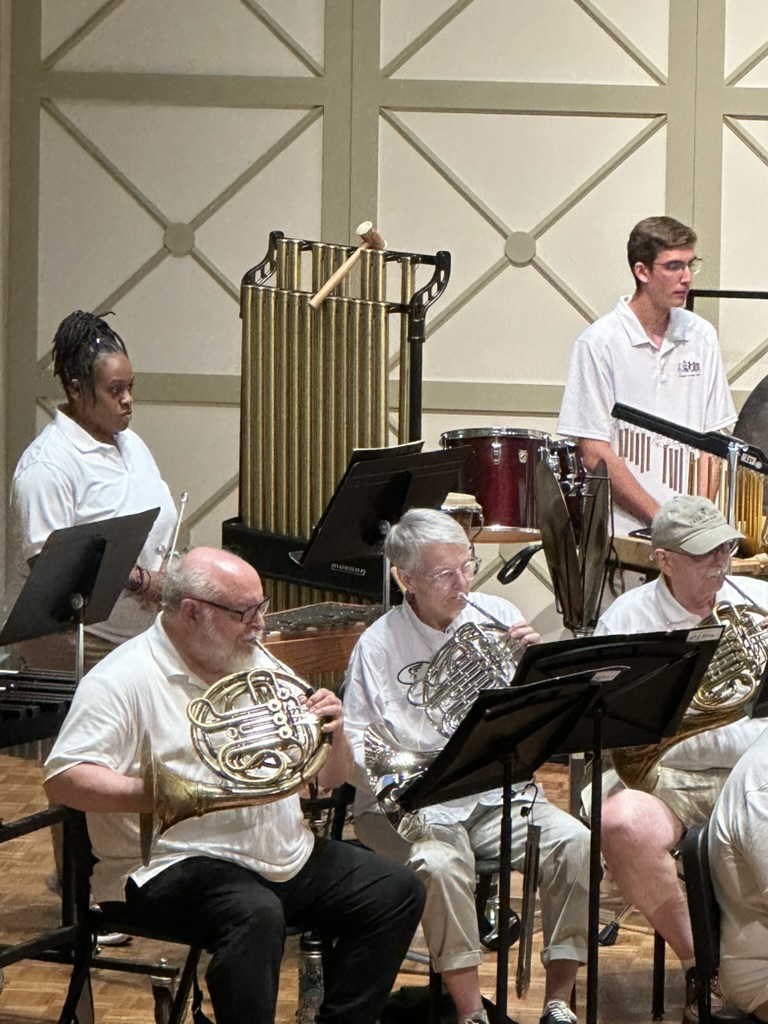
Sarah, who can always “find me something to do,” sent me a link to the Spartanburg Community Band. I dusted off my French horn, loaded it into the Mini, and showed up. I played as softly as I could, listening to my neighbor for the pitch while I re-learned fingerings and remembered how to breathe as I buzzed the mouthpiece. Not long after, I joined the choir at the neighborhood Trinity United Methodist Church. Which, of course, meant I was also drafted into the handbell choir. (It’s funny how the choir members who double as bell-ringers, plus the music director, all grinned and said, “Well, handbells on Monday, choir on Wednesday!”) So, I guess I’m in handbells now too.

And then came the start of the new semester. I walked into the cafeteria for the back-to-school breakfast the university provides. I sat with colleagues, caught up on life, and we laughed together as we talked about classes we’re teaching. There was such positive energy around our table! Later, I listened to our chancellor give the State of the University address — which, by the way, is good. Then the deans introduced new faculty.

I took a moment to reflect on the dean who had taken my place. She is kind and thoughtful, already working to build community in our college. I felt warmth and satisfaction, a kind of peace. Like sitting on the porch listening to cicadas at dusk, when the heat of the day has finally lifted. She has a quiet confidence, the kind that signals she knows what she’s doing. That she’s got this. The kind of confidence I now have too — as faculty.

As if the universe were reaffirming that I am in the right role — that I am where I’m supposed to be — two invitations arrived that same day. One colleague invited me to do a book talk with their curriculum theory class, reconnecting me with scholarship and teaching I had missed during my years in administration. Another asked me to consider contributing a chapter to an upcoming Handbook of Ignorance Studies in Education. Now, I know that ignorance studies is a highly serious matter, but me being me, I can’t help chuckling at the title. It feels like the perfect opportunity to bring a little folksy charm and sense of irony to the subject. Both invitations humbled and inspired me. Coming just one day before the semester began, they reinforced my professional identity as teacher, scholar, and service colleague (and yes, committee assignments also arrived that day).

So what do I mean when I say embracing life before retirement? When I imagine retirement, I hear the people who, whenever asked “How’s retirement?” say, “I don’t know how I ever got everything done when I worked. There just aren’t enough hours in the day!” Almost everybody says that when asked. Retirement, for many, is a season of busy leisure, where the biggest problem is deciding what leisure looks like. If you want to take a nap, you can take a nap. If you want to read, you can read. Because nothing is pressing you to be somewhere else.

And yet, I’m tasting a version of that right now — a freedom to choose what matters most, even while working. Music. Teaching. Writing. E-triking. Monthly Breakfast Club with Sarah and a couple of colleague friends. Nourishment for mind, body, and spirit. Life still has its hiccups and valleys — I’m not pretending otherwise. I know they are sometimes filled with loss and grief, unfulfilled dreams, guilt, and yes, fear. And when those valleys come, I still get low and afraid, just as I always have. Sarah is right: I need ways to pull myself out of them. And honestly? An e-trike ride with my French horn slung over my shoulder feels just about right.

Even when I was younger, I used to (half) joke: I’ll never be able to retire — they’ll have to roll me out of school in my coffin. Now that I’m within six to eight years of retirement, that gnawing fear still tugs at me. I’m close. A decade ago, when I entered administration, I even set a countdown timer app on my phone. That should have been the clue right there that I wasn’t where I needed to be. I don’t look at that timer anymore.

The difference now is that I think about the last days, and the blessings God has knocked me over the head with. Yes, there will still be valleys — loss and grief, unfulfilled dreams, guilt, and fear. But alongside them, there is also laughter, music, students, writing, dogs, cats, and Sarah. And I realize that if this is my life for another decade while I work — teaching, music, writing, laughter, valleys and all — not only will I “make it” to retirement, I can embrace the mindset now.

Almost like retirement. But better.
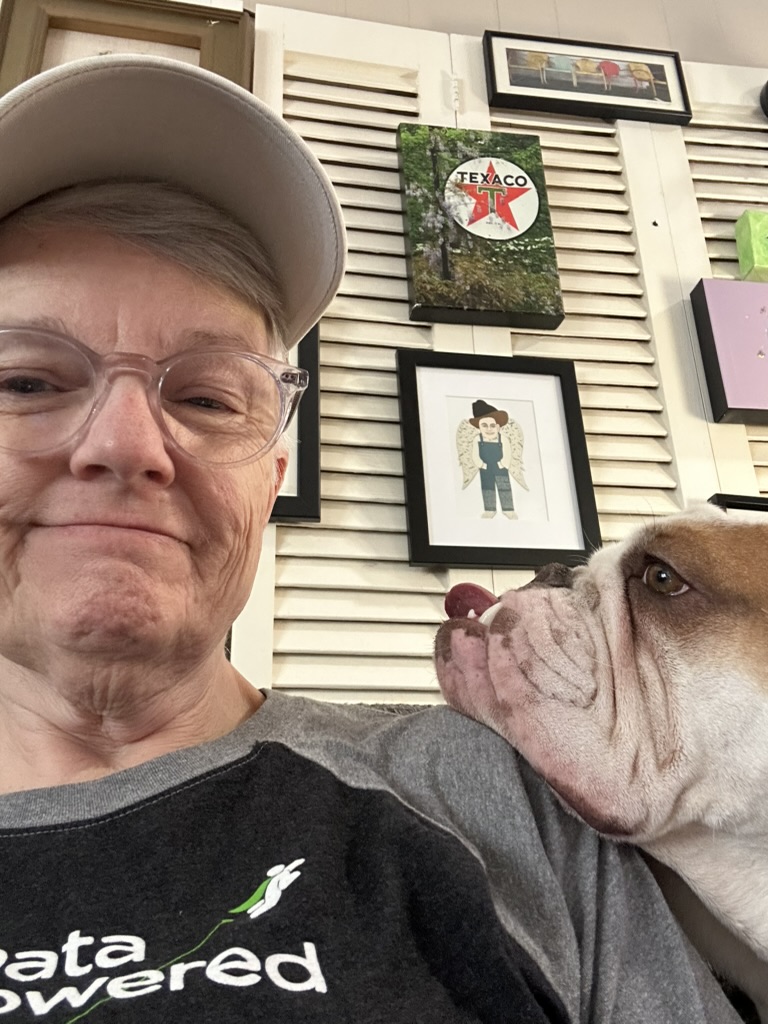
Image of Ugena Whitlock and bulldog.
Who is that old person being lovingly gazed at by Bruno the bulldog?
Playing French Horn with SCB
On vacation with Rory.
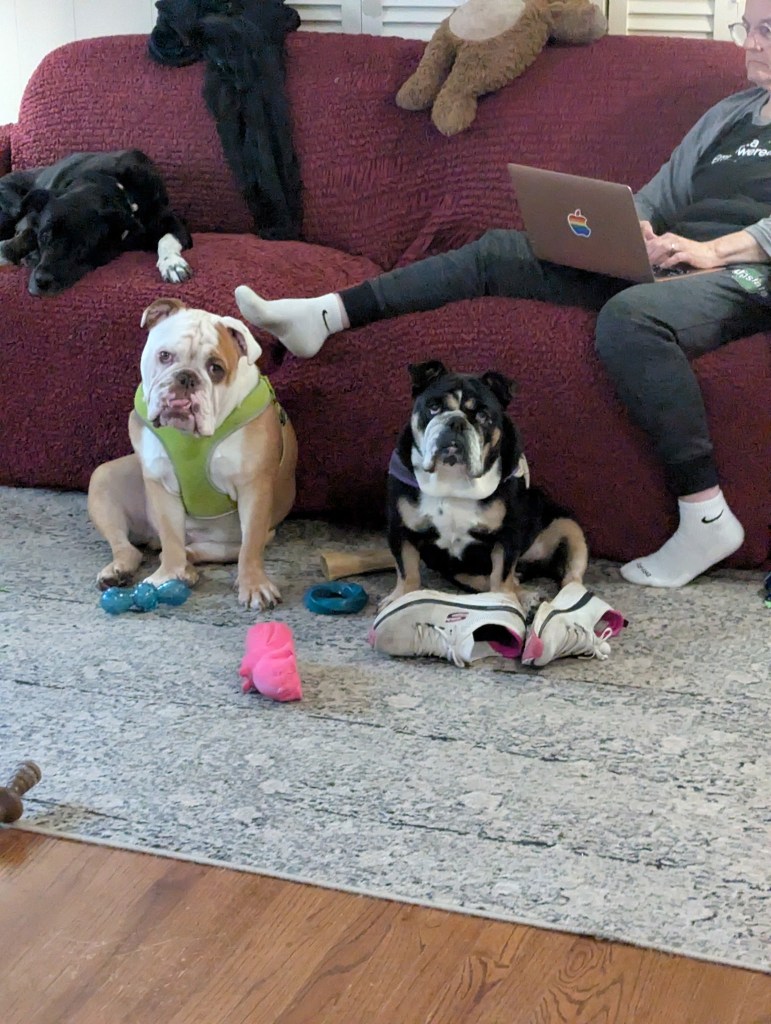
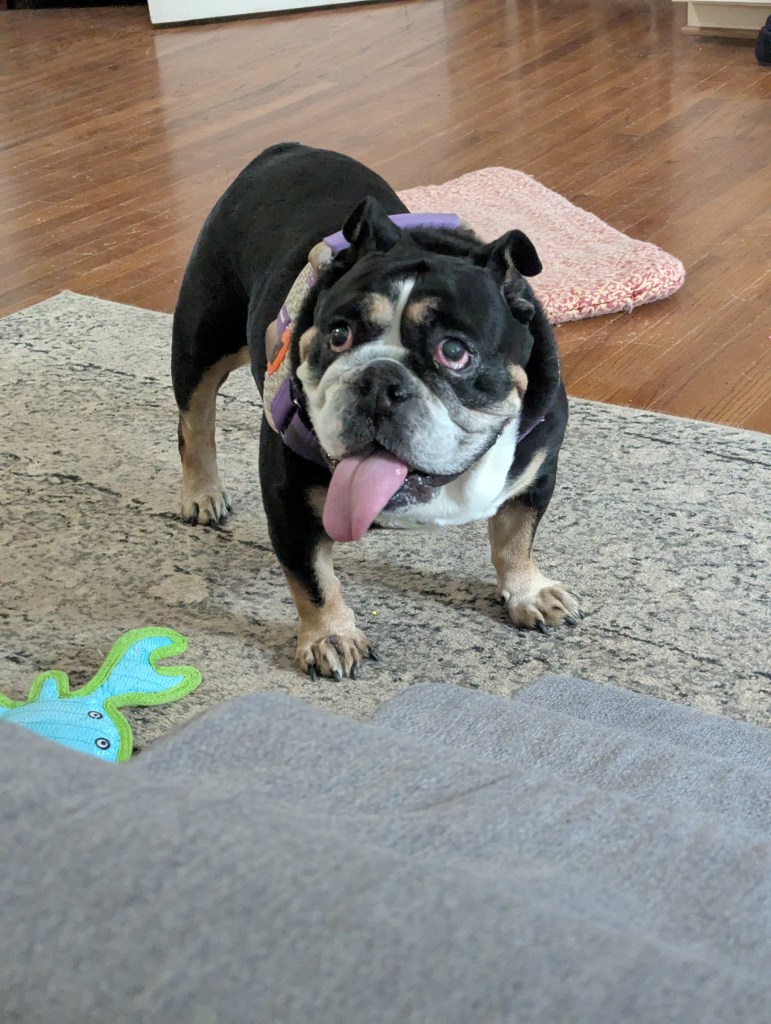
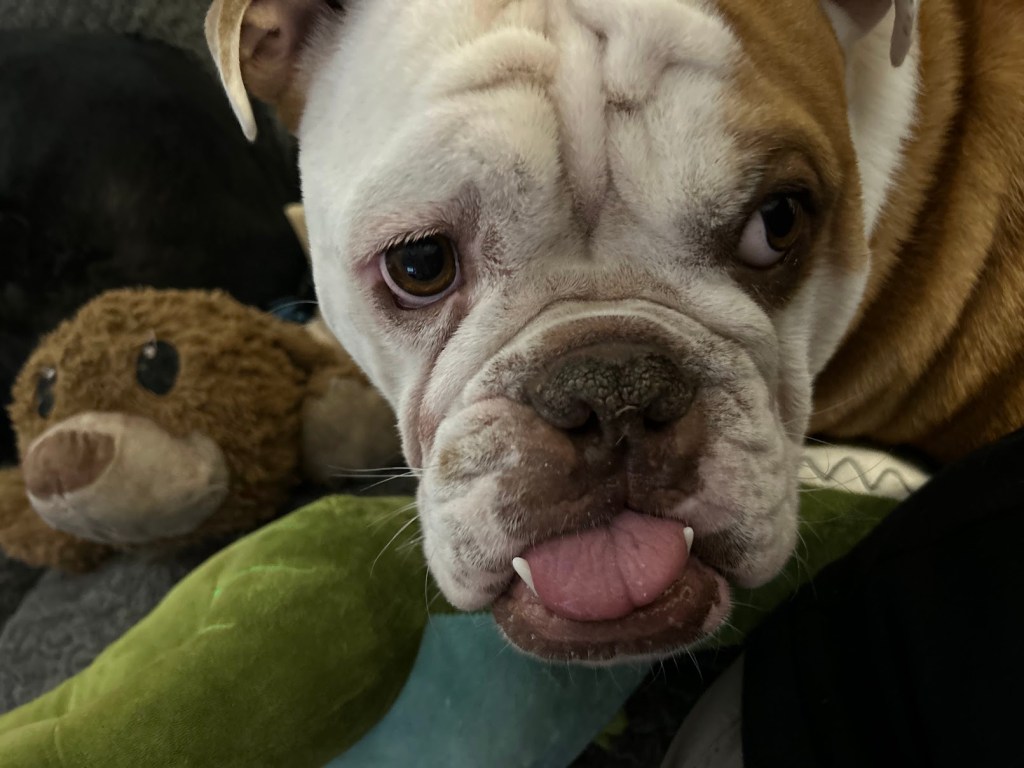
Bruno has the last word.

My New Journal Article IS Published!

I’m honored to share that my new article, A Field in Flux: Notes from an Administrative Escapee, has been published in the Journal of the American Association for the Advancement of Curriculum Studies (JAAACS). While its title suggests a personal confessional, the piece ultimately offers a broader reflection on the evolving and embattled state of Curriculum Studies/Theory—shaped as much by political and ideological pressures as by institutional shifts in teacher education. Drawing on recent scholarship and personal experience, I explore what it means to “come back to theory” in a moment when the field itself feels fragmented yet urgently needed.

You can read the full article here: A Field in Flux: Notes from an Administrative Escapee – JAAACS, 2025.

Remembering the Teachers Who Inspired Me, Part 1

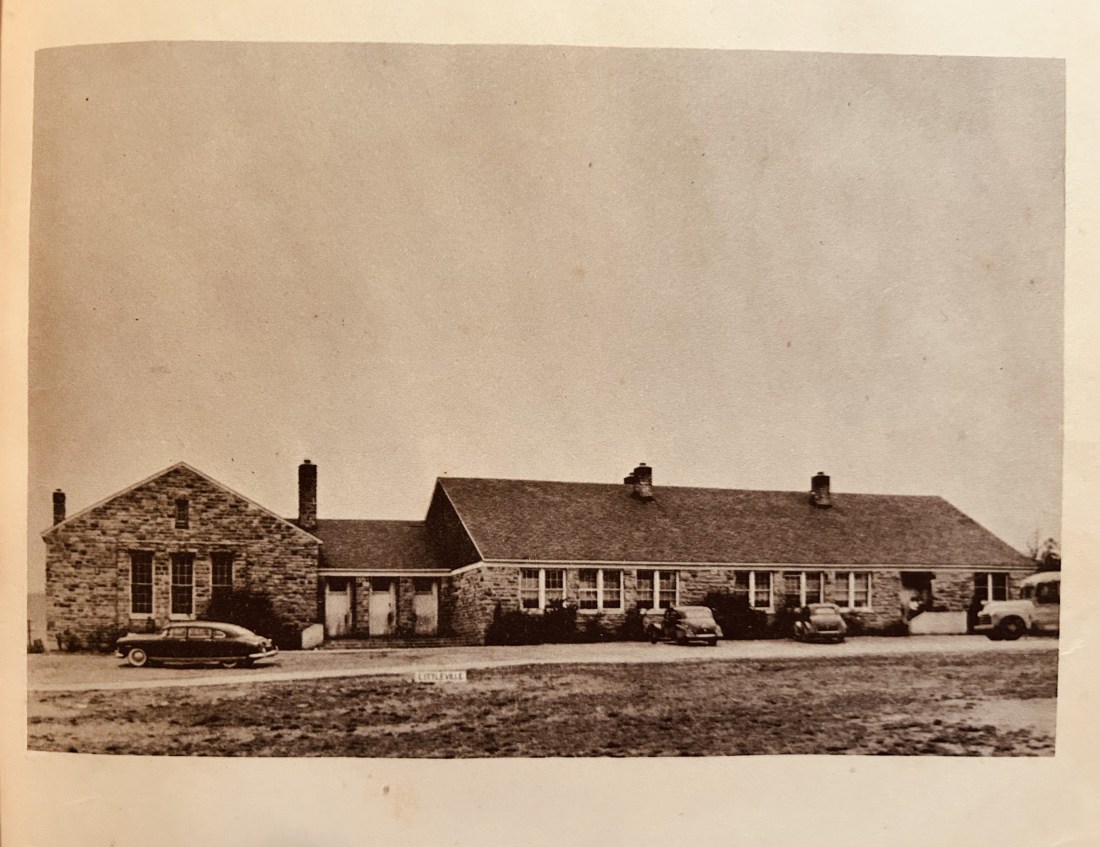
Littleville School, 1949

What I Learned From My Teachers

There’s a lot we carry from our school days—the lessons that stick, the ones that shape us in ways we only realize years later. I’ve been thinking about the teachers who left a deep impression on me, and how those early experiences continue to resonate as a quiet, steady presence in my life and work today. This piece (Parts 1 & 2) is dedicated to the teachers who shaped me, and I want to honor them by name.
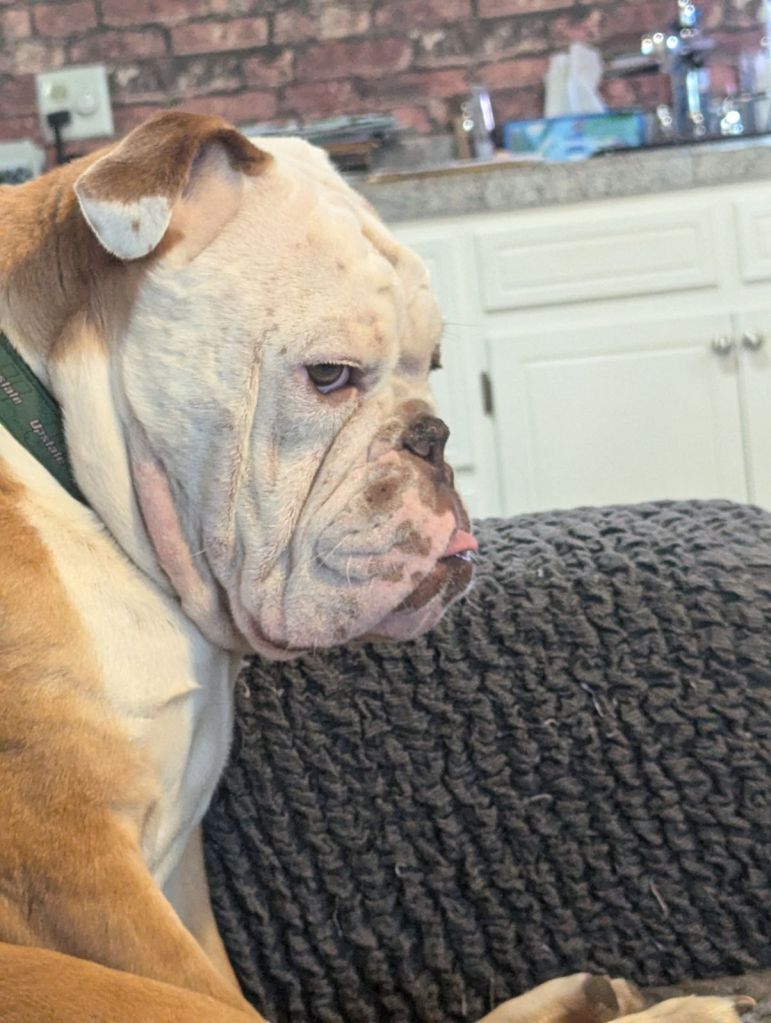
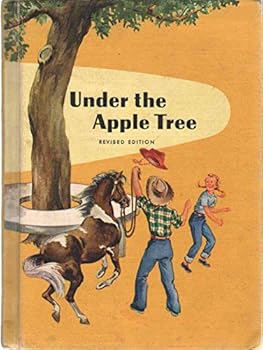
Image of book Under the Apple Tree.
I loved this book.

Mrs. Hood, 1st Grade: Recognizing Potential
Mrs. Hood saw something in me from the very start. I still have the report card she wrote on: “Ugena is a good student, but she talks too much.” That one line captured a lot. It was the first sign that someone recognized my potential—and my tendency to let my mouth run ahead of me. I’ve held onto that report card all these years, a reminder of what it means to be recognized for one’s potential and ability. In first grade, we received our first “real” readers, Under the Apple Tree. I remember sleeping with mine under my pillow. Years later, I found a copy and treasure it as a symbol of my lifelong love of learning.

Top: Mrs. Mavis Fowler and Jeannie Clement; Bottom left: Mrs. Fowler; Bottom right: a cute picture of my brother Tracy Whitlock

Mrs. Fowler, 2nd Grade: Be Kind and Carry a Red Paddle
Mrs. Fowler wasn’t just the first teacher to believe in me—she made me believe I was special. She had a way of balancing kindness with authority, and yes, she carried a red paddle as a reminder that rules mattered. But it wasn’t fear that motivated us in her classroom—it was the feeling that she cared. That balance of kindness and discipline taught me more than any lesson from a textbook. I also remember me, Jeannie Clement, and Susan Pace singing church hymns at the front of the class during school hours—something that feels almost unimaginable today, but back then, it was just part of the rhythm of life and learning in Mrs. Fowler’s class.

Mrs. Haley, 3rd Grade: You Can Do Hard Things in Challenging Places
Mrs. Haley was an African American teacher in an all-white school in Littleville, Alabama, in 1971. That alone was remarkable. But what sticks with me is how she tried to teach us about Dr. Martin Luther King—in a place and time where that wasn’t easy. She showed me that you can do hard things, even when the environment isn’t welcoming, and that courage can look like simply sharing the truth. I don’t know what happened to Mrs. Haley–what turns her life took. I hope she knows that in that little school room with green walls, she made a different.

Mrs. Elsie Haley
Mrs. Haley and members of our 3rd Grade Play.
I was the narrator, second from left on right.

Mrs. Wimberly, 4th Grade: Finding Joy in Learning (and Neck Massages)
I absolutely adored Mrs. Wimberly. She had a way of making the classroom feel fun and alive. This was the year I first heard about the Osmond Brothers from Jeannie Clement, and while that might seem trivial, it’s part of what made school feel like a place where life happened. Mrs. Wimberly wasn’t naive either—she let us give her neck massages during PE, while having deep discussions about who was better, the Osmonds or Elvis. Looking back, I see that she knew how to keep us engaged, even if it meant a little creative classroom management.

Mrs. Wimberly was also the first person I had met who had seen Elvis live in concert. She gave me a photo book from the concert, and for Christmas, my mom got her the most wonderful present, which I had selected: a black plastic cat with diamond eyes and a fuzzy boa—filled with bubble bath. If nothing else, I have always been classy!

Mrs. Wimberly, probably on the last day of school.
Mrs. Marie Wimberly, behind the school at the baseball field. Notice the kid trying to give her rabbit ears.

Mrs. Wells, 5th Grade: The Best Education, No Matter Where You Are
Following Mrs. Wimberly was no small task, but Mrs. Wells handled it with grace and grit. She was the only teacher I had at Littleville who actually lived in our community, and she took that responsibility seriously. When I complained that math was hard and had a fifth grade hissy fit, she didn’t let me off the hook—she made sure I learned fractions. Mrs. Wells held an Education Specialist degree, and my mother once asked her why she stayed at Littleville School when she could’ve worked anywhere. Her answer: “Our kids deserve a good education, just like anybody else.” That belief has stayed with me, a quiet reminder that showing up fully isn’t just about personal pride—it’s because others deserve the best we have to offer, no matter where we are. Mrs. Wells eventually became the principal of Littleville School and remained in that position until it was closed in 1994. (I have written about Littleville School in “A Memoir of Littleville School: Identity, Community, and Rural Education in a Curriculum Study of Rural Place” in William Reynolds’s collection, Vol. 494, Forgotten Places: Critical Studies in Rural Education (2017), pp. 169-188.). Mrs. Ann Wells lived to be 88 years old, and till the end of her life, when she saw my parents, she asked about me.

Miss Renwick, 6th & 7th Grade English: The First Crush
Of all my teachers, Miss Renwick is the one I’ve wondered about the most over all these years. I wish I knew what happened to her. Looking back, I know now that she was my first crush, as young girls often have. I adored her, admired her, and hung on every word she said. My poor mother spent countless hours waiting for me in the parking lot of Littleville School while I lingered in Miss Renwick’s classroom after school. I really appreciate that—both my mother’s patience and Miss Renwick’s willingness to let a student hang around after a long day. She introduced us to literature–not just stories found in “readers,” but the classics. She described the faraway places where they took place. “You can go to these places, see these things,” she told me. I’d like for her, wherever she is, to know that although I took a circuitous route, I did.
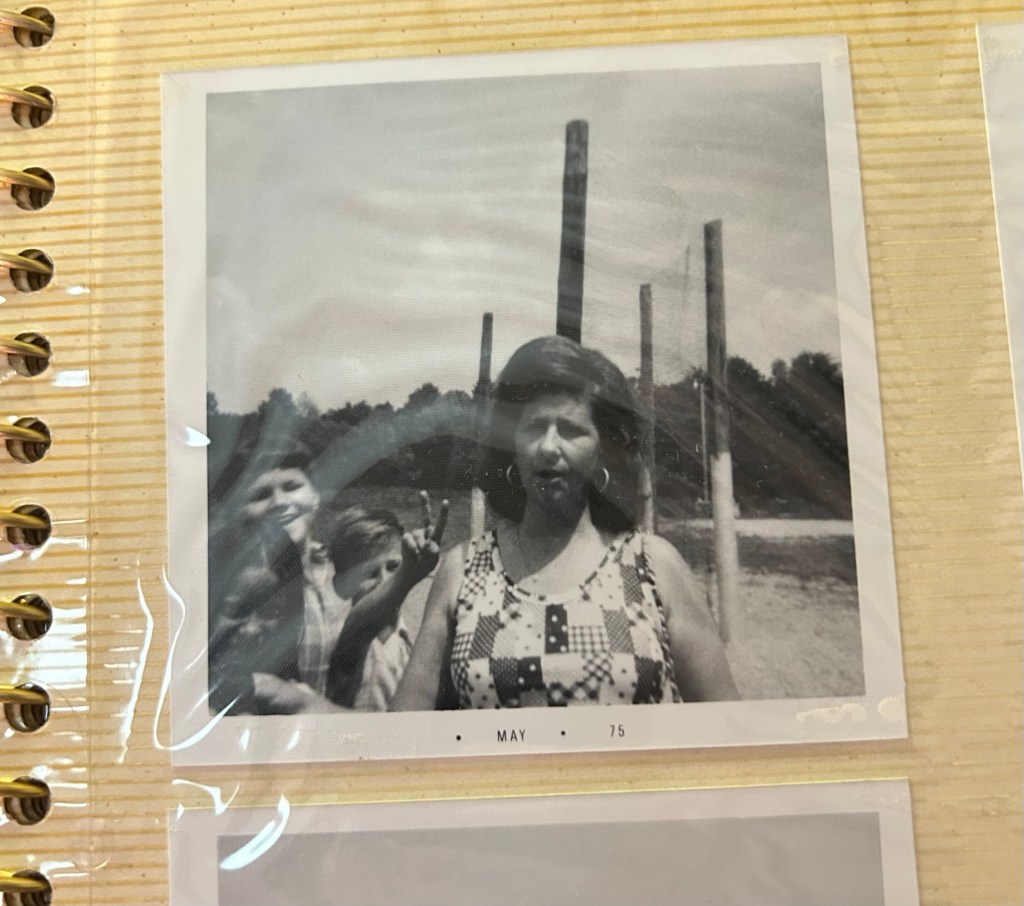
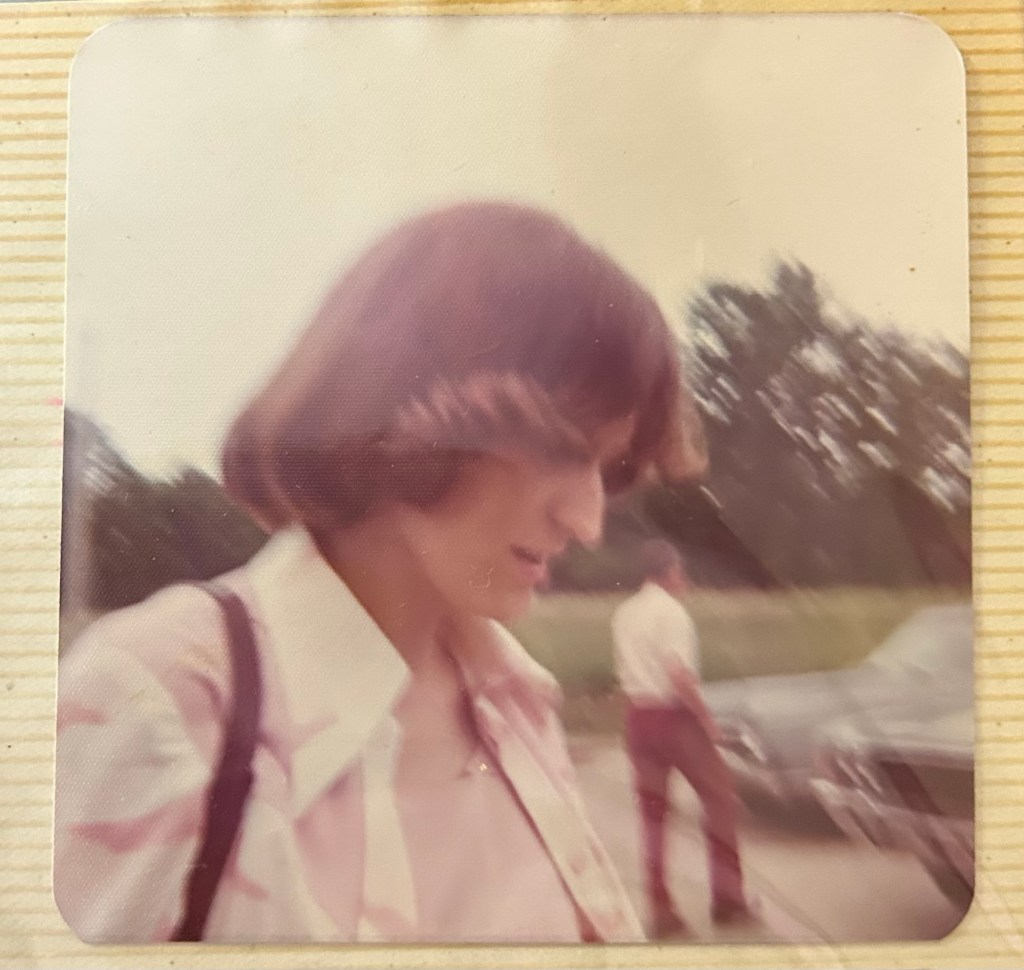
Miss Renwick. Note her look at me coming into her classroom after school to take yet another picture.
Miss Renwick, last day of school, 6th grade
And yes, I did take a picture of her car. For years, I wanted a Toyota Tercel Wagon
Mr. Sizemore, 7th Grade Science: The Surprise of Humanity
Mr. Sizemore was a science teacher with a presence that made us all a little nervous. He was the only teacher I ever had who effectively taught while sitting behind his chair, which he did almost every day unless he got up for the occasional lab activity. He wore the same clothes every day: a blue shirt, blue jacket, dark pants, and shined brogans. His black hair was neatly combed with Brylcreem—long after Brylcreem had gone out of style. He wore black horned-rimmed glasses like Clark Kent. He drove an old blue Ford truck, and his stern demeanor was enough to keep us on edge. We were especially scared when he’d slam his book on the desk if we weren’t paying attention. But I remember my daddy talking about running into him out in public, chatting about chickens like old friends. It surprised me to realize Mr. Sizemore had a first name—David—and a life beyond the classroom. Thinking about him today, I realize just how young he must have been in 1976. That small realization stuck with me: teachers are people, too.

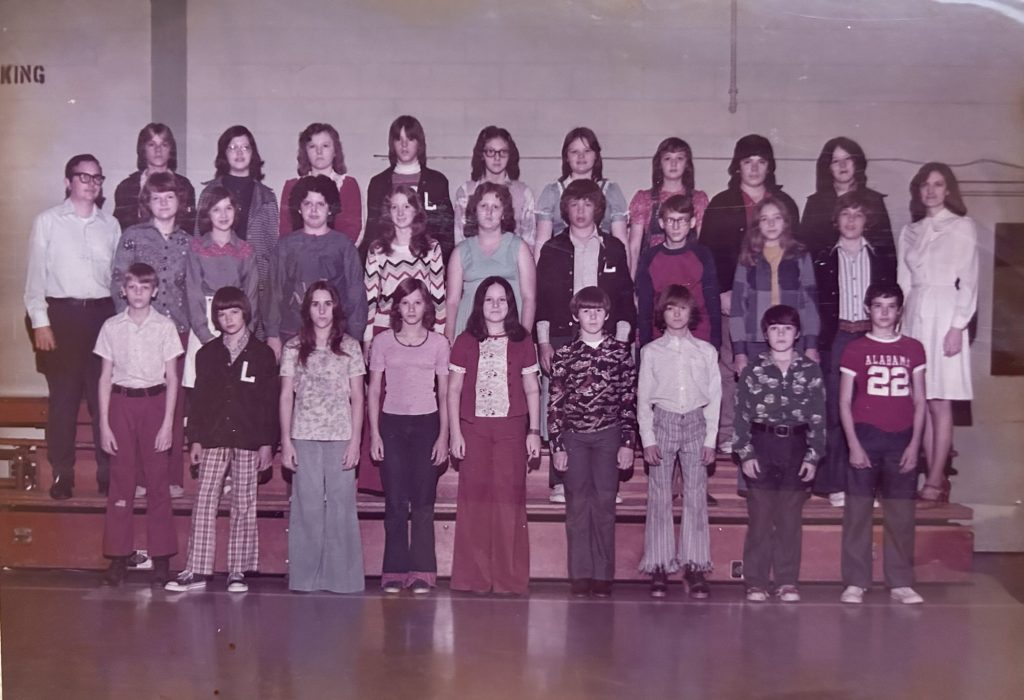
Littleville School 6th Grade Class Picture, 1974. Second Row: Far left, Mr. David Sizemore; far right, Miss Joyce Renwick; second from right, Ugena Whitlock

To be continued in Part 2…

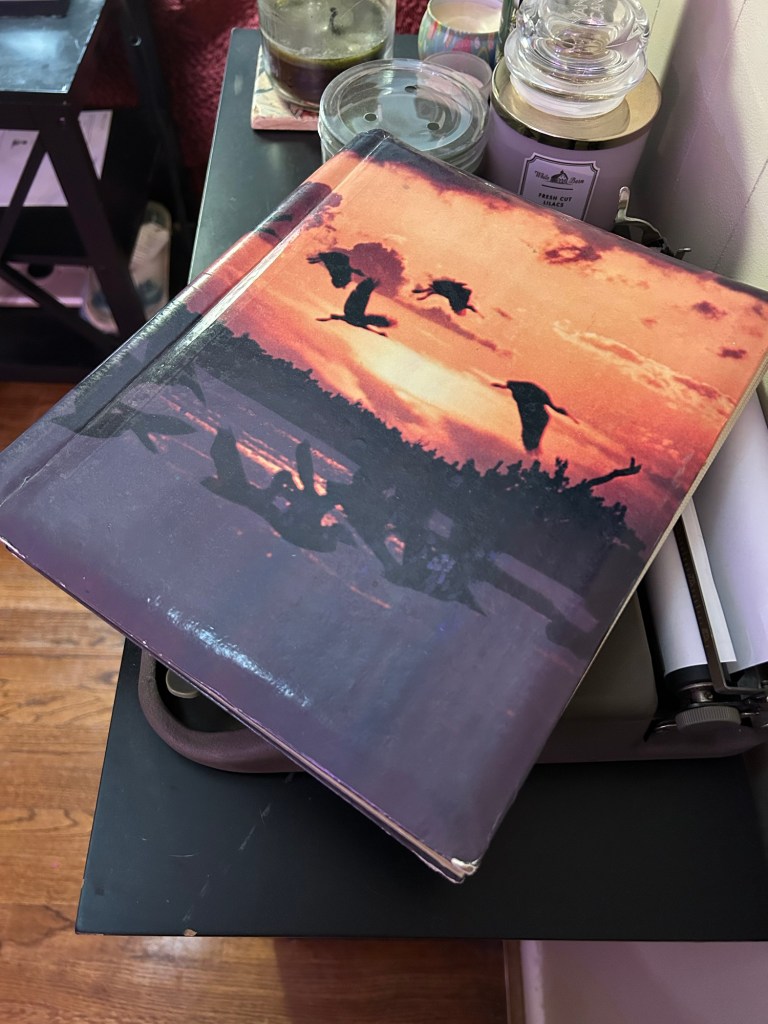
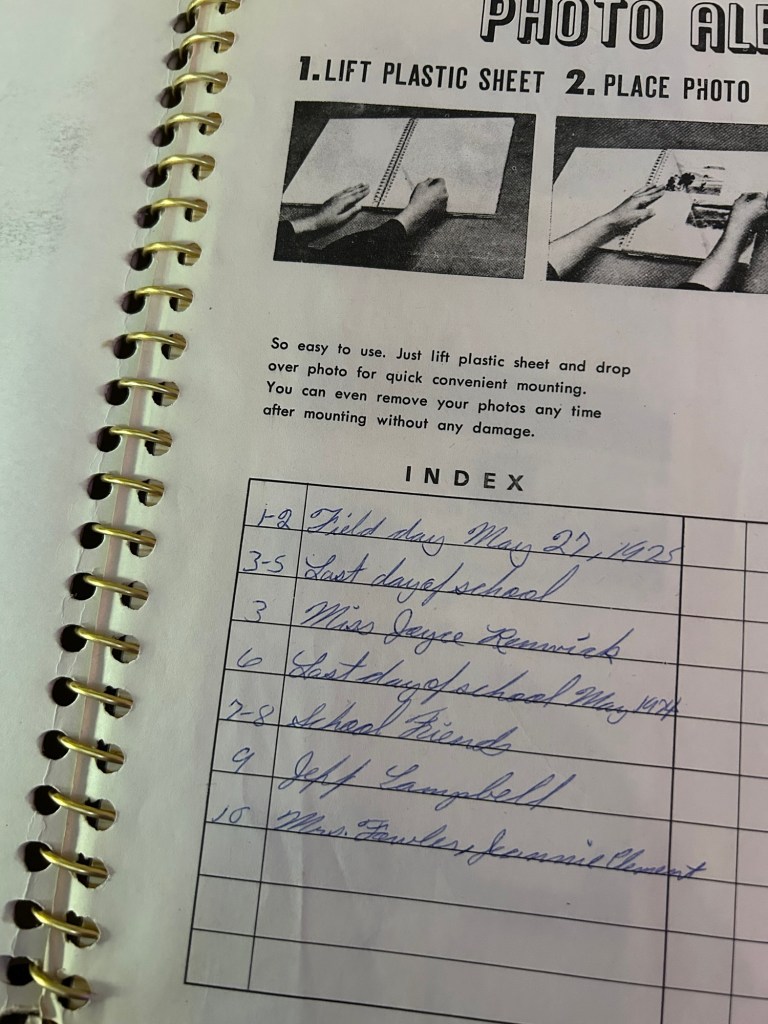
My Treasured School Photo Album
Handwritten Table of Contents from my Littleville photo album in my best cursive.

Sojourners Together: Supporting Students Through the Struggle

Image of boats adrift

Title: Sojourners Together: Supporting Students Through the Struggle

In my last post, I shared how online teaching has rekindled my passion for the classroom. I’m enjoying the challenge of engaging students in new ways, and I’ve found it fulfilling to build connections through messages, stories, and shared experiences. But as much as I’m finding this fresh approach to teaching rewarding, I’m also deeply aware that many of my students are struggling.

Image of boat adrift
A Boat Adrift

Recently, I sent out a weekly check-in message—something simple, just to touch base. While many students voiced their overall enjoyment of the class, several also let me know they’re having a hard time. These aren’t typical undergraduate students juggling part-time jobs and coursework. These are working professionals, members of a cohort in our Master’s in Applied Learning and Instruction program. They teach in local partner school districts. They’re educators, spouses, parents, coaches, community members. They’re churchgoers, pet owners, and caregivers. And yet, despite all these roles, they’ve committed to taking two graduate classes each semester for two years.

They do this not just for a much-needed pay raise, but for their professional growth—to become better teachers for their students. Our children. And that humbles me. It’s not easy.

These students took a heavy blow during COVID-19. They were asked to be miracle workers, juggling the impossible demands of remote learning while supporting students, families, and their communities. If there was one silver lining to the pandemic, it’s that thousands of parents who had their children learning from home gained a newfound appreciation for teachers. They saw firsthand just how challenging this work is.

And yet, despite all of this, my students show up. They’re willing to do the hard work every day. But I know—and they know—that time is scarce. They probably don’t have six extra hours a week to devote to their studies, yet that’s the general guideline for graduate coursework. They’re balancing it all, and their struggle deepens my sense of responsibility as their instructor.

If I expect them to make time for this class, I have to make it worth their while. I owe them my best. If I want them to give of themselves, I need to give of myself.

Is the reading dry this week? Then I’ll record a discussion to bring it to life. Is the assignment complicated? I’ll walk them through it, step by step. Are assignments feeling routine and uninspired? I’ll revise them to appeal to different learning styles and spark engagement. Do they need more time to complete an assignment? I’ll do my best to accommodate that. Are they feeling overwhelmed? Then I’ll be present—showing up in the class, personalizing my feedback, and ensuring they don’t feel adrift in the online world.

I’ve practiced social-emotional learning long before it had a name. I know the value of a supportive learning environment, and yes, sometimes that means sharing pictures of our five pets to give them a chuckle. It’s about reminding them that I’m here, on the other side of the screen, rooting for them.

Image of boats adrift
Boats, together

As hokey as it might sound, caring is part of the classroom culture I want to cultivate—a culture of care and connection. Teaching can be a lonely profession. Being a professor can be just as isolating. But this online space offers a chance to bridge that gap, to connect people who might otherwise feel alone in their struggles.

It is important that I keep asking them to check in—asking how they’re doing, beyond just the coursework. These check-ins aren’t just about staying informed; they’re about fostering trust and reminding them they’re not alone in this. We are sojourners together this semester. Yes, they will struggle. That’s part of the journey. But the most important assurance I can give them is that I am here. And sometimes, that’s enough to make all the difference.

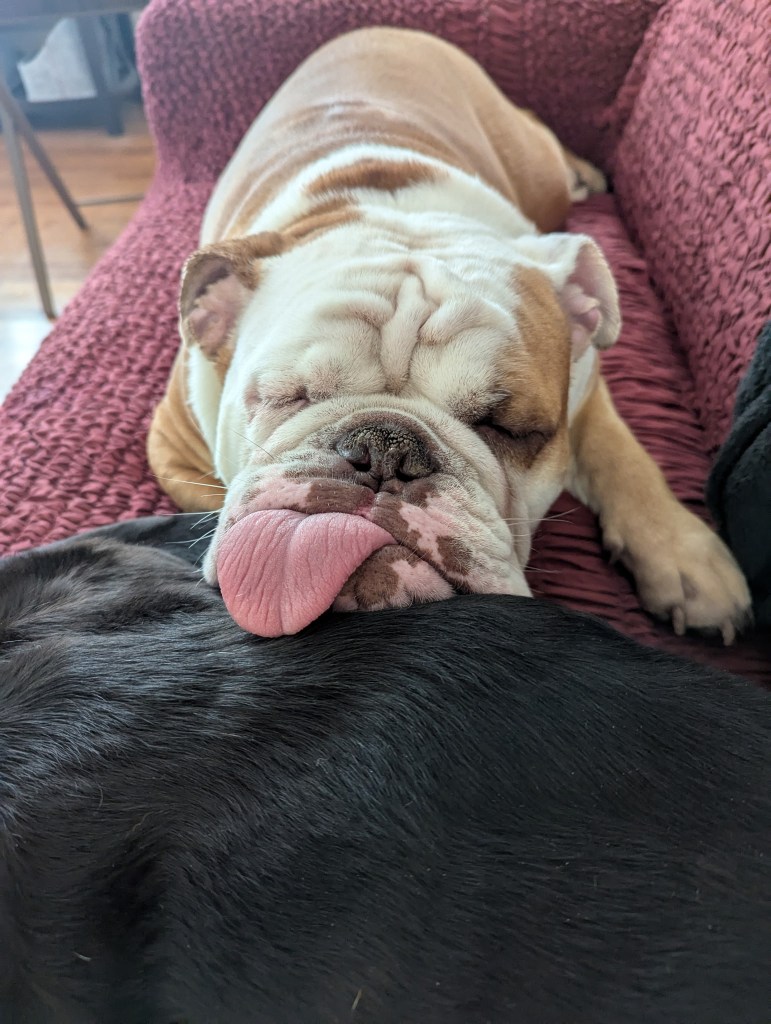
Image of English Bulldog sleeping with tongue out.
Bruno knows the struggle is real.

Old Dog, New Tricks: How Online Teaching Rekindled My Passion for Teaching

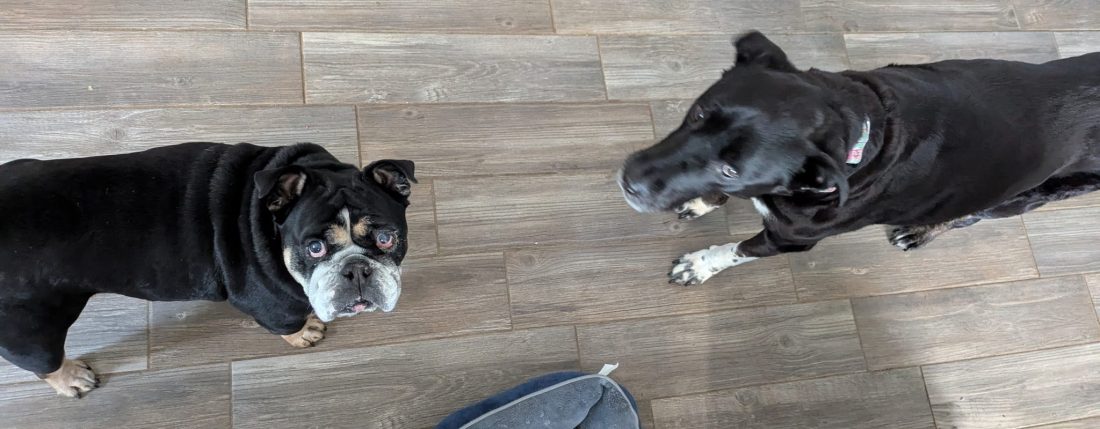
Image of senior dogs, one English Bulldog and one lab mix.

Old Dog, New Tricks: How Online Teaching Rekindled My Passion for Teaching

When I decided to step back into online teaching after nearly a decade, I thought the biggest draw would be the freedom to work from anywhere—maybe even while spending time with family in Alabama. The idea of crafting lessons with location flexibility sounded like the kind of balance I needed in this season of my life. But as it turns out, the freedom to work from anywhere is just the icing on the cake. What I didn’t expect was how much I’d reconnect with the heart of teaching itself.

It turns out, all of my classes are online this semester. My institution uses Blackboard Ultra—a platform that’s more advanced than the clunky tools I remember from my last online teaching experience. Back then, fostering real connection in an asynchronous class felt nearly impossible. I remember the difficulty setting up video calls and lectures, for example. This time around, though, something clicked. I’m not just uploading assignments and grading papers. I’m building relationships, one announcement, one message, one shared story at a time.

Finding Connection in an Self-Paced World

Online classes can roll along on autopilot if you let them. I could easily pop in, grade assignments, and call it a day. But that’s not how I’m wired. I need to feel connected—to know there are real people on the other side of the screen. I’m also a texter—I have been since the advent of smartphones. Messaging appeals to my introverted nature, the one that has an aversion to phone calls. This same preference drives how I approach my students. So, I make it a point to check in regularly with my students. I send out announcements throughout the week, not just about deadlines and assignments, but to share something about myself and encourage them to do the same—something that reminds us we’re people, that we’re travelers together, not just consumers of virtual learning, detached and mechanical.

One week, I sent out a simple message: “Time to check in. How’s the course going? How are you doing?” I wasn’t sure what to expect, but the responses both caught me off guard and moved me. Students didn’t just give me feedback on the course—they shared snippets of their lives, their challenges, their small victories. A few thanked me for asking about their well-being, calling it “refreshing” to have that kind of interaction in an online class. That’s when it hit me: this wasn’t just about teaching content. It was about building community. (They also mentioned how they struggled with balancing all of their responsibilities with their coursework. That’s coming up in my next post.)

Bruno, Bulldogs, and Building Community

Stories have always been the glue that holds people together. I started sharing little anecdotes about my life—like tales of my dog, Bruno, and our recent adventure adopting an older bulldog, a lady named Marley. I didn’t think much of it at first, but the response was immediate and heartfelt. Students shared stories about their own pets, adding humor and warmth to our digital space. Today, I even shared a picture of “the pack,” and the flood of responses made me realize that even in a virtual space, we could connect as people.

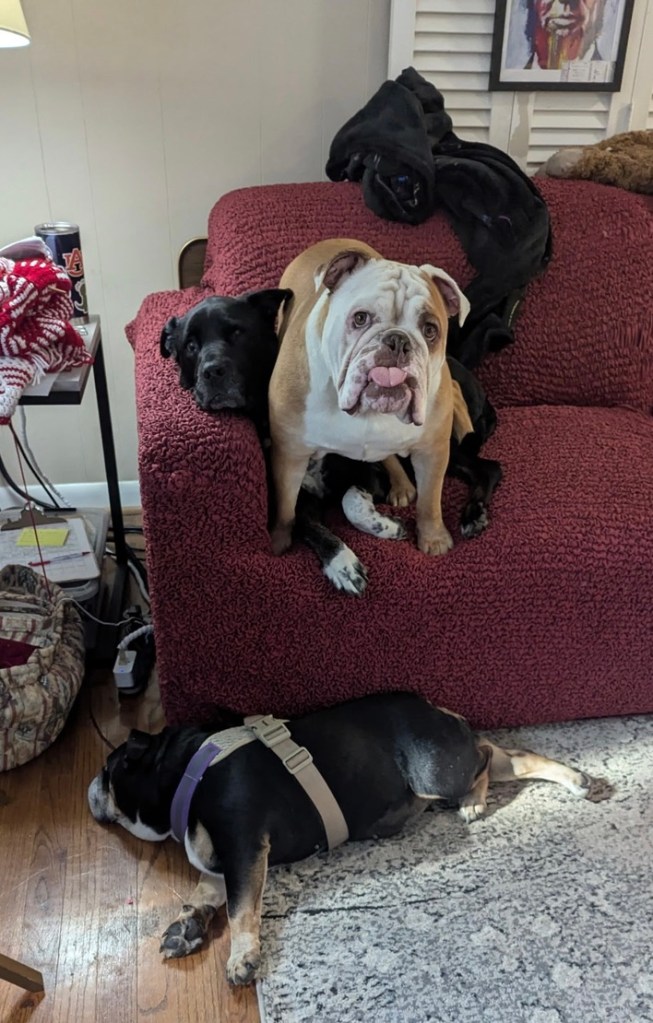
Image of two English Bulldogs and a lab mix.
Our Pack: Bruno, Caroline, and “new” Old Dog, Marley

Adapting While in Progress: Revising the Syllabus Mid-Course

Not everything has been smooth sailing. One of my classes didn’t feel as rigorous as it should’ve been. The material wasn’t pushing students to engage deeply, and I could tell it wasn’t encouraging them to read as much as they needed to. So, two weeks into the course, I did something I’ve never done before: I updated the syllabus mid-stream, knowing it could disrupt the flow of the class.

I rebalanced the points on existing assignments and added lightweight quizzes as reading guides. It took me about three days to get everything in order, and then I let the students know what I’d done and, more importantly, why I’d done it. Transparency matters. For a while, no one complained, and I breathed a sigh of relief, thinking the transition had been smooth. But today, I received my first piece of critical feedback.

One student reached out, expressing how overwhelmed he felt juggling work and two classes. Most of my master’s students work in local districts, and I could sense the stress in his message. I assured him that the quizzes were designed as reading guides—more of a nudge than a test—and if he read the chapters, he should be able to complete them as he went along. To ease the pressure, I removed the time limit on the quizzes. It may not have solved all his concerns, but it was important to me that he knew I was attentive to his feedback.

Why insist on these low-stakes checks of reading? Because they signal that the reading matters—not just to pass the class but to engage with the material meaningfully. It’s a gentle reminder that what’s in those chapters is essential, and I want them to take it seriously.

Grading as a Conversation, Not a Chore

I’ll be honest here. I say “reconnect,” but what I really mean is connect for the first time. I went into the teaching profession in 1985 because it was convenient. I had a challenging marriage, a young daughter, and was homesick and lonely. I just didn’t have the time to do the homework to pursue a career in law or chemistry—which I discovered I really liked in college. I went into the field whose subjects of English and history were easiest for me: education. It has sometimes felt as though I have been in a profession not of my freewill choosing for almost 40 years. This made me hold a resentment toward it. I resisted and rebelled against national standards, for example, through curriculum theory writing, taking a cue from other scholars in the field. I had missed—because it never appealed to me in the first place—the only valid reason to become a teacher: students.

Image of Ugena Whitlock working on Apple computer with two English Bulldogs and a lab mix.
Me, working on my online classes with the Pack in place

As I think about it, I love nothing more than being a student, and I have felt respect and fondness for teachers who truly cared about me. Yet I was not this kind of teacher to my students. This is not to say that I mistreated them—quite the contrary. I was the fun teacher for most of my career—the easy grader and the one who drew a little outside of the box. When I arrived at my current institution, a recurring theme that people actually spoke out loud was putting students first. I envied this and knew that I seemed a few steps removed from students. Now, as a non-administrative faculty member, I have a unique opportunity for a second chance—not to reconnect with a passion, but to form one. I find great hope in this—not just for second chances to find something I feel something for, but for redemption itself. This online platform of words—and blessed words are my seeds of connection—allow me to connect to my students and develop a relationship with them and teaching that, for me, is new.

Embracing AI and Lifelong Learning

Another unexpected twist in this journey has been my dive into AI. I’m realistic about it. I use AI tools, and I know my students will too—as will their own students one day. Instead of policing its use, I’m teaching them how to use AI as a tool, not a crutch. It’s part of preparing them for the future, and honestly, it’s been fascinating to explore.

Image representing AI as a learning tool.
AI As Learning Tool

I’ve been attending workshops, like the one put on by USC Upstate’s CAIFS last week, and I’m signing up for mini-courses through ACUE. There’s something deeply satisfying about being an “old dog” excited to learn new tricks. It’s reminded me that teaching isn’t just about imparting knowledge—it’s about staying curious, staying engaged, and always being willing to grow.

The Puzzle of Online Teaching: Finding My Niche

Part of what’s made this experience so fulfilling is how it taps into different parts of who I am. I’m an introverted Virgo and a bit of a gadget enthusiast. Online teaching feels like solving a puzzle, finding new ways to innovate, communicate, and engage. I don’t often get so absorbed in something that I lose track of time and forget to eat, but when I’m working on my classes, that’s exactly what happens. It’s a sign that I’m not just doing this because I have to—I’m doing it because I really, really enjoy it.

I’m drawing from my background in curriculum design and integrating best practices for online learning. One of the challenges I’ve set for myself is to create personalized video lectures for all my classes. Right now, I’m using pre-loaded videos from previous iterations of the courses, but I’m excited to make them my own—to bring more of my voice and personality into the mix.

Conclusion: More Than I Expected

When I first agreed to teach online again, I thought it would be a practical move—a way to work from anywhere and stay connected to my family in Alabama. But it’s become so much more than that. It’s sparked a passion for teaching, blending the challenge of engaging pedagogy with the joy of connecting with students. Serendipitously, it has opened up new avenues for growth and exploration.

Online teaching isn’t just a job for me now. It’s a space where I’m learning, innovating, and building community in ways I never expected. And as it turns out, this “old dog” has plenty of new tricks left to learn—and plenty of stories left to share from the front porch, whether real or virtual.

Image of small English Bulldog
Marley

Embracing Late Career: Finding Purpose at 60

I began my career in higher education later in life. It was my second career after 14 years teaching in secondary schools. Transitioning from being a mid-career teacher to starting over as a university professor was both exciting and daunting. This kind of shift isn’t unusual, but for me, one important factor stood out: I entered it older. I became a brand-new assistant professor at age 40. Young by some measures, sure, but it meant that becoming established and reaching mid-career milestones happened in my 40s and 50s—not my 20s and 30s when ambition and energy seem limitless.

Career Stages and Life Stages

Sites like Indeed often categorize career stages neatly, like in the graphic below. Up until recently, I considered myself mid-career. But my academic career has never aligned well with life stages. This September, I’ll turn 62—an age when I can start drawing Social Security (though I’m not planning to just yet). The reality of this milestone makes it clear: I’m approaching retirement.

This period is commonly called the “Decline Stage” (a less-than-uplifting name, to say the least), which typically spans ages 55–65. By contrast, the “Late Career Stage” is defined as ages 45–55. For convenience, I’ve included descriptions of these stages from a cited resource below. Their cheery tone—especially the idea that late-career professionals don’t need to learn new things—makes me suspect the author might still be in the “Exploration Stage.”

When it fully sank in that:

I’m in my 60s, and
I’m officially in late career,
…my emotions ranged from shock to disbelief to sadness to resignation. I cycled through the stages of grief daily for awhile, but I usually landed at acceptance. When it comes to my career, though, I’ve found something better than acceptance. Let me explain.

A Shift in Perspective

Becoming an academic is thrilling, but being a good one takes work. Since entering the profession in 2005, I’ve poured myself into getting established: publishing, building networks, traveling to conferences, reviewing conference proposals, writing a book, editing another, editing a section in an academic journal, coordinating programs, organizing events, and even hosting visiting scholars. My mid-career years were spent in administration, serving as a department chair and, most recently, as a college dean.

Image of English Bulldog and stuffed bear
Bruno contemplates a change of perspective

Looking back, I realize my career trajectory and life stage were out of sync. I was a late-stage-aged professional in a mid-stage career role, and it took stepping away from administration to fully understand that. While this epiphany is deeply personal, perhaps others in similar positions can relate.

For the first time in decades, I don’t have a clear next rung on the career ladder. I don’t have a career path.

How odd this feels. And yet…

Kevin McAllister Energy

Remember in Home Alone when Kevin realizes he “made his family disappear”? That’s how I feel about transitioning from a career ladder to what I call “career presence.” I don’t have a career path, and surprisingly, I don’t mind.

Now, don’t misunderstand me: I’m not suggesting I can coast until retirement. That’s not what I’m feeling at all, and I would not want to coast if I could. What I feel is empowerment, self-determination, and—dare I say it—freedom. For the first time, I’m genuinely content with my job. I want to realize the gratifying–and hard–work that comes with being a professor, and I have no doubt this is within my grasp. This must be how people who are passionate about their work feel: happy, hopeful, mindful, and present.

Charting a New Path

Instead of focusing on what’s next on the ladder, I’m charting a meaningful professional presence. It feels a bit like starting over, like I did when I became an assistant professor 20 years ago. Only this time, I’m not climbing—I’m walking.

I originally planned to end this post with “Five Goals for My Late-Career Path,” but I realized they all boil down to one: Be fully present—with students, colleagues, family, friends, neighbors, pets, hobbies, prayer, study, or entertainment–with myself. Shouldn’t this be the goal at every stage of life and career? Probably. But for me, this epiphany comes with the clarity of late-stage-ness.

The truth is, I’m running out of stages. I want to revel in my work, to wake up before the alarm, excited about the day ahead. My new trajectory is joy, and I am in the exact stage I’m supposed to be. That feels mighty good.

Excerpt from From Exploration to Retirement: 5 Stages of Your Career Journey:

Late-career-Typical age range: 45-55 years old

After reaching the middle of your career, the late-career phase offers a chance for a less stressful job setting. In this stage, people can teach, guide others, and find and train someone to take their place. They no longer need to learn new things.

Older employees can find fulfillment in mentoring younger colleagues, even if there are fewer opportunities for career advancement. Job changes are less likely during this stage, with one’s reputation and standing serving as security for their position.

Retirement is a time to think about life and have more free time for fun activities instead of work.This is what contentment feels like. This is what people feel who are passionate about their work.

Decline-Typical age range: 55-65 years old

Upon completing a fulfilling career and dedicating several decades to the workforce, many individuals reach the point of retirement.

After you retire, you can take a break from your job. During this time, you can spend quality time with your loved ones and go on trips. Redirecting your skills and knowledge, you can rekindle past hobbies, cultivate new interests, or engage in volunteer work (Olde Raleigh Financial Group, https://www.olderaleighfinancial.com/orfg-resources/from-exploration-to-retirement-5-stages-of-your-career-journey).

Being Human When AI Works Almost As Well, Sort Of

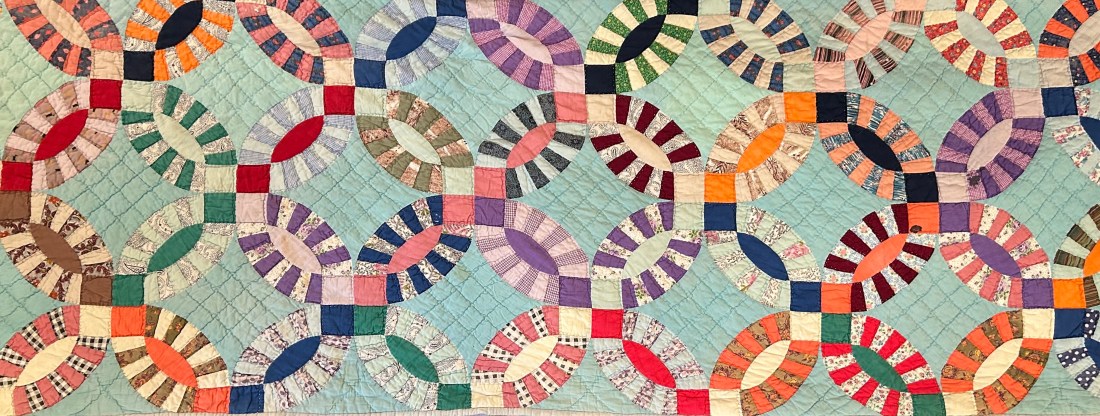
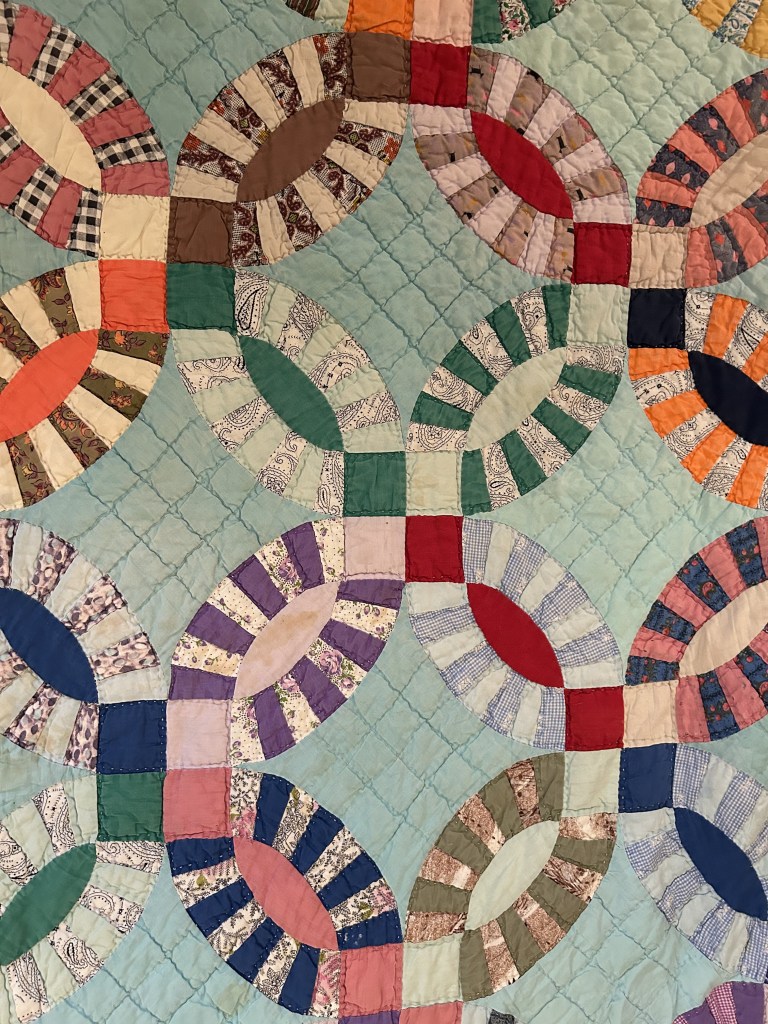
Image of a handmade double wedding band quilt featuring interlocking circular patterns in vibrant colors on a light background. The intricate stitching and carefully pieced fabric showcase the craftsmanship and artistry of traditional quilting.
Image of brown and white English Bulldog showing side profile sitting on gray furniture
Bruno displaying AI (Actual Intelligence)

I added a page to my Homepage to explain my thoughts and personal policy regarding Artificial Intelligence. Here it is as a post.

Within 20 years (perhaps 10, probably 5), this message will no longer be necessary. Within a generation, content producers and consumers will have figured out the ethics of using Artificial Intelligence to generate all kinds of content–from graphic designs, to music, to work documents for all professions, to classroom coursework, to, yes, blogs. We will have found the balance between using AI as a tool to enhance our work and relying on it to do the work for us. We will have figured out the survival–celebration, value–of artists, academics, and writers (human anythings) so that we will not have been replaced, which is a current concern. With a nod to Faulkner, I believe when it comes to AI, we will do more than survive. We will prevail, but we are not there yet.

My institution has three options regarding AI usage in the classroom that we faculty can incorporate into our syllabi–“Generative Artificial Intelligence Use Prohibited,” “Generative Artificial Intelligence Use Allowed with Attribution,” and “Generative Artificial Intelligence Use Encouraged with Attribution.” That pretty well captures the options for use in most settings. We can prohibit the use of AI, allow its use with care, and/or encourage its use. I would argue that the first option is not only unrealistic, but it would also put users at a disadvantage. Option 3 sounds to me like it could turn into a party–a free for all for beginners and professionals alike without boundaries and guardrails. Option 2 is a reasonable place to start, as it insists upon using the creative brain first and primarily, allowing us to form a relationship with AI–which we will do, one way or another, but that is another story–where it is the tool, not us. We humans must stay in the game, after all. (To the people reading this in 20 years–I know you are laughing and shaking your heads. Enjoy!)

I think of AI like quilts. You can purchase pre-printed quilting material at Walmart or any fabric store. To make your quilt, you only have to put stuffing (called batting or wading) between the printed side and the backing, and outline the printed design with thread, and viola, a quilt. I have one or two of these that my sweet mother and aunt have given me. They are treasures, but they are nothing like the quilts they used to make before their hands got tired and bent from arthritis. Designs were intricate and colorful, made from generations old patterns. Some patterns were made with hundreds of small pieces of cloth, which were stitched painstakingly, creating a “double wedding band,” for example, on the colorful front and plain-cloth backing. These quilts are heirlooms, works of art that are lovingly protected and stored to preserve their beauty. The difference between AI generated content and human generated content is like the difference between the printed quilt and the pieced quilt.

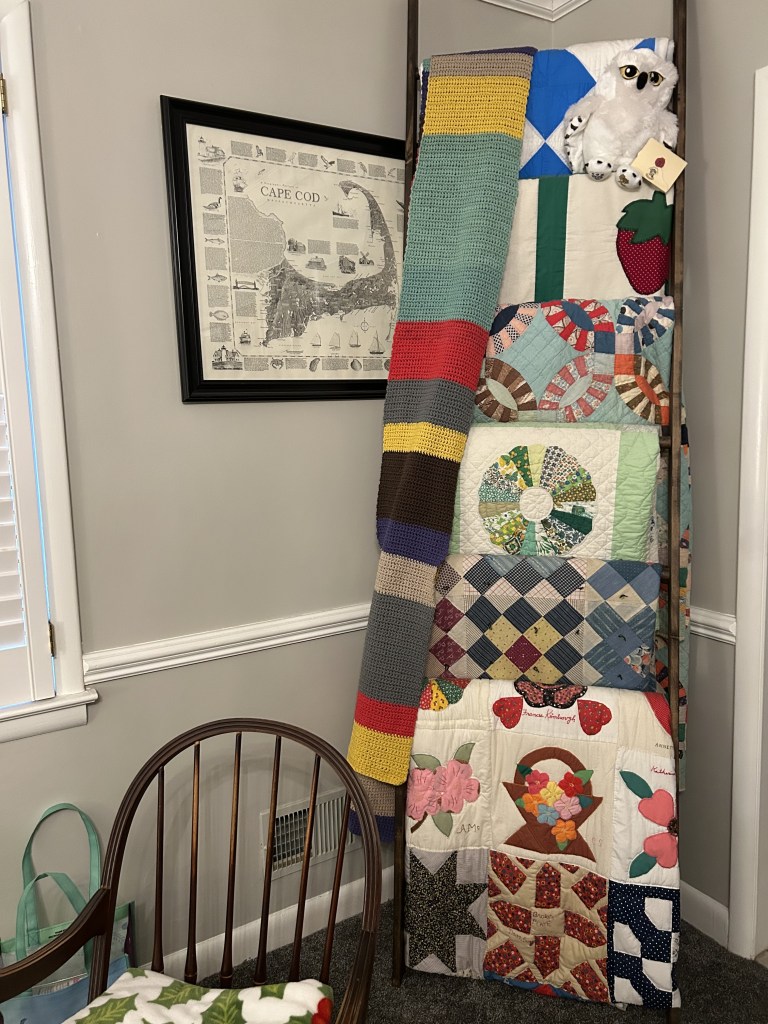
Image of a quilt ladder displayed in a cozy room. The ladder holds a collection of colorful handmade quilts, including a double wedding band quilt, a basket design, and others with intricate patterns. A crocheted striped blanket hangs alongside them. At the top of the ladder is a plush white owl. A framed Cape Cod map hangs on the wall, with a wooden chair and a tote bag visible in the foreground.
A collection of family heirlooms! Quilt ladder displaying several hand pieced quilts.

But, you may ask, how is that a valid comparison, since AI content is sometimes indistinguishable, often superior to human generated content? The attributes of beauty, of quality—even, maybe especially, messiness and flaws—are the human elements. Our challenge is not to attempt to catch up to what AI can do–we can’t. Our challenge is what the poets have always sought to evoke in humanity. It reminds me of what Ashley Wilkes tried in vain to express to Scarlett O’Hara: “I do mind, very much, the loss of the beauty of the old life I loved. Scarlett, before the war, life was beautiful. There was a glamour to it, a perfection and a completeness and a symmetry to it like Grecian art.” Ashley, though, mourned for the lost grace and perfection (that never existed), and in so doing, sadly missed the point…and the opportunity. Human completeness and symmetry are not going anywhere; we just have to be intentional about keeping them—us—alive. Aliveness is the pearl that makes Artificial Intelligence artificial.

At the beginning of my classes, my students and I talk about the ethics of using AI for course assignments. We look at the University’s options, above, and I talk to them about Google’s standards for evaluating web content (Google will not publish just anything), the E-E-A-T Guidelines. E-E-A-T stands for expertise, experience, authoritativeness, and trust. Google holds content to this standard in part to screen content that is generated to “manipulate search rankings.” Google uses its automated ranking system to focus on “high-quality, reliable, people-first content” https://developers.google.com/search/docs/fundamentals/creating-helpful-content. I’m sure that me and my little blog and my academic writing were not what Google had in mind when it developed its regulatory content standards. My blog has 4 readers, one of whom is my sweet Mother, and the academic writing has even fewer. But just as AI reaches broadly toward various fields and modalities, so too must the ethics that guide its use.

I try to persuade my students that I would rather read work full of their own emotions, originality, and creativity than a perfectly crafted AI-generated response paper. I’m not naive—AI is too easy to use—so we talk a lot about treating it more as an editor than a creator. I encourage them to maintain and strengthen their sense of creator-ness while learning to use AI responsibly as a tool to enhance their ideas, not replace them. I want them to see themselves as authors of their own thoughts, capable of crafting their work like a beautiful, hand-pieced quilt, rather than relying on AI to assemble their ideas for them.

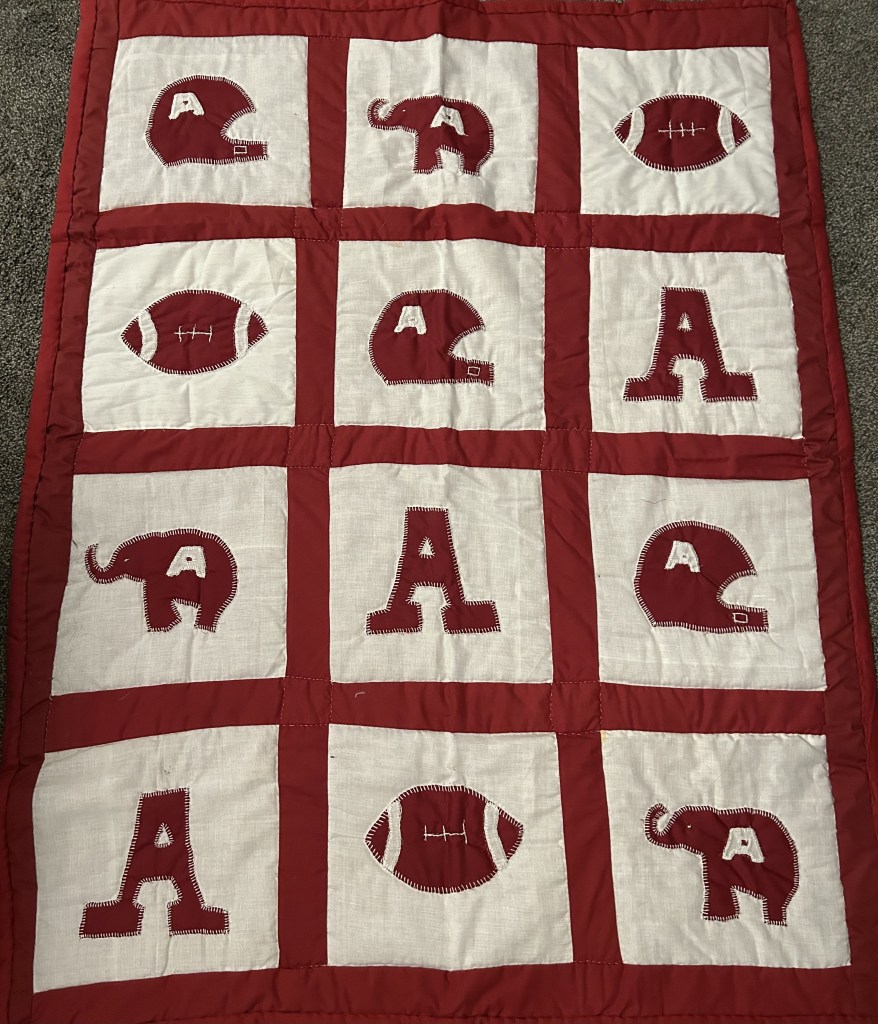
Image of a handmade quilt with a crimson and white Alabama football theme. The quilt features appliqué designs of football helmets, footballs, the letter 'A,' and elephants in alternating squares. Each design is outlined with visible stitching, and the quilt is bordered with a crimson edge, showcasing school spirit and craftsmanship.
Lovingly made Alabama Quilt from my Mother

Some academics will prohibit the use of AI in their courses, focusing on catching students who use it. These are likely the same individuals who hold their peers to a higher standard when it comes to leveraging AI. Over time, these attitudes will adapt. For instance, I was encouraged to find that a Google search for ‘Scholars and academics who use AI’ yielded results emphasizing the responsible and ethical use of AI in research and writing. Just today, Tom’s Guide published an article, ’12 Days of OpenAI,’ reporting on OpenAI’s release of the new Pro More subscription, designed for advanced scientific research and complex mathematical problem-solving, at a cost of $200 per month. I’m old enough to remember when personal calculators were banned in math classrooms out of fear that students wouldn’t learn to calculate on their own. Eventually, we realized that without understanding the underlying concepts, a calculator wouldn’t help a student much. Similarly, while AI has historically struggled with math, it’s improving—and for $200 a month, you can see its progress. Advances like Pro More will inevitably become irresistible and indispensable for researchers. I suspect that as AI continues to evolve, the ethics of its use in academia will become increasingly situational.

For my blog and academic writing, I drafted a disclosure to include with my work. The following is the only AI-generated content in the post. ChatGPT spit this first one out in less than 10 seconds. It’s well-organized and pretty comprehensive, and with my found time I folded a load of laundry. Scroll to the bottom to see the human-created, much simpler finished product:

Personal Ethical Policy for AI Use in Writing

As a writer, I recognize the value of artificial intelligence as a tool to enhance creativity, efficiency, and quality in my work. To maintain integrity and uphold ethical standards, I commit to the following principles:

  1. Transparency:
  • I will disclose the use of AI tools in the creation of any content where its contribution significantly impacts the final product, especially in professional, academic, or published works.
  1. Originality:
  • I will ensure that the core ideas, voice, and creative expression in my writing remain my own. AI will serve as an aid, not a replacement, for my unique perspective and narrative.
  1. Accuracy and Verification:
  • I will verify any AI-generated information, ideas, or suggestions to ensure factual accuracy, avoid misinformation, and maintain credibility in my writing.
  1. Plagiarism Prevention:
  • I will not use AI to produce content that could be considered plagiarized or misrepresented as entirely original. Proper attribution will be given where AI outputs are directly used.
  1. Mindful Usage:
  • I will use AI tools for appropriate tasks such as brainstorming, editing, and administrative writing assistance, while refraining from over-reliance that could diminish my skill development or creative input.
  1. Respect for Context:
  • In collaborative projects, I will adhere to agreed-upon policies regarding AI use and respect any ethical or legal guidelines specific to the context of my work.
  1. Commitment to Growth:
  • I will continuously evaluate the role of AI in my writing practice, striving to balance innovation with authenticity, and learning how to responsibly adapt to emerging technologies.

That’s way too much information, and notice how Chat GPT numbered each item in its own list #1, a fitting reminder that although AI organizes information with precision at light speed, creativity and meaning-making is and will continue to be a human enterprise.

AI went on to ask me: “Would you like adjustments to tailor this for a specific audience, such as professional peers, readers, or students?” I declined the offer, and here is my human version:

The work presented here is original to me. I have used AI tools such as ChatGPT sparingly and ethically for tasks such as identifying trending topics, proofreading, suggesting key words for search engine optimization. I have carefully reviewed AI-generated suggestions to ensure they align with my authentic voice and unique style, thereby preserving the creativity and integrity of the work and myself.

Image of a handmade double wedding band quilt featuring interlocking circular patterns in vibrant colors on a light background. The intricate stitching and carefully pieced fabric showcase the craftsmanship and artistry of traditional quilting.
Hand pieced Double Wedding Band Quilt

A Letter To My Students, From Their “New” Professor

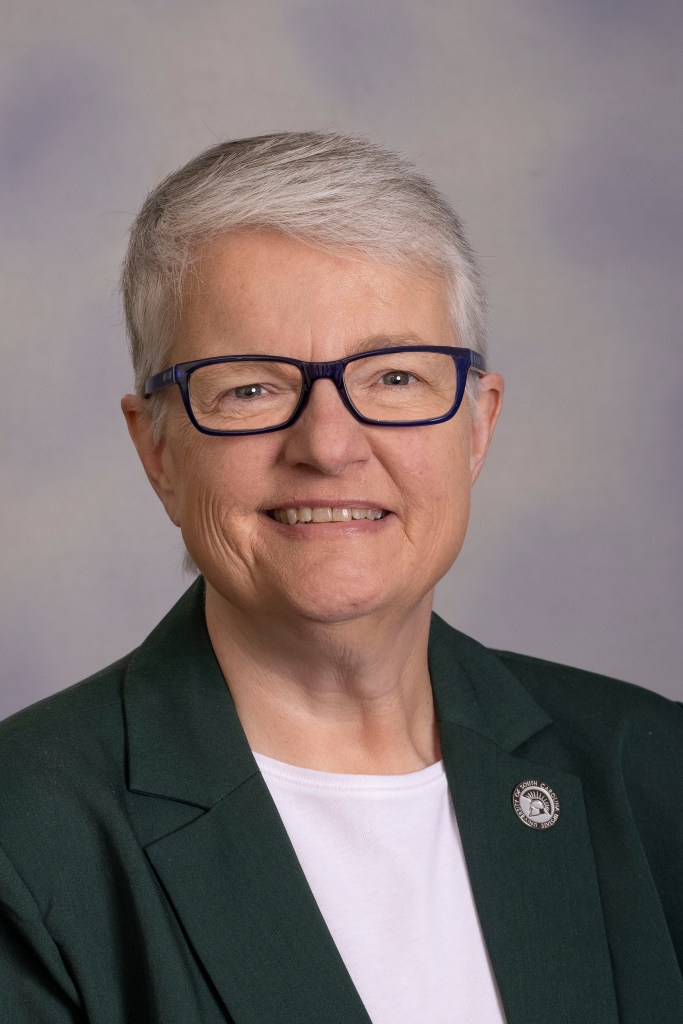
Image of Dr. Ugena Whitlock at USC Upstate
Dr. Ugena Whitlock

Dear Students,

Welcome to the new semester and to our class! As your professor, I want you to know how excited I am to be back in the classroom after several years in administration. It’s been a while since I last taught a full course load—2007, to be exact. Since then, I taught an occasional class until stepping fully into administration in 2016. Now, here I am, rejoining the classroom and rediscovering the rewards of working with students like you.

Image of a brown and white English Bulldog with his tongue out. He is playing with 6 hippopotamus squeak toys lined up on a dog bed.
Bruno is ready for school

A lot has changed since I last taught full-time. We’ve experienced a global pandemic, witnessed national and global unrest, navigated four presidential elections, endured economic turbulence, and just generally undergone shifts in our society. Schools and classrooms have changed over the years, too. Teachers have left the field in significant numbers and fewer people are entering the profession. Those who stay report that their students have changed. Actually, we’ve all changed.

But amid all this change, some things remain constant—our innate human capacity for love and acceptance, and our nature as social creatures who need each other. We are curious about the world and about one another. We can laugh at ourselves. These are foundations that inspire me as a teacher, ones I hope will inspire you, too. Our humanness fills me with faith. I have faith in you and in the value of this class. We are going to explore some very interesting topics together, which I hope you will carry into your own classrooms. I hope you will also pass on to your students the faith, hope, and inspiration that I hold for you.

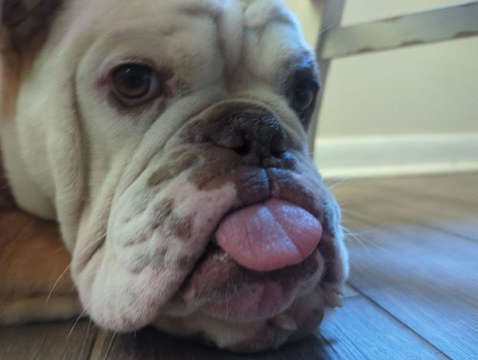
Close up image of brown and white English Bulldog with his tongue out.
Bruno contemplating beginning of semester

I’ll be honest with you: I feel a mix of anticipation and vulnerability as I return to the classroom. I want to create a dynamic, engaging space that feels welcoming and worthwhile for each of you. Even though it’s been a while since I’ve facilitated learning experiences for students–either online or in person–I see it as a challenge worth embracing. Why? I still believe in the power of education to make a difference—not just for your students but for you, too. I believe that we can change the world one student at a time.

Our time together will be about more than standards, objectives, and theory (though we’ll cover plenty of that stuff). It will be about understanding ourselves as educators, examining the world through a critical yet hopeful lens, and preparing for the deeply human work of teaching. I have great hope that you will find this class meaningful and empowering as you move closer to realizing your dreams—both personally and professionally.

Let’s begin our journey with curiosity, openness, and mutual respect. I’m here to support you every step of the way.

Warm regards,
Dr. Ugena Whitlock
Your “New” Professor

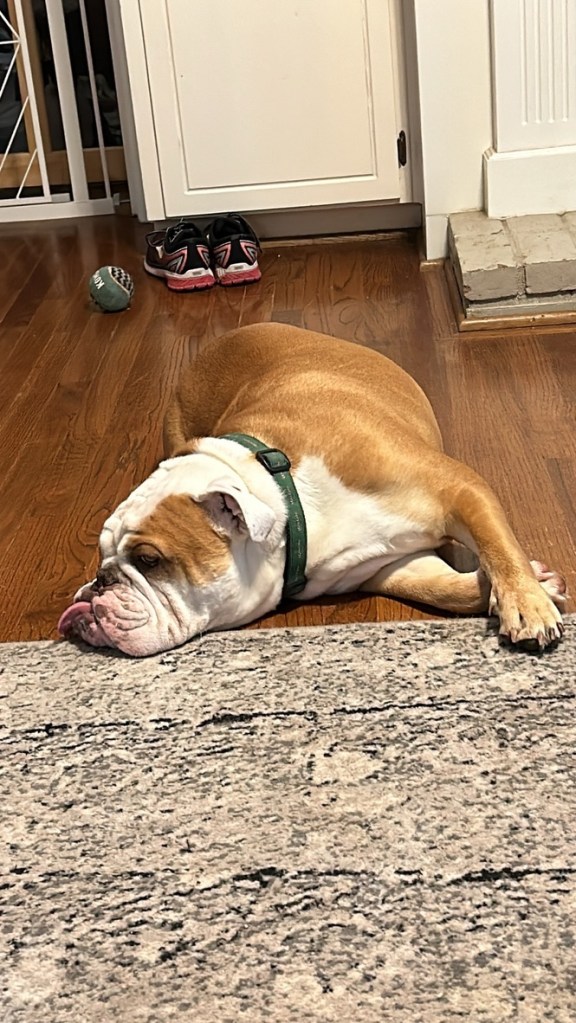
Image of a brown and white English Bulldog with his tongue out lying on a rug
Bruno after a long day at school

Exciting News: A New Chapter for the Blog!

Image of Logo for Blog The Front Porch Professor with rocking chair, typewriter, and Mazda Miata..

Hello, friends! I’m thrilled to share that my blog is getting a fresh start under a new name: “The Front Porch Professor.” This new space will continue to feature the reflections, stories, and observations you’ve enjoyed, with a renewed focus on life, learning, and the journey ahead—all with a touch of Southern charm.

I’m currently working on exporting all my posts from Just Keep Swimming to the new blog, so nothing will be lost. If you’ve been following here, I hope you’ll join me on this new adventure! With any luck, your subscription will carry over seamlessly, but if not, I’ll share the link to the new blog soon so you can continue following along.

Thank you for your support and encouragement—stay tuned for updates and more from “The Front Porch Professor.”

The Promise of Forgiveness & Reconciliation, part 3

I call this last post The Promise Forgiveness & Reconciliation because I want to end on a hopeful note.

The Mystery of Forgiveness & Reconciliation, part 1

The Limits of Forgiveness & Reconciliation, part 2

I believe it is justifiably hopeful given the theory, theology, and practical parts of the topics. If I were going to teach a Sunday School class, or even present a lesson in a college education class, I would begin by scouring literature and web sites. I would, in the style of Worthington and Lederach, turn to case studies and current events. Much like these blog posts, the organization of a brief curriculum would be somewhat as follows:

  1. Introduction, Definition of Terms, Participant Questions
  2. Deeper Understandings: Contexts, Benefits, Limits
  3. The Scope of Forgiving and Reconciling: Interpersonal, Local, Global
  4. Putting It All Together, Where Do We Go From Here, Revisit Initial Questions

Peace Dove 1

I have included below Revisiting the 10 Practices of Just Peacemaking Theory by David P. Gushee (2019) from EthicsDaily.com. Developed by the late ethicist Glen Stassen. Although the practices reference peacemaking (which I use interchangeably with reconciliation, knowing there are differences) at the global setting, I believe they can be modified to allow us to act upon them locally.

  1. Support nonviolent direct action.
    Nonviolent direct action occurs when citizens confront injustice through peaceful public protests and other resistance strategies, including boycotts and strategic noncooperation. Practiced effectively by Mohandas Gandhi and Martin Luther King Jr.
  2. Take independent initiatives to reduce threat. 
  3. Use cooperative conflict resolution. These skills train adversaries to see each other as human beings with dignity and legitimate needs rather than as sub-humans whose every negotiating demand is illegitimate just because of how evil they are.
  4. Acknowledge responsibility for conflict and injustice; seek repentance and forgiveness.
  5. Promote democracy, human rights and religious liberty.
  6. Foster just and sustainable economic development. Hungry people easily become desperate and violent, and, when they rebel, their need is at least temporarily exacerbated.
  7. Work with emerging cooperative forces in the international system.It stands to reason that the more nations are involved in these webs of interaction, the less likely they are to make war.
  8. Strengthen the United Nations and international organizations.
  9. Reduce offensive weapons and weapons trade.
  10. Encourage grassroots peacemaking groups and voluntary associations. Everybody needs somebody looking over their shoulders to keep them in check. See the full article here

Peace, justice, dignity, equity, voice, and the resolution of conflict are the basis of reconciliation. What about forgiveness? Psychology Today states, “Forgiveness is the release of resentment or anger.” It does not mean reconciliation–no person or entity has to return to a harmful relationship. “Forgiveness is vitally important for the mental health of those who have been victimized. It propels people forward rather than keeping them emotionally engaged in an injustice or trauma.” It has physical, emotional, and psychological benefits, and has been shown to “elevate mood, enhance optimism, and guard against anger, stress, anxiety, and depression.” Forgiveness and Reconciliation are like a suit: you can wear the jacket and pants separately, but they also go together. Maintaining the distinction acknowledges the offended party (I am avoiding the word victim here). If this complicated process is worked prayerfully and diligently, there are situations where both are possible outcomes. Link to Psychology Today: Forgiveness

peace dove 2

The following is the beginnings of a collection of resources that I will add to over time.

  1. Duke Divinity School: Center for Reconciliation Resources https://divinity.duke.edu/initiatives/cfr/resources
  2. Peace Center for Forgiveness & Reconciliation http://www.choosetoforgive.org/
  3. The Forgiveness Project https://www.theforgivenessproject.com/
  4. Racial Equity Resource Guide http://www.racialequityresourceguide.org/organizations/organizations/sectionFilter/Racial%20Healing
  5. Racial Equity Institute https://www.racialequityinstitute.com/partner-organizations
  6. Reconciliation Ministry (Disciples of Christ) https://reconciliationministry.org/
  7. Conciliation Resources http://www.c-r.org/
  8. Truth and Reconciliation, Commission of Canada http://www.trc.ca/resources.html
  9. Community Tool Box https://ctb.ku.edu/en/table-of-contents/spirituality-and-community-building/forgiveness-and-reconciliation/main
  10. Center for Justice & Reconciliation http://restorativejustice.org/#sthash.i2cZEw7o.dpb
  11. Lederach, J.P. (2014) Reconcile: Conflict Transformation for Ordinary Christians. Virginia: Herald Press.
  12. Jones, G. (1995). Embodying Forgiveness: A Theological Analysis. Grand Rapids: Eerdmans.
  13. Worthington, E.L. (2001). Forgiving and Reconciling: Bridges to Wholeness and Hope. Illinois: InterVarsity Press.
  14. Walker-Barnes, C. (2019). I Bring the Voices of My People: A Womanist Vision for Racial Reconciliation. Grand Rapids: Eerdmans.


asymmetrical-ethics