So This Is 61: Notes on Aging From the Inside Out

Image of snowy tree, Littleville, Alabama.

So This Is 61: Notes on Aging From the Inside Out

I didn’t expect to notice it all at once. Nobody tells you that one day, getting out of a chair will require a full mental and physical commitment. Or that you’ll avoid driving at night because headlights are now earthly starbursts. Or that the first time you wake up with a stiff neck, you’ll briefly wonder if you also have a brain tumor, because the sharp pain shoots all the way up into your temple. Of course, it’s just how you slept, but the thought still crosses your mind. My neck now cracks so hard I sometimes wonder if others can hear it. This is all new.

These are notes from those realizations—honest reflections of what 61 feels like, from the outside in and the inside out.

Oh. And who IS that old woman staring back at me in the mirror?
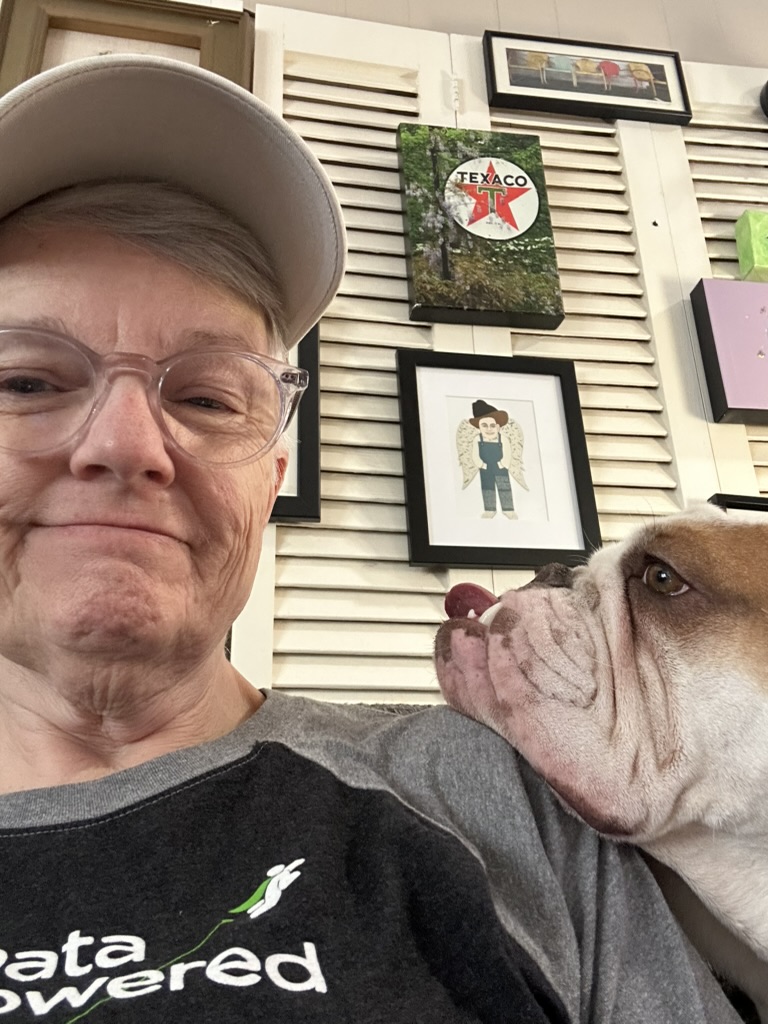
Image of Ugena Whitlock and bulldog.
Who is that old person being lovingly gazed at by Bruno the bulldog?

Aging is full of these little surprises—some unsettling, some mildly amusing, and some that require a good stretch, a heating pad, and a moment of reflection. I am learning, slowly, to embrace it all. I’m slowing down, but not shutting down. Sixty is NOT the new 90, as Sarah likes to suggest to me. If anything, I’m rediscovering the joys of having time to potz around the house, sort through old pictures, take the dogs for walks, and drive my Miata around Spartanburg like it’s my own personal victory lap.

I have less—less urgency, less need to accumulate things—but I also have more. More awareness, more gratitude, more quiet moments of contentment. Don’t get me wrong, I’ll still upgrade to the latest iPhone every couple of years and buy accessories for the Miata and Mini Clubman, but there’s nothing I can think of that I truly need. That’s an unsettling realization, not because it signals loss, but because it signals a kind of peace. I’ve been asked whether this feeling means I’m depressed. I don’t think so. If anything, it feels like clarity, like a settling in—like I’m moving toward a place where I don’t have to chase after the next thing. I haven’t arrived there yet, but I can tell a difference.

Image of people singing in church, Littleville, Alabama.
Blurry picture I snuck while Daddy is leading a song at church on Singing Night.

Aging isn’t just about collecting years; it’s about collecting perspective. There is wisdom in learning what to hold onto and what to let go of and in understanding that urgency is often self-imposed. It is true that contentment is “not about having what you want but wanting what you have”–that is, it’s in perspective. I remember when I was about 9 years old, I stood by eavesdropping, as children do, when Mother and Daddy were visiting with the preacher after Sunday night church. I don’t know how the conversation turned toward me–probably because I tried to join in the adult’s conversation. But I still recall Daddy telling the preacher, “Ugena can’t be content.” Even then, I wanted the next thing, to go to the next place–I just plain wanted. I realize now it’s a quality that must be cultivated. I am working on it.

I’ve learned that not every battle is worth fighting–not every hill is one to die on. Very few are. And against a life of doing otherwise, I’ve come to understand that silence can be more powerful than a quick, clever retort (which, I admit, is a talent of mine). Although Sarah probably say it’s taking too long, I’m also learning to take myself less seriously–to laugh at myself when I can.

And yet, aging isn’t just about accumulating (waiting patiently for?) wisdom—it’s also about watching my body become a stranger to me. The aches, the slower reflexes, the shifting body shape that seems to have a mind of its own. And let’s not even talk about hair loss and the horrifying reality of what gravity does to internal organs. I wonder if everybody, like me, sees someone and thinks “old person,” only to discover that she or he is younger than I am. I die a little on the inside when that happens, and it does regularly.

I’ve inherited certain characteristics from my father—beyond just looking more and more like a little old man every day. If I’m not careful, I can be short-tempered and convinced my way is obviously best. I don’t always filter my thoughts the way I should—not snapping, exactly, but sometimes speaking too bluntly, unaware in the moment of how my words might land. And yet, also like him, I’ve also mellowed. I am more nostalgic, more sentimental, more conscious of time slipping through my fingers like sand. I find joy in familiar places, in the sound of a bird’s song. I think I am figuring out the face in the mirror. It’s starting to look like me. The trick is learning to love the aging face.

When I married at 18, I could imagine “50 years from now.” Now, I understand, in a way I didn’t before, that the time ahead is finite. There’s an end of the road. My parents, whose mortality would have been unimaginable to me 20 years ago, are fading—fragile, frail. My father still has a prolific memory of a shirt he was wearing when he was talking to a particular person at a specific place in 1957 while a specific song played on the radio, but he struggles to remember which channel is which on the TV. My mother, who was heavy-set all my life, is growing thin. It’s probably healthier, but it’s startling to me. Even the house, now 50 years old, is a little less kempt, as houses tend to become when the priority is simply to live in them rather than maintain them. These things are bittersweet to see.

There’s a void where the future used to be. I can’t plan for 50 years down the road anymore. Twenty years, maybe. Ten, certainly (no, not certainly, more…hope-fully). But the open-ended future that once stretched ahead indefinitely has become something else entirely. Maybe the saddest thought—and why do I allow my ruminations to go here—is that one day, not too far into the future, the last people on earth who call me by the nickname that Daddy pronounced upon me when I was born, will be gone. He and Mother call me Miss Bean. I’ll never hear it spoken naturally to me again. This is, by the way, a very Daddy way of thinking, and I have to stop it. It’s dangerous, depressing, and yet, sometimes, it sneaks in anyway.
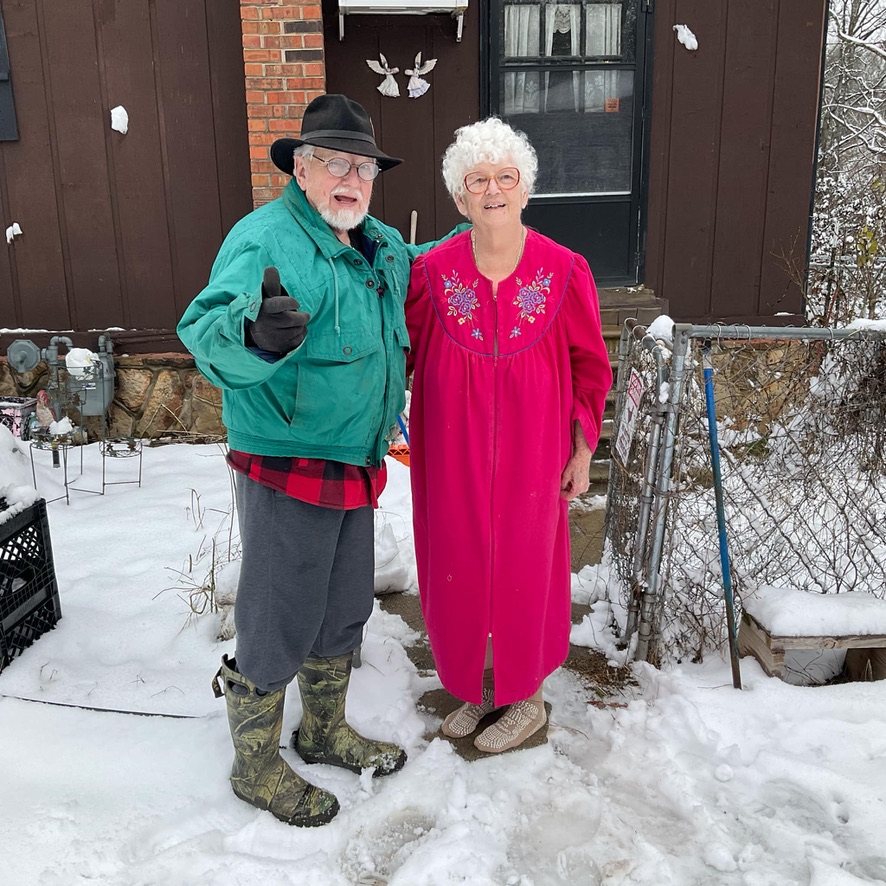
Image of old folks in winter, Littleville, Alabama.
The Whitlocks outside the house to show the snow. Not used with permission, but I’ll take my chances.

And yet, there is joy to be found in all of this. There is humor. There is, finally and blessedly, contentment. There is the deep love I have for my family–and a conviction to see every minute they are in the world as a gift. Time doesn’t march on–that heifer tears out like her tail is on fire. Aging isn’t a slow march toward irrelevance—it’s a shift in focus, a new way of seeing. I am still learning, still growing, still moving—albeit with a few more creaks and groans along the way. And in the meantime, I’ll keep driving my Miata and cracking my neck like like a walnut. I’ll keep striving toward the Big Three attributes of sanity: gratitude, contentment, and humor as I remind myself that I’m still here. And I’m still going.
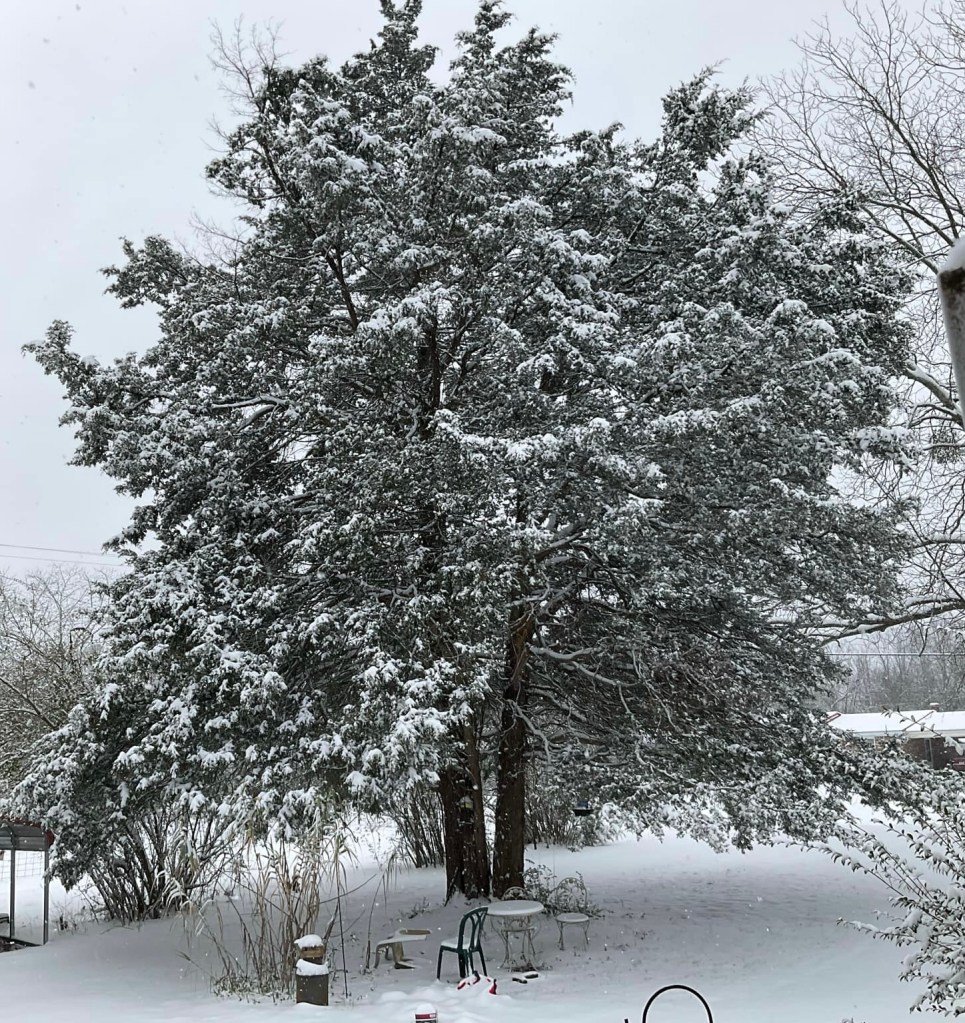
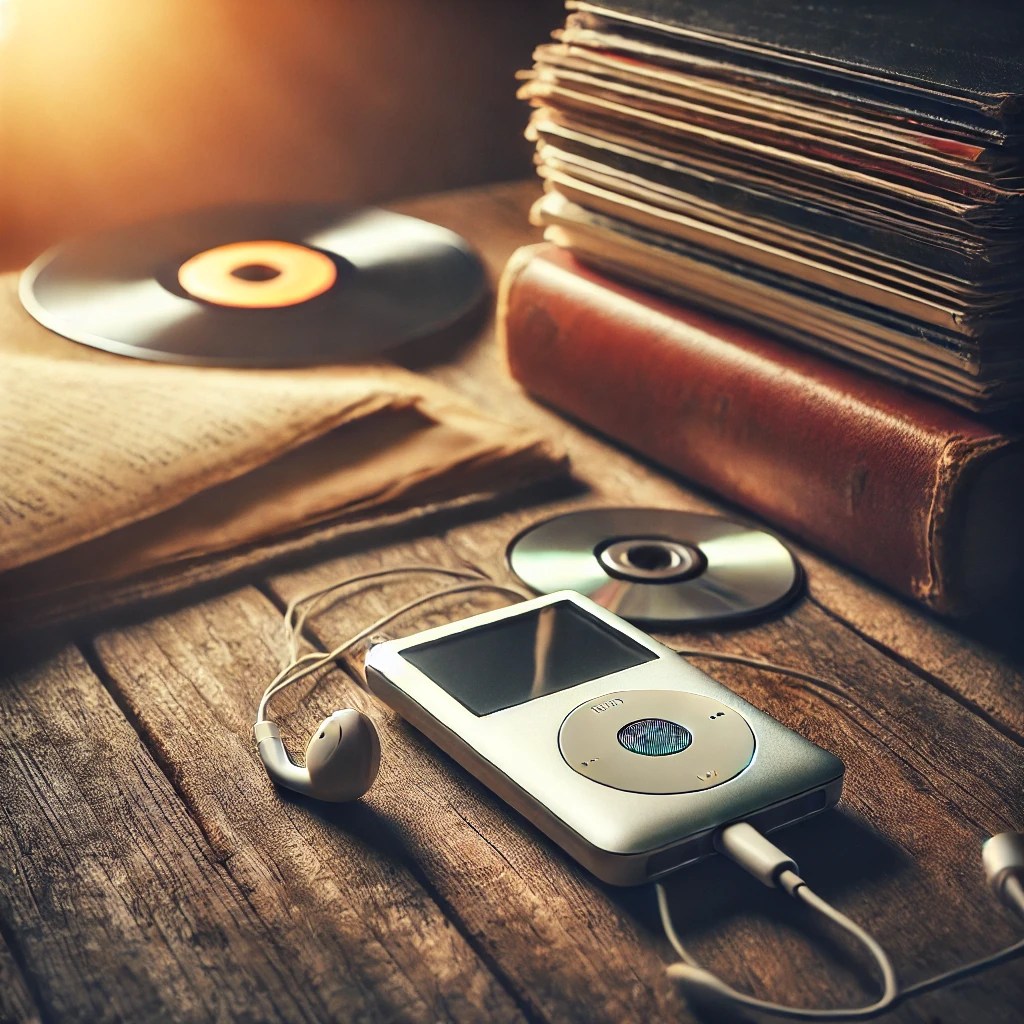
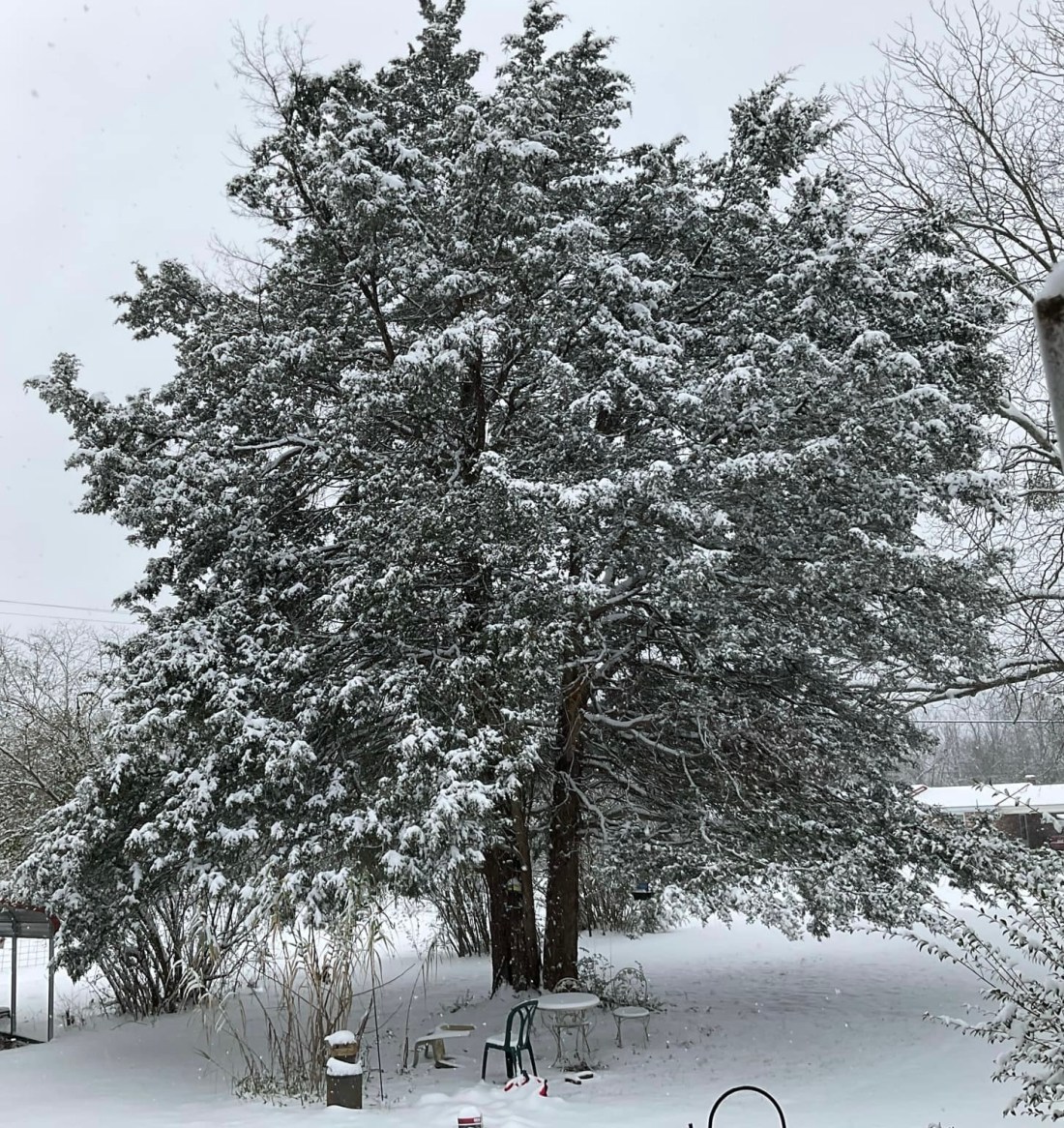
Image of snowy tree, Littleville, Alabama.
Ice and snow on the remains of the old cedar tree at home, Littleville, Alabama.

The Playlist of me: Forgotten iPod, Rediscovered Self (Power of Music, Part 1)

A warm, nostalgic scene featuring a vintage iPod with earbuds resting on a wooden table. Surrounding the iPod are a stack of old CDs and vinyl records, symbolizing a love for music across different eras. Soft, ambient lighting creates a cozy and reflective atmosphere, with a hint of a worn journal and handwritten notes in the background, evoking a sense of personal rediscovery and connection through music.

I Found My iPod: Rediscovering Happiness Through Music, Part 1

Last year, I completed an End of Life (Death) Doula program with INELDA, the International End of Life Doula Association. The experience itself deserves its own post, but one lesson from the program keeps coming back to me: the role of music in creating peace during life’s final moments.

Image of International End of Life Doula Association, INELDA, logo

As the person in our care begins their end-of-life journey, we were advised not to play their favorite songs as background music. At first, this advice seemed strange to me. After all, wouldn’t a familiar melody bring comfort? It sure does for me! But then it was explained: favorite songs are deeply personal and emotionally charged. They can evoke strong memories, longings, or attachments that might not be conducive to a peaceful transition. Instead, we were taught to choose ambient tones or tranquil soundscapes to foster an atmosphere of calm and rest.

Not being a doula or having experienced end-of-life caregiving firsthand, this suggestion went against my intuition. The more I thought about it, though, the more sense it made. If it were me, I could imagine holding off my own passing just to hear my favorite song finish! The idea stayed with me: music is powerful, not just for its personal connections but for its ability to transcend memory and emotion, helping us navigate transitions when we need it most.

This thought was still on my mind when I stumbled across something I hadn’t seen in years—my old iPod.

From Records to iPods: A Musical Journey

As a Generation Jones Boomer, I’ve collected music in just about every format imaginable. I started with records and CDs, eventually amassing hundreds of them. Many of my favorite records were handed down from my parents when they got rid of their stereo. I didn’t have a record player either by then, but I kept the albums for the memories. Over time, I replaced many of those records with CDs, though I had to replace some of those twice after accidentally leaving my CD holder in a car I sold.

Then came the 2000s and the rise of digital music. When Apple introduced the iPod in 2001, I thought it was the pinnacle of technological advancement. I was as excited about it then as I am about AI now–granted for different reasons. I finally got one in 2005, and that summer, I spent two weeks downloading every CD I owned onto it. I painstakingly created playlists for every mood and occasion, collecting songs I thought I’d never hear again.

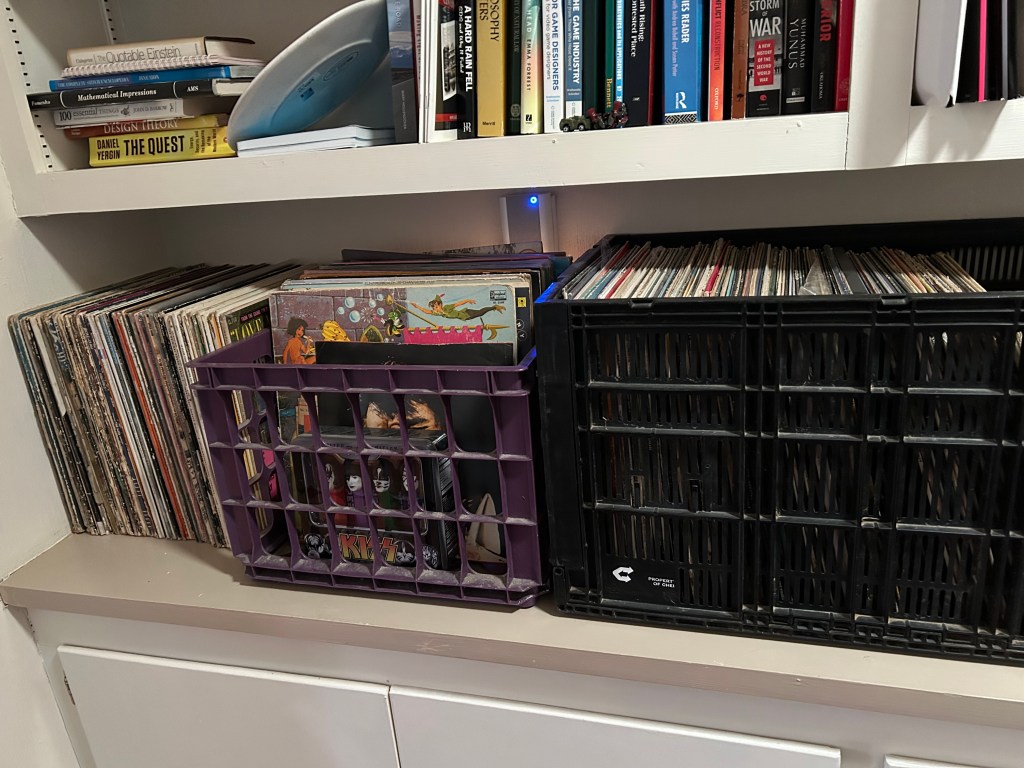
Image of record albums in crates. Disney's Merriest Melodies album.
My record album collection

By 2012, I had curated over 3,000 songs. I refused to sync my iPod with updated iTunes software because it wouldn’t preserve my playlists exactly as I had arranged them. They were perfect, and I wasn’t about to mess with perfection.

But as MP3s, smartphones, and streaming services like Spotify and SiriusXM gained popularity, iPods started to feel outdated. I used mine occasionally for chores around the house, but even that became less frequent. By 2022, Apple officially discontinued the iPod, and mine had long since stopped holding a charge. Eventually, it wouldn’t turn on at all. But I couldn’t bring myself to discard it permanently—it still held my songs.

Rediscovering My iPod

Last week, while searching for batteries in a drawer, I came across my old iPod again. Out of habit, I plugged it in, hoping for the best. The Apple logo flickered to life for a moment, and then… nothing. “Ugena,” Sarah said, “we live two minutes from a computer repair shop. Take it over there and see if they can fix it.”

The tech guy at the shop popped the back plate off, took one look, and said, “It’s your battery. See how it’s puffed up like a pillow? It should be flat. That’s an easy fix.” I was overjoyed.

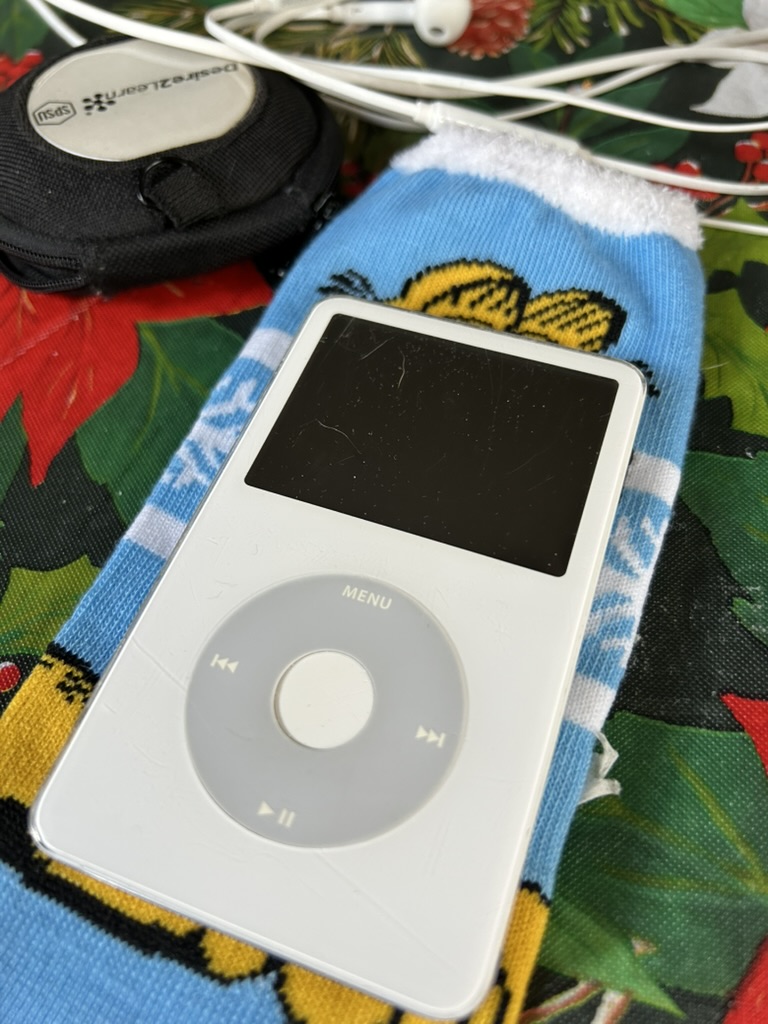
Image of iPod Classic 5.5 gen laying on a Garfield cartoon sock.
My iPod

When I picked it up a week later, I could hardly contain my excitement. After nearly a decade, I saw my playlists on the screen again. I navigated the wheel (nothing like the sound of those clicks as it turns!) to find the perfect song for the moment, and when “Love Grows (Where My Rosemary Goes)” by Edison Lighthouse began to play, I felt an overwhelming sense of contentment. I was home.

More Than Memories

For me, music isn’t just about nostalgia. While certain songs remind me of people or moments—like Elvis always bringing my mom to mind—it’s the music itself that moves me. The key changes, the minor chords, the walls of sound (a la Phil Spector) all stir something in me that feels bigger than words.

And yet, sometimes it is the words. A perfectly turned phrase can be so compelling, so beautifully crafted, that it draws me in completely. It stirs a visceral reaction, and I can’t help but sing along. And yes I do grab a hairbrush for a makeshift microphone. At that moment, the three of us–mind, body, and spirit–are in sync with the melody and words. During my free concerts, whether in the shower, the car, or empty house, my old romantic self rises to the surface, caught up in the sheer power of the lyrics.

This emotional connection reminds me of Howard Gardner’s theory of Multiple Intelligences from his 1983 book Frames of Mind. One of these intelligences, musical intelligence, refers to the ability to recognize, create, and emotionally connect with music. Though the theory is considered pseudoscience by some, it resonates with me. It helps me explain feelings that go far beyond simply liking music. What I feel is deeper, more profound—something that connects to the core of who I am.

Rediscovering my iPod wasn’t just about finding old favorites. It was about reconnecting with a part of myself—a good and strong piece of myself that, during my distractions with job advancement and the trappings of success, had been suppressed. During those times, I was lost, adrift, unaware of how much I had let go of what truly anchored me. But when the music is back in my life, it’s as if I’ve found my way home—a reminder of who I am and what brings me joy. In the words of the old song, “Was blind, but now I see.”

The last 5 random songs played on my iPod while I’m writing this:

  1. Bad Romance, Lady Gaga
  2. My Heart Skips a Beat, Buck Owens
  3. Silver Wings, Merle Haggard
  4. On the Street Where You Live, Bill Shirley dubbed for My Fair Lady
  5. Livin’ in the Sunlight, Lovin’ in the Moonlight, Tiny Tim (from Spongebob Movie)https://youtu.be/hERIZmJpwTI?si=JSKnB7XR5_rwbiHq
A warm, nostalgic scene featuring a vintage iPod with earbuds resting on a wooden table. Surrounding the iPod are a stack of old CDs and vinyl records, symbolizing a love for music across different eras. Soft, ambient lighting creates a cozy and reflective atmosphere, with a hint of a worn journal and handwritten notes in the background, evoking a sense of personal rediscovery and connection through music.