Finding My Voice Again: A Musical Journey (Power of Music, Part 2)

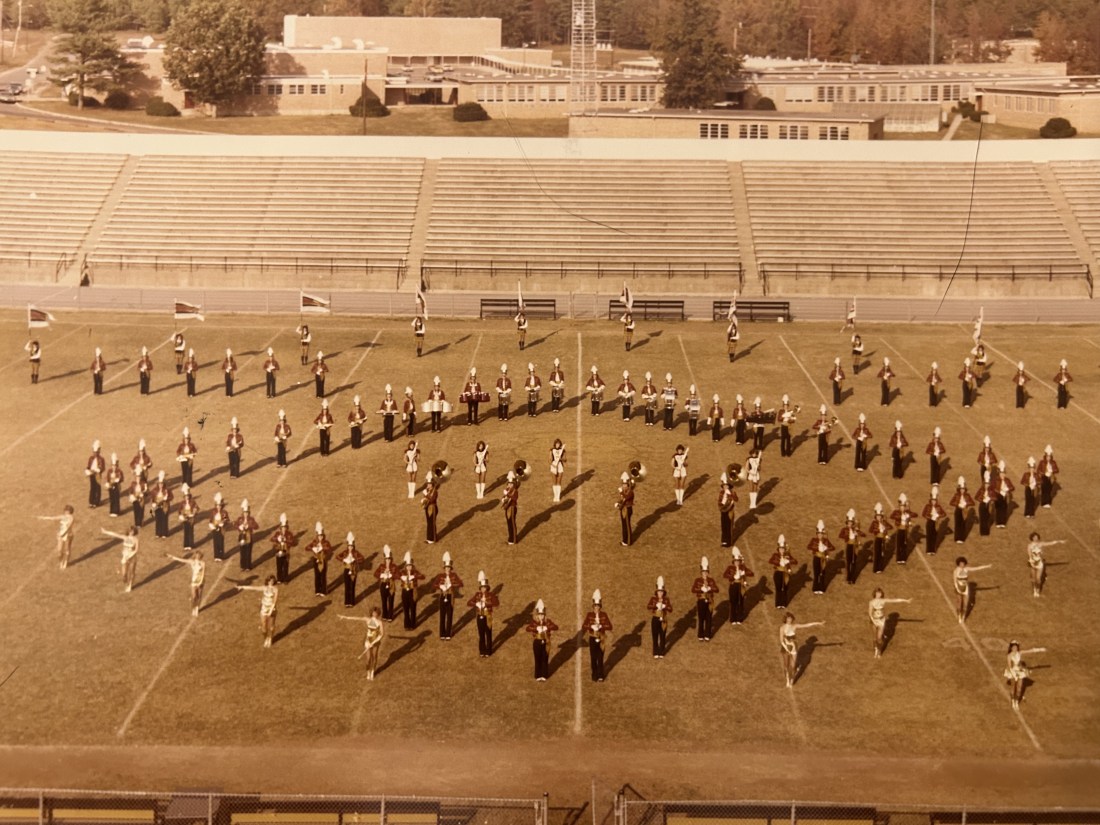
Image of 1979 Russellville Marching 100 Band Yearbook Picture

Finding My Voice Again

Music has always been more than just entertainment for me; it’s a pathway to the deepest parts of myself, a way to explore the complicated emotions that shape my inner being. Growing up, singing hymns a cappella in our small church was an unforgettable experience. I still recall sitting on a pew in the third row, right behind the song leader’s wife, with my friends Lynne and Susan. Our young voices would blend together in harmony, and Mrs. Greenhill would turn around, a twinkle in her eyes, to compliment our singing. “I heard you girls singing that alto,” she’d say. Those words of encouragement still resonate with me today.
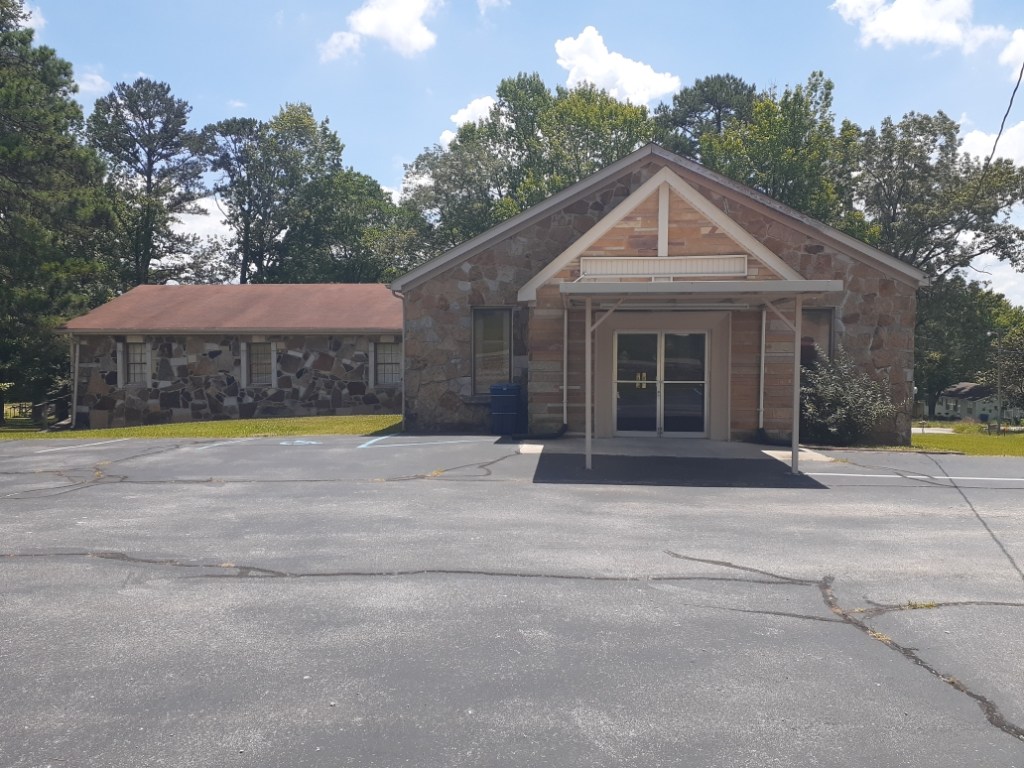
Image of small stone church, Littleville Church of Christ, Littleville, Alabama
My home church, Littleville Church of Christ, Littleville, Alabama

High school choir–the RHS Singers–was an incredible experience. We developed our singing abilities and musical knowledge as we discovered the pure joy of making music together, especially when we got to perform. I remember how proud I was when I wore the stage choir outfit made from gaberdine with matching rayon scarf that my Mom had sewn on her Singer sewing machine. I still remember the songs. And, as I’ve previously explored in my reflection on the RHS Marching 100, music has always held a significant place in my life. These experiences deeply shaped my love for music and continue to influence me today.

This strong connection to music was reaffirmed by my recent rediscovery of my old iPod. As I wrote in “The Playlist of Me: Forgotten iPod, Rediscovered Self,” my iPod held a collection of songs carefully chosen over time, each a reflection of a specific mood or memory. Listening to that forgotten playlist for the first time in a decade felt like uncovering a long-lost piece of myself. It was a powerful reminder of the abiding impact music has on my spirit.
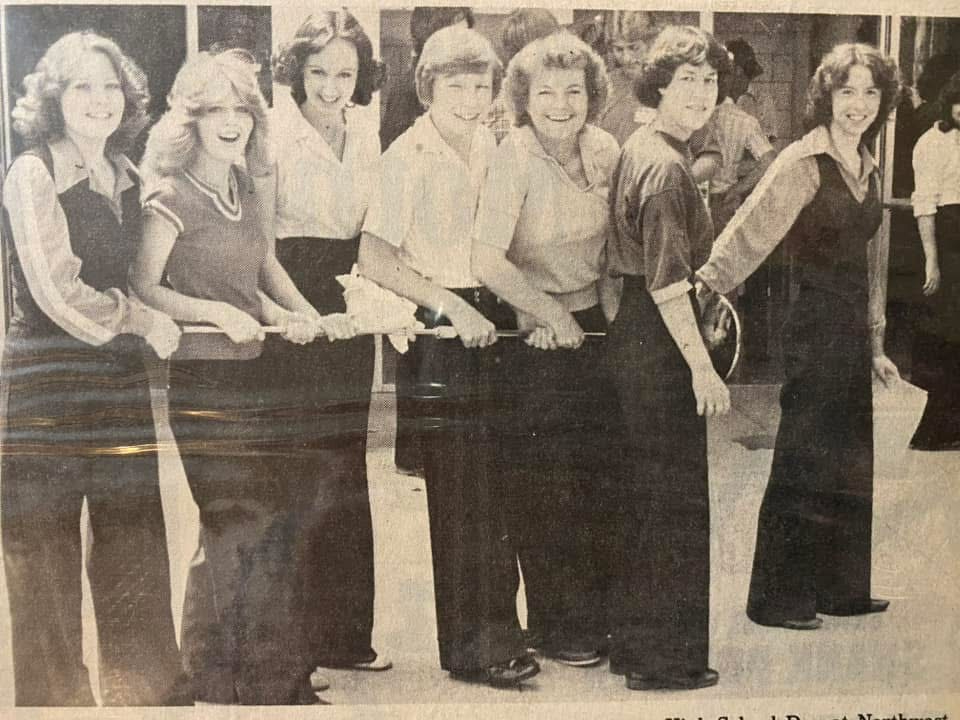
Image of seven teenagers in the Russellville High School RHS Singers choir, 1980
Joyful times! A group of RHS Singers being silly. We were “setting up” the microphone stand. I am third from right.

Darker Days

During my junior year, my boyfriend, who later became my husband, began to increasingly feel threatened by the time I spent with my classmates and the joyous importance of music in my life. Through subtle and not-so-subtle manipulations, he pressured me to miss choir and band gigs, culminating in his attempts to prevent me from going on an upcoming band trip to Washington D.C., a dream of mine. Heartbroken but worn down from struggling, I quit both. Losing these creative and social outlets devastated me, leaving a dark hole in my life where music and my connection with my classmates had once been.

After I graduated and we married, I began to have recurring dreams, vivid and unsettling. In these dreams, I would find myself transported back to my high school days, immersed in the music, the joy of playing my instrument washing over me. But the comfort of the dream would always be shattered by the harsh reality of waking, leaving me with a profound sense of loss and longing.

My marriage, unfortunately and unsurprisingly, amplified the unhealthy power dynamic between us. When we divorced, I finally felt free, but the loss of my 45s—taken from my belongings while I was packing—left me angry and heartbroken. Those records, collected during cherished weekly trips to town with my mom from as far back as I can remember until I got married, traced and preserved the years of my life growing up. Their disappearance wasn’t just a loss of possessions; it was a loss of something irreplaceable. I’ve been trying to rebuild that collection ever since, but those original records will always be gone. My only solace was that I no longer had the homesick dreams.

Image of blue plastic 45rpm record holder.
A similar blue plastic record holder to mine.

Looking back now, I see how, over time, I had become disconnected from vital parts of myself—choir, band, and even my cherished collection of 45s, all tangible links to my teenage years. The impact of the loss extended beyond the immediate. At this point, you may be thinking, “Well, lady, why didn’t you just play the radio or go to a concert? Why so dramatic?”

I continued to listen to music, of course, but it wasn’t the same. It was as if I was merely going through the motions, like a writer who stares at a blank page, unable to truly engage with the creative process. I didn’t realize how much I had distanced myself from the deep connection I once felt with music until I reconnected with it recently.

Image of a stack of old 45 rpm records

Rediscovering the Magic

The silencing of my musical expression that had been made complete during my marriage left a void in my life. However, the yearning for music never truly subsided. Years later, I found myself drawn back to the familiar comfort of church choir. The initial hesitation soon gave way to a renewed sense of joy as I rediscovered the power of music to uplift and connect. My voice, once silenced, found itself again. People would remark, “I’ve never seen anyone as happy as you look when you’re singing.” These simple observations resonated deeply, confirming that I had found my way back to a source of profound happiness and fulfillment.

Rediscovering the magic of music has brought unexpected joys. Sharing my father’s love for the music of his youth has been a deeply rewarding experience. As he hummed a long-forgotten tune for me, I would embark on a digital treasure hunt, searching for that elusive melody.
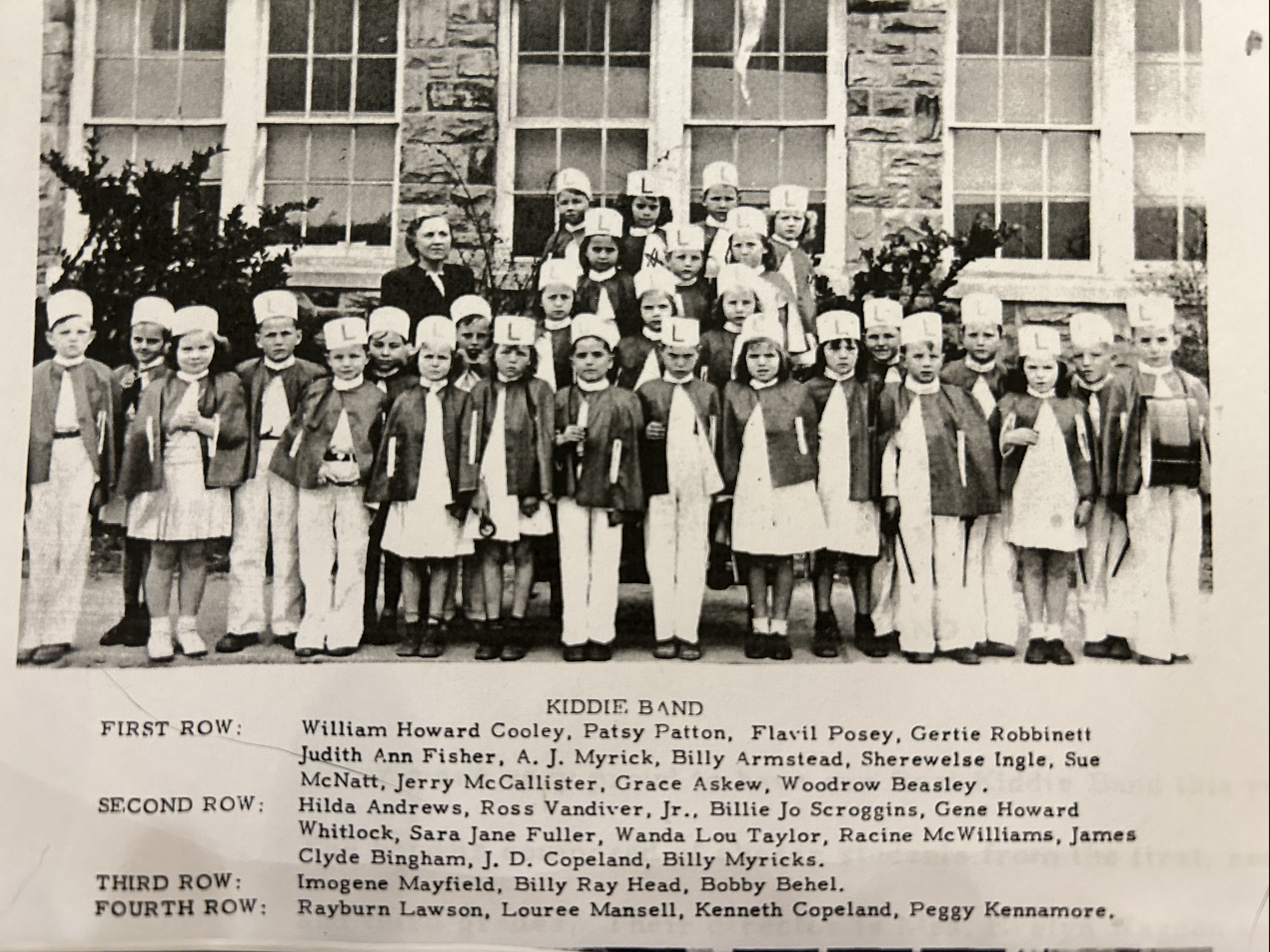
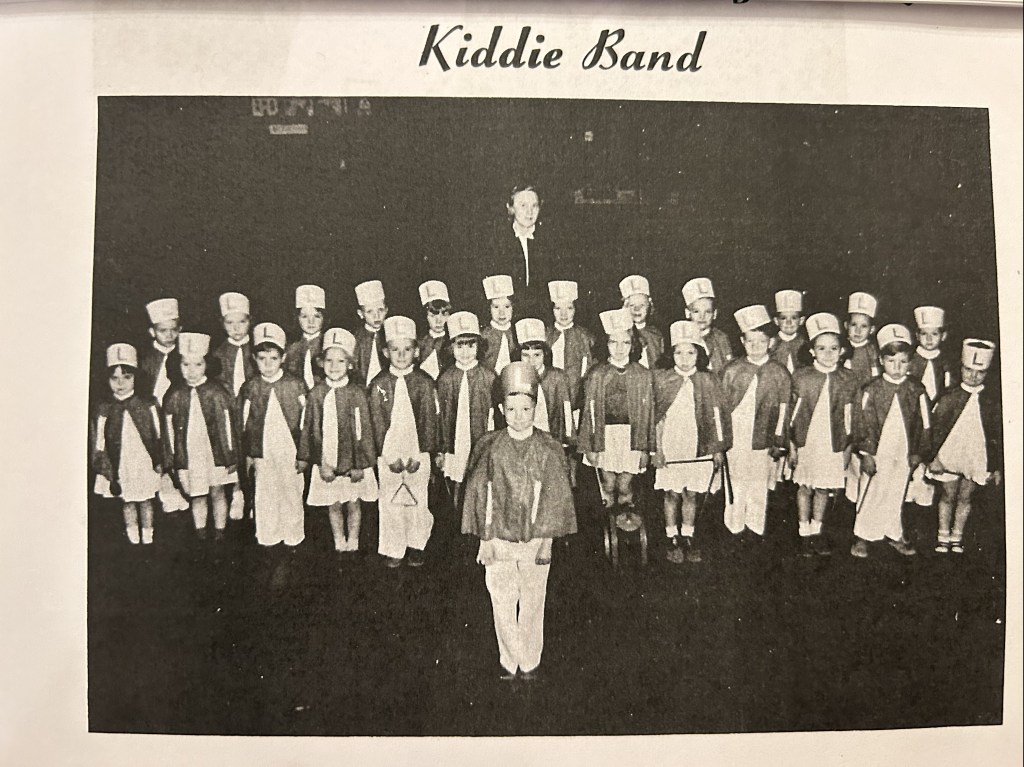
Image of 1949 Littleville School Kiddie Band
Littleville School Kiddie Band, 1949. Daddy, Gene Howard Whitlock, is in the second row.
Image of Littleville School Kiddie Band, 1950
1950 Kiddie Band. My Mother, Wonell Fisher, is in the back row, third from left.

Downloading and burning CDs for him became a treasured ritual, a way to bridge the gap between generations and share a piece of his past. Both my parents fondly remember their days at Littleville School, where they had both been members of the Kiddie Band – a cherished program that sadly did not exist by the time I arrived. My father, a natural performer, particularly enjoyed his time in the band, relishing the opportunity to entertain the crowd. While looking through old yearbooks, my son and I discovered that Daddy had been voted Littleville School’s Most Talented in 1953–based mostly on his performance of Mr. Sandman–when he was in seventh grade. Mother had been a cheerleader, but that is another story.
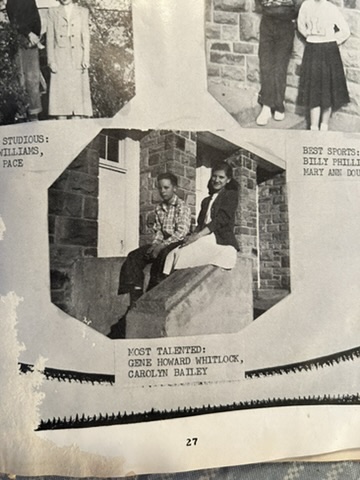
Littleville School Most Talented 1953, Gene H. Whitlock
Littleville School 1953 Most Talented, Gene Howard Whitlock

The resurgence of vinyl, with its emphasis on the warmth and character of analog sound, has also brought a new dimension to my musical journey. Listening to records again evokes vivid memories of my childhood and hours spent browsing records at TG&Y with Mom, while also connecting me to the music that shaped me. Growing up a lonely kid in a small town, I spent many Saturday nights sitting in the dark listening to Wolfman Jack on my folks’ RCA console stereo. For years, I didn’t have a record player, but Sarah found one on Facebook Marketplace and encouraged me to buy it, convinced it would bring me peace and happiness. The reality, however, has been more complex, stirring emotions and reflections I hadn’t expected.

Listening to old hymns like those I sang in the little brick church house evoked a flood of powerful feelings. The harmonies, the raw emotion, the memories of singing alongside Lynne and Susan on the church pew, all come rushing back. After witnessing me tearfully singing along with the Chuck Wagon Gang, Sarah gently noticed that while she had anticipated a sense of peace and happiness, she had not expected the tears.
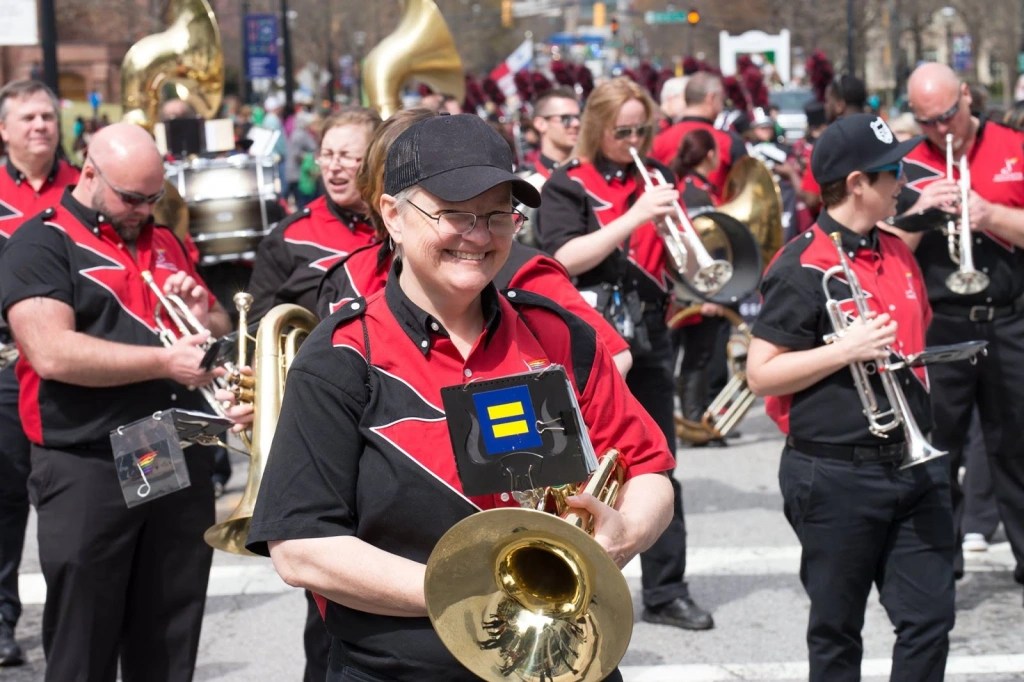
Image of marching band, includes trumpet players, tuba players, and drums in background. Ugena Whitlock with mellophone in foreground.
Ready to march in a parade with the Atlanta Freedom Bands with my mellophone

In addition to church choir, joining the Atlanta Freedom Bands provided a powerful outlet for my musical expression. The first time I marched in a parade after more than 40 years, the music surged through me, a wave of joy and liberation washing over me. It was as if a dormant part of my soul had finally awakened. Community band serves as a poignant reminder that it’s never too late to rediscover and nurture our passions. Even if it harder to march a mile uphill forty years when I’m older.

Looking back, the unhappiness of that earlier period cast a long shadow over my understanding of music’s role in my life. It seemed to be a casualty of that tumultuous time. Yet, amid the pain and regret, an innocent, peaceful memory emerges. In stage choir performances way back in 1979, I can still see Robert, his guy’s choir costume accented with a 1920s white straw boater hat, dancing the routine with his partner (I, a product of my fundamentalist upbringing, was decidedly not a dancer!). They were performing to the choral version of “Close to You” by The Carpenters. Robert, a good boy from a troubled background, died a few years ago. I wrote about it in a previous blog post: For Bob.

I can’t hear “Close to You” today without that sweet memory, and sometimes its poignancy is so powerful, I cry. For him, for us, for episodes of happiness amid the turmoil of two people who married far too young – the passage of time allows me to see without the lingering pain. This, in the end, is what music truly means to me: its magic, mysterious, and soul-stirring power to bring me to gentleness and peace. It helps me to heal by reminding me of the beauty and fragility of life. Through music, I cherish the precious moments of joy from even the darkest times. And, I must admit, even though I have been to the nation’s capital many times, I still regret not going to D.C. with the band.
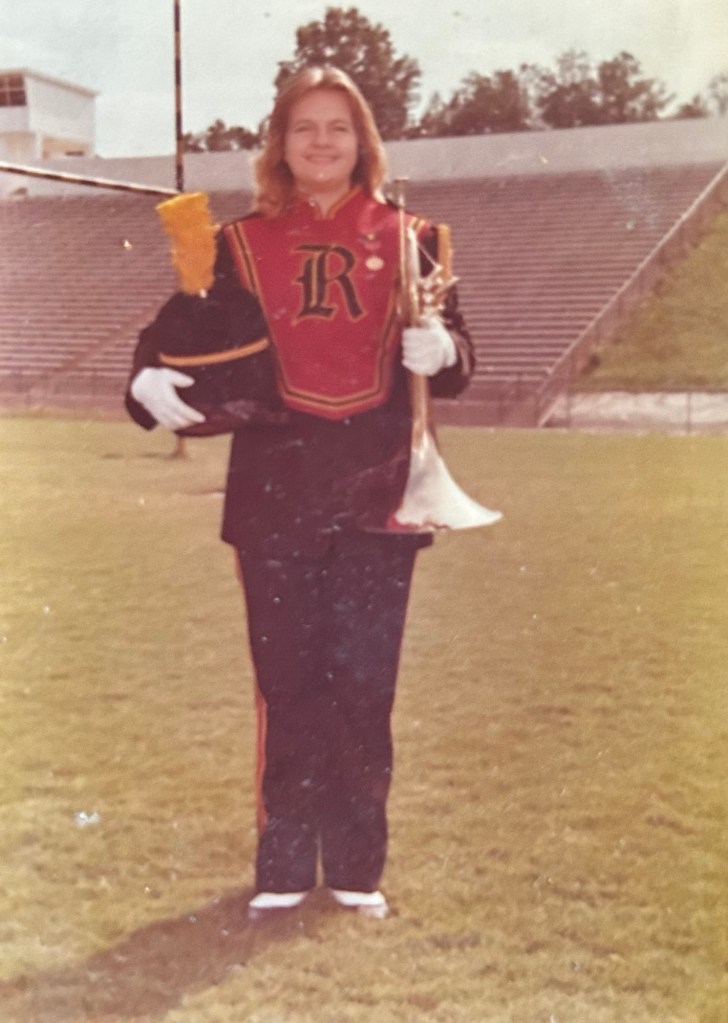

Image of band student Ugena Whitlock posing with mellophone in band uniform, 1977.
The first time I saw a Russellville Marching 100 band uniform, my young life’s goal was to wear one! Here I am, complete with gloves, spats, and mellophone. Notice the old shaker hat with plume and the medal for winning the Greatest Bands in Dixie Competition in New Orleans.

Exploring Nostalgia, Place and Southern Identity in Writing

Nostalgia, Place, and Feeling Southern

In a recent essay, Evolving From Just Keep Swimming to The Front Porch Professor, I explored the journey of reimagining this blog to reflect my evolving focus on narrative storytelling. At its heart lies the front porch, a symbol that anchors my Southern identity and shapes the lens through which I write. This post builds on that foundation, unpacking the concepts of nostalgia, place, and Southern identity—terms that are complex and intertwined. Sitting on the front porch is an appropriate place from which to give them the careful exploration they deserve.

You may be asking, “Well, when are you going to start writing instead of just writing about your writing?” Good question. The process is a throwback to academic writing, where you have to describe your framework and method for presenting your ideas. In other words, I need to tell you how and why I’m going to tell you what I tell you. Then I can tell you. But you’ll be glad to know I’m about ready to start front porching.

Why The Front Porch Professor?

Claiming the title of professor in my blog name is about more than qualifications; it reflects a blend of storytelling, introspection, and intellectual curiosity. It signals that the reflections here are informed by years of observing and searching for meaning. The image of a professor on a front porch bridges the formality of academia and the warmth of casual conversation. I invite you into a space where lived experience meets thoughtful analysis, encouraging connections and deeper understanding.

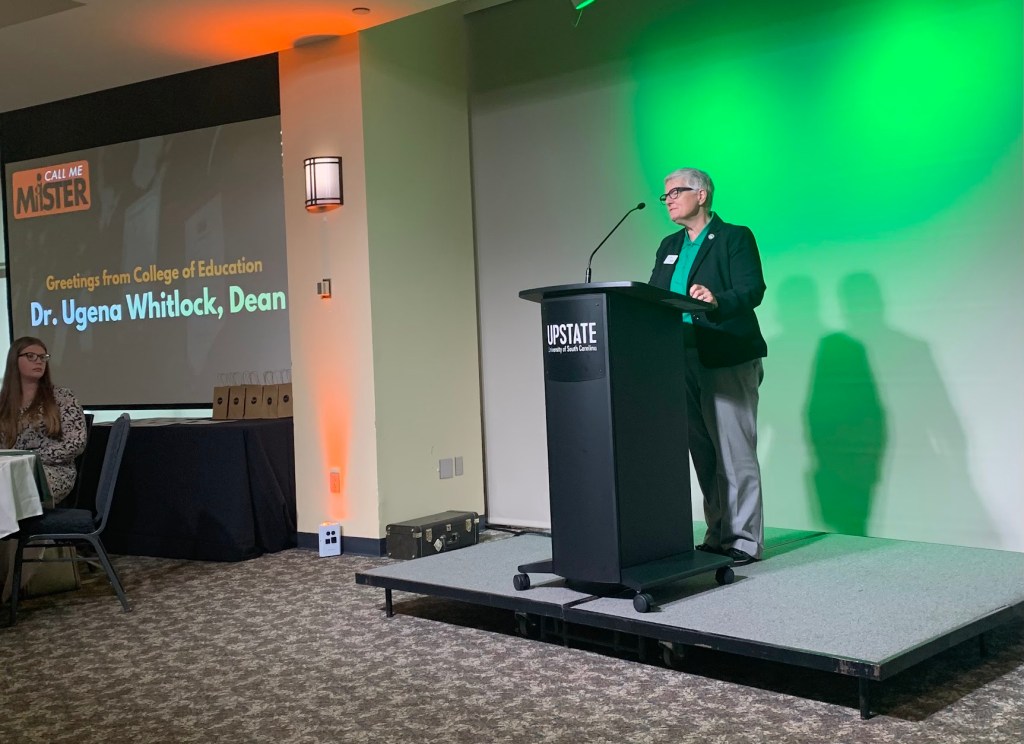
Image of Dr. Ugena Whitlock at USC Upstate
Professor Whitlock

For me, the title is also a tribute. As a small-town girl from rural Alabama, raised by working-class parents, becoming a professor is a point of pride. It’s a testament to their sacrifices and the support of friends and loved ones. They are ever present in my writing, shaping the stories I tell and the perspectives I share. I am both proud of the accomplishment and humbled by the debt and responsibility I owe them.

Place and the Southern Perspective

When I write about place, I’m speaking to more than just geography. Place encompasses the physical environments where life unfolds. Place is the landscape on which contexts of culture, history, and society are painted. It’s where relationships, joys, disappointments, and lessons unfold. All this happens individually and collectively. Place is both a backdrop and a character in our stories, influencing who we are and how we navigate the world.

Image of small downtown Russellville, Alabama, with snow, church, and Roxy theater
Downtown Russellville, Alabama

Being Southern, then, adds layers to this concept. The South is more than a region; it’s a complex web of traditions, histories, and cultural markers. To call oneself Southern is to grapple with the beauty and contradictions of the place. With the South’s ugliness. Can one be proud to be a Southerner, as I am? What does this mean? What am I proud of? And what about the parts of Southern “heritage” that I am not proud of? What is my relationship to those people who claim and celebrate the ignoble parts?

Writing From a Southern Perspective

“Being Southern” is as much a state of mind as it is a physical state. My Southern identity isn’t about celebrating a romanticized version of the South–you know, moonlight and magnolias. Instead, it’s a lens through which I explore themes of home, culture, and identity. The South, for me, is a place of deep connections, shaped by family, history, and the rhythms of everyday life. Southern identity is not monolithic—I don’t assume my identity is exactly like yours, just as your experiences may differ from mine. While we may share certain aspects, identity is deeply individual and uniquely shaped by personal experiences.

Image of dinner with deviled eggs and mashed potatoes
Southern food–note the Thanksgiving Chicken and Dressing

Family and home are central to this perspective, grounding my stories in the relationships and traditions that define Southern life for me. The culture of the place is a tapestry woven through the land, neighbors, communities, histories, food, churches, schools, music, and football. These often appear in my writing, not only offering insights into shared experiences but also helping us understand the world around us and highlighting the relevance of our observations. Yes, there are lessons to be got from SEC football. Roll Tide, y’all.

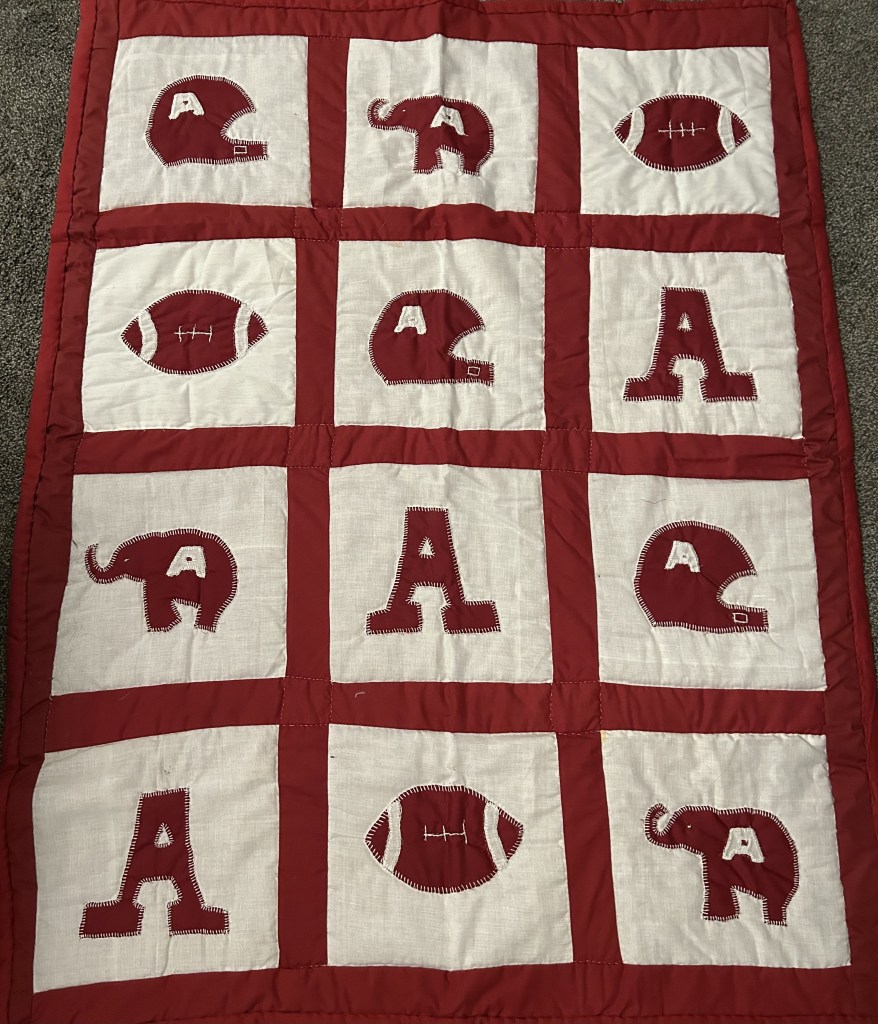
Image of a handmade quilt with a crimson and white Alabama football theme. The quilt features appliqué designs of football helmets, footballs, the letter 'A,' and elephants in alternating squares. Each design is outlined with visible stitching, and the quilt is bordered with a crimson edge, showcasing school spirit and craftsmanship.
Lovingly made Alabama Quilt from my Mother

But writing from a Southern perspective also means wrestling with the region’s complexities. The South is as much about its tensions and contradictions as its traditions. It’s a place where politics, identity, and history converge, challenging us to confront difficult truths while celebrating what makes it unique. Without acknowledging the turmoil and inequalities of its past, any discussion of Southern life, identity, and culture feels inauthentic and incomplete—it’s a Southern writer’s malpractice. As someone who often says, “I love the South,” I can be trusted to both celebrate and critique it. Critique from someone who hasn’t lived it or can’t celebrate it is equally incomplete–and there are plenty of these critics around. This is my not so humble Southern opinion.

Nostalgia: A Lens for Understanding

Nostalgia, as I see it, is not about longing for a bygone era but about connecting the past with the present to find meaning that may inform the future. The word itself comes from the Greek words nostos, meaning “homecoming,” and algos, meaning “pain” or “longing.” It speaks to a deep yearning for the familiarity and comfort of home, even if that home is more an idea than a place. Some homes are not the kind we can long for; rather, we might long to be released from their memory. This etymology captures the duality of nostalgia: it brings remembrances of warmth and connection, yet it also reminds us of what is distant or lost. The dual nature of nostalgia vies for our attention, wrestles for focus, and fights for dominance—keeping many of us in therapy for years.

Image of small stone church, Littleville Church of Christ, Littleville, Alabama
My home church, Littleville Church of Christ, Littleville, Alabama

It’s a complex emotion, often blending warm memories with a bittersweet awareness of time’s passage. Far from being purely personal, nostalgia is often collective, rooted in shared experiences and cultural touchstones like family recipes, cherished traditions, or the familiar strains of an old song. In my writing, nostalgia becomes a guide for exploration. Stories about homeplace and family lead me to reflections of broader themes, such as the importance of community, civility, and the pace of modern life. Nostalgia isn’t a destination where we can remain lost in the preferred past; for me, it’s like wrapping myself in an old quilt, offering warmth as I navigate the here and now. You can’t linger too long, though, because living means stepping into the day with clarity and intention.

The Front Porch as a Space for Reflection and Stories

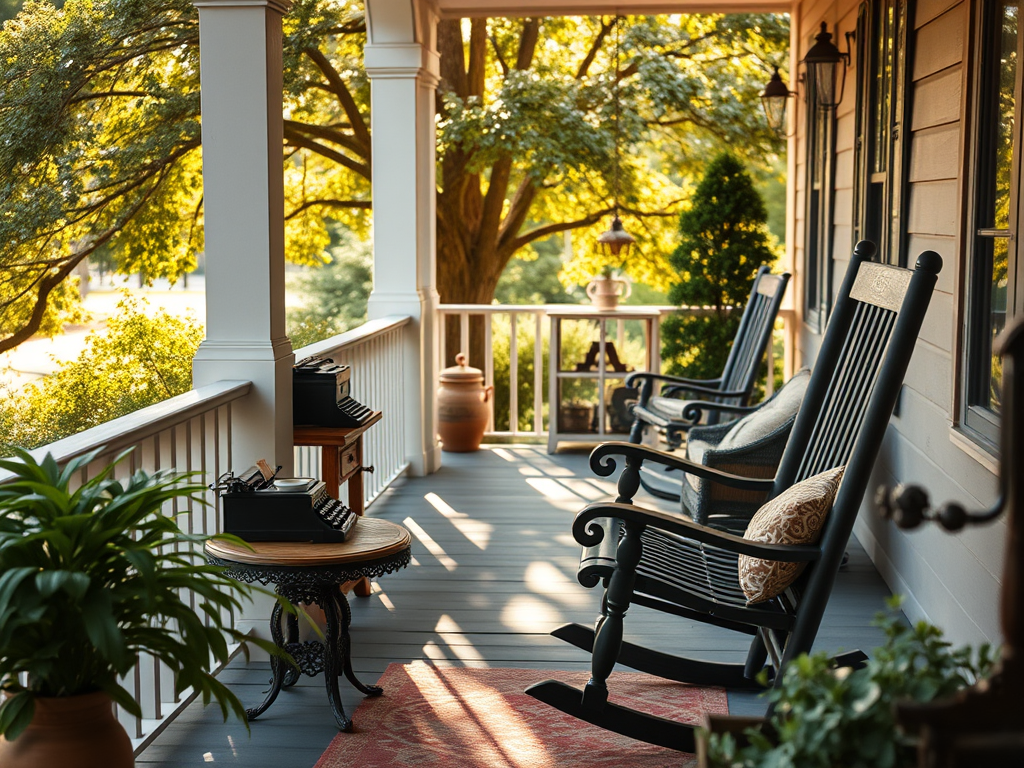
The front porch, in this context, is both a literal and metaphorical space—a place where complex ideas meet honest, accessible conversation. It’s where intellectual rigor mingles with the warmth of shared stories, and where connections are formed through curiosity and reflection. This is the balance I strive for: nostalgia not as an escape but as a framework for growing and learning.

The front porch is open to anyone willing to join the conversation, to explore what place, the South, and our shared histories mean in today’s world. And if you aren’t Southern, you might still have a good time and make connections, too. Together, we can find clarity, joy, and meaning in the stories we tell. I believe we have a responsibility to one another to make the world a better place–a place where we indeed have the liberty to pursue the happiness of a gratifying life. Taking care of our neighbors has never been as important as it is now. It feels like not only have we forgotten how, but we have forgotten that we ought to in the first place. That’s another reason front porches are important. I hope you will join me.

Evolving from Just Keep Swimming to The Front Porch Professor

Image of Logo for Blog The Front Porch Professor with rocking chair, typewriter, and Mazda Miata..

Time for a Change

After fourteen years maintaining my blog Just Keep Swimming, I decided it was time for a change. When I started blogging those years ago, blogs, shorthand for “weblogs,” (remember that?) were fairly new, and I was deep into building a career by writing articles for academic journals. I knew that autobiographical narrative Curriculum Theory (my professional writing) would not be a lucrative venture. It wouldn’t earn money or attract thousands of readers. I determined that I would use the blog as a journal. I wrote personal essays in memoir style that might later be crafted into journal articles–a sort of pre-writing holding station. I also told myself that my blog was really only for me. I thought this would lessen my disappointment at having no readers. That part was sad because I really wanted somebody to read what I was writing.

Image of blog logo justkeepswimming.com
Logo for Just Keep Swimming Blog

So, the blog was a patchwork of ideas and topics with loose themes and frameworks pulling them together. Not surprisingly, then, I had difficulty giving it a name. Sarah helped. The more I obsessed over finding just the right name for a blog nobody would read, the more I secretly hoped someone would. The more I obsessed, the more she tried to help me get centered. She tried to help me find some resilience somewhere. “Just keep swimming,” she said, as much a suggestion for my state of mind as for the blog title. It fit. For almost a decade, I have worked on justkeepswimming.life–mostly sporadically. During those same ten years, my career evolved from faculty member to department chair to college dean. As a small-town girl from Littleville, Alabama, I wanted to see just how far I could go. I told myself I didn’t have the time to write regularly. I did well to just keep swimming.

This Spring I will once again be a faculty member in the college, without an administrative role of any kind. I’ve been thinking about this change a lot, and I reckon it will be a good move. I am looking forward to teaching again. I am also eager to have some autonomy over my time. Faculty generally work more than 40 hours per week, but oftentimes, when and where we work is up to us. This kind of flexibility will take away an important excuse for not posting regularly—that’s the goal. Updating the blog’s purpose and branding reflects the updates going on in my life. What is my new identity–who am I now that my decades-long professional identity has changed? What kind writing do I want to do, and what will I write about? What do I, as one white Southern professor with blue collar roots, have to say?

Heading Out To the Front Porch

I reflected on what I wanted the blog to be. I asked myself why I started blogging. It isn’t to have a journal to springboard into professional papers. Nor do I write to make money or achieve celebrity status as a blogger. I write blog posts because it brings me joyful engagement. This engagement gives me purpose. It also provides an immediate connection to you, and you to me. And somewhere among the joy, purpose, and connection, there is also the urgency of needing to tell.

In her book, Why I Write, Joan Didion wrote, “I write entirely to find out what I’m thinking, what I’m looking at, what I see and what it means. What I want and what I fear” (“Why I Write.” The White Album, Farrar, Straus and Giroux, 1979, pp. 192–194.). Her quote has been shortened over the years to “I never know what I think until I read what I write,” which is unfortunate since it leaves out the part about what one wants and fears. When I write I am participating in the world around me and putting meaning on what I see and experience. And yes, desire and fear are part of it, just like they are ever-present in one’s consciousness. What anything means to me won’t be what it means to you, for you are participating from your consciousness, your home place. And that’s what I’d like to evoke with my stories–for both me and you.

Image of Logo for Blog The Front Porch Professor with rocking chair, typewriter, and Mazda Miata..
New Logo for The Front Porch Professor that includes a rocking chair, antique typewriter, and Mazda Miata.

In essence, then, I am re-claiming my identity as a writer. Who am I? I value education, so I got a PhD and became a professor. I am a Southerner to my soul, and my perspectives for writing are shaped–and shape–that identity. I write about the South, my particular anchor of homeplace. Homeplace is a treasured concept for me, one that encompasses family, food, religion, politics, music, sexuality, culture–it is the landscape on which my life has been written. I view the landscape through a lens–a veil, as I like to think of it–of nostalgia. As I write, I hold the present up, looking backwards to the past—my recollection and understanding of it—with a questioning eye toward the future. To symbolize the space from which I can observe and cast a critical eye on Southern place, I chose the front porch.

A front porch is more than just a place—it’s a state of mind. It’s where stories are told, where folks sit and hang around together. It’s a place where the world slows down just enough to reflect on what truly matters to me. With The Front Porch Professor, my goal is to bring the warmth and depth of this space into the stories I share. I work through the tensions between issues that matter to readers today. I also offer honest, insider critiques of the South. Sound idyllic? It can be, but just like the South, the front porch can also be a troubled and complicated place where anguish, heartbreak, disappointment, and violence take place. Every few days, I have to sweep the porch to clear dust and cobwebs to make sure it is an inviting place for myself and others.

Who Should Read It?

The intended audience for The Front Porch Professor are folks who appreciate stories that resonate on both a personal and universal level, blending the warmth of lived experience with the relevance of today’s challenges. My readers might be older adults, reflecting on their own life journeys and drawn to narratives that echo their experiences. They might be educators or seekers who appreciate the intersection of storytelling with deeper ideas about culture, family, and identity.

This blog also speaks to those who find meaning in the everyday—the simple joys of a shared meal, the comfort of homeplace, or the peace found while sitting in the shade in a back yard. I believe there is also value for people who can’t recollect joy from their homes. There may be appeal here for them as well. Home for some–if it means anything at all–are places of atrocities, hurt, and darkness. Home may be a place of utter ambivalence. If this is you, then I invite you, too. In this blog, I look for the mysteries to be found in simplifying the complex and complicating the simple.

Why Does It Matter?

Our world is a noisy place, and it feels to me like we are distracted by it–not just distracted but affected in other ways. Noisy politics, for example, has polarized some of us to the point of violence. It has also created animosity with friends and family. We seem to have lost focus on the things that matter, which is always others. I hope my stories can balance out some of the clutter. I hope that together we can pause and look for grounding–the kind that I find from recollecting and observing what happens around me and to me.

Image of logo for the Front Porch Professor with ukelele, typewriter, rocking chair.
Alternate Logo for The Front Porch Professor that includes ukelele and typewriter with no Miata.

Maybe you, like me, want to have a deeper engagement with life around us and with others in it. Maybe you, like me, want to nourish a homeplace of the heart, our own personal touchstone where inward reflection points us out-ward toward purpose. A safe and joyful place of our making–whatever that might look like for you–where we contemplate how our own sense of belonging connects us to others. I hope The Front Porch Professor is engaging and entertaining; still, I do not consider life merely to entertain. As you read, I invite you to actively participate with me as we pause, surmise, and make meaning. Don’t just read. Come along with me on our shared journey.

Image of Dr. Ugena Whitlock, author of The Front Porch Professor.
Introducing Dr. Ugena Whitlock, The Front Porch Professor!