(Un)Holy Saturday: A Community Lament Psalm

dark cross

It is Holy Saturday, God, the day good Christians celebrate Jesus’s body lying in the tomb while his soul descended into hell, the Harrowing of Hell, they call it. Holy Saturday is coming home from a funeral. Everybody is exhausted, and the loss is starting to get real. You have to eat~~people have brought food~~but you are not hungry, might never be hungry again. After Big Mama’s funeral, I sat at the familiar kitchen table with her old friends, who told stories. Those of us at the table laughed until we cried, but the sisters—my mother and Lois and Mary and Judy and Barbara—were in the dark bedroom where their mother had taken her last breath; they did not laugh. They could hardly hold themselves up, so they held each other. It was raw and ugly, and if any of them had dared, they might have cursed you, God. They were groaning in their utter desolation. Holy Saturday started like that, with women holding vigil in their sorrow.

There is another word I first (and pretty much only) heard in the Bible: iniquity. Iniquity is to wickedness what groaning is to grieving. You are good, God, and trust in your goodness outweighs my worry; but my fundamentalist conscience tells me our United States will give an accounting for our iniquity. We sin together, all of us: we are inhospitable to neighbors at our borders, we march in hatred to maintain an apartheid state, and we lay offerings at the feed of corporate gods. We do not merely turn our heads as our poor fight to live—and often lose the fight—but we defiantly jut out our chins at them because they got what they had coming. It helps that they are different colors than we are. We incarcerate young men of color to prove our point. We busy ourselves with what goes on in one room of the house—the bedroom—with little concern with what goes on in the rest of your world. Longsuffering God, batter our hearts, as the poet cried (John Donne). Lay us bare again so that in our nakedness the only place our eyes can turn is to you. On this Holy Saturday, harrow our souls toward reconciliation with you as we keep vigil for the terrifying Resurrection we (don’t) know is coming. Amen.

Louisiana Black Church Fires: A Psalm of Community Lament

Holy God, we must speak the names. St. Mary Baptist. Greater Union Baptist. Mount Pleasant Baptist. Louisiana smolders. In the names and the smoke our sin is manifest. We do not speak of their pain because the pain is their own—it belongs to their hearts. We do not get to cry those tears. Theirs is not our story to tell. Our story is a 21-year-old in an orange jump suit staring back at the camera. “His dad has been a sheriff for a number of years, he’s a good fellow,” said a state congressman. “My understanding is the son has had a troubled past.” Yes. Sons of the South have troubled pasts. “Not guilty,” he pleads. It is we who need to plea, yet ours can be no other than guilty. In 1963, two other sets of eyes looked back at the camera, in Birmingham; our pasts are troubled. “I tremble for my country,” Jefferson said, “when I reflect that God is just; that his justice cannot sleep forever.” Louisiana burns, God, and we tremble in our transgression. Do you yet sleep?

Church Ruins

God, we trust you~~that we are not condemned to forever suffer the consequences of our sin by perpetuating evil. At the hearing, the 21-year-old arsonist’s father, the deputy, left the courtroom in tears. What did he cry for? His “good boy”? A lost youth? A youth lost? His boy took pictures of himself. Pouring gasoline. With a blazing building. Among the ruins. He claimed this.

God of justice, God of righteousness, we trust you and we offer you all praise~~but we do not know exactly what to ask you. Has nothing been asked before? Have we not prayed for forgiveness? Have we not prayed for good relations? Have we not prayed white prayers that our white children would not detect our locked-away resentment of freedom ringing? Correct us. Guide our hearts to pray those prayers. Awaken your justice, God, and direct us toward reconciliation and love—discernible in the photographed eyes looking back at us. Amen.

Church Ruins 2

Missionary Position: The UMC, Sexuality, and the Global Church

First, I need to acknowledge my white privilege and citizenship in a colonizer nation. Additionally, I am a U.S. Christian in a missionary culture, which has contributed to colonization. That said, I am also a gay female Christian from a rural Fundamentalist denomination, so I also can speak from intersecting places of marginalization.

In late February, the United Methodist Church voted to maintain its traditional stance against same-sex marriage and non-celibate gay clergy. This could very well be the issue that splits the UMC; in fact, the fissures started as soon as the vote was counted. The “Traditional Plan” passed with 438 votes in favor and 384 against, 53% to 47%. Yet in 2014, a PEW Research Study reported that 60% of U.S. UMC members believed that same-sex marriage should be accepted. On the eve of the 2018 General Conference, informal guestimates predicted that 66% of U.S. delegates would vote for the One Church Plan, which would allow individual churches and regional conferences to decide whether to ordain and marry LGBTQ members (https://mainstreamumc.com/blog/groups-are-misusing-survey-results/ and https://religionnews.com/2019/02/25/united-methodist-committee-rejects-one-church-plan-which-would-allow-lgbt-clergy/). So what happened?

il_794xN.1845053811_ovr9

The UMC has around 12 million members globally, about half its members. Methodists from outside the U.S. are generally more conservative and favor traditional positions on sexuality, reports Christianity Today. At the General Conference, 41% of the 864 delegates were non-U.S, 30% of those from Africa. I don’t even have to break out my calculator to know that without global delegates in the mix, the Traditional Plan would almost certainly have been defeated. (Take a look at the UMC World Map here: https://www.christianitytoday.com/news/2019/february/united-methodists-lgbt-vote-umc-general-conference-denomina.html).

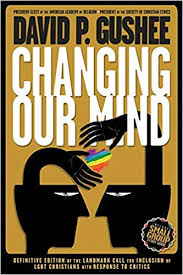
There are several issues to eventually unpack, such as how to reconcile the U.S. UMC and whether or not it will lovingly include its LGBT members and clergy within its community. Very briefly, though, I want to consider another ethical dilemma the UMC faces: how to be Christ’s universal church when the majority of half its members oppose changes taking place in U.S. culture. “In this case,” says Mercer University ethicist David Gushee, “culture looks more like the gospel than churches do” (Changing Our Minds, https://www.youtube.com/watch?v=7oO81hxbmGM). One delegate from Mozambique said the Traditional Plan “is what God Wants in the church in this world” (https://www.christianitytoday.com/news/2019/february/united-methodist-lgbt-vote-conference-plan.html). Is it? More important here, is it what U.S. Methodists believe?

Gushee, whose book Changing Our Minds gives his account of changing his mind about the inclusion of LGBT persons in the church, notes that he is, “convinced this is not a sexual ethics issue, but it’s about human dignity” (YouTube). He goes on to pose three questions for which I propose the UMC hold itself—locally and globally—accountable. Who counts as equal? Who counts as having dignity? And at a level fundamental to the gospel—Who counts as included within the reach of the good news that God loves human beings in Jesus Christ? After all, he reminds us, sexuality is but a “tertiary concern” compared to issues of the sacredness of life and human dignity.

After nearly 250 years, the Methodist Church has accomplished one of the greatest missionary feats in history—preaching Jesus the Christ throughout the world and adding over 6 million souls to its count. Problem is, in many of these areas, it is not even safe to be “out” as a LGBT Christian. And, the UMC usually holds a mainline, moderate stance on most issues in U.S. culture. In February, the conservative global element nudged the church in a direction against itself. At least I hope that is the case—for herein lies its denominational ethical dilemma. What is the Methodist Church today?

I’ll turn once more to Gushee, who argues if we aren’t in solidarity, we’re part of the oppression. He notes profoundly, “this solidarity will be costly” (YouTube). It will indeed. If the UMC—as a microcosm of the greater church—does not actively seek to recover the broader narratives laid out by Gushee—the Kingdom of God, justice, the example of Jesus, love of neighbor, the Golden Rule, and compassion for those who suffer—then it admits its own ugly complicity in rejecting human dignity. It will have nearly literally have gained the whole world but forfeited its soul (Mk. 8:36). Now is its chance to do both.

Gushee

Changing Our Minds by David Gushee

Till Death?: The Curiously Ethical Question of Intentional Monogamy

This week’s post is an updating of a one that began as a paper I presented at the 2017 South Eastern Women’s Studies (SEWSA) Conference called Intentional Monogamy: Not Your Grandma’s Sexual Ethics. I’m thinking about monogamy as an act of queer intentionality.

Even before I started my MDiv at Mercer, I had been playing with God-talk (theology) in my curriculum theory writing. For example, I believe that Dietrich Bonhoeffer’s notion of ethics and existentialist theologian Paul Tillich’s conceptualization of God and Christ are not just relevant to our world today, they are essential. Three semesters in to seminary, I’m just learning what I do not know about Christian Ethics, so I will start small, with the most common state of being in a relationship in Western practice—monogamy—I’m thinking about it in the context of the current issue of same-sex marriage. We have constructed a God to suit our dominant White Western culture, just as we have constructed normal, normative sexual ethics. The god we crafted has a preference, which we codified into morality, for matrimony. Marriage is one man, one woman, monogamous. You know the Wedding Vow: “I, ___, take thee, ___, to be my wedded husband/wife, to have and to hold, from this day forward, for better, for worse, for richer, for poorer, in sickness and in health, to love and to cherish, till death do us part, according to God’s holy ordinance; and thereto I pledge thee my faith [or] pledge myself to you” (https://www.theknot.com/content/traditional-wedding-vows-from-various-religions).

In Mimi Schippers Beyond Monogamy: Polyamory and the Future of Poly Queer Sexualities (2016), she extends Adrienne Rich’s idea of compulsory heterosexuality to include compulsory monogamy as a “regime of sexual normalcy” (Kindle loc 183) and offers a critique of mononormativity. She points out, There have been very few theoretical interrogations of how monogamy is implicated in and productive of gender, race, and sexual hierarchies or the role of monogamy as an organizing rationale for regimes of normalcy and social structures of inequality (loc 254). Schipper didn’t leave much space for conceptualizing a postmodern, queer monogamy. Intentional monogamy is queer monogamy–even if the participants are heterosexual, cis-gender participants. It holds similar queer possibilities for disruption. How? Because of its intentional nature. Hence, intentionality is transgressive.

Intentional monogamy confronts monogamy by default, which renders monogamy invisible, unconsidered. Also by default is the assumed and legitimized feature of monogamous couples to reproduce the heterosexual, heteronormative family. There is a whole other discussion here—for another time—on how the re-production of “the family” also reproduces the hierarchies and inequities—personal, political, institutionalized, time-honored. There is a lot hinging on monogamy.

So, in this space, I want to look finally at the intentional part of Intentional Monogamy. For this, I need a story. In Beyond Monogamy, Schippers makes a very interesting point that I will admit I had not thought about, but of course should have: that cheating narratives are important to maintaining mononormativity and leaving monogamy invisible as the hegemonic norm (loc 742). Cheating is the threat that keeps couples within monogamous bounds. Cheating holds monogamy together. It is to relationships what sin is to Christianity. Like sin, cheating is a transgression of the vow to be in right relation. But again, what if we flip this thought so that intentionality is the transgressive turn?

About a year and a half into our relationship, Sarah and I began discussing the terms for our future together. Knowing Sarah, this in fact is romantic. One evening she entered the room, stopped in the middle of it, and said, “I’m monogamous.” I half-looked up from emails or the tv, or whatever I was doing and said, “Yeah, so am I.” And that, as they say, is when it started getting real. She got my complete attention by telling me that to her, I wasn’t at a place to make that assertion. It’s true: I had been living under a few assumptions, stretching all the way back to adolescence and dating. Yet I thought our own commitment had been understood when we had made a commitment. Exclusivity, to me, had implied monogamy, and that was her point. Implied monogamy was not sufficient grounds for a long term relationship. I argued, cajoled, reasoned—used all my skills to persuade her—and myself—that I was a confirmed monogamist. And then she said something so shocking and profound that I knew it to be true: You say you are monogamous when what you really want is someone who won’t cheat on you. 

Sarah’s declaration of monogamy, her intentionality, was a disruption of heteronormative compulsory institutional default relationship form. For me, it troubled the cheating narrative, which played right into reinforcing hetero- and mononormativity. From Beyond MonogamyMonogamy needs cheating in a fundamental way. In addition to serving as the demonized opposite of monogamy, the mark of the cheater is used to push individuals to conform to monogamous behavior and monogamous appearances (loc 748). Wow. You have to confront your monogamous privilege just like you do your white privilege. You have to know that there are other ways of being in relationships–ways that involve more than two partners, she said, and then you can come back to monogamy. Of course, my first question for her was, “Good lord, do I have to try them?” “Not necessarily”, she said,” just as long as you know enough to make an informed decision.”

My students often ask whether anyone can be queer; that is, can you be a straight cis-person and be queer. Sometimes I give them a simple answer. Queer has a political requirement to it; it is purposefully disruptive of normative structures (yes, that’s part of my simple answer to them). It is intentional. So, I tell them, to be queer, you have to believe yourself to be. And that is part of how monogamy can be a queer act—in its intentionality. Monogamy is not a condition to be bound to, a “till death” sentence of imbalanced power. It is a state of free, into which we might freely enter. After about a month of my coming to learn that, Sarah was satisfied. We married on the day the US Supreme Court ruled on Obergefell, June 26, 2015.

Untheorized, monogamy brings its heteronormative baggage into sexual ethics, thereby invalidating its very underpinnings. There’s a famous line from Our Town:  People are meant to go through life two by two. ‘Taint natural to be lonesome. Along my journey toward monogamy, I have learned that ‘taint necessarily natural to go two by two, but if we want to, it’s queerer than we might think.

Schippers, M. (2016). Beyond Monogamy: Polyamory and the Future of Polyqueer Sexualities. New York: NYU Press.


Thoughts on Prayer Following the Christchurch Massacre

As I write this, another heinous mass shooting has taken place by white supremacists, this time in New Zealand. Almost 50 of our Muslim neighbors were murdered and 20 seriously injured, killed while they were praying. This attack is on my mind and heart as I contemplate this week’s Core Forum on prayer. As one public figure tweeted this morning, “Whether it is antisemitism in Pittsburgh, racism in Charlottesville, or the xenophobia and Islamophobia to day, violent hate is on the march at home and abroad….Silence is complicity.” I include this because the connection is made to multiple groups that are targeted for no other reason than hatred of any particular difference. The city where this atrocity occurred is called, ironically or not, Christchurch.

I have a chaplet that has inspired my prayer this week. If any of you are like I was and do not know what a chaplet is, it is a kind of small rosary–a prayer object–that usually has a saint medallion/object attached to the beads. Mine has two medallions. The first is St. Francis, whose prayer I have always loved, and the other, newer one is Julian of Norwich, whose mystical experiences inspire me. Julian’s words also comfort me like a gentle voice and touch soothes a child: All shall be well, and all shall be well, and all manner of thing shall be well. I also made this quote my phone wallpaper–a postmodern engagement with the 15th century mystic. Still, when I see the words, I pray them. I’m thinking Fundamentalist Evangelicals do not a rule pray chaplets or contemplate icons in our prayer life. That’s unfortunate because for me it has deepened my prayers. Henri Nouwen says, “Icons…lead us into the inner room of prayer and bring us close to the heart of God” (p. 61). Whether icons are kinesthetic like mine, or natural, they open us to the Mystery of God’s presence.

The politician’s quote, above, suggests to us that the end to hatred and violence–peace–comes at a great price: our psychological, emotional, and embodied engagement. I am reminded that when the messages of MLK, JFK, and RFK turned from civil rights to peace, their lives were extinguished. The work of peace is a work of justice, and justice is the nature of God. Thoughts and prayers are not acts of peace in the world; prayer is that place of mystery where we might know that all will be well. Prayer is the interior castle (Teresa of Avila) where we are lost with and strengthened by our Beloved. Prayer is not what we do for the oppressed; prayer is what we do for ourselves so that we can have the strength to do the hard work of justice. God waits for us.

Coda: When John Lennon’s “Imagine” was released in 1971, it scared people–Christians who feared the new peaceful, global social order it suggested. In an interview with Playboy magazine, Lennon said that Dick Gregory had given Ono and him a Christian prayer book, which inspired the concept behind “Imagine.” A prayer book. He said,

The concept of positive prayer … If you can imagine a world at peace, with no denominations of religion – not without religion but without this my God-is-bigger-than-your-God thing – then it can be true … the World Church called me once and asked, “Can we use the lyrics to ‘Imagine’ and just change it to ‘Imagine one religion’?” That showed [me] they didn’t understand it at all. It would defeat the whole purpose of the song, the whole idea. (Wikipedia).

They were right to be scared, for it calls for an end of systems of domination, by definition the domain of the dominant culture. I wonder if we are any more willing to pray it today.

Imagine (a Prayer)

The lyrics are below.

Imagine there’s no heaven
It’s easy if you try
No hell below us
Above us only sky
Imagine all the people
Living for today (ah ah ah)
Imagine there’s no countries
It isn’t hard to do
Nothing to kill or die for
And no religion, too
Imagine all the people
Living life in peace
You may say that I’m a dreamer
But I’m not the only one
I hope someday you’ll join us
And the world will be as one
Imagine no possessions
I wonder if you can
No need for greed or hunger
A brotherhood of man
Imagine all the people
Sharing all the world
You may say that I’m a dreamer
But I’m not the only one
I hope someday you’ll join us
And the world will live as one

The Journey Begins

Thanks for joining me!
Good company in a journey makes the way seem shorter. — Izaak Walton
post This is a place for peaceful contemplation inspired by story. What is spiritual mindfulness? For me, it is remembering to feed my spirit. This blog is a spiritual practice~~storying the soul, if you will. Most sites I find on either one of these topics focuses on meditative and wellness practices. Maybe that’s what you are expecting here. I hope you’ll be pleasantly surprised as instead you find a narrative approach to exploring spirituality, mindful of the everyday. That’s what I do–I write. For almost two decades I dedicated my time and energies (a lot of mental energy, i.e. worry) to academic writing. Here’s how I did it: I would write my narrative essays about place, religion, gender, sexuality, white privilege, etc., and then cite the requisite sources (that’s the academic part). But a funny thing kept happening. People would approach me after a panel presentation and say, “You know, you really ought to write a book with just your stories.” Which is exactly what I wanted to be doing. The problem is, I am an academic; thus, the academic writing.  This is a period of discernment and transformation in my life. Of course, that’s part of what you’ll find here too. I started to seminary and had to make some life choices. One was to step back from academic writing and do the kind of writing I really do enjoy–and that’s what you are reading now. I invite you to come along on my journey as I nourish my own spirit through story telling, being mindful of every, every minute, as Emily in Our Town would say. It is my hope that my stories offer you nourishment of some kind too.  The writing here comes from observations that dawn on me as I go about living life with as much intentionality as I can muster. That’s the mindfulness part. What makes it spiritual? Well, that’s the part of me where the words come from—the part that hopes to connect us to, as Paul Tillich would put it, the ground of our being. One.

On X-Men and Orlando

On X-Men and Orlando

I’ve been making my family watch a lot of X-men movies this week, as a kind of research project for the new X-Men: Apocalypse. One of the themes throughout all the movies is good versus evil (another theme, especially in X-Men: The Last Stand, is marginalization of people because of their mutation–a clear parallel to homophobia and reparative therapy often forced upon LGB people–but that is another story…). For example, there are good mutants and evil mutants, good humans and evil humans. Sometimes, the evil forces come out on top. But sometimes, Professor X, Charles Xavier, gets through to them. “Don’t do this,” he persuades telepathically. “It isn’t who you are.” Occasionally, he gets through, even to Magneto.

Evil is among us. Whatever prompts us to reject our ethical thinking toward one another by supporting unregulated weapons purchases, or failing to commit meaningful resources to domestic violence and mental illness, or reinforcing homophobia through reframing it as “Religious Freedom”–that is evil. If those issues had been addressed through ethical, social responsible action, then the shooting on Sunday morning most likely would not have happened. They are the root cause–not one person’s or a group’s faith-beliefs toward the Holy Being. We must hold each other accountable, must remind and encourage each other–through real, responsible action, that this is not who we are. Like Professor X, I believe our world depends upon it.

Hissing Ball of Fury: Losing Diana

The cat hated everybody. Everybody, that is, except me. And Sarah, of course–but she had owned Sarah for seventeen years, so that was to be expected. I only knew her for five months, and I didn’t really expect her to warm up to me. More than that, I never expected to warm up to her. So when we helped her to her final sleep on Monday, the last thing I expected was to feel what I felt and react how I did. 

First of all, I am not a cat person. I had a cat once, and I despised it. Yes, my cat-loving friends will be shocked at that. Kitty was part Siamese and was mean. Worse than that, she caused me to lose sleep every night. If she was outside, she wanted in; if she was inside, she wanted out. Day in and day out. Why didn’t I just leave her in or out, you might ask? Well, I believe if you ask that, YOU are not a cat person. She would come to my bedside and claw at the blinds until I was awake. If I shooed her away, she’d wait till I lay back down and begin again. When she was outside, she would come to my bedroom window and claw on the screen, which is not a sound conducive to sleeping, especially as I lay there envisioning a trip to Home Depot to replace yet another screen. When I moved from Louisiana to Georgia, I gave the neighbors a bag of cat food and $20 to take care of the cat. I drove the U-Haul truck away as fast as I could so that Kitty couldn’t somehow attach herself and hang on for the cross-country trek. I was free of cats. Until Diana. 

Sarah called her Hissing Ball of Fury because that’s what she turned into whenever anybody tried to touch her. Over the months, as I met Sarah’s friends, they all asked, “And how are you getting on with the Little Cat?” Only they don’t say “Cat.” They had learned the hard way. “Oh, she’ll like ME,” they had said, one by one. “I’m good with animals,” they had said, one by one. And one by one, they had approached Diana talking softly and reaching to pet her, only to have her turn into Miss Fury. Diana had been banned from veterinary practices in two states because she bit. I witnessed this myself when we took her to the vet three months ago. Two young techs had assured us, “Oh, she’ll be fine with us,” only to bolt from the room to fetch the doctor to do this first-year vet school procedure himself. “Diana bites” was written in bold red letters across the top of her chart. And so she did. 

So what was my secret? I think it was that I let Diana be Diana. I let her come to me. When she sat with her back to us, which was her usual position until she got ready to be petted, I let her be. I only spoke to her when she looked at me, and never reached out to touch her. Then one day when she came to Sarah for her evening head-butts (Diana was a head-butter), she walked right into my hand. Then one morning I awoke with a cat sleeping on my head. On my head. She only hissed at me once. I had reached down to pet her as I walked by the couch where she was lying, foolishly thinking that we had bonded over the head-sleeping. “Don’t get to comfortable with me, old gal,” she seemed to imply in that hiss. “I come to YOU.” I only picked her up once. It was the day before she died. That is how I knew it was over. 

The vet must have felt the same way when he picked her up on Monday morning and said, “This is the first time I’ve really gotten to examine her completely.” He gently felt her frail body and asked Sarah if she was sure of her decision. She was. We had set up what Sarah called “Kitty Hospice” at the bungalow over the weekend, administering IV fluids and concocting what looked like an awful mess but was evidently a cat delicacy Sarah called “duck soup.” Diana would take a little, then lie on a pile of Sarah’s clothes and her old teddy bear, Ted, until we took her outside to lie in the grass warmed by the sun. The fluids never pepped her up as Sarah had expected; she was that far gone. So we fed her duck soup and let her be outside as much as she wanted. She even hissed at a stray cat once. We had one brief second of hope, then watched as she turned away all but a bite of food. I am glad we had that weekend. As we watched Diana, I watched Sarah say goodbye to her friend of seventeen years. 

I think things happen for a reason. Like finding an abandoned kitten two weeks ago–one that has pretty much taken over our lives by blessedly taking up our attention during the last week. I’ve heard the old saying that we don’t find pets–rather, pets find us. This one was put in our way at precisely the appropriate place and time. Just like Pastor Kim’s prayer in church on Sunday. As I sat there in the choir loft during the service, the words startled me out actually praying, hoping that it might in some way bring Diana’s human some comfort. Give us the courage and grace to live through the dying season, was the prayer. The grace to understand death, as well as life, even though the dying–the perpetual winter–dims a light in our souls.

As we sat outside with Diana Saturday, Sarah told me that she had chosen her name from Edith Hamilton’s famous book Mythology. It is appropriate–and somewhat ironic now–that her name had come from that book. In it, Hamilton quotes from Aeschylus’s Agamemnon
Drop, drop—in our sleep, upon the heart
sorrow falls, memory’s pain,
and to us, though against our very will,
even in our own despite,
comes wisdom

by the awful grace of God.
Aeschylus describes the process by which we come to the understanding for which the pastor prayed. Drop by drop upon the heart by the awful grace of God. How profoundly simple that it might come from the great blessing of being owned by a pet. But, if you are a cat person–like I am now–that is no surprise. 

Bonhoeffer and Psalms

**Note: This post is a devotional written for a congregational newsletter. I’m putting it here as a repository. So if this kind of writing isn’t particularly your thing, hang around, I’ll be back as the reprobate soon.
 
 
Psalms 27:6-7
Then my head will be exalted
    above the enemies who surround me;
at his sacred tent I will sacrifice with shouts of joy;
    I will sing and make music to the Lord.
Hear my voice when I call, Lord;
    be merciful to me and answer me.
Dietrich Bonhoeffer and the Prayerbook of the Bible
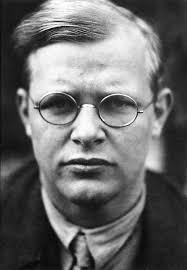
In 1940 Dietrich Bonhoeffer wrote an 84-page meditation on the Psalms called Prayerbook of the Bible, in which he explains the importance of the Psalms for Christian prayer. I can’t think of Psalms now without thinking of Dietrich Bonhoeffer, who wrote concerning them, “Along these lines the Holy Scriptures tell us that the first thought and the first word of the day belong to God.” Actually, I’ve revised it a bit and say it as a prayer: “Lord, the first word and the last word of the day belong to You.” Saying this helps me re-focus—sometimes find focus because sometimes, left to my own devices, my thoughts go immediately every day to myself, my life, my plans, my trouble, my happiness. When the first and last thoughts of the day belong to God, my life—my day—is given context and perspective. This little phrase is a comforting guidepost for me. It really should have been all along, but it was not—until I met Bonhoeffer.
Maybe you have heard of him. If not, you can access documentaries and a movie about his life on YouTube or Netflix. Documentary fanatic that I am, I was browsing them in Netflix one Sunday afternoon and came upon one about him by accident. I would like to say that I discovered this fellow through theological study, but no. I had run out of historical documentaries about Nazi Germany to watch. I’ve been reading Bonhoeffer ever since. His life is an example of how an ordinary human is capable of extraordinary acts in the face of oppression. That sounds trite as I write it, like a bumper sticker, so let me give you a brief biographical sketch. His life adds depth to his writing for me, just as his writing gives deeper meaning to his life, and between the two, I realize that we can be called upon at any time and place to do that which is right. I do not know how I would meet that challenge.
If Dietrich Bonhoeffer had lived in any other place and time, he would have still been known as a brilliant theologian. His book Discipleshipexplains who Christians are; Life Together explains how we live. He was born in 1907 to a life of privilege. His father was a professor, and his mother came from an old and respected family. By the time he was 23 years old, he had written TWO dissertations In 1931 at the age of 25 he was a professor at the University of Berlin. Wow. He wanted very badly travel to India and study with Gandhi, but he never did. In 1932 Hitler happened instead. If Dietrich Bonhoeffer had taught and preached and turned a blind eye to the Nazis, he would likely have lived, married, had children, traveled, written great theological works, and died like old professors do. That is not what happened. Instead he took a stand that Christ, not the Fuhrer, was the head of the Church. It was his call of disciplieship.
He came to the U.S. twice. The first time was in 1930 on a teaching fellowship to Union Theological Seminary in NYC, where he first met African American Christians. He began teaching Sunday School at Harlem’s famous Abyssinian Baptist Church, and was moved by the “rapturous passion and vision” of the Black church. It is here that he found connections between religion and social justice and developed a love for Black spirituals—both of which he carried back with him to Germany. He shared both with the young seminarians he taught from 1935-1937.  I am glad Bonhoeffer has a U.S. connection.
He returned here in June 1939 again at the invitation of Union Theological Seminary, as Hitler began invading Europe. But he soon regretted his decision, as he wrote Reinhold Niebuhr: “I have come to the conclusion that I made a mistake in coming to America. I must live through this difficult period in our national history with the people of Germany. I will have no right to participate in the reconstruction of Christian life in Germany after the war if I do not share the trials of this time with my people… Christians in Germany will have to face the terrible alternative of either willing the defeat of their nation in order that Christian civilization may survive or willing the victory of their nation and thereby destroying civilization. I know which of these alternatives I must choose but I cannot make that choice from security.” He returned to Germany on the last scheduled steamer to cross the Atlantic before the war.
From 1940 to 1943 he worked as part of the German resistance, helping Jewish people obtain papers to escape. He even knew about the 1944 plot to assassinate Hitler (My quaker friends cringe a little at this part). He was arrested in 1943 because of conflict between the SS and the Military Intelligence organization for which he worked. When the Nazis discovered his connections with the assassination conspirators—who had also worked where Bonhoeffer worked—he was hanged on April 9, 1945, just two weeks before American troops liberated the camp where he was imprisoned.
Bonhoeffer continued his writing—and his ministry—from prison, living and talking Christ to prison guards. His friend, student, and biographer, Eberhard Bethge, recounted the words of the prison doctor who attended his execution, “I saw Pastor Bonhoeffer… kneeling on the floor praying fervently to God. I was most deeply moved by the way this lovable man prayed, so devout and so certain that God heard his prayer. At the place of execution, he again said a short prayer and then climbed the few steps to the gallows, brave and composed. His death ensued after a few seconds. In the almost fifty years that I worked as a doctor, I have hardly ever seen a man die so entirely submissive to the will of God.” Where did he get this strength? Bonhoeffer knew that God heard his prayers because he prayed the Psalms regularly.
From prison he had written his parents, “Before I go to sleep I repeat to myself the verses that I have learned during the day, and at 6 a.m. I like to read psalms and hymns, think of you all, and know that you are thinking of me.” The Psalms were central to his theology—and to his daily life. He began Prayerbook of the Bible with the disciples asking Jesus, “Lord, teach us to pray!” Then he goes on, “At the request of the disciples, Jesus gave them the Lord’s Prayer… It is a great grace that God tells us how we can pray in the name of Jesus Christ.” He sums up a very important point about the Psalms: Jesus died on the cross with words from the Psalms on his lips (Ps 22:2, Ps 31:6). Bonhoeffer considered Psalms significant because in them we have an example of how God wishes us to approach God in prayer, praise, and professions of faith and trust. This significance is confirmed by Jesus—as His model to the disciples and in his final words on the Cross. I can’t help thinking they were among Bonhoeffer’s final words too.
Try this: read our verses above while thinking about the young preacher’s life, and his death, and his utter conviction that the Psalms are God’s words and when we pray them, we pray them with Jesus.

Recovering from Fundamentalism, Part 1

One of my friends is, like me, a recovering fundamentalist Christian. 

She suggested that I might get to the root of my issues, whether about relationships, teaching, or writing–whatever–by forgiving myself. It took a recovering fundamentalist to recognize that and present it in that way. The closest I ever got thinking about forgiveness was when my therapist (the one I pay) suggested that I look back at the girl who married young because of gender role social expectations and not so subtle pressure from family. She asked me to engage with that young woman, going back even to  the smart tom-boy who felt different and often alone. When I did that very hard work, I asked the young me for forgiveness. I realized that I did not feel like I had taken care of her. I remember that was a very hard session. 

But forgiving myself now–that’s different from looking back at me then. Forgive, for what? The issue is the essentially the same it seems. Since my divorce, I have felt robbed of the 16 years I was married. (Side note: it has been 16  years since my divorce. Geez. Get over it.) Robbed, as though they were taken. Passive verb. I had blamed the fundamentalist church, my parents, my husband, Alabama–anyone, everyone. But me. Thing is, I’ve been furious with myself for having done this to myself–and for staying in it for those years. I did this. Me. (Now suddenly the anger issues my paid therapist brought up that I couldn’t see became very clear and noticeable). My unpaid counselor friend calls it discipline fundamentalism. I try to be “good,” but all that old unforgiven baggage surfaces and I act out (yes, there has been acting out), leaving me guilt laden and sorrowful. I make a pact with myself and resolve to do better. Trouble is, that doesn’t work. Hasn’t worked. 

In addition to forgiving my self, I will tell myself as often as I need to hear it, “it is enough.” Not “I am enough.” I know I am–my issues are not about confidence or worthiness. I’m just never satisfied with what I’ve accomplished. It’s almost always writing. When I can’t dig in and write a lot, I will read, or now, write here. That’s enough. It’s working. Even writing it now I feel a tremendous sense of relief and peace. So whatever I do, it’s enough for today.  

You may ask what this deep reflection has to do with fundamentalism. I think the imprint fundamental Christianity has had on me as a female has been about judgement. Naturally, I was taught at all costs to be a good girl because I would be judged by God. Here on earth, meanwhile, I was expected to be good and conform so I would be judged acceptable by others (what will the neighbors think). I learned to be good so that my daddy would not lose his temper. Be good, be good, be good. And if I were ever human–spontaneous, uninhibited, free-spirited (and all the behaviors these entail)–I felt that judgement upon me from all sides and fell short. So, forgiveness and acceptance is the first, deeply internal step to recovery from fundamentalism. It is the step that allows me to see that judgement is something that somebody else does. And it has very little to do with me. More on this later.