Finding My Voice Again: A Musical Journey (Power of Music, Part 2)

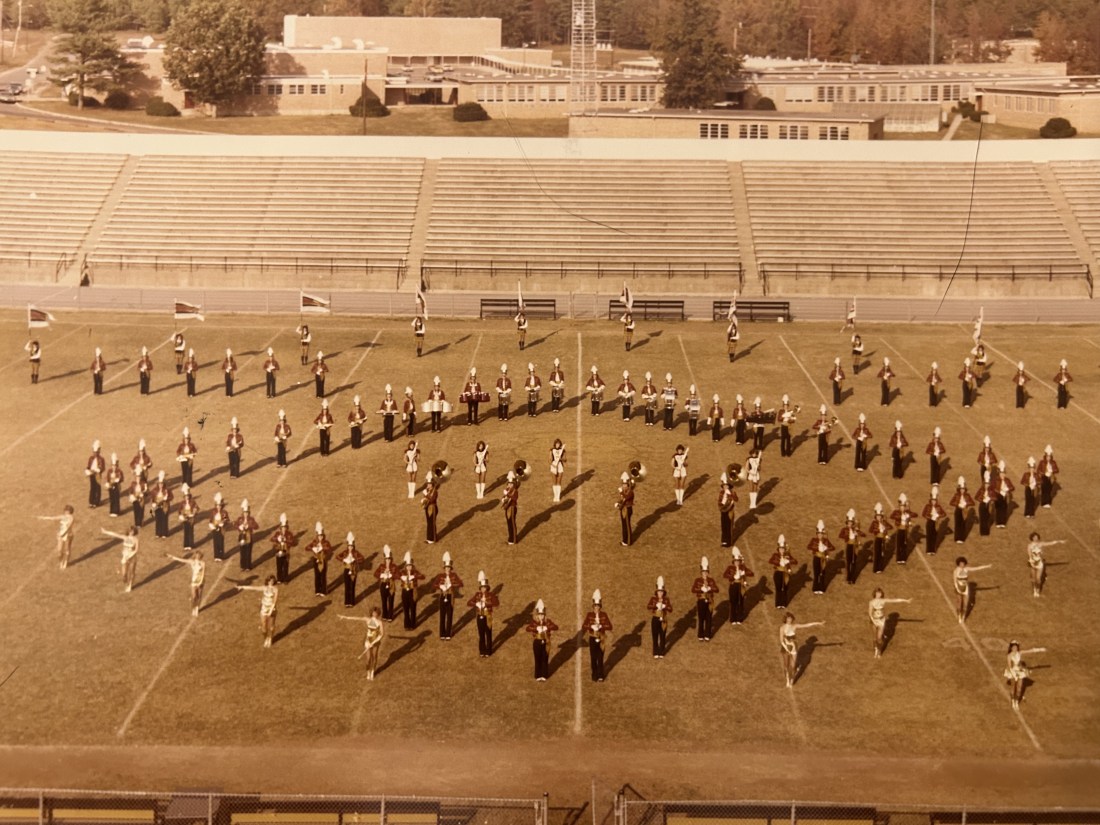
Image of 1979 Russellville Marching 100 Band Yearbook Picture

Finding My Voice Again

Music has always been more than just entertainment for me; it’s a pathway to the deepest parts of myself, a way to explore the complicated emotions that shape my inner being. Growing up, singing hymns a cappella in our small church was an unforgettable experience. I still recall sitting on a pew in the third row, right behind the song leader’s wife, with my friends Lynne and Susan. Our young voices would blend together in harmony, and Mrs. Greenhill would turn around, a twinkle in her eyes, to compliment our singing. “I heard you girls singing that alto,” she’d say. Those words of encouragement still resonate with me today.

Image of small stone church, Littleville Church of Christ, Littleville, Alabama
My home church, Littleville Church of Christ, Littleville, Alabama

High school choir–the RHS Singers–was an incredible experience. We developed our singing abilities and musical knowledge as we discovered the pure joy of making music together, especially when we got to perform. I remember how proud I was when I wore the stage choir outfit made from gaberdine with matching rayon scarf that my Mom had sewn on her Singer sewing machine. I still remember the songs. And, as I’ve previously explored in my reflection on the RHS Marching 100, music has always held a significant place in my life. These experiences deeply shaped my love for music and continue to influence me today.

This strong connection to music was reaffirmed by my recent rediscovery of my old iPod. As I wrote in “The Playlist of Me: Forgotten iPod, Rediscovered Self,” my iPod held a collection of songs carefully chosen over time, each a reflection of a specific mood or memory. Listening to that forgotten playlist for the first time in a decade felt like uncovering a long-lost piece of myself. It was a powerful reminder of the abiding impact music has on my spirit.
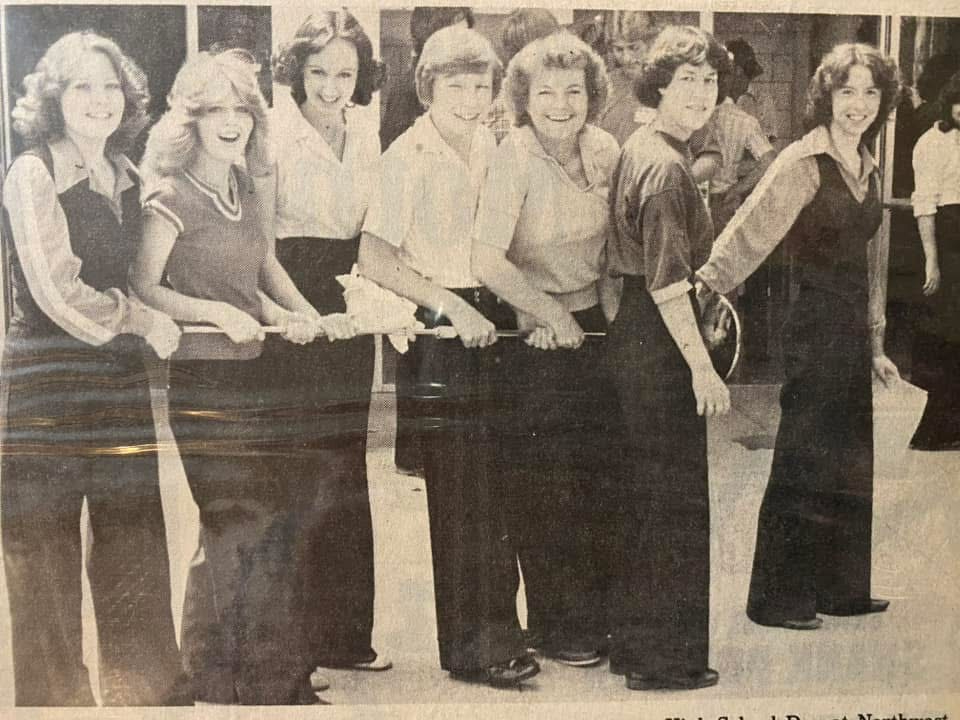
Image of seven teenagers in the Russellville High School RHS Singers choir, 1980
Joyful times! A group of RHS Singers being silly. We were “setting up” the microphone stand. I am third from right.

Darker Days

During my junior year, my boyfriend, who later became my husband, began to increasingly feel threatened by the time I spent with my classmates and the joyous importance of music in my life. Through subtle and not-so-subtle manipulations, he pressured me to miss choir and band gigs, culminating in his attempts to prevent me from going on an upcoming band trip to Washington D.C., a dream of mine. Heartbroken but worn down from struggling, I quit both. Losing these creative and social outlets devastated me, leaving a dark hole in my life where music and my connection with my classmates had once been.

After I graduated and we married, I began to have recurring dreams, vivid and unsettling. In these dreams, I would find myself transported back to my high school days, immersed in the music, the joy of playing my instrument washing over me. But the comfort of the dream would always be shattered by the harsh reality of waking, leaving me with a profound sense of loss and longing.

My marriage, unfortunately and unsurprisingly, amplified the unhealthy power dynamic between us. When we divorced, I finally felt free, but the loss of my 45s—taken from my belongings while I was packing—left me angry and heartbroken. Those records, collected during cherished weekly trips to town with my mom from as far back as I can remember until I got married, traced and preserved the years of my life growing up. Their disappearance wasn’t just a loss of possessions; it was a loss of something irreplaceable. I’ve been trying to rebuild that collection ever since, but those original records will always be gone. My only solace was that I no longer had the homesick dreams.

Image of blue plastic 45rpm record holder.
A similar blue plastic record holder to mine.

Looking back now, I see how, over time, I had become disconnected from vital parts of myself—choir, band, and even my cherished collection of 45s, all tangible links to my teenage years. The impact of the loss extended beyond the immediate. At this point, you may be thinking, “Well, lady, why didn’t you just play the radio or go to a concert? Why so dramatic?”

I continued to listen to music, of course, but it wasn’t the same. It was as if I was merely going through the motions, like a writer who stares at a blank page, unable to truly engage with the creative process. I didn’t realize how much I had distanced myself from the deep connection I once felt with music until I reconnected with it recently.

Image of a stack of old 45 rpm records

Rediscovering the Magic

The silencing of my musical expression that had been made complete during my marriage left a void in my life. However, the yearning for music never truly subsided. Years later, I found myself drawn back to the familiar comfort of church choir. The initial hesitation soon gave way to a renewed sense of joy as I rediscovered the power of music to uplift and connect. My voice, once silenced, found itself again. People would remark, “I’ve never seen anyone as happy as you look when you’re singing.” These simple observations resonated deeply, confirming that I had found my way back to a source of profound happiness and fulfillment.

Rediscovering the magic of music has brought unexpected joys. Sharing my father’s love for the music of his youth has been a deeply rewarding experience. As he hummed a long-forgotten tune for me, I would embark on a digital treasure hunt, searching for that elusive melody.
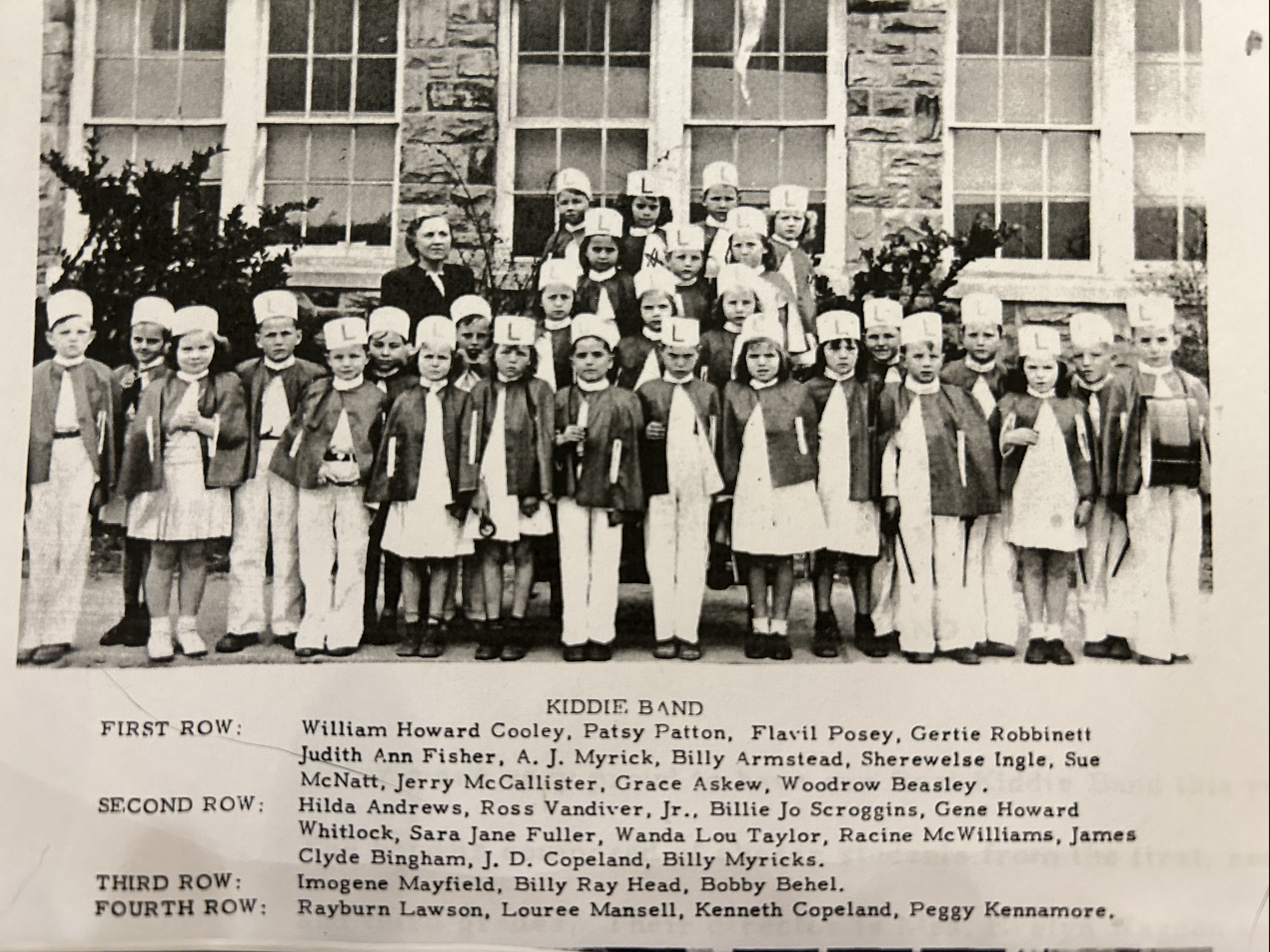
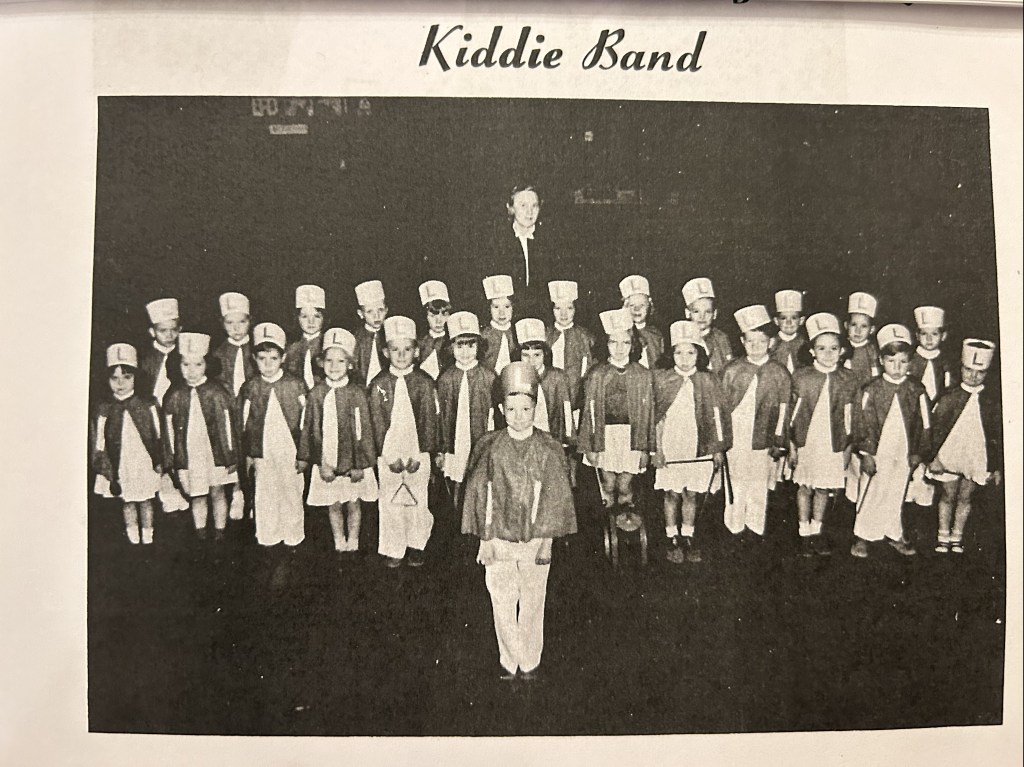
Image of 1949 Littleville School Kiddie Band
Littleville School Kiddie Band, 1949. Daddy, Gene Howard Whitlock, is in the second row.
Image of Littleville School Kiddie Band, 1950
1950 Kiddie Band. My Mother, Wonell Fisher, is in the back row, third from left.

Downloading and burning CDs for him became a treasured ritual, a way to bridge the gap between generations and share a piece of his past. Both my parents fondly remember their days at Littleville School, where they had both been members of the Kiddie Band – a cherished program that sadly did not exist by the time I arrived. My father, a natural performer, particularly enjoyed his time in the band, relishing the opportunity to entertain the crowd. While looking through old yearbooks, my son and I discovered that Daddy had been voted Littleville School’s Most Talented in 1953–based mostly on his performance of Mr. Sandman–when he was in seventh grade. Mother had been a cheerleader, but that is another story.
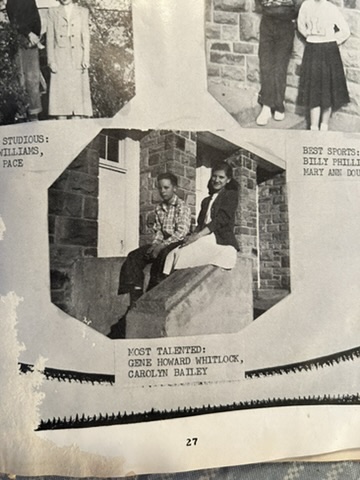
Littleville School Most Talented 1953, Gene H. Whitlock
Littleville School 1953 Most Talented, Gene Howard Whitlock

The resurgence of vinyl, with its emphasis on the warmth and character of analog sound, has also brought a new dimension to my musical journey. Listening to records again evokes vivid memories of my childhood and hours spent browsing records at TG&Y with Mom, while also connecting me to the music that shaped me. Growing up a lonely kid in a small town, I spent many Saturday nights sitting in the dark listening to Wolfman Jack on my folks’ RCA console stereo. For years, I didn’t have a record player, but Sarah found one on Facebook Marketplace and encouraged me to buy it, convinced it would bring me peace and happiness. The reality, however, has been more complex, stirring emotions and reflections I hadn’t expected.

Listening to old hymns like those I sang in the little brick church house evoked a flood of powerful feelings. The harmonies, the raw emotion, the memories of singing alongside Lynne and Susan on the church pew, all come rushing back. After witnessing me tearfully singing along with the Chuck Wagon Gang, Sarah gently noticed that while she had anticipated a sense of peace and happiness, she had not expected the tears.

Image of marching band, includes trumpet players, tuba players, and drums in background. Ugena Whitlock with mellophone in foreground.
Ready to march in a parade with the Atlanta Freedom Bands with my mellophone

In addition to church choir, joining the Atlanta Freedom Bands provided a powerful outlet for my musical expression. The first time I marched in a parade after more than 40 years, the music surged through me, a wave of joy and liberation washing over me. It was as if a dormant part of my soul had finally awakened. Community band serves as a poignant reminder that it’s never too late to rediscover and nurture our passions. Even if it harder to march a mile uphill forty years when I’m older.

Looking back, the unhappiness of that earlier period cast a long shadow over my understanding of music’s role in my life. It seemed to be a casualty of that tumultuous time. Yet, amid the pain and regret, an innocent, peaceful memory emerges. In stage choir performances way back in 1979, I can still see Robert, his guy’s choir costume accented with a 1920s white straw boater hat, dancing the routine with his partner (I, a product of my fundamentalist upbringing, was decidedly not a dancer!). They were performing to the choral version of “Close to You” by The Carpenters. Robert, a good boy from a troubled background, died a few years ago. I wrote about it in a previous blog post: For Bob.

I can’t hear “Close to You” today without that sweet memory, and sometimes its poignancy is so powerful, I cry. For him, for us, for episodes of happiness amid the turmoil of two people who married far too young – the passage of time allows me to see without the lingering pain. This, in the end, is what music truly means to me: its magic, mysterious, and soul-stirring power to bring me to gentleness and peace. It helps me to heal by reminding me of the beauty and fragility of life. Through music, I cherish the precious moments of joy from even the darkest times. And, I must admit, even though I have been to the nation’s capital many times, I still regret not going to D.C. with the band.
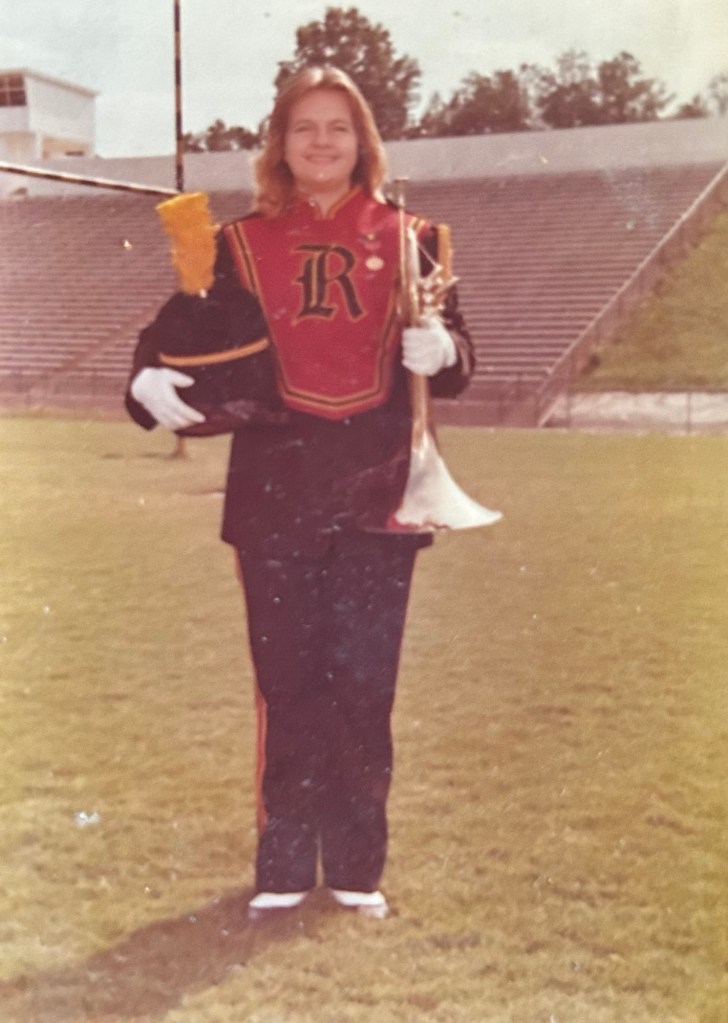
Image of band student Ugena Whitlock posing with mellophone in band uniform, 1977.
The first time I saw a Russellville Marching 100 band uniform, my young life’s goal was to wear one! Here I am, complete with gloves, spats, and mellophone. Notice the old shaker hat with plume and the medal for winning the Greatest Bands in Dixie Competition in New Orleans.

My Friend Duncan: The Scottish Terrier Who Won My Heart and Changed My Life

Image of Scottish Terrier Puppy sitting among potted plants

I still look for Duncan when I move from one room to another. I hear the little “click, click, click” of his toenails as he toddles across the wood floor. I think of him every time the leaves fall, expecting him to chase the light that dances between the shadows. I keep his little blue plaid collar with a spiffy bowtie on my dresser. I call our new dog–and sometimes call my son Daniel–“Duncan” when I’m in a hurry. I miss him.

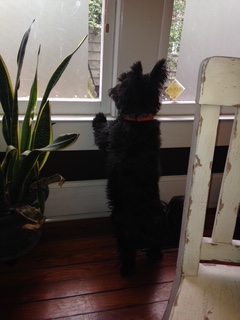
Image of Scottish Terrier standing on two legs looking out the window. Also pictures are potted plant and distressed dining chair.
Duncan standing on two legs looking out the window

I got Duncan for company and road trips, having been without a dog in the house for a few years. I had owned terriers before, but never a Scottish Terrier. While he was typical of the terrier breed, he was a Scottie, which gave him unique attributes, like not wanting his feet touched. He would yip and howl in holy terror at nail clipping time. He was a detached little fellow who did not need to be in my lap. In fact, I think he preferred to lie quietly at my feet. I discovered his staunch independence the day I brought him home. He was 10 weeks old, and I took him outside to the big front yard to start working on toilet training. I am used to puppies who want to be right with you–underfoot. Scottish Terriers have old people personalities even as puppies. I looked away from him for a minute to speak to a neighbor, and when I turned around, he was gone.

I looked all over for him–up and down the street, all sides of the house, under the porch, under the car. By this time my neighbor, who had returned to her porch, could see I was getting frantic. I yelled across our yards, “I just got him, and now he’s gone!” My neighbor had four kids, who all had friends, and who were all out in her driveway on bikes. She gave them marching orders: “Get on your bikes and look for the puppy.” And off they peddled, circling the block. It reminded me of communities coming together in movies, you know, like you don’t often see in real life. None of them had Duncan with them when they came back together.

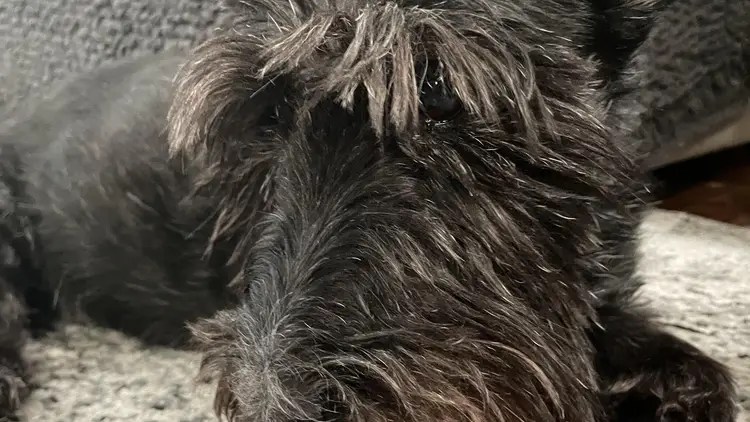
Image of a senior aged Scottish Terrier
My old man

It was then the next-door neighbor on the other side yelled to me from his back porch. “I see something little and dark. Is that him?” To this day, I don’t know how he had seen Duncan. I trudged to the pine tree he was pointing at in the far back of my wooded, sloped lot. There, under the tree in a patch of knee-high weeds sat Duncan. He was calm and stoic looking, peering through the fence toward the woods like Ferdinand the Bull in the story. This was the first of his sojourns, each one scaring me worse than the ones before.

When he was a young dog, he could escape from the average fence by burrowing under it. Terriers–from the French word “terre,” which means earth–were bred to “go to ground.” His favorite escape was to the woods to sniff for critters. Once, he cornered an especially slow squirrel and did not know what to do with it; fortunately for everyone but the squirrel, it died sitting there before Duncan could acquire the taste for blood. Usually, he headed off in the same direction–toward the woods–and the same neighbor would report a sighting after Sarah and I had been driving around the neighborhood for half an hour.

Image of Scottish Terrier next to a laptop computer
Duncan at work

One Sunday we came home from church to discover that not only had one of the kids left the gate open, but I had rushed out of the house (typical Sunday) without remembering to bring Duncan inside from his morning potty. Animal control had left a yellow note on the front door telling us when and where to come to bail him out. The one crabby neighbor in the neighborhood had called them. She had been afraid of a Scottish Terrier who was sniffing the ground and heading away from her house. We rushed to the pound, where one of the volunteers brought him out, jauntily jogging and smiling as he met us. The volunteer was happy with him, but not with us. She frowned as she took the opportunity to chastise us and issue warnings about consequences if it happened again. It didn’t. After that escape, we reinforced the bottom of the chain link fence with chicken wire, which I’m sure did not increase our property value.

He lived longer than the typical 10-year lifespan of a Scottie. One day I suddenly realized he was approaching 13, and I knew then he was living on borrowed time. He was noticeably slowing down, asking to be pulled in the wagon as we explored local trails. I had never been able to train myself to be a good leash walker (note how I said train me, not him). Duncan tugged and ran ahead until he found the perfect patch of ground, where he would have sniffed every blade of grass if I had let him. I couldn’t take him on brisk walks with cardio benefits because he would take three steps, stop to sniff, repeat. Now that he was a senior, we went on short walks with fewer stops and tugs. He reverted to peeing in the house on corners of the furniture when he got up for his nightly midnight drink. We began to crate him at night.

In the spring of his thirteenth year, he started throwing up. He was still eating and drinking, behaviors that I knew usually slowed and stopped at the end of life. I did not think we were there yet. The vet gave us a prescription for pancreatitis and told us to bring him back in a couple of weeks if the vomiting continued. After a few days, it got better…until it started again. The first night he threw up in his crate, we held our breath hoping it was a fluke. The second night we planned to take him to the vet for a re-check on the pancreatitis. Our wonderful vet gave us the dreadful news. “The pancreatitis is fine,” he said. “It’s these lumps I’m worried about. Let’s get him a scan.” The results showed golf ball-sized tumors in his abdomen. That was the first time I cried at the vet’s office.

Image of Scottish Terrier sitting on window ledge looking outside at a tree and building
Duncan on guard

Being the thoughtful person that she is, and to bring me out of my sadness to focus on what was really important during all of this, Sarah began to plan Duncan’s “bucket list.” At first, I just went along. But then I started to understand; it was really our bucket list–mine and his, together. We loaded up the little red wagon we had bought to cart the old man around and went camping. It makes me happy to think of him sitting in the middle of the campsite in that little wagon. We hit the trails and took road trips. He got a pup cup from the local ice cream shop. The only item on the list we did not get to was taking a trip to Alabama so that my folks could see him again. My sweet mother proudly reminds me that it was she who house trained Duncan when he stayed with them for a couple of weeks. She misses him, too.

The end came soon after. In three weeks, his belly was hard and swollen, and he began panting through the night. He was dying. I held him in my arms as we went into the veterinary room, held him when the kind vet administered the first shot, the one that sent him into a deep, peaceful sleep. But I could not bear the final shot. When I broke down and collapsed in the chair, Sarah petted and soothed him for the last time. It is the hardest thing I have ever done, and it broke me. I am crying now as I remember, and it is only now, months after, that I can bear to write about it. I still cannot look at the rosewood box with his ashes; Sarah has put it away for now.

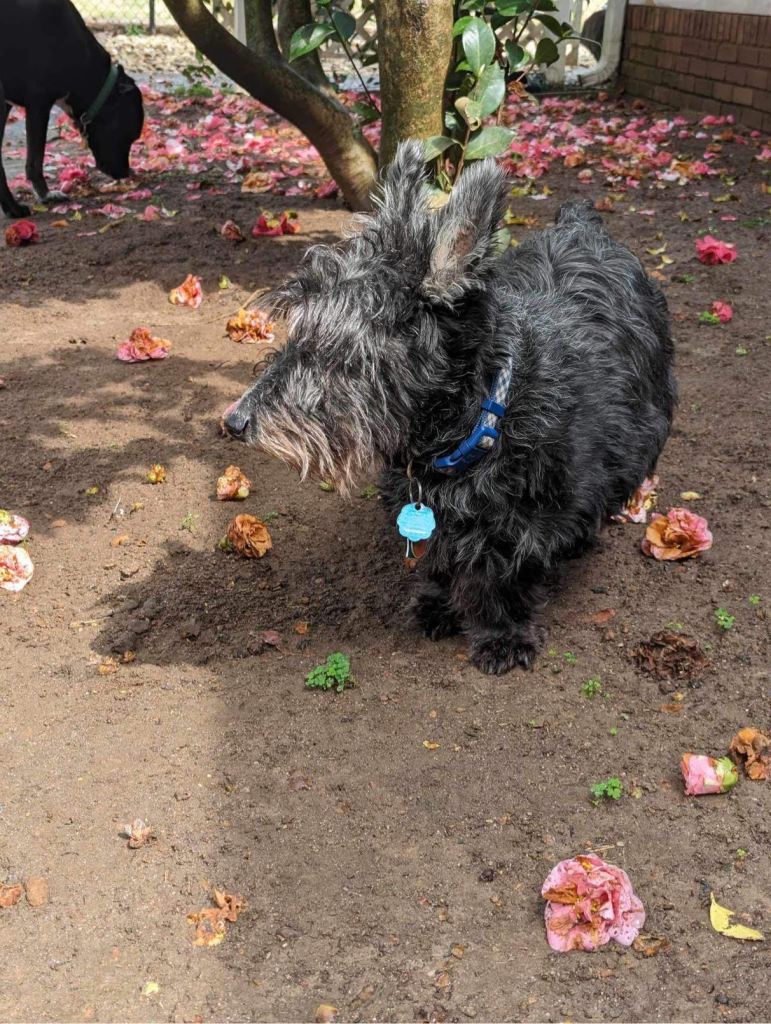
Image of Scottish Terrier under gardinia bush with gardinia flowers. Also pictured is a lab mix black dog.
Duncan under the gardinias

I don’t use the word “pet” when I can help it now. I don’t use the language of ownership anymore. I have done so here to reflect the lessons learned from my Duncan. He was my friend. A stalwart sentry, he was a proud dog who carried himself with dignity. Even during his last months, he never slouched or walked with his head down. Each step was deliberate and graceful, almost tiptoeing. He had the presence of a little gentleman. Duncan was lovingly stubborn until the end, tilting his head and gently pulling on his leash if he was not yet ready to continue our stroll. When he was groomed in that standard “show dog” cut, his brindle patterns were tiger-colored, swirling around on his back and neck like a chocolate and caramel brownie. He was magnificent.

Duncan has helped me navigate the passing of time, which is the gift from him I appreciate most. Life is short; if you want to see how short, reflect on the lifespan of a beloved furry companion. I grieved his death more deeply than I ever have before, with my immediate family still living. I am forced to prepare for inevitable loss of parents and the sad yearning of looking into the void where they once were. I picture Duncan looking at me and tilting his head, like when he was listening to me. “Yes, it’s indescribably hard,” he seems to think. “Just keep your nose down and keep tracking.” On days I work from home, I look at the sunbeams on the rug and think about how he used to sit and stare at the beams, expecting to catch one at any minute, his whole body alert and quivering, his tail wagging in anticipation. And after all, that’s life, isn’t it? Head down, keep tracking, and always look for that sunbeam you’re about to catch. Thank you, friend.

Image of Scottish Terrier named Duncan in a pond. His tongue is out as though he is smiling.
Duncan in a pond

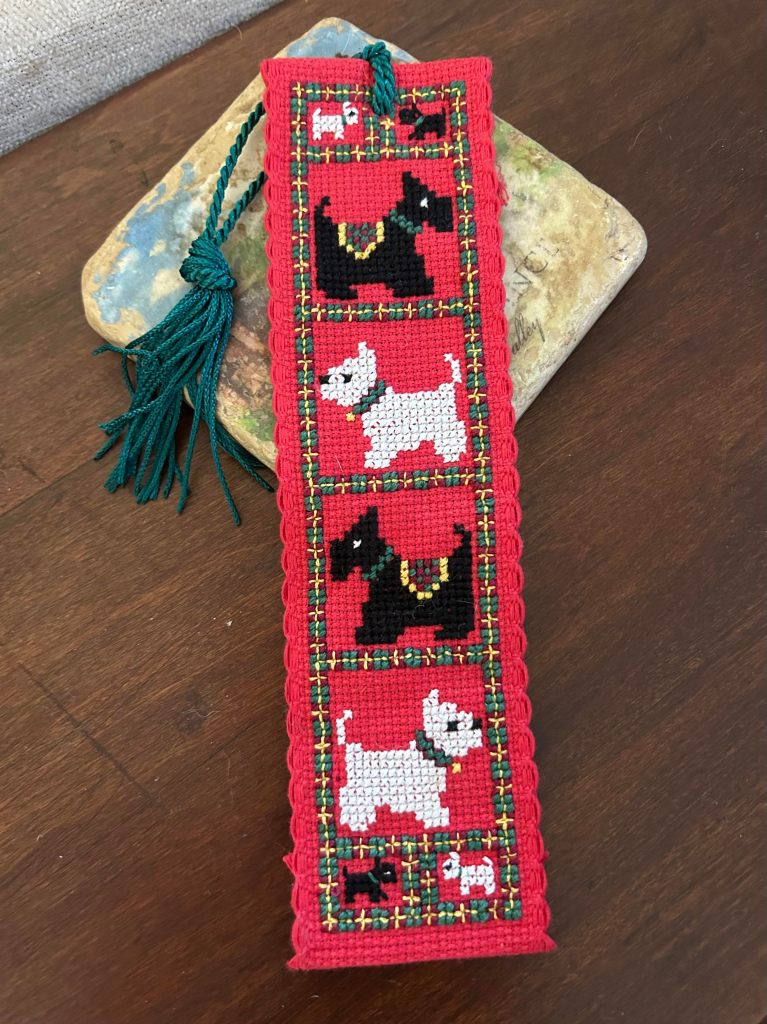
A final note, throughout the essay, I have referred to “we,” plural. In reality, Sarah provided Duncan’s end-of-life care and doctor visits. Reading this, she jokes about the so-called loyalty of Scotties, since when she entered my life, he adopted her as his person. He sat in her lap and asked for pets the day he met her–and continued to do so for the next 10 years. She reminds me that Duncan was in fact affectionate with her, if not so much with me. She was the only human whom he would allow to touch his feet. She made me the lovely Scottie bookmark in the picture, and I thank her for caring for us both.

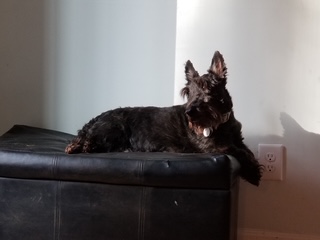
Image of Scottish Terrier named Duncan reclining regally on a settee
Duncan looking regal and thoughtful
Image of Ugena Whitlock holding Scottish Terrier Duncan while on vacation.
Duncan and Me
Image of red bookmark with green tassle that shows two large Scottish Terriers, two large white Scottish Terriers, two small black Scottish Terriers, and two small white Scottish Terriers.
Beautiful intricate Scottish Terrier bookmark by Sarah

Just Keep Swimming: Pandemic Edition

This is my first blog post since everything has changed. Everything. So where to start? To begin with, today I am not going to talk about the politics of it all. I wanted to lay out the sequence of events so that I can remember them–where I was, what I was doing. Reflections will come later.

In February, we heard the word Wuhan for the first time. I recall Sarah mentioned it in passing, and I remember replying, “Oh, ok, uh-huh,” without stopping what I was doing. Throughout that month and into March, I may or may not have clicked on updates from China that came across my news feed, but since it was not a topic yet related to U.S. politics (my preferred topic), I likely kept scrolling. Then came March.

On March 1, there were 75 confirmed cases in the U.S. On March 9, the day Sarah was to drive to South Florida for a math conference, there were 704. On March 10, we cancelled a cruise we had booked with Sarah’s family and church pals. Then on March 11, the World Health Organization (WHO) declared COVID-19 a pandemic. By March 12, the day she decided to come home early, the number was 1,697 (https://www.worldometers.info/coronavirus/country/us/ ). By the way, COVID-19 is the specific strain of coronavirus (a general group of viruses); to call it the Chinese coronavirus is not only inaccurate, it’s racist. Yep. You may not care for the Chinese government, but those folks over there got sick like us folks over here. See? 

map_cov19

By mid-March–which sounds and feels like a decade ago as I write it–online news sources had special COVID-19 pages/links, where you could see all news updates related to the virus in one place. The 2020 Democratic primary was affected. Super Tuesday was pretty much overshadowed. Candidates and other politicians–including the president, who thrives on rallys–began cancelling. The last Democratic debate–like all late night shows–were held without live audiences. I must admit I approve of the format for debates–for Stephen Colbert, not so much. As early as Saturday, March 7th, Kennesaw State University had begun to develop a “continuity plan” in the event face-to-face classes were suspended. It was essentially a plan for all courses to go online.

Unexpected issues started cropping up, too. For example, what would students do if dorms and dining halls were closed? What about homeless students (and all universities have them)? What about students who did not have computers or notebooks, but only their smartphones? The news channels began to have question and answer programming where viewers sent in questions for experts to answer. We submitted our plan to the university president by March 10th, and then we waited. It truly felt like a calm before the storm, eerie silence and all. By the evening of Friday the 13th, announcements came that public schools and universities would go online the following week. Church services across the country scrambled to find ways to make virtual worship meaningful. This was also the day that everyone in America went to the grocery stores for toilet paper.

Monday, March 16, was the day the stock market had its worst day since 1987. It was also the day we started setting up our home offices. Sarah had worked all weekend preparing to teach three in-person classes completely online–and have office hours virtually. I brought home monitors and books from the office after having one virtual meeting on my laptop. Honestly, I need the 2 monitors so I can do other things during the meeting, like look for social distancing staples online. You know you do it too, which is why it is on one of the 10,000 blog posts called, “Good Virtual Meeting Etiquette.” I have so far had five virtual meetings this week. It got so bad, one group had trouble finding a time–from home during social distancing!–to schedule our next meeting. A well-meaning colleague suggested meeting early–8:30 or 9:00 am–so that people would be free. I told him it was obscene to start that early. Because we are at home does not mean we are always “on,” which he was NOT suggesting. But it’s something to think about.

virtualmeetings

So, it is Friday, March 20, and we are caught up with the basics. I have learned how to change my Zoom background and so far have been at the Grassy Knoll, the White House, Graceland, and inside the Tardis. We have cooked more this week. Sarah has started an outdoor garden–so far with mainly carrot tops from our increased vegetable consumption. My office is a thing of beauty, and I am about to run out of diversionary tactics related to rearranging it. I have so far ventured out twice–both times to the office and thrift shop. I took wipes and sanitizer. I have taken a walk. We are ahead of the laundry. I have read Scripture and Sister Joan Chittister’s take on The Rule of Benedict every morning.

The other pandemic task I worked on this week was connecting. I realized that part of my own continuity plan should include staying in contact with people. As an introvert, it’s saying a lot that I should have that as my concern, but I am aware that I self-isolate enough anyway–imagine when it is mandatory! So, I hit the Facebook and made “Friends” with people from all parts of my life: colleagues, church folks, family, old classmates, scholar friends. I paid attention as people started setting up “Hangouts” and various groups and web meet ups. There have also been plenty of news and blogs encouraging people to take precautions to avoid loneliness, which will be very real as this thing goes along. Speaking of blogging, it’s another way I feel connected, and I’m planning on doing it more. There should be plenty to write about. One thought I had this week, during my containment prep, was how aptly named the blog is, Just Keep Swimming. If it was appropriate up to now, it sure is as we move forward. It is, for me, a hope-full idea: hang on, keep going, do the best you can. That’s the plan, anyway. 

dolphinhope


My White Privilege: An Unexpected But Unsurprising Glimpse

privilege, white privilege, race, racism

This week I had to check my whiteness two times, first at the ONA Coalition National Gathering and then at the UCC General Synod. The lesson was reinforced for me that, even though I have more than one historically marginalized marker with which I identify (gender and sexuality), that does not mean I am enlightened or evolved in relation to other marginalized populations. It is no fun having to face this in real world situations, but it’s crucial to remember. It also teaches me that in discerning for the ministry, I have a lot to learn. It is God saying, “You’re not there yet.”

The first was during a talk given by a candidate on the slate for a UCC national office. Right after the UMC vote, I had been a little indignant about African delegates being the conservative votes that put the resolution against LGBTQ ordination over the top. Reverend Karen Georgia Thompson pointed out that the African delegates had been heavily lobbied and probably manipulated by conservative (probably Southern) delegates. Of course they had; it created the narrative that benefitted U.S. delegates while reinforcing the stereotype that Black bodies and Black churches were by nature “essentially” conservative. 

The second instance was personal. I had a roommate for Synod, a gifted African American chaplain I’ll call Susan. One night, we went to a late evening reception for Members in Discernment for ordination. It was late, so there weren’t many people in the large Hilton hotel suite. In the corner, engaged in conversation with a conference delegate, sat Reverend Traci Blackmon, a rock star minister, prophet, activist in the UCC. She came on the national scene in helping people from Ferguson, Missouri, respond to the Michael Brown murder in 2014. Naturally, we were both star struck. While helping ourselves to the snacks and wine, Rev. Blackmon walked over and began heating up her leftovers from Maggiano’s. The three of us struck up a conversation about a contentious topic in the last session. She was very gracious and seemed to me to be in the mood to talk. It seemed like she needed to unwind before calling the very long day a night. So the three of us sat down in the living room area of the spacious suite while she ate. Even though it was late, I was energized. Like those cop shows where they have to keep the caller on the line so they can trace the call,  I just wanted her to keep talking. She is a public theological intellectual, and like bell hooks, a treasure.

UCC, United Church of Christ, microaggression, white privilege, general synod, member in discernment

When we got back our room, I was revved up from the experience. “Traci Blackmon had a conversation with us,” I said. “Well,” said Susan, “she had a conversation with you. I think I may have made one statement.” Screeching halt. She was right. I, in my white academic privilege, had manipulated the conversation so that I could “own” an engagement with this person I admired. I knew how to guide conversation, to interview a subject, and that’s what I had done. My new friend was gracious, and to her great credit, she didn’t excuse or deny it to make me feel better. The irony is that throughout the conversation with Rev. Blackmon I kept telling myself that I was humbled to be in her presence. No I wasn’t; I was proud. Humility is what Susan exhibited, yet I was so blinded by my privilege I did not see it.

I am not suggesting Susan did not have voice–she did, and she could have called me out severely as we debriefed. What I realized was that in this space where justice and covenant were sacred ideals to be put into practice by all Christians, I had performed a microaggression from a place of privilege, so I am glad the space is also one of grace and mercy. Although, like the tools of privilege in my invisible backpack, I do not deserve them.

A Game of Thrones Travelogue: Or, Finding Community in a LaQuinta in Orlando, Florida

Like all GoT fans, Sarah and I had been awaiting Season 8 for two years. For the last month, we’ve been organizing our weeks around Sunday nights at 9:00. We’ve organized our Sundays around that one hour. This week, for the series finale, we had a minor change to our normal routine of gathering around our tv with tailgating snacks. We were in Orlando for a math conference. No problem~~we’d just watch it on HBO at the hotel. On Friday night, we discovered the LaQuinta provided complimentary Showtime. Not HBO. We had 48 hours.

Saturday was spent researching, me poolside and Sarah from a panel session. We called Buffalo Wild Wings, who was running commercials nationwide showing the Mother of Dragons. This probably meant they were going to have their monitors blaring with the final episode. Nope~~they didn’t have an HBO subscription. Could we live stream through our cable provider? Apparently not unless we were in proximity of our cable box. Did we know anybody who actually 1) lived in Orlando and 2) had HBO? Time was running out! Game of Thrones, GoT, LaQuinta, Orlando, Florida, Community, Entertainment

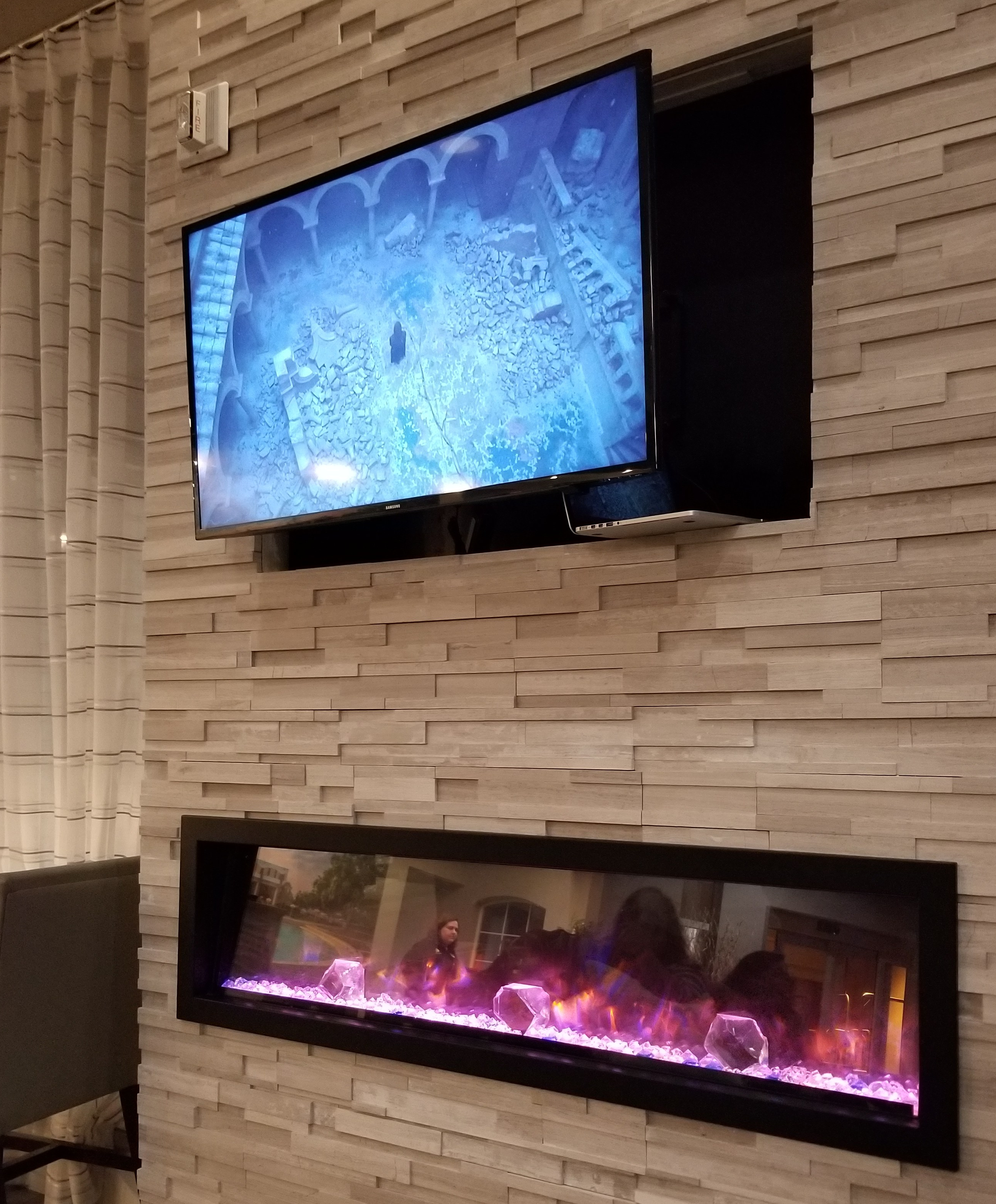
Thanks to Google, we discovered HBO Go and made plans to stream on our laptop that evening. Since Sarah’s high school friend–an engineer–was hanging out with us, we’d watch in the lobby. It was the best we could do. We started set up early, an hour ahead of time. Putting our heads together to make the most of our viewing environment, we got up our courage to ask the receptionist if she might dim lights and lower the volume of the lobby monitor blasting out Men In Black, which she was clearly watching from the desk. I was elected to ask.

“Lights? No problem!” replied desk clerk Julie to my first request. “I’ll dim what I can.” “Would you like to hook up the computer to our HDMI cable so you can watch it on the big tv?” A viewing event was going to happen after all! We grabbed the engineer and it was ON! Lights dimmed and the three of us planted ourselves on the comfortable LaQuinta lobby furniture just as the announcer began, Previously, on Game of Thrones. 

Then a woman walked by and saw Lord Tyrion walking through the ruins of King’s Landing, above. “Oh my God, it’s ON!” We invited her to join us. She ran down the hall and returned with a hotel pillow. “Hi, I’m Sandy,” she said, not waiting for returned introductions as she snuggled in. Sarah texted her math pal Laurie, also at the LaQuinta, to join us; she appeared, giddy with excitement. The family checking in turned and looked at us and the tv. Their teenage daughter drifted over as her mom said, “Yeah, you can just stay right here and watch.” The teenager took a seat at a table behind us, on the margin. “Come on, join us~~it’s ok!” She took a seat on the couch. Sarah made a mad dash to the room to grab our road trip snacks–grapes, Triscuits, Babybel cheese.

We were, for that hour, persons of a common union, communing around an entertainment event. Sentimental sap that I am, I looked at us, and it felt good, comfortable. We didn’t talk~~except when Sarah’s friend enthusiastically punctuated each scene with a question. Is Lady Brienne pregnant?? Is Jon going to kill her?? I heard there’s a poison chalice!! There’s one in every community, and we love them anyway. Sandy’s phone buzzed non-stop, except when it was ringing. She eventually tucked it under the pillow. And, keep in mind we were in a hotel lobby; I’m heartened to know the Orlando LaQuinta is doing such good business from 9:00-10:00pm on a Sunday night. There was a steady stream of check-ins.

As the last scene faded and the credits started to roll, Julie turned the lights back up. As if on cue, our little viewing community began to stir, turning away from the big screen, where we had–finally–found out who would rule the 7 Kingdoms (sort of, fans will know what I mean) and watched Arya head west of Westeros. The most some of us could utter was, wow. Although some elaborated with expressions of disbelief–or validated predictions, whichever.

Our little band milled around, gathered up our belongings, and began to drift off. “A selfie~~we need a selfie!” Sarah insisted. “Gather around, everybody.” I looked at the teenager, “What’s your name?” “Chelsea,” she grinned. Game of Thrones, GoT, LaQuinta, Orlando, Florida, Community, Television

Communities are like families: they come in different shapes and sizes. Sometimes we don’t get to choose its members. They give us a sense of belonging, if only for an hour in a hotel lobby. They can be chosen, but sometimes they form spontaneously. Sometimes they are temporary, like this one, never to be exactly replicated again. Thinking about it now, my heart is warmed, and its strings are tugged. I hope it happens again and again, random people who share a few moments. I think world peace and reconciliation could happen that way, friendly gatherings. Maybe not over tv; maybe over food or sports. Is that naive? Yes, of course. But there is something child-like in naivety–an openness to wonder and whimsey, to connecting. As a concluding thought, I was going to do as I usually do and end with a well-placed quote from Game of Thrones, but upon checking, I couldn’t find one that captured the spirit of anything other than violent-war-and-slaughter or mockery. So I settled on one of hopefulness and determination and purity of heart and, well, of openness–not unlike the promise of community. Hold the door!

Hissing Ball of Fury: Losing Diana

The cat hated everybody. Everybody, that is, except me. And Sarah, of course–but she had owned Sarah for seventeen years, so that was to be expected. I only knew her for five months, and I didn’t really expect her to warm up to me. More than that, I never expected to warm up to her. So when we helped her to her final sleep on Monday, the last thing I expected was to feel what I felt and react how I did. 

First of all, I am not a cat person. I had a cat once, and I despised it. Yes, my cat-loving friends will be shocked at that. Kitty was part Siamese and was mean. Worse than that, she caused me to lose sleep every night. If she was outside, she wanted in; if she was inside, she wanted out. Day in and day out. Why didn’t I just leave her in or out, you might ask? Well, I believe if you ask that, YOU are not a cat person. She would come to my bedside and claw at the blinds until I was awake. If I shooed her away, she’d wait till I lay back down and begin again. When she was outside, she would come to my bedroom window and claw on the screen, which is not a sound conducive to sleeping, especially as I lay there envisioning a trip to Home Depot to replace yet another screen. When I moved from Louisiana to Georgia, I gave the neighbors a bag of cat food and $20 to take care of the cat. I drove the U-Haul truck away as fast as I could so that Kitty couldn’t somehow attach herself and hang on for the cross-country trek. I was free of cats. Until Diana. 

Sarah called her Hissing Ball of Fury because that’s what she turned into whenever anybody tried to touch her. Over the months, as I met Sarah’s friends, they all asked, “And how are you getting on with the Little Cat?” Only they don’t say “Cat.” They had learned the hard way. “Oh, she’ll like ME,” they had said, one by one. “I’m good with animals,” they had said, one by one. And one by one, they had approached Diana talking softly and reaching to pet her, only to have her turn into Miss Fury. Diana had been banned from veterinary practices in two states because she bit. I witnessed this myself when we took her to the vet three months ago. Two young techs had assured us, “Oh, she’ll be fine with us,” only to bolt from the room to fetch the doctor to do this first-year vet school procedure himself. “Diana bites” was written in bold red letters across the top of her chart. And so she did. 

So what was my secret? I think it was that I let Diana be Diana. I let her come to me. When she sat with her back to us, which was her usual position until she got ready to be petted, I let her be. I only spoke to her when she looked at me, and never reached out to touch her. Then one day when she came to Sarah for her evening head-butts (Diana was a head-butter), she walked right into my hand. Then one morning I awoke with a cat sleeping on my head. On my head. She only hissed at me once. I had reached down to pet her as I walked by the couch where she was lying, foolishly thinking that we had bonded over the head-sleeping. “Don’t get to comfortable with me, old gal,” she seemed to imply in that hiss. “I come to YOU.” I only picked her up once. It was the day before she died. That is how I knew it was over. 

The vet must have felt the same way when he picked her up on Monday morning and said, “This is the first time I’ve really gotten to examine her completely.” He gently felt her frail body and asked Sarah if she was sure of her decision. She was. We had set up what Sarah called “Kitty Hospice” at the bungalow over the weekend, administering IV fluids and concocting what looked like an awful mess but was evidently a cat delicacy Sarah called “duck soup.” Diana would take a little, then lie on a pile of Sarah’s clothes and her old teddy bear, Ted, until we took her outside to lie in the grass warmed by the sun. The fluids never pepped her up as Sarah had expected; she was that far gone. So we fed her duck soup and let her be outside as much as she wanted. She even hissed at a stray cat once. We had one brief second of hope, then watched as she turned away all but a bite of food. I am glad we had that weekend. As we watched Diana, I watched Sarah say goodbye to her friend of seventeen years. 

I think things happen for a reason. Like finding an abandoned kitten two weeks ago–one that has pretty much taken over our lives by blessedly taking up our attention during the last week. I’ve heard the old saying that we don’t find pets–rather, pets find us. This one was put in our way at precisely the appropriate place and time. Just like Pastor Kim’s prayer in church on Sunday. As I sat there in the choir loft during the service, the words startled me out actually praying, hoping that it might in some way bring Diana’s human some comfort. Give us the courage and grace to live through the dying season, was the prayer. The grace to understand death, as well as life, even though the dying–the perpetual winter–dims a light in our souls.

As we sat outside with Diana Saturday, Sarah told me that she had chosen her name from Edith Hamilton’s famous book Mythology. It is appropriate–and somewhat ironic now–that her name had come from that book. In it, Hamilton quotes from Aeschylus’s Agamemnon
Drop, drop—in our sleep, upon the heart
sorrow falls, memory’s pain,
and to us, though against our very will,
even in our own despite,
comes wisdom

by the awful grace of God.
Aeschylus describes the process by which we come to the understanding for which the pastor prayed. Drop by drop upon the heart by the awful grace of God. How profoundly simple that it might come from the great blessing of being owned by a pet. But, if you are a cat person–like I am now–that is no surprise. 

Recovering from Fundamentalism, Part 1

One of my friends is, like me, a recovering fundamentalist Christian. 

She suggested that I might get to the root of my issues, whether about relationships, teaching, or writing–whatever–by forgiving myself. It took a recovering fundamentalist to recognize that and present it in that way. The closest I ever got thinking about forgiveness was when my therapist (the one I pay) suggested that I look back at the girl who married young because of gender role social expectations and not so subtle pressure from family. She asked me to engage with that young woman, going back even to  the smart tom-boy who felt different and often alone. When I did that very hard work, I asked the young me for forgiveness. I realized that I did not feel like I had taken care of her. I remember that was a very hard session. 

But forgiving myself now–that’s different from looking back at me then. Forgive, for what? The issue is the essentially the same it seems. Since my divorce, I have felt robbed of the 16 years I was married. (Side note: it has been 16  years since my divorce. Geez. Get over it.) Robbed, as though they were taken. Passive verb. I had blamed the fundamentalist church, my parents, my husband, Alabama–anyone, everyone. But me. Thing is, I’ve been furious with myself for having done this to myself–and for staying in it for those years. I did this. Me. (Now suddenly the anger issues my paid therapist brought up that I couldn’t see became very clear and noticeable). My unpaid counselor friend calls it discipline fundamentalism. I try to be “good,” but all that old unforgiven baggage surfaces and I act out (yes, there has been acting out), leaving me guilt laden and sorrowful. I make a pact with myself and resolve to do better. Trouble is, that doesn’t work. Hasn’t worked. 

In addition to forgiving my self, I will tell myself as often as I need to hear it, “it is enough.” Not “I am enough.” I know I am–my issues are not about confidence or worthiness. I’m just never satisfied with what I’ve accomplished. It’s almost always writing. When I can’t dig in and write a lot, I will read, or now, write here. That’s enough. It’s working. Even writing it now I feel a tremendous sense of relief and peace. So whatever I do, it’s enough for today.  

You may ask what this deep reflection has to do with fundamentalism. I think the imprint fundamental Christianity has had on me as a female has been about judgement. Naturally, I was taught at all costs to be a good girl because I would be judged by God. Here on earth, meanwhile, I was expected to be good and conform so I would be judged acceptable by others (what will the neighbors think). I learned to be good so that my daddy would not lose his temper. Be good, be good, be good. And if I were ever human–spontaneous, uninhibited, free-spirited (and all the behaviors these entail)–I felt that judgement upon me from all sides and fell short. So, forgiveness and acceptance is the first, deeply internal step to recovery from fundamentalism. It is the step that allows me to see that judgement is something that somebody else does. And it has very little to do with me. More on this later. 

On Writing, Part 1: Friends and Me

I have lately begun surrounding myself with friends who are either Sagittarius or who have backgrounds in a counseling or therapy profession, or both. I did not start out to purposefully do this, but once I noticed that I seemed to be collecting these kinds of people for friends, I kept keeping track. Now, It is altogether possible that they are drawn to me, so I am trying to figure out what it is that is appealing about me for these inquisitive, curious archers and advising helping professional types. I suspect it is that I tell a good story and tend to have some sort of conflict (I refuse to say drama), entanglement,  or crossroads in my life that I am seeking input for. I don’t mind saying that I like to get different viewpoints about what’s going on in my life. It helps me make decisions; it also means I can change my mind based on what seems to be most suitable. 

They have different approaches, these groups of friends. I don’t think any of them are both Sagittariuses and therapists. If I could find that person, I’d try very hard to move next door to her. Anyway, what this means is that I get different categories of feedback and support. Generally the Sagittarius free-forward-moving spirit helps me break out of my Virgo straight jacket and see my own possibilities. A Sagittarius cheers me on with, “You can DO it! You must GO for it!” as she is boarding the plane for her own next adventure (did I mention that my friends are almost exclusively women friends?). A counselor/psychologist, on the other hand, mainly asks me questions and insists that I feel my feelings before acting on them. 

Let me try to back myself out and try to figure out what it is about me that these bits of cheers and counsel meet. Reading the paragraph above, my Sagittariuses pick up on the doubtfulness, tentativeness, resistance, and hesitancy that I counter with impulsive acting out. My mind-pros insist I get to the root of those feelings, which I avoid by impulsive acting out. Reading the paragraph above, I am surprised I have any friends at all. I think I do tell a good story, and am just endearing enough that they keep me around. I am glad they do.   

What does any of this have to do with the topic, writing? Well, that’s mostly what I am doubtful, tentative, resistant, and hesitant about. And that is not a good thing, since I really, really need and truly want to be writing. Lately I’ve had the thought that even though I am a professor, I don’t have anything that I want to especially profess. That’s kind of like being on the Island of Misfit Toys. It is not that I don’t feel worthy or lack confidence; I have friends who have those issues as demons. I feel plenty worthy and confident. I think I haven’t found my joy, my bliss in it yet. I don’t think I’ve found a way, even after over a dozen years of being in the academy in one way or another, to do this job, this work, joyfully. And I truly believe it can and should approached and engaged with joy. So, joyfully onward today. My day, my work, my terms. My bliss.