Embracing Life Before Retirement: A Personal Journey

When I told Sarah I was thinking of titling this post Embracing Life Before Retirement, I could practically hear the pearl-clutching. Let me say right here at the start: I’m not counting down the days to stop working. I’m not slacking off. I don’t have too much time on my hands. In fact, I’m working hard — joyfully so. This isn’t about stepping back; it’s about growing into myself. At my age, the question of who am I becoming? carries a certain urgency.

Sarah, who can always “find me something to do,” sent me a link to the Spartanburg Community Band. I dusted off my French horn, loaded it into the Mini, and showed up. I played as softly as I could, listening to my neighbor for the pitch while I re-learned fingerings and remembered how to breathe as I buzzed the mouthpiece. Not long after, I joined the choir at the neighborhood Trinity United Methodist Church. Which, of course, meant I was also drafted into the handbell choir. (It’s funny how the choir members who double as bell-ringers, plus the music director, all grinned and said, “Well, handbells on Monday, choir on Wednesday!”) So, I guess I’m in handbells now too.

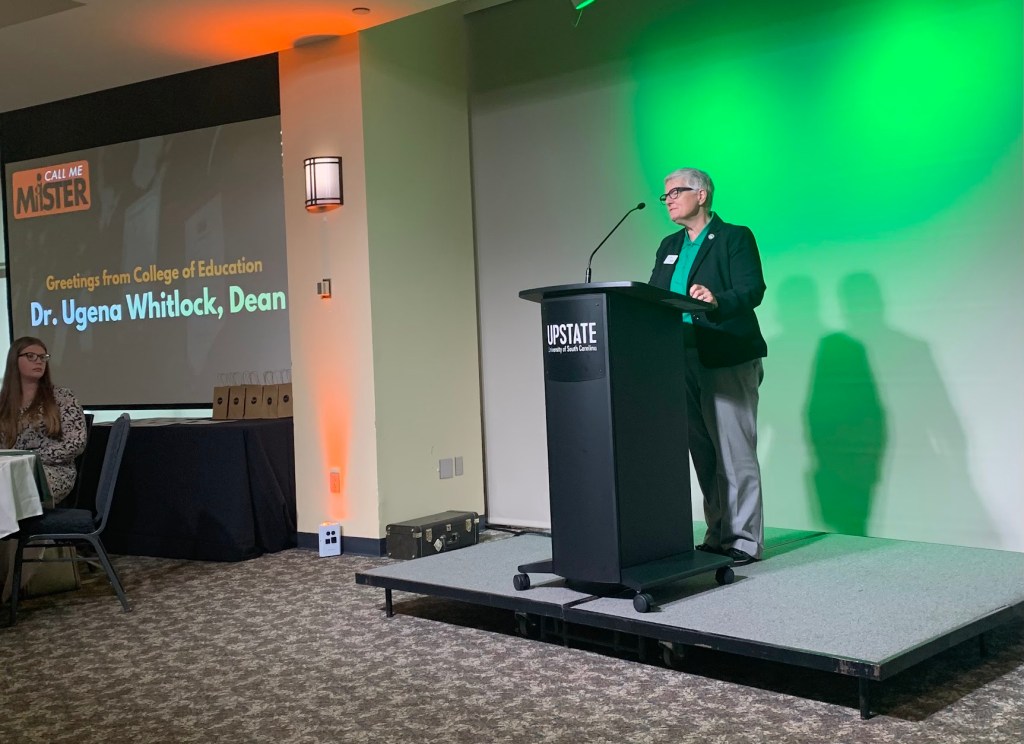
And then came the start of the new semester. I walked into the cafeteria for the back-to-school breakfast the university provides. I sat with colleagues, caught up on life, and we laughed together as we talked about classes we’re teaching. There was such positive energy around our table! Later, I listened to our chancellor give the State of the University address — which, by the way, is good. Then the deans introduced new faculty.

I took a moment to reflect on the dean who had taken my place. She is kind and thoughtful, already working to build community in our college. I felt warmth and satisfaction, a kind of peace. Like sitting on the porch listening to cicadas at dusk, when the heat of the day has finally lifted. She has a quiet confidence, the kind that signals she knows what she’s doing. That she’s got this. The kind of confidence I now have too — as faculty.

As if the universe were reaffirming that I am in the right role — that I am where I’m supposed to be — two invitations arrived that same day. One colleague invited me to do a book talk with their curriculum theory class, reconnecting me with scholarship and teaching I had missed during my years in administration. Another asked me to consider contributing a chapter to an upcoming Handbook of Ignorance Studies in Education. Now, I know that ignorance studies is a highly serious matter, but me being me, I can’t help chuckling at the title. It feels like the perfect opportunity to bring a little folksy charm and sense of irony to the subject. Both invitations humbled and inspired me. Coming just one day before the semester began, they reinforced my professional identity as teacher, scholar, and service colleague (and yes, committee assignments also arrived that day).

So what do I mean when I say embracing life before retirement? When I imagine retirement, I hear the people who, whenever asked “How’s retirement?” say, “I don’t know how I ever got everything done when I worked. There just aren’t enough hours in the day!” Almost everybody says that when asked. Retirement, for many, is a season of busy leisure, where the biggest problem is deciding what leisure looks like. If you want to take a nap, you can take a nap. If you want to read, you can read. Because nothing is pressing you to be somewhere else.

And yet, I’m tasting a version of that right now — a freedom to choose what matters most, even while working. Music. Teaching. Writing. E-triking. Monthly Breakfast Club with Sarah and a couple of colleague friends. Nourishment for mind, body, and spirit. Life still has its hiccups and valleys — I’m not pretending otherwise. I know they are sometimes filled with loss and grief, unfulfilled dreams, guilt, and yes, fear. And when those valleys come, I still get low and afraid, just as I always have. Sarah is right: I need ways to pull myself out of them. And honestly? An e-trike ride with my French horn slung over my shoulder feels just about right.

Even when I was younger, I used to (half) joke: I’ll never be able to retire — they’ll have to roll me out of school in my coffin. Now that I’m within six to eight years of retirement, that gnawing fear still tugs at me. I’m close. A decade ago, when I entered administration, I even set a countdown timer app on my phone. That should have been the clue right there that I wasn’t where I needed to be. I don’t look at that timer anymore.

The difference now is that I think about the last days, and the blessings God has knocked me over the head with. Yes, there will still be valleys — loss and grief, unfulfilled dreams, guilt, and fear. But alongside them, there is also laughter, music, students, writing, dogs, cats, and Sarah. And I realize that if this is my life for another decade while I work — teaching, music, writing, laughter, valleys and all — not only will I “make it” to retirement, I can embrace the mindset now.

Almost like retirement. But better.

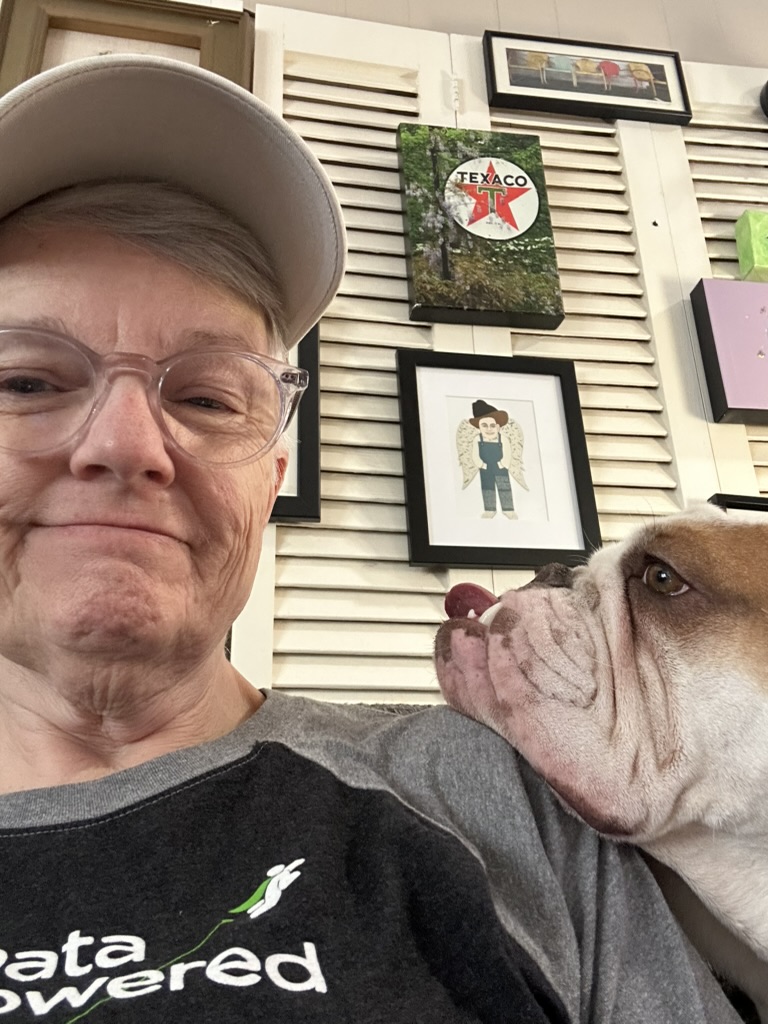
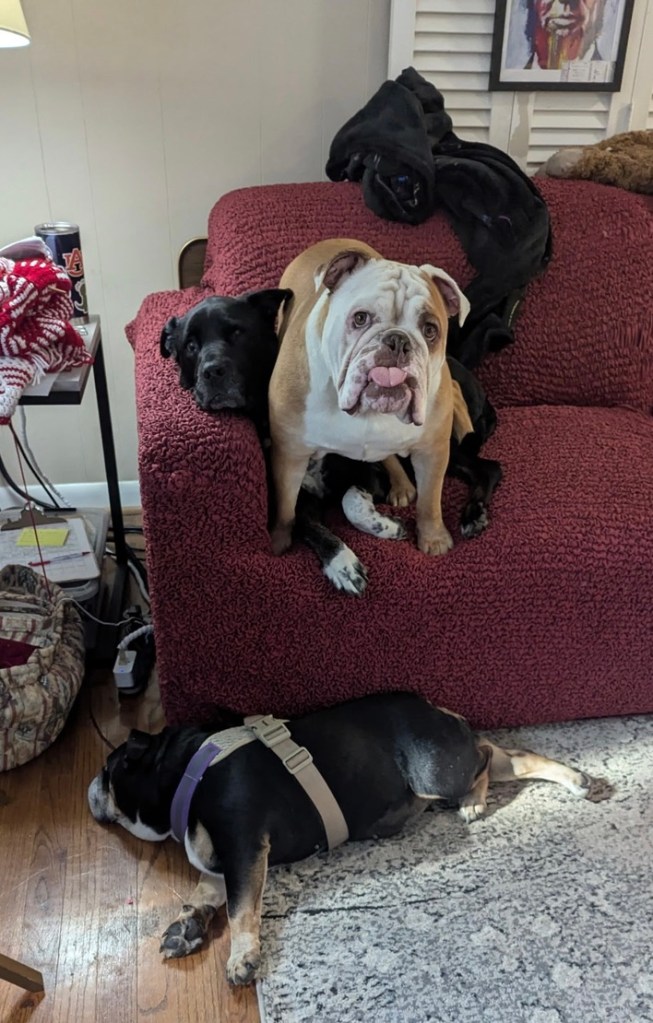
Image of Ugena Whitlock and bulldog.
Who is that old person being lovingly gazed at by Bruno the bulldog?
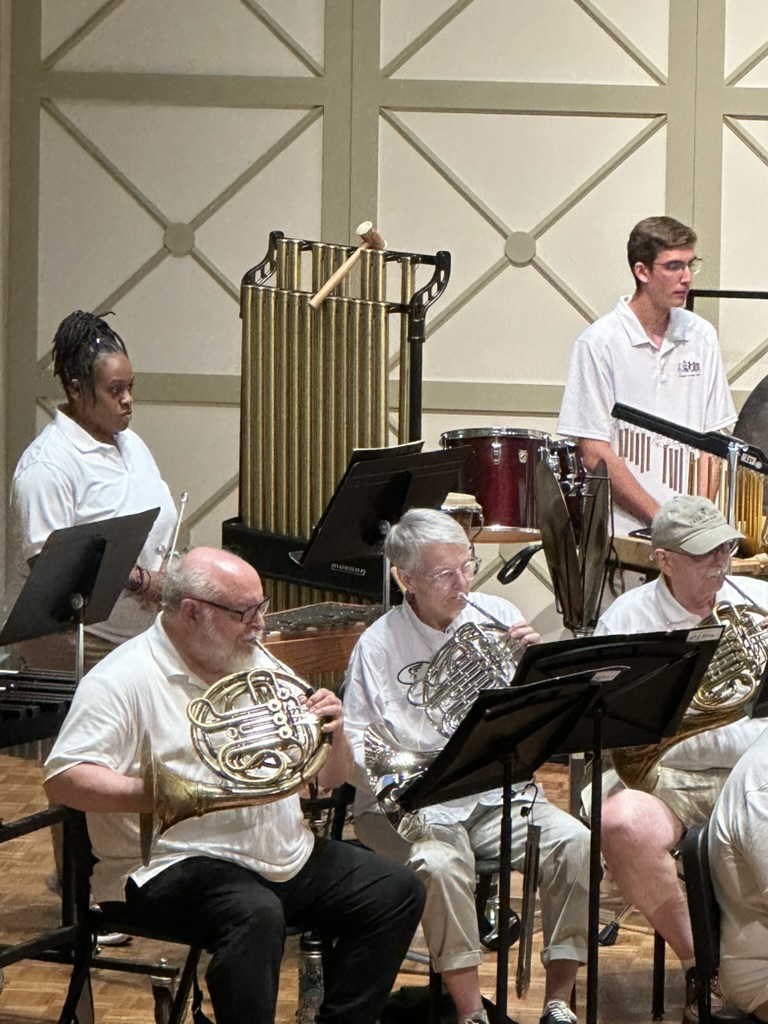
Playing French Horn with SCB
On vacation with Rory.
Bruno has the last word.

Remembering the Teachers Who Inspired Me, Part 2

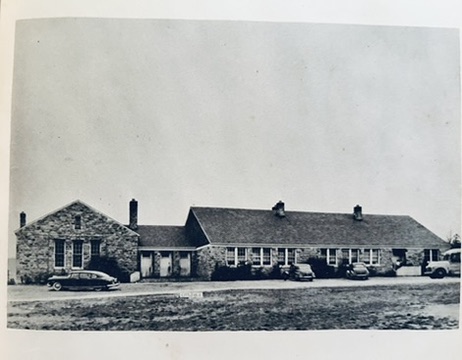
Littleville School, 1949

What I Learned From My Teachers

From Part 1: There’s a lot we carry from our school days—the lessons that stick, the ones that shape us in ways we only realize years later. I’ve been thinking about the teachers who left a deep impression on me, and how those early experiences continue to resonate as a quiet, steady presence in my life and work today. This piece (Parts 1 & 2) is dedicated to the teachers who shaped me, and I want to honor them by name.

Classrooms in Littleville Elementary & Junior High School
Classrooms in front of Littleville School shortly after its closure

Part 2: Miss Thorne, 7th Grade Math: A Lesson in Apology
Miss Janice Thorne, who became Mrs. Berry during our 7th-grade year, is the only teacher I ever apologized to as an adult. My behavior in her class was atrocious. I vividly remember entertaining my classmates by hiding in the classroom while she searched the campus for me—the day the principal, Mr. Morgan, called my dad. Not my mom. Dad. I don’t remember acting out much after that. Like Mrs. Wells, Miss Thorne had the unfortunate task of competing with Miss Renwick for my attention, but unlike Mrs. Wells, she wasn’t a natural commander. I’m really sorry, Miss Thorne.

Miss Thorne also had the misfortune of being assigned to teach us P.E., which required her to wear gym shorts, crew socks, and SeaVees gym shoes. For some reason, this embarrassed me, though I couldn’t have explained why. She was also a member of a neighboring congregation, so I saw her off and on through the years. That made my apology all the more meaningful when I finally had the courage to offer it.

Probably unsurprisingly, Janice left teaching the year after I had her as a teacher. I have reflected on whether my behavior might have contributed to her decision, and my small consolation is that she likely made a good deal of money by going to work for TVA. Miss Thorne—Mrs. Berry—died in 2023, and I am so glad I had the chance to show her respect as an adult.

Mr. Morgan, Principal and 7th Grade Social Studies: The Importance of Being Remembered
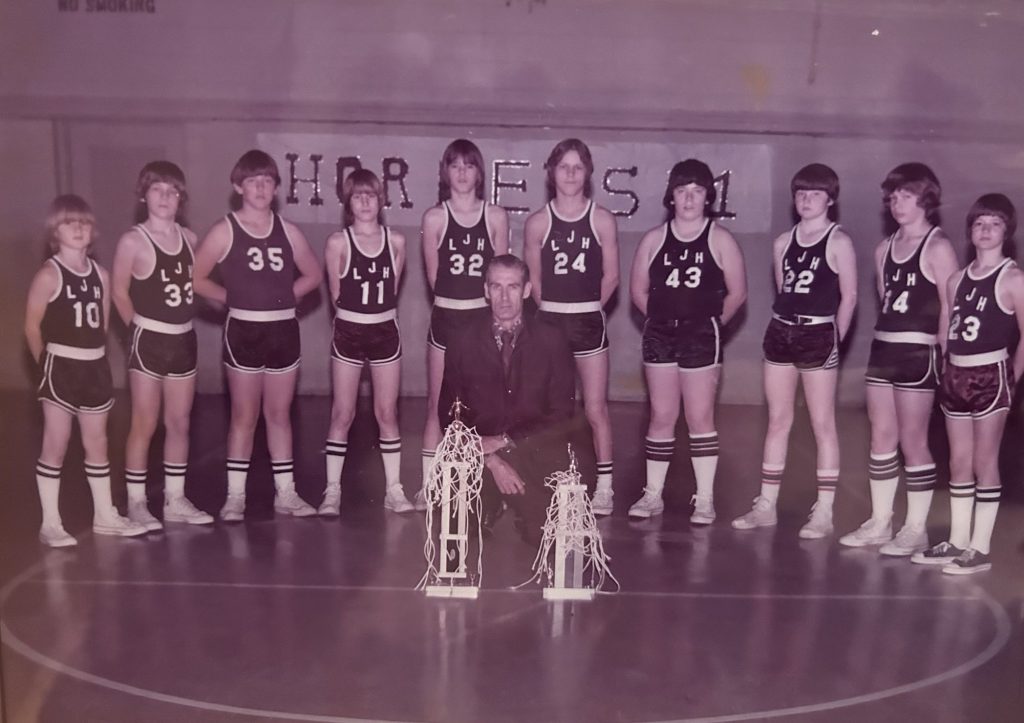
Mr. Morgan was the principal of Littleville School and also taught us 7th grade social studies. He was tall, having played basketball in his younger years, and he coached our teams with the same towering presence. His other claim to fame was that he had fought in the Korean War alongside Dan Blocker, who played Hoss in the very popular Bonanza TV show. I was glad to learn that Mr. Blocker was a nice person. Mr. Morgan regaled us with stories like these during social studies—and come to think of it, the Korean War was part of the curriculum. Mr. Morgan had the longest face I’d ever seen–one can’t help but recall Lurch from The Addams Family–and he spoke with a distinct impediment. We students discussed it and surmised that his tongue was attached to the bottom of his mouth—at least, that’s what it sounded like when he talked. But we quickly learned to understand him, and his speech became just another part of who he was.

Littleville School Gymnasium
Run-down gym of Littleville School, a shell of its former self.

Every year I attended Littleville, I earned a paddling from Mr. Morgan. Unlike Mrs. Fowler’s little red-painted ping pong paddle that intimidated second graders, Mr. Morgan’s paddle was a serious piece of wood—it must have been two feet long and was covered in signatures from its many recipients over the years.

In the early 1990s, Littleville School was closed due to low enrollment. The town had suffered during the recessions of the 1970s, and eventually, the numbers just weren’t there to keep the school open. Before the doors closed for the last time, a “homecoming” was held for everyone who had ever attended. That included my parents, my brother, neighbors—even my grandparents. I was a grown young woman by then. My parents were reminiscing with Mr. Morgan, who chose to retire rather than move to another school. He looked at me and said, “I remember when I gave you a paddling one time, Ugena. I had to hold back a laugh when you looked up at me and said, ‘Mr. Morgan, this is going to hurt me more than it hurts you.'”

Littleville School "Hornets" Basketball Team, 1974. Center: Mr. Theron Morgan.
Littleville School “Hornets” Basketball Team, 1974. Center: Mr. Theron Morgan.

A 20-year career, and he remembered a joke from a 10-year-old girl. Because I was funny and smart. I had been memorable. That, I think, is my main lesson—that these people thought enough of me to remember me.

Mrs. Mansell, 9th Grade Algebra: Making Math Make Sense
In 8th grade, I transferred from Littleville to Russellville to join the RHS Marching 100 Band. My parents really sacrificed to make this happen, commuting me to school a half-hour away instead of the five-minute trip to Littleville. Almost every teacher I’ve mentioned so far had told my parents that I needed enrichment to keep me busy—that my acting out was because I was smart. That made an impact, so I went to Russellville instead of following my Littleville classmates to the county school. I have often wondered how different my life would have been if I had taken the natural path instead of forging the one I did. Two roads diverged…

The RHS Torch and Tradition, a legacy of E.L. "Prof" Williams
The RHS Torch and Tradition, a legacy of E.L. “Prof” Williams

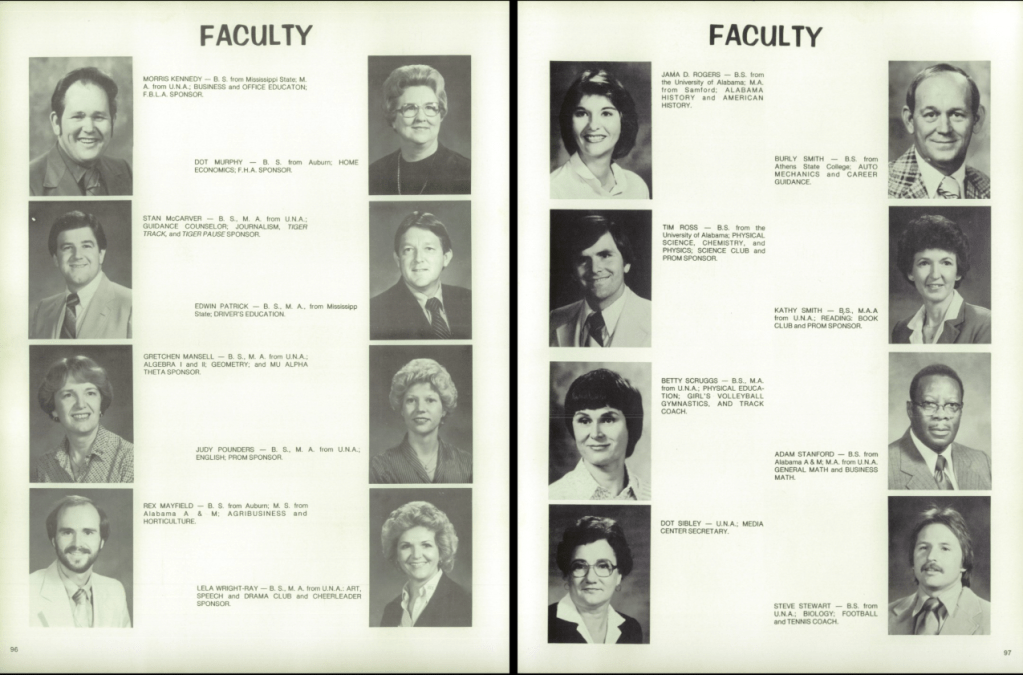
At Russellville, Mrs. Mansell stood out. She had real presence. She taught 9th grade Algebra and made math understandable in a way it hadn’t been since Mrs. Wells. Her father, E.L. “Prof” Williams, had been principal at Russellville High from 1937 to 1957, and my dad even remembered “Mickey” Mansell helping him register as a new student his ninth grade year. She connected with us, made herself available, and showed patience beyond measure. I remember being at a slumber party before exams, and a group of us girls called her for help. She patiently tutored us over the phone, and we all did well on exam day.

Faculty from 1982 Russellville High School Tiger Tracks Yearbook
Faculty from the RHS Tiger Tracks Yearbook; Mrs. Gretchen “Mickey” Mansell is in far right column, third from top

Despite her dedication and deep roots in the school’s history, Mrs. Mansell wasn’t allowed to teach upper-level math in the late 1970s. Those classes were reserved for a male teacher who prided himself on making his classes competitive. He openly stated that he taught to the valedictorian and salutatorian—to weed the rest of us out. I was weeded out of trigonometry in the first week. Discouraged and disheartened, I switched to Home Ec. I decided I’d rather study European and American furniture styles than endure that feeling on a regular basis.

I suppose I learned a lesson from him too—but of all my teachers, his was the biggest lesson on what not to do.

This piece is dedicated to the teachers who shaped me, and I want to honor them by name. They were the steady presence that guided a little girl from the country, who against all odds, would leave Littleville and go on to earn a doctorate and become a professor. I grew up knowing I was the “smart girl,” in part because they told me so—through their expectations, patience, and nurturing. They taught me lessons about kindness, resilience, community, and the quiet power of believing in someone. And as I reflect on my own teaching, I realize I’m still learning from them, still carrying their influence with me in every classroom I enter. I thank them so much.

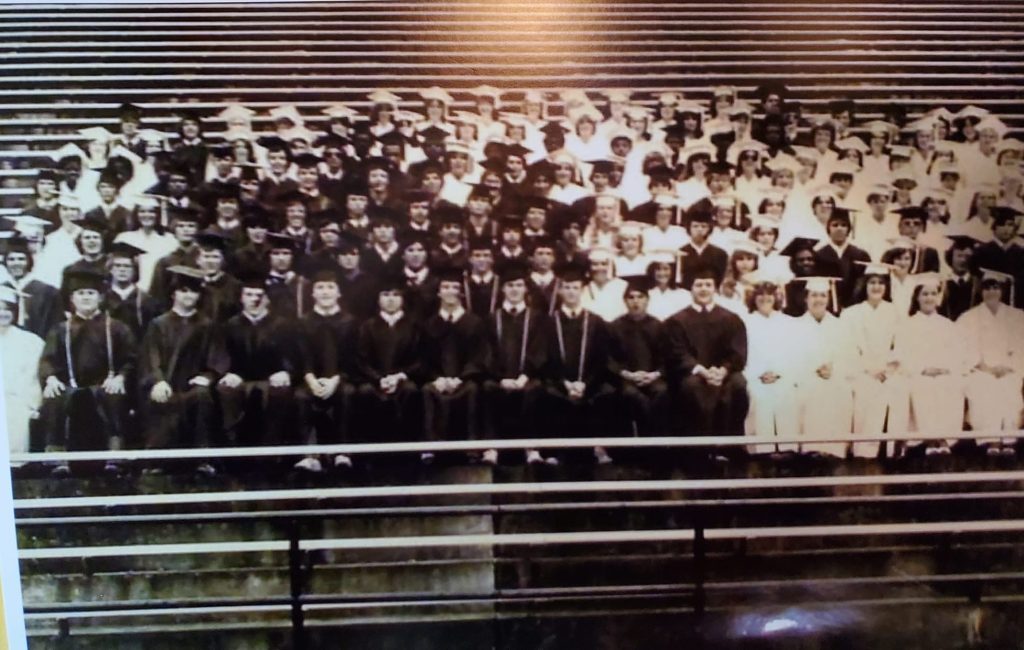
Russellville High School Senior Class Picture, 1981

Old Dog, New Tricks: How Online Teaching Rekindled My Passion for Teaching

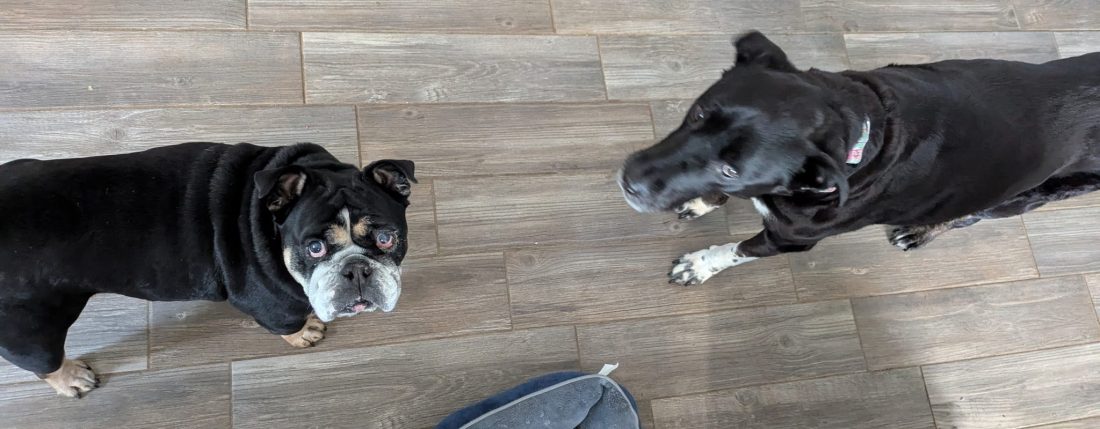
Image of senior dogs, one English Bulldog and one lab mix.

Old Dog, New Tricks: How Online Teaching Rekindled My Passion for Teaching

When I decided to step back into online teaching after nearly a decade, I thought the biggest draw would be the freedom to work from anywhere—maybe even while spending time with family in Alabama. The idea of crafting lessons with location flexibility sounded like the kind of balance I needed in this season of my life. But as it turns out, the freedom to work from anywhere is just the icing on the cake. What I didn’t expect was how much I’d reconnect with the heart of teaching itself.

It turns out, all of my classes are online this semester. My institution uses Blackboard Ultra—a platform that’s more advanced than the clunky tools I remember from my last online teaching experience. Back then, fostering real connection in an asynchronous class felt nearly impossible. I remember the difficulty setting up video calls and lectures, for example. This time around, though, something clicked. I’m not just uploading assignments and grading papers. I’m building relationships, one announcement, one message, one shared story at a time.

Finding Connection in an Self-Paced World

Online classes can roll along on autopilot if you let them. I could easily pop in, grade assignments, and call it a day. But that’s not how I’m wired. I need to feel connected—to know there are real people on the other side of the screen. I’m also a texter—I have been since the advent of smartphones. Messaging appeals to my introverted nature, the one that has an aversion to phone calls. This same preference drives how I approach my students. So, I make it a point to check in regularly with my students. I send out announcements throughout the week, not just about deadlines and assignments, but to share something about myself and encourage them to do the same—something that reminds us we’re people, that we’re travelers together, not just consumers of virtual learning, detached and mechanical.

One week, I sent out a simple message: “Time to check in. How’s the course going? How are you doing?” I wasn’t sure what to expect, but the responses both caught me off guard and moved me. Students didn’t just give me feedback on the course—they shared snippets of their lives, their challenges, their small victories. A few thanked me for asking about their well-being, calling it “refreshing” to have that kind of interaction in an online class. That’s when it hit me: this wasn’t just about teaching content. It was about building community. (They also mentioned how they struggled with balancing all of their responsibilities with their coursework. That’s coming up in my next post.)

Bruno, Bulldogs, and Building Community

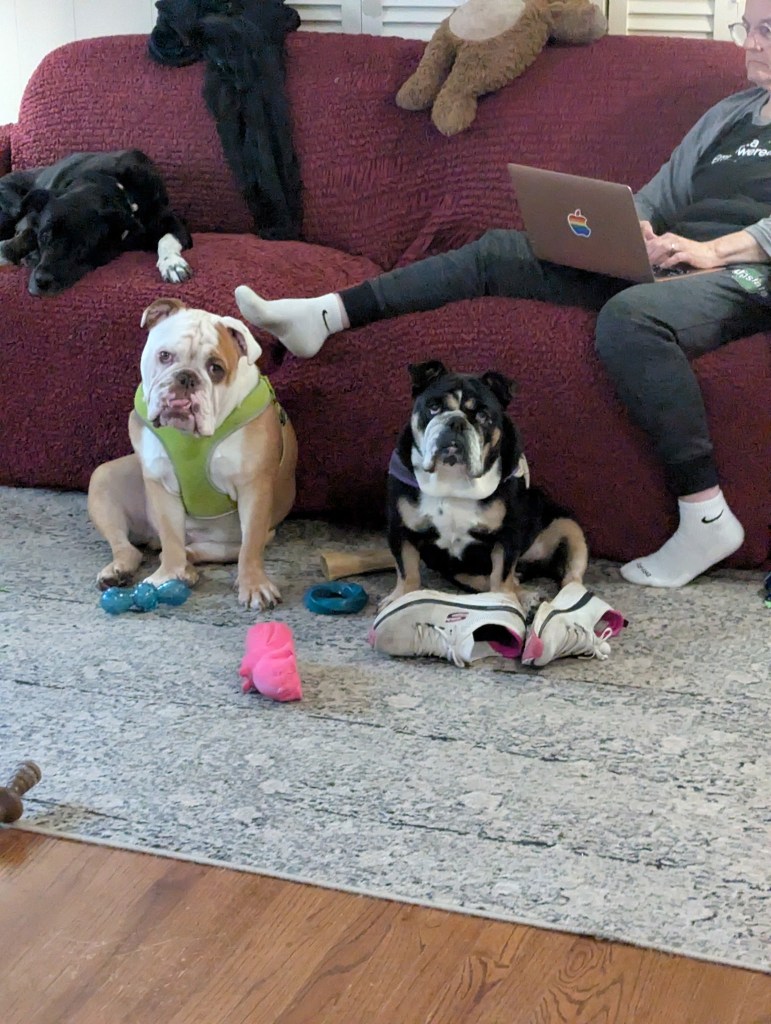
Stories have always been the glue that holds people together. I started sharing little anecdotes about my life—like tales of my dog, Bruno, and our recent adventure adopting an older bulldog, a lady named Marley. I didn’t think much of it at first, but the response was immediate and heartfelt. Students shared stories about their own pets, adding humor and warmth to our digital space. Today, I even shared a picture of “the pack,” and the flood of responses made me realize that even in a virtual space, we could connect as people.

Image of two English Bulldogs and a lab mix.
Our Pack: Bruno, Caroline, and “new” Old Dog, Marley

Adapting While in Progress: Revising the Syllabus Mid-Course

Not everything has been smooth sailing. One of my classes didn’t feel as rigorous as it should’ve been. The material wasn’t pushing students to engage deeply, and I could tell it wasn’t encouraging them to read as much as they needed to. So, two weeks into the course, I did something I’ve never done before: I updated the syllabus mid-stream, knowing it could disrupt the flow of the class.

I rebalanced the points on existing assignments and added lightweight quizzes as reading guides. It took me about three days to get everything in order, and then I let the students know what I’d done and, more importantly, why I’d done it. Transparency matters. For a while, no one complained, and I breathed a sigh of relief, thinking the transition had been smooth. But today, I received my first piece of critical feedback.

One student reached out, expressing how overwhelmed he felt juggling work and two classes. Most of my master’s students work in local districts, and I could sense the stress in his message. I assured him that the quizzes were designed as reading guides—more of a nudge than a test—and if he read the chapters, he should be able to complete them as he went along. To ease the pressure, I removed the time limit on the quizzes. It may not have solved all his concerns, but it was important to me that he knew I was attentive to his feedback.

Why insist on these low-stakes checks of reading? Because they signal that the reading matters—not just to pass the class but to engage with the material meaningfully. It’s a gentle reminder that what’s in those chapters is essential, and I want them to take it seriously.

Grading as a Conversation, Not a Chore

I’ll be honest here. I say “reconnect,” but what I really mean is connect for the first time. I went into the teaching profession in 1985 because it was convenient. I had a challenging marriage, a young daughter, and was homesick and lonely. I just didn’t have the time to do the homework to pursue a career in law or chemistry—which I discovered I really liked in college. I went into the field whose subjects of English and history were easiest for me: education. It has sometimes felt as though I have been in a profession not of my freewill choosing for almost 40 years. This made me hold a resentment toward it. I resisted and rebelled against national standards, for example, through curriculum theory writing, taking a cue from other scholars in the field. I had missed—because it never appealed to me in the first place—the only valid reason to become a teacher: students.

Image of Ugena Whitlock working on Apple computer with two English Bulldogs and a lab mix.
Me, working on my online classes with the Pack in place

As I think about it, I love nothing more than being a student, and I have felt respect and fondness for teachers who truly cared about me. Yet I was not this kind of teacher to my students. This is not to say that I mistreated them—quite the contrary. I was the fun teacher for most of my career—the easy grader and the one who drew a little outside of the box. When I arrived at my current institution, a recurring theme that people actually spoke out loud was putting students first. I envied this and knew that I seemed a few steps removed from students. Now, as a non-administrative faculty member, I have a unique opportunity for a second chance—not to reconnect with a passion, but to form one. I find great hope in this—not just for second chances to find something I feel something for, but for redemption itself. This online platform of words—and blessed words are my seeds of connection—allow me to connect to my students and develop a relationship with them and teaching that, for me, is new.

Embracing AI and Lifelong Learning

Another unexpected twist in this journey has been my dive into AI. I’m realistic about it. I use AI tools, and I know my students will too—as will their own students one day. Instead of policing its use, I’m teaching them how to use AI as a tool, not a crutch. It’s part of preparing them for the future, and honestly, it’s been fascinating to explore.

Image representing AI as a learning tool.
AI As Learning Tool

I’ve been attending workshops, like the one put on by USC Upstate’s CAIFS last week, and I’m signing up for mini-courses through ACUE. There’s something deeply satisfying about being an “old dog” excited to learn new tricks. It’s reminded me that teaching isn’t just about imparting knowledge—it’s about staying curious, staying engaged, and always being willing to grow.

The Puzzle of Online Teaching: Finding My Niche

Part of what’s made this experience so fulfilling is how it taps into different parts of who I am. I’m an introverted Virgo and a bit of a gadget enthusiast. Online teaching feels like solving a puzzle, finding new ways to innovate, communicate, and engage. I don’t often get so absorbed in something that I lose track of time and forget to eat, but when I’m working on my classes, that’s exactly what happens. It’s a sign that I’m not just doing this because I have to—I’m doing it because I really, really enjoy it.

I’m drawing from my background in curriculum design and integrating best practices for online learning. One of the challenges I’ve set for myself is to create personalized video lectures for all my classes. Right now, I’m using pre-loaded videos from previous iterations of the courses, but I’m excited to make them my own—to bring more of my voice and personality into the mix.

Conclusion: More Than I Expected

When I first agreed to teach online again, I thought it would be a practical move—a way to work from anywhere and stay connected to my family in Alabama. But it’s become so much more than that. It’s sparked a passion for teaching, blending the challenge of engaging pedagogy with the joy of connecting with students. Serendipitously, it has opened up new avenues for growth and exploration.

Online teaching isn’t just a job for me now. It’s a space where I’m learning, innovating, and building community in ways I never expected. And as it turns out, this “old dog” has plenty of new tricks left to learn—and plenty of stories left to share from the front porch, whether real or virtual.

Image of small English Bulldog
Marley

Finding My Voice Again: A Musical Journey (Power of Music, Part 2)

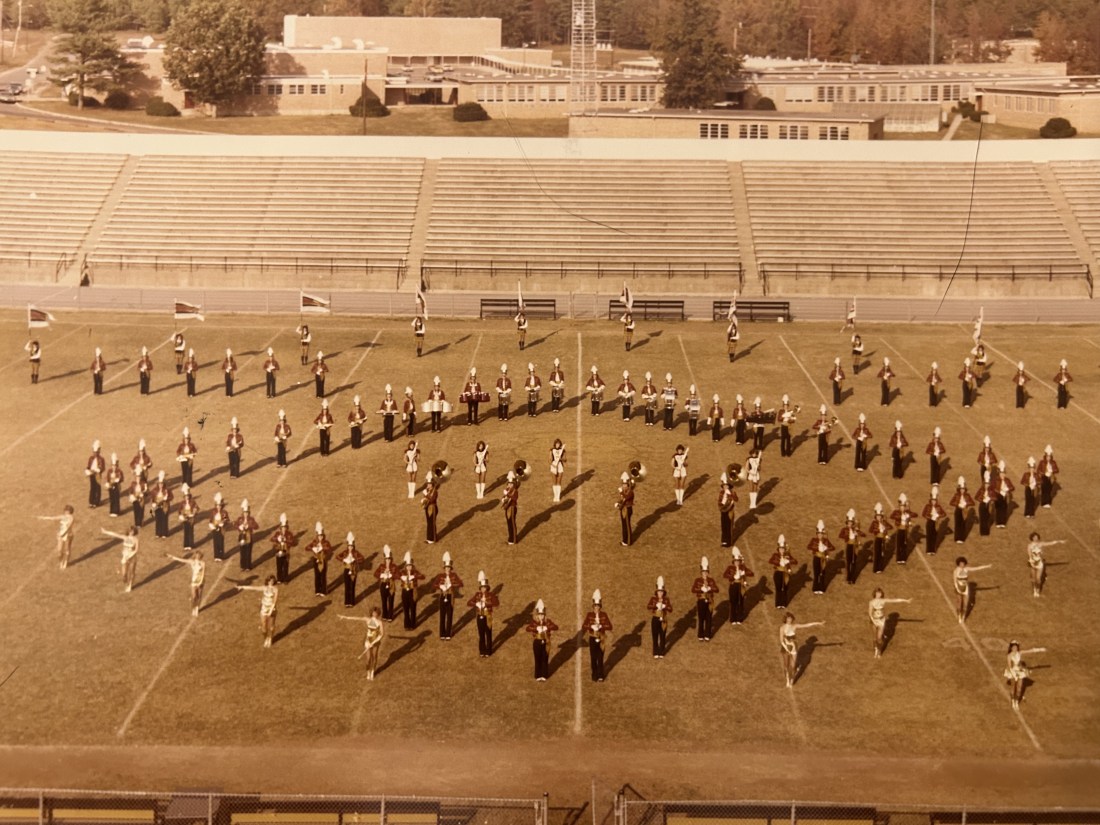
Image of 1979 Russellville Marching 100 Band Yearbook Picture

Finding My Voice Again

Music has always been more than just entertainment for me; it’s a pathway to the deepest parts of myself, a way to explore the complicated emotions that shape my inner being. Growing up, singing hymns a cappella in our small church was an unforgettable experience. I still recall sitting on a pew in the third row, right behind the song leader’s wife, with my friends Lynne and Susan. Our young voices would blend together in harmony, and Mrs. Greenhill would turn around, a twinkle in her eyes, to compliment our singing. “I heard you girls singing that alto,” she’d say. Those words of encouragement still resonate with me today.

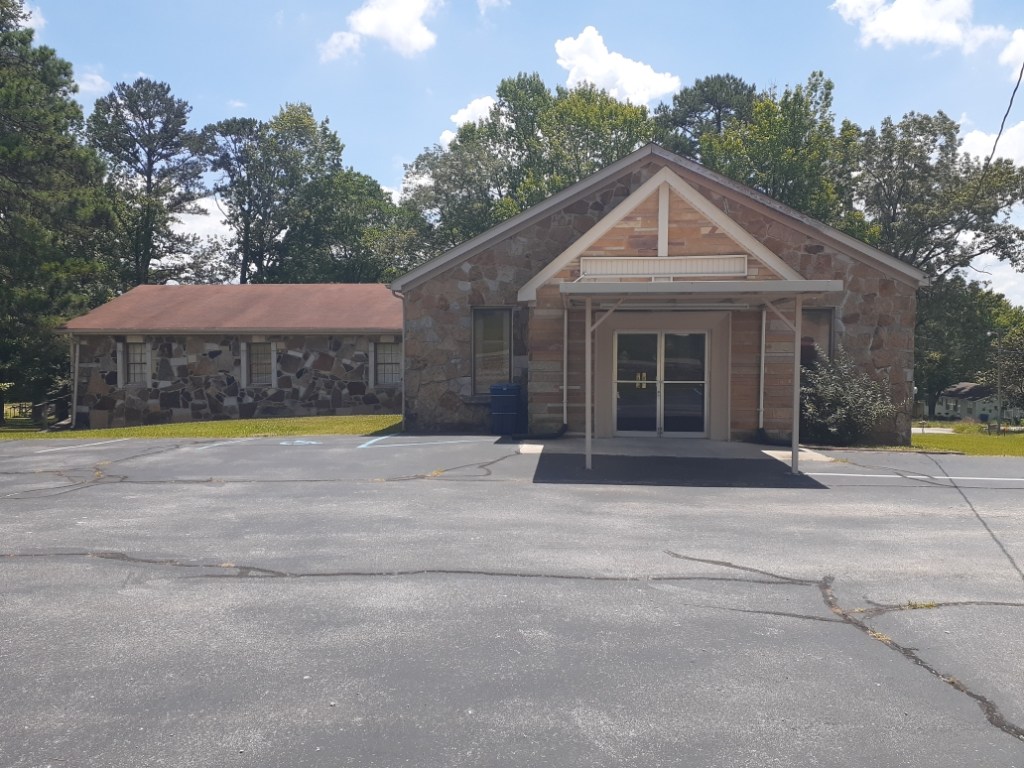
Image of small stone church, Littleville Church of Christ, Littleville, Alabama
My home church, Littleville Church of Christ, Littleville, Alabama

High school choir–the RHS Singers–was an incredible experience. We developed our singing abilities and musical knowledge as we discovered the pure joy of making music together, especially when we got to perform. I remember how proud I was when I wore the stage choir outfit made from gaberdine with matching rayon scarf that my Mom had sewn on her Singer sewing machine. I still remember the songs. And, as I’ve previously explored in my reflection on the RHS Marching 100, music has always held a significant place in my life. These experiences deeply shaped my love for music and continue to influence me today.

This strong connection to music was reaffirmed by my recent rediscovery of my old iPod. As I wrote in “The Playlist of Me: Forgotten iPod, Rediscovered Self,” my iPod held a collection of songs carefully chosen over time, each a reflection of a specific mood or memory. Listening to that forgotten playlist for the first time in a decade felt like uncovering a long-lost piece of myself. It was a powerful reminder of the abiding impact music has on my spirit.

Image of seven teenagers in the Russellville High School RHS Singers choir, 1980
Joyful times! A group of RHS Singers being silly. We were “setting up” the microphone stand. I am third from right.

Darker Days

During my junior year, my boyfriend, who later became my husband, began to increasingly feel threatened by the time I spent with my classmates and the joyous importance of music in my life. Through subtle and not-so-subtle manipulations, he pressured me to miss choir and band gigs, culminating in his attempts to prevent me from going on an upcoming band trip to Washington D.C., a dream of mine. Heartbroken but worn down from struggling, I quit both. Losing these creative and social outlets devastated me, leaving a dark hole in my life where music and my connection with my classmates had once been.

After I graduated and we married, I began to have recurring dreams, vivid and unsettling. In these dreams, I would find myself transported back to my high school days, immersed in the music, the joy of playing my instrument washing over me. But the comfort of the dream would always be shattered by the harsh reality of waking, leaving me with a profound sense of loss and longing.

My marriage, unfortunately and unsurprisingly, amplified the unhealthy power dynamic between us. When we divorced, I finally felt free, but the loss of my 45s—taken from my belongings while I was packing—left me angry and heartbroken. Those records, collected during cherished weekly trips to town with my mom from as far back as I can remember until I got married, traced and preserved the years of my life growing up. Their disappearance wasn’t just a loss of possessions; it was a loss of something irreplaceable. I’ve been trying to rebuild that collection ever since, but those original records will always be gone. My only solace was that I no longer had the homesick dreams.

Image of blue plastic 45rpm record holder.
A similar blue plastic record holder to mine.

Looking back now, I see how, over time, I had become disconnected from vital parts of myself—choir, band, and even my cherished collection of 45s, all tangible links to my teenage years. The impact of the loss extended beyond the immediate. At this point, you may be thinking, “Well, lady, why didn’t you just play the radio or go to a concert? Why so dramatic?”

I continued to listen to music, of course, but it wasn’t the same. It was as if I was merely going through the motions, like a writer who stares at a blank page, unable to truly engage with the creative process. I didn’t realize how much I had distanced myself from the deep connection I once felt with music until I reconnected with it recently.

Image of a stack of old 45 rpm records

Rediscovering the Magic

The silencing of my musical expression that had been made complete during my marriage left a void in my life. However, the yearning for music never truly subsided. Years later, I found myself drawn back to the familiar comfort of church choir. The initial hesitation soon gave way to a renewed sense of joy as I rediscovered the power of music to uplift and connect. My voice, once silenced, found itself again. People would remark, “I’ve never seen anyone as happy as you look when you’re singing.” These simple observations resonated deeply, confirming that I had found my way back to a source of profound happiness and fulfillment.

Rediscovering the magic of music has brought unexpected joys. Sharing my father’s love for the music of his youth has been a deeply rewarding experience. As he hummed a long-forgotten tune for me, I would embark on a digital treasure hunt, searching for that elusive melody.

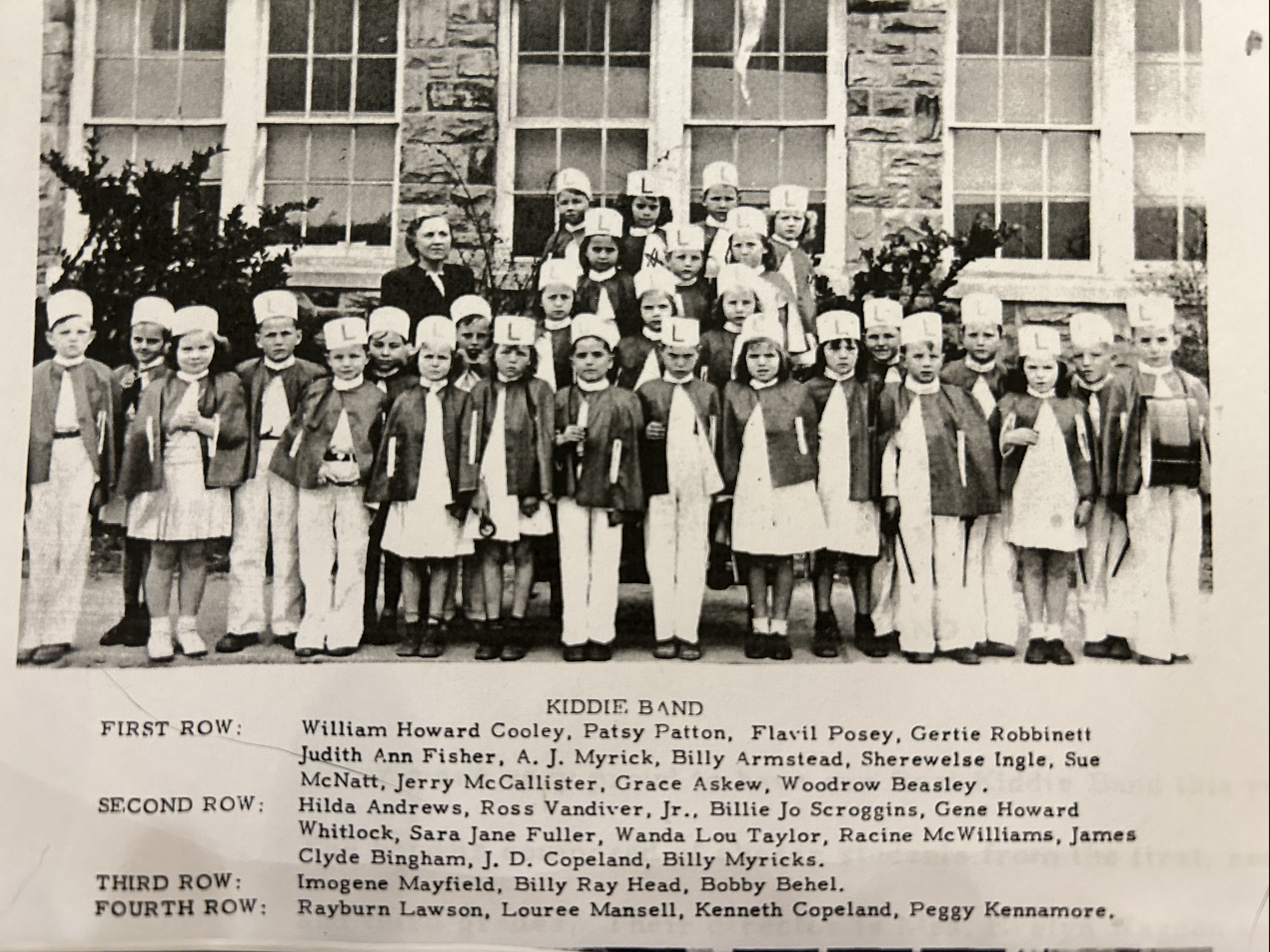
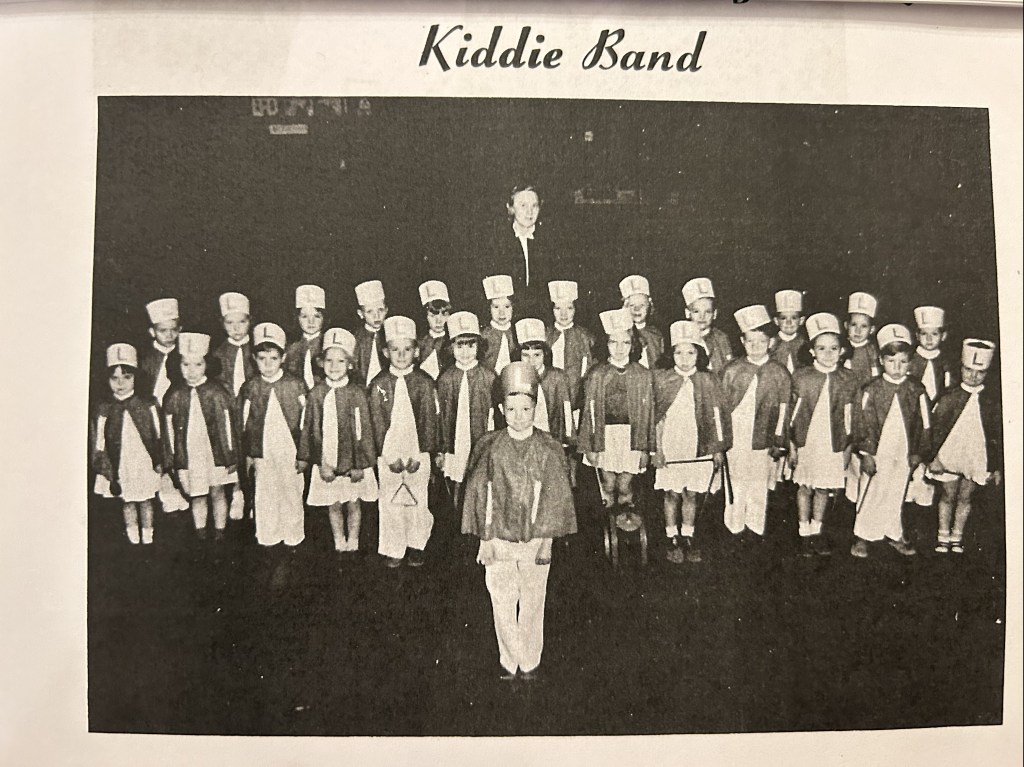
Image of 1949 Littleville School Kiddie Band
Littleville School Kiddie Band, 1949. Daddy, Gene Howard Whitlock, is in the second row.
Image of Littleville School Kiddie Band, 1950
1950 Kiddie Band. My Mother, Wonell Fisher, is in the back row, third from left.

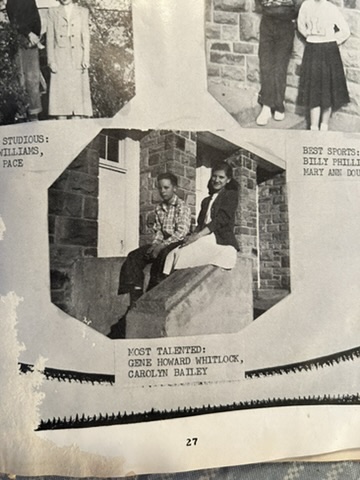
Downloading and burning CDs for him became a treasured ritual, a way to bridge the gap between generations and share a piece of his past. Both my parents fondly remember their days at Littleville School, where they had both been members of the Kiddie Band – a cherished program that sadly did not exist by the time I arrived. My father, a natural performer, particularly enjoyed his time in the band, relishing the opportunity to entertain the crowd. While looking through old yearbooks, my son and I discovered that Daddy had been voted Littleville School’s Most Talented in 1953–based mostly on his performance of Mr. Sandman–when he was in seventh grade. Mother had been a cheerleader, but that is another story.

Littleville School Most Talented 1953, Gene H. Whitlock
Littleville School 1953 Most Talented, Gene Howard Whitlock

The resurgence of vinyl, with its emphasis on the warmth and character of analog sound, has also brought a new dimension to my musical journey. Listening to records again evokes vivid memories of my childhood and hours spent browsing records at TG&Y with Mom, while also connecting me to the music that shaped me. Growing up a lonely kid in a small town, I spent many Saturday nights sitting in the dark listening to Wolfman Jack on my folks’ RCA console stereo. For years, I didn’t have a record player, but Sarah found one on Facebook Marketplace and encouraged me to buy it, convinced it would bring me peace and happiness. The reality, however, has been more complex, stirring emotions and reflections I hadn’t expected.

Listening to old hymns like those I sang in the little brick church house evoked a flood of powerful feelings. The harmonies, the raw emotion, the memories of singing alongside Lynne and Susan on the church pew, all come rushing back. After witnessing me tearfully singing along with the Chuck Wagon Gang, Sarah gently noticed that while she had anticipated a sense of peace and happiness, she had not expected the tears.

Image of marching band, includes trumpet players, tuba players, and drums in background. Ugena Whitlock with mellophone in foreground.
Ready to march in a parade with the Atlanta Freedom Bands with my mellophone

In addition to church choir, joining the Atlanta Freedom Bands provided a powerful outlet for my musical expression. The first time I marched in a parade after more than 40 years, the music surged through me, a wave of joy and liberation washing over me. It was as if a dormant part of my soul had finally awakened. Community band serves as a poignant reminder that it’s never too late to rediscover and nurture our passions. Even if it harder to march a mile uphill forty years when I’m older.

Looking back, the unhappiness of that earlier period cast a long shadow over my understanding of music’s role in my life. It seemed to be a casualty of that tumultuous time. Yet, amid the pain and regret, an innocent, peaceful memory emerges. In stage choir performances way back in 1979, I can still see Robert, his guy’s choir costume accented with a 1920s white straw boater hat, dancing the routine with his partner (I, a product of my fundamentalist upbringing, was decidedly not a dancer!). They were performing to the choral version of “Close to You” by The Carpenters. Robert, a good boy from a troubled background, died a few years ago. I wrote about it in a previous blog post: For Bob.

I can’t hear “Close to You” today without that sweet memory, and sometimes its poignancy is so powerful, I cry. For him, for us, for episodes of happiness amid the turmoil of two people who married far too young – the passage of time allows me to see without the lingering pain. This, in the end, is what music truly means to me: its magic, mysterious, and soul-stirring power to bring me to gentleness and peace. It helps me to heal by reminding me of the beauty and fragility of life. Through music, I cherish the precious moments of joy from even the darkest times. And, I must admit, even though I have been to the nation’s capital many times, I still regret not going to D.C. with the band.

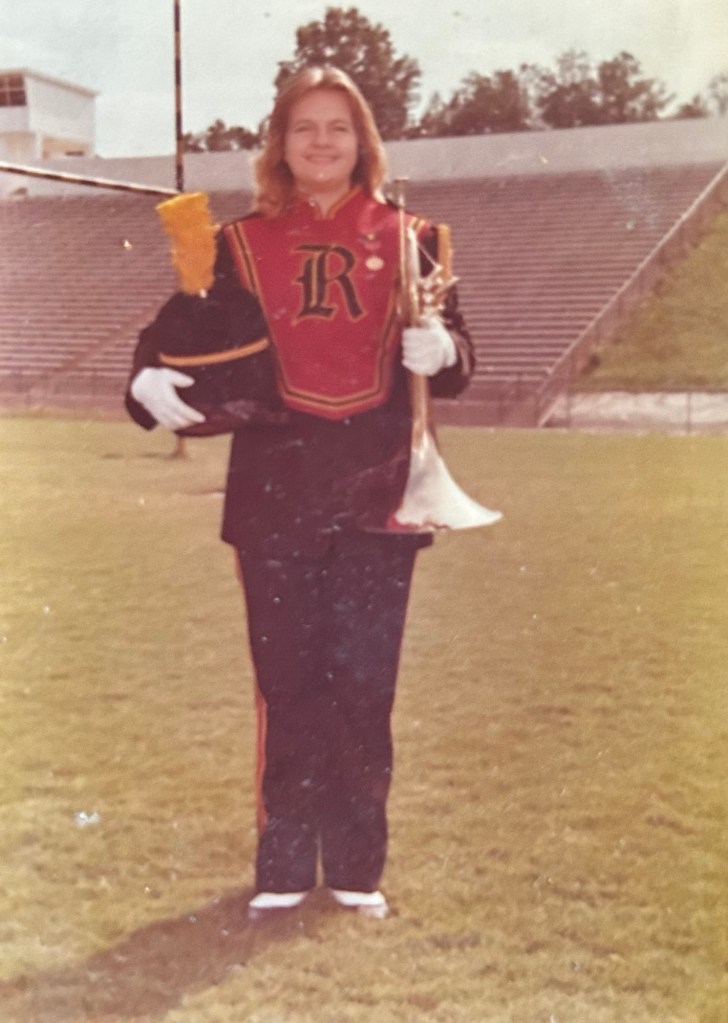
Image of band student Ugena Whitlock posing with mellophone in band uniform, 1977.
The first time I saw a Russellville Marching 100 band uniform, my young life’s goal was to wear one! Here I am, complete with gloves, spats, and mellophone. Notice the old shaker hat with plume and the medal for winning the Greatest Bands in Dixie Competition in New Orleans.

The Playlist of me: Forgotten iPod, Rediscovered Self (Power of Music, Part 1)

A warm, nostalgic scene featuring a vintage iPod with earbuds resting on a wooden table. Surrounding the iPod are a stack of old CDs and vinyl records, symbolizing a love for music across different eras. Soft, ambient lighting creates a cozy and reflective atmosphere, with a hint of a worn journal and handwritten notes in the background, evoking a sense of personal rediscovery and connection through music.

I Found My iPod: Rediscovering Happiness Through Music, Part 1

Last year, I completed an End of Life (Death) Doula program with INELDA, the International End of Life Doula Association. The experience itself deserves its own post, but one lesson from the program keeps coming back to me: the role of music in creating peace during life’s final moments.

Image of International End of Life Doula Association, INELDA, logo

As the person in our care begins their end-of-life journey, we were advised not to play their favorite songs as background music. At first, this advice seemed strange to me. After all, wouldn’t a familiar melody bring comfort? It sure does for me! But then it was explained: favorite songs are deeply personal and emotionally charged. They can evoke strong memories, longings, or attachments that might not be conducive to a peaceful transition. Instead, we were taught to choose ambient tones or tranquil soundscapes to foster an atmosphere of calm and rest.

Not being a doula or having experienced end-of-life caregiving firsthand, this suggestion went against my intuition. The more I thought about it, though, the more sense it made. If it were me, I could imagine holding off my own passing just to hear my favorite song finish! The idea stayed with me: music is powerful, not just for its personal connections but for its ability to transcend memory and emotion, helping us navigate transitions when we need it most.

This thought was still on my mind when I stumbled across something I hadn’t seen in years—my old iPod.

From Records to iPods: A Musical Journey

As a Generation Jones Boomer, I’ve collected music in just about every format imaginable. I started with records and CDs, eventually amassing hundreds of them. Many of my favorite records were handed down from my parents when they got rid of their stereo. I didn’t have a record player either by then, but I kept the albums for the memories. Over time, I replaced many of those records with CDs, though I had to replace some of those twice after accidentally leaving my CD holder in a car I sold.

Then came the 2000s and the rise of digital music. When Apple introduced the iPod in 2001, I thought it was the pinnacle of technological advancement. I was as excited about it then as I am about AI now–granted for different reasons. I finally got one in 2005, and that summer, I spent two weeks downloading every CD I owned onto it. I painstakingly created playlists for every mood and occasion, collecting songs I thought I’d never hear again.

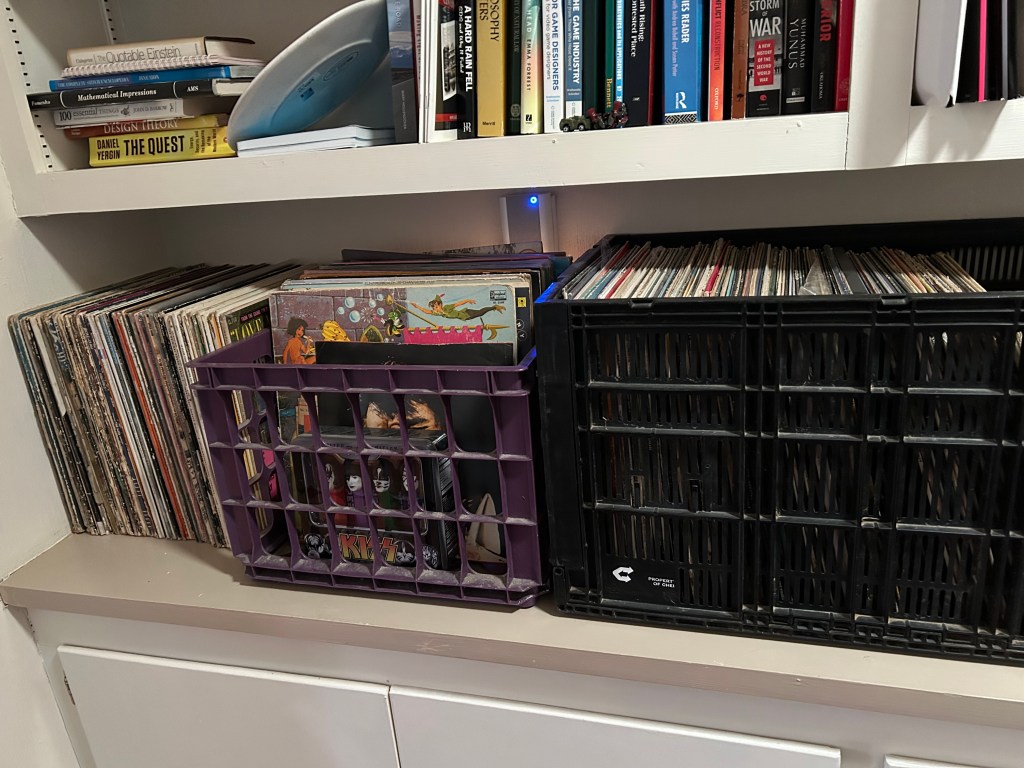
Image of record albums in crates. Disney's Merriest Melodies album.
My record album collection

By 2012, I had curated over 3,000 songs. I refused to sync my iPod with updated iTunes software because it wouldn’t preserve my playlists exactly as I had arranged them. They were perfect, and I wasn’t about to mess with perfection.

But as MP3s, smartphones, and streaming services like Spotify and SiriusXM gained popularity, iPods started to feel outdated. I used mine occasionally for chores around the house, but even that became less frequent. By 2022, Apple officially discontinued the iPod, and mine had long since stopped holding a charge. Eventually, it wouldn’t turn on at all. But I couldn’t bring myself to discard it permanently—it still held my songs.

Rediscovering My iPod

Last week, while searching for batteries in a drawer, I came across my old iPod again. Out of habit, I plugged it in, hoping for the best. The Apple logo flickered to life for a moment, and then… nothing. “Ugena,” Sarah said, “we live two minutes from a computer repair shop. Take it over there and see if they can fix it.”

The tech guy at the shop popped the back plate off, took one look, and said, “It’s your battery. See how it’s puffed up like a pillow? It should be flat. That’s an easy fix.” I was overjoyed.

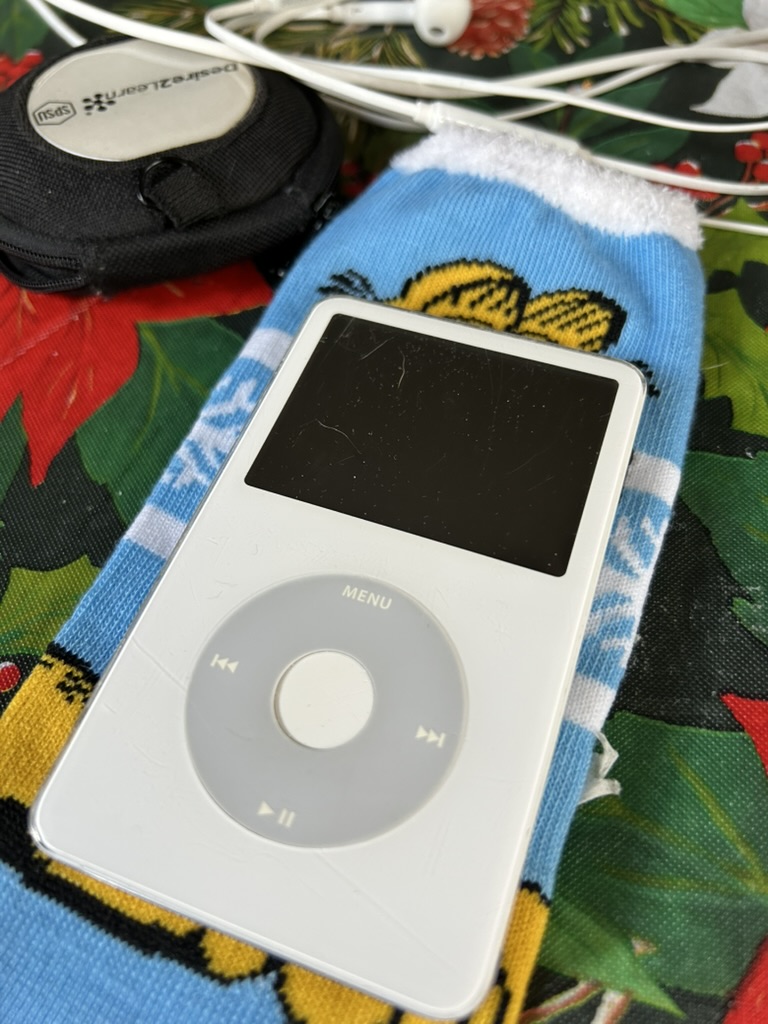
Image of iPod Classic 5.5 gen laying on a Garfield cartoon sock.
My iPod

When I picked it up a week later, I could hardly contain my excitement. After nearly a decade, I saw my playlists on the screen again. I navigated the wheel (nothing like the sound of those clicks as it turns!) to find the perfect song for the moment, and when “Love Grows (Where My Rosemary Goes)” by Edison Lighthouse began to play, I felt an overwhelming sense of contentment. I was home.

More Than Memories

For me, music isn’t just about nostalgia. While certain songs remind me of people or moments—like Elvis always bringing my mom to mind—it’s the music itself that moves me. The key changes, the minor chords, the walls of sound (a la Phil Spector) all stir something in me that feels bigger than words.

And yet, sometimes it is the words. A perfectly turned phrase can be so compelling, so beautifully crafted, that it draws me in completely. It stirs a visceral reaction, and I can’t help but sing along. And yes I do grab a hairbrush for a makeshift microphone. At that moment, the three of us–mind, body, and spirit–are in sync with the melody and words. During my free concerts, whether in the shower, the car, or empty house, my old romantic self rises to the surface, caught up in the sheer power of the lyrics.

This emotional connection reminds me of Howard Gardner’s theory of Multiple Intelligences from his 1983 book Frames of Mind. One of these intelligences, musical intelligence, refers to the ability to recognize, create, and emotionally connect with music. Though the theory is considered pseudoscience by some, it resonates with me. It helps me explain feelings that go far beyond simply liking music. What I feel is deeper, more profound—something that connects to the core of who I am.

Rediscovering my iPod wasn’t just about finding old favorites. It was about reconnecting with a part of myself—a good and strong piece of myself that, during my distractions with job advancement and the trappings of success, had been suppressed. During those times, I was lost, adrift, unaware of how much I had let go of what truly anchored me. But when the music is back in my life, it’s as if I’ve found my way home—a reminder of who I am and what brings me joy. In the words of the old song, “Was blind, but now I see.”

The last 5 random songs played on my iPod while I’m writing this:

  1. Bad Romance, Lady Gaga
  2. My Heart Skips a Beat, Buck Owens
  3. Silver Wings, Merle Haggard
  4. On the Street Where You Live, Bill Shirley dubbed for My Fair Lady
  5. Livin’ in the Sunlight, Lovin’ in the Moonlight, Tiny Tim (from Spongebob Movie)https://youtu.be/hERIZmJpwTI?si=JSKnB7XR5_rwbiHq
A warm, nostalgic scene featuring a vintage iPod with earbuds resting on a wooden table. Surrounding the iPod are a stack of old CDs and vinyl records, symbolizing a love for music across different eras. Soft, ambient lighting creates a cozy and reflective atmosphere, with a hint of a worn journal and handwritten notes in the background, evoking a sense of personal rediscovery and connection through music.

Embracing Late Career: Finding Purpose at 60

I began my career in higher education later in life. It was my second career after 14 years teaching in secondary schools. Transitioning from being a mid-career teacher to starting over as a university professor was both exciting and daunting. This kind of shift isn’t unusual, but for me, one important factor stood out: I entered it older. I became a brand-new assistant professor at age 40. Young by some measures, sure, but it meant that becoming established and reaching mid-career milestones happened in my 40s and 50s—not my 20s and 30s when ambition and energy seem limitless.

Career Stages and Life Stages

Sites like Indeed often categorize career stages neatly, like in the graphic below. Up until recently, I considered myself mid-career. But my academic career has never aligned well with life stages. This September, I’ll turn 62—an age when I can start drawing Social Security (though I’m not planning to just yet). The reality of this milestone makes it clear: I’m approaching retirement.

This period is commonly called the “Decline Stage” (a less-than-uplifting name, to say the least), which typically spans ages 55–65. By contrast, the “Late Career Stage” is defined as ages 45–55. For convenience, I’ve included descriptions of these stages from a cited resource below. Their cheery tone—especially the idea that late-career professionals don’t need to learn new things—makes me suspect the author might still be in the “Exploration Stage.”

When it fully sank in that:

I’m in my 60s, and
I’m officially in late career,
…my emotions ranged from shock to disbelief to sadness to resignation. I cycled through the stages of grief daily for awhile, but I usually landed at acceptance. When it comes to my career, though, I’ve found something better than acceptance. Let me explain.

A Shift in Perspective

Becoming an academic is thrilling, but being a good one takes work. Since entering the profession in 2005, I’ve poured myself into getting established: publishing, building networks, traveling to conferences, reviewing conference proposals, writing a book, editing another, editing a section in an academic journal, coordinating programs, organizing events, and even hosting visiting scholars. My mid-career years were spent in administration, serving as a department chair and, most recently, as a college dean.

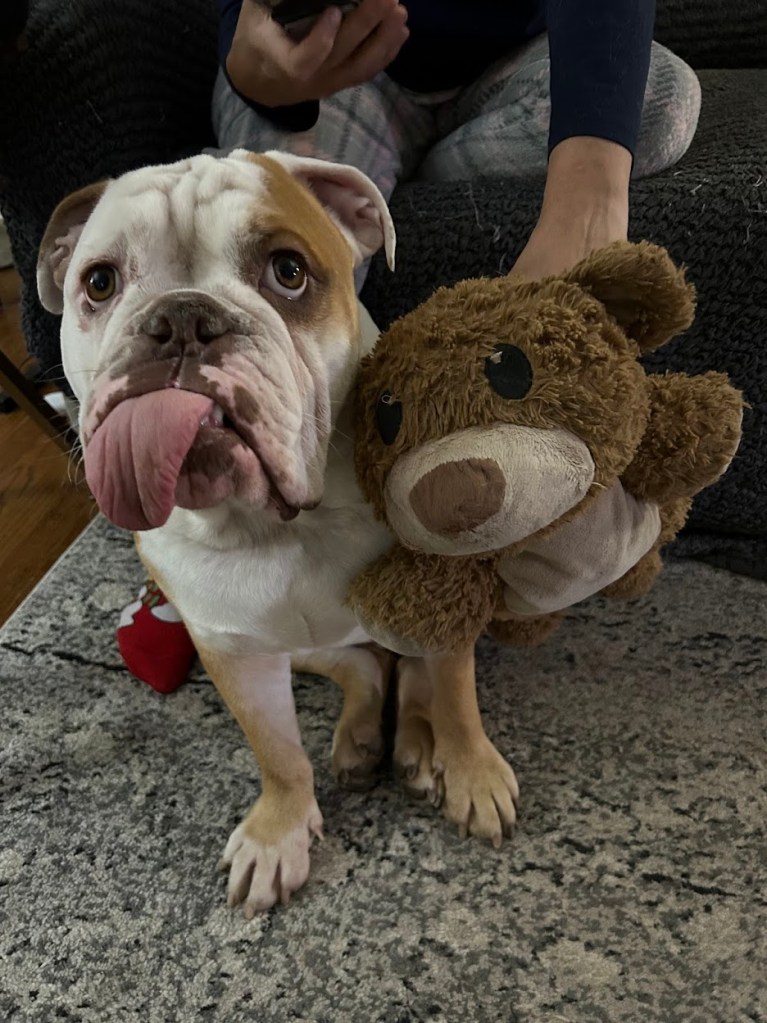
Image of English Bulldog and stuffed bear
Bruno contemplates a change of perspective

Looking back, I realize my career trajectory and life stage were out of sync. I was a late-stage-aged professional in a mid-stage career role, and it took stepping away from administration to fully understand that. While this epiphany is deeply personal, perhaps others in similar positions can relate.

For the first time in decades, I don’t have a clear next rung on the career ladder. I don’t have a career path.

How odd this feels. And yet…

Kevin McAllister Energy

Remember in Home Alone when Kevin realizes he “made his family disappear”? That’s how I feel about transitioning from a career ladder to what I call “career presence.” I don’t have a career path, and surprisingly, I don’t mind.

Now, don’t misunderstand me: I’m not suggesting I can coast until retirement. That’s not what I’m feeling at all, and I would not want to coast if I could. What I feel is empowerment, self-determination, and—dare I say it—freedom. For the first time, I’m genuinely content with my job. I want to realize the gratifying–and hard–work that comes with being a professor, and I have no doubt this is within my grasp. This must be how people who are passionate about their work feel: happy, hopeful, mindful, and present.

Charting a New Path

Instead of focusing on what’s next on the ladder, I’m charting a meaningful professional presence. It feels a bit like starting over, like I did when I became an assistant professor 20 years ago. Only this time, I’m not climbing—I’m walking.

I originally planned to end this post with “Five Goals for My Late-Career Path,” but I realized they all boil down to one: Be fully present—with students, colleagues, family, friends, neighbors, pets, hobbies, prayer, study, or entertainment–with myself. Shouldn’t this be the goal at every stage of life and career? Probably. But for me, this epiphany comes with the clarity of late-stage-ness.

The truth is, I’m running out of stages. I want to revel in my work, to wake up before the alarm, excited about the day ahead. My new trajectory is joy, and I am in the exact stage I’m supposed to be. That feels mighty good.

Excerpt from From Exploration to Retirement: 5 Stages of Your Career Journey:

Late-career-Typical age range: 45-55 years old

After reaching the middle of your career, the late-career phase offers a chance for a less stressful job setting. In this stage, people can teach, guide others, and find and train someone to take their place. They no longer need to learn new things.

Older employees can find fulfillment in mentoring younger colleagues, even if there are fewer opportunities for career advancement. Job changes are less likely during this stage, with one’s reputation and standing serving as security for their position.

Retirement is a time to think about life and have more free time for fun activities instead of work.This is what contentment feels like. This is what people feel who are passionate about their work.

Decline-Typical age range: 55-65 years old

Upon completing a fulfilling career and dedicating several decades to the workforce, many individuals reach the point of retirement.

After you retire, you can take a break from your job. During this time, you can spend quality time with your loved ones and go on trips. Redirecting your skills and knowledge, you can rekindle past hobbies, cultivate new interests, or engage in volunteer work (Olde Raleigh Financial Group, https://www.olderaleighfinancial.com/orfg-resources/from-exploration-to-retirement-5-stages-of-your-career-journey).

Exploring Nostalgia, Place and Southern Identity in Writing

Nostalgia, Place, and Feeling Southern

In a recent essay, Evolving From Just Keep Swimming to The Front Porch Professor, I explored the journey of reimagining this blog to reflect my evolving focus on narrative storytelling. At its heart lies the front porch, a symbol that anchors my Southern identity and shapes the lens through which I write. This post builds on that foundation, unpacking the concepts of nostalgia, place, and Southern identity—terms that are complex and intertwined. Sitting on the front porch is an appropriate place from which to give them the careful exploration they deserve.

You may be asking, “Well, when are you going to start writing instead of just writing about your writing?” Good question. The process is a throwback to academic writing, where you have to describe your framework and method for presenting your ideas. In other words, I need to tell you how and why I’m going to tell you what I tell you. Then I can tell you. But you’ll be glad to know I’m about ready to start front porching.

Why The Front Porch Professor?

Claiming the title of professor in my blog name is about more than qualifications; it reflects a blend of storytelling, introspection, and intellectual curiosity. It signals that the reflections here are informed by years of observing and searching for meaning. The image of a professor on a front porch bridges the formality of academia and the warmth of casual conversation. I invite you into a space where lived experience meets thoughtful analysis, encouraging connections and deeper understanding.

Image of Dr. Ugena Whitlock at USC Upstate
Professor Whitlock

For me, the title is also a tribute. As a small-town girl from rural Alabama, raised by working-class parents, becoming a professor is a point of pride. It’s a testament to their sacrifices and the support of friends and loved ones. They are ever present in my writing, shaping the stories I tell and the perspectives I share. I am both proud of the accomplishment and humbled by the debt and responsibility I owe them.

Place and the Southern Perspective

When I write about place, I’m speaking to more than just geography. Place encompasses the physical environments where life unfolds. Place is the landscape on which contexts of culture, history, and society are painted. It’s where relationships, joys, disappointments, and lessons unfold. All this happens individually and collectively. Place is both a backdrop and a character in our stories, influencing who we are and how we navigate the world.

Image of small downtown Russellville, Alabama, with snow, church, and Roxy theater
Downtown Russellville, Alabama

Being Southern, then, adds layers to this concept. The South is more than a region; it’s a complex web of traditions, histories, and cultural markers. To call oneself Southern is to grapple with the beauty and contradictions of the place. With the South’s ugliness. Can one be proud to be a Southerner, as I am? What does this mean? What am I proud of? And what about the parts of Southern “heritage” that I am not proud of? What is my relationship to those people who claim and celebrate the ignoble parts?

Writing From a Southern Perspective

“Being Southern” is as much a state of mind as it is a physical state. My Southern identity isn’t about celebrating a romanticized version of the South–you know, moonlight and magnolias. Instead, it’s a lens through which I explore themes of home, culture, and identity. The South, for me, is a place of deep connections, shaped by family, history, and the rhythms of everyday life. Southern identity is not monolithic—I don’t assume my identity is exactly like yours, just as your experiences may differ from mine. While we may share certain aspects, identity is deeply individual and uniquely shaped by personal experiences.

Image of dinner with deviled eggs and mashed potatoes
Southern food–note the Thanksgiving Chicken and Dressing

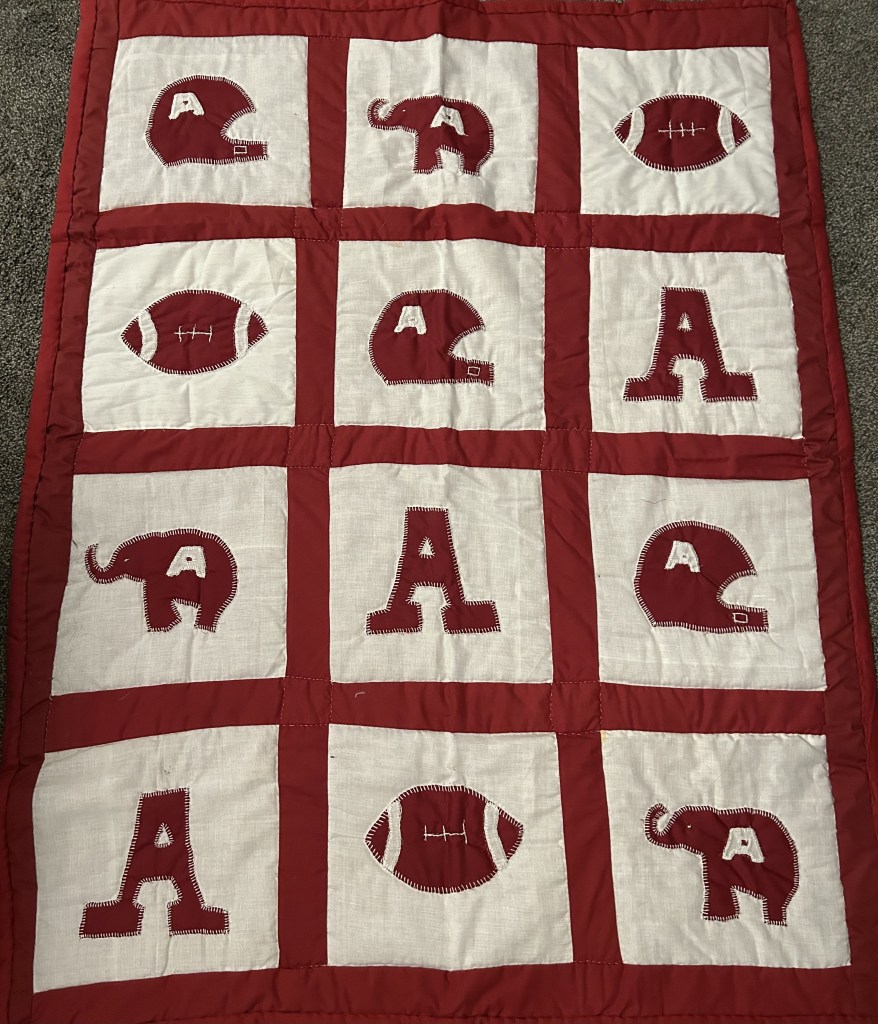
Family and home are central to this perspective, grounding my stories in the relationships and traditions that define Southern life for me. The culture of the place is a tapestry woven through the land, neighbors, communities, histories, food, churches, schools, music, and football. These often appear in my writing, not only offering insights into shared experiences but also helping us understand the world around us and highlighting the relevance of our observations. Yes, there are lessons to be got from SEC football. Roll Tide, y’all.

Image of a handmade quilt with a crimson and white Alabama football theme. The quilt features appliqué designs of football helmets, footballs, the letter 'A,' and elephants in alternating squares. Each design is outlined with visible stitching, and the quilt is bordered with a crimson edge, showcasing school spirit and craftsmanship.
Lovingly made Alabama Quilt from my Mother

But writing from a Southern perspective also means wrestling with the region’s complexities. The South is as much about its tensions and contradictions as its traditions. It’s a place where politics, identity, and history converge, challenging us to confront difficult truths while celebrating what makes it unique. Without acknowledging the turmoil and inequalities of its past, any discussion of Southern life, identity, and culture feels inauthentic and incomplete—it’s a Southern writer’s malpractice. As someone who often says, “I love the South,” I can be trusted to both celebrate and critique it. Critique from someone who hasn’t lived it or can’t celebrate it is equally incomplete–and there are plenty of these critics around. This is my not so humble Southern opinion.

Nostalgia: A Lens for Understanding

Nostalgia, as I see it, is not about longing for a bygone era but about connecting the past with the present to find meaning that may inform the future. The word itself comes from the Greek words nostos, meaning “homecoming,” and algos, meaning “pain” or “longing.” It speaks to a deep yearning for the familiarity and comfort of home, even if that home is more an idea than a place. Some homes are not the kind we can long for; rather, we might long to be released from their memory. This etymology captures the duality of nostalgia: it brings remembrances of warmth and connection, yet it also reminds us of what is distant or lost. The dual nature of nostalgia vies for our attention, wrestles for focus, and fights for dominance—keeping many of us in therapy for years.

Image of small stone church, Littleville Church of Christ, Littleville, Alabama
My home church, Littleville Church of Christ, Littleville, Alabama

It’s a complex emotion, often blending warm memories with a bittersweet awareness of time’s passage. Far from being purely personal, nostalgia is often collective, rooted in shared experiences and cultural touchstones like family recipes, cherished traditions, or the familiar strains of an old song. In my writing, nostalgia becomes a guide for exploration. Stories about homeplace and family lead me to reflections of broader themes, such as the importance of community, civility, and the pace of modern life. Nostalgia isn’t a destination where we can remain lost in the preferred past; for me, it’s like wrapping myself in an old quilt, offering warmth as I navigate the here and now. You can’t linger too long, though, because living means stepping into the day with clarity and intention.

The Front Porch as a Space for Reflection and Stories

The front porch, in this context, is both a literal and metaphorical space—a place where complex ideas meet honest, accessible conversation. It’s where intellectual rigor mingles with the warmth of shared stories, and where connections are formed through curiosity and reflection. This is the balance I strive for: nostalgia not as an escape but as a framework for growing and learning.

The front porch is open to anyone willing to join the conversation, to explore what place, the South, and our shared histories mean in today’s world. And if you aren’t Southern, you might still have a good time and make connections, too. Together, we can find clarity, joy, and meaning in the stories we tell. I believe we have a responsibility to one another to make the world a better place–a place where we indeed have the liberty to pursue the happiness of a gratifying life. Taking care of our neighbors has never been as important as it is now. It feels like not only have we forgotten how, but we have forgotten that we ought to in the first place. That’s another reason front porches are important. I hope you will join me.

Gratitude, Anyway: A Christmas Message for Finding Happiness

Image of Little Debbie Christmas Tree Cakes, one standing and one cross section showing cake icing.

I got stuck while writing this post. I knew I wanted to write about being grateful for my life and everything and everybody in it. I knew I wanted to frame it around having gratitude when those blessings might be blurred by shiny objects, such as ambition and wanderlust. I had most of it completed, but I couldn’t decided how to wrap it up without it having a rosy, yet empty, ending. Not too much as seen from the front porch is rosy; there are cobwebs and dust on my front porch. Then I took a walk on a frosty December night and the ending found me.

Does this ever happen to you? You come up with a brilliant idea—something you think is groundbreaking—only to find someone else has already beaten you to it. I suspect it happens to most writers. A blog idea I thought would be perfect was already taken. I began exploring memoir writing, only to discover someone else has already captured the same experiences with the same folksy charm! I have thought of an ideas for a book, and as I begin doing research for it, there it is–already published by somebody else! Even academic journal articles I’ve envisioned writing often already exist, in forms eerily close to what I had in mind. And every time it happens, it stings. These aren’t rare occurrences—they’ve happened more than just once or twice in my life. Here’s one that happened today: A very fine post by Jim Wallis called “Singing the Lord’s Song in a Strange Land” discusses thoughts I’ve had as an Armchair Quarterback for years—even before the election. It’s title even sounds like something I would have thought of. It’s beautiful. You should read it. Dang it. Singing the Lord’s Song in a Strange Land.

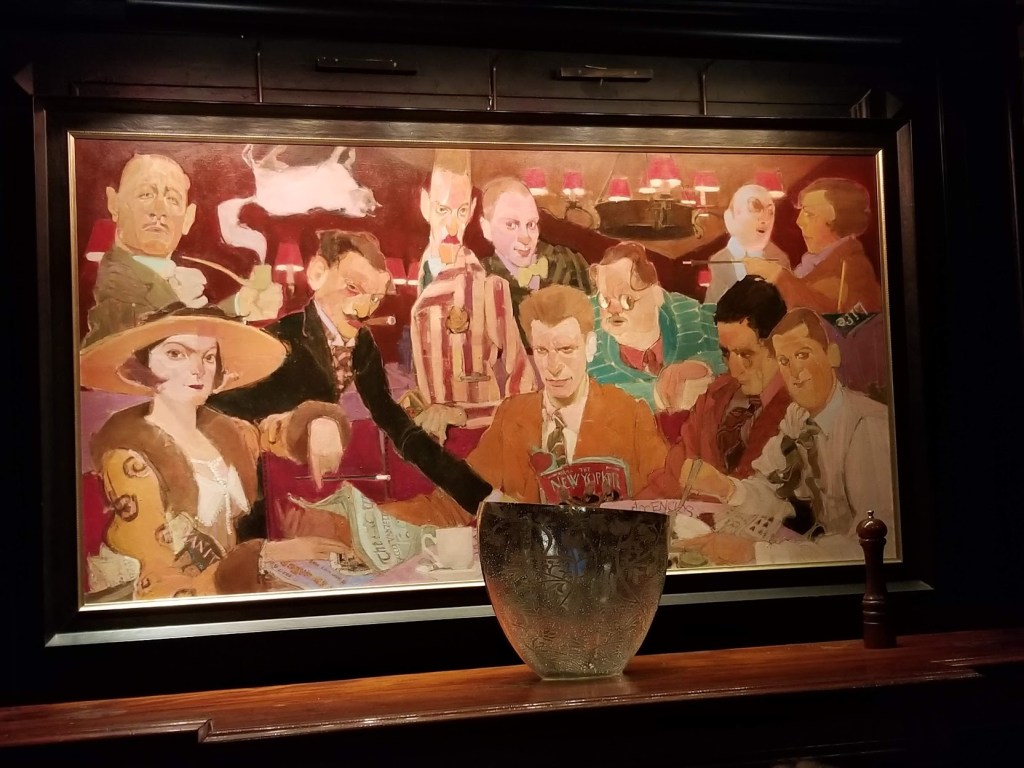
Image of painting of the Round Table at the Algonquin Hotel in New York City
The Round Table at the Algonquin Hotel

And then there’s the yearning. I can’t deny feeling a twinge of envy when I see friends and colleagues celebrating their achievements on Facebook. It’s a humbling reminder of my own aspirations and the work I still want to accomplish. A dear friend recently mentioned seeing several plays on a trip to New York City. She misses New York very deeply, and I’m happy that she makes regular visits; it does her soul good. Now, I’ve been fortunate to see my share of Broadway musicals—I even saw Bette Midler in Hello, Dolly!—an experience I still count as one of the best of my life. But life changes, as it always does, and I don’t have those same opportunities now. Sarah prefers camping with the dogs, and while I finally convinced her to upgrade tent to a pop-up camper, our adventures now involve hoisting Bruno the Bulldog up the steps to his bed.

Image of English Bulldog and stuffed bear.
Bruno and Snugs Baby

I don’t want to be a globetrotter, and I don’t long for the lifestyle of the rich and famous. I admit, though, when I’m out in the woods at midnight with a flashlight, waiting for Bruno to finish his business, it can feel like a bit of a step down from the lights on Broadway. Travel, especially to historically rich locales, thrills me. I relish every minute of it. I soak up the salty air and sea breezes of beaches from New England to Miami. And yes, theater makes me breathless. Euphoria has its place, and I appreciate it when I have it.
But adventures are the in-between spaces. The wholeness of life, for me, is found in simple joys. The whole fabric of life takes place in Spartanburg, feeding the dogs and cats—and in Alabama at my childhood homeplace. Whether tending to dogs and cats or listening to the stories my mother tells about pictures and treasures we sort through-both of us aware of time pressing down upon us—these are the things I am fiercely grateful for.

I think back to how I grew up, a child of hardworking people in Alabama. My parents taught me to be proud of where I came from, to appreciate the simple joys of home and family. They have always begun and ended every prayer by giving thanks to God. Even now, my heart remains etched with gratitude that I learned from them. I look around and see a life I love—a cozy old house in a picturesque neighborhood, my quirky cars in the driveway, my family within a few hours’ drive, and my pets curled up with Sarah and me on the couch. I’m comfortable in my own skin, grateful for work that fulfills me, and thankful for the profound blessing of having stability in my life. I’m blessed not to face food or housing insecurity, unlike so many others on this earth. I do a quick check and confirm that the reason I blog in the first place is to find joy and fulfillment–which I do.

Here’s the thing I’ve noticed: life is full of moments like these. No matter what you achieve or experience, there will always be someone smarter, more accomplished, more traveled, or more adventurous. It’s easy to let envy creep in or to feel like I’ve missed out. But at this stage in my life, I’ve learned to lean into a different perspective: gratitude, anyway. Choosing gratitude is a practice, and I have to practice it. Being grateful is as simple as the adage: It’s not having what you want but wanting what you have. I didn’t say it was an easy practice.

Image of actor Nathan Lane leaving Broadway theater after the play Angels in America
Nathan Lane Leaving Theater After Angels in America

Yes, I would really like an occasional New York weekend getaway. I’d love to see my name on the cover of a groundbreaking book or a memoir about a girl from a working-class family in the South–kind of like “The View from Rural Missouri by Jess Piper, which is a terrific collection by a Renaissance Woman from Missouri, at https://jesspiper.substack.com/. Dang it. But I also find happiness in where I am, not just in those imagined greener pastures. There’s a profound joy and relief in realizing that life isn’t a race or competition. I take satisfaction in setting my own goals and working toward them at my own pace—leaving room for reflection and leisure along the way. I will get where I get when I get there. I wonder why it has taken me so long to be at peace with this. I am grateful that I am.
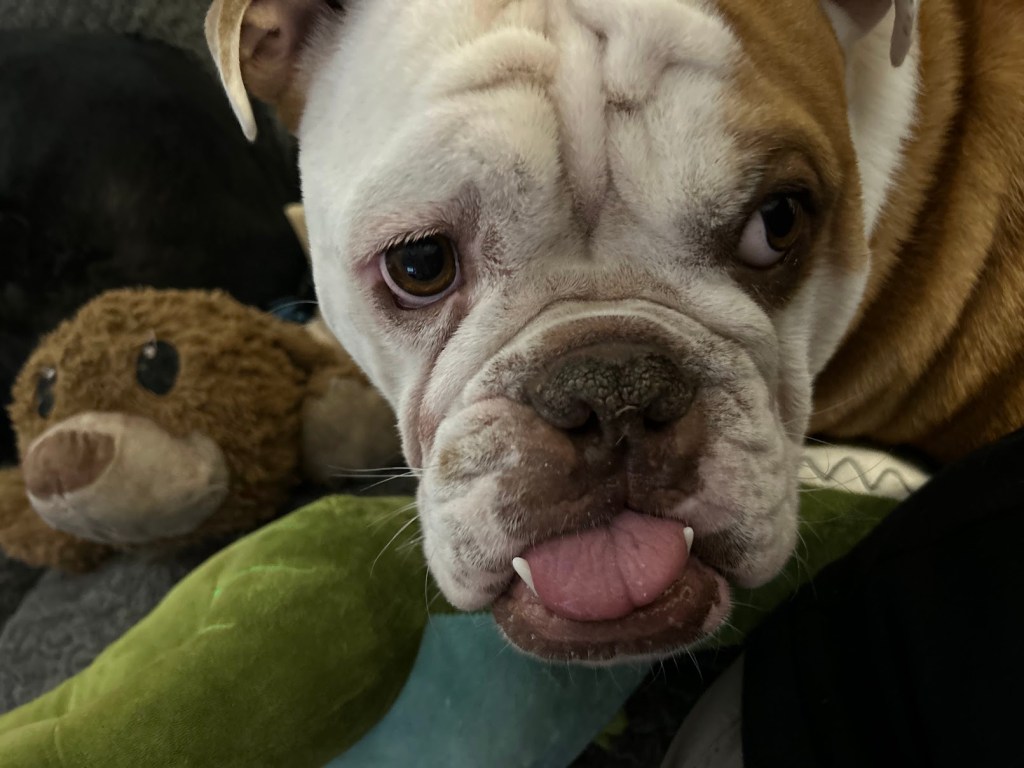

Image of the Statue of Liberty
Statue of Liberty

Here is where I had trouble sticking the ending. So I set it aside and went to the Spartanburg Christmas Parade. We live in a neighborhood that looks like Bedford Falls in It’s A Wonderful Life, and we can walk the two blocks to the parade route. We walked arm-in-arm to Main Street, got hot chocolate, and found a spot among the crowd to watch the parade. If you’ve ever been to a hometown Christmas parade, you know exactly what it was like. There were fire engines driven by Grinches, lights strung from cars and trucks and tractors, local beauty queens wearing Santa hats instead of tiaras, and marching bands. Oh, the marching bands. One of my most wonderful experiences was marching in my high school band. Memories of it fill me with happiness and exhilaration. As soon as I heard the drum cadence marking the band’s approach, I felt that feeling again. Then they began to play. It was at that moment the meaning of what I had been trying to capture in my writing became physically real to me. I began to cry as they marched by, joyful in the present and in jubilant memories. This, I knew, was gratitude.

Image of parade float and parade walkers in Spartanburg Christmas Parade.
Spartanburg Christmas Parade Float

While I’ve been struggling with disappointment at the parade passing me by, I just needed the reminder that parades don’t pass a person by—we experience them, marching right alongside. So, I’ll keep dreaming and working toward new goals, and I’ll keep finding happiness right here, in this moment. Gratitude, I understand, is not to be approached as “anyway.” Gratitude is an attitude–a mindset of unwavering, ongoing appreciation, regardless of the circumstance. Although I won’t always be successful, and although some days will be easier than others, I choose Gratitude, always.

Image of Spartanburg School for the Deaf and Blind Bus in Spartanburg Christmas Parade
Spartanburg School for the Deaf and Blind Bus in Spartanburg Christmas Parade
Image of Spartanburg Waste Truck in Christmas Parade
Spartanburg Waste Co. Truck in Christmas Parade

My Friend Duncan: The Scottish Terrier Who Won My Heart and Changed My Life

Image of Scottish Terrier Puppy sitting among potted plants

I still look for Duncan when I move from one room to another. I hear the little “click, click, click” of his toenails as he toddles across the wood floor. I think of him every time the leaves fall, expecting him to chase the light that dances between the shadows. I keep his little blue plaid collar with a spiffy bowtie on my dresser. I call our new dog–and sometimes call my son Daniel–“Duncan” when I’m in a hurry. I miss him.

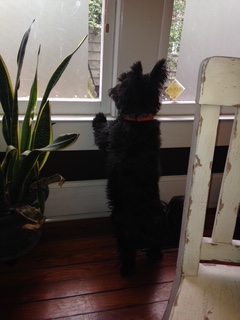
Image of Scottish Terrier standing on two legs looking out the window. Also pictures are potted plant and distressed dining chair.
Duncan standing on two legs looking out the window

I got Duncan for company and road trips, having been without a dog in the house for a few years. I had owned terriers before, but never a Scottish Terrier. While he was typical of the terrier breed, he was a Scottie, which gave him unique attributes, like not wanting his feet touched. He would yip and howl in holy terror at nail clipping time. He was a detached little fellow who did not need to be in my lap. In fact, I think he preferred to lie quietly at my feet. I discovered his staunch independence the day I brought him home. He was 10 weeks old, and I took him outside to the big front yard to start working on toilet training. I am used to puppies who want to be right with you–underfoot. Scottish Terriers have old people personalities even as puppies. I looked away from him for a minute to speak to a neighbor, and when I turned around, he was gone.

I looked all over for him–up and down the street, all sides of the house, under the porch, under the car. By this time my neighbor, who had returned to her porch, could see I was getting frantic. I yelled across our yards, “I just got him, and now he’s gone!” My neighbor had four kids, who all had friends, and who were all out in her driveway on bikes. She gave them marching orders: “Get on your bikes and look for the puppy.” And off they peddled, circling the block. It reminded me of communities coming together in movies, you know, like you don’t often see in real life. None of them had Duncan with them when they came back together.

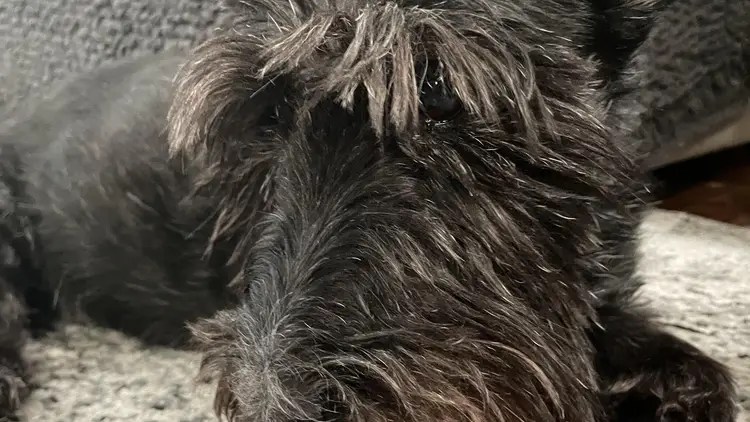
Image of a senior aged Scottish Terrier
My old man

It was then the next-door neighbor on the other side yelled to me from his back porch. “I see something little and dark. Is that him?” To this day, I don’t know how he had seen Duncan. I trudged to the pine tree he was pointing at in the far back of my wooded, sloped lot. There, under the tree in a patch of knee-high weeds sat Duncan. He was calm and stoic looking, peering through the fence toward the woods like Ferdinand the Bull in the story. This was the first of his sojourns, each one scaring me worse than the ones before.

When he was a young dog, he could escape from the average fence by burrowing under it. Terriers–from the French word “terre,” which means earth–were bred to “go to ground.” His favorite escape was to the woods to sniff for critters. Once, he cornered an especially slow squirrel and did not know what to do with it; fortunately for everyone but the squirrel, it died sitting there before Duncan could acquire the taste for blood. Usually, he headed off in the same direction–toward the woods–and the same neighbor would report a sighting after Sarah and I had been driving around the neighborhood for half an hour.

Image of Scottish Terrier next to a laptop computer
Duncan at work

One Sunday we came home from church to discover that not only had one of the kids left the gate open, but I had rushed out of the house (typical Sunday) without remembering to bring Duncan inside from his morning potty. Animal control had left a yellow note on the front door telling us when and where to come to bail him out. The one crabby neighbor in the neighborhood had called them. She had been afraid of a Scottish Terrier who was sniffing the ground and heading away from her house. We rushed to the pound, where one of the volunteers brought him out, jauntily jogging and smiling as he met us. The volunteer was happy with him, but not with us. She frowned as she took the opportunity to chastise us and issue warnings about consequences if it happened again. It didn’t. After that escape, we reinforced the bottom of the chain link fence with chicken wire, which I’m sure did not increase our property value.

He lived longer than the typical 10-year lifespan of a Scottie. One day I suddenly realized he was approaching 13, and I knew then he was living on borrowed time. He was noticeably slowing down, asking to be pulled in the wagon as we explored local trails. I had never been able to train myself to be a good leash walker (note how I said train me, not him). Duncan tugged and ran ahead until he found the perfect patch of ground, where he would have sniffed every blade of grass if I had let him. I couldn’t take him on brisk walks with cardio benefits because he would take three steps, stop to sniff, repeat. Now that he was a senior, we went on short walks with fewer stops and tugs. He reverted to peeing in the house on corners of the furniture when he got up for his nightly midnight drink. We began to crate him at night.

In the spring of his thirteenth year, he started throwing up. He was still eating and drinking, behaviors that I knew usually slowed and stopped at the end of life. I did not think we were there yet. The vet gave us a prescription for pancreatitis and told us to bring him back in a couple of weeks if the vomiting continued. After a few days, it got better…until it started again. The first night he threw up in his crate, we held our breath hoping it was a fluke. The second night we planned to take him to the vet for a re-check on the pancreatitis. Our wonderful vet gave us the dreadful news. “The pancreatitis is fine,” he said. “It’s these lumps I’m worried about. Let’s get him a scan.” The results showed golf ball-sized tumors in his abdomen. That was the first time I cried at the vet’s office.

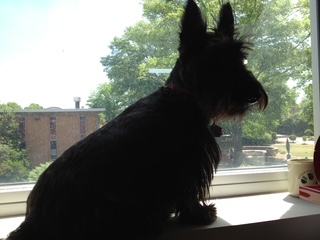
Image of Scottish Terrier sitting on window ledge looking outside at a tree and building
Duncan on guard

Being the thoughtful person that she is, and to bring me out of my sadness to focus on what was really important during all of this, Sarah began to plan Duncan’s “bucket list.” At first, I just went along. But then I started to understand; it was really our bucket list–mine and his, together. We loaded up the little red wagon we had bought to cart the old man around and went camping. It makes me happy to think of him sitting in the middle of the campsite in that little wagon. We hit the trails and took road trips. He got a pup cup from the local ice cream shop. The only item on the list we did not get to was taking a trip to Alabama so that my folks could see him again. My sweet mother proudly reminds me that it was she who house trained Duncan when he stayed with them for a couple of weeks. She misses him, too.

The end came soon after. In three weeks, his belly was hard and swollen, and he began panting through the night. He was dying. I held him in my arms as we went into the veterinary room, held him when the kind vet administered the first shot, the one that sent him into a deep, peaceful sleep. But I could not bear the final shot. When I broke down and collapsed in the chair, Sarah petted and soothed him for the last time. It is the hardest thing I have ever done, and it broke me. I am crying now as I remember, and it is only now, months after, that I can bear to write about it. I still cannot look at the rosewood box with his ashes; Sarah has put it away for now.

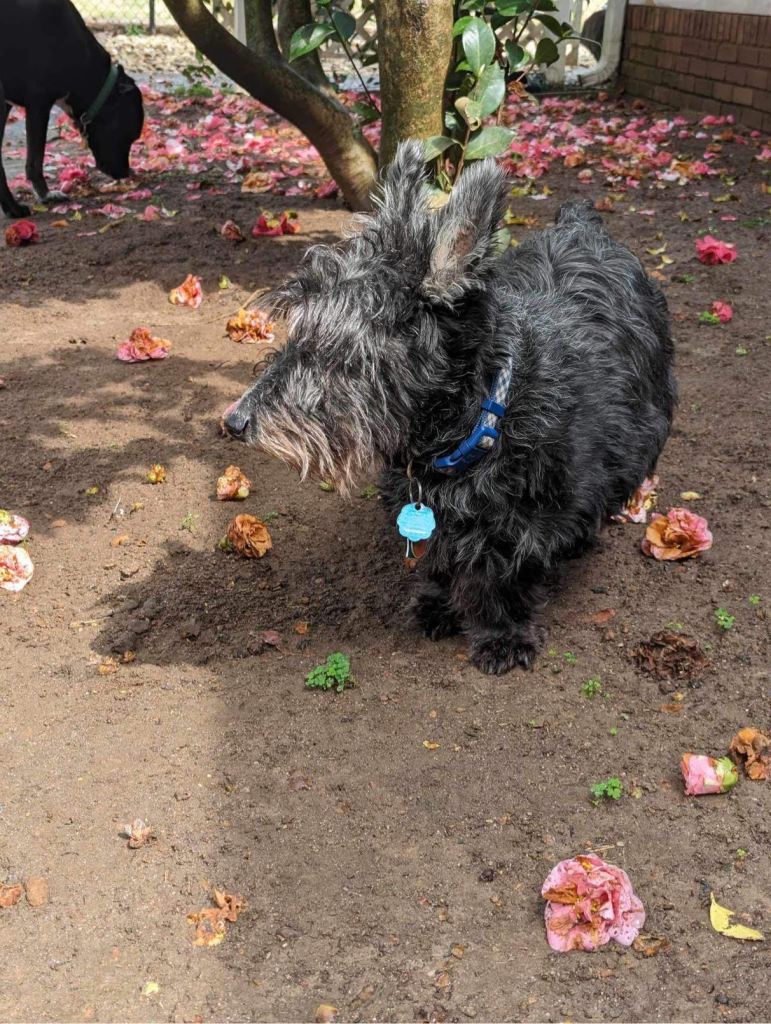
Image of Scottish Terrier under gardinia bush with gardinia flowers. Also pictured is a lab mix black dog.
Duncan under the gardinias

I don’t use the word “pet” when I can help it now. I don’t use the language of ownership anymore. I have done so here to reflect the lessons learned from my Duncan. He was my friend. A stalwart sentry, he was a proud dog who carried himself with dignity. Even during his last months, he never slouched or walked with his head down. Each step was deliberate and graceful, almost tiptoeing. He had the presence of a little gentleman. Duncan was lovingly stubborn until the end, tilting his head and gently pulling on his leash if he was not yet ready to continue our stroll. When he was groomed in that standard “show dog” cut, his brindle patterns were tiger-colored, swirling around on his back and neck like a chocolate and caramel brownie. He was magnificent.

Duncan has helped me navigate the passing of time, which is the gift from him I appreciate most. Life is short; if you want to see how short, reflect on the lifespan of a beloved furry companion. I grieved his death more deeply than I ever have before, with my immediate family still living. I am forced to prepare for inevitable loss of parents and the sad yearning of looking into the void where they once were. I picture Duncan looking at me and tilting his head, like when he was listening to me. “Yes, it’s indescribably hard,” he seems to think. “Just keep your nose down and keep tracking.” On days I work from home, I look at the sunbeams on the rug and think about how he used to sit and stare at the beams, expecting to catch one at any minute, his whole body alert and quivering, his tail wagging in anticipation. And after all, that’s life, isn’t it? Head down, keep tracking, and always look for that sunbeam you’re about to catch. Thank you, friend.

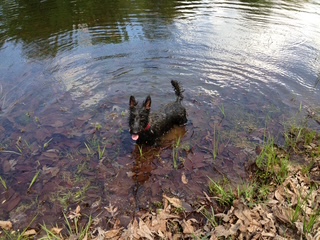
Image of Scottish Terrier named Duncan in a pond. His tongue is out as though he is smiling.
Duncan in a pond

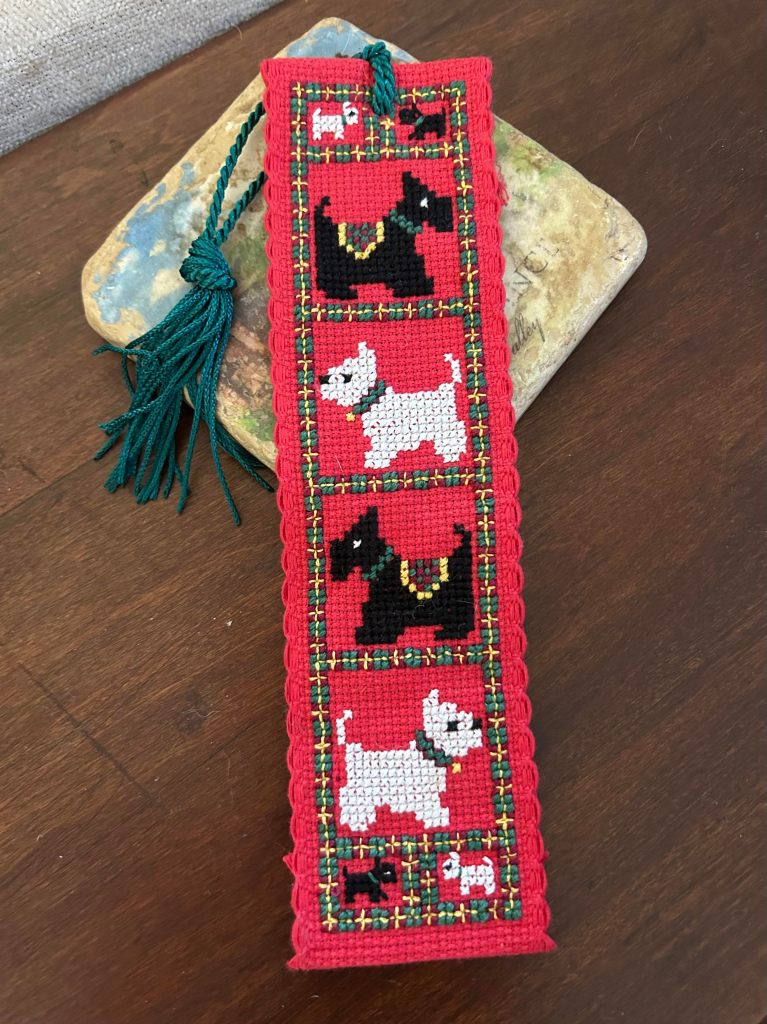
A final note, throughout the essay, I have referred to “we,” plural. In reality, Sarah provided Duncan’s end-of-life care and doctor visits. Reading this, she jokes about the so-called loyalty of Scotties, since when she entered my life, he adopted her as his person. He sat in her lap and asked for pets the day he met her–and continued to do so for the next 10 years. She reminds me that Duncan was in fact affectionate with her, if not so much with me. She was the only human whom he would allow to touch his feet. She made me the lovely Scottie bookmark in the picture, and I thank her for caring for us both.

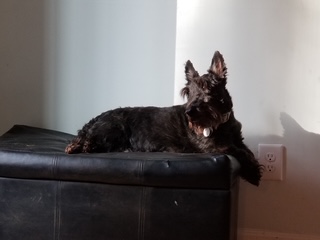
Image of Scottish Terrier named Duncan reclining regally on a settee
Duncan looking regal and thoughtful
Image of Ugena Whitlock holding Scottish Terrier Duncan while on vacation.
Duncan and Me
Image of red bookmark with green tassle that shows two large Scottish Terriers, two large white Scottish Terriers, two small black Scottish Terriers, and two small white Scottish Terriers.
Beautiful intricate Scottish Terrier bookmark by Sarah

The Old Man and the Coon, or, Tales of Daddy and Popeye

I am not a phone talker. Nobody in my family is, but it occurred to me today that I had not spoken to my parents in a while. So I called them. Daddy is 83, and Mother is 80. My son Daniel lives with them and they all take care of one another. Mother and Daniel have an English Bulldog named Boo Baby, and Daddy has an 18 year-old Rat Terrier named Popeye. In dog years, he’s older than Daddy. Now, when the phone rings at the house, Mother picks up the downstairs phone, and Daddy picks up the extension in his room simultaneously. He waits his turn patiently for me and Mother to catch up, and then he will say something like, “Well, I’m still here.” That’s Mom’s cue to turn me over to him. So, I went through my topics–work, weather, how I’m doing, more weather, and the proper name of Grandpa’s Whiskers (it’s Cleome). Then it was time to talk to Daddy.

He eventually asked, “Did I tell you about Popeye nearly getting hit by a car the other day?” I said no, what happened? Popeye is deaf and blind and has already been hit by a car once in his life when he was much younger. They keep him in a pen outside with a box fan beneath a beach umbrella continuously running to keep him cool in the Alabama heat. Daddy lets him out in the yard when he goes outside, and that day he followed Daddy to the mailbox. While Daddy got the mail, Popeye stopped in the middle of the road to wait on him. A car came speeding around the curve–Daddy is very attuned to traffic these days–and Popeye didn’t move. My father then steps out into the road and attempts to slow the oncoming car, which did not stop but veered into the other lane, barely missing Daddy and Popeye.

This is Daddy’s story about the Raccoon, which he and everybody else in my family calls a coon (I come from a family of coon hunters.). Here’s how he told it.

Last night, me and Pop went out to close up the barn. He went down the back of the barn and started barking. I thought ‘uh-oh’ he’s treed something. And I looked up and there was a big ol’ coon hanging from the rafter by his hind legs reaching down towards Popeye! I thought that if he got him, he’d tear Popeye up. So I said, c’mon Pop, let’s go get the shotgun. I come in the house and got the shotgun and told Daniel and your Mama that I reckon I was gonna have to kill that coon. Popeye had come up to the gate by the house, and he was ready for me and him to go back and get the coon. So we went out there, and there was the coon, but when he saw us, he slipped out the back of the barn. So I said alright Pop, let’s go back in the house. Now, can you imagine an old man and old dog out in the dark at the barn with a shotgun gonna shoot a coon?

I told him that I wondered about that but decided just to let him tell it. He got a chuckle out of that. My dad is very proud of me, especially of me getting a Ph.D. He kids me about how far I’ve come from Littleville, Alabama, and has modified my nickname of “Miss Bean” to be more formally “Dr. Miss Bean.” As we were hanging up (Whitlocks do NOT stay on the phone), he said, “You need to write a book about that. Only thing, nobody would know what you were talking about.” I bet I could tell it so they would, I thought to myself. So, that’s what I did. Before I moved away from Alabama for the first time, Daddy gave me some advice my great-grandmother gave her son as he went off to war: “Don’t forget who you are.” That was it. Daddy knew that I knew what it meant. Who I am is of that place. I come from a patch of land in Littleville where my dad and his little dog put up the chickens every night and my mom and my son work their little flower garden and fill 10 hummingbird feeders every day. Where we will have barbeque and fried catfish from Swamp Johns and homemade ice cream when I go to visit. Daddy, I haven’t forgotten.