So This Is 61: Notes on Aging From the Inside Out

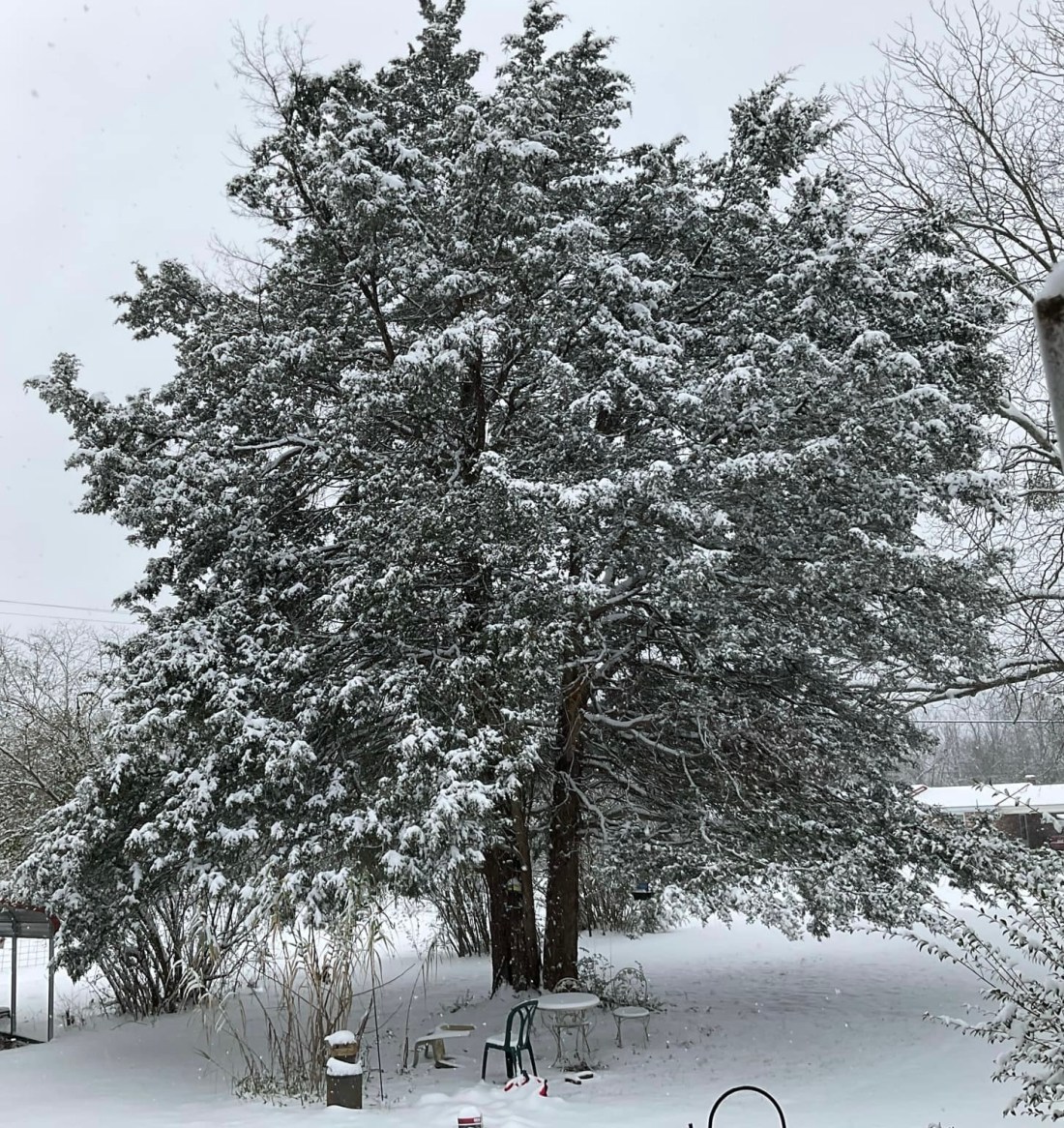
Image of snowy tree, Littleville, Alabama.

So This Is 61: Notes on Aging From the Inside Out

I didn’t expect to notice it all at once. Nobody tells you that one day, getting out of a chair will require a full mental and physical commitment. Or that you’ll avoid driving at night because headlights are now earthly starbursts. Or that the first time you wake up with a stiff neck, you’ll briefly wonder if you also have a brain tumor, because the sharp pain shoots all the way up into your temple. Of course, it’s just how you slept, but the thought still crosses your mind. My neck now cracks so hard I sometimes wonder if others can hear it. This is all new.

These are notes from those realizations—honest reflections of what 61 feels like, from the outside in and the inside out.

Oh. And who IS that old woman staring back at me in the mirror?
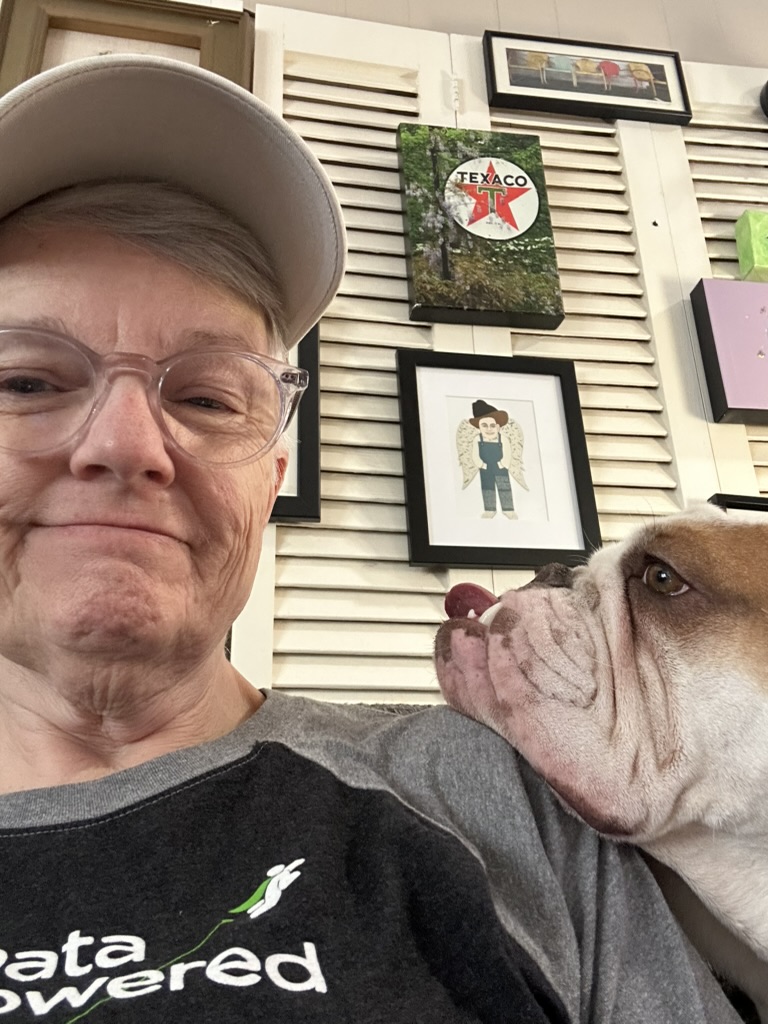
Image of Ugena Whitlock and bulldog.
Who is that old person being lovingly gazed at by Bruno the bulldog?

Aging is full of these little surprises—some unsettling, some mildly amusing, and some that require a good stretch, a heating pad, and a moment of reflection. I am learning, slowly, to embrace it all. I’m slowing down, but not shutting down. Sixty is NOT the new 90, as Sarah likes to suggest to me. If anything, I’m rediscovering the joys of having time to potz around the house, sort through old pictures, take the dogs for walks, and drive my Miata around Spartanburg like it’s my own personal victory lap.

I have less—less urgency, less need to accumulate things—but I also have more. More awareness, more gratitude, more quiet moments of contentment. Don’t get me wrong, I’ll still upgrade to the latest iPhone every couple of years and buy accessories for the Miata and Mini Clubman, but there’s nothing I can think of that I truly need. That’s an unsettling realization, not because it signals loss, but because it signals a kind of peace. I’ve been asked whether this feeling means I’m depressed. I don’t think so. If anything, it feels like clarity, like a settling in—like I’m moving toward a place where I don’t have to chase after the next thing. I haven’t arrived there yet, but I can tell a difference.

Image of people singing in church, Littleville, Alabama.
Blurry picture I snuck while Daddy is leading a song at church on Singing Night.

Aging isn’t just about collecting years; it’s about collecting perspective. There is wisdom in learning what to hold onto and what to let go of and in understanding that urgency is often self-imposed. It is true that contentment is “not about having what you want but wanting what you have”–that is, it’s in perspective. I remember when I was about 9 years old, I stood by eavesdropping, as children do, when Mother and Daddy were visiting with the preacher after Sunday night church. I don’t know how the conversation turned toward me–probably because I tried to join in the adult’s conversation. But I still recall Daddy telling the preacher, “Ugena can’t be content.” Even then, I wanted the next thing, to go to the next place–I just plain wanted. I realize now it’s a quality that must be cultivated. I am working on it.

I’ve learned that not every battle is worth fighting–not every hill is one to die on. Very few are. And against a life of doing otherwise, I’ve come to understand that silence can be more powerful than a quick, clever retort (which, I admit, is a talent of mine). Although Sarah probably say it’s taking too long, I’m also learning to take myself less seriously–to laugh at myself when I can.

And yet, aging isn’t just about accumulating (waiting patiently for?) wisdom—it’s also about watching my body become a stranger to me. The aches, the slower reflexes, the shifting body shape that seems to have a mind of its own. And let’s not even talk about hair loss and the horrifying reality of what gravity does to internal organs. I wonder if everybody, like me, sees someone and thinks “old person,” only to discover that she or he is younger than I am. I die a little on the inside when that happens, and it does regularly.

I’ve inherited certain characteristics from my father—beyond just looking more and more like a little old man every day. If I’m not careful, I can be short-tempered and convinced my way is obviously best. I don’t always filter my thoughts the way I should—not snapping, exactly, but sometimes speaking too bluntly, unaware in the moment of how my words might land. And yet, also like him, I’ve also mellowed. I am more nostalgic, more sentimental, more conscious of time slipping through my fingers like sand. I find joy in familiar places, in the sound of a bird’s song. I think I am figuring out the face in the mirror. It’s starting to look like me. The trick is learning to love the aging face.

When I married at 18, I could imagine “50 years from now.” Now, I understand, in a way I didn’t before, that the time ahead is finite. There’s an end of the road. My parents, whose mortality would have been unimaginable to me 20 years ago, are fading—fragile, frail. My father still has a prolific memory of a shirt he was wearing when he was talking to a particular person at a specific place in 1957 while a specific song played on the radio, but he struggles to remember which channel is which on the TV. My mother, who was heavy-set all my life, is growing thin. It’s probably healthier, but it’s startling to me. Even the house, now 50 years old, is a little less kempt, as houses tend to become when the priority is simply to live in them rather than maintain them. These things are bittersweet to see.

There’s a void where the future used to be. I can’t plan for 50 years down the road anymore. Twenty years, maybe. Ten, certainly (no, not certainly, more…hope-fully). But the open-ended future that once stretched ahead indefinitely has become something else entirely. Maybe the saddest thought—and why do I allow my ruminations to go here—is that one day, not too far into the future, the last people on earth who call me by the nickname that Daddy pronounced upon me when I was born, will be gone. He and Mother call me Miss Bean. I’ll never hear it spoken naturally to me again. This is, by the way, a very Daddy way of thinking, and I have to stop it. It’s dangerous, depressing, and yet, sometimes, it sneaks in anyway.
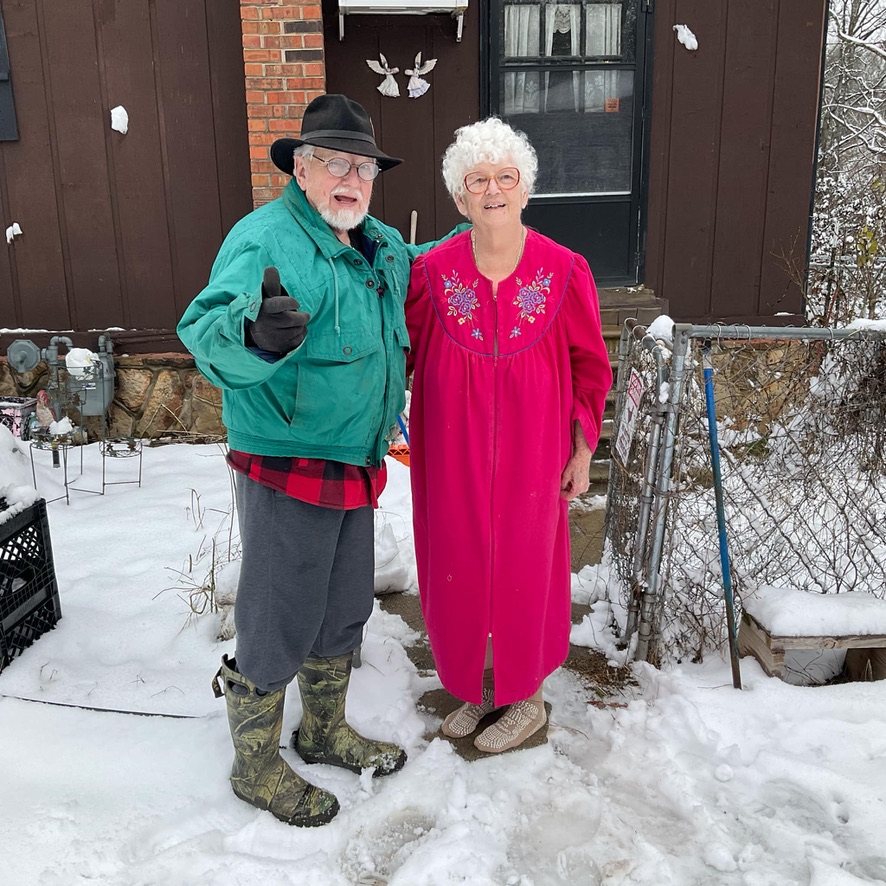
Image of old folks in winter, Littleville, Alabama.
The Whitlocks outside the house to show the snow. Not used with permission, but I’ll take my chances.

And yet, there is joy to be found in all of this. There is humor. There is, finally and blessedly, contentment. There is the deep love I have for my family–and a conviction to see every minute they are in the world as a gift. Time doesn’t march on–that heifer tears out like her tail is on fire. Aging isn’t a slow march toward irrelevance—it’s a shift in focus, a new way of seeing. I am still learning, still growing, still moving—albeit with a few more creaks and groans along the way. And in the meantime, I’ll keep driving my Miata and cracking my neck like like a walnut. I’ll keep striving toward the Big Three attributes of sanity: gratitude, contentment, and humor as I remind myself that I’m still here. And I’m still going.
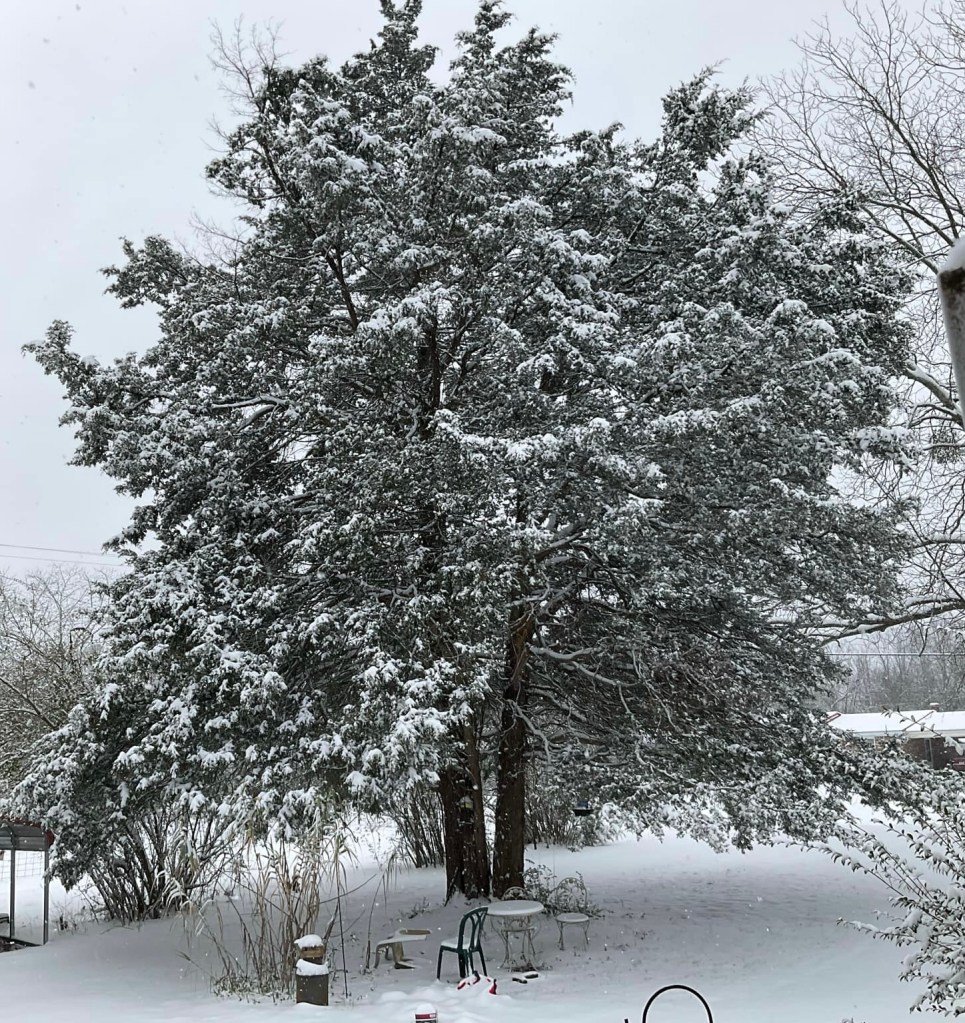
Image of snowy tree, Littleville, Alabama.
Ice and snow on the remains of the old cedar tree at home, Littleville, Alabama.

Starting Mounjaro after the Holidays

I have been waiting for a drug like Mounjaro for decades.

All my life I have struggled with my weight. I remember in elementary school they made us weigh at each report card time. In 3rd grade I broke 100 lbs. By my wedding at age 18, I weighed 170 lbs. And yes, the dress I had purchased a year earlier no longer fit. By my 40th birthday, I had reached what would be my highest weight ever: 253 lbs. It was at that point I was diagnosed with Polycystic Ovarian Syndrome (PCOS) and the accompanying Insulin Resistance (IR). Metformin helped me get down to where my body insists I should be: 200 lbs. For 20 years, my body and I have done a yo-yo dance. I have gotten as low as 168–for about 2 weeks and have weighed as much as 215, where I am today. Somewhere along the way, I began reading about weight loss pharma. I recall when they isolated the hormone that made you feel satiated. I recall the predictions that one day there would be a pill. I remember studies that connected Diabetes 2 and obesity. Oh, and I remember the first time my doctor noted “obese” on my chart and apologized for it.

Although D2 drugs that lead to weight loss like Ozempic and Wegovy have been around for awhile, it was not until the Mounjaro (tirzepatide) studies were announced with astonished and promising fanfare that I seriously began to hope. Was my 5 decade fantasy finally becoming a reality, like tvs in watches and time travel (I can hope, can’t I?)?

Mounjaro still has some setbacks: prohibitive cost, side effects, unproven record, threat of thyroid cancer, etc. But when I saw weight loss of up to 22.5% in study participants, I began to follow the research intently. It was approved by the FDA in May 2022 and showed up as an approved D2 drug in my insurance drug by Fall 2022. I decided to ask my doctor to prescribe it for me. I had my arguments laid out, see above with D2 threats sprinkled in. To my surprise, she had no qualms about trying me on it. My insurance company requires Prior Authorization, which I thought would take several days, but by that evening, tirzepatide showed up in my medications in MyChart. I was jaw droppingly amazed.

So here are some steps I have taken to begin my journey:

  1. I bought scales to start weighing myself daily again. For me, it has to be every day.
  2. I am committed to begin eating more healthily to start balancing out before I begin my Mounjaro, which will be when it gets in stock and after the holiday.
  3. I am making sure my doctor calls the insurance company for a Prior Approval. With PA, the cost is $25. Without, $1,000. It’s worth my time to get the dang thing approved.
  4. I took a “Day Zero” photo of myself. I have never done this, partly because I just never took the time to and partly because of really not wanting to see fat me documented in a photo. Mounjaro requires a re-wiring of the way you think, so I see this as a first step.

Day Zero Picture. Do you know how hard it is for me to post this picture? Even as I write, I can’t help staring at it. All I see are the fat parts. Well, it’s on.

To be honest, after reading blogs and sub-Reddit posts, I am a bit terrified of the side effects of Mounjaro. I won’t list them here, but the Reddit folks don’t hold back describing them. I can’t imagine working if I have some of them (I’m looking at you, Sulphur Burp). Still, I am willing to risk it. There are those who will judge and criticize me for not being happy and comfortable in my body, for wanting to put myself through a drug regimen to re-shape myself, for being driven by a smaller number and clothing size. Good for them. They obviously are not driven by the burning desire to shop for regular sized clothes at Talbots. I’m serious. When I go shopping there for my work clothes, I head straight to the back of the store for the plus sizes, which is about 1/4 of the store. The other 3/4 has a wide variety of cute, colorful, stylish clothes that go up to a size 16. I currently wear a size 16W, but those never come in candy apple red velveteen. So yes, what will get me through the nausea and other unnamed bodily functions are sexy pants and matching sweater.

I have included two helpful resources I found on Reddit. First is Best Food Choices for Ozempic, Wegovy & Mounjaro Weight Loss: Dr Lipman Endocrinologist

Here is Mounjaro/Ozempic/Wegovy/Trulicity Tips

*Take injection after a protein fortified meal

*Start fiber, magnesium powder or digestive enzymes listed below, at the start of the prescription so you don’t end up with severe constipation

*Take a multivitamin

*Eat protein every 3 hours (goal 80g – 100g a day) to maintain muscle mass during weight loss

*Drink 1-2 servings of sugar free electrolytes a day if eating low carb

*Drink 60+ oz of water daily

*Determine your daily caloric intake based on BMR & TEE determined by a dietitian/nutritionist. DO NOT go below 1000 calories – too few calories will stall your metabolism and the scale.

*Once you know daily caloric goal, track calories in an app like MyFitnessPal- https://www.healthline.com/nutrition/how-many-calories-per-day#calculator

Low Carb Protein Drink Suggestions 

READY TO DRINK

-Orgain – https://amzn.to/3PBUwdi

-Premier Protein – https://amzn.to/3BQbD5w

-Fairlife Core Power – https://amzn.to/3WwMcxw

-Fairlife – https://amzn.to/3HKKHry

POWDERED

-Clean Simple Eats – https://amzn.to/3hKTOxE

-Premier Protein – https://amzn.to/3HJ6Y9c

– Just Ingredients- https://justingredients.us

Nausea

– eat protein every 3 hours

– drink electrolytes – https://amzn.to/3FJv2pR

– Non Drowsy Dramamine – https://amzn.to/3PMeu5e

– Ginger Tablets – https://amzn.to/3YyegT8

– Isopropyl alcohol inhalation – https://www.ncbi.nlm.nih.gov/pmc/articles/PMC6189884/ 

– Zofran prescription – can create additional constipation

Constipation

– Fiber https://amzn.to/3VbCmAh

– Calm Magnesium Powder – https://amzn.to/3WurkHf

– Digestive Enzymes – https://amzn.to/3jfsBUv

– Miralax – https://amzn.to/3je8yWj

– laxatives, senna or Smooth Move tea are not suggested because they are absorb into the bloodstream and can be addictive

Burping

– Digestive enzymes before you eat  https://amzn.to/3WtY6Iz

– Gas X before you eat https://amzn.to/3Vjuahy

– Vitanica Digestion Tonic – https://amzn.to/3G2Lsek

Acid Reflux

Immediate Relief

* Apple Cider Vinegar 2 TBSP  in 8 oz of water

* Apple Cider Vinegar Supplement https://amzn.to/3v41rT6

* Tums https://amzn.to/3Yzyyvx

* Mylanta https://amzn.to/3G7CFrD

Long Term Relief (take daily) –

* Bromelain – https://amzn.to/3v3AFdq

* Digestive Enzymes – https://amzn.to/3WtY6Iz

Multivitamin

* Mary Ruth’s Liquid – https://amzn.to/3jgl6wu

* Passion 4 Life Liquid  https://amzn.to/3v3KIPN

* Vimerson Health https://amzn.to/3W9uYGY

* Ritual https://amzn.to/3BJm7TV

Loose Skin/Hair Loss 

* Vital Protein Collagen – https://amzn.to/3PGxTEz

* Physician’s Choice – https://amzn.to/3G4B0CV

* Sanar Naturals Collagen – https://amzn.to/3PUdk7T

* Dr Emil Hair, Skin & Nails – https://amzn.to/3BPaj2N

Long Term Results

The goal while losing weight is to learn how to make different choices and create new habits that will create sustainable, long term results that start with mindset work. Here are a few books on Audible that will help you assess your brain and your habits!

* Chasing Cupcakes – https://amzn.to/3WiaEDq

* Beck Diet Solution – https://amzn.to/3Wu04sr

* Beck Diet Solution Workbook https://amzn.to/3BN84Nl

* Never Binge Again – https://amzn.to/3BNA5UR

If you are looking for virtual doctors who are prescribing to compounding pharmacies, here are a few to research

* PUSH

* SEQUENCE

* JOINMOUCHI

Food choices:

https://www.richardlipmanmd.com/best-food-choices-for-ozempic-wegovy-mounjaro/?fbclid=IwAR3wEmM2HJ7W5nbZPQYhvkCmJumnvm8XcsdyJTG1kXIansUaTRi_kAALQok

Medical Advice Disclaimer

DISCLAIMER: THIS DOCUMENT DOES NOT PROVIDE MEDICAL ADVICE

The information, including but not limited to, text, graphics, images and other material contained on this document are for informational purposes only. No information on this document is intended to be a substitute for professional medical advice, diagnosis or treatment. Always seek the advice of your physician or other qualified healthcare provider with any questions you may have regarding a medical condition or treatment and before undertaking a new health care regimen, and never disregard professional medical advice or delay in seeking it because of something you have read on this document.

Go back

Your message has been sent

Warning

My Sugar Addiction, Day 1

I am gaining my weight back. Again. Like just about every person who has ever battled their weight, I have tried every diet plan imaginable. I’ve taken diet pills–over the counter and prescription–and for awhile I took Alli fat blocking pills, which was the grossest diet plan ever. Google that one. I’ve done Weight Watchers, now WW so you will feel like a winner, thank you, Oprah. It’s still Weight Watchers. I’ve exercised for a solid year; that, along with WW, which works if you work it, resulted in my losing the most weight I ever had in my adult life: 70 pounds. It felt so good! I got a complete new wardrobe and felt young again. I was so encouraged this time when I read that if I could keep it off for 3 years, I could keep it off for good. When it started creeping back after about year two–those crisp white shirts and modern-cut pants started feeling snug (a word of terror for fat people)–I looked that factoid up again. It had said five years, not three. I had weighted 168 for exactly 2 days, and as I creeped back up in the 170s, I told myself that my body wanted me to be in that range. Again, if you’ve ever been a weight warrior, you know the feeling in the pit of my stomach as I watched myself outgrow my clothes. Again.

fat david

My size 10 Levis were the first item to go, then my pants for going out. I donated my cute pinstripe suit after church one Sunday when a guy jokingly–it’s always jokingly, you know, but there’s truth behind it and it hurts like a sucker punch–said “Hey girl, you trying to show off those biceps?” I looked down at curved stripes on too-tight sleeves. Last year, I bought size 16 Levis, telling myself I still had not reached my highest weight–253, so 16 was okay. I was still under 200 pounds. Then came another holiday season.

I don’t even bother making New Year’s resolutions any more. What is the point? It’s always the same: lose some weight. Weight warriors, familiar? Knowing most people gain a few pounds over the holidays, and also knowing I didn’t have any to gain, I was determined to practice portion control. I didn’t gain during the month-long eat fest, but I began to feel my body change beyond the feel of my clothes. I put out of my mind that the size 16 roomy L.L.Bean pants’ waistband was getting snug. (oh no!). I was out of breath in the shower. I developed a candida fungus under my belly fat. Yes, that is so far the most embarrassing thing that I’ve ever felt about my body. Fat can be fluffy if you tell yourself enough. But a seepy, smelly rash made me feel nothing but shame.

This weekend an interview with Molly Carmel popped up on my newsfeed, and led me to her new book, Breaking Up With Sugar: Divorce the Diets, Drop the Pounds, and Live Your Best Life. I had do decide whether to add another weight loss book to my Kindle. I have books on insulin resistance, carbs, and the keto diet, for example. I know the science, and I know the “secrets” of weight loss. If knowledge were enough, wouldn’t we all be thinner and healthy? That, precisely, is Carmel’s point. I ‘m going to call her Molly, since the tone of her book is friendly and encouraging. I’m reading Breaking Up now, and I’m glad I bought it.

sugardownload (1)

Here’s Molly’s About the Author on Amazon: Molly Carmel has made it her life’s mission to help people find a sustainable solution to the battle of obesity and related eating disorders. After battling her own eating disorder for over 20 years and finding no solution in available treatment, she created The Beacon, where she helps clients recover from similar addictions. Carmel received her Bachelor’s in Social Work from Cornell University and her Master’s from Columbia University’s School of Social Work. She has extensive training in Dialectical Behavioral Therapy, addiction, and nutrition.

The chapters support the breakup/divorce/find a healthy relationship theme of the book. I’m on Chapter 3, “The Truth About Your Sweetest Love,” where Molly gives a summary of how sugar is in reality “Suicide on the Installment Plan.” I wanted to include her list of sugar’s lethal capacity here: But Sugar also negatively affects every single part of your body. Some of these harmful effects are more well known than others. Eating sugar has been linked to: inflammation, migraine headaches, anxiety, brain fog, trouble sleeping, weakened eyesight, gum disease, heart disease, increased cholesterol, asthma, suppressed immunity, kidney damage, nonalcoholic fatty liver, overworked pancreas, arthritis, osteoporosis, metabolic syndrome, and leptin resistance. There’s even terrifying research showing that Sugar increases the risk of developing certain cancers. And of course, let us not forget Sugar’s piece de resistance, glucose intolerance and diabetis

And yet, knowing all of this and having encountered many of the effects on Molly’s list, I keep right on eating sugar and its evil twin flour anyway. I’m going to keep reading, but I’m open to the idea that I think and behave like an addict when it comes to sugar–and I suspect toward food in general. I looked ahead to see whether Molly had made me a shopping list and a suggested meal plan? She had? Ah ha, I thought, but are they easy or complicated? Maybe they were like keto, a list of foods and meals of stuff I really don’t like (how much butter can I eat?). Nah, Molly included good, whole foods. I felt healthier just reading the foods and plans, which are easy and sustainable. I went through her lists of proteins, fats, carbs and made a grocery list.

I’ve already started the self-doubt talk in my mind. I’ve done this before–so many times. What is different about this time? How long will I be able to eat this food, which I’ll get tired of, won’t I? It’ll take too long to lose this much weight, so what’s the point? But Friday is pizza night! You work so hard, don’t you deserve a reward?  Molly, though, has already thought of this–she describes how she herself heard those same voices. Of everything I’ve read so far, this passage has hit me most profoundly was about how rats respond to excessive Sugar–which Molly capitalizes to remind us that we really are in a relationship. After describing sugar DTs, she writes, What’s more, when the rats withdrawing from Sugar were placed in water, they were less likely to swim or climb out, and more likely to passively float. They had lost their will to survive. I’m going to keep reading, Chapter 4 is “Defining Your Relationship: How Bad Is It Really?” There’s even a quiz. I know already; it’s pretty bad. I have a food addiction. I’ll start from there.

cuterat


On (Not) Minding Mortality

Yesterday I was reminded by two different folks of my blog, which is the first item put on hold when life gets really busy. Blog writing–reflective essays, really–is my favorite kind of writing, and I always mean to do better about not neglecting it. If I could do this for a living, I believe I would. So here’s something for today.

When I opened the page to start an entry, I found the following two paragraphs that I had begun last year. Let me tell you, I was in a really different place then than I am now, so it is not the same entry I would do today. Still, as I read it, I thought it was important to show the contrast and reflect on that for a minute. The original title was Minding Mortality. I felt like that needed to change too, so I changed it slightly as you can see.

One unexpected realization of practicing mindfulness has been that I am more mindful now of my own mortality. That’s probably due to my coming to the practice at this particular age; I’m fifty-five. I used to tell people that weight, not age, was my worrisome number. There have seldom been days in my life when I did not think about how much I weigh. Still do. I am happy to report that with the discernment that has come with getting older–and with having a generous life-partner–I now have a more peace-full relationship with my body. I have healthier reasons for wanting there to be less of me. But, age. I didn’t mind turning 50; in fact, I was proud that I didn’t mind. I was traveling, meeting people, enjoying life. That year I had an extended episode of cognitive dissonance–a mid-life crisis, if you will–about the meaning of life. Not just “the meaning of life,” but the meaning of my life. That is why the title of this blog is so important to me. It indicates a moment at the crossroads when focused, deliberate thinking was imperative. I remember distinctly the day when I took a different path that led to here. I didn’t know then that it had to do with thinking about mortality, but I see now that it does. If I had been content that my life had been meaningfully well spent, the dissonance would have been a lot less jarring.

Three years later, at fifty-three, I began grappling with the awareness of not having as many years left as I have lived. I started expressing my consciousness of it in small ways at first~making joking references to being put in a nursing home by my kids as my parents had done. Confirming my beneficiaries. Then one day I told Sarah that I would really like to get a diy project done so that I could enjoy it before I was dead. And it wasn’t a figure of speech

So that was last year. Since then, some imbalances have righted themselves after a good deal of grieving, and I had a bit of re-adjusting to life to do. Once again, I felt like I was emerging from a cocoon to a new day of opportunity that beamed the question, Who do you want to be? Except this time, the question was not out there alone in the universe for me to orchestrate a response to it. The question that settled on me like a warm sweater is, Who does God want me to be? I gotta tell you–when a question like this is put in the way it was put to me–well, I commenced to find the answer. Trust me, I’ll work through more of it here; the way the path opened up is, at least to me, fascinating–sometimes a little scary.

What is a good ending for the post from a year ago? As with most things, age and one’s location on the continuum of birth-to-death depends on how you frame it. And for me, it’s the difference between the two questions, above. Lived for myself, each day, each week, each month would be “one less.” On the other hand, resting–existing, thriving, living–in what Marcus Borg might call the more-ness of God illuminates the moreness of life.

For Tracy. Remember:
Marty Robbins The Master’s Call

Lessons from My Face

Prompt from Mindfulness: A Journal (Price, 2016)
Make a list of ten everyday activities that you find relaxing or soothing–even those as small as calling a friend or making a cup of your favorite tea. Try it! Do one of the activities on your list and write about your experience. 

The List, in no particular order:
1. read–theology, queer theology, JFK assassination theories
2. watch television–documentaries, period pieces, docu-dramas, biographies
3. having my afternoon cup of espresso made with my luxury-item coffee maker
4. playing piano
5. tidying up
6. singing
7. listening to music, which kind of music depends on my mood
8. reverie, including porch time with close friends
9. meditating with my Calm app

I realize this is probably a sad little list for many people. I can’t even think of a last item offhand. But I think my simple list hints at my capacity for finding joy in the simplest of experiences, noticing a blue bird, for example. This capacity, in turn, points to my state of being generally, happy. I have, though, always had a facial expression that belies this inner state; I found out it has a name: bitchy- or angry-resting face.  Challenge enough, without the surly-resting face that Bells Palsy begat. These days I have to work to put my best face forward.

It has almost been a year since Bell’s Palsy took over the left side of my face. I’ve written about it~the depression and frustration and then hope-full-ness. So, after a year I realize that I have some important takeaways from the experience. The most important is when God wants to get your attention, God finds a way.

What else have I learned? Well first, people look instinctively at the face for a clue as to how any given interaction is going to go, whether it is saying hello or engaging in conversation. I have learned to flex my smile muscles when I’m walking down the hall or into someone’s office or into a meeting. Otherwise, I can see in their eyes that they’re bracing themselves. This is different than before the BP~~now I can actually feel the muscles pull when I try to look pleasant, or when I smile. If, as the author of The Surprising Psychology of Smiling, below, is correct and smiles tell you something important about the wearer, I must intentionally craft a message of authentic friendliness if I expect folks to tell my important thing!

The Surprising Psychology of Smiling

I don’t have a poker face; I cannot remain neutral whether I am pleased or aggravated. The other day I learned the term for this: microexpressions. A microexpression is an involuntary facial expression that occurs in around 1/25 of a second and exposes one’s true emotions. Wikipedia tells us that they occur when a person is trying to conceal all signs of how they feel about an interaction or situation. Microexpressions seem to be universal; everybody has them. People with good social skills learn how to recover from them faster than others. Still, I am not sure there is much “micro” about my expressions. They go directly to macro. Now I actively practice relaxing my face so that it can achieve a neutral expression, and I savor the feeling of the muscles at peace.

My face isn’t always doing what I think it is. This is particularly noticeable in the morning when my face is waking up with the rest of me. It takes a second of extra effort to raise my left eye completely. One morning I looked at myself in the mirror while I was singing. The sound was coming out as usual–I sounded like myself. But only one side of my face was animated and expressive; the left side was still lagging behind. My mouth looked more like a “D” than an “O.” I’ve really had to practice this one. During choir, I have to work those same smile muscles in both my mouth and my eye while singing. And while it feels from the inside like I have a pageant smile on my face, it’s actually forming my old singing face. This reminds me of how you have to exaggerate expressions and voice on the stage during a play. It may feel like over acting, but it comes out sounding natural.

I have learned to take cues from my face. When I become frustrated or irritated, I can feel the large muscle in my cheek–the one that runs from my eye to my mouth, which makes it a serendipitous mindfulness check. Stress almost certainly triggered the BP in the first place, so I use its manifestation to my advantage. And, I continue to search for a spiritual meaning in it all.  For example, one charge to Christians is to see the face of Christ in everyone we meet, which is another kind of mindfulness cue~~one toward compassionate service, of love. I like the thought of this, of seeing the face of Christ in ourselves and others, but Jesus’s expressions were not just happy ones. He suffered from emotional, psychological, and physical wounds. Jesus got mad; he too was under stress. I guess that is really an important lesson I had not thought of~~to accept my new natural face. If ultimately this is the most muscle control I ever recover, which I reckon to be around 87% (when I can whistle properly, I’ll round it up to 90%), then I must lovingly cherish my face, deliberately, as I have not had to do before. I mean, of course I used to wish that my nose were pointer and my smile bigger, but it was my face and I loved it. I am learning to love it again now, and in the process I am learning so much more.

Billy Joel “The Stranger”

God Laughs, or Fun with Bell’s Palsy

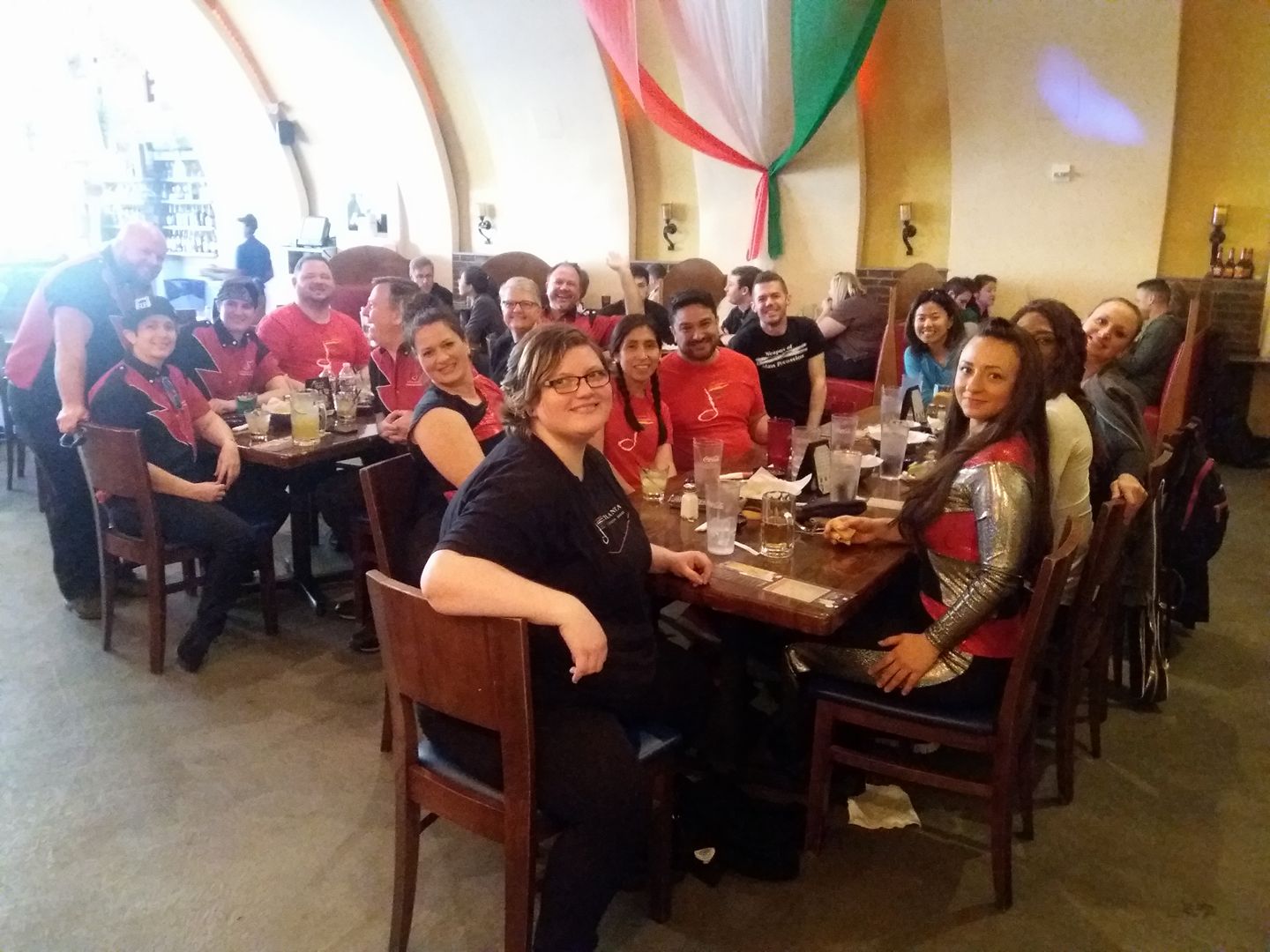
You make your plans, and God laughs. That’s what happened to me over the weekend. Let me go back, though, and start with discovering the Atlanta Freedom Bands, which I wrote about here in November 2014. I recollected how finding the band made me realize how much I had missed making music, marching in parades, performing in concerts. How after more than 30 years, finding the AFB was like discovering a new, yet long lost treasure. Last year, I marched my first season of parades in various Atlanta community festivals. It was wondrous. And at Christmas, I performed in my first concert playing French Horn in 35 years. Last Saturday morning, I marched mellophone with the AFB in the Atlanta St. Patrick’s Day parade. Afterwards, members of the band had lunch and drinks and fellowship at a local restaurant, which is the custom with this group.

Saturday night, kept waking up with what felt like a neck cramp. When I woke up early Sunday my speech was slurred, which I chalk up to needing a little more sleep, so I went back to bed. When I woke up again, I couldn’t blink my left eye. I ended up Sunday at the emergency room in Marietta. After they have ruled out a stroke, which was probably the best news I have ever received in my life, they told me I had a textbook case of Bell’s palsy. After a lot of googling I found out that it’s caused by virus, kind of like shingles. Likely because I had the flu, and that virus was in my system, it ended up attacking my facial nerve, causing it to be droopy and paralyzed. Like shingles, it was likely triggered by stress. In addition to facial paralysis–a word, like biopsy, fills me with terror–I have heightened ear sensitivity in my left ear, so loud noises, including my own sneezing, amplify like I’m standing in front of a Bose speaker. By all accounts, I will (should?) regain use of my facial muscles. Most well-wishers report success stories. It is totally unrelated to a stroke, and contracting it one time does not mean I will get it again. Those are the things I know. The worst part is that I can’t blink, so my eye gets dry and irritated. And that can lead to all kinds of trouble. I have to keep eye drops in it and wear a patch. Having only one eye affects depth perception and means I can’t drive. I can’t whistle or smile or buzz my lips. And buzzing one’s lips is essential to playing a horn.

Even though I realize I am very blessed in that this could’ve been so much worse, I’m still having to learn to deal with it. There are lots of adjustments I’m having to make pretty quickly. I’m learning how to have meals with straws and napkins. I’m learning how to turn my head in order to see better with an eyepatch. I’m learning to enunciate words using one side of my mouth. I’m learning how to encounter other people whose first response is to look away from me. I tried to go to the office yesterday, and by the end of the day I was exhausted from having to compensate physically in order to get from point A to point B, or participate in meetings. Talking and looking took a lot of energy that I had taken for granted. Part of the dealing with is going through my own stages of grief: denial, anger, bargaining, depression, and acceptance.

Sunday and Monday I was in denial. I jokingly made a list with Sarah of one eyed characters for costume parties. We go back and forth with one-eyed jokes. In case you didn’t know, there are many one-eyed one liners. Believing the doctors that taking the meds would speed up recovery by months, I thought, Well if I can’t play horn, I’ll just break out the old flute and play that! I tried for half an hour to form the embrasure to blow air across the mouthpiece.  I waited to blink at any minute. I planned to go to choir. Tuesday night begin my descent into anger. I kept a dinner engagement with some visitors to campus, old friends from my curriculum world. When I entered the restaurant, Marlows Tavern, which I had been to so many times over the past few years, the hostess looked at me and then looked away. Same thing happened when the waitress came to take my drink order. I realize now that I do the same thing automatically–probably most of us do.  The next day, I mentioned choir to Sarah, who slowly turned and looked at me and said, Honey, you’re not going to choir. When I looked back at her in one-eyed disbelief, she started singing a little bit of the Hallelujah Chorus, which we’ve been working on for a month. I thought my left ear would blow out. No, I wasn’t going to choir. When she dropped me at the office,  just walking from one building to the next took all my energy to keep my eye covered so it would not dry out. I had two meetings where it was very important that I be able to speak, and that was extra energy. My colleagues, wonderful people, tried very hard to look at me in a normal way–and for that I will forever be appreciative. Nevertheless, I feel different, I talk different, I look different. And that was psychological and emotional energy spent that I wasn’t used to spending.

I’ll let you know when I’ve moved from anger to bargaining. Till then, in order to work through some of that anger, in order that something generative and therapeutic might come from it, I decided to pick up the blog again. It’s always been my favorite, preferred mode of writing. Academic work is important, but it isn’t accessible, and it limits my flow of thinking since I have to measure my tone and phrasing as well as the thoughts themselves. Here, I can have a conversation, if only with myself. Plus, Sarah approves of it since it will help keep me out of trouble–like trying to do home-improvement projects with one eye that doesn’t need to get dust in it. Most important, this is all helping me put my life in perspective and put the parts of my life in priority. It isn’t an overnight revelation, but I realize that stress is counterproductive and can be harmful. I reaffirm that life is always already about the people in it. That being present and being mindful is living. I am intentionally choosing hope and happiness. Hope and happiness are not default properties, and being intentional about them makes a difference. As I think about it, coming to this place is a kind of bargaining. I will trade impatience for writing, frustration for processing, sight for insight.

Band friends at Sr. Patron’s
Mellophone


A mello-photo bomb