Gratitude, Anyway: A Christmas Message for Finding Happiness

Image of Little Debbie Christmas Tree Cakes, one standing and one cross section showing cake icing.

I got stuck while writing this post. I knew I wanted to write about being grateful for my life and everything and everybody in it. I knew I wanted to frame it around having gratitude when those blessings might be blurred by shiny objects, such as ambition and wanderlust. I had most of it completed, but I couldn’t decided how to wrap it up without it having a rosy, yet empty, ending. Not too much as seen from the front porch is rosy; there are cobwebs and dust on my front porch. Then I took a walk on a frosty December night and the ending found me.

Does this ever happen to you? You come up with a brilliant idea—something you think is groundbreaking—only to find someone else has already beaten you to it. I suspect it happens to most writers. A blog idea I thought would be perfect was already taken. I began exploring memoir writing, only to discover someone else has already captured the same experiences with the same folksy charm! I have thought of an ideas for a book, and as I begin doing research for it, there it is–already published by somebody else! Even academic journal articles I’ve envisioned writing often already exist, in forms eerily close to what I had in mind. And every time it happens, it stings. These aren’t rare occurrences—they’ve happened more than just once or twice in my life. Here’s one that happened today: A very fine post by Jim Wallis called “Singing the Lord’s Song in a Strange Land” discusses thoughts I’ve had as an Armchair Quarterback for years—even before the election. It’s title even sounds like something I would have thought of. It’s beautiful. You should read it. Dang it. Singing the Lord’s Song in a Strange Land.

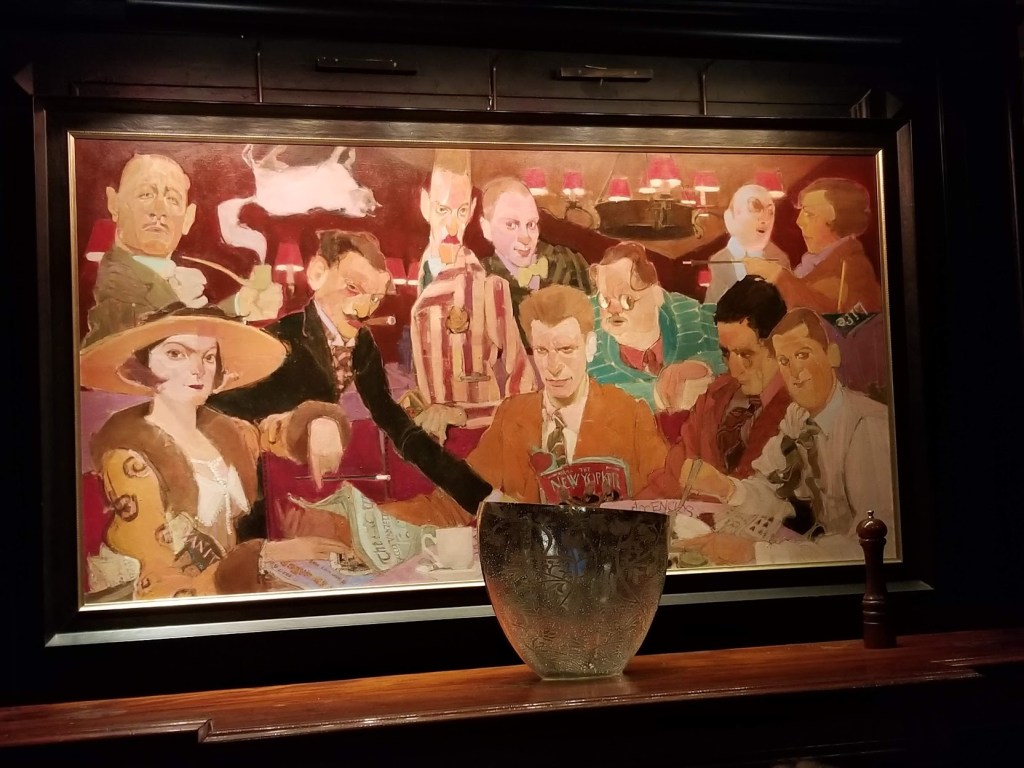
Image of painting of the Round Table at the Algonquin Hotel in New York City
The Round Table at the Algonquin Hotel

And then there’s the yearning. I can’t deny feeling a twinge of envy when I see friends and colleagues celebrating their achievements on Facebook. It’s a humbling reminder of my own aspirations and the work I still want to accomplish. A dear friend recently mentioned seeing several plays on a trip to New York City. She misses New York very deeply, and I’m happy that she makes regular visits; it does her soul good. Now, I’ve been fortunate to see my share of Broadway musicals—I even saw Bette Midler in Hello, Dolly!—an experience I still count as one of the best of my life. But life changes, as it always does, and I don’t have those same opportunities now. Sarah prefers camping with the dogs, and while I finally convinced her to upgrade tent to a pop-up camper, our adventures now involve hoisting Bruno the Bulldog up the steps to his bed.
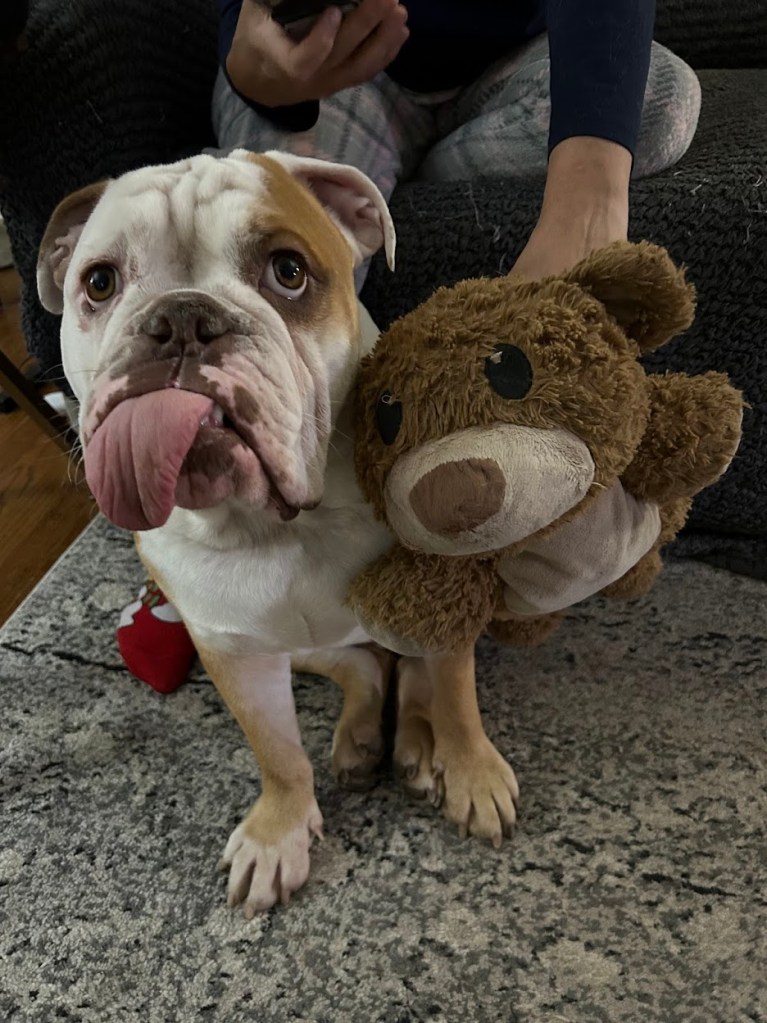
Image of English Bulldog and stuffed bear.
Bruno and Snugs Baby

I don’t want to be a globetrotter, and I don’t long for the lifestyle of the rich and famous. I admit, though, when I’m out in the woods at midnight with a flashlight, waiting for Bruno to finish his business, it can feel like a bit of a step down from the lights on Broadway. Travel, especially to historically rich locales, thrills me. I relish every minute of it. I soak up the salty air and sea breezes of beaches from New England to Miami. And yes, theater makes me breathless. Euphoria has its place, and I appreciate it when I have it.

But adventures are the in-between spaces. The wholeness of life, for me, is found in simple joys. The whole fabric of life takes place in Spartanburg, feeding the dogs and cats—and in Alabama at my childhood homeplace. Whether tending to dogs and cats or listening to the stories my mother tells about pictures and treasures we sort through-both of us aware of time pressing down upon us—these are the things I am fiercely grateful for.

I think back to how I grew up, a child of hardworking people in Alabama. My parents taught me to be proud of where I came from, to appreciate the simple joys of home and family. They have always begun and ended every prayer by giving thanks to God. Even now, my heart remains etched with gratitude that I learned from them. I look around and see a life I love—a cozy old house in a picturesque neighborhood, my quirky cars in the driveway, my family within a few hours’ drive, and my pets curled up with Sarah and me on the couch. I’m comfortable in my own skin, grateful for work that fulfills me, and thankful for the profound blessing of having stability in my life. I’m blessed not to face food or housing insecurity, unlike so many others on this earth. I do a quick check and confirm that the reason I blog in the first place is to find joy and fulfillment–which I do.

Here’s the thing I’ve noticed: life is full of moments like these. No matter what you achieve or experience, there will always be someone smarter, more accomplished, more traveled, or more adventurous. It’s easy to let envy creep in or to feel like I’ve missed out. But at this stage in my life, I’ve learned to lean into a different perspective: gratitude, anyway. Choosing gratitude is a practice, and I have to practice it. Being grateful is as simple as the adage: It’s not having what you want but wanting what you have. I didn’t say it was an easy practice.

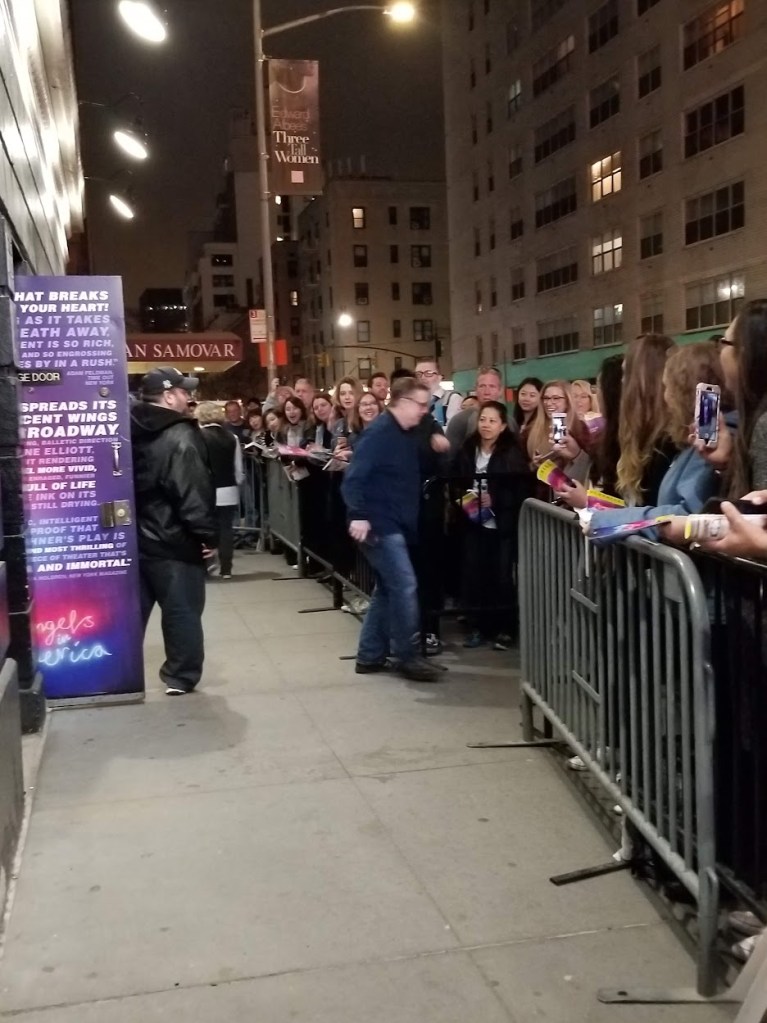
Image of actor Nathan Lane leaving Broadway theater after the play Angels in America
Nathan Lane Leaving Theater After Angels in America

Yes, I would really like an occasional New York weekend getaway. I’d love to see my name on the cover of a groundbreaking book or a memoir about a girl from a working-class family in the South–kind of like “The View from Rural Missouri by Jess Piper, which is a terrific collection by a Renaissance Woman from Missouri, at https://jesspiper.substack.com/. Dang it. But I also find happiness in where I am, not just in those imagined greener pastures. There’s a profound joy and relief in realizing that life isn’t a race or competition. I take satisfaction in setting my own goals and working toward them at my own pace—leaving room for reflection and leisure along the way. I will get where I get when I get there. I wonder why it has taken me so long to be at peace with this. I am grateful that I am.

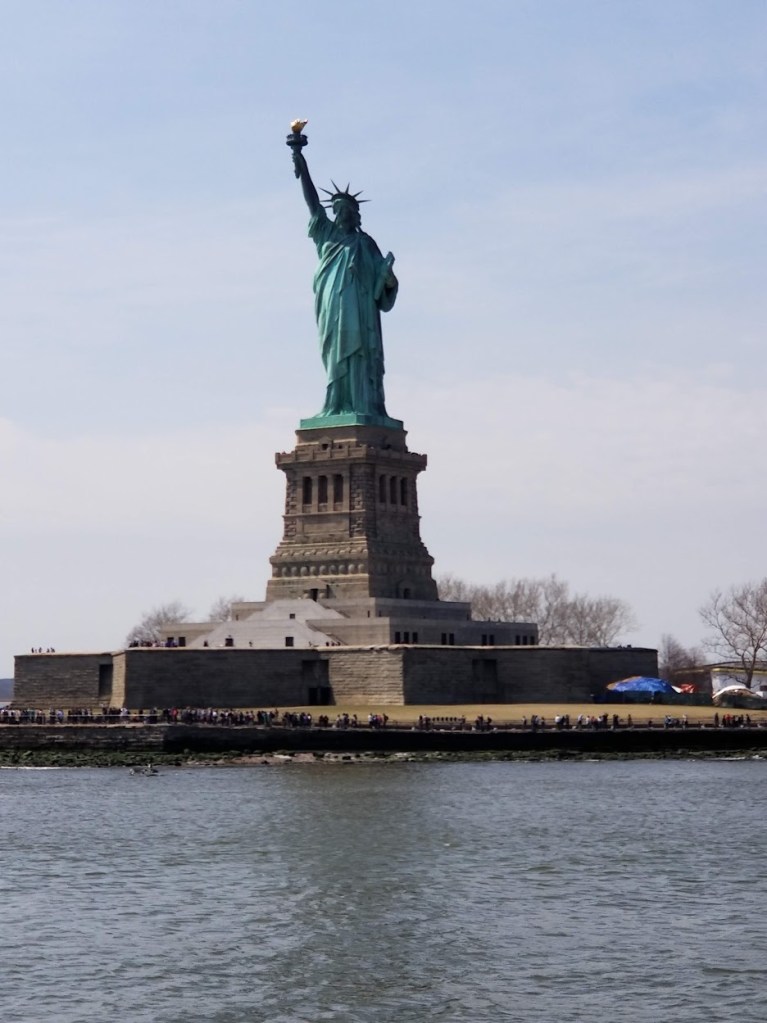
Image of the Statue of Liberty
Statue of Liberty

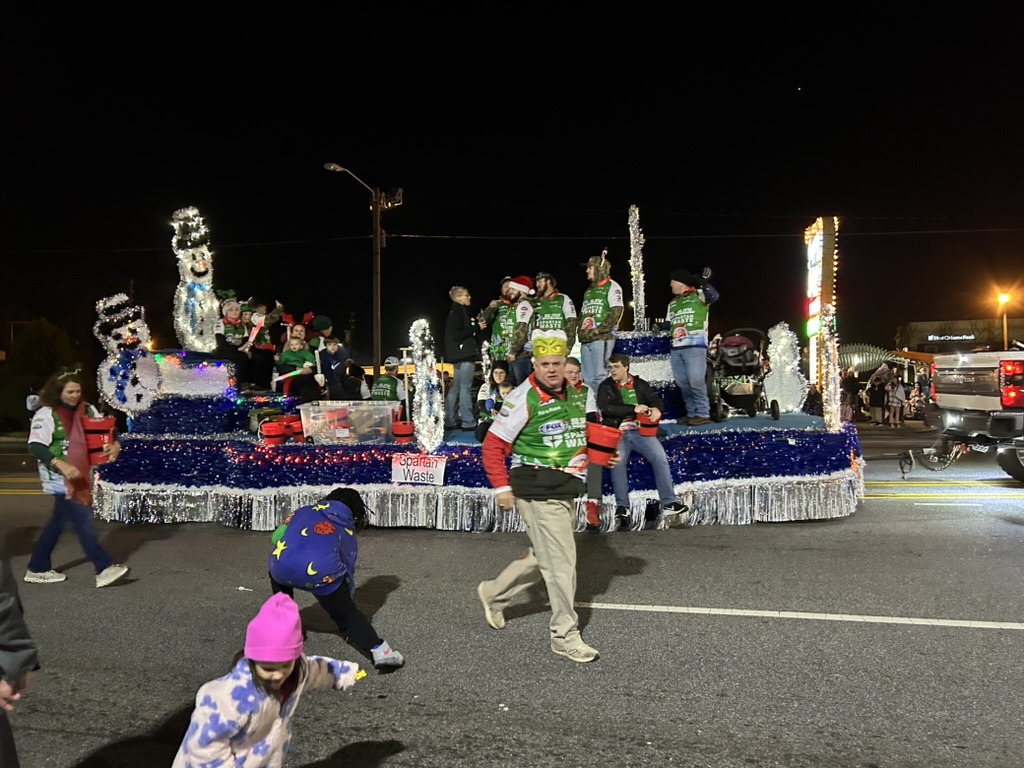
Here is where I had trouble sticking the ending. So I set it aside and went to the Spartanburg Christmas Parade. We live in a neighborhood that looks like Bedford Falls in It’s A Wonderful Life, and we can walk the two blocks to the parade route. We walked arm-in-arm to Main Street, got hot chocolate, and found a spot among the crowd to watch the parade. If you’ve ever been to a hometown Christmas parade, you know exactly what it was like. There were fire engines driven by Grinches, lights strung from cars and trucks and tractors, local beauty queens wearing Santa hats instead of tiaras, and marching bands. Oh, the marching bands. One of my most wonderful experiences was marching in my high school band. Memories of it fill me with happiness and exhilaration. As soon as I heard the drum cadence marking the band’s approach, I felt that feeling again. Then they began to play. It was at that moment the meaning of what I had been trying to capture in my writing became physically real to me. I began to cry as they marched by, joyful in the present and in jubilant memories. This, I knew, was gratitude.

Image of parade float and parade walkers in Spartanburg Christmas Parade.
Spartanburg Christmas Parade Float

While I’ve been struggling with disappointment at the parade passing me by, I just needed the reminder that parades don’t pass a person by—we experience them, marching right alongside. So, I’ll keep dreaming and working toward new goals, and I’ll keep finding happiness right here, in this moment. Gratitude, I understand, is not to be approached as “anyway.” Gratitude is an attitude–a mindset of unwavering, ongoing appreciation, regardless of the circumstance. Although I won’t always be successful, and although some days will be easier than others, I choose Gratitude, always.

Image of Spartanburg School for the Deaf and Blind Bus in Spartanburg Christmas Parade
Spartanburg School for the Deaf and Blind Bus in Spartanburg Christmas Parade
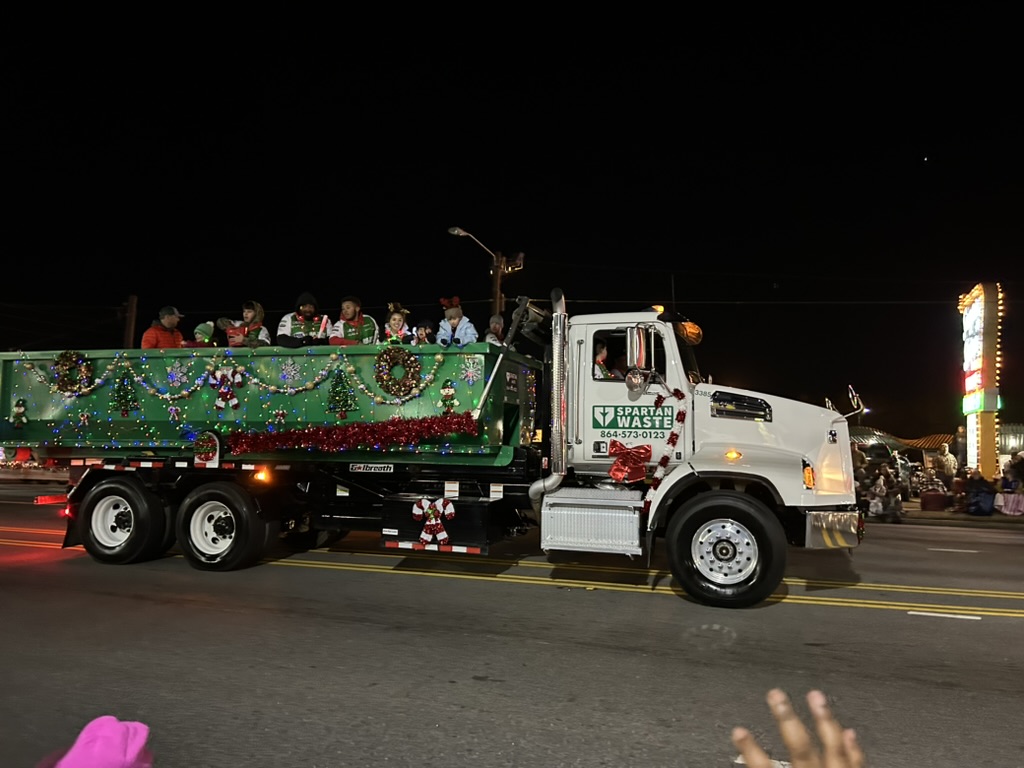
Image of Spartanburg Waste Truck in Christmas Parade
Spartanburg Waste Co. Truck in Christmas Parade

My Friend Duncan: The Scottish Terrier Who Won My Heart and Changed My Life

Image of Scottish Terrier Puppy sitting among potted plants

I still look for Duncan when I move from one room to another. I hear the little “click, click, click” of his toenails as he toddles across the wood floor. I think of him every time the leaves fall, expecting him to chase the light that dances between the shadows. I keep his little blue plaid collar with a spiffy bowtie on my dresser. I call our new dog–and sometimes call my son Daniel–“Duncan” when I’m in a hurry. I miss him.

Image of Scottish Terrier standing on two legs looking out the window. Also pictures are potted plant and distressed dining chair.
Duncan standing on two legs looking out the window

I got Duncan for company and road trips, having been without a dog in the house for a few years. I had owned terriers before, but never a Scottish Terrier. While he was typical of the terrier breed, he was a Scottie, which gave him unique attributes, like not wanting his feet touched. He would yip and howl in holy terror at nail clipping time. He was a detached little fellow who did not need to be in my lap. In fact, I think he preferred to lie quietly at my feet. I discovered his staunch independence the day I brought him home. He was 10 weeks old, and I took him outside to the big front yard to start working on toilet training. I am used to puppies who want to be right with you–underfoot. Scottish Terriers have old people personalities even as puppies. I looked away from him for a minute to speak to a neighbor, and when I turned around, he was gone.

I looked all over for him–up and down the street, all sides of the house, under the porch, under the car. By this time my neighbor, who had returned to her porch, could see I was getting frantic. I yelled across our yards, “I just got him, and now he’s gone!” My neighbor had four kids, who all had friends, and who were all out in her driveway on bikes. She gave them marching orders: “Get on your bikes and look for the puppy.” And off they peddled, circling the block. It reminded me of communities coming together in movies, you know, like you don’t often see in real life. None of them had Duncan with them when they came back together.

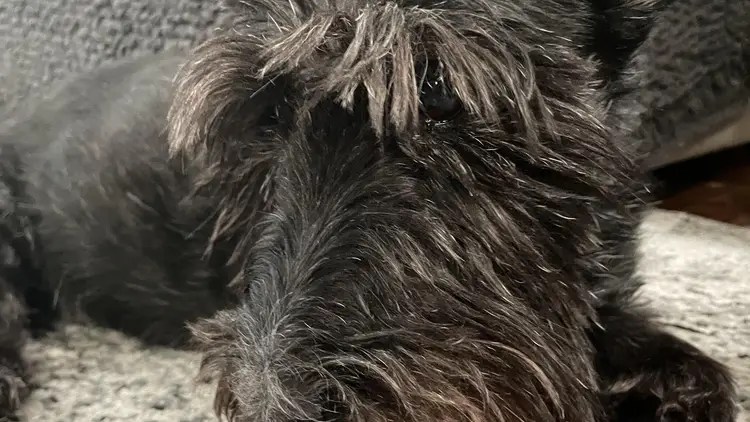
Image of a senior aged Scottish Terrier
My old man

It was then the next-door neighbor on the other side yelled to me from his back porch. “I see something little and dark. Is that him?” To this day, I don’t know how he had seen Duncan. I trudged to the pine tree he was pointing at in the far back of my wooded, sloped lot. There, under the tree in a patch of knee-high weeds sat Duncan. He was calm and stoic looking, peering through the fence toward the woods like Ferdinand the Bull in the story. This was the first of his sojourns, each one scaring me worse than the ones before.

When he was a young dog, he could escape from the average fence by burrowing under it. Terriers–from the French word “terre,” which means earth–were bred to “go to ground.” His favorite escape was to the woods to sniff for critters. Once, he cornered an especially slow squirrel and did not know what to do with it; fortunately for everyone but the squirrel, it died sitting there before Duncan could acquire the taste for blood. Usually, he headed off in the same direction–toward the woods–and the same neighbor would report a sighting after Sarah and I had been driving around the neighborhood for half an hour.

Image of Scottish Terrier next to a laptop computer
Duncan at work

One Sunday we came home from church to discover that not only had one of the kids left the gate open, but I had rushed out of the house (typical Sunday) without remembering to bring Duncan inside from his morning potty. Animal control had left a yellow note on the front door telling us when and where to come to bail him out. The one crabby neighbor in the neighborhood had called them. She had been afraid of a Scottish Terrier who was sniffing the ground and heading away from her house. We rushed to the pound, where one of the volunteers brought him out, jauntily jogging and smiling as he met us. The volunteer was happy with him, but not with us. She frowned as she took the opportunity to chastise us and issue warnings about consequences if it happened again. It didn’t. After that escape, we reinforced the bottom of the chain link fence with chicken wire, which I’m sure did not increase our property value.

He lived longer than the typical 10-year lifespan of a Scottie. One day I suddenly realized he was approaching 13, and I knew then he was living on borrowed time. He was noticeably slowing down, asking to be pulled in the wagon as we explored local trails. I had never been able to train myself to be a good leash walker (note how I said train me, not him). Duncan tugged and ran ahead until he found the perfect patch of ground, where he would have sniffed every blade of grass if I had let him. I couldn’t take him on brisk walks with cardio benefits because he would take three steps, stop to sniff, repeat. Now that he was a senior, we went on short walks with fewer stops and tugs. He reverted to peeing in the house on corners of the furniture when he got up for his nightly midnight drink. We began to crate him at night.

In the spring of his thirteenth year, he started throwing up. He was still eating and drinking, behaviors that I knew usually slowed and stopped at the end of life. I did not think we were there yet. The vet gave us a prescription for pancreatitis and told us to bring him back in a couple of weeks if the vomiting continued. After a few days, it got better…until it started again. The first night he threw up in his crate, we held our breath hoping it was a fluke. The second night we planned to take him to the vet for a re-check on the pancreatitis. Our wonderful vet gave us the dreadful news. “The pancreatitis is fine,” he said. “It’s these lumps I’m worried about. Let’s get him a scan.” The results showed golf ball-sized tumors in his abdomen. That was the first time I cried at the vet’s office.

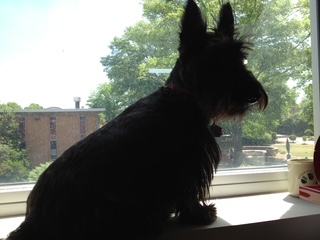
Image of Scottish Terrier sitting on window ledge looking outside at a tree and building
Duncan on guard

Being the thoughtful person that she is, and to bring me out of my sadness to focus on what was really important during all of this, Sarah began to plan Duncan’s “bucket list.” At first, I just went along. But then I started to understand; it was really our bucket list–mine and his, together. We loaded up the little red wagon we had bought to cart the old man around and went camping. It makes me happy to think of him sitting in the middle of the campsite in that little wagon. We hit the trails and took road trips. He got a pup cup from the local ice cream shop. The only item on the list we did not get to was taking a trip to Alabama so that my folks could see him again. My sweet mother proudly reminds me that it was she who house trained Duncan when he stayed with them for a couple of weeks. She misses him, too.

The end came soon after. In three weeks, his belly was hard and swollen, and he began panting through the night. He was dying. I held him in my arms as we went into the veterinary room, held him when the kind vet administered the first shot, the one that sent him into a deep, peaceful sleep. But I could not bear the final shot. When I broke down and collapsed in the chair, Sarah petted and soothed him for the last time. It is the hardest thing I have ever done, and it broke me. I am crying now as I remember, and it is only now, months after, that I can bear to write about it. I still cannot look at the rosewood box with his ashes; Sarah has put it away for now.

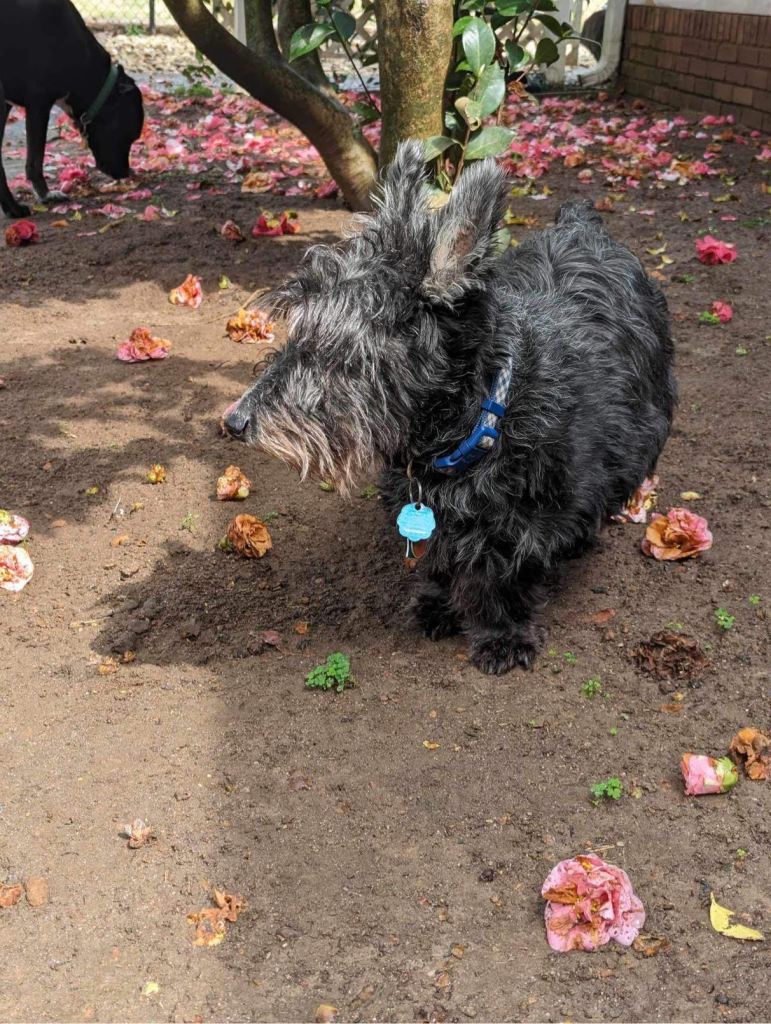
Image of Scottish Terrier under gardinia bush with gardinia flowers. Also pictured is a lab mix black dog.
Duncan under the gardinias

I don’t use the word “pet” when I can help it now. I don’t use the language of ownership anymore. I have done so here to reflect the lessons learned from my Duncan. He was my friend. A stalwart sentry, he was a proud dog who carried himself with dignity. Even during his last months, he never slouched or walked with his head down. Each step was deliberate and graceful, almost tiptoeing. He had the presence of a little gentleman. Duncan was lovingly stubborn until the end, tilting his head and gently pulling on his leash if he was not yet ready to continue our stroll. When he was groomed in that standard “show dog” cut, his brindle patterns were tiger-colored, swirling around on his back and neck like a chocolate and caramel brownie. He was magnificent.

Duncan has helped me navigate the passing of time, which is the gift from him I appreciate most. Life is short; if you want to see how short, reflect on the lifespan of a beloved furry companion. I grieved his death more deeply than I ever have before, with my immediate family still living. I am forced to prepare for inevitable loss of parents and the sad yearning of looking into the void where they once were. I picture Duncan looking at me and tilting his head, like when he was listening to me. “Yes, it’s indescribably hard,” he seems to think. “Just keep your nose down and keep tracking.” On days I work from home, I look at the sunbeams on the rug and think about how he used to sit and stare at the beams, expecting to catch one at any minute, his whole body alert and quivering, his tail wagging in anticipation. And after all, that’s life, isn’t it? Head down, keep tracking, and always look for that sunbeam you’re about to catch. Thank you, friend.

Image of Scottish Terrier named Duncan in a pond. His tongue is out as though he is smiling.
Duncan in a pond

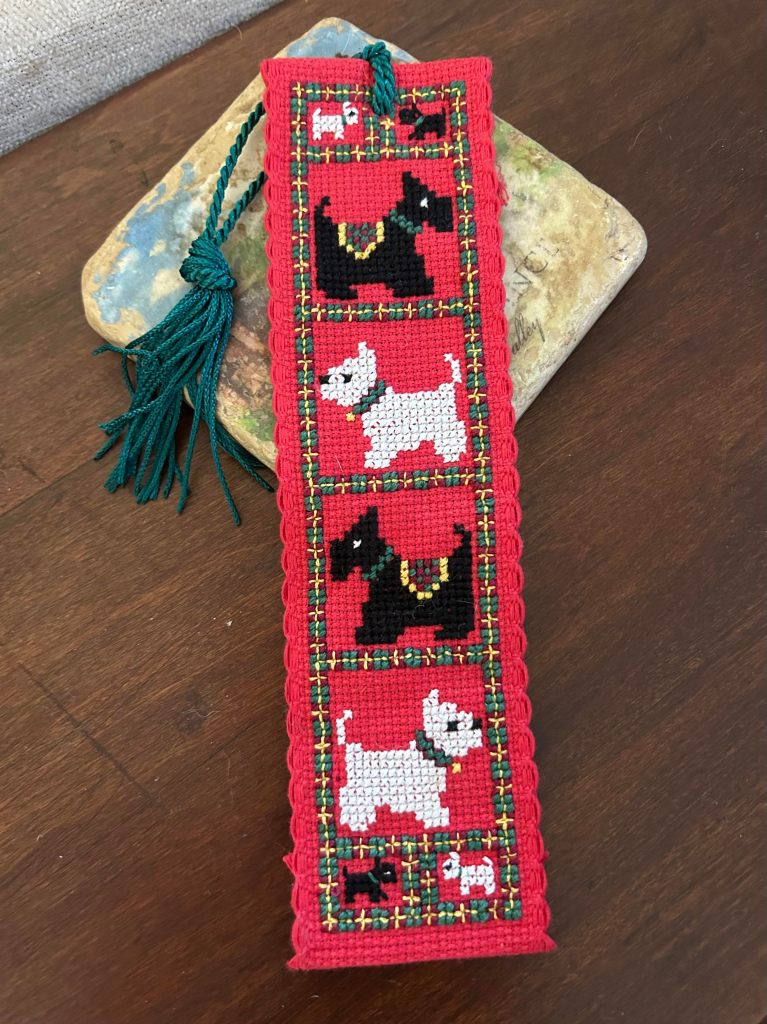
A final note, throughout the essay, I have referred to “we,” plural. In reality, Sarah provided Duncan’s end-of-life care and doctor visits. Reading this, she jokes about the so-called loyalty of Scotties, since when she entered my life, he adopted her as his person. He sat in her lap and asked for pets the day he met her–and continued to do so for the next 10 years. She reminds me that Duncan was in fact affectionate with her, if not so much with me. She was the only human whom he would allow to touch his feet. She made me the lovely Scottie bookmark in the picture, and I thank her for caring for us both.

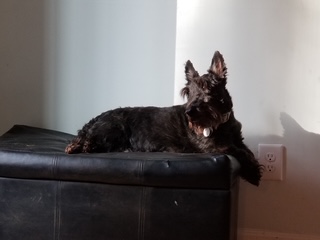
Image of Scottish Terrier named Duncan reclining regally on a settee
Duncan looking regal and thoughtful
Image of Ugena Whitlock holding Scottish Terrier Duncan while on vacation.
Duncan and Me
Image of red bookmark with green tassle that shows two large Scottish Terriers, two large white Scottish Terriers, two small black Scottish Terriers, and two small white Scottish Terriers.
Beautiful intricate Scottish Terrier bookmark by Sarah

The Old Man and the Coon, or, Tales of Daddy and Popeye

I am not a phone talker. Nobody in my family is, but it occurred to me today that I had not spoken to my parents in a while. So I called them. Daddy is 83, and Mother is 80. My son Daniel lives with them and they all take care of one another. Mother and Daniel have an English Bulldog named Boo Baby, and Daddy has an 18 year-old Rat Terrier named Popeye. In dog years, he’s older than Daddy. Now, when the phone rings at the house, Mother picks up the downstairs phone, and Daddy picks up the extension in his room simultaneously. He waits his turn patiently for me and Mother to catch up, and then he will say something like, “Well, I’m still here.” That’s Mom’s cue to turn me over to him. So, I went through my topics–work, weather, how I’m doing, more weather, and the proper name of Grandpa’s Whiskers (it’s Cleome). Then it was time to talk to Daddy.

He eventually asked, “Did I tell you about Popeye nearly getting hit by a car the other day?” I said no, what happened? Popeye is deaf and blind and has already been hit by a car once in his life when he was much younger. They keep him in a pen outside with a box fan beneath a beach umbrella continuously running to keep him cool in the Alabama heat. Daddy lets him out in the yard when he goes outside, and that day he followed Daddy to the mailbox. While Daddy got the mail, Popeye stopped in the middle of the road to wait on him. A car came speeding around the curve–Daddy is very attuned to traffic these days–and Popeye didn’t move. My father then steps out into the road and attempts to slow the oncoming car, which did not stop but veered into the other lane, barely missing Daddy and Popeye.

This is Daddy’s story about the Raccoon, which he and everybody else in my family calls a coon (I come from a family of coon hunters.). Here’s how he told it.

Last night, me and Pop went out to close up the barn. He went down the back of the barn and started barking. I thought ‘uh-oh’ he’s treed something. And I looked up and there was a big ol’ coon hanging from the rafter by his hind legs reaching down towards Popeye! I thought that if he got him, he’d tear Popeye up. So I said, c’mon Pop, let’s go get the shotgun. I come in the house and got the shotgun and told Daniel and your Mama that I reckon I was gonna have to kill that coon. Popeye had come up to the gate by the house, and he was ready for me and him to go back and get the coon. So we went out there, and there was the coon, but when he saw us, he slipped out the back of the barn. So I said alright Pop, let’s go back in the house. Now, can you imagine an old man and old dog out in the dark at the barn with a shotgun gonna shoot a coon?

I told him that I wondered about that but decided just to let him tell it. He got a chuckle out of that. My dad is very proud of me, especially of me getting a Ph.D. He kids me about how far I’ve come from Littleville, Alabama, and has modified my nickname of “Miss Bean” to be more formally “Dr. Miss Bean.” As we were hanging up (Whitlocks do NOT stay on the phone), he said, “You need to write a book about that. Only thing, nobody would know what you were talking about.” I bet I could tell it so they would, I thought to myself. So, that’s what I did. Before I moved away from Alabama for the first time, Daddy gave me some advice my great-grandmother gave her son as he went off to war: “Don’t forget who you are.” That was it. Daddy knew that I knew what it meant. Who I am is of that place. I come from a patch of land in Littleville where my dad and his little dog put up the chickens every night and my mom and my son work their little flower garden and fill 10 hummingbird feeders every day. Where we will have barbeque and fried catfish from Swamp Johns and homemade ice cream when I go to visit. Daddy, I haven’t forgotten.

For Bob

Robert Daniel Hyde, April 11, 1960-March 14, 2023, Russellville High School Class of 1979

My children’s dad died yesterday. My ex-husband. I did not expect to feel these feelings.

I had not seen Robert–the more distant, formal name I called him after I left–since one Sunday 10 years ago when he pulled into my parents’ driveway and asked me to come outside. He wanted to make amends, apologizing for not being a good husband for all those years. I thanked him and told him it was a long time ago. I didn’t hear from him very often–didn’t think of him very often. He chose a different path, and part of me envies him for giving up trappings that didn’t mean anything to him so that he could move home. He and his mother took care of each other until she died. He loved his kids, and if they wanted to come see him, they could. But he was clear that his life was his own–take it or leave it. When they would see him, they did not describe their visits to me. So, I don’t know much about Robert’s life outside of that. I do not know yet how he died–whether he was alone at home or in a hospital. I know he was sick for a long time.

We were together for almost 20 years, married for the last 16 years of them. I have spent many years and a lot of therapy struggling with the feeling of being robbed of those years of my life by him–my youth, my college years, the promise of finding out all I could be. We were toxic as a couple; whatever the chemistry, the result was that he became more and more controlling, while I became more and more codependent. I was miserable, and no doubt he was, too. We got to that point that is the death knell of relationships. We didn’t fight because we were exhausted and didn’t care any more enough to fight. So we were done, and I remember the day in 2014 when I had been without him longer than we had been together. Today, I have been processing the complex feelings of sadness and–yes–loss I am feeling. I am sad for my children, of course, but was unprepared for how I felt for myself.

I doubt he will have a funeral, or a viewing, as we still have in the South. I don’t think he would want one. Truthfully, I don’t know who would go. My kids, his siblings, my parents, maybe someone from their church, and some Russellville people who remembered him from school. I don’t see his obituary in the local paper. And, since I got the news, I have had “Close to You” playing in a loop in my head.

“Close to You,” by the Carpenters brings back one of my earliest and fondest memories of Bob. It would have been around 1978, and we were both in the high school choir, the RHS Singers. I picture him with the other guys doing the dance routine, wearing those striped rayon shirts and white boater hats. I never hear the song without that memory, and it is nice. I think I loved him first and most because he was a good boy–not a good old boy, but a good boy, as we say in the South. One who loved his mama and grandmama and wasn’t always up to meanness. He wanted to be Band Captain, and he loved the RHS Marching 100. That’s the way I want to remember Bob–young, handsome, with a boyish face and easy smile. It’s funny the things I remember, like the shape of his feet and the way he looked when he played the trumpet.

Close To You, The Carpenters https://youtu.be/iFx-5PGLgb4

Bob was a husband and father, son and brother, grandson, descendent of the first governor of Tennessee–and a Bama fan. I am glad that he lived, and for me, the world is emptier tonight. We shared children and nearly 50 years of history together. As time goes on, there are fewer and fewer people you can say that about. I feel like the part of me that shared those years is gone, too. And that is why I am writing this. I wanted to remember, wanted, needed, to give myself the time and place to summon memories–snapshots of Bob, happy and endearing. Not only that, it is also important to me that he is remembered. I want him to be mourned. He will be by his family, but that is not what I mean. This night, it is important to me that in this vast universe, a man is remembered–that he lived–and marched and sang and played and laughed–that he was. Rest in peace, Bob.

My Long, Strange Curriculum Journey

Note: The following essay was submitted in draft form for a collection to which I was invited to contribute called “Letters to the Field” (of curriculum studies). The call was in 2021, and the theme of the book was to be reflections on the dumpster fire that was the year 2020. Each piece was to be handwritten in the author’s preferred style and format. The book may be in production. If so, here’s what my entry will be. If not, here’s what it would have been. Enjoy.

Hello, Field.

I hope you are well. As I write, we are mid-way through 2021, which seems incredible. Time has been “out of joint” since March 2020. I sat in my office and watch seasons pass; each time I stepped outside, I was stepping into a different season. It was nearly a year and a half before I traveled to see my family, and I still have not seen my grandchildren. How did I fare? Well, I’m introverted, so for a long while, the virtual/remote situation was ideal. Like most everyone, I enjoyed pajama Zooms and working at my own pace. After 15 months, I found myself searching for webinars to join during the day, just to feel plugged in professionally. This was most unusual for me. And you? I noticed several calls for works about Covid and race in the U.S. I see that your various conferences made valiant virtual attempts as did others. I suppose, then, it was not an ideal situation for most of us.

Truthfully, I was a spectator to the last two years. Being at home made it easy to self-isolate. And I did not write a word about either pandemic–Covid 19 or Black Lives. I’ve thought about why not. During 2020 I was finishing a Master of Divinity degree from seminary. From March 2020 to March 2021, I followed nothing but Covid until I got my vaccines. I tracked the death toll. In late spring and summer, I watched cities burn as we paid a collective price for the sin of racism. It was also an election year–after 4 years of having Donald J. Trump as the U.S. president. I watched as a dispicable, weak, narcissistic emperor with no clothes attempted a coup–aided and abetted by dispicable, weak, narcissistic congressional and state legislative sycophants.On January 6, I watched, jaw dropped, the coup attempt unfold, when the U.S. Capitol was stormed on live tv as Congress was about to certify the election results anyway. I was weary and suffering from media overload. I tuned in and cried on an Inauguration Day, which was blessedly uneventful.

I cried two other times in 2020. Both took place the first weekend I visited my parents in over a year. We were sitting around having coffee when my daddy–dismissing Mother’s cautioning against it–brought up politics. It’s important to him that we find common ground in his conservative worldview. “The US isn’t a democracy any more. We’re somewhere in the middle of Socialism and Communism.” Now, I’m not going to unpack any of that or sort out the concepts. I replied as long as we have free elections, we have something of a Republic still. Then my mom drove home the point. She said the election was rigged. That was it. I had a meltdown, which I won’t describe, other than to say I began to cry. The conversation, thankfully, ended. Daddy moved on.

The following day, Sunday, I was moved to tears again; however, the context and feeling were entirely different. My parent’s church, the one I grew up in, was still distancing for Covid. A handful went inside the building, yet there was still a “drive-in” option in the parking lot. The Elders had purchased a transmitter, and people were directed to tune their radios to 92.5, where they could hear the service. The rest of my family worshipped inside, but I, now feeling like a full-fledged outsider, changed my dial. Daddy gave the welcome and announcement, and I smiled as his voice came from my car’s speakers. Then the congregation turned in their hymnals to the opening song. Then the old, familiar hymns began, songs for which I did not need a song book. I knew all the verses of all the songs. Then the contentment and peace that comes from losing oneself in music came over me. I didn’t care how I might have looked to those driving in or driving by.

I am sure you’ve received plenty of letters i that are emphatic about our field never having been as relevant and necessary (!) as it is now. We are poised, they will say, to address the contexts of the Age of Pandemics. I know this because at every crisis point since Curriculum Theory has existed, we have made those proclamations. And we are not wrong. Yet, here we are again. So, Field, what are your intentions? I’m reading over my stories above, and have a “more things change more they stay the same” moment. In the years that I’ve worked as an administrator and stepped back from curriculum theory writing, convictions of white Southerners (whites everywhere?) have deepened. As time has passed, the difference is that now they are sanctioned by politicians who court them as their voting base. The implications of radical conservative politics ranges promoting the Big Lie of voter fraud to the All Lives Matter refrain to righteous, nationalistic indignation at being directed to wear a mask to prevent the spread of a highly contaigous and deadly disease. This week, parents are protesting our local school district because a white school board member sent them a video link that features a video with the “real truth” about masks: they don’t work (and neither does the vaccine). The danger, then, of curriculum studies of Southern place is more discernable for me. But so is the necessity of doing it.

Don’t I have anything positive to contribute in terms of being central to the present moment? Same old, same old, I guess. I will continue going to the conferences and publishing in the journals. After all, we have to put our work somewhere. At those conferences, we will continue to look for ways to put our theorizing into activism. I suspect we will write very sternly worded letters and post them on our websites. We will do what we can to advance the field so that there is a place to post the letters. Mostly, we will tell ourselves that ours is the New Fresh Next Voice that will change the world and make it more equitable and inclusive. Why so negative, you ask. I suppose it’s because we’ve been telling ourselves this for all these years. Truth is, I stepped back for 6 years in part because I could not see that I was making any difference with you, dear Field. The biggest difference has been in me. I am changed from the writing and from the politics and social untethering. I am changed by COVID-19. Administration has changed me and so has studying for the ministry. I’m older, more seasoned, and yes, resigned to the way the world keeps turning.

Writing curriculum theory is not so unlike studying for ministry in that both look for ways to connect with the human spirit in a world that cares very little for the spirit. So in the end, the real question for me is not whether there is a place for my curriculum theory at your table but rather for your table in my curriculum theory. Really, it’s not me it’s you.

And that, in the end, is what my divine nudger whispers to me.

Yours(?)

Ugena

Without a Country. Why isn’t this obvious?

In 1973, Cliff Robertson starred in an ABC Movie of the Week production of Edward Everett Hale’s story, “The Man Without a Country.” In it, an American officer is being court martialed for consorting with Aaron Burr. He wanted to make a point about the disunity of the new country and so blurted out, “Damn the United States! I wish I may never hear of the United States again!” The judge took him at his word, and in a rather pissy move, sentenced Philip Nolan to spend the rest of his life sailing the seas on American warships without ever setting foot on or hearing any news about the U.S. again. It’s one of my favorite stories (and made for tv movies!). I have thought about it a lot over the last few weeks. I think–even though I get the point Nolan was making (kind of like Rev. Jeremiah Wright’s in 2007, see https://abcnews.go.com/Blotter/DemocraticDebate/story?id=4443788&page=1), my wistful call would be, “Bless the United States! I sure would like to live in ‘United’ States again.”

I took a break from blogging regularly over the last four years to go to seminary. In fact, the election of 2016 was a big reason I decided to go to seminary. I had a low, sick feeling more and more people would be hurting, and I wanted to be able to offer spiritual care. If you want to say I had a call, that was it. And that was before Covid-19, kids in cages, Russia and Ukraine, Charlottesville, Black Lives Matter, George Floyd, corporate deregulations, revocation of environmental protections, withdrawals from the Iran Deal and Paris Climate Agreement, Jeff Sessions, William Barr, Brett Kavanaugh, insurrection, embracing of dictators, Kenosha, Cruz & Hawley, QAnon, Seattle, Jeffrey Epstein, Harvey Weinstein, The Big Lie, The Year 2020–and more that I could name, like these, off the top of my head. And oh yeah, did I mention Covid-19?

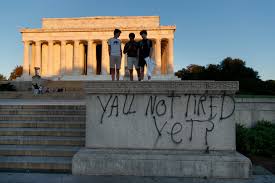
It is not hard to see, as all major news outlets and commentators are reporting, how every day of the last four years led directly to here. Radical insurrectionists planned for months to descend upon Washington, D.C. to be directed by the President of the United States to storm the U.S. Capital while Congress was in session. The President and members of Congress–bolstered by Republican led state legislatures–actually expected and attempted to overturn legally certified (by Republican legislatures) election results. Both Democrat Congresspersons and Republicans who voted to approve the Electoral College results–including the Vice President of the United States–are afraid they will be hurt or killed. By their congressional colleagues and their supporters. Some members have been attacked in airports; others are switching up their daily routines to throw would be attackers off. Representative Alexandria Ocasio-Cortez posted on Instagram she was afraid her colleagues would help the insurrectionists kill her. Let that sink in. https://www.nbcnews.com/video/alexandria-ocasio-cortez-tells-instagram-i-thought-i-was-going-to-die-during-capitol-riot-99380293747

(Not a Civil War era picture)

I am still trying to form coherent thoughts about our United States at the end of a four-year dumpster fire. I am trying to see, as I have begun to do since seminary, where God is in all of it. Here is a ramdom list of (what I think are) relevant thoughts on the country on the eve of Joe Biden’s inauguration. Really random.

  • For about one day I was able to feel a lightness of spirit as Georgia, the state I live in now, replaced two Republican senators with two Democrats, one, the first Black Georgia Senator ever. That was on January 5.
  • Black people and white people do not live in the same country. Where White people are angry, fearful, frustrated, and shocked at the events over the last four years, Black people are shaking their heads saying, “We tried to tell y’all.” This is how it feels. As activist Kimberly Jones said, “Be glad Black people aren’t seeking revenge” (https://www.youtube.com/watch?reload=9&v=YPfeg6E52nA). To reiterate: Black people AREN’T seeking revenge.
  • Related: White people, People of Color are going to outnumber us in a couple of decades–in our lifetime. Start living now like that is a fact.
  • Related: If you are worried about a “way of life,” or “American values,” or “The American Way” going away, you are resisting the above fact.
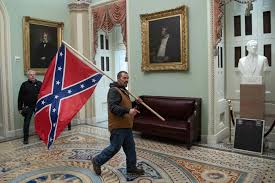
  • A Confederate flag was paraded through the United States Capital on January 6, 2020. Even Robert E. Lee was not able to do this.
  • Related: A gallows with an expert looking noose was set up on Capital grounds on the same day.
Gallows & Noose, U.S. Capital
  • It is looking more and more like the insurrectionists were led on recon tours by Congresspersons and Congressional Staff.
  • The President is not The Godfather. He cannot call up and strong arm Secretaries of State or State Legislators to find votes that simply were not there. Everybody knew, including him, that they were not there. He and the radicals just wished they were.
  • Concealed Carry is not a good idea. I don’t see how anybody could say it was ever a good idea. People voted for it anyway. Same with Campus Carry. Nineteen year olds with weapons. Again, who thinks that is a good idea?
  • Related: Nobody is coming for your (hunting, social, skeet, toy, cigarette lighter, BB) guns.
  • The President is using Christians. Christians please realize this.
  • Hillary Clinton’s statement about “The Deplorables,” taken out of context, helped lose her the election. Donald Trump looked at his supporters and called them low class. Please be insulted by that, too.
  • I knew the day Tommy Tuberville announced he was running for U.S. Senate he would be elected by the good people of Alabama. Even Alabama Fans (Roll Tide!) voted for the former Auburn football coach.
  • Coach Senator Tuberville stated the three Constitutionally established branches of government are the House, the Senate, and the Executive. They aren’t. (Legislative, Executive, Judicial). If there are tests to become teachers, lawyers, accountants, doctors, airplane pilots, and drivers, we might think about having one for members of Congress. It wouldn’t have to be that hard.
  • Between Tuberville, Congressman Mo Brooks, and Jeff Sessions, Alabama has done enough for the country for awhile.
  • There did not have to be 400,000 deaths from Covid-19 in the U.S.
  • Related: There are places in this country where if your last chance to live is in an ambulance. If you can’t be revived there, you die. ERs are full.
  • Science and God are not at odds with one another. Science and religion are.
  • “My individual rights and my Freedom of Religion” should not be used as excuses or weapons for not doing what you want. See above about Christians being used.
  • Radical Far-Right Extremism is the biggest threat to this country right now. They were hiding and secretive about their destruction until Donald Trump validated their voice and they came out into the open.
  • Far-Right Extremism is White Supremacy is Far-Right Extremism.
  • Read the above again.
  • Fear of liberals and Democrats and Republicans and progressives is irrational. Fear of extremists is not. Decent people can become radicalized to not see this.
  • Related: I have written before that MAGA people are angry. Maybe not all of them are, but some are, and they are also strategic.
They were there too.
  • Those Senators and Congressmen must really love their jobs (power, privilege, status) if they are willing to make excuses for Donald Trump and not get rid of him when they had the chance. I don’t know how it is a question as to whether to vote to ban him from running for office again.
  • Related: If they don’t vote to ban Donald Trump for running for office again, NONE OF THEM will have a chance at a 2024 presidential run.
  • Related: Donald Trump is far from finished in his influence over conservative Americans.
  • It only took 4 years for near-total devastation of capitalist-based democracy to almost colapse on January 6. Some Republicans condescendingly said asked after the November election, “What can it hurt to humor the President for these last few weeks?” See January 6. Now you know.
Indellible image of insurrectionists storming the Capital on January 6, 2021

That’s enough for now. I’ll be back with more. Looking over my list, I realize my hunch in 2016 was right. People are hurting–and are hurting each other. I believe that love is the answer. That we scoff at that thought as empty, powerless, and trite, is part of the problem. It says a lot about how so very necessary love is. More on this later.

Who remembers the ABC Movie of the Week?

Ok, how about now?

Thought so!

White People, What Are We Thinking?

It’s time for white people to check our thinking. Right now.

What are we thinking? I don’t mean, as in, What are we THINKING?? No, I mean, as in, what are we as white people actually thinking right now as the U.S. moves into week two of protests and month three of social distancing? What are we thinking about race, the president, Covid-19, about anything?

As a teacher, I often found that my white college students, who were studying to become teachers in public schools, were uncomfortable talking about race. They did not want to say the “wrong” thing and get called out or challenged. That’s the trade off, though, for talking openly and honestly about race. We get to talk, but we will get things wrong, and we might–will no doubt–have that pointed out. Dont worry, this is a judgement free zone–the point is to think about what we are thinking.

Here is an important point: we must think about what we are thinking so that we can know who we are, and what we support or oppose. To start with, I have a lot of faith in people. I give us credit for generally wanting to do the right thing, to get along with each other, to help each other, and to be able to see injustice and be offended by it.

So I’m going to throw some random thoughts that some of us may or may not be having these days, as we watch FOX or CNN or MSNBC, or even Lifetime. I’m wondering if we’re thinking some of the same things.

  • Covid-19 is easing up, so we can go out to eat. Or to church. Or to a ballgame.
  • Football should start on time in the fall. Especially college football.
  • The cities are on fire. What we need is some law and order. It was necessary for the military to be called up to protect….(fill in the blank).
  • There do seem to be quite a few cops killing Black people, but….(fill in blank with your reason).
  • Covid-19 was spread from a Chinese laboratory. Or a Chinese bat. Either way, it was Chinese.
  • Sure black lives matter. All lives matter.
  • These protesters are all radicals.
  • Since Martin Luther King, Blacks have equal rights.
  • It’s embarrassing to wear a mask. People will look me strange, maybe even smirk.
  • If people don’t wear masks, we will build up herd immunity to Covid-19.
  • I feel guilty about race issues. Sometimes this turns to anger.
  • It feels like the U.S. is split right now on just about any and every issue.
  • Cops would not kill if they weren’t provoked by thugs and criminals.
  • President Trump….(fill in the blank with what you think about the president).
  • I’m worried this country won’t be the same as it was six months ago, but I hope it does.
  • Why aren’t Black people more grateful and appreciative that that I am not a racist?
  • I do not have white privilege because I’ve worked hard for anything I have.
  • I want to do something to support the protesters, but what?

Again, no judgement or moralizing here. I just think we ought to be clear about where we stand and how we feel about events going on around us. Maybe you are open to new ways of thinking. Maybe you are trying hard to empathize with others. Maybe not. For myself, I feel as though I come up short with being informed and being an ally to people….what do I think I should write here….people fighting for their rights?….fighting to breathe?…people whose cause I agree with? I am weighing out which group of people I want to offend least by speaking my own truth. Maybe you also think these things.

So, IF you are like me, wondering what you can do, wondering how you can be an ally, wondering how you can find out more information on Covid–trying to figure out anything at all, I have some links to share. And finally, if you find yourself feeling a certain way that I have the audacity to write this kind of thing at all, see if you can figure out what is prompting those feelings.

First: Guidelines for Being Strong White Allies, adapted from Uprooting Racism: How White People Can Work for Social Justice by Paul Kivel. https://www.racialequitytools.org/resourcefiles/kivel3.pdf

Here is an excerpt:

  • What People of Color Want from White Allies
    “Respect us”
  • “Listen to us”
    “Find out about us”
  • “Don’t make assumptions”
    “Don’t take over”
  • “Stand by my side”
    “Provide information”
  • “Don’t assume you know
    what’s best for me”
    “Resources”
  • “Money”
    “Take risks”
  • “Make mistakes”
    “Don’t take it personally”
  • “Honesty”
    “Understanding”
  • “Talk to other white people”
    “Teach your children about “Interrupt jokes and comments”
    racism”
    “Speak up”
  • “Don’t ask me to speak for my
    people”
    “Your body on the line”
  • “Persevere daily”

Here is another link, White Anti-Racism: Living the Legacy, from Teaching Tolerance.org https://www.tolerance.org/professional-development/white-antiracism-living-the-legacy Here’s an excerpt from that site on guilt: Guilt allows white people to maintain the status quo. Guilt creates paralysis. Guilt transfers the responsibility to people of color. Guilt continues the aspect of racism wherein white people put people of color in a situation of taking care of us.

Here’s a list of 17 Books On Racism Every White Person Needs To Read from a cite called WhiteAllyToolkit.com

https://www.whiteallytoolkit.com/resources/2017/8/10/17-books-on-racism-every-white-person-needs-to-read

And finally, Here’s a Covid-19 link from Cedars-Sinai, Reliable Sources for Covid-19 Info https://www.cedars-sinai.org/newsroom/reliable-sources-for-coronavirus-info/. You can also look at your local and state health departments, but in my opinion if you really want to get a good read on the situation, dig into how your local nursing homes are doing and scan your local newspapers.

Just Keep Swimming: Pandemic Edition

This is my first blog post since everything has changed. Everything. So where to start? To begin with, today I am not going to talk about the politics of it all. I wanted to lay out the sequence of events so that I can remember them–where I was, what I was doing. Reflections will come later.

In February, we heard the word Wuhan for the first time. I recall Sarah mentioned it in passing, and I remember replying, “Oh, ok, uh-huh,” without stopping what I was doing. Throughout that month and into March, I may or may not have clicked on updates from China that came across my news feed, but since it was not a topic yet related to U.S. politics (my preferred topic), I likely kept scrolling. Then came March.

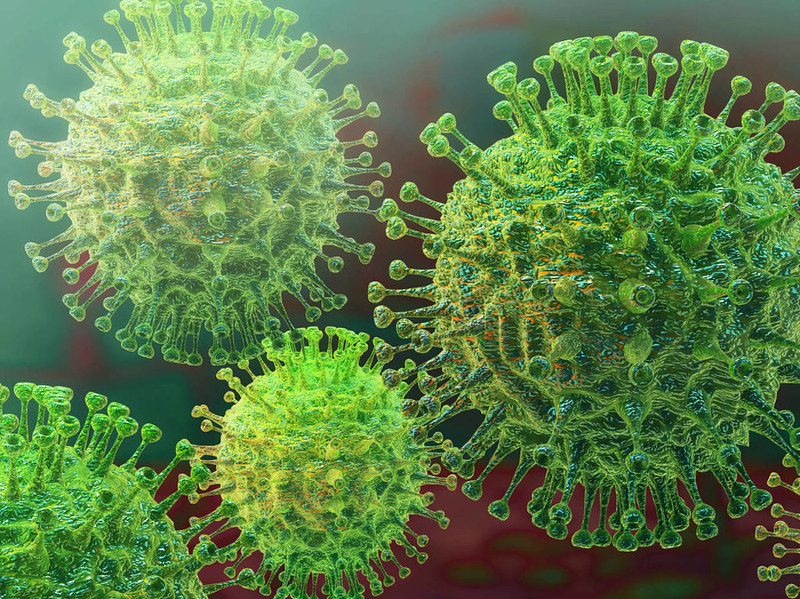
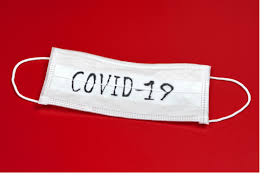
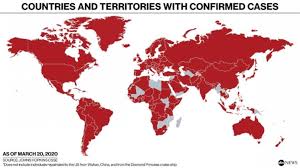
On March 1, there were 75 confirmed cases in the U.S. On March 9, the day Sarah was to drive to South Florida for a math conference, there were 704. On March 10, we cancelled a cruise we had booked with Sarah’s family and church pals. Then on March 11, the World Health Organization (WHO) declared COVID-19 a pandemic. By March 12, the day she decided to come home early, the number was 1,697 (https://www.worldometers.info/coronavirus/country/us/ ). By the way, COVID-19 is the specific strain of coronavirus (a general group of viruses); to call it the Chinese coronavirus is not only inaccurate, it’s racist. Yep. You may not care for the Chinese government, but those folks over there got sick like us folks over here. See? 

map_cov19

By mid-March–which sounds and feels like a decade ago as I write it–online news sources had special COVID-19 pages/links, where you could see all news updates related to the virus in one place. The 2020 Democratic primary was affected. Super Tuesday was pretty much overshadowed. Candidates and other politicians–including the president, who thrives on rallys–began cancelling. The last Democratic debate–like all late night shows–were held without live audiences. I must admit I approve of the format for debates–for Stephen Colbert, not so much. As early as Saturday, March 7th, Kennesaw State University had begun to develop a “continuity plan” in the event face-to-face classes were suspended. It was essentially a plan for all courses to go online.

Unexpected issues started cropping up, too. For example, what would students do if dorms and dining halls were closed? What about homeless students (and all universities have them)? What about students who did not have computers or notebooks, but only their smartphones? The news channels began to have question and answer programming where viewers sent in questions for experts to answer. We submitted our plan to the university president by March 10th, and then we waited. It truly felt like a calm before the storm, eerie silence and all. By the evening of Friday the 13th, announcements came that public schools and universities would go online the following week. Church services across the country scrambled to find ways to make virtual worship meaningful. This was also the day that everyone in America went to the grocery stores for toilet paper.

Monday, March 16, was the day the stock market had its worst day since 1987. It was also the day we started setting up our home offices. Sarah had worked all weekend preparing to teach three in-person classes completely online–and have office hours virtually. I brought home monitors and books from the office after having one virtual meeting on my laptop. Honestly, I need the 2 monitors so I can do other things during the meeting, like look for social distancing staples online. You know you do it too, which is why it is on one of the 10,000 blog posts called, “Good Virtual Meeting Etiquette.” I have so far had five virtual meetings this week. It got so bad, one group had trouble finding a time–from home during social distancing!–to schedule our next meeting. A well-meaning colleague suggested meeting early–8:30 or 9:00 am–so that people would be free. I told him it was obscene to start that early. Because we are at home does not mean we are always “on,” which he was NOT suggesting. But it’s something to think about.

virtualmeetings

So, it is Friday, March 20, and we are caught up with the basics. I have learned how to change my Zoom background and so far have been at the Grassy Knoll, the White House, Graceland, and inside the Tardis. We have cooked more this week. Sarah has started an outdoor garden–so far with mainly carrot tops from our increased vegetable consumption. My office is a thing of beauty, and I am about to run out of diversionary tactics related to rearranging it. I have so far ventured out twice–both times to the office and thrift shop. I took wipes and sanitizer. I have taken a walk. We are ahead of the laundry. I have read Scripture and Sister Joan Chittister’s take on The Rule of Benedict every morning.

The other pandemic task I worked on this week was connecting. I realized that part of my own continuity plan should include staying in contact with people. As an introvert, it’s saying a lot that I should have that as my concern, but I am aware that I self-isolate enough anyway–imagine when it is mandatory! So, I hit the Facebook and made “Friends” with people from all parts of my life: colleagues, church folks, family, old classmates, scholar friends. I paid attention as people started setting up “Hangouts” and various groups and web meet ups. There have also been plenty of news and blogs encouraging people to take precautions to avoid loneliness, which will be very real as this thing goes along. Speaking of blogging, it’s another way I feel connected, and I’m planning on doing it more. There should be plenty to write about. One thought I had this week, during my containment prep, was how aptly named the blog is, Just Keep Swimming. If it was appropriate up to now, it sure is as we move forward. It is, for me, a hope-full idea: hang on, keep going, do the best you can. That’s the plan, anyway. 

dolphinhope


My Sugar Addiction, Day 1

I am gaining my weight back. Again. Like just about every person who has ever battled their weight, I have tried every diet plan imaginable. I’ve taken diet pills–over the counter and prescription–and for awhile I took Alli fat blocking pills, which was the grossest diet plan ever. Google that one. I’ve done Weight Watchers, now WW so you will feel like a winner, thank you, Oprah. It’s still Weight Watchers. I’ve exercised for a solid year; that, along with WW, which works if you work it, resulted in my losing the most weight I ever had in my adult life: 70 pounds. It felt so good! I got a complete new wardrobe and felt young again. I was so encouraged this time when I read that if I could keep it off for 3 years, I could keep it off for good. When it started creeping back after about year two–those crisp white shirts and modern-cut pants started feeling snug (a word of terror for fat people)–I looked that factoid up again. It had said five years, not three. I had weighted 168 for exactly 2 days, and as I creeped back up in the 170s, I told myself that my body wanted me to be in that range. Again, if you’ve ever been a weight warrior, you know the feeling in the pit of my stomach as I watched myself outgrow my clothes. Again.

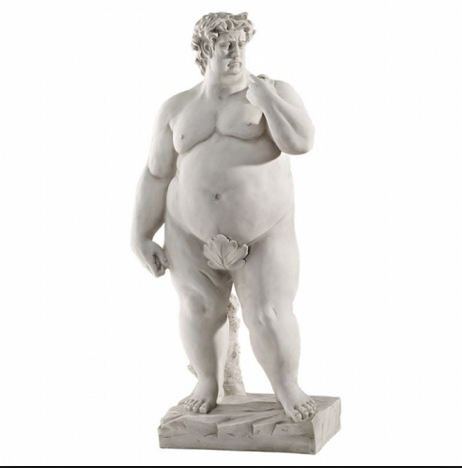
fat david

My size 10 Levis were the first item to go, then my pants for going out. I donated my cute pinstripe suit after church one Sunday when a guy jokingly–it’s always jokingly, you know, but there’s truth behind it and it hurts like a sucker punch–said “Hey girl, you trying to show off those biceps?” I looked down at curved stripes on too-tight sleeves. Last year, I bought size 16 Levis, telling myself I still had not reached my highest weight–253, so 16 was okay. I was still under 200 pounds. Then came another holiday season.

I don’t even bother making New Year’s resolutions any more. What is the point? It’s always the same: lose some weight. Weight warriors, familiar? Knowing most people gain a few pounds over the holidays, and also knowing I didn’t have any to gain, I was determined to practice portion control. I didn’t gain during the month-long eat fest, but I began to feel my body change beyond the feel of my clothes. I put out of my mind that the size 16 roomy L.L.Bean pants’ waistband was getting snug. (oh no!). I was out of breath in the shower. I developed a candida fungus under my belly fat. Yes, that is so far the most embarrassing thing that I’ve ever felt about my body. Fat can be fluffy if you tell yourself enough. But a seepy, smelly rash made me feel nothing but shame.

This weekend an interview with Molly Carmel popped up on my newsfeed, and led me to her new book, Breaking Up With Sugar: Divorce the Diets, Drop the Pounds, and Live Your Best Life. I had do decide whether to add another weight loss book to my Kindle. I have books on insulin resistance, carbs, and the keto diet, for example. I know the science, and I know the “secrets” of weight loss. If knowledge were enough, wouldn’t we all be thinner and healthy? That, precisely, is Carmel’s point. I ‘m going to call her Molly, since the tone of her book is friendly and encouraging. I’m reading Breaking Up now, and I’m glad I bought it.

sugardownload (1)

Here’s Molly’s About the Author on Amazon: Molly Carmel has made it her life’s mission to help people find a sustainable solution to the battle of obesity and related eating disorders. After battling her own eating disorder for over 20 years and finding no solution in available treatment, she created The Beacon, where she helps clients recover from similar addictions. Carmel received her Bachelor’s in Social Work from Cornell University and her Master’s from Columbia University’s School of Social Work. She has extensive training in Dialectical Behavioral Therapy, addiction, and nutrition.

The chapters support the breakup/divorce/find a healthy relationship theme of the book. I’m on Chapter 3, “The Truth About Your Sweetest Love,” where Molly gives a summary of how sugar is in reality “Suicide on the Installment Plan.” I wanted to include her list of sugar’s lethal capacity here: But Sugar also negatively affects every single part of your body. Some of these harmful effects are more well known than others. Eating sugar has been linked to: inflammation, migraine headaches, anxiety, brain fog, trouble sleeping, weakened eyesight, gum disease, heart disease, increased cholesterol, asthma, suppressed immunity, kidney damage, nonalcoholic fatty liver, overworked pancreas, arthritis, osteoporosis, metabolic syndrome, and leptin resistance. There’s even terrifying research showing that Sugar increases the risk of developing certain cancers. And of course, let us not forget Sugar’s piece de resistance, glucose intolerance and diabetis

And yet, knowing all of this and having encountered many of the effects on Molly’s list, I keep right on eating sugar and its evil twin flour anyway. I’m going to keep reading, but I’m open to the idea that I think and behave like an addict when it comes to sugar–and I suspect toward food in general. I looked ahead to see whether Molly had made me a shopping list and a suggested meal plan? She had? Ah ha, I thought, but are they easy or complicated? Maybe they were like keto, a list of foods and meals of stuff I really don’t like (how much butter can I eat?). Nah, Molly included good, whole foods. I felt healthier just reading the foods and plans, which are easy and sustainable. I went through her lists of proteins, fats, carbs and made a grocery list.

I’ve already started the self-doubt talk in my mind. I’ve done this before–so many times. What is different about this time? How long will I be able to eat this food, which I’ll get tired of, won’t I? It’ll take too long to lose this much weight, so what’s the point? But Friday is pizza night! You work so hard, don’t you deserve a reward?  Molly, though, has already thought of this–she describes how she herself heard those same voices. Of everything I’ve read so far, this passage has hit me most profoundly was about how rats respond to excessive Sugar–which Molly capitalizes to remind us that we really are in a relationship. After describing sugar DTs, she writes, What’s more, when the rats withdrawing from Sugar were placed in water, they were less likely to swim or climb out, and more likely to passively float. They had lost their will to survive. I’m going to keep reading, Chapter 4 is “Defining Your Relationship: How Bad Is It Really?” There’s even a quiz. I know already; it’s pretty bad. I have a food addiction. I’ll start from there.

cuterat


“White Savior Barbie,” Not me!

I really love my seminary, the McAfee School of Theology, Mercer University. Faculty and staff there are committed to issues of justice and spiritual growth. It is also a place where only about 45% of the students are white. I want to support a place like that and more important, learn from the variety of perspectives and experiences of my classmates. It is a place where I can focus on issues important to me, like being a good ally by attending to my white privilege. I am convinced that my anti-racist work as a white Southern academic should also include theological and religious frameworks. I needed to get in touch with my Jesus.

White Savior
White Savior Movie

Part of the institution’s commitment to spiritual formation is the annual faculty, staff, and student weekend retreat, which the founding faculty built into the design of the programs. We just recently had one at the Pinnacle Center in the North Georgia mountains, where we spend two days worshiping together and getting to know one another. We build deeper relationships as classmates at a setting like this, where we pray and take communion together. This year, the dean announced he had been working with friends in Union Point, Georgia, to plan a work day at a historic cemetery near the original location of Mercer University. Here’s what he said:

This summer I learned of a neglected African American cemetery located nearby the Penfield cemetery. I have partnered with African American activists and other leaders to help them with a clean-up effort on October 26. I would very much appreciate it if you would join me as we honor this sacred space and practice remembrance.

He noted that enslaved persons were buried there.

Here is what I wish I had thought: Does it make a difference that the dean is a straight, white, cis-male? Were faculty invited to discuss this topic, welcoming voices from faculty of color? Could groundwork have been laid so that the announcement would have had context for the benefit of the students, most of whom were African American? What is motivating me to want to participate?

What I actually did, though, was volunteer to clean up the cemetery.

A few days later, the dean sent a reminder and included additional information that a filmmaker friend and seminary grad would be filming for a documentary. A few days after that, I learned that a group of African American students had submitted a letter to the dean to express concerns about the project. I have not seen this letter, but the seminary grapevine is real. That was the day I discovered the “Savior Barbie” Instagram account. If you haven’t heard about it, below is a Huff Post article, along with 2 examples of Barbie’s posts.

White Savior Barbie Huff Post

White Savior Barbie

White Savior Barbie pokes fun at people who suffer from “White Savior Complex,” the term used to describe the white Westerners who travel to third world countries and make the entire affair an exercise in self-congratulatory sacrifice. (Huff Post). The account owners, who remain anonymous, point out, “We have both struggled with our own realizations and are definitely not claiming innocence here.” “Barbie Savior, we hope, is an entertaining jumping off point for some very real discussions, debates, and resolves.” It isn’t that there is anything inherently wrong with doing volunteer work to help people. WSB targets the idea that Africa needs saving from itself and white people are the ones who can do it. Barbie Savior is there for a photo op, the ultimate selfie. This kind of thinking supported colonialism, conquest, and slavery. It is white supremacy.

Barbie Savior (@barbiesavior)

White Savior Barbie 3

Let me be clear: I am not suggesting for a minute that the McAfee dean is in error. I have no idea until and unless he discusses it what the process was for bringing this opportunity to the students. For all I know, he brought it to the faculty first for them to unpack together. The letter from students is said to contain references to a diversity strategic plan, which I imagine calls for voice and conversation and inclusion in initiative planning. I have no doubt he is prayerfully and profoundly considering what they have written and will respond appropriately. This is not about him; it is about my own complicity in maintaining racist systems in which the White Savior Complex operates.

So just what was I thinking? My first thought was what a great service project! As a Southern Christian who knows what “Decoration Day” is, I have cleaned old cemeteries for as long as I can remember. My second thought was about the historical significance of the place, for yes, I was in part motivated by it being a very, very old African American cemetery that was the final resting place of former enslaved persons.

My third thought was about my friend Edeltress in Baton Rouge, who had taken me on a detour to her ancestral cemetery one day while we were on a school visit for work. “Do you mind?” she asked me. “It’s been so long since I’ve been here. I was a little girl and my parents brought me.” So we drove to a countryside in Louisiana that I couldn’t find today if I had to. “Here it is,” she said. But looking around, I couldn’t see a graveyard. Just what looked like woods, undergrowth, weeds–way back, about a hundred feet off the side of the road. Edeltress laughed. “Oh, you’re looking for a white cemetery. This is how our cemeteries look.” We tramped around the site, being careful not to step on the graves, and on the way home, she told me stories about her father, who had driven an old broken-down truck so that his white neighbors would not recognize him for a landowner and successful farmer. My people were dangerous. So that is the image I got in my head when the dean asked for volunteers. I thought of paying tribute, in this small way, to my friend.

That is why I am going to acknowledge my white privilege, acknowledge the concerns of my classmates–for they hold us accountable for thinking of and processing these issues before complying–and then go clean up a grave yard. But you won’t see it on Facebook or Twitter. I will not take a selfie with a tombstone. Does this make me admirable? Is this sufficient acknowledgement, or am I assuaging my conscience? Am I asking the right questions? I don’t know, but it gives me something to ponder as I pull weeds.

White Savior Barbie 2

White supremacy can look like skin heads carrying swastikas; it can look like angry white people wearing red hats. It can be masked by well intentioned white people who secretly voted for Trump. And it can be a white seminary student who fails to do the work of problematizing a workday over the graves of enslaved persons. There is another White Savior resource I find relevant here. White Savior: Racism in the American Church (2019). The film “explores the historic relationship between racism and American Christianity, the ongoing segregation of the church in the US, and the complexities of racial reconciliation” (imdb). I recommend it. The film closes with an African American minister from the Bronx discussing being an ally. “Being an ally,” he said, “means asking ‘What do you need? and sometimes that means just shut up and listen.”

At the end of the day, I believe in a place like McAfee. It exemplifies the complexity of racial reconciling and justice. The messiness of it. It is a place where we can make all the mistakes–and there are many–and learn that the sky doesn’t fall when we make them. It is a place where, sometimes, we can just shut up and listen.