So This Is 61: Notes on Aging From the Inside Out

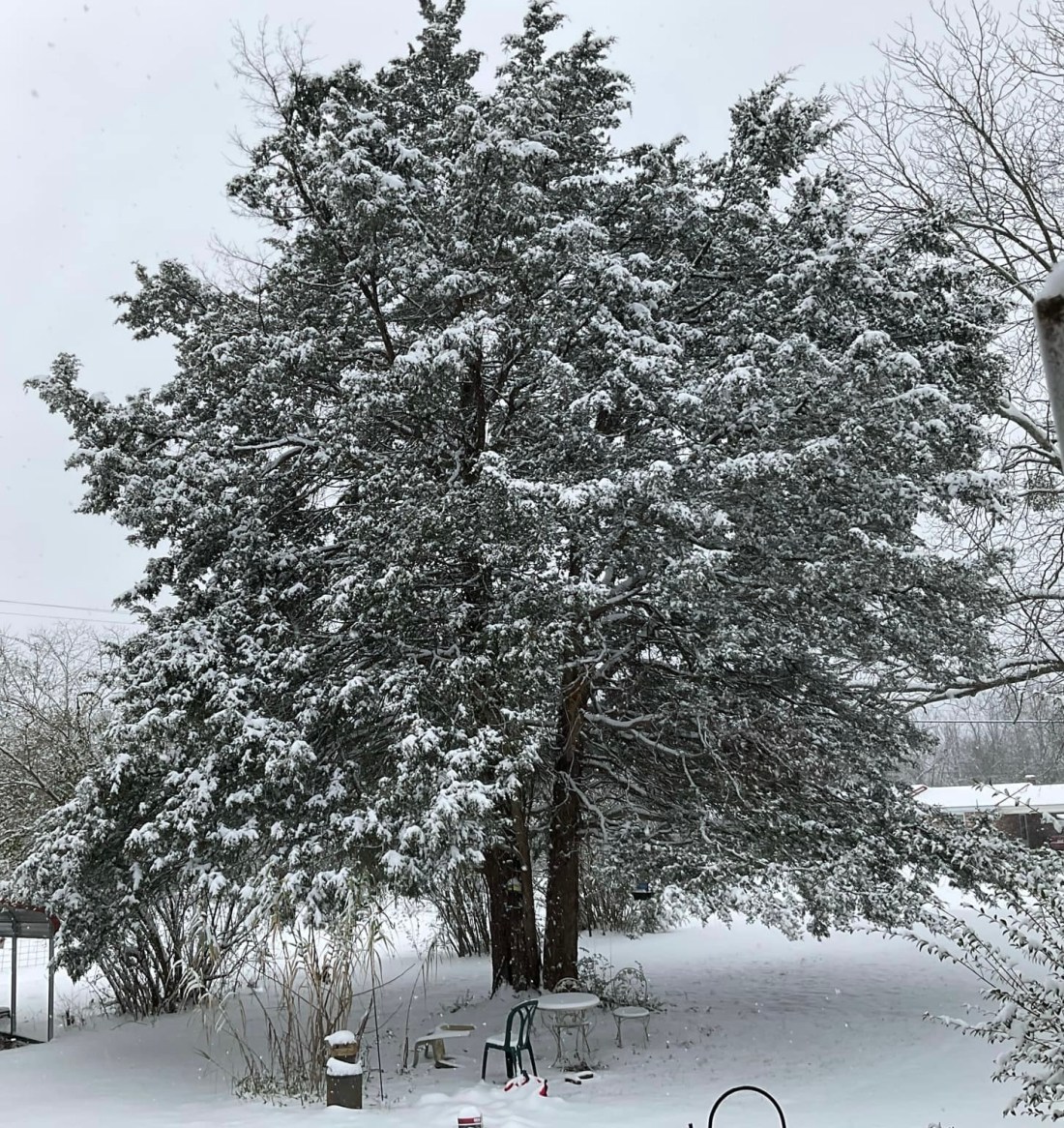
Image of snowy tree, Littleville, Alabama.

So This Is 61: Notes on Aging From the Inside Out

I didn’t expect to notice it all at once. Nobody tells you that one day, getting out of a chair will require a full mental and physical commitment. Or that you’ll avoid driving at night because headlights are now earthly starbursts. Or that the first time you wake up with a stiff neck, you’ll briefly wonder if you also have a brain tumor, because the sharp pain shoots all the way up into your temple. Of course, it’s just how you slept, but the thought still crosses your mind. My neck now cracks so hard I sometimes wonder if others can hear it. This is all new.

These are notes from those realizations—honest reflections of what 61 feels like, from the outside in and the inside out.

Oh. And who IS that old woman staring back at me in the mirror?
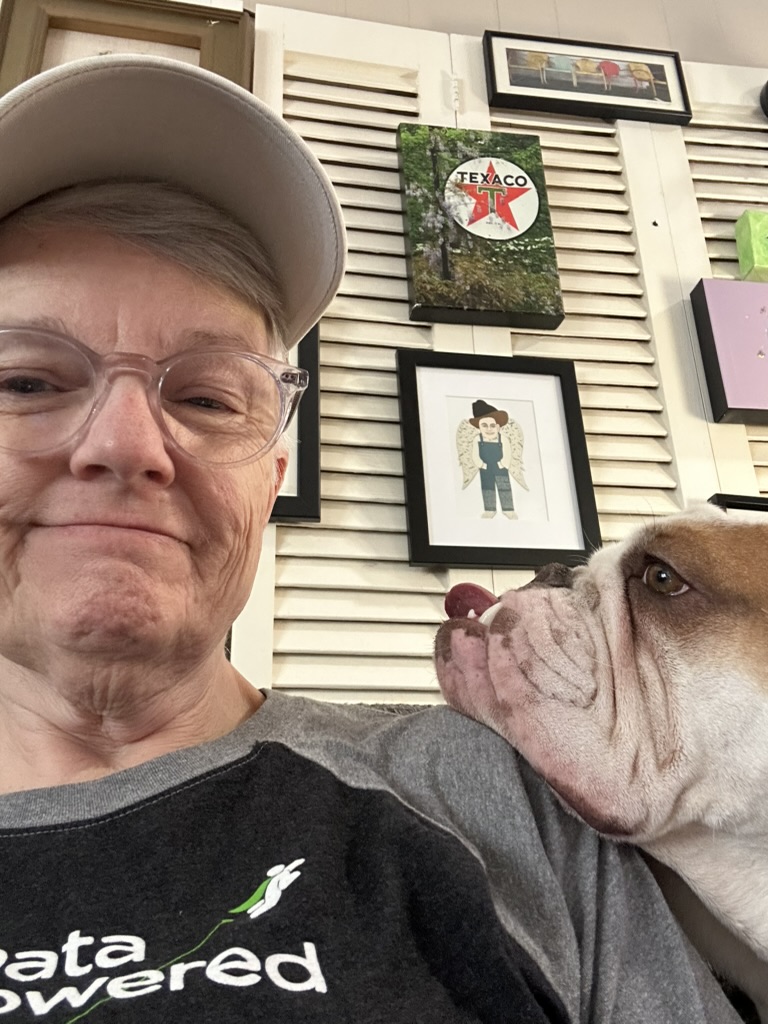
Image of Ugena Whitlock and bulldog.
Who is that old person being lovingly gazed at by Bruno the bulldog?

Aging is full of these little surprises—some unsettling, some mildly amusing, and some that require a good stretch, a heating pad, and a moment of reflection. I am learning, slowly, to embrace it all. I’m slowing down, but not shutting down. Sixty is NOT the new 90, as Sarah likes to suggest to me. If anything, I’m rediscovering the joys of having time to potz around the house, sort through old pictures, take the dogs for walks, and drive my Miata around Spartanburg like it’s my own personal victory lap.

I have less—less urgency, less need to accumulate things—but I also have more. More awareness, more gratitude, more quiet moments of contentment. Don’t get me wrong, I’ll still upgrade to the latest iPhone every couple of years and buy accessories for the Miata and Mini Clubman, but there’s nothing I can think of that I truly need. That’s an unsettling realization, not because it signals loss, but because it signals a kind of peace. I’ve been asked whether this feeling means I’m depressed. I don’t think so. If anything, it feels like clarity, like a settling in—like I’m moving toward a place where I don’t have to chase after the next thing. I haven’t arrived there yet, but I can tell a difference.

Image of people singing in church, Littleville, Alabama.
Blurry picture I snuck while Daddy is leading a song at church on Singing Night.

Aging isn’t just about collecting years; it’s about collecting perspective. There is wisdom in learning what to hold onto and what to let go of and in understanding that urgency is often self-imposed. It is true that contentment is “not about having what you want but wanting what you have”–that is, it’s in perspective. I remember when I was about 9 years old, I stood by eavesdropping, as children do, when Mother and Daddy were visiting with the preacher after Sunday night church. I don’t know how the conversation turned toward me–probably because I tried to join in the adult’s conversation. But I still recall Daddy telling the preacher, “Ugena can’t be content.” Even then, I wanted the next thing, to go to the next place–I just plain wanted. I realize now it’s a quality that must be cultivated. I am working on it.

I’ve learned that not every battle is worth fighting–not every hill is one to die on. Very few are. And against a life of doing otherwise, I’ve come to understand that silence can be more powerful than a quick, clever retort (which, I admit, is a talent of mine). Although Sarah probably say it’s taking too long, I’m also learning to take myself less seriously–to laugh at myself when I can.

And yet, aging isn’t just about accumulating (waiting patiently for?) wisdom—it’s also about watching my body become a stranger to me. The aches, the slower reflexes, the shifting body shape that seems to have a mind of its own. And let’s not even talk about hair loss and the horrifying reality of what gravity does to internal organs. I wonder if everybody, like me, sees someone and thinks “old person,” only to discover that she or he is younger than I am. I die a little on the inside when that happens, and it does regularly.

I’ve inherited certain characteristics from my father—beyond just looking more and more like a little old man every day. If I’m not careful, I can be short-tempered and convinced my way is obviously best. I don’t always filter my thoughts the way I should—not snapping, exactly, but sometimes speaking too bluntly, unaware in the moment of how my words might land. And yet, also like him, I’ve also mellowed. I am more nostalgic, more sentimental, more conscious of time slipping through my fingers like sand. I find joy in familiar places, in the sound of a bird’s song. I think I am figuring out the face in the mirror. It’s starting to look like me. The trick is learning to love the aging face.

When I married at 18, I could imagine “50 years from now.” Now, I understand, in a way I didn’t before, that the time ahead is finite. There’s an end of the road. My parents, whose mortality would have been unimaginable to me 20 years ago, are fading—fragile, frail. My father still has a prolific memory of a shirt he was wearing when he was talking to a particular person at a specific place in 1957 while a specific song played on the radio, but he struggles to remember which channel is which on the TV. My mother, who was heavy-set all my life, is growing thin. It’s probably healthier, but it’s startling to me. Even the house, now 50 years old, is a little less kempt, as houses tend to become when the priority is simply to live in them rather than maintain them. These things are bittersweet to see.

There’s a void where the future used to be. I can’t plan for 50 years down the road anymore. Twenty years, maybe. Ten, certainly (no, not certainly, more…hope-fully). But the open-ended future that once stretched ahead indefinitely has become something else entirely. Maybe the saddest thought—and why do I allow my ruminations to go here—is that one day, not too far into the future, the last people on earth who call me by the nickname that Daddy pronounced upon me when I was born, will be gone. He and Mother call me Miss Bean. I’ll never hear it spoken naturally to me again. This is, by the way, a very Daddy way of thinking, and I have to stop it. It’s dangerous, depressing, and yet, sometimes, it sneaks in anyway.
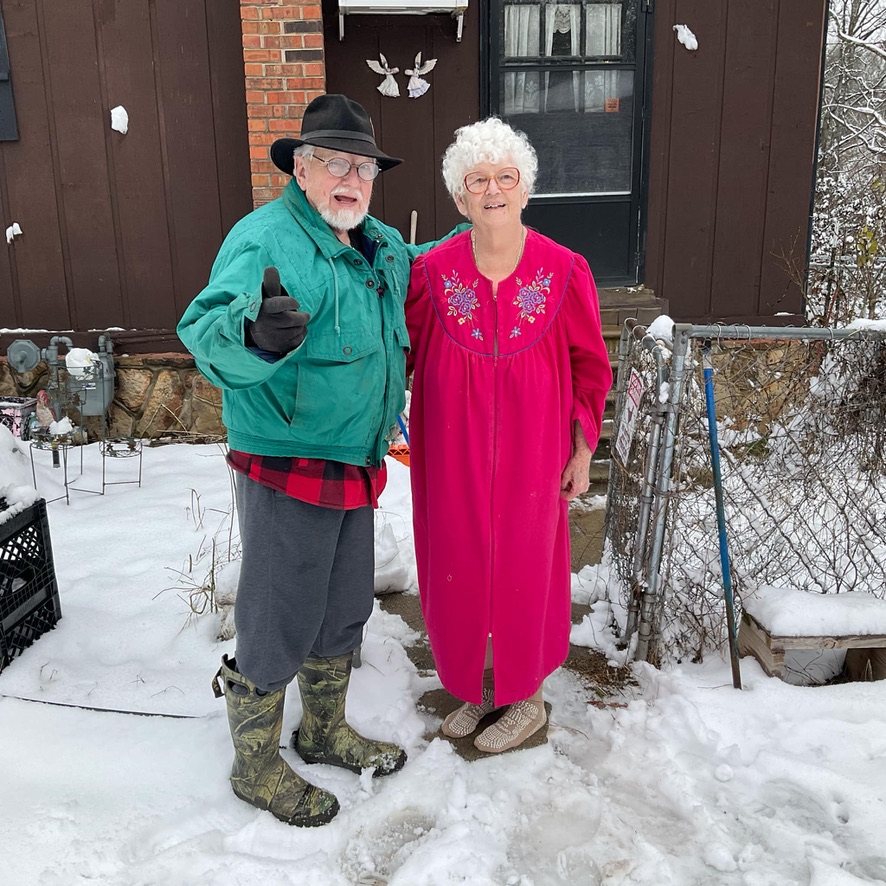
Image of old folks in winter, Littleville, Alabama.
The Whitlocks outside the house to show the snow. Not used with permission, but I’ll take my chances.

And yet, there is joy to be found in all of this. There is humor. There is, finally and blessedly, contentment. There is the deep love I have for my family–and a conviction to see every minute they are in the world as a gift. Time doesn’t march on–that heifer tears out like her tail is on fire. Aging isn’t a slow march toward irrelevance—it’s a shift in focus, a new way of seeing. I am still learning, still growing, still moving—albeit with a few more creaks and groans along the way. And in the meantime, I’ll keep driving my Miata and cracking my neck like like a walnut. I’ll keep striving toward the Big Three attributes of sanity: gratitude, contentment, and humor as I remind myself that I’m still here. And I’m still going.
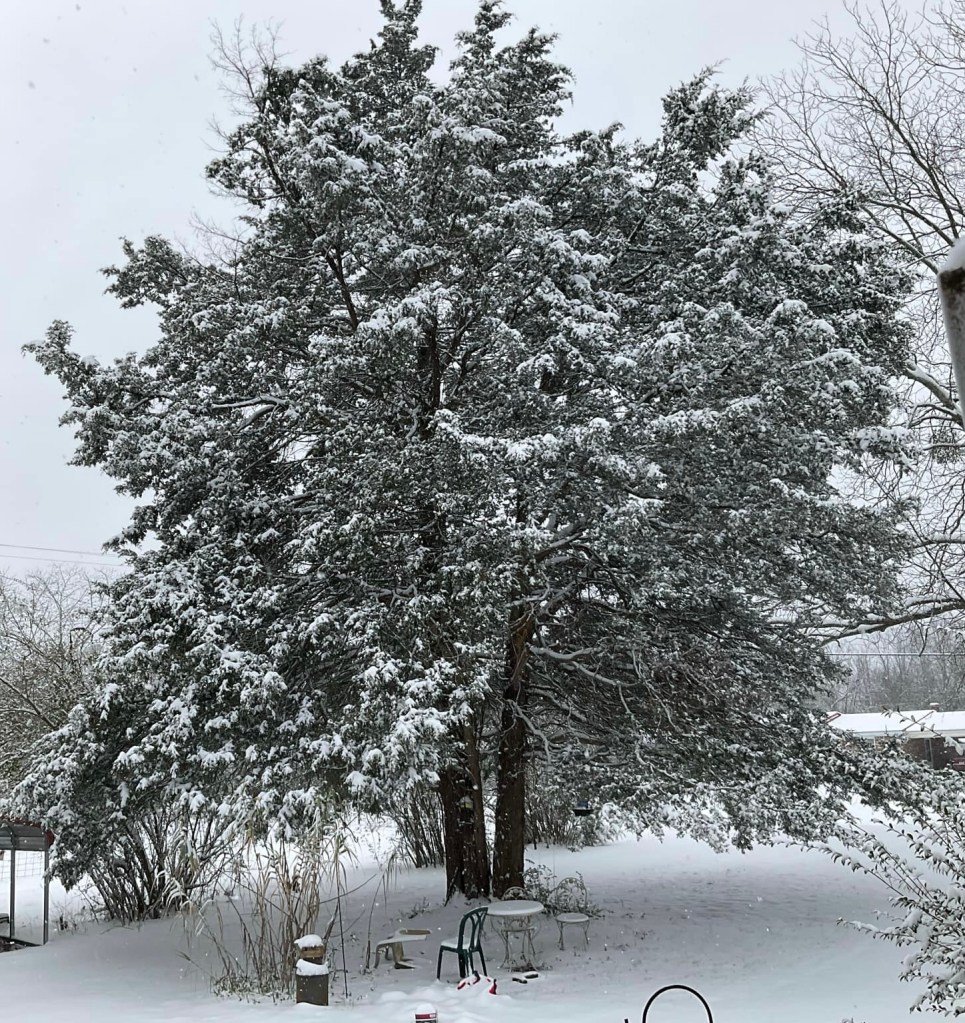
Image of snowy tree, Littleville, Alabama.
Ice and snow on the remains of the old cedar tree at home, Littleville, Alabama.

Embracing Late Career: Finding Purpose at 60

I began my career in higher education later in life. It was my second career after 14 years teaching in secondary schools. Transitioning from being a mid-career teacher to starting over as a university professor was both exciting and daunting. This kind of shift isn’t unusual, but for me, one important factor stood out: I entered it older. I became a brand-new assistant professor at age 40. Young by some measures, sure, but it meant that becoming established and reaching mid-career milestones happened in my 40s and 50s—not my 20s and 30s when ambition and energy seem limitless.

Career Stages and Life Stages

Sites like Indeed often categorize career stages neatly, like in the graphic below. Up until recently, I considered myself mid-career. But my academic career has never aligned well with life stages. This September, I’ll turn 62—an age when I can start drawing Social Security (though I’m not planning to just yet). The reality of this milestone makes it clear: I’m approaching retirement.

This period is commonly called the “Decline Stage” (a less-than-uplifting name, to say the least), which typically spans ages 55–65. By contrast, the “Late Career Stage” is defined as ages 45–55. For convenience, I’ve included descriptions of these stages from a cited resource below. Their cheery tone—especially the idea that late-career professionals don’t need to learn new things—makes me suspect the author might still be in the “Exploration Stage.”

When it fully sank in that:

I’m in my 60s, and
I’m officially in late career,
…my emotions ranged from shock to disbelief to sadness to resignation. I cycled through the stages of grief daily for awhile, but I usually landed at acceptance. When it comes to my career, though, I’ve found something better than acceptance. Let me explain.

A Shift in Perspective

Becoming an academic is thrilling, but being a good one takes work. Since entering the profession in 2005, I’ve poured myself into getting established: publishing, building networks, traveling to conferences, reviewing conference proposals, writing a book, editing another, editing a section in an academic journal, coordinating programs, organizing events, and even hosting visiting scholars. My mid-career years were spent in administration, serving as a department chair and, most recently, as a college dean.

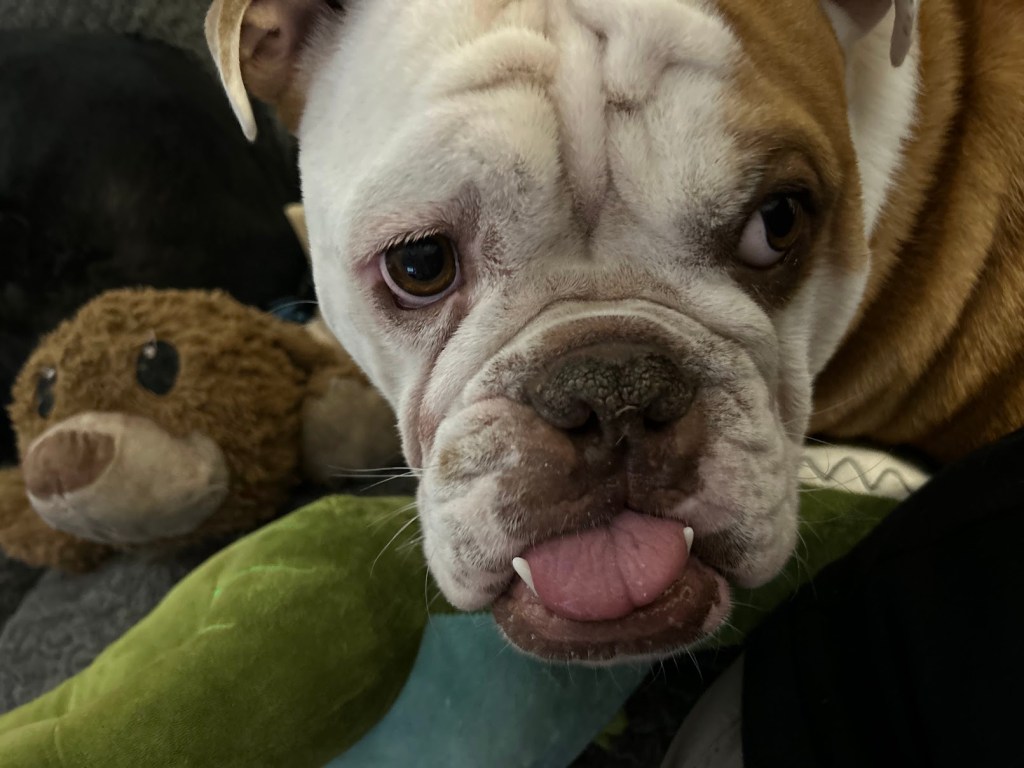
Image of English Bulldog and stuffed bear
Bruno contemplates a change of perspective

Looking back, I realize my career trajectory and life stage were out of sync. I was a late-stage-aged professional in a mid-stage career role, and it took stepping away from administration to fully understand that. While this epiphany is deeply personal, perhaps others in similar positions can relate.

For the first time in decades, I don’t have a clear next rung on the career ladder. I don’t have a career path.

How odd this feels. And yet…

Kevin McAllister Energy

Remember in Home Alone when Kevin realizes he “made his family disappear”? That’s how I feel about transitioning from a career ladder to what I call “career presence.” I don’t have a career path, and surprisingly, I don’t mind.

Now, don’t misunderstand me: I’m not suggesting I can coast until retirement. That’s not what I’m feeling at all, and I would not want to coast if I could. What I feel is empowerment, self-determination, and—dare I say it—freedom. For the first time, I’m genuinely content with my job. I want to realize the gratifying–and hard–work that comes with being a professor, and I have no doubt this is within my grasp. This must be how people who are passionate about their work feel: happy, hopeful, mindful, and present.

Charting a New Path

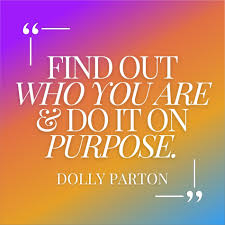
Instead of focusing on what’s next on the ladder, I’m charting a meaningful professional presence. It feels a bit like starting over, like I did when I became an assistant professor 20 years ago. Only this time, I’m not climbing—I’m walking.

I originally planned to end this post with “Five Goals for My Late-Career Path,” but I realized they all boil down to one: Be fully present—with students, colleagues, family, friends, neighbors, pets, hobbies, prayer, study, or entertainment–with myself. Shouldn’t this be the goal at every stage of life and career? Probably. But for me, this epiphany comes with the clarity of late-stage-ness.

The truth is, I’m running out of stages. I want to revel in my work, to wake up before the alarm, excited about the day ahead. My new trajectory is joy, and I am in the exact stage I’m supposed to be. That feels mighty good.

Excerpt from From Exploration to Retirement: 5 Stages of Your Career Journey:

Late-career-Typical age range: 45-55 years old

After reaching the middle of your career, the late-career phase offers a chance for a less stressful job setting. In this stage, people can teach, guide others, and find and train someone to take their place. They no longer need to learn new things.

Older employees can find fulfillment in mentoring younger colleagues, even if there are fewer opportunities for career advancement. Job changes are less likely during this stage, with one’s reputation and standing serving as security for their position.

Retirement is a time to think about life and have more free time for fun activities instead of work.This is what contentment feels like. This is what people feel who are passionate about their work.

Decline-Typical age range: 55-65 years old

Upon completing a fulfilling career and dedicating several decades to the workforce, many individuals reach the point of retirement.

After you retire, you can take a break from your job. During this time, you can spend quality time with your loved ones and go on trips. Redirecting your skills and knowledge, you can rekindle past hobbies, cultivate new interests, or engage in volunteer work (Olde Raleigh Financial Group, https://www.olderaleighfinancial.com/orfg-resources/from-exploration-to-retirement-5-stages-of-your-career-journey).

Exciting News: A New Chapter for the Blog!

Image of Logo for Blog The Front Porch Professor with rocking chair, typewriter, and Mazda Miata..

Hello, friends! I’m thrilled to share that my blog is getting a fresh start under a new name: “The Front Porch Professor.” This new space will continue to feature the reflections, stories, and observations you’ve enjoyed, with a renewed focus on life, learning, and the journey ahead—all with a touch of Southern charm.

I’m currently working on exporting all my posts from Just Keep Swimming to the new blog, so nothing will be lost. If you’ve been following here, I hope you’ll join me on this new adventure! With any luck, your subscription will carry over seamlessly, but if not, I’ll share the link to the new blog soon so you can continue following along.

Thank you for your support and encouragement—stay tuned for updates and more from “The Front Porch Professor.”

For Bob

Robert Daniel Hyde, April 11, 1960-March 14, 2023, Russellville High School Class of 1979

My children’s dad died yesterday. My ex-husband. I did not expect to feel these feelings.

I had not seen Robert–the more distant, formal name I called him after I left–since one Sunday 10 years ago when he pulled into my parents’ driveway and asked me to come outside. He wanted to make amends, apologizing for not being a good husband for all those years. I thanked him and told him it was a long time ago. I didn’t hear from him very often–didn’t think of him very often. He chose a different path, and part of me envies him for giving up trappings that didn’t mean anything to him so that he could move home. He and his mother took care of each other until she died. He loved his kids, and if they wanted to come see him, they could. But he was clear that his life was his own–take it or leave it. When they would see him, they did not describe their visits to me. So, I don’t know much about Robert’s life outside of that. I do not know yet how he died–whether he was alone at home or in a hospital. I know he was sick for a long time.

We were together for almost 20 years, married for the last 16 years of them. I have spent many years and a lot of therapy struggling with the feeling of being robbed of those years of my life by him–my youth, my college years, the promise of finding out all I could be. We were toxic as a couple; whatever the chemistry, the result was that he became more and more controlling, while I became more and more codependent. I was miserable, and no doubt he was, too. We got to that point that is the death knell of relationships. We didn’t fight because we were exhausted and didn’t care any more enough to fight. So we were done, and I remember the day in 2014 when I had been without him longer than we had been together. Today, I have been processing the complex feelings of sadness and–yes–loss I am feeling. I am sad for my children, of course, but was unprepared for how I felt for myself.

I doubt he will have a funeral, or a viewing, as we still have in the South. I don’t think he would want one. Truthfully, I don’t know who would go. My kids, his siblings, my parents, maybe someone from their church, and some Russellville people who remembered him from school. I don’t see his obituary in the local paper. And, since I got the news, I have had “Close to You” playing in a loop in my head.

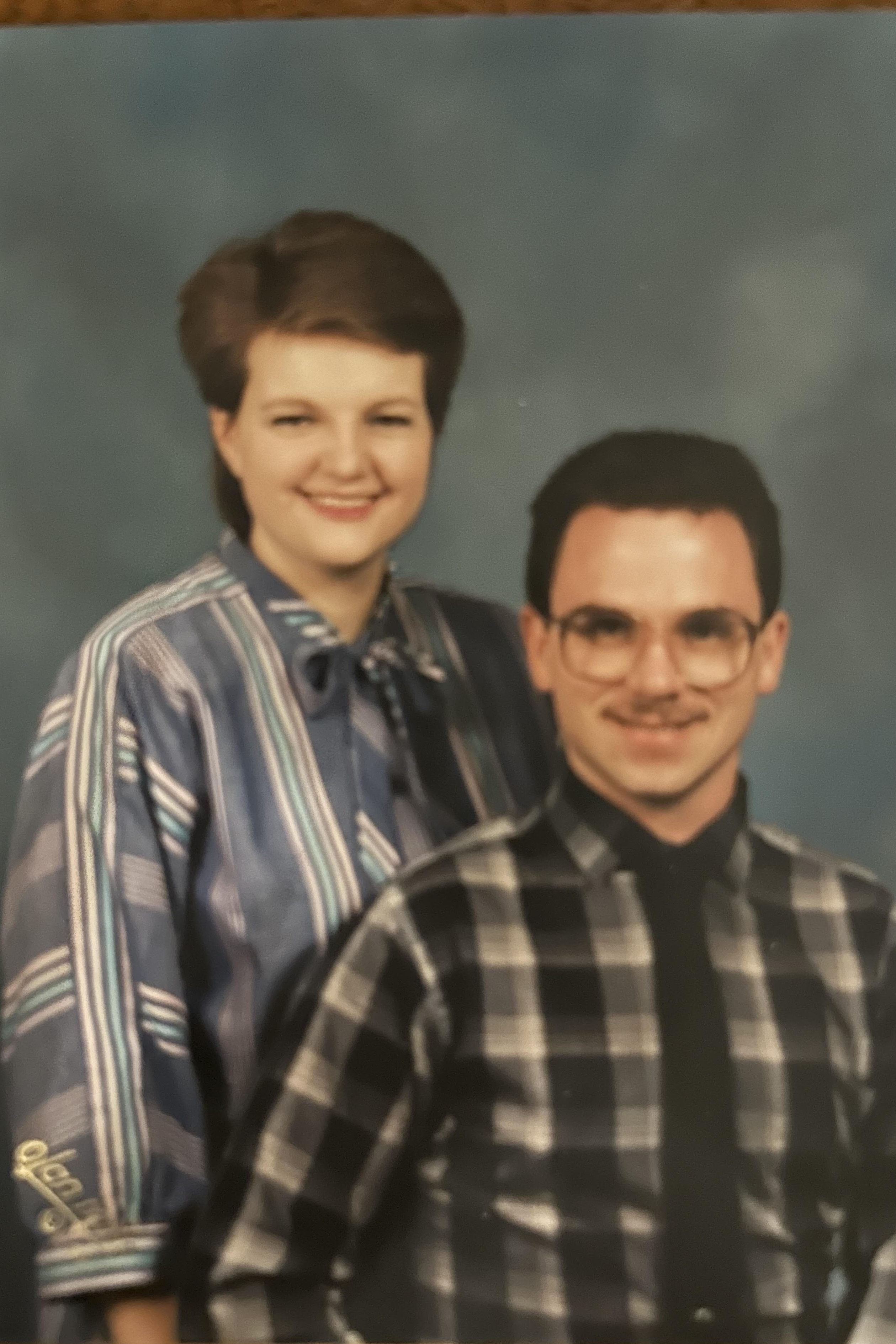
“Close to You,” by the Carpenters brings back one of my earliest and fondest memories of Bob. It would have been around 1978, and we were both in the high school choir, the RHS Singers. I picture him with the other guys doing the dance routine, wearing those striped rayon shirts and white boater hats. I never hear the song without that memory, and it is nice. I think I loved him first and most because he was a good boy–not a good old boy, but a good boy, as we say in the South. One who loved his mama and grandmama and wasn’t always up to meanness. He wanted to be Band Captain, and he loved the RHS Marching 100. That’s the way I want to remember Bob–young, handsome, with a boyish face and easy smile. It’s funny the things I remember, like the shape of his feet and the way he looked when he played the trumpet.

Close To You, The Carpenters https://youtu.be/iFx-5PGLgb4

Bob was a husband and father, son and brother, grandson, descendent of the first governor of Tennessee–and a Bama fan. I am glad that he lived, and for me, the world is emptier tonight. We shared children and nearly 50 years of history together. As time goes on, there are fewer and fewer people you can say that about. I feel like the part of me that shared those years is gone, too. And that is why I am writing this. I wanted to remember, wanted, needed, to give myself the time and place to summon memories–snapshots of Bob, happy and endearing. Not only that, it is also important to me that he is remembered. I want him to be mourned. He will be by his family, but that is not what I mean. This night, it is important to me that in this vast universe, a man is remembered–that he lived–and marched and sang and played and laughed–that he was. Rest in peace, Bob.

(Un)Holy Saturday: A Community Lament Psalm

dark cross

It is Holy Saturday, God, the day good Christians celebrate Jesus’s body lying in the tomb while his soul descended into hell, the Harrowing of Hell, they call it. Holy Saturday is coming home from a funeral. Everybody is exhausted, and the loss is starting to get real. You have to eat~~people have brought food~~but you are not hungry, might never be hungry again. After Big Mama’s funeral, I sat at the familiar kitchen table with her old friends, who told stories. Those of us at the table laughed until we cried, but the sisters—my mother and Lois and Mary and Judy and Barbara—were in the dark bedroom where their mother had taken her last breath; they did not laugh. They could hardly hold themselves up, so they held each other. It was raw and ugly, and if any of them had dared, they might have cursed you, God. They were groaning in their utter desolation. Holy Saturday started like that, with women holding vigil in their sorrow.

There is another word I first (and pretty much only) heard in the Bible: iniquity. Iniquity is to wickedness what groaning is to grieving. You are good, God, and trust in your goodness outweighs my worry; but my fundamentalist conscience tells me our United States will give an accounting for our iniquity. We sin together, all of us: we are inhospitable to neighbors at our borders, we march in hatred to maintain an apartheid state, and we lay offerings at the feed of corporate gods. We do not merely turn our heads as our poor fight to live—and often lose the fight—but we defiantly jut out our chins at them because they got what they had coming. It helps that they are different colors than we are. We incarcerate young men of color to prove our point. We busy ourselves with what goes on in one room of the house—the bedroom—with little concern with what goes on in the rest of your world. Longsuffering God, batter our hearts, as the poet cried (John Donne). Lay us bare again so that in our nakedness the only place our eyes can turn is to you. On this Holy Saturday, harrow our souls toward reconciliation with you as we keep vigil for the terrifying Resurrection we (don’t) know is coming. Amen.

On (Not) Minding Mortality

Yesterday I was reminded by two different folks of my blog, which is the first item put on hold when life gets really busy. Blog writing–reflective essays, really–is my favorite kind of writing, and I always mean to do better about not neglecting it. If I could do this for a living, I believe I would. So here’s something for today.

When I opened the page to start an entry, I found the following two paragraphs that I had begun last year. Let me tell you, I was in a really different place then than I am now, so it is not the same entry I would do today. Still, as I read it, I thought it was important to show the contrast and reflect on that for a minute. The original title was Minding Mortality. I felt like that needed to change too, so I changed it slightly as you can see.

One unexpected realization of practicing mindfulness has been that I am more mindful now of my own mortality. That’s probably due to my coming to the practice at this particular age; I’m fifty-five. I used to tell people that weight, not age, was my worrisome number. There have seldom been days in my life when I did not think about how much I weigh. Still do. I am happy to report that with the discernment that has come with getting older–and with having a generous life-partner–I now have a more peace-full relationship with my body. I have healthier reasons for wanting there to be less of me. But, age. I didn’t mind turning 50; in fact, I was proud that I didn’t mind. I was traveling, meeting people, enjoying life. That year I had an extended episode of cognitive dissonance–a mid-life crisis, if you will–about the meaning of life. Not just “the meaning of life,” but the meaning of my life. That is why the title of this blog is so important to me. It indicates a moment at the crossroads when focused, deliberate thinking was imperative. I remember distinctly the day when I took a different path that led to here. I didn’t know then that it had to do with thinking about mortality, but I see now that it does. If I had been content that my life had been meaningfully well spent, the dissonance would have been a lot less jarring.

Three years later, at fifty-three, I began grappling with the awareness of not having as many years left as I have lived. I started expressing my consciousness of it in small ways at first~making joking references to being put in a nursing home by my kids as my parents had done. Confirming my beneficiaries. Then one day I told Sarah that I would really like to get a diy project done so that I could enjoy it before I was dead. And it wasn’t a figure of speech

So that was last year. Since then, some imbalances have righted themselves after a good deal of grieving, and I had a bit of re-adjusting to life to do. Once again, I felt like I was emerging from a cocoon to a new day of opportunity that beamed the question, Who do you want to be? Except this time, the question was not out there alone in the universe for me to orchestrate a response to it. The question that settled on me like a warm sweater is, Who does God want me to be? I gotta tell you–when a question like this is put in the way it was put to me–well, I commenced to find the answer. Trust me, I’ll work through more of it here; the way the path opened up is, at least to me, fascinating–sometimes a little scary.

What is a good ending for the post from a year ago? As with most things, age and one’s location on the continuum of birth-to-death depends on how you frame it. And for me, it’s the difference between the two questions, above. Lived for myself, each day, each week, each month would be “one less.” On the other hand, resting–existing, thriving, living–in what Marcus Borg might call the more-ness of God illuminates the moreness of life.

For Tracy. Remember:
Marty Robbins The Master’s Call

God Laughs, or Fun with Bell’s Palsy

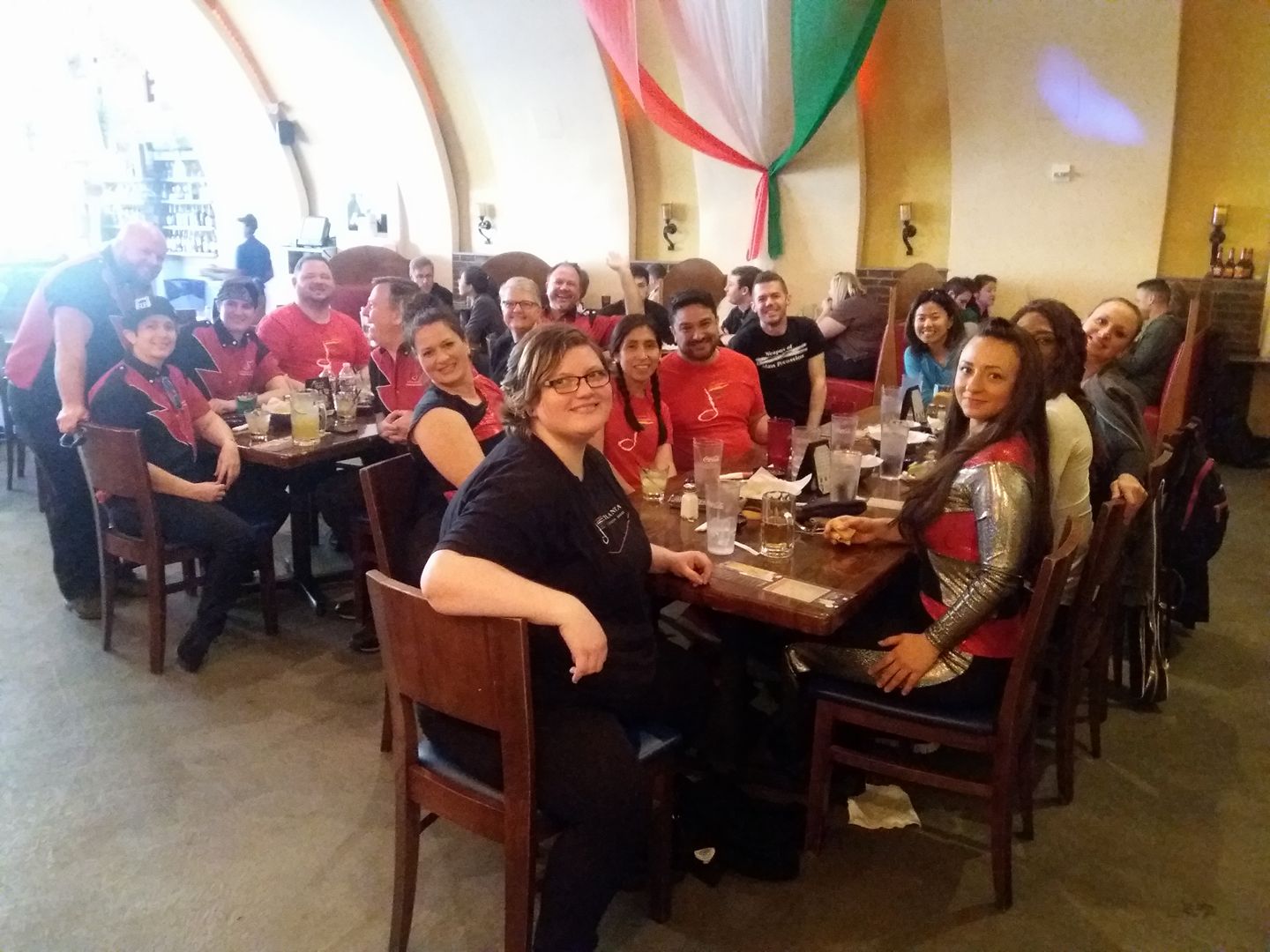
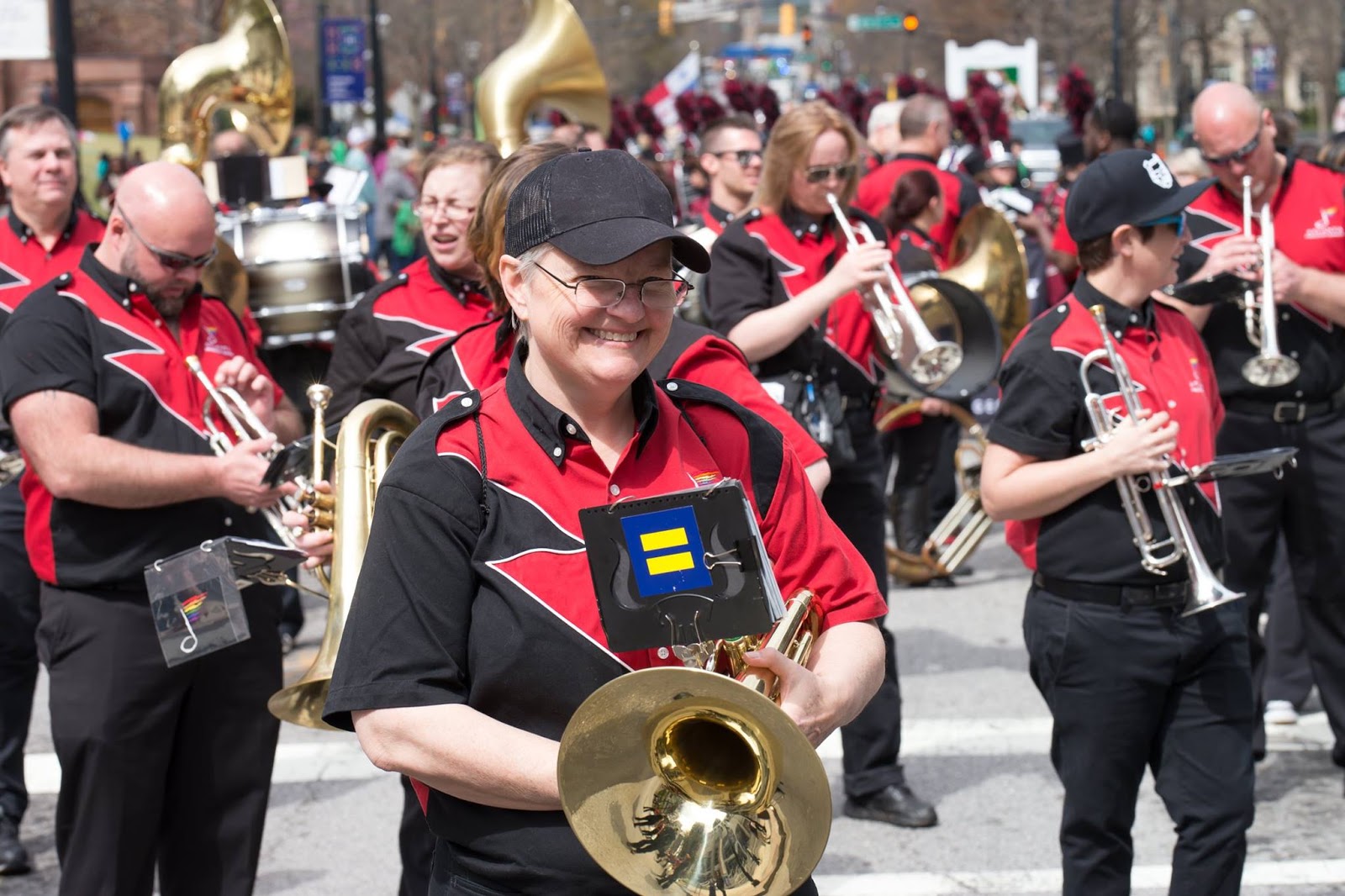
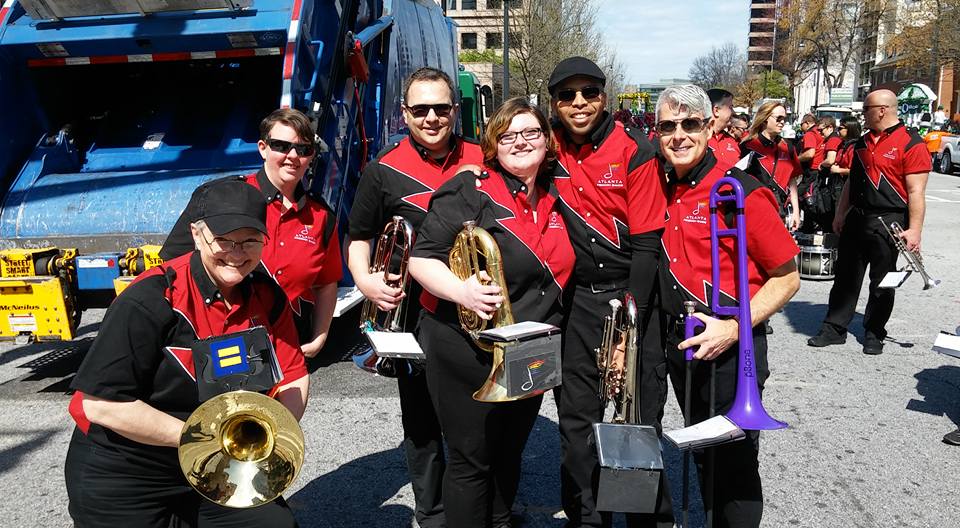
You make your plans, and God laughs. That’s what happened to me over the weekend. Let me go back, though, and start with discovering the Atlanta Freedom Bands, which I wrote about here in November 2014. I recollected how finding the band made me realize how much I had missed making music, marching in parades, performing in concerts. How after more than 30 years, finding the AFB was like discovering a new, yet long lost treasure. Last year, I marched my first season of parades in various Atlanta community festivals. It was wondrous. And at Christmas, I performed in my first concert playing French Horn in 35 years. Last Saturday morning, I marched mellophone with the AFB in the Atlanta St. Patrick’s Day parade. Afterwards, members of the band had lunch and drinks and fellowship at a local restaurant, which is the custom with this group.

Saturday night, kept waking up with what felt like a neck cramp. When I woke up early Sunday my speech was slurred, which I chalk up to needing a little more sleep, so I went back to bed. When I woke up again, I couldn’t blink my left eye. I ended up Sunday at the emergency room in Marietta. After they have ruled out a stroke, which was probably the best news I have ever received in my life, they told me I had a textbook case of Bell’s palsy. After a lot of googling I found out that it’s caused by virus, kind of like shingles. Likely because I had the flu, and that virus was in my system, it ended up attacking my facial nerve, causing it to be droopy and paralyzed. Like shingles, it was likely triggered by stress. In addition to facial paralysis–a word, like biopsy, fills me with terror–I have heightened ear sensitivity in my left ear, so loud noises, including my own sneezing, amplify like I’m standing in front of a Bose speaker. By all accounts, I will (should?) regain use of my facial muscles. Most well-wishers report success stories. It is totally unrelated to a stroke, and contracting it one time does not mean I will get it again. Those are the things I know. The worst part is that I can’t blink, so my eye gets dry and irritated. And that can lead to all kinds of trouble. I have to keep eye drops in it and wear a patch. Having only one eye affects depth perception and means I can’t drive. I can’t whistle or smile or buzz my lips. And buzzing one’s lips is essential to playing a horn.

Even though I realize I am very blessed in that this could’ve been so much worse, I’m still having to learn to deal with it. There are lots of adjustments I’m having to make pretty quickly. I’m learning how to have meals with straws and napkins. I’m learning how to turn my head in order to see better with an eyepatch. I’m learning to enunciate words using one side of my mouth. I’m learning how to encounter other people whose first response is to look away from me. I tried to go to the office yesterday, and by the end of the day I was exhausted from having to compensate physically in order to get from point A to point B, or participate in meetings. Talking and looking took a lot of energy that I had taken for granted. Part of the dealing with is going through my own stages of grief: denial, anger, bargaining, depression, and acceptance.

Sunday and Monday I was in denial. I jokingly made a list with Sarah of one eyed characters for costume parties. We go back and forth with one-eyed jokes. In case you didn’t know, there are many one-eyed one liners. Believing the doctors that taking the meds would speed up recovery by months, I thought, Well if I can’t play horn, I’ll just break out the old flute and play that! I tried for half an hour to form the embrasure to blow air across the mouthpiece.  I waited to blink at any minute. I planned to go to choir. Tuesday night begin my descent into anger. I kept a dinner engagement with some visitors to campus, old friends from my curriculum world. When I entered the restaurant, Marlows Tavern, which I had been to so many times over the past few years, the hostess looked at me and then looked away. Same thing happened when the waitress came to take my drink order. I realize now that I do the same thing automatically–probably most of us do.  The next day, I mentioned choir to Sarah, who slowly turned and looked at me and said, Honey, you’re not going to choir. When I looked back at her in one-eyed disbelief, she started singing a little bit of the Hallelujah Chorus, which we’ve been working on for a month. I thought my left ear would blow out. No, I wasn’t going to choir. When she dropped me at the office,  just walking from one building to the next took all my energy to keep my eye covered so it would not dry out. I had two meetings where it was very important that I be able to speak, and that was extra energy. My colleagues, wonderful people, tried very hard to look at me in a normal way–and for that I will forever be appreciative. Nevertheless, I feel different, I talk different, I look different. And that was psychological and emotional energy spent that I wasn’t used to spending.

I’ll let you know when I’ve moved from anger to bargaining. Till then, in order to work through some of that anger, in order that something generative and therapeutic might come from it, I decided to pick up the blog again. It’s always been my favorite, preferred mode of writing. Academic work is important, but it isn’t accessible, and it limits my flow of thinking since I have to measure my tone and phrasing as well as the thoughts themselves. Here, I can have a conversation, if only with myself. Plus, Sarah approves of it since it will help keep me out of trouble–like trying to do home-improvement projects with one eye that doesn’t need to get dust in it. Most important, this is all helping me put my life in perspective and put the parts of my life in priority. It isn’t an overnight revelation, but I realize that stress is counterproductive and can be harmful. I reaffirm that life is always already about the people in it. That being present and being mindful is living. I am intentionally choosing hope and happiness. Hope and happiness are not default properties, and being intentional about them makes a difference. As I think about it, coming to this place is a kind of bargaining. I will trade impatience for writing, frustration for processing, sight for insight.

Band friends at Sr. Patron’s
Mellophone


A mello-photo bomb