My Friend Duncan: The Scottish Terrier Who Won My Heart and Changed My Life

Image of Scottish Terrier Puppy sitting among potted plants

I still look for Duncan when I move from one room to another. I hear the little “click, click, click” of his toenails as he toddles across the wood floor. I think of him every time the leaves fall, expecting him to chase the light that dances between the shadows. I keep his little blue plaid collar with a spiffy bowtie on my dresser. I call our new dog–and sometimes call my son Daniel–“Duncan” when I’m in a hurry. I miss him.
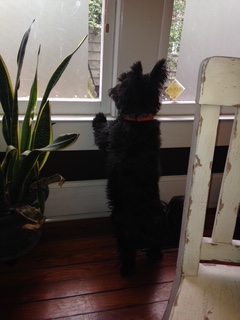
Image of Scottish Terrier standing on two legs looking out the window. Also pictures are potted plant and distressed dining chair.
Duncan standing on two legs looking out the window

I got Duncan for company and road trips, having been without a dog in the house for a few years. I had owned terriers before, but never a Scottish Terrier. While he was typical of the terrier breed, he was a Scottie, which gave him unique attributes, like not wanting his feet touched. He would yip and howl in holy terror at nail clipping time. He was a detached little fellow who did not need to be in my lap. In fact, I think he preferred to lie quietly at my feet. I discovered his staunch independence the day I brought him home. He was 10 weeks old, and I took him outside to the big front yard to start working on toilet training. I am used to puppies who want to be right with you–underfoot. Scottish Terriers have old people personalities even as puppies. I looked away from him for a minute to speak to a neighbor, and when I turned around, he was gone.

I looked all over for him–up and down the street, all sides of the house, under the porch, under the car. By this time my neighbor, who had returned to her porch, could see I was getting frantic. I yelled across our yards, “I just got him, and now he’s gone!” My neighbor had four kids, who all had friends, and who were all out in her driveway on bikes. She gave them marching orders: “Get on your bikes and look for the puppy.” And off they peddled, circling the block. It reminded me of communities coming together in movies, you know, like you don’t often see in real life. None of them had Duncan with them when they came back together.
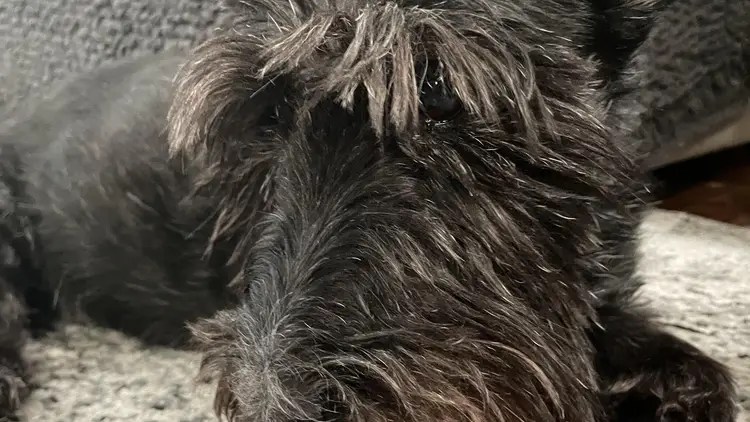
Image of a senior aged Scottish Terrier
My old man

It was then the next-door neighbor on the other side yelled to me from his back porch. “I see something little and dark. Is that him?” To this day, I don’t know how he had seen Duncan. I trudged to the pine tree he was pointing at in the far back of my wooded, sloped lot. There, under the tree in a patch of knee-high weeds sat Duncan. He was calm and stoic looking, peering through the fence toward the woods like Ferdinand the Bull in the story. This was the first of his sojourns, each one scaring me worse than the ones before.

When he was a young dog, he could escape from the average fence by burrowing under it. Terriers–from the French word “terre,” which means earth–were bred to “go to ground.” His favorite escape was to the woods to sniff for critters. Once, he cornered an especially slow squirrel and did not know what to do with it; fortunately for everyone but the squirrel, it died sitting there before Duncan could acquire the taste for blood. Usually, he headed off in the same direction–toward the woods–and the same neighbor would report a sighting after Sarah and I had been driving around the neighborhood for half an hour.

Image of Scottish Terrier next to a laptop computer
Duncan at work

One Sunday we came home from church to discover that not only had one of the kids left the gate open, but I had rushed out of the house (typical Sunday) without remembering to bring Duncan inside from his morning potty. Animal control had left a yellow note on the front door telling us when and where to come to bail him out. The one crabby neighbor in the neighborhood had called them. She had been afraid of a Scottish Terrier who was sniffing the ground and heading away from her house. We rushed to the pound, where one of the volunteers brought him out, jauntily jogging and smiling as he met us. The volunteer was happy with him, but not with us. She frowned as she took the opportunity to chastise us and issue warnings about consequences if it happened again. It didn’t. After that escape, we reinforced the bottom of the chain link fence with chicken wire, which I’m sure did not increase our property value.

He lived longer than the typical 10-year lifespan of a Scottie. One day I suddenly realized he was approaching 13, and I knew then he was living on borrowed time. He was noticeably slowing down, asking to be pulled in the wagon as we explored local trails. I had never been able to train myself to be a good leash walker (note how I said train me, not him). Duncan tugged and ran ahead until he found the perfect patch of ground, where he would have sniffed every blade of grass if I had let him. I couldn’t take him on brisk walks with cardio benefits because he would take three steps, stop to sniff, repeat. Now that he was a senior, we went on short walks with fewer stops and tugs. He reverted to peeing in the house on corners of the furniture when he got up for his nightly midnight drink. We began to crate him at night.

In the spring of his thirteenth year, he started throwing up. He was still eating and drinking, behaviors that I knew usually slowed and stopped at the end of life. I did not think we were there yet. The vet gave us a prescription for pancreatitis and told us to bring him back in a couple of weeks if the vomiting continued. After a few days, it got better…until it started again. The first night he threw up in his crate, we held our breath hoping it was a fluke. The second night we planned to take him to the vet for a re-check on the pancreatitis. Our wonderful vet gave us the dreadful news. “The pancreatitis is fine,” he said. “It’s these lumps I’m worried about. Let’s get him a scan.” The results showed golf ball-sized tumors in his abdomen. That was the first time I cried at the vet’s office.

Image of Scottish Terrier sitting on window ledge looking outside at a tree and building
Duncan on guard

Being the thoughtful person that she is, and to bring me out of my sadness to focus on what was really important during all of this, Sarah began to plan Duncan’s “bucket list.” At first, I just went along. But then I started to understand; it was really our bucket list–mine and his, together. We loaded up the little red wagon we had bought to cart the old man around and went camping. It makes me happy to think of him sitting in the middle of the campsite in that little wagon. We hit the trails and took road trips. He got a pup cup from the local ice cream shop. The only item on the list we did not get to was taking a trip to Alabama so that my folks could see him again. My sweet mother proudly reminds me that it was she who house trained Duncan when he stayed with them for a couple of weeks. She misses him, too.

The end came soon after. In three weeks, his belly was hard and swollen, and he began panting through the night. He was dying. I held him in my arms as we went into the veterinary room, held him when the kind vet administered the first shot, the one that sent him into a deep, peaceful sleep. But I could not bear the final shot. When I broke down and collapsed in the chair, Sarah petted and soothed him for the last time. It is the hardest thing I have ever done, and it broke me. I am crying now as I remember, and it is only now, months after, that I can bear to write about it. I still cannot look at the rosewood box with his ashes; Sarah has put it away for now.
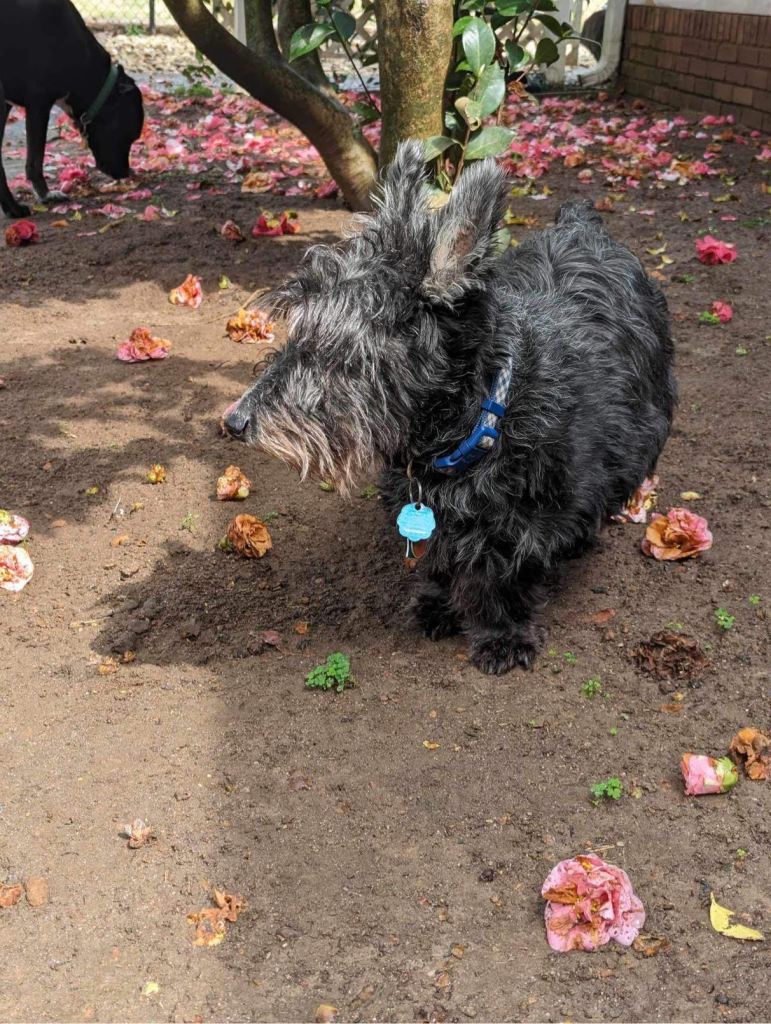
Image of Scottish Terrier under gardinia bush with gardinia flowers. Also pictured is a lab mix black dog.
Duncan under the gardinias

I don’t use the word “pet” when I can help it now. I don’t use the language of ownership anymore. I have done so here to reflect the lessons learned from my Duncan. He was my friend. A stalwart sentry, he was a proud dog who carried himself with dignity. Even during his last months, he never slouched or walked with his head down. Each step was deliberate and graceful, almost tiptoeing. He had the presence of a little gentleman. Duncan was lovingly stubborn until the end, tilting his head and gently pulling on his leash if he was not yet ready to continue our stroll. When he was groomed in that standard “show dog” cut, his brindle patterns were tiger-colored, swirling around on his back and neck like a chocolate and caramel brownie. He was magnificent.

Duncan has helped me navigate the passing of time, which is the gift from him I appreciate most. Life is short; if you want to see how short, reflect on the lifespan of a beloved furry companion. I grieved his death more deeply than I ever have before, with my immediate family still living. I am forced to prepare for inevitable loss of parents and the sad yearning of looking into the void where they once were. I picture Duncan looking at me and tilting his head, like when he was listening to me. “Yes, it’s indescribably hard,” he seems to think. “Just keep your nose down and keep tracking.” On days I work from home, I look at the sunbeams on the rug and think about how he used to sit and stare at the beams, expecting to catch one at any minute, his whole body alert and quivering, his tail wagging in anticipation. And after all, that’s life, isn’t it? Head down, keep tracking, and always look for that sunbeam you’re about to catch. Thank you, friend.

Image of Scottish Terrier named Duncan in a pond. His tongue is out as though he is smiling.
Duncan in a pond

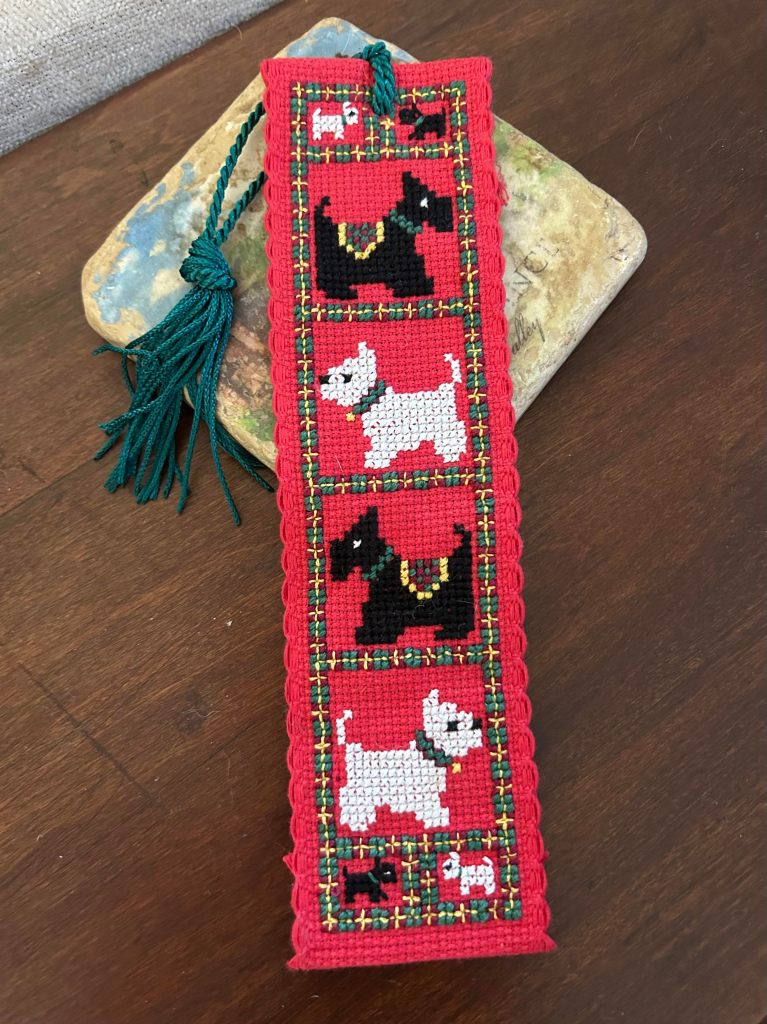
A final note, throughout the essay, I have referred to “we,” plural. In reality, Sarah provided Duncan’s end-of-life care and doctor visits. Reading this, she jokes about the so-called loyalty of Scotties, since when she entered my life, he adopted her as his person. He sat in her lap and asked for pets the day he met her–and continued to do so for the next 10 years. She reminds me that Duncan was in fact affectionate with her, if not so much with me. She was the only human whom he would allow to touch his feet. She made me the lovely Scottie bookmark in the picture, and I thank her for caring for us both.
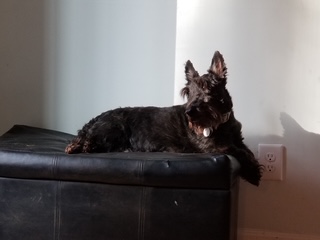
Image of Scottish Terrier named Duncan reclining regally on a settee
Duncan looking regal and thoughtful
Image of Ugena Whitlock holding Scottish Terrier Duncan while on vacation.
Duncan and Me
Image of red bookmark with green tassle that shows two large Scottish Terriers, two large white Scottish Terriers, two small black Scottish Terriers, and two small white Scottish Terriers.
Beautiful intricate Scottish Terrier bookmark by Sarah

Exciting News: A New Chapter for the Blog!

Image of Logo for Blog The Front Porch Professor with rocking chair, typewriter, and Mazda Miata..

Hello, friends! I’m thrilled to share that my blog is getting a fresh start under a new name: “The Front Porch Professor.” This new space will continue to feature the reflections, stories, and observations you’ve enjoyed, with a renewed focus on life, learning, and the journey ahead—all with a touch of Southern charm.

I’m currently working on exporting all my posts from Just Keep Swimming to the new blog, so nothing will be lost. If you’ve been following here, I hope you’ll join me on this new adventure! With any luck, your subscription will carry over seamlessly, but if not, I’ll share the link to the new blog soon so you can continue following along.

Thank you for your support and encouragement—stay tuned for updates and more from “The Front Porch Professor.”

Without a Country. Why isn’t this obvious?

In 1973, Cliff Robertson starred in an ABC Movie of the Week production of Edward Everett Hale’s story, “The Man Without a Country.” In it, an American officer is being court martialed for consorting with Aaron Burr. He wanted to make a point about the disunity of the new country and so blurted out, “Damn the United States! I wish I may never hear of the United States again!” The judge took him at his word, and in a rather pissy move, sentenced Philip Nolan to spend the rest of his life sailing the seas on American warships without ever setting foot on or hearing any news about the U.S. again. It’s one of my favorite stories (and made for tv movies!). I have thought about it a lot over the last few weeks. I think–even though I get the point Nolan was making (kind of like Rev. Jeremiah Wright’s in 2007, see https://abcnews.go.com/Blotter/DemocraticDebate/story?id=4443788&page=1), my wistful call would be, “Bless the United States! I sure would like to live in ‘United’ States again.”

I took a break from blogging regularly over the last four years to go to seminary. In fact, the election of 2016 was a big reason I decided to go to seminary. I had a low, sick feeling more and more people would be hurting, and I wanted to be able to offer spiritual care. If you want to say I had a call, that was it. And that was before Covid-19, kids in cages, Russia and Ukraine, Charlottesville, Black Lives Matter, George Floyd, corporate deregulations, revocation of environmental protections, withdrawals from the Iran Deal and Paris Climate Agreement, Jeff Sessions, William Barr, Brett Kavanaugh, insurrection, embracing of dictators, Kenosha, Cruz & Hawley, QAnon, Seattle, Jeffrey Epstein, Harvey Weinstein, The Big Lie, The Year 2020–and more that I could name, like these, off the top of my head. And oh yeah, did I mention Covid-19?

It is not hard to see, as all major news outlets and commentators are reporting, how every day of the last four years led directly to here. Radical insurrectionists planned for months to descend upon Washington, D.C. to be directed by the President of the United States to storm the U.S. Capital while Congress was in session. The President and members of Congress–bolstered by Republican led state legislatures–actually expected and attempted to overturn legally certified (by Republican legislatures) election results. Both Democrat Congresspersons and Republicans who voted to approve the Electoral College results–including the Vice President of the United States–are afraid they will be hurt or killed. By their congressional colleagues and their supporters. Some members have been attacked in airports; others are switching up their daily routines to throw would be attackers off. Representative Alexandria Ocasio-Cortez posted on Instagram she was afraid her colleagues would help the insurrectionists kill her. Let that sink in. https://www.nbcnews.com/video/alexandria-ocasio-cortez-tells-instagram-i-thought-i-was-going-to-die-during-capitol-riot-99380293747

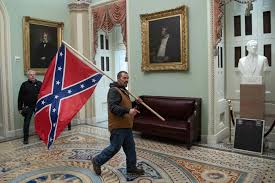
(Not a Civil War era picture)

I am still trying to form coherent thoughts about our United States at the end of a four-year dumpster fire. I am trying to see, as I have begun to do since seminary, where God is in all of it. Here is a ramdom list of (what I think are) relevant thoughts on the country on the eve of Joe Biden’s inauguration. Really random.

  • For about one day I was able to feel a lightness of spirit as Georgia, the state I live in now, replaced two Republican senators with two Democrats, one, the first Black Georgia Senator ever. That was on January 5.
  • Black people and white people do not live in the same country. Where White people are angry, fearful, frustrated, and shocked at the events over the last four years, Black people are shaking their heads saying, “We tried to tell y’all.” This is how it feels. As activist Kimberly Jones said, “Be glad Black people aren’t seeking revenge” (https://www.youtube.com/watch?reload=9&v=YPfeg6E52nA). To reiterate: Black people AREN’T seeking revenge.
  • Related: White people, People of Color are going to outnumber us in a couple of decades–in our lifetime. Start living now like that is a fact.
  • Related: If you are worried about a “way of life,” or “American values,” or “The American Way” going away, you are resisting the above fact.
  • A Confederate flag was paraded through the United States Capital on January 6, 2020. Even Robert E. Lee was not able to do this.
  • Related: A gallows with an expert looking noose was set up on Capital grounds on the same day.
Gallows & Noose, U.S. Capital
  • It is looking more and more like the insurrectionists were led on recon tours by Congresspersons and Congressional Staff.
  • The President is not The Godfather. He cannot call up and strong arm Secretaries of State or State Legislators to find votes that simply were not there. Everybody knew, including him, that they were not there. He and the radicals just wished they were.
  • Concealed Carry is not a good idea. I don’t see how anybody could say it was ever a good idea. People voted for it anyway. Same with Campus Carry. Nineteen year olds with weapons. Again, who thinks that is a good idea?
  • Related: Nobody is coming for your (hunting, social, skeet, toy, cigarette lighter, BB) guns.
  • The President is using Christians. Christians please realize this.
  • Hillary Clinton’s statement about “The Deplorables,” taken out of context, helped lose her the election. Donald Trump looked at his supporters and called them low class. Please be insulted by that, too.
  • I knew the day Tommy Tuberville announced he was running for U.S. Senate he would be elected by the good people of Alabama. Even Alabama Fans (Roll Tide!) voted for the former Auburn football coach.
  • Coach Senator Tuberville stated the three Constitutionally established branches of government are the House, the Senate, and the Executive. They aren’t. (Legislative, Executive, Judicial). If there are tests to become teachers, lawyers, accountants, doctors, airplane pilots, and drivers, we might think about having one for members of Congress. It wouldn’t have to be that hard.
  • Between Tuberville, Congressman Mo Brooks, and Jeff Sessions, Alabama has done enough for the country for awhile.
  • There did not have to be 400,000 deaths from Covid-19 in the U.S.
  • Related: There are places in this country where if your last chance to live is in an ambulance. If you can’t be revived there, you die. ERs are full.
  • Science and God are not at odds with one another. Science and religion are.
  • “My individual rights and my Freedom of Religion” should not be used as excuses or weapons for not doing what you want. See above about Christians being used.
  • Radical Far-Right Extremism is the biggest threat to this country right now. They were hiding and secretive about their destruction until Donald Trump validated their voice and they came out into the open.
  • Far-Right Extremism is White Supremacy is Far-Right Extremism.
  • Read the above again.
  • Fear of liberals and Democrats and Republicans and progressives is irrational. Fear of extremists is not. Decent people can become radicalized to not see this.
  • Related: I have written before that MAGA people are angry. Maybe not all of them are, but some are, and they are also strategic.
They were there too.
  • Those Senators and Congressmen must really love their jobs (power, privilege, status) if they are willing to make excuses for Donald Trump and not get rid of him when they had the chance. I don’t know how it is a question as to whether to vote to ban him from running for office again.
  • Related: If they don’t vote to ban Donald Trump for running for office again, NONE OF THEM will have a chance at a 2024 presidential run.
  • Related: Donald Trump is far from finished in his influence over conservative Americans.
  • It only took 4 years for near-total devastation of capitalist-based democracy to almost colapse on January 6. Some Republicans condescendingly said asked after the November election, “What can it hurt to humor the President for these last few weeks?” See January 6. Now you know.
Indellible image of insurrectionists storming the Capital on January 6, 2021

That’s enough for now. I’ll be back with more. Looking over my list, I realize my hunch in 2016 was right. People are hurting–and are hurting each other. I believe that love is the answer. That we scoff at that thought as empty, powerless, and trite, is part of the problem. It says a lot about how so very necessary love is. More on this later.

Who remembers the ABC Movie of the Week?

Ok, how about now?

Thought so!

Just Keep Swimming: Pandemic Edition

This is my first blog post since everything has changed. Everything. So where to start? To begin with, today I am not going to talk about the politics of it all. I wanted to lay out the sequence of events so that I can remember them–where I was, what I was doing. Reflections will come later.

In February, we heard the word Wuhan for the first time. I recall Sarah mentioned it in passing, and I remember replying, “Oh, ok, uh-huh,” without stopping what I was doing. Throughout that month and into March, I may or may not have clicked on updates from China that came across my news feed, but since it was not a topic yet related to U.S. politics (my preferred topic), I likely kept scrolling. Then came March.

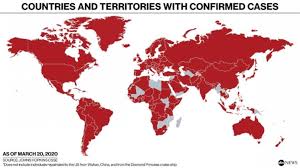
On March 1, there were 75 confirmed cases in the U.S. On March 9, the day Sarah was to drive to South Florida for a math conference, there were 704. On March 10, we cancelled a cruise we had booked with Sarah’s family and church pals. Then on March 11, the World Health Organization (WHO) declared COVID-19 a pandemic. By March 12, the day she decided to come home early, the number was 1,697 (https://www.worldometers.info/coronavirus/country/us/ ). By the way, COVID-19 is the specific strain of coronavirus (a general group of viruses); to call it the Chinese coronavirus is not only inaccurate, it’s racist. Yep. You may not care for the Chinese government, but those folks over there got sick like us folks over here. See? 

map_cov19

By mid-March–which sounds and feels like a decade ago as I write it–online news sources had special COVID-19 pages/links, where you could see all news updates related to the virus in one place. The 2020 Democratic primary was affected. Super Tuesday was pretty much overshadowed. Candidates and other politicians–including the president, who thrives on rallys–began cancelling. The last Democratic debate–like all late night shows–were held without live audiences. I must admit I approve of the format for debates–for Stephen Colbert, not so much. As early as Saturday, March 7th, Kennesaw State University had begun to develop a “continuity plan” in the event face-to-face classes were suspended. It was essentially a plan for all courses to go online.

Unexpected issues started cropping up, too. For example, what would students do if dorms and dining halls were closed? What about homeless students (and all universities have them)? What about students who did not have computers or notebooks, but only their smartphones? The news channels began to have question and answer programming where viewers sent in questions for experts to answer. We submitted our plan to the university president by March 10th, and then we waited. It truly felt like a calm before the storm, eerie silence and all. By the evening of Friday the 13th, announcements came that public schools and universities would go online the following week. Church services across the country scrambled to find ways to make virtual worship meaningful. This was also the day that everyone in America went to the grocery stores for toilet paper.

Monday, March 16, was the day the stock market had its worst day since 1987. It was also the day we started setting up our home offices. Sarah had worked all weekend preparing to teach three in-person classes completely online–and have office hours virtually. I brought home monitors and books from the office after having one virtual meeting on my laptop. Honestly, I need the 2 monitors so I can do other things during the meeting, like look for social distancing staples online. You know you do it too, which is why it is on one of the 10,000 blog posts called, “Good Virtual Meeting Etiquette.” I have so far had five virtual meetings this week. It got so bad, one group had trouble finding a time–from home during social distancing!–to schedule our next meeting. A well-meaning colleague suggested meeting early–8:30 or 9:00 am–so that people would be free. I told him it was obscene to start that early. Because we are at home does not mean we are always “on,” which he was NOT suggesting. But it’s something to think about.

virtualmeetings

So, it is Friday, March 20, and we are caught up with the basics. I have learned how to change my Zoom background and so far have been at the Grassy Knoll, the White House, Graceland, and inside the Tardis. We have cooked more this week. Sarah has started an outdoor garden–so far with mainly carrot tops from our increased vegetable consumption. My office is a thing of beauty, and I am about to run out of diversionary tactics related to rearranging it. I have so far ventured out twice–both times to the office and thrift shop. I took wipes and sanitizer. I have taken a walk. We are ahead of the laundry. I have read Scripture and Sister Joan Chittister’s take on The Rule of Benedict every morning.

The other pandemic task I worked on this week was connecting. I realized that part of my own continuity plan should include staying in contact with people. As an introvert, it’s saying a lot that I should have that as my concern, but I am aware that I self-isolate enough anyway–imagine when it is mandatory! So, I hit the Facebook and made “Friends” with people from all parts of my life: colleagues, church folks, family, old classmates, scholar friends. I paid attention as people started setting up “Hangouts” and various groups and web meet ups. There have also been plenty of news and blogs encouraging people to take precautions to avoid loneliness, which will be very real as this thing goes along. Speaking of blogging, it’s another way I feel connected, and I’m planning on doing it more. There should be plenty to write about. One thought I had this week, during my containment prep, was how aptly named the blog is, Just Keep Swimming. If it was appropriate up to now, it sure is as we move forward. It is, for me, a hope-full idea: hang on, keep going, do the best you can. That’s the plan, anyway. 

dolphinhope


A Parenting Psalm: Wisdom Prayer for My Children

I remember as a young girl my Daddy pointing out the difference between knowledge and wisdom. Wisdom comes with age, he said. Well, he finished, it ought to. It occurs to me—I am trying not to worry about it, really—that because of life’s circumstances, there are many “words of wisdom” I have not taught my children and may not ever have the opportunity to tell them. Help me, oh God, put some of them down here.

Be happy with how you look—love your body; it contains your beautiful spirit. Your body will change as you get older; help it along with kindness. You don’t ever have to think of unpleasant or embarrassing moments from your past; banish them as soon as they enter your mind if they bring you pain. Try to forgive your parents; they are deeply flawed. Know that you are loved, and it’s ok to feel the love from generations before you. Fill your life with non-human animals; you already know they love you unconditionally. You can feel it. Carry yourself with pride without being prideful; it just means admire yourself with humility. If you have children, teach them the Bible stories and make them learn some verses; if you have forgotten, learn them again. Don’t be afraid of the dark; don’t be afraid to fly; don’t be afraid to travel. Stay away from negative people; trust your instincts if you have doubts about someone’s integrity.

Never settle when it comes to a partner; never be with someone who is settling for you. Go outside. Go see some old ruins. Go to New York City and Washington D.C. and New Orleans. Go to the Pacific Ocean. Go stand in an old cathedral and an old country church in the woods. Remember to look up at stars. Find a job you like and stick with it. Save enough money, but don’t worry about not having a lot of it. Don’t accumulate a lot of things; curb your desire for things. Let yourself be enthusiastic. Let yourself be awed. Remember that children are raised to grow and go—whether it is you or your children. Read. Pray for guidance when making decisions: let your litmus test be, Will I regret more if I do it or don’t do it? Sing. Learn to do something fun that you are proud of. Eat dessert now and then. Keep a journal. Know that when most people say “happy” they mean “instantly gratified.” Those aren’t the same: be happy. Be kind. Let yourself be a nerd when it comes to learning. Never stop learning. Have integrity. Look at some art, and learn something about it. Take care of earth however you can; we’re using it up and won’t get another. Help people. Take help from people when you need it. Learn poetry. Believe in God so that you can know that God is with you and has been there through all of it.

This is my prayer, God, for my children. Amen.

IMG00071

I Heart Blogging, or, Thank You Dorothy Allison

Here’s what you’ll see on my About page now.

When Sam Phillips’ secretary at Sun Records, Marion Keisker, asked Elvis who he sounded like, he replied, “I don’t sound like nobody, ma’am.” Writing can be such an isolating activity, that I’m sure I’m not alone in feeling like I don’t write like anybody else does. I sure don’t feel like my writing is a neat fit in most other places. Blog writing feels right. First, it isn’t traditional academic writing like I’m required to do as a professor. I cheat at that usually–it’s such a formulaic, forced disciplinary exercise. When I do it, I write my narrative first and then sprinkle in the theory. Don’t laugh~~it earned me a Ph.D. and tenure. Thing is, the narrative is all I ever want to write.

For the purpose of categorizing it, I’m going to call it personal essay and memoir writing. It’s personal, and it’s narrative.

It’s not exactly essay, if by essay we prescribe more gatekeeping formulas. Same with memoir. It’s not storytelling exactly either, not like fiction. It is storying, though.  For example, here’s a true one. Back in around 2003, Miss Dorothy Allison came to LSU while I was working on a doctorate in education. I just love Dorothy Allison, especially her Skin: Talking About Sex, Class and Literature. I was lucky enough to participate in a writing workshop one evening, lucky because most of the spots were taken by English majors.

One of the exercises was to free write for a few minutes. She asked for volunteers to share, and I, having a huge student crush, shot my hand up. I truly think my writing is not half bad, and have been told as much. So I shared. Did I mention that almost every other participant was an English major? English majors take their critiques of writing very seriously. The most scathing was from a very serious woman who accused me of attempting to replicate Miss Allison’s style, which honest to God, had never crossed my mind. You know how crushing it is to the soul when someone looks at you–and you recognize the look as one of pity? Miss Dorothy Allison looked at me like that.

Still, it’s–this–is the kind of writing I want to do. The kind that, try as I might, is what comes out. I still don’t think it’s half bad. That’s why I’m putting it out here. If not another soul reads it–or if English majors do and snicker like the Prufrockian Eternal Footman–I like seeing it here.

hp photosmart 720
Me and Miss Dorothy Allison, 2003. Before the English majors got a hold of me….

Thoughts on Prayer Following the Christchurch Massacre

As I write this, another heinous mass shooting has taken place by white supremacists, this time in New Zealand. Almost 50 of our Muslim neighbors were murdered and 20 seriously injured, killed while they were praying. This attack is on my mind and heart as I contemplate this week’s Core Forum on prayer. As one public figure tweeted this morning, “Whether it is antisemitism in Pittsburgh, racism in Charlottesville, or the xenophobia and Islamophobia to day, violent hate is on the march at home and abroad….Silence is complicity.” I include this because the connection is made to multiple groups that are targeted for no other reason than hatred of any particular difference. The city where this atrocity occurred is called, ironically or not, Christchurch.

I have a chaplet that has inspired my prayer this week. If any of you are like I was and do not know what a chaplet is, it is a kind of small rosary–a prayer object–that usually has a saint medallion/object attached to the beads. Mine has two medallions. The first is St. Francis, whose prayer I have always loved, and the other, newer one is Julian of Norwich, whose mystical experiences inspire me. Julian’s words also comfort me like a gentle voice and touch soothes a child: All shall be well, and all shall be well, and all manner of thing shall be well. I also made this quote my phone wallpaper–a postmodern engagement with the 15th century mystic. Still, when I see the words, I pray them. I’m thinking Fundamentalist Evangelicals do not a rule pray chaplets or contemplate icons in our prayer life. That’s unfortunate because for me it has deepened my prayers. Henri Nouwen says, “Icons…lead us into the inner room of prayer and bring us close to the heart of God” (p. 61). Whether icons are kinesthetic like mine, or natural, they open us to the Mystery of God’s presence.

The politician’s quote, above, suggests to us that the end to hatred and violence–peace–comes at a great price: our psychological, emotional, and embodied engagement. I am reminded that when the messages of MLK, JFK, and RFK turned from civil rights to peace, their lives were extinguished. The work of peace is a work of justice, and justice is the nature of God. Thoughts and prayers are not acts of peace in the world; prayer is that place of mystery where we might know that all will be well. Prayer is the interior castle (Teresa of Avila) where we are lost with and strengthened by our Beloved. Prayer is not what we do for the oppressed; prayer is what we do for ourselves so that we can have the strength to do the hard work of justice. God waits for us.

Coda: When John Lennon’s “Imagine” was released in 1971, it scared people–Christians who feared the new peaceful, global social order it suggested. In an interview with Playboy magazine, Lennon said that Dick Gregory had given Ono and him a Christian prayer book, which inspired the concept behind “Imagine.” A prayer book. He said,

The concept of positive prayer … If you can imagine a world at peace, with no denominations of religion – not without religion but without this my God-is-bigger-than-your-God thing – then it can be true … the World Church called me once and asked, “Can we use the lyrics to ‘Imagine’ and just change it to ‘Imagine one religion’?” That showed [me] they didn’t understand it at all. It would defeat the whole purpose of the song, the whole idea. (Wikipedia).

They were right to be scared, for it calls for an end of systems of domination, by definition the domain of the dominant culture. I wonder if we are any more willing to pray it today.

Imagine (a Prayer)

The lyrics are below.

Imagine there’s no heaven
It’s easy if you try
No hell below us
Above us only sky
Imagine all the people
Living for today (ah ah ah)
Imagine there’s no countries
It isn’t hard to do
Nothing to kill or die for
And no religion, too
Imagine all the people
Living life in peace
You may say that I’m a dreamer
But I’m not the only one
I hope someday you’ll join us
And the world will be as one
Imagine no possessions
I wonder if you can
No need for greed or hunger
A brotherhood of man
Imagine all the people
Sharing all the world
You may say that I’m a dreamer
But I’m not the only one
I hope someday you’ll join us
And the world will live as one

The Journey Begins

Thanks for joining me!
Good company in a journey makes the way seem shorter. — Izaak Walton
post This is a place for peaceful contemplation inspired by story. What is spiritual mindfulness? For me, it is remembering to feed my spirit. This blog is a spiritual practice~~storying the soul, if you will. Most sites I find on either one of these topics focuses on meditative and wellness practices. Maybe that’s what you are expecting here. I hope you’ll be pleasantly surprised as instead you find a narrative approach to exploring spirituality, mindful of the everyday. That’s what I do–I write. For almost two decades I dedicated my time and energies (a lot of mental energy, i.e. worry) to academic writing. Here’s how I did it: I would write my narrative essays about place, religion, gender, sexuality, white privilege, etc., and then cite the requisite sources (that’s the academic part). But a funny thing kept happening. People would approach me after a panel presentation and say, “You know, you really ought to write a book with just your stories.” Which is exactly what I wanted to be doing. The problem is, I am an academic; thus, the academic writing.  This is a period of discernment and transformation in my life. Of course, that’s part of what you’ll find here too. I started to seminary and had to make some life choices. One was to step back from academic writing and do the kind of writing I really do enjoy–and that’s what you are reading now. I invite you to come along on my journey as I nourish my own spirit through story telling, being mindful of every, every minute, as Emily in Our Town would say. It is my hope that my stories offer you nourishment of some kind too.  The writing here comes from observations that dawn on me as I go about living life with as much intentionality as I can muster. That’s the mindfulness part. What makes it spiritual? Well, that’s the part of me where the words come from—the part that hopes to connect us to, as Paul Tillich would put it, the ground of our being. One.


Lessons from My Face

Prompt from Mindfulness: A Journal (Price, 2016)
Make a list of ten everyday activities that you find relaxing or soothing–even those as small as calling a friend or making a cup of your favorite tea. Try it! Do one of the activities on your list and write about your experience. 

The List, in no particular order:
1. read–theology, queer theology, JFK assassination theories
2. watch television–documentaries, period pieces, docu-dramas, biographies
3. having my afternoon cup of espresso made with my luxury-item coffee maker
4. playing piano
5. tidying up
6. singing
7. listening to music, which kind of music depends on my mood
8. reverie, including porch time with close friends
9. meditating with my Calm app

I realize this is probably a sad little list for many people. I can’t even think of a last item offhand. But I think my simple list hints at my capacity for finding joy in the simplest of experiences, noticing a blue bird, for example. This capacity, in turn, points to my state of being generally, happy. I have, though, always had a facial expression that belies this inner state; I found out it has a name: bitchy- or angry-resting face.  Challenge enough, without the surly-resting face that Bells Palsy begat. These days I have to work to put my best face forward.

It has almost been a year since Bell’s Palsy took over the left side of my face. I’ve written about it~the depression and frustration and then hope-full-ness. So, after a year I realize that I have some important takeaways from the experience. The most important is when God wants to get your attention, God finds a way.

What else have I learned? Well first, people look instinctively at the face for a clue as to how any given interaction is going to go, whether it is saying hello or engaging in conversation. I have learned to flex my smile muscles when I’m walking down the hall or into someone’s office or into a meeting. Otherwise, I can see in their eyes that they’re bracing themselves. This is different than before the BP~~now I can actually feel the muscles pull when I try to look pleasant, or when I smile. If, as the author of The Surprising Psychology of Smiling, below, is correct and smiles tell you something important about the wearer, I must intentionally craft a message of authentic friendliness if I expect folks to tell my important thing!

The Surprising Psychology of Smiling

I don’t have a poker face; I cannot remain neutral whether I am pleased or aggravated. The other day I learned the term for this: microexpressions. A microexpression is an involuntary facial expression that occurs in around 1/25 of a second and exposes one’s true emotions. Wikipedia tells us that they occur when a person is trying to conceal all signs of how they feel about an interaction or situation. Microexpressions seem to be universal; everybody has them. People with good social skills learn how to recover from them faster than others. Still, I am not sure there is much “micro” about my expressions. They go directly to macro. Now I actively practice relaxing my face so that it can achieve a neutral expression, and I savor the feeling of the muscles at peace.

My face isn’t always doing what I think it is. This is particularly noticeable in the morning when my face is waking up with the rest of me. It takes a second of extra effort to raise my left eye completely. One morning I looked at myself in the mirror while I was singing. The sound was coming out as usual–I sounded like myself. But only one side of my face was animated and expressive; the left side was still lagging behind. My mouth looked more like a “D” than an “O.” I’ve really had to practice this one. During choir, I have to work those same smile muscles in both my mouth and my eye while singing. And while it feels from the inside like I have a pageant smile on my face, it’s actually forming my old singing face. This reminds me of how you have to exaggerate expressions and voice on the stage during a play. It may feel like over acting, but it comes out sounding natural.

I have learned to take cues from my face. When I become frustrated or irritated, I can feel the large muscle in my cheek–the one that runs from my eye to my mouth, which makes it a serendipitous mindfulness check. Stress almost certainly triggered the BP in the first place, so I use its manifestation to my advantage. And, I continue to search for a spiritual meaning in it all.  For example, one charge to Christians is to see the face of Christ in everyone we meet, which is another kind of mindfulness cue~~one toward compassionate service, of love. I like the thought of this, of seeing the face of Christ in ourselves and others, but Jesus’s expressions were not just happy ones. He suffered from emotional, psychological, and physical wounds. Jesus got mad; he too was under stress. I guess that is really an important lesson I had not thought of~~to accept my new natural face. If ultimately this is the most muscle control I ever recover, which I reckon to be around 87% (when I can whistle properly, I’ll round it up to 90%), then I must lovingly cherish my face, deliberately, as I have not had to do before. I mean, of course I used to wish that my nose were pointer and my smile bigger, but it was my face and I loved it. I am learning to love it again now, and in the process I am learning so much more.

Billy Joel “The Stranger”

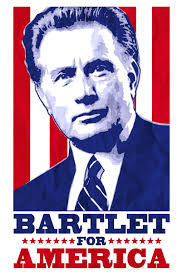
Where Have You Gone, Jed Bartlet?

Sarah and I have recently taken to binge watching The West Wing. She’d never seen the entire series; I had, but after this presidential election, I wanted to watch it again. That doesn’t really capture it. I felt compelled to watch it again. Even during the presidential debates, I started getting the feeling that in some way reality was slipping away from me and my country. Here was the heir apparent, the presumptive winner of the whole shebang, Hillary Clinton. She looked like a president; she talked like a president; she had all the experience and credentials one (well, a democrat one) would expect and hope for in a president. She appeared in debates with Nondescript White Guy and Bernie Sanders, a socialist senator from Vermont. A socialist senator from Vermont??? But, Bernie kept her–and us–honest.  I never for one minute thought he was electable, but we need politicians like Bernie Sanders to influence the Democrat platform toward equity and access.

On the Republican side there were more candidates than a stage could hold. The thing is, I’m a firm democrat, but there were a few Republicans that I could have resigned myself into voting for if, say, it was uncovered that Hillary had broken the law or was indicted before the election. As I’m writing this, I find it incredible that I just talked about a voting option pending my candidate being indicted for a felony. The signs, you see, were always already there. Anyway, one by one TV celebrity and real estate tycoon Donald Trump picked off credible Republican candidates. He bullied, he lied, he badgered, he mocked, he was dismissive, until at last, there was only him. He was the Celebrity Apprentice host!!!

Election night at our house looked a lot like the SNL skit the following week. Here’s the link: https://youtu.be/SHG0ezLiVGc. We had barely gotten our election night snacks out before the tide started to turn. The story that night, for me, was less that our highly qualified candidate lost, or even that the unfit, unqualified, unprepared, and undesirous candidate won. The story was the shock and despair of the commentators and pundits. When James Carville and Rachel Maddow tell us we’re in trouble, we’re in trouble. Like the (white) people in the skit, our night devolved as it went on.

Then came the 75 days of blissful collective denial. Never have I heard so little talk–so little acknowledgement–of the transition of presidential power. We were a country living a Diana Ross song: just walk away in the cold morning light but let us have the warmth of this long, last night.

And then the inauguration happened. So we turned to our president for solace and wisdom–our president of choice, that is. As we watch our nightly West Wing episodes, astonishingly, the “current” events of the show are again and again eerily similar to current events in our new un-reality. I understand that WW characters are blessed with good scripts–smart, educated, professional, savvy, clever, introspective, commanding–and the genius of Aaron Sorkin.  It’s when I turn it to MSNBC that the badly scripted please-don’t-let-this-be-real-reality show begins. It’s not that a television series presents a more desired reality, it presents a more realistic reality.

Yesterday, I found a Buzzfeed post from one year ago this week, 28 Jed Bartlet Moments We All Need To Be Reminded of Right Now (www.buzzfeed.com/robinedds/let-bartlet-be-bartle). Now that I think about it, it’s not that I need to be reminded of Jed Bartlett moments, it’s that I just so badly want to be. And, I’m not the only one. I’ve mentioned my realistic reality hypothesis to several friends, and they often reply that they too are re-watching the series seeking their own Jed Bartlet moments. These moments model statesmanship and diplomacy, negotiation and compromise. They show a flawed president, his seat-of-the-pants staff, a nettlesome press, and an entrenched, polarized congress–making government work. Making democracy work. I think here’s the part that makes the realities so stark for me: when called upon to make certain very hard decisions, Bartlet grapples with his integrity, his ethical compass. He makes the decision but he does so loathsomely. Our current president shows no sign of grappling–in fact, no sign of an ethical compass. There is no sign, even, of an acknowledgement that any decision was difficult. We do not know how this president comes to a decision, and how one comes to a decision is sometimes as significant as the decision itself.

Where Bartlet feels such a profound sense of accountability to Americans that it visibly weighs on him, there is no evidence of such a sense on our current president. So I will end this post with the obvious: if he doesn’t have one, we’ll provide it for him. We must not normalize this unrealistic character who has crafted the most elaborate reality show in U.S. history, and we must hold him accountable–by insisting that the press call him on every word, every move. In one marvelous scene (of many), Jed’s Chief of Staff reminds senior staff of a core maxim by writing on a yellow pad, Let Bartlet Be Bartlet. Leo knew that Bartlet’s character was an intangible asset to be factored into the hard work of governing. So I say Let Trump Be Trump, for his character, too, will manifest so that its effect upon government can no longer be ignored.

Below is a YouTube link to the Feckless Thug scene of Two Cathedrals. Enjoy.

https://youtu.be/dVgK5HKj3P4