Embracing Life Before Retirement: A Personal Journey

When I told Sarah I was thinking of titling this post Embracing Life Before Retirement, I could practically hear the pearl-clutching. Let me say right here at the start: I’m not counting down the days to stop working. I’m not slacking off. I don’t have too much time on my hands. In fact, I’m working hard — joyfully so. This isn’t about stepping back; it’s about growing into myself. At my age, the question of who am I becoming? carries a certain urgency.

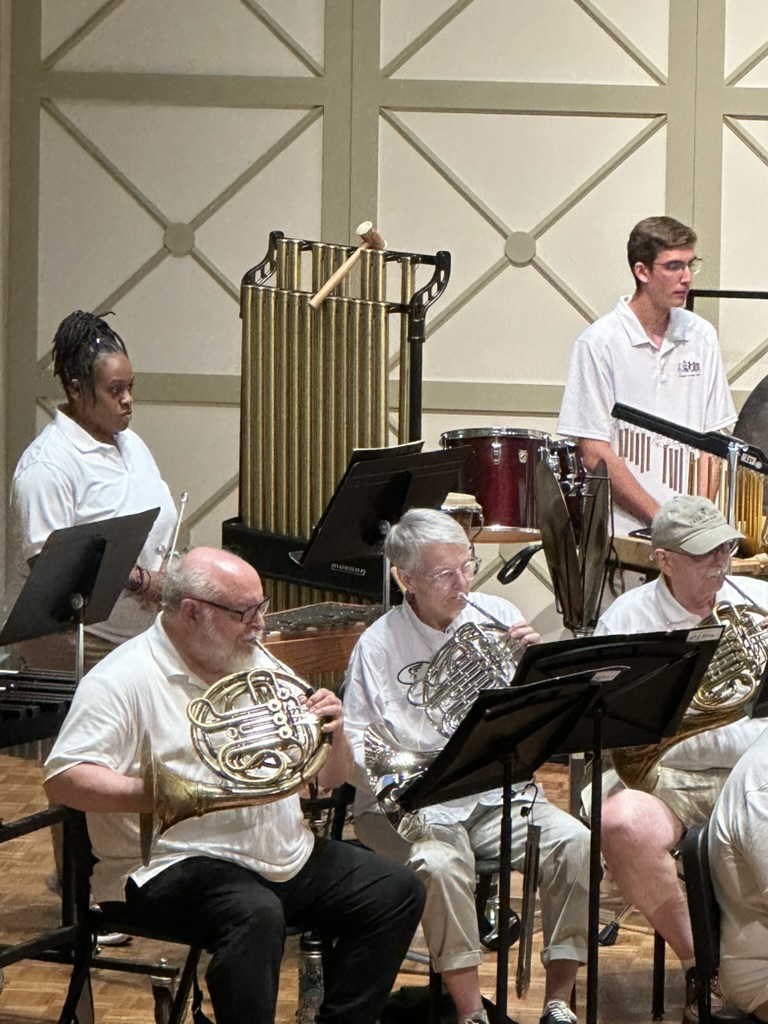
Sarah, who can always “find me something to do,” sent me a link to the Spartanburg Community Band. I dusted off my French horn, loaded it into the Mini, and showed up. I played as softly as I could, listening to my neighbor for the pitch while I re-learned fingerings and remembered how to breathe as I buzzed the mouthpiece. Not long after, I joined the choir at the neighborhood Trinity United Methodist Church. Which, of course, meant I was also drafted into the handbell choir. (It’s funny how the choir members who double as bell-ringers, plus the music director, all grinned and said, “Well, handbells on Monday, choir on Wednesday!”) So, I guess I’m in handbells now too.

And then came the start of the new semester. I walked into the cafeteria for the back-to-school breakfast the university provides. I sat with colleagues, caught up on life, and we laughed together as we talked about classes we’re teaching. There was such positive energy around our table! Later, I listened to our chancellor give the State of the University address — which, by the way, is good. Then the deans introduced new faculty.

I took a moment to reflect on the dean who had taken my place. She is kind and thoughtful, already working to build community in our college. I felt warmth and satisfaction, a kind of peace. Like sitting on the porch listening to cicadas at dusk, when the heat of the day has finally lifted. She has a quiet confidence, the kind that signals she knows what she’s doing. That she’s got this. The kind of confidence I now have too — as faculty.

As if the universe were reaffirming that I am in the right role — that I am where I’m supposed to be — two invitations arrived that same day. One colleague invited me to do a book talk with their curriculum theory class, reconnecting me with scholarship and teaching I had missed during my years in administration. Another asked me to consider contributing a chapter to an upcoming Handbook of Ignorance Studies in Education. Now, I know that ignorance studies is a highly serious matter, but me being me, I can’t help chuckling at the title. It feels like the perfect opportunity to bring a little folksy charm and sense of irony to the subject. Both invitations humbled and inspired me. Coming just one day before the semester began, they reinforced my professional identity as teacher, scholar, and service colleague (and yes, committee assignments also arrived that day).

So what do I mean when I say embracing life before retirement? When I imagine retirement, I hear the people who, whenever asked “How’s retirement?” say, “I don’t know how I ever got everything done when I worked. There just aren’t enough hours in the day!” Almost everybody says that when asked. Retirement, for many, is a season of busy leisure, where the biggest problem is deciding what leisure looks like. If you want to take a nap, you can take a nap. If you want to read, you can read. Because nothing is pressing you to be somewhere else.

And yet, I’m tasting a version of that right now — a freedom to choose what matters most, even while working. Music. Teaching. Writing. E-triking. Monthly Breakfast Club with Sarah and a couple of colleague friends. Nourishment for mind, body, and spirit. Life still has its hiccups and valleys — I’m not pretending otherwise. I know they are sometimes filled with loss and grief, unfulfilled dreams, guilt, and yes, fear. And when those valleys come, I still get low and afraid, just as I always have. Sarah is right: I need ways to pull myself out of them. And honestly? An e-trike ride with my French horn slung over my shoulder feels just about right.

Even when I was younger, I used to (half) joke: I’ll never be able to retire — they’ll have to roll me out of school in my coffin. Now that I’m within six to eight years of retirement, that gnawing fear still tugs at me. I’m close. A decade ago, when I entered administration, I even set a countdown timer app on my phone. That should have been the clue right there that I wasn’t where I needed to be. I don’t look at that timer anymore.

The difference now is that I think about the last days, and the blessings God has knocked me over the head with. Yes, there will still be valleys — loss and grief, unfulfilled dreams, guilt, and fear. But alongside them, there is also laughter, music, students, writing, dogs, cats, and Sarah. And I realize that if this is my life for another decade while I work — teaching, music, writing, laughter, valleys and all — not only will I “make it” to retirement, I can embrace the mindset now.

Almost like retirement. But better.
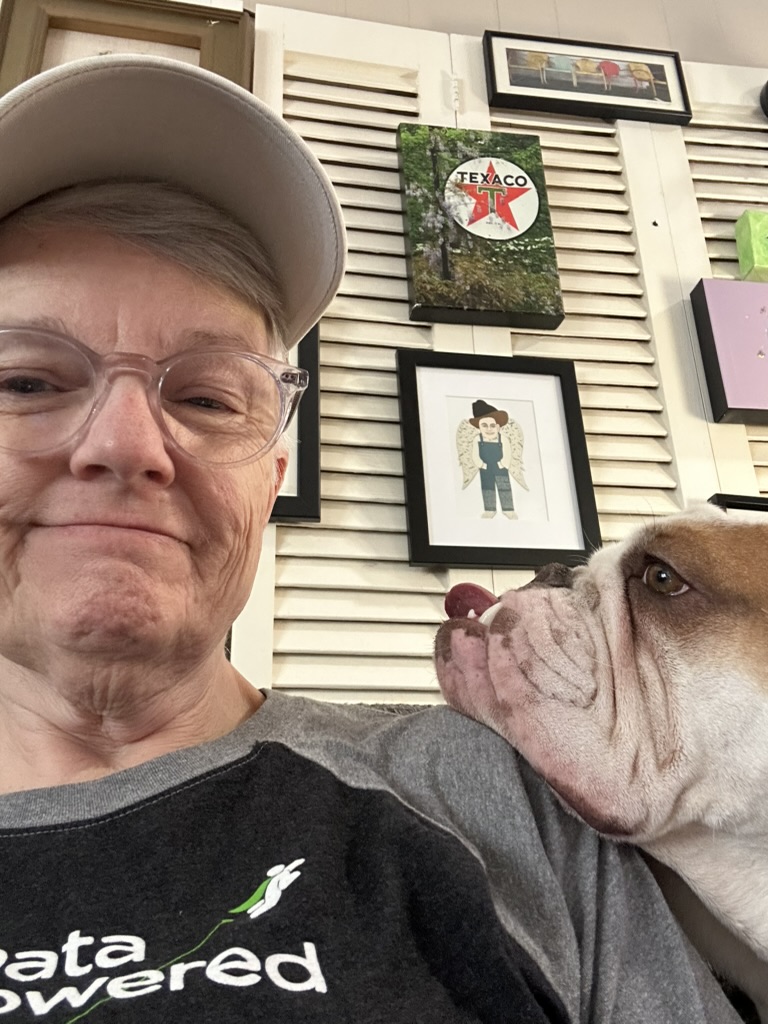
Image of Ugena Whitlock and bulldog.
Who is that old person being lovingly gazed at by Bruno the bulldog?
Playing French Horn with SCB
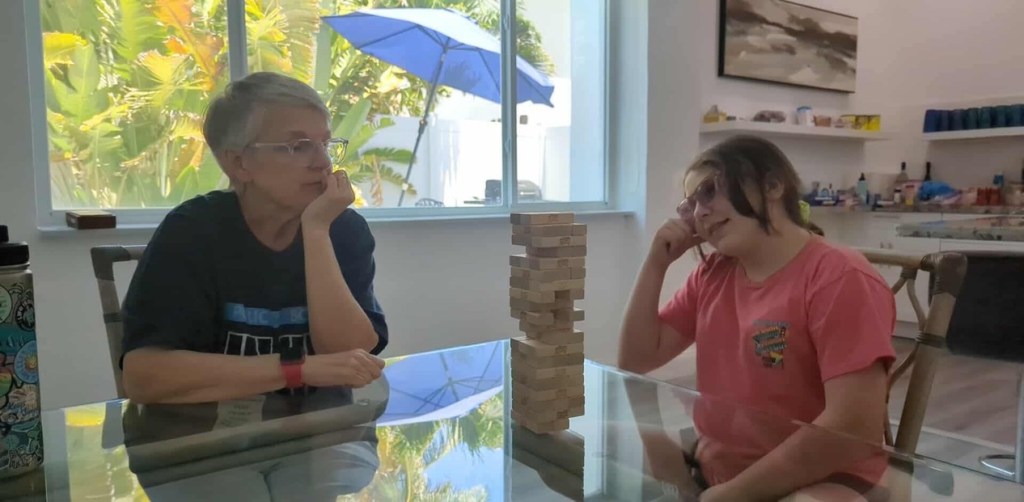
On vacation with Rory.
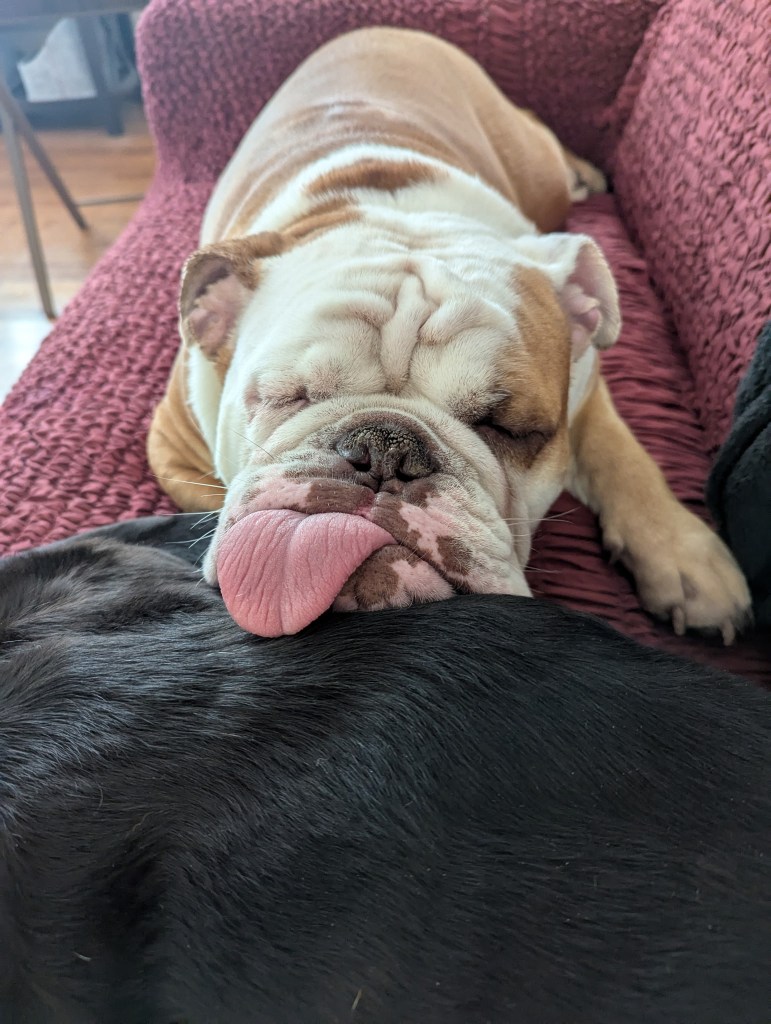
Bruno has the last word.

Sojourners Together: Supporting Students Through the Struggle

Image of boats adrift

Title: Sojourners Together: Supporting Students Through the Struggle

In my last post, I shared how online teaching has rekindled my passion for the classroom. I’m enjoying the challenge of engaging students in new ways, and I’ve found it fulfilling to build connections through messages, stories, and shared experiences. But as much as I’m finding this fresh approach to teaching rewarding, I’m also deeply aware that many of my students are struggling.

Image of boat adrift
A Boat Adrift

Recently, I sent out a weekly check-in message—something simple, just to touch base. While many students voiced their overall enjoyment of the class, several also let me know they’re having a hard time. These aren’t typical undergraduate students juggling part-time jobs and coursework. These are working professionals, members of a cohort in our Master’s in Applied Learning and Instruction program. They teach in local partner school districts. They’re educators, spouses, parents, coaches, community members. They’re churchgoers, pet owners, and caregivers. And yet, despite all these roles, they’ve committed to taking two graduate classes each semester for two years.

They do this not just for a much-needed pay raise, but for their professional growth—to become better teachers for their students. Our children. And that humbles me. It’s not easy.

These students took a heavy blow during COVID-19. They were asked to be miracle workers, juggling the impossible demands of remote learning while supporting students, families, and their communities. If there was one silver lining to the pandemic, it’s that thousands of parents who had their children learning from home gained a newfound appreciation for teachers. They saw firsthand just how challenging this work is.

And yet, despite all of this, my students show up. They’re willing to do the hard work every day. But I know—and they know—that time is scarce. They probably don’t have six extra hours a week to devote to their studies, yet that’s the general guideline for graduate coursework. They’re balancing it all, and their struggle deepens my sense of responsibility as their instructor.

If I expect them to make time for this class, I have to make it worth their while. I owe them my best. If I want them to give of themselves, I need to give of myself.

Is the reading dry this week? Then I’ll record a discussion to bring it to life. Is the assignment complicated? I’ll walk them through it, step by step. Are assignments feeling routine and uninspired? I’ll revise them to appeal to different learning styles and spark engagement. Do they need more time to complete an assignment? I’ll do my best to accommodate that. Are they feeling overwhelmed? Then I’ll be present—showing up in the class, personalizing my feedback, and ensuring they don’t feel adrift in the online world.

I’ve practiced social-emotional learning long before it had a name. I know the value of a supportive learning environment, and yes, sometimes that means sharing pictures of our five pets to give them a chuckle. It’s about reminding them that I’m here, on the other side of the screen, rooting for them.

Image of boats adrift
Boats, together

As hokey as it might sound, caring is part of the classroom culture I want to cultivate—a culture of care and connection. Teaching can be a lonely profession. Being a professor can be just as isolating. But this online space offers a chance to bridge that gap, to connect people who might otherwise feel alone in their struggles.

It is important that I keep asking them to check in—asking how they’re doing, beyond just the coursework. These check-ins aren’t just about staying informed; they’re about fostering trust and reminding them they’re not alone in this. We are sojourners together this semester. Yes, they will struggle. That’s part of the journey. But the most important assurance I can give them is that I am here. And sometimes, that’s enough to make all the difference.

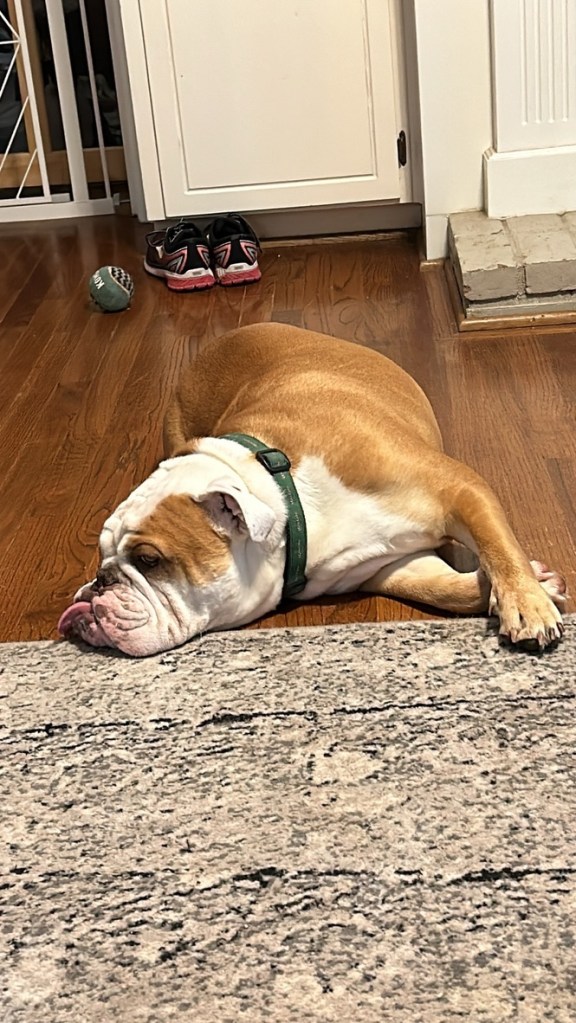
Image of English Bulldog sleeping with tongue out.
Bruno knows the struggle is real.

A Letter To My Students, From Their “New” Professor

Image of Dr. Ugena Whitlock at USC Upstate
Dr. Ugena Whitlock

Dear Students,

Welcome to the new semester and to our class! As your professor, I want you to know how excited I am to be back in the classroom after several years in administration. It’s been a while since I last taught a full course load—2007, to be exact. Since then, I taught an occasional class until stepping fully into administration in 2016. Now, here I am, rejoining the classroom and rediscovering the rewards of working with students like you.

Image of a brown and white English Bulldog with his tongue out. He is playing with 6 hippopotamus squeak toys lined up on a dog bed.
Bruno is ready for school

A lot has changed since I last taught full-time. We’ve experienced a global pandemic, witnessed national and global unrest, navigated four presidential elections, endured economic turbulence, and just generally undergone shifts in our society. Schools and classrooms have changed over the years, too. Teachers have left the field in significant numbers and fewer people are entering the profession. Those who stay report that their students have changed. Actually, we’ve all changed.

But amid all this change, some things remain constant—our innate human capacity for love and acceptance, and our nature as social creatures who need each other. We are curious about the world and about one another. We can laugh at ourselves. These are foundations that inspire me as a teacher, ones I hope will inspire you, too. Our humanness fills me with faith. I have faith in you and in the value of this class. We are going to explore some very interesting topics together, which I hope you will carry into your own classrooms. I hope you will also pass on to your students the faith, hope, and inspiration that I hold for you.

Close up image of brown and white English Bulldog with his tongue out.
Bruno contemplating beginning of semester

I’ll be honest with you: I feel a mix of anticipation and vulnerability as I return to the classroom. I want to create a dynamic, engaging space that feels welcoming and worthwhile for each of you. Even though it’s been a while since I’ve facilitated learning experiences for students–either online or in person–I see it as a challenge worth embracing. Why? I still believe in the power of education to make a difference—not just for your students but for you, too. I believe that we can change the world one student at a time.

Our time together will be about more than standards, objectives, and theory (though we’ll cover plenty of that stuff). It will be about understanding ourselves as educators, examining the world through a critical yet hopeful lens, and preparing for the deeply human work of teaching. I have great hope that you will find this class meaningful and empowering as you move closer to realizing your dreams—both personally and professionally.

Let’s begin our journey with curiosity, openness, and mutual respect. I’m here to support you every step of the way.

Warm regards,
Dr. Ugena Whitlock
Your “New” Professor

Image of a brown and white English Bulldog with his tongue out lying on a rug
Bruno after a long day at school

Evolving from Just Keep Swimming to The Front Porch Professor

Image of Logo for Blog The Front Porch Professor with rocking chair, typewriter, and Mazda Miata..

Time for a Change

After fourteen years maintaining my blog Just Keep Swimming, I decided it was time for a change. When I started blogging those years ago, blogs, shorthand for “weblogs,” (remember that?) were fairly new, and I was deep into building a career by writing articles for academic journals. I knew that autobiographical narrative Curriculum Theory (my professional writing) would not be a lucrative venture. It wouldn’t earn money or attract thousands of readers. I determined that I would use the blog as a journal. I wrote personal essays in memoir style that might later be crafted into journal articles–a sort of pre-writing holding station. I also told myself that my blog was really only for me. I thought this would lessen my disappointment at having no readers. That part was sad because I really wanted somebody to read what I was writing.

Image of blog logo justkeepswimming.com
Logo for Just Keep Swimming Blog

So, the blog was a patchwork of ideas and topics with loose themes and frameworks pulling them together. Not surprisingly, then, I had difficulty giving it a name. Sarah helped. The more I obsessed over finding just the right name for a blog nobody would read, the more I secretly hoped someone would. The more I obsessed, the more she tried to help me get centered. She tried to help me find some resilience somewhere. “Just keep swimming,” she said, as much a suggestion for my state of mind as for the blog title. It fit. For almost a decade, I have worked on justkeepswimming.life–mostly sporadically. During those same ten years, my career evolved from faculty member to department chair to college dean. As a small-town girl from Littleville, Alabama, I wanted to see just how far I could go. I told myself I didn’t have the time to write regularly. I did well to just keep swimming.

This Spring I will once again be a faculty member in the college, without an administrative role of any kind. I’ve been thinking about this change a lot, and I reckon it will be a good move. I am looking forward to teaching again. I am also eager to have some autonomy over my time. Faculty generally work more than 40 hours per week, but oftentimes, when and where we work is up to us. This kind of flexibility will take away an important excuse for not posting regularly—that’s the goal. Updating the blog’s purpose and branding reflects the updates going on in my life. What is my new identity–who am I now that my decades-long professional identity has changed? What kind writing do I want to do, and what will I write about? What do I, as one white Southern professor with blue collar roots, have to say?

Heading Out To the Front Porch

I reflected on what I wanted the blog to be. I asked myself why I started blogging. It isn’t to have a journal to springboard into professional papers. Nor do I write to make money or achieve celebrity status as a blogger. I write blog posts because it brings me joyful engagement. This engagement gives me purpose. It also provides an immediate connection to you, and you to me. And somewhere among the joy, purpose, and connection, there is also the urgency of needing to tell.

In her book, Why I Write, Joan Didion wrote, “I write entirely to find out what I’m thinking, what I’m looking at, what I see and what it means. What I want and what I fear” (“Why I Write.” The White Album, Farrar, Straus and Giroux, 1979, pp. 192–194.). Her quote has been shortened over the years to “I never know what I think until I read what I write,” which is unfortunate since it leaves out the part about what one wants and fears. When I write I am participating in the world around me and putting meaning on what I see and experience. And yes, desire and fear are part of it, just like they are ever-present in one’s consciousness. What anything means to me won’t be what it means to you, for you are participating from your consciousness, your home place. And that’s what I’d like to evoke with my stories–for both me and you.

Image of Logo for Blog The Front Porch Professor with rocking chair, typewriter, and Mazda Miata..
New Logo for The Front Porch Professor that includes a rocking chair, antique typewriter, and Mazda Miata.

In essence, then, I am re-claiming my identity as a writer. Who am I? I value education, so I got a PhD and became a professor. I am a Southerner to my soul, and my perspectives for writing are shaped–and shape–that identity. I write about the South, my particular anchor of homeplace. Homeplace is a treasured concept for me, one that encompasses family, food, religion, politics, music, sexuality, culture–it is the landscape on which my life has been written. I view the landscape through a lens–a veil, as I like to think of it–of nostalgia. As I write, I hold the present up, looking backwards to the past—my recollection and understanding of it—with a questioning eye toward the future. To symbolize the space from which I can observe and cast a critical eye on Southern place, I chose the front porch.

A front porch is more than just a place—it’s a state of mind. It’s where stories are told, where folks sit and hang around together. It’s a place where the world slows down just enough to reflect on what truly matters to me. With The Front Porch Professor, my goal is to bring the warmth and depth of this space into the stories I share. I work through the tensions between issues that matter to readers today. I also offer honest, insider critiques of the South. Sound idyllic? It can be, but just like the South, the front porch can also be a troubled and complicated place where anguish, heartbreak, disappointment, and violence take place. Every few days, I have to sweep the porch to clear dust and cobwebs to make sure it is an inviting place for myself and others.

Who Should Read It?

The intended audience for The Front Porch Professor are folks who appreciate stories that resonate on both a personal and universal level, blending the warmth of lived experience with the relevance of today’s challenges. My readers might be older adults, reflecting on their own life journeys and drawn to narratives that echo their experiences. They might be educators or seekers who appreciate the intersection of storytelling with deeper ideas about culture, family, and identity.

This blog also speaks to those who find meaning in the everyday—the simple joys of a shared meal, the comfort of homeplace, or the peace found while sitting in the shade in a back yard. I believe there is also value for people who can’t recollect joy from their homes. There may be appeal here for them as well. Home for some–if it means anything at all–are places of atrocities, hurt, and darkness. Home may be a place of utter ambivalence. If this is you, then I invite you, too. In this blog, I look for the mysteries to be found in simplifying the complex and complicating the simple.

Why Does It Matter?

Our world is a noisy place, and it feels to me like we are distracted by it–not just distracted but affected in other ways. Noisy politics, for example, has polarized some of us to the point of violence. It has also created animosity with friends and family. We seem to have lost focus on the things that matter, which is always others. I hope my stories can balance out some of the clutter. I hope that together we can pause and look for grounding–the kind that I find from recollecting and observing what happens around me and to me.

Image of logo for the Front Porch Professor with ukelele, typewriter, rocking chair.
Alternate Logo for The Front Porch Professor that includes ukelele and typewriter with no Miata.

Maybe you, like me, want to have a deeper engagement with life around us and with others in it. Maybe you, like me, want to nourish a homeplace of the heart, our own personal touchstone where inward reflection points us out-ward toward purpose. A safe and joyful place of our making–whatever that might look like for you–where we contemplate how our own sense of belonging connects us to others. I hope The Front Porch Professor is engaging and entertaining; still, I do not consider life merely to entertain. As you read, I invite you to actively participate with me as we pause, surmise, and make meaning. Don’t just read. Come along with me on our shared journey.

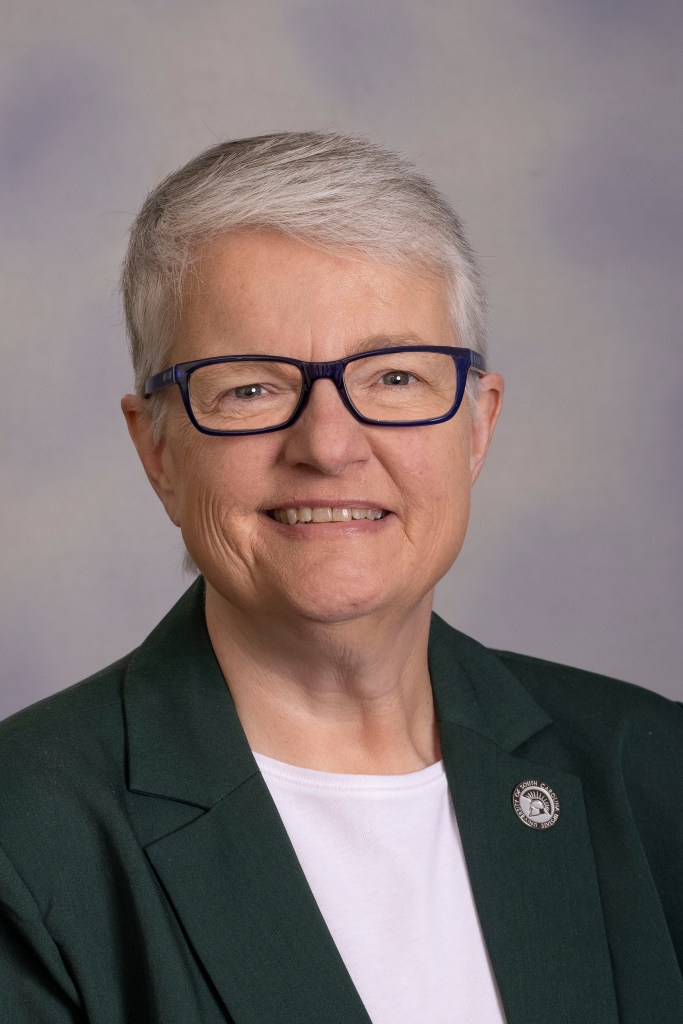
Image of Dr. Ugena Whitlock, author of The Front Porch Professor.
Introducing Dr. Ugena Whitlock, The Front Porch Professor!