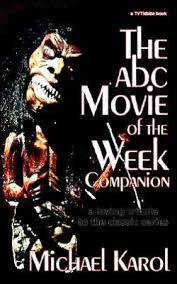
In 1973, Cliff Robertson starred in an ABC Movie of the Week production of Edward Everett Hale’s story, “The Man Without a Country.” In it, an American officer is being court martialed for consorting with Aaron Burr. He wanted to make a point about the disunity of the new country and so blurted out, “Damn the United States! I wish I may never hear of the United States again!” The judge took him at his word, and in a rather pissy move, sentenced Philip Nolan to spend the rest of his life sailing the seas on American warships without ever setting foot on or hearing any news about the U.S. again. It’s one of my favorite stories (and made for tv movies!). I have thought about it a lot over the last few weeks. I think–even though I get the point Nolan was making (kind of like Rev. Jeremiah Wright’s in 2007, see https://abcnews.go.com/Blotter/DemocraticDebate/story?id=4443788&page=1), my wistful call would be, “Bless the United States! I sure would like to live in ‘United’ States again.”
I took a break from blogging regularly over the last four years to go to seminary. In fact, the election of 2016 was a big reason I decided to go to seminary. I had a low, sick feeling more and more people would be hurting, and I wanted to be able to offer spiritual care. If you want to say I had a call, that was it. And that was before Covid-19, kids in cages, Russia and Ukraine, Charlottesville, Black Lives Matter, George Floyd, corporate deregulations, revocation of environmental protections, withdrawals from the Iran Deal and Paris Climate Agreement, Jeff Sessions, William Barr, Brett Kavanaugh, insurrection, embracing of dictators, Kenosha, Cruz & Hawley, QAnon, Seattle, Jeffrey Epstein, Harvey Weinstein, The Big Lie, The Year 2020–and more that I could name, like these, off the top of my head. And oh yeah, did I mention Covid-19?
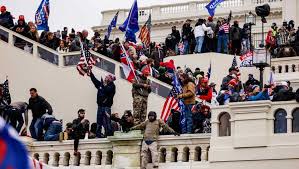
It is not hard to see, as all major news outlets and commentators are reporting, how every day of the last four years led directly to here. Radical insurrectionists planned for months to descend upon Washington, D.C. to be directed by the President of the United States to storm the U.S. Capital while Congress was in session. The President and members of Congress–bolstered by Republican led state legislatures–actually expected and attempted to overturn legally certified (by Republican legislatures) election results. Both Democrat Congresspersons and Republicans who voted to approve the Electoral College results–including the Vice President of the United States–are afraid they will be hurt or killed. By their congressional colleagues and their supporters. Some members have been attacked in airports; others are switching up their daily routines to throw would be attackers off. Representative Alexandria Ocasio-Cortez posted on Instagram she was afraid her colleagues would help the insurrectionists kill her. Let that sink in. https://www.nbcnews.com/video/alexandria-ocasio-cortez-tells-instagram-i-thought-i-was-going-to-die-during-capitol-riot-99380293747
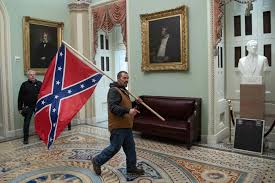
(Not a Civil War era picture)
I am still trying to form coherent thoughts about our United States at the end of a four-year dumpster fire. I am trying to see, as I have begun to do since seminary, where God is in all of it. Here is a ramdom list of (what I think are) relevant thoughts on the country on the eve of Joe Biden’s inauguration. Really random.
For about one day I was able to feel a lightness of spirit as Georgia, the state I live in now, replaced two Republican senators with two Democrats, one, the first Black Georgia Senator ever. That was on January 5.
Black people and white people do not live in the same country. Where White people are angry, fearful, frustrated, and shocked at the events over the last four years, Black people are shaking their heads saying, “We tried to tell y’all.” This is how it feels. As activist Kimberly Jones said, “Be glad Black people aren’t seeking revenge” (https://www.youtube.com/watch?reload=9&v=YPfeg6E52nA). To reiterate: Black people AREN’T seeking revenge.
Related: White people, People of Color are going to outnumber us in a couple of decades–in our lifetime. Start living now like that is a fact.
Related: If you are worried about a “way of life,” or “American values,” or “The American Way” going away, you are resisting the above fact.
A Confederate flag was paraded through the United States Capital on January 6, 2020. Even Robert E. Lee was not able to do this.
Related: A gallows with an expert looking noose was set up on Capital grounds on the same day.
Gallows & Noose, U.S. Capital
It is looking more and more like the insurrectionists were led on recon tours by Congresspersons and Congressional Staff.
The President is not The Godfather. He cannot call up and strong arm Secretaries of State or State Legislators to find votes that simply were not there. Everybody knew, including him, that they were not there. He and the radicals just wished they were.
Concealed Carry is not a good idea. I don’t see how anybody could say it was ever a good idea. People voted for it anyway. Same with Campus Carry. Nineteen year olds with weapons. Again, who thinks that is a good idea?
Related: Nobody is coming for your (hunting, social, skeet, toy, cigarette lighter, BB) guns.
The President is using Christians. Christians please realize this.
Hillary Clinton’s statement about “The Deplorables,” taken out of context, helped lose her the election. Donald Trump looked at his supporters and called them low class. Please be insulted by that, too.
I knew the day Tommy Tuberville announced he was running for U.S. Senate he would be elected by the good people of Alabama. Even Alabama Fans (Roll Tide!) voted for the former Auburn football coach.
Coach Senator Tuberville stated the three Constitutionally established branches of government are the House, the Senate, and the Executive. They aren’t. (Legislative, Executive, Judicial). If there are tests to become teachers, lawyers, accountants, doctors, airplane pilots, and drivers, we might think about having one for members of Congress. It wouldn’t have to be that hard.
Between Tuberville, Congressman Mo Brooks, and Jeff Sessions, Alabama has done enough for the country for awhile.
There did not have to be 400,000 deaths from Covid-19 in the U.S.
Related: There are places in this country where if your last chance to live is in an ambulance. If you can’t be revived there, you die. ERs are full.
Science and God are not at odds with one another. Science and religion are.
“My individual rights and my Freedom of Religion” should not be used as excuses or weapons for not doing what you want. See above about Christians being used.
Radical Far-Right Extremism is the biggest threat to this country right now. They were hiding and secretive about their destruction until Donald Trump validated their voice and they came out into the open.
Far-Right Extremism is White Supremacy is Far-Right Extremism.
Read the above again.
Fear of liberals and Democrats and Republicans and progressives is irrational. Fear of extremists is not. Decent people can become radicalized to not see this.
Related: I have written before that MAGA people are angry. Maybe not all of them are, but some are, and they are also strategic.
They were there too.
Those Senators and Congressmen must really love their jobs (power, privilege, status) if they are willing to make excuses for Donald Trump and not get rid of him when they had the chance. I don’t know how it is a question as to whether to vote to ban him from running for office again.
Related: If they don’t vote to ban Donald Trump for running for office again, NONE OF THEM will have a chance at a 2024 presidential run.
Related: Donald Trump is far from finished in his influence over conservative Americans.
It only took 4 years for near-total devastation of capitalist-based democracy to almost colapse on January 6. Some Republicans condescendingly said asked after the November election, “What can it hurt to humor the President for these last few weeks?” See January 6. Now you know.
Indellible image of insurrectionists storming the Capital on January 6, 2021
That’s enough for now. I’ll be back with more. Looking over my list, I realize my hunch in 2016 was right. People are hurting–and are hurting each other. I believe that love is the answer. That we scoff at that thought as empty, powerless, and trite, is part of the problem. It says a lot about how so very necessary love is. More on this later.
I ran across this paper I wrote for a Religious Liberty class at McAfee School of Theology, Mercer University. I didn’t think it was half bad, so I’m posting it in my blog. It’s a little thick, so I’m adding some cat pictures.
Historical Context of the Controversy The religion clause of the U.S. Constitution states, Congress shall make no law respecting an establishment of religion, or prohibiting the free exercise thereof. It is included with freedom of the press, free speech, and the right to assemble and petition the government. It is the part of the first amendment upon which concepts of religious freedom—which I use interchangeably here with religious liberty—are based. According to Davis, religious liberty in the U.S. is based upon the overarching ideal of separation of church and state (p. 81). He cites a religion historian who called religious liberty, “America’s great gift to civilization and the world” (p. 81). Interpretations of the religion clause have evolved since ratification in 1791 primarily through rulings by the Supreme Court of the United States (SCOTUS) on cases involving two concepts: establishment and free exercise. As Flowers explains, cases vary according to topics, such as taxation, school prayer, human resources, and insurance—but all of these share a tension of whether the government violates establishment when it supports religious organizations or free exercise when it does not. Understandably, decisions passed down by the Court are influenced by its makeup; it has in fact changed its position over time. Nearly eighty years ago, Justice Hugo Black famously declared, “In the words of Jefferson, the clause against establishment of religion by laws was intended to erect a wall of separation between church and State’” (in Davis, p. 84). Over the last decade, however, the idea of religious liberty itself has undergone an odd reversal. No longer is its chief principal the freedom to exercise one’s religious beliefs and practices protected by the wall of separation from the government. Rather, religious liberty is now evoked by conservative Christians in order for them to freely exercise their right to discriminate against individuals or groups whose ideologies do not align with their religious beliefs. These Christians are, then, seeking establishment via rulings to substantiate discrimination, which they consider free exercise. Tracing the course of the transformation of religious liberty is beyond the scope of this paper. From my own historical memory and research, I trace it to the overt courting of the religious right in the South by Nixonian republicans in 1968, culminating with Ronald Reagan’s alliance with the Moral Majority that led to his victory in the 1980 election—in which he unseated an incumbent President who is unequivocally a devout Christian. This was the beginning of the narrative shift of religious liberty that supports the blatant politicized overreach we see today. For this paper, I did a Google search for “religious liberty.” I focused on articles and blog posts whose topics related directly to the cultural cooptation of the idea of religious liberty as I describe it above. Left of center publication, The Week, writer Joel Mathis sums up the premise of my paper: The term “religious liberties” sounds anodyne enough: The First Amendment guarantees that Congress shall not prohibit the free exercise of faith. And conservatives frame the recent debates with a libertarian gloss: Government shouldn’t make religious folks violate their faith-informed consciences to provide contraception to employees or make wedding cakes for gay couples. On the surface the message is: “Leave us alone and we’ll leave you alone.” What could be more American? But that message isn’t honest.
Unless you’re a Christian — and let’s be honest, unless you’re a conservative Christian — conservative advocacy of religious liberties is a big con, a consolidation of rights and privileges not meant to be shared with Muslims, atheists, or other religious minorities. You don’t have to reach far for examples. (https://theweek.com/articles/784953/conservatives-religious-liberty-con) And I did not. What follows is a sampling of what I found. Competing Arguments The day I was writing this, May 22, 2020, an op-ed piece popped up on CNN’s website: This Isn’t About Religious Freedom (Graves-Fitzsimmons). It outlines issues surrounding Covid-19 religious liberty litigation, written as a response to President Trump’s push for governors to allow churches to re-open. The president’s invocation of liberty, prompted the author to note, “From a wider perspective, the Covid-19 crisis also reveals a new dimension to how some conservatives have distorted our treasured American value of religious freedom” (https://www.cnn.com/2020/05/14/opinions/religious-freedom-lawsuits-on-social-distancing-graves-fitzsimmons/index.html). He goes on to cite examples of the exploitation of religious liberty to further conservative agendas, he lists groups such as the Alliance Defending Freedom that spent 54 million to argue the Masterpiece Cakeshop anti-LGBTQ case at SCOTUS. Graves-Fitzsimmons connects Covid-19 religious freedom lawsuits to current and pending cases involving whether “religious or moral beliefs of an employer should be an acceptable excuse to deny people birth control and whether taxpayer funds may be used for faith-based foster care agencies that discriminate against LGBTQ people” (ibid). He points out what is a recurring theme in my research—discriminatory conservative agendas are out of sync with public opinion surrounding these issues. The twisting of religious freedom, according to the author, is about winning the culture war and thereby bolstering the conservative voting base, Trump’s lifeblood. He concludes with a call to expose the bigotry behind the thin veil of religious freedom that covers it and “reclaim a religious freedom that does no harm” (ibid). My research led me to The Berkely Center for Religion, Peace, and World Affairs at Georgetown University, an organization that examines, “the intersection of religion with global policy challenges of diplomacy, democracy, development and dialogue” (https://charterforcompassion.org/berkley-center-for-religion-peace-and-world-affairs?gclid=CjwKCAjwtqj2BRBYEiwAqfzur7FiTtxXPCn-_a4r4LjVhNdG9NLoy1QudwMV5MKW8mNOBRXOBabq3xoCW6gQAvD_BwE).
I found three essays in response to the Politics of School Prayer post in the Center’s Forum that address what one calls the “false narrative” of religious freedom. This pre-Covid post uses as a prompt President Trump’s announcement on 2020 “Religious Freedom Day” of new guidelines regarding school prayer during non-instructional time and the rights of students whose “freedom to pray has been violated” (https://berkleycenter.georgetown.edu/posts/politics-of-school-prayer). Additionally, he announced plans to remove “regulatory burdens” on faith-based social service providers that are supported by the Department of Health and Human Services—that is, by taxpayer dollars. The post suggests that while Trumpian Republicans have conducting an offensive front in the culture wars, Democrats have spent (frittered?) their energies trying to “connect with evangelical voters,” a heretofore fruitless effort. The first response, The Debates Over Religious Freedom in the United States: What Debates?, by James W. Fraser, refutes the president’s claim of burdensome regulations of religious freedom by pointing out the new guidelines were nearly identical with previous guidelines issued by the G.W Bush and Clinton administrations. Fraser argues that the president’s fanfare over existing guidelines has deeper motives—first, to “warp the truth to stay in power,” that is, to fire up his conservative White Christian base, many of whom believe themselves to be discriminated against by progressives. If Trump can maintain the fiction of an “assault on faith” and the greater fiction that he alone can fix it, he will keep the support of his base. An even darker motive, according to Fraser, of touting his guidelines was to serve as a “cover for other policies which represent a dangerous infringement of rights” (https://berkleycenter.georgetown.edu/responses/the-debates-over-religious-freedom-in-the-united-states-what-debates). He concludes with this stark statement, “…the obvious conclusion is that retaining voting blocs is more important to the administration than any concern for the rights of American citizens, religious or otherwise. We are better than that” (ibid). One hopes, but are we?
The second response, A False Narrative of Religious Freedom Threatens Americans’ Rights, by Rob Boston, begins by pointing out ways Trump’s school prayer guidelines in fact differ from Bush’s and Clinton’s, most significantly, that student- and teacher-initiated prayer at school functions may be legal. He then quickly turns to the problem of terminology in the evolving narrative of religious freedom, namely, that as it is used today demands religious privilege, which is very distinct from liberty. Boston offers a helpful definition of what religious freedom has historically meant in the U.S.: “the right to worship (or not) as you see fit, as long as you don’t harm others. It means the right to join together with fellow believers to build houses of worship, spread religious messages, and create a sense of community bound together by shared beliefs” (https://berkleycenter.georgetown.edu/responses/a-false-narrative-of-religious-freedom-threatens-americans-rights). Conversely, today’s conceptualization of religious freedom is a coersive and compulsive denial of the rights of others [and] is alien” to our core values (ibid). He points out that Americans are used to wrangling over issues, but this is a different age—one where polarization makes old ways of debating obsolete. When it comes to the minority voices of conservative White Christians, he concludes, “It is dangerous to accept even a little bit of oppression based on religion. The answer is always to resist it, by all legal means” (ibid). The final article I examined from the Berkley Center Forum was A Free Exercise Argument Against Trump’s ‘Religious Freedom’ Rules by Peter Henne. His approach is somewhat different from other responses, as he approaches the issue with the onus of rectifying the cooptation of religious liberty on progressives. “The problem is that progressives have accepted the conservative framing of religious freedom” (https://berkleycenter.georgetown.edu/responses/a-free-exercise-argument-against-trump-s-religious-freedom-rules). He charges us to retake a narrative whose subsequent policies discriminate against all but a small group of Christians. When progressives begin asserting that our own religious freedoms are infringed upon, the historical conceptualization will re-emerge. Practically, Boston proposes this: “Rather than religious freedom vs. non-discrimination, it would be a debate over the nature of religious freedom. And Trump-wary conservative Christians are more likely to be responsive to progressives explaining their approach to religious freedom than they are to calls to curtail religious freedom” (ibid). When my tax dollars go to an organization that refuses, for example, to allow a gay couple to adopt a child because they are gay—and since my faith tradition, the UCC, welcomes everyone, “Whoever you are, and wherever you are on life’s journey,” my religious liberty has been breached.
My Position I argue that conservative White Christian America seeks to be sanctioned by the State through strategic SCOTUS rulings on the First Amendment. Let me be clear: not all conservatives nor all White Christians seek to twist the First Amendment. My complaint is with those of the population who overtly and intentionally seek to deploy the concept of religious liberty to discriminate. If we correlate them with Trump’s hardcore base, which I am taking the liberty of doing, it ends up being around 40% of Americans (https://projects.fivethirtyeight.com/trump-approval-ratings/). I am old enough to remember when Religious Liberty did not have the topsy turvy meaning it has now. Growing up a white child in the South in the 60s and 70s, God and Country had distinct meanings for me; we were a “Christian Nation.” By the 2016 election, I began to have the disappointing realization that the country I live in is not the one I thought I grew up in. As Black and Brown Americans could have told me, my imagined America was never real; it was only a narrative that kept social and political hierarchies in place. I agree with the argument that upholding both the establishment and free exercise components strengthens religious practice in this country. I hold the position that the current rally cry of “Religious Liberty” signals a license to discriminate and thereby to enforce through subterfuge a morality code that bolsters white supremacy nationalism. This is not Christian. Again, not all conservative White Christians are white nationalists. Just as politicians like Leader McConnell who actively work to pack the judiciary with conservative judges are not all actively forwarding a religious agenda. And yet, these groups are strange bedfellows.
As Bill Clinton reminded us in 1992, “It’s the economy, stupid.” But how might corporate-forward politicians get plain folks to vote against their own economic interests? By appealing to their/our values. In 1980, when the Republicans actively courted religious leaders like Falwell and Robertson to get Christians on board, they promised Christians would have a friend in the White House, a seat at the table—that they would have a voice in governing. So Christians voted Republican. There was no real seat at the table, so the strategy changed to grassroots campaigns and gaining control of the judiciary. Aside from one setback on same-gender marriage from Obergefell v. Hodges in 2015, they have been overwhelming successful in influencing politics, which, of course, include the Courts. In his dissent of Obergefell, Justice Alito forecasted—or perhaps signaled—the ruling would have an “inevitable conflict with religious liberty” argument. I am not a political scientist, but my gut tells me that the LGBT victory with Obergefell helped the narrative shift; there would be new, more creative, ways to discriminate. If same-gender marriage was established by an unelected federal judiciary, so too then would cases be decided where refusal of services, for example, be equated with free exercise of religion. Impact on Local Ministries A 2019 brief from the Center for American Progress entitled Religious Liberty Should Do No Harm argues that policymakers have a responsibility to enact legislation that will, “ensure the right of religious liberty for all Americans without infringing on the rights and religious freedoms of others” (London and Saddiqi, https://www.americanprogress.org/issues/religion/reports/2019/04/11/468041/religious-liberty-no-harm/). They offer suggestions for building a framework of inclusive, non-discriminatory religious liberty.
One option relevant to local ministries is to consult faith communities in local policymaking. This might be through the formation of interfaith councils, working groups, and task forces that represent a diversity of faith traditions, “in order to ensure that the many voices of the faith community are considered in policymaking” (ibid). This idea gets to the crux of the matter, writ large. Local politics are unduly influenced by conservative White Christians; local municipalities are unable to oppose Republican governors to mandate business closures during a pandemic, let alone establish interfaith policy consulting councils. If we were at a place in this country where rural Alabama had interfaith advisory groups, it might be a good sign that religious liberty was alive and well. But we are not. My religious affiliation is with the United Church of Christ (UCC), an Open and Affirming (ONA) denomination toward some of the populations against whom religious liberty is being used as a weapon. The most obvious impact religious liberty laws have on my local ministry involves providing sacred spaces of radical welcome who are being discriminated against. My congregation would not only make a cake for a same-gender couple, we would perform the wedding and host the reception! As important, we would show up in solidarity at the state capital. As Flowers and some of the writers above note, the establishment clause ensures the religious liberty of all who wish to freely exercise religious beliefs, not just of a small subset who would seek to manipulate the First Amendment to suit themselves. For example, this is not a fight for religious liberty of Muslims. It is important that local ministries be vocal in opposition to misuse and misinterpretation of religious liberty. We must, then, employ our own religious liberty to re-establish the concept of freedom inherent in it. I will end with a story. My congregation is literally on a hill; drivers by cannot see us from the street. As one drives up the hill to the building, we have displayed really powerful signs about being the church and proclaiming that we are an ONA church. Once or twice we tried to put the signs at the foot of the hill; that way, people could see what we stand for. Both times, the signs disappeared. We do not hang a rainbow flag outside our building or display the UCC “Rainbow Comma” logo on our marquee. We do not display Black Lives Matter signs. London and Siddiqi end their brief with this cautionary word, “If policymakers do not ensure that religious liberty protects the free exercise of religion for all Americans, it will continue to be weaponized as a tool for discrimination and political gain and weaken nondiscrimination protections” (americanprogress.org). A “city set on a hill” (Mt. 5:14) can be hidden if it wants to be. We can be visible by being the church, or we can watch as inclusive religious liberty slips beyond our grasp. The work happens at the foot of the hill.
As part of my UCC Sacred Conversations to End Racism (SC2ER) class, I collected these resources from online sources. Although I blatantly lifted them, I have cited the source links. It’s a lot~~so keep scrolling for the hot links!
Van Sertima, Ivan, They Came Before Columbus: The African Presence in Ancient America, (New York, NY: Random House, 1976).
Ortiz, Paul. An African American and Latinx History of the United States. (Boston, MA: Beacon Press, 2018).
Higginbotham, Leon A., Jr., Shades of Freedom: Racial Politics and Presumptions of the American Legal Process, (New York, NY: Oxford Press, 1996).
Morrison, Toni, The Origins of Others, (Cambridge, MA: Harvard University Press, 2017).
Boesak, Allan Aubrey, Curtiss DeYoung, Radical Reconciliation: Beyond Political Pietism and Christian Quietism, (Maryknoll, NY: Orbis Book, 2012).
DiAngelo, Robin, What Does It Mean To Be White? Developing White Racial Literacy, (Peter Lang Publishing, 2012). ________ White Fragility: Why It’s So Hard For White People to Talk About Racism, (Boston, MA: Beacon Press, 2018).
Resmaa, Menakem, My Grandmother’s Hands: Racialized Trauma and the Pathway to Mending Our Hearts and Bodies, (Central Recovery Press: Las Vegas, NV, 2017).
Mills, Charles, The Racial Contract, (Ithaca, NY: Cornell University Press, 1997).
Baptist, Edward E., The Half Has Never Been Told: Slavery and the Making of American Capitalism, (New York, NY: Basic Books, 2014).
Introducing Womanist Theology – Stephanie Y. Mitchem
An Introduction to Womanist Biblical Interpretation – Nyasha Junior
Sisters in the Wilderness: The Challenges to Womanist God-Talk – Delores S. Williams
Enfleshing Freedom, body, race, and being, — M. Shawn Copeland
Embracing the Spirit: Womanist Perspectives on Hope, Salvation & Transformation – Emile M. Townes
Women Race and Class – Angela Davis Freedom is a Constant Struggle: Ferguson, Palestine and the Foundations of a Movement
The James Cone Collection
For My People: Black Theology and the Black Church: Black Theology and the Life of the Church (Bishop Henry McNeal Turner Studies in North American Black Book
Said I Wasn’t Gonna Tell Nobody: The Making of a Black Theologian
A Black Theology of Liberation – Fourtieth Anniversary Edition
Black Theology and Black Power
God of the Oppressed
Latinx and Mujerista Resources
Mujerista Theology – A Theology for the Twenty-First Century, Ada Maria Isasi-Diaz
A Reader in Latina Feminist Theology: Religion and Justice, Maria Pilar Aquino
Decolonizing Biblical Studies: A View from the Margins, A Postcolonial Commentary on the New Testament, Fernando F. Sergovia
Racism and God-Talk: A Latino/A Perspective – Ruben Rosario Rodriguez
The Ties That Bind: African American and Hispanic American/Latino/a Theologies in Dialogue – Anthony B. Pinn and Benjamin Valentin
Harvest of Empire: A History of Latinos in America – Juan Gonzalez
Asian and Asian American Resources
Heart of the Cross: A Postcolonial Christology, Anne Joh
Making Paper Cranes: Toward an Asian American Feminist Theology, Mihee Kim-Kort
Prophetic Lament: A Call for Justice in Troubled Times, Soong Chan Rah
Off the Menu: Asian and Asian North American Women’s Religion and Theology, Rita Brock
Postcolonial Bible (Bible and Postcolonial), R.S. Sugirtharajah
Voices from the Margins, R.S Sugirtharajah
The Myth of the Model Minority: Asian Americans Facing Racism, Rosalind S. Chou and Joe Feagin
For more Racial Justice Resources and information contact Rev. Dr. Velda Love Lovev@ucc.org
Anti-Racist Reading List from Ibram X. Kendi
By: R Rattusnorvegicus Chicago Public Library Community-created list
“This anti-racist syllabus is for people realizing they were never taught how to be anti-racist. How to treat all the racial groups as equals. How to look at the racial inequity all around and look for the racist policies producing it, and the racist ideas veiling it. This list is for people beginning their anti-racist journey ..” Ibram X. Kendi (author of “How to Be an Antiracist”)
Fatal Invention How Science, Politics, and Big Business Re-create Race in the Twenty-first Century by Roberts, Dorothy
Stamped From the Beginning: The Definitive History of Racist Ideas in America by Kendi, Ibram X.
White Fragility: Why It’s So Hard for White People to Talk About Racism by DiAngelo, Robin J.
Locking up Our Own: Crime and Punishment in Black America by Forman, James
I Know Why the Caged Bird Sings by Angelou, Maya
The Autobiography of Malcolm X by X, Malcolm
Redefining Realness: My Path to Womanhood, Identity, Love & So Much More by Mock, Janet
Eloquent Rage: A Black Feminist Discovers Her Superpower by Cooper, Brittney C.
Heavy: An American Memoir by Laymon, Kiese
The Fire Next Time by Baldwin, James
Sister Outsider: Essays and Speeches by Lorde, Audre
Between the World and Me by Coates, Ta-Nehisi
The Fire This Time by Kenan, Randall
The Half Has Never Been Told: Slavery and the Making of American Capitalism
The Price for Their Pound of Flesh: The Value of the Enslaved, From Womb to Grave, in the Building of A Nation by Berry, Daina Ramey
Reconstruction: America’s Unfinished Revolution, 1863-1877 by Foner, Eric
Slavery by Another Name: The Re-enslavement of of Black Americans From the Civil War to World War II by Blackmon, Douglas A.
The New Jim Crow: Mass Incarceration in the Age of Colorblindness by Alexander, Michelle
The Condemnation of Blackness: Race, Crime, and the Making of Modern Urban America by Muhammad, Khalil Gibran
The Color of Law: A Forgotten History of How Our Government Segregated America by Rothstein, Richard
The Origins of the Urban Crisis: Race and Inequality in Postwar Detroit by Sugrue, Thomas J.
The Warmth of Other Suns: The Epic Story of America’s Great Migration by Wilkerson, Isabel
A More Beautiful and Terrible History: The Uses and Misuses of Civil Rights History by Theoharis, Jeanne
Cold War Civil Rights: Race and the Image of American Democracy by Dudziak, Mary L.
Too Heavy A Load: Black Women in Defense of Themselves, 1894-1994 by White, Deborah G.
When and Where I Enter: The Impact of Black Women on Race and Sex in America by Giddings, Paula
From the War on Poverty to the War on Crime: The Making of Mass Incarceration in America by Hinton, Elizabeth Kai
Are Prisons Obsolete? by Davis, Angela Y.
Just Mercy: A Story of Justice and Redemption by Stevenson, Bryan
Roots by Haley, Alex
North of Slavery: The Negro in the Free States, 1790-1860 by Litwack, Leon F.
They Can’t Kill Us All: Ferguson, Baltimore, and A New Era in America’s Racial Justice Movement by Lowery, Wesley
From #BlackLivesMatter to Black Liberation by Taylor, Keeanga-Yamahtta
Give Us the Ballot: The Modern Struggle for Voting Rights in America by Berman, Ari
One Person, No Vote: How Voter Suppression Is Destroying Our Democracy by Anderson, Carol
Antiracism: An Introduction by Zamalin, Alex
How To Be An Antiracist by Kendi, Ibram X.
The Racial Healing Handbook: Practical Activities to Help You Challenge Privilege, Confront Systemic Racism & Engage in Collective Healing by Singh, Anneliese A.
The Wellbeing Handbook for Overcoming Everyday Racism: How to Be Resilient in the Face of Discrimination and Microagressions by Cousins, Susan
The Inner Work of Racial Justice: Healing Ourselves and Transforming Our Communities Through Mindfulness by Magee, Rhonda V.
The Black and the Blue: A Cop Reveals the Crimes, Racism, and Injustice in America’s Law Enforcement by Horace, Matthew
Chokehold: Policing Black Men by Butler, Paul
Citizen: An American Lyric by Rankine, Claudia
Democracy in Black: How Race Still Enslaves the American Soul by Glaude, Eddie S.
Eloquent Rage: A Black Feminist Discovers Her Superpower by Cooper, Brittney C.
Fire Shut up in My Bones: A Memoir by Blow, Charles M.
I’m Still Here: Black Dignity in A World Made for Whiteness by Brown, Austin Channing
Me and White Supremacy: Combat Racism, Change the World, and Become A Good Ancestor by Saad, Layla F
My Midnight Years: Surviving Jon Burge’s Police Torture Ring and Death Row by Kitchen, Ronald
No Ashes in the Fire: Coming of Age Black & Free in America by Moore, Darnell L.
On the Other Side of Freedom: The Case for Hope by Mckesson, DeRay
Solitary: Unbroken by Four Decades in Solitary Confinement : My Storory of Transformation and Hope by Woodfox, Albert
So You Want to Talk About Race by Oluo, Ijeoma
Tears We Cannot Stop: A Sermon to White America by Dyson, Michael Eric
Things That Make White People Uncomfortable by Bennett, Michael
This Will Be My Undoing: Living at the Intersection of Black, Female, and Feminist in (white) America by Jerkins, Morgan
What Doesn’t Kill You Makes You Blacker: A Memoir in Essays by Young, Damon
When They Call You A Terrorist: A Black Lives Matter Memoir by Khan-Cullors, Patrisse
Why Are All the Black Kids Sitting Together in the Cafeteria? And Other Conversations About Race by Tatum, Beverly Daniel
Healing Racial Trauma: The Road to Resilience by Rowe, Sheila Wise
This Book Is Anti-racist by Jewell, Tiffany
I Am Not your Negro: A Major Motion Picture Directed by Raoul Peck by Baldwin, James
Begin Again: James Baldwin’s America and Its Urgent Lessons for Our Own by Glaude, Eddie S.
An Antiracist Reading List NY Times, compiled by Ibram X. Kendi
BIOLOGY
FATAL INVENTION: How Science, Politics, and Big Business Re-create Race in the Twenty-First Century By Dorothy Roberts
No book destabilized my fraught notions of racial distinction and hierarchy — the belief that each race had different genes, diseases and natural abilities — more than this vigorous critique of the “biopolitics of race.” Roberts, a professor at the University of Pennsylvania, shows unequivocally that all people are indeed created equal, despite political and economic special interests that keep trying to persuade us otherwise. New Press, 2011
ETHNICITY
WEST INDIAN IMMIGRANTS: A Black Success Story? By Suzanne Model
Some of the same forces have led Americans to believe that the recent success of black immigrants from the Caribbean proves either that racism does not exist or that the gap between African-Americans and other groups in income and wealth is their own fault. But Model’s meticulous study, emphasizing the self-selecting nature of the West Indians who emigrate to the United States, argues otherwise, showing me, a native of racially diverse New York City, how such notions — the foundation of ethnic racism — are unsupported by the facts. Russell Sage Foundation, 2008
BODY
THE CONDEMNATION OF BLACKNESS: Race, Crime, and the Making of Modern Urban America By Khalil Gibran Muhammad
“Black” and “criminal” are as wedded in America as “star” and “spangled.” Muhammad’s book traces these ideas to the late 19th century, when racist policies led to the disproportionate arrest and incarceration of blacks, igniting urban whites’ fears and bequeathing tenaciously racist stereotypes. Harvard University, 2010
CULTURE
THEIR EYES WERE WATCHING GOD By Zora Neale Hurston
Of course, the black body exists within a wider black culture — one Hurston portrayed with grace and insight in this seminal novel. She defies racist Americans who would standardize the cultures of white people or sanitize, eroticize, erase or assimilate those of blacks. 1937
BEHAVIOR
THE NEGRO ARTIST AND THE RACIAL MOUNTAIN By Langston Hughes
“We younger Negro artists who create now intend to express our individual dark-skinned selves without fear or shame,” Hughes wrote nearly 100 years ago. “We know we are beautiful. And ugly too.” We are all imperfectly human, and these imperfections are also markers of human equality. The Nation, June 23, 1926
COLOR
THE BLUEST EYE By Toni Morrison
THE BLACKER THE BERRY By Wallace Thurman
Beautiful and hard-working black people come in all shades. If dark people have less it is not because they are less, a moral eloquently conveyed in these two classic novels, stirring explorations of colorism. 1970 | 1929
WHITENESS
THE AUTOBIOGRAPHY OF MALCOLM X By Malcolm X and Alex Haley
DYING OF WHITENESS: How the Politics of Racial Resentment Is Killing America’s Heartland By Jonathan M. Metzl
Malcolm X began by adoring whiteness, grew to hate white people and, ultimately, despised the false concept of white superiority — a killer of people of color. And not only them: low- and middle-income white people too, as Metzl’s timely book shows, with its look at Trump-era policies that have unraveled the Affordable Care Act and contributed to rising gun suicide rates and lowered life expectancies. 1965 | Basic Books, 2019
BLACKNESS
LOCKING UP OUR OWN: Crime and Punishment in Black America By James Forman Jr.
Just as Metzl explains how seemingly pro-white policies are killing whites, Forman explains how blacks themselves abetted the mass incarceration of other blacks, beginning in the 1970s. Amid rising crime rates, black mayors, judges, prosecutors and police chiefs embraced tough-on-crime policies that they promoted as pro-black with tragic consequences for black America. Farrar, Straus & Giroux, 2017 (Read the review.)
CLASS
BLACK MARXISM: The Making of the Black Radical Tradition By Cedric J. Robinson
Black America has been economically devastated by what Robinson calls racial capitalism. He chastises white Marxists (and black capitalists) for failing to acknowledge capitalism’s racial character, and for embracing as sufficient an interpretation of history founded on a European vision of class struggle. Zed Press, 1983
SPACES
WAITING ’TIL THE MIDNIGHT HOUR: A Narrative History of Black Power in America By Peniel E. Joseph
As racial capitalism deprives black communities of resources, assimilationists ignore or gentrify these same spaces in the name of “development” and “integration.” To be antiracist is not only to promote equity among racial groups, but also among their spaces, something the black power movement of the 1960s and 1970s understood well, as Joseph’s chronicle makes clear. Holt, 2006
GENDER
HOW WE GET FREE: Black Feminism and the Combahee River Collective Edited by Keeanga-Yamahtta Taylor
WELL-READ BLACK GIRL: Finding Our Stories, Discovering Ourselves Edited by Glory Edim
I began my career studying, and too often admiring, activists who demanded black (male) power over black communities, including over black women, whom they placed on pedestals and under their feet. Black feminist literature, including these anthologies, helps us recognize black women “as human, levelly human,” as the Combahee River Collective demanded to be seen in 1977.
SEXUALITY
REDEFINING REALNESS: My Path to Womanhood, Identity, Love & So Much More by Janet Mock
I grew up in a Christian household thinking there was something abnormal and immoral about queer blacks. My racialized transphobia made Mock’s memoir an agonizing read — just as my racialized homophobia made Lorde’s essays and speeches a challenge. But pain often precedes healing.
Atria, 2014 | Crossing Press, 1984
By not running from the books that pain us, we can allow them to transform us. I ran from antiracist books most of my life. But now I can’t stop running after them — scrutinizing myself and my society, and in the process changing both. Ibram X. Kendi
Miss Juneteenth, a new movie about a former beauty queen and single mom preparing her rebellious teenage daughter for the “Miss Juneteenth” pageant in Texas
“The Death of George Floyd, In Context,” by Jelani Cobb of The New Yorker
“Of Course There Are Protests. The State Is Failing Black People,” by Keeanga-Yamahtta Taylor for the New York Times
“This Is How Loved Ones Want Us To Remember George Floyd,” by Alisha Ebrahimji for CNN.
The New York Times Magazine’s award-winning The 1619 Project is as important as ever. Take some time to read (or re-read) the entire thing, particularly this essay by Nikole Hannah-Jones
“You shouldn’t need a Harvard degree to survive birdwatching while black,” by Samuel Getachew, a 17-year-old and the 2019 Oakland youth poet laureate, for the Washington Post
“It’s exhausting. How many hashtags will it take for all of America to see Black people as more than their skin color?” by Rita Omokha for Elle
Hear To Slay, “the black feminist podcast of your dreams,” with Roxane Gay and Tressie McMillan Cottom
Pod Save The People, organizer and activist DeRay Mckesson explores news, culture, social justice, and politics with analysis from fellow activists Brittany Packnett, Sam Sinyangwe, and writer Dr. Clint Smith III
The Appeal, a podcast on criminal justice reform hosted by Adam Johnson
Justice In America, a podcast by Josie Duffy Rice and Clint Smith on criminal justice reform
It’s time for white people to check our thinking. Right now.
What are we thinking? I don’t mean, as in, What are we THINKING?? No, I mean, as in, what are we as white people actually thinking right now as the U.S. moves into week two of protests and month three of social distancing? What are we thinking about race, the president, Covid-19, about anything?
As a teacher, I often found that my white college students, who were studying to become teachers in public schools, were uncomfortable talking about race. They did not want to say the “wrong” thing and get called out or challenged. That’s the trade off, though, for talking openly and honestly about race. We get to talk, but we will get things wrong, and we might–will no doubt–have that pointed out. Dont worry, this is a judgement free zone–the point is to think about what we are thinking.
Here is an important point: we must think about what we are thinking so that we can know who we are, and what we support or oppose. To start with, I have a lot of faith in people. I give us credit for generally wanting to do the right thing, to get along with each other, to help each other, and to be able to see injustice and be offended by it.
So I’m going to throw some random thoughts that some of us may or may not be having these days, as we watch FOX or CNN or MSNBC, or even Lifetime. I’m wondering if we’re thinking some of the same things.
Covid-19 is easing up, so we can go out to eat. Or to church. Or to a ballgame.
Football should start on time in the fall. Especially college football.
The cities are on fire. What we need is some law and order. It was necessary for the military to be called up to protect….(fill in the blank).
There do seem to be quite a few cops killing Black people, but….(fill in blank with your reason).
Covid-19 was spread from a Chinese laboratory. Or a Chinese bat. Either way, it was Chinese.
Sure black lives matter. All lives matter.
These protesters are all radicals.
Since Martin Luther King, Blacks have equal rights.
It’s embarrassing to wear a mask. People will look me strange, maybe even smirk.
If people don’t wear masks, we will build up herd immunity to Covid-19.
I feel guilty about race issues. Sometimes this turns to anger.
It feels like the U.S. is split right now on just about any and every issue.
Cops would not kill if they weren’t provoked by thugs and criminals.
President Trump….(fill in the blank with what you think about the president).
I’m worried this country won’t be the same as it was six months ago, but I hope it does.
Why aren’t Black people more grateful and appreciative that that I am not a racist?
I do not have white privilege because I’ve worked hard for anything I have.
I want to do something to support the protesters, but what?
Again, no judgement or moralizing here. I just think we ought to be clear about where we stand and how we feel about events going on around us. Maybe you are open to new ways of thinking. Maybe you are trying hard to empathize with others. Maybe not. For myself, I feel as though I come up short with being informed and being an ally to people….what do I think I should write here….people fighting for their rights?….fighting to breathe?…people whose cause I agree with? I am weighing out which group of people I want to offend least by speaking my own truth. Maybe you also think these things.
So, IF you are like me, wondering what you can do, wondering how you can be an ally, wondering how you can find out more information on Covid–trying to figure out anything at all, I have some links to share. And finally, if you find yourself feeling a certain way that I have the audacity to write this kind of thing at all, see if you can figure out what is prompting those feelings.
What People of Color Want from White Allies “Respect us”
“Listen to us” “Find out about us”
“Don’t make assumptions” “Don’t take over”
“Stand by my side” “Provide information”
“Don’t assume you know what’s best for me” “Resources”
“Money” “Take risks”
“Make mistakes” “Don’t take it personally”
“Honesty” “Understanding”
“Talk to other white people” “Teach your children about “Interrupt jokes and comments” racism” “Speak up”
“Don’t ask me to speak for my people” “Your body on the line”
“Persevere daily”
Here is another link, White Anti-Racism: Living the Legacy, from Teaching Tolerance.org https://www.tolerance.org/professional-development/white-antiracism-living-the-legacy Here’s an excerpt from that site on guilt: Guilt allows white people to maintain the status quo. Guilt creates paralysis. Guilt transfers the responsibility to people of color. Guilt continues the aspect of racism wherein white people put people of color in a situation of taking care of us.
Here’s a list of 17 Books On Racism Every White Person Needs To Read from a cite called WhiteAllyToolkit.com
And finally, Here’s a Covid-19 link from Cedars-Sinai, Reliable Sources for Covid-19 Info https://www.cedars-sinai.org/newsroom/reliable-sources-for-coronavirus-info/. You can also look at your local and state health departments, but in my opinion if you really want to get a good read on the situation, dig into how your local nursing homes are doing and scan your local newspapers.
I really love my seminary, the McAfee School of Theology, Mercer University. Faculty and staff there are committed to issues of justice and spiritual growth. It is also a place where only about 45% of the students are white. I want to support a place like that and more important, learn from the variety of perspectives and experiences of my classmates. It is a place where I can focus on issues important to me, like being a good ally by attending to my white privilege. I am convinced that my anti-racist work as a white Southern academic should also include theological and religious frameworks. I needed to get in touch with my Jesus.
White Savior Movie
Part of the institution’s commitment to spiritual formation is the annual faculty, staff, and student weekend retreat, which the founding faculty built into the design of the programs. We just recently had one at the Pinnacle Center in the North Georgia mountains, where we spend two days worshiping together and getting to know one another. We build deeper relationships as classmates at a setting like this, where we pray and take communion together. This year, the dean announced he had been working with friends in Union Point, Georgia, to plan a work day at a historic cemetery near the original location of Mercer University. Here’s what he said:
This summer I learned of a neglected African American cemetery located nearby the Penfield cemetery. I have partnered with African American activists and other leaders to help them with a clean-up effort on October 26. I would very much appreciate it if you would join me as we honor this sacred space and practice remembrance.
He noted that enslaved persons were buried there.
Here is what I wish I had thought: Does it make a difference that the dean is a straight, white, cis-male? Were faculty invited to discuss this topic, welcoming voices from faculty of color? Could groundwork have been laid so that the announcement would have had context for the benefit of the students, most of whom were African American?What is motivating me to want to participate?
What I actually did, though, was volunteer to clean up the cemetery.
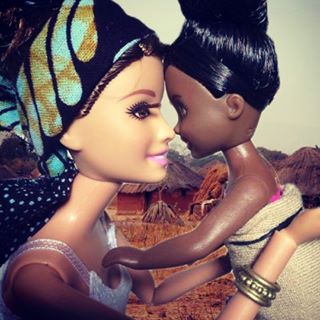
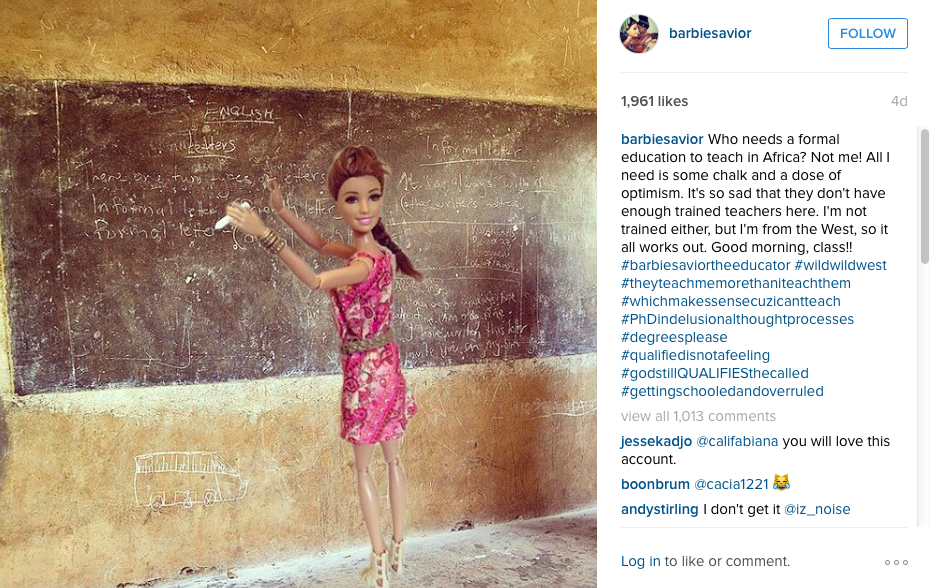
A few days later, the dean sent a reminder and included additional information that a filmmaker friend and seminary grad would be filming for a documentary. A few days after that, I learned that a group of African American students had submitted a letter to the dean to express concerns about the project. I have not seen this letter, but the seminary grapevine is real. That was the day I discovered the “Savior Barbie” Instagram account. If you haven’t heard about it, below is a Huff Post article, along with 2 examples of Barbie’s posts.
White Savior Barbie pokes fun at people who suffer from “White Savior Complex,” the term used to describe the white Westerners who travel to third world countries and make the entire affair an exercise in self-congratulatory sacrifice. (Huff Post). The account owners, who remain anonymous, point out, “We have both struggled with our own realizations and are definitely not claiming innocence here.” “Barbie Savior, we hope, is an entertaining jumping off point for some very real discussions, debates, and resolves.” It isn’t that there is anything inherently wrong with doing volunteer work to help people. WSB targets the idea that Africa needs saving from itself and white people are the ones who can do it. Barbie Savior is there for a photo op, the ultimate selfie. This kind of thinking supported colonialism, conquest, and slavery. It is white supremacy.
Let me be clear: I am not suggesting for a minute that the McAfee dean is in error. I have no idea until and unless he discusses it what the process was for bringing this opportunity to the students. For all I know, he brought it to the faculty first for them to unpack together. The letter from students is said to contain references to a diversity strategic plan, which I imagine calls for voice and conversation and inclusion in initiative planning. I have no doubt he is prayerfully and profoundly considering what they have written and will respond appropriately. This is not about him; it is about my own complicity in maintaining racist systems in which the White Savior Complex operates.
So just what was I thinking? My first thought was what a great service project! As a Southern Christian who knows what “Decoration Day” is, I have cleaned old cemeteries for as long as I can remember. My second thought was about the historical significance of the place, for yes, I was in part motivated by it being a very, very old African American cemetery that was the final resting place of former enslaved persons.
My third thought was about my friend Edeltress in Baton Rouge, who had taken me on a detour to her ancestral cemetery one day while we were on a school visit for work. “Do you mind?” she asked me. “It’s been so long since I’ve been here. I was a little girl and my parents brought me.” So we drove to a countryside in Louisiana that I couldn’t find today if I had to. “Here it is,” she said. But looking around, I couldn’t see a graveyard. Just what looked like woods, undergrowth, weeds–way back, about a hundred feet off the side of the road. Edeltress laughed. “Oh, you’re looking for a white cemetery. This is how our cemeteries look.” We tramped around the site, being careful not to step on the graves, and on the way home, she told me stories about her father, who had driven an old broken-down truck so that his white neighbors would not recognize him for a landowner and successful farmer. My people were dangerous. So that is the image I got in my head when the dean asked for volunteers. I thought of paying tribute, in this small way, to my friend.
That is why I am going to acknowledge my white privilege, acknowledge the concerns of my classmates–for they hold us accountable for thinking of and processing these issues before complying–and then go clean up a grave yard. But you won’t see it on Facebook or Twitter. I will not take a selfie with a tombstone. Does this make me admirable? Is this sufficient acknowledgement, or am I assuaging my conscience? Am I asking the right questions? I don’t know, but it gives me something to ponder as I pull weeds.
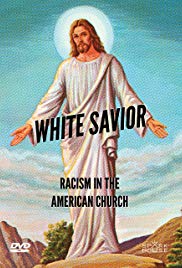
White supremacy can look like skin heads carrying swastikas; it can look like angry white people wearing red hats. It can be masked by well intentioned white people who secretly voted for Trump. And it can be a white seminary student who fails to do the work of problematizing a workday over the graves of enslaved persons. There is another White Savior resource I find relevant here. White Savior: Racism in the American Church (2019). The film “explores the historic relationship between racism and American Christianity, the ongoing segregation of the church in the US, and the complexities of racial reconciliation” (imdb). I recommend it. The film closes with an African American minister from the Bronx discussing being an ally. “Being an ally,” he said, “means asking ‘What do you need? and sometimes that means just shut up and listen.”
At the end of the day, I believe in a place like McAfee. It exemplifies the complexity of racial reconciling and justice. The messiness of it. It is a place where we can make all the mistakes–and there are many–and learn that the sky doesn’t fall when we make them. It is a place where, sometimes, we can just shut up and listen.
This week I had to check my whiteness two times, first at the ONA Coalition National Gathering and then at the UCC General Synod. The lesson was reinforced for me that, even though I have more than one historically marginalized marker with which I identify (gender and sexuality), that does not mean I am enlightened or evolved in relation to other marginalized populations. It is no fun having to face this in real world situations, but it’s crucial to remember. It also teaches me that in discerning for the ministry, I have a lot to learn. It is God saying, “You’re not there yet.”
The first was during a talk given by a candidate on the slate for a UCC national office. Right after the UMC vote, I had been a little indignant about African delegates being the conservative votes that put the resolution against LGBTQ ordination over the top. Reverend Karen Georgia Thompson pointed out that the African delegates had been heavily lobbied and probably manipulated by conservative (probably Southern) delegates. Of course they had; it created the narrative that benefitted U.S. delegates while reinforcing the stereotype that Black bodies and Black churches were by nature “essentially” conservative.
The second instance was personal. I had a roommate for Synod, a gifted African American chaplain I’ll call Susan. One night, we went to a late evening reception for Members in Discernment for ordination. It was late, so there weren’t many people in the large Hilton hotel suite. In the corner, engaged in conversation with a conference delegate, sat Reverend Traci Blackmon, a rock star minister, prophet, activist in the UCC. She came on the national scene in helping people from Ferguson, Missouri, respond to the Michael Brown murder in 2014. Naturally, we were both star struck. While helping ourselves to the snacks and wine, Rev. Blackmon walked over and began heating up her leftovers from Maggiano’s. The three of us struck up a conversation about a contentious topic in the last session. She was very gracious and seemed to me to be in the mood to talk. It seemed like she needed to unwind before calling the very long day a night. So the three of us sat down in the living room area of the spacious suite while she ate. Even though it was late, I was energized. Like those cop shows where they have to keep the caller on the line so they can trace the call, I just wanted her to keep talking. She is a public theological intellectual, and like bell hooks, a treasure.
When we got back our room, I was revved up from the experience. “Traci Blackmon had a conversation with us,” I said. “Well,” said Susan, “she had a conversation with you. I think I may have made one statement.” Screeching halt. She was right. I, in my white academic privilege, had manipulated the conversation so that I could “own” an engagement with this person I admired. I knew how to guide conversation, to interview a subject, and that’s what I had done. My new friend was gracious, and to her great credit, she didn’t excuse or deny it to make me feel better. The irony is that throughout the conversation with Rev. Blackmon I kept telling myself that I was humbled to be in her presence. No I wasn’t; I was proud. Humility is what Susan exhibited, yet I was so blinded by my privilege I did not see it.
I am not suggesting Susan did not have voice–she did, and she could have called me out severely as we debriefed. What I realized was that in this space where justice and covenant were sacred ideals to be put into practice by all Christians, I had performed a microaggression from a place of privilege, so I am glad the space is also one of grace and mercy. Although, like the tools of privilege in my invisible backpack, I do not deserve them.
Today is June 19th, Juneteenth, the day in 1865 when news of Lincoln’s signing of the Emancipation Proclamation two years earlier finally reached enslaved persons in Texas. It coincides with the National Gathering of the UCC Open & Affirming National Gathering and a Race and Religion course assignment on whether the Lost Cause still exists in the South today. All things work together, and it is fitting.
When I was a kid my parents took my little brother and me to Shiloh National Military Park. This began and strengthened my fascination with the Civil War. Other Southern writers have written about how prominently Civil War lore figured into their childhoods, how it shape their psyches as Southern men. No major battles took place in Alabama like in Virginia and Tennessee, so my parents—who took exactly one vacation in their lives and it was NOT to the beach—hauled us on a day trip to Shiloh. We saw the exhibits with artifacts from the battlefield: bullets, bayonets, buttons. We saw a film that mapped out the two-day fight from April 6-7, 1862, the bloodiest battle until Antietam five months later. It remains the sixth on the top ten list. We walked around sites so horrific they had been named: Hornets Nest and Bloody Pond, water colored red by soldiers’ blood. At the end of the day, my parents took us to the gift shop, where we were each allowed one souvenir. My brother and I got the same memento—a confederate private’s cap. We did not even consider the Union blue cap of the yankees.
I think perhaps the Lost Cause takes on a different meaning for working class Southerners than it had for the old plantation class that evolved into wealth obtained from industry and later, investment. For us, the Lost Cause equated with the tragic romanticism of the lost war. The South is a contested place; it is a place looked down upon by those outside—and sometimes inside—of it. During the tour, my brother and I cheered for the Shiloh story of Day 1, that went to the confederates. On the second day, Grant’s reinforcements arrived, Albert Sidney Johnston was shot, and the battle went to the Union. The feeling I had then is similar to the physical and emotional drain I feel after the University of Alabama loses a big game to Auburn. It is real disappointment that I feel for the rest of the day. Our land had been invaded and we had lost. That was my lost cause, and its symbols took on religious meanings—the Stars and Bars battle flag, the gallant General Lee upon his steed Traveler (yes, I know the horse’s name), and of course, Dixie, our hymn.
Constructing the Lost Cause narrative so strong that is part of the psyche of Southerners who have no discernable connection to the Old South other than geographic location required a national comprehensive campaign. So the question to consider is, in whose interest was it to create the Lost Cause as an organizing theme? The white plantation class, supported by southern newspapers convinced poor whites that they were whiter than they were poor; thus, they allied with the people who looked like them. We continue to do this today, voting and allying against our economic interests because they are white. Northern and Southern Protestants turned defeated confederates into defeated Christians as the Lost Cause became a vehicle for Southern Redemption—redemption that was religious, social, and political.
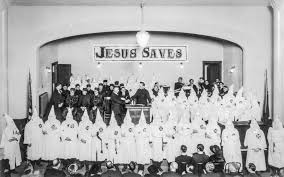
Yesterday, I attended a session at the UCC Open and Affirming (ONA) National Gathering in Milwaukee, called Offensive Faith: Queering the Playbook for Religious Engagement. Rev. Naomi Washington-Leapheart, of the National LGBTQ Task Force stressed the intersectionality present in dismantling systems of gender and sexuality oppression. People of color are disproportionately affected by violence in this country; the same is true for gender violence. One of the pictures she shared prompted my reflections here, connecting religion, the Lost Cause, and racial (and gendered) violence. I look at it now and am offended, yes, but I see it and know that the stirrings of nostalgia I also feel seeing the old black and white photo that could have been taken at Littleville Elementary School, where I grew up a confederate child. My nostalgia is a fruit of white privilege, and so too is offensive.
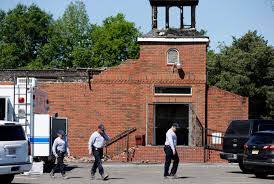
The second photo Rev. Leapheart shared will likely offend Lost Causers—not only them, it will offend many other white people. I think when we as a people can be offended by both images because they stand for a history of racial violence in which religion has been complicit—then we might hope for redemption.
Please also take time to visit the National LGBTQ Task Force web site and read about their All of Me. All the Time campaign for the Equality Act. They have this description:
The National LGBTQ Task Force educates federal policymakers about the need for non-discrimination protections that ensure the whole person is able to advocate for themselves when discriminated against, wherever that discrimination takes place. We work with a wide range of progressive partner organizations across the country both at the state and federal level, like the National Black Justice Coalition. The Task Force shifts the conversation from a political and technical one to a national and inclusive conversation based on morals and values.
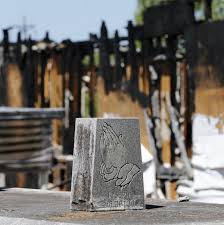
Holy God, we must speak the names. St. Mary Baptist. Greater Union Baptist. Mount Pleasant Baptist. Louisiana smolders. In the names and the smoke our sin is manifest. We do not speak of their pain because the pain is their own—it belongs to their hearts. We do not get to cry those tears. Theirs is not our story to tell. Our story is a 21-year-old in an orange jump suit staring back at the camera. “His dad has been a sheriff for a number of years, he’s a good fellow,” said a state congressman. “My understanding is the son has had a troubled past.” Yes. Sons of the South have troubled pasts. “Not guilty,” he pleads. It is we who need to plea, yet ours can be no other than guilty. In 1963, two other sets of eyes looked back at the camera, in Birmingham; our pasts are troubled. “I tremble for my country,” Jefferson said, “when I reflect that God is just; that his justice cannot sleep forever.” Louisiana burns, God, and we tremble in our transgression. Do you yet sleep?
God, we trust you~~that we are not condemned to forever suffer the consequences of our sin by perpetuating evil. At the hearing, the 21-year-old arsonist’s father, the deputy, left the courtroom in tears. What did he cry for? His “good boy”? A lost youth? A youth lost? His boy took pictures of himself. Pouring gasoline. With a blazing building. Among the ruins. He claimed this.
God of justice, God of righteousness, we trust you and we offer you all praise~~but we do not know exactly what to ask you. Has nothing been asked before? Have we not prayed for forgiveness? Have we not prayed for good relations? Have we not prayed white prayers that our white children would not detect our locked-away resentment of freedom ringing? Correct us. Guide our hearts to pray those prayers. Awaken your justice, God, and direct us toward reconciliation and love—discernible in the photographed eyes looking back at us. Amen.
Last night, we sat in front of the television and watched the announcement of the Grand Jury decision from Ferguson, Missouri. From the time the broadcast started, there was a split screen, one camera on the crowd and another on the DA who was reading the lengthy statement. For a while, we watched the people straining to hear what he was saying on their radios and phones. Then, when he got to the point and announced that the Grand Jury had voted not to indict the white policeman who shot Michael Brown, we watched the people process the information, at first in stunned silence. Then the protests started. Even as I write that, just like the camera crews, I realize was expecting them to begin almost on cue. We were waiting. So, I watched them start up, then heat up, and Sarah tracked them all over the country on Twitter.
Then, at around 11:00, we called it a night.
That, friends, is one example of what is known as White Privilege. I had built my evening tv viewing around the press conference and coverage of the “event.” After about the second round of teargas had been shot into the crowd in Ferguson, Sarah looked up from the string of protests starting in every major U.S. city and said, “I think I’m just going to sit here in my white privilege.” I, caught up in the unfolding story, asked her what she meant. “I don’t HAVE a riot outside MY door.” I can be thick as mud sometimes.
Thomas Jefferson wrote, “I tremble for my country when I reflect that God is just; that his justice cannot sleep forever.” Ferguson is the 21st Century version of “Selma,” a cry for justice that in one word captures the collective voices of the disenfranchised. And last night, for me it was there for my viewing pleasure. A few weeks ago, Pastor Kim preached a sermon about it; I shook my head, wrung my hands, and felt sufficiently bad, but not bad enough to stay for the continued Sunday School discussion the following week. That’s part of my white privilege too: I can join up with a church committed to social justice and have the audacity to think that I’m “covered” just by signing the roll. When really, PUCC is a place for me to re-charge and build up my strength to go, to do, to live justice. Thing is, I don’t really know specifics on how to do that, or maybe I do deep down, but the White Privilege is that little voice inside me that tells me that I don’t—or that it activism can be terribly inconvenient.
I’ll tell you what I couldn’t look at last night, still couldn’t look at this morning when I was seeing all the posts on Facebook. I couldn’t look at the pictures of Michael Brown’s family in what I understand as pain at hearing the verdict. I do not get to share in that pain, don’t get to try to empathize and feel it. I don’t get to feel it because my White Privilege means I can conveniently shut the feelings off whenever I want to. And not just feelings—if I wanted to, at least until the awakening of the Just God, I could live my life for the most part without ever encountering injustice based on my race. I have for half a century, after all. In all likelihood, my son will not be shot by a policeman when he wears his hoodie or has his hands in his pockets. And if that ever happened, I would not be expected to be a stately presence on tv who represents all White mothers everywhere. So, to me, I don’t get to look upon my Black sisters’ and brothers’ anguish now, although, to me, I MUST hear what they are saying. It sounds to me a lot like what Jefferson said 200 years ago. Tremble, country, for God is just.
I’ll end by sharing link to a blog post entitled, “12 Things That White People Can Do Now Because of Ferguson.” Ferguson is now, like Selma was in the 60s, a complicated and contested issue. But if “doing” is what is needed, and I believe it is, then here is a “do-able” way to start. The link is
http://qz.com/250701/12-things-white-people-can-do-now-because-ferguson/. Anti-racist activist Tim Wise (see www.TimWise.org) points out that racism hurts everyone, and that until White people understand that, we will not really become invested in living for a world that is just for everyone. This is a hard knowledge, not a warm fuzzy one. But in the end of this church year, where we have fallen short of the promise of peace on earth, good will toward all people, it is a realization we might—no, must—seek.


















 The Front Porch Professor