I’m honored to share that my new article, A Field in Flux: Notes from an Administrative Escapee, has been published in the Journal of the American Association for the Advancement of Curriculum Studies (JAAACS). While its title suggests a personal confessional, the piece ultimately offers a broader reflection on the evolving and embattled state of Curriculum Studies/Theory—shaped as much by political and ideological pressures as by institutional shifts in teacher education. Drawing on recent scholarship and personal experience, I explore what it means to “come back to theory” in a moment when the field itself feels fragmented yet urgently needed.
You can read the full article here:A Field in Flux: Notes from an Administrative Escapee – JAAACS, 2025.
In a recent essay, Evolving From Just Keep Swimming to The Front Porch Professor, I explored the journey of reimagining this blog to reflect my evolving focus on narrative storytelling. At its heart lies the front porch, a symbol that anchors my Southern identity and shapes the lens through which I write. This post builds on that foundation, unpacking the concepts of nostalgia, place, and Southern identity—terms that are complex and intertwined. Sitting on the front porch is an appropriate place from which to give them the careful exploration they deserve.
You may be asking, “Well, when are you going to start writing instead of just writing about your writing?” Good question. The process is a throwback to academic writing, where you have to describe your framework and method for presenting your ideas. In other words, I need to tell you how and why I’m going to tell you what I tell you. Then I can tell you. But you’ll be glad to know I’m about ready to start front porching.
Why The Front Porch Professor?
Claiming the title of professor in my blog name is about more than qualifications; it reflects a blend of storytelling, introspection, and intellectual curiosity. It signals that the reflections here are informed by years of observing and searching for meaning. The image of a professor on a front porch bridges the formality of academia and the warmth of casual conversation. I invite you into a space where lived experience meets thoughtful analysis, encouraging connections and deeper understanding.
Professor Whitlock
For me, the title is also a tribute. As a small-town girl from rural Alabama, raised by working-class parents, becoming a professor is a point of pride. It’s a testament to their sacrifices and the support of friends and loved ones. They are ever present in my writing, shaping the stories I tell and the perspectives I share. I am both proud of the accomplishment and humbled by the debt and responsibility I owe them.
Place and the Southern Perspective
When I write about place, I’m speaking to more than just geography. Place encompasses the physical environments where life unfolds. Place is the landscape on which contexts of culture, history, and society are painted. It’s where relationships, joys, disappointments, and lessons unfold. All this happens individually and collectively. Place is both a backdrop and a character in our stories, influencing who we are and how we navigate the world.
Downtown Russellville, Alabama
Being Southern, then, adds layers to this concept. The South is more than a region; it’s a complex web of traditions, histories, and cultural markers. To call oneself Southern is to grapple with the beauty and contradictions of the place. With the South’s ugliness. Can one be proud to be a Southerner, as I am? What does this mean? What am I proud of? And what about the parts of Southern “heritage” that I am not proud of? What is my relationship to those people who claim and celebrate the ignoble parts?
Writing From a Southern Perspective
“Being Southern” is as much a state of mind as it is a physical state. My Southern identity isn’t about celebrating a romanticized version of the South–you know, moonlight and magnolias. Instead, it’s a lens through which I explore themes of home, culture, and identity. The South, for me, is a place of deep connections, shaped by family, history, and the rhythms of everyday life. Southern identity is not monolithic—I don’t assume my identity is exactly like yours, just as your experiences may differ from mine. While we may share certain aspects, identity is deeply individual and uniquely shaped by personal experiences.
Southern food–note the Thanksgiving Chicken and Dressing
Family and home are central to this perspective, grounding my stories in the relationships and traditions that define Southern life for me. The culture of the place is a tapestry woven through the land, neighbors, communities, histories, food, churches, schools, music, and football. These often appear in my writing, not only offering insights into shared experiences but also helping us understand the world around us and highlighting the relevance of our observations. Yes, there are lessons to be got from SEC football. Roll Tide, y’all.
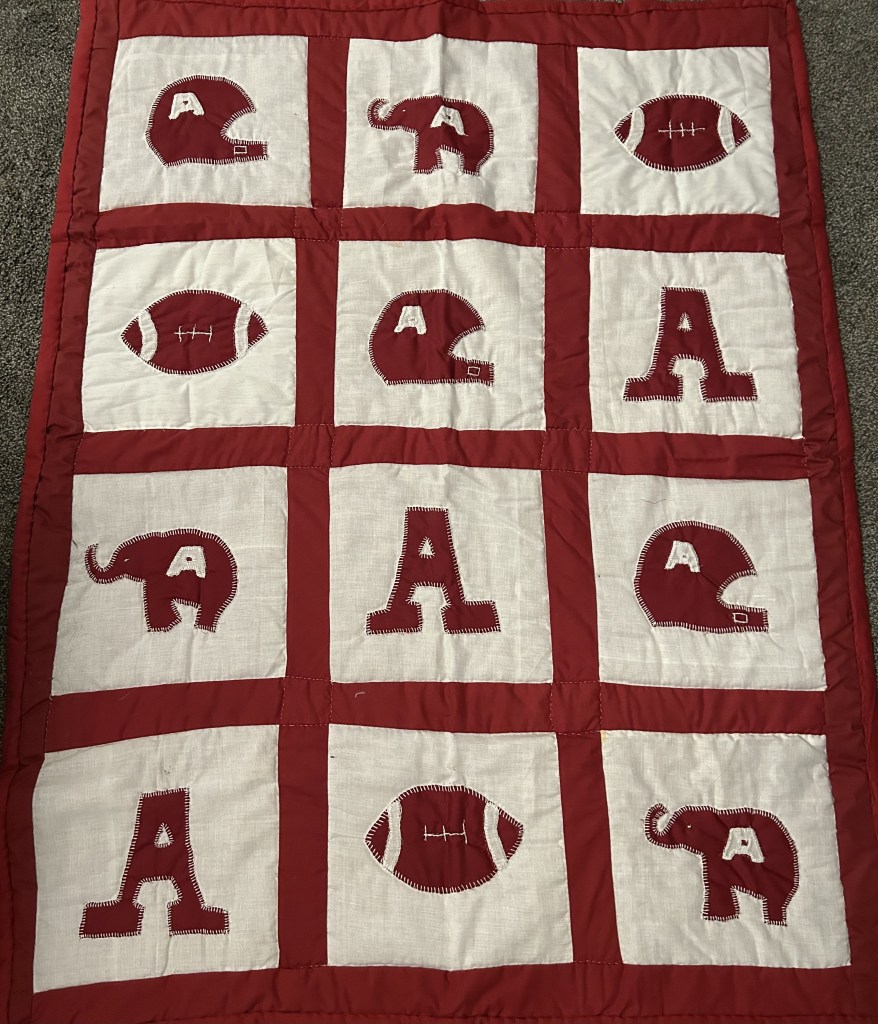
Lovingly made Alabama Quilt from my Mother
But writing from a Southern perspective also means wrestling with the region’s complexities. The South is as much about its tensions and contradictions as its traditions. It’s a place where politics, identity, and history converge, challenging us to confront difficult truths while celebrating what makes it unique. Without acknowledging the turmoil and inequalities of its past, any discussion of Southern life, identity, and culture feels inauthentic and incomplete—it’s a Southern writer’s malpractice. As someone who often says, “I love the South,” I can be trusted to both celebrate and critique it. Critique from someone who hasn’t lived it or can’t celebrate it is equally incomplete–and there are plenty of these critics around. This is my not so humble Southern opinion.
Nostalgia: A Lens for Understanding
Nostalgia, as I see it, is not about longing for a bygone era but about connecting the past with the present to find meaning that may inform the future. The word itself comes from the Greek words nostos, meaning “homecoming,” and algos, meaning “pain” or “longing.” It speaks to a deep yearning for the familiarity and comfort of home, even if that home is more an idea than a place. Some homes are not the kind we can long for; rather, we might long to be released from their memory. This etymology captures the duality of nostalgia: it brings remembrances of warmth and connection, yet it also reminds us of what is distant or lost. The dual nature of nostalgia vies for our attention, wrestles for focus, and fights for dominance—keeping many of us in therapy for years.
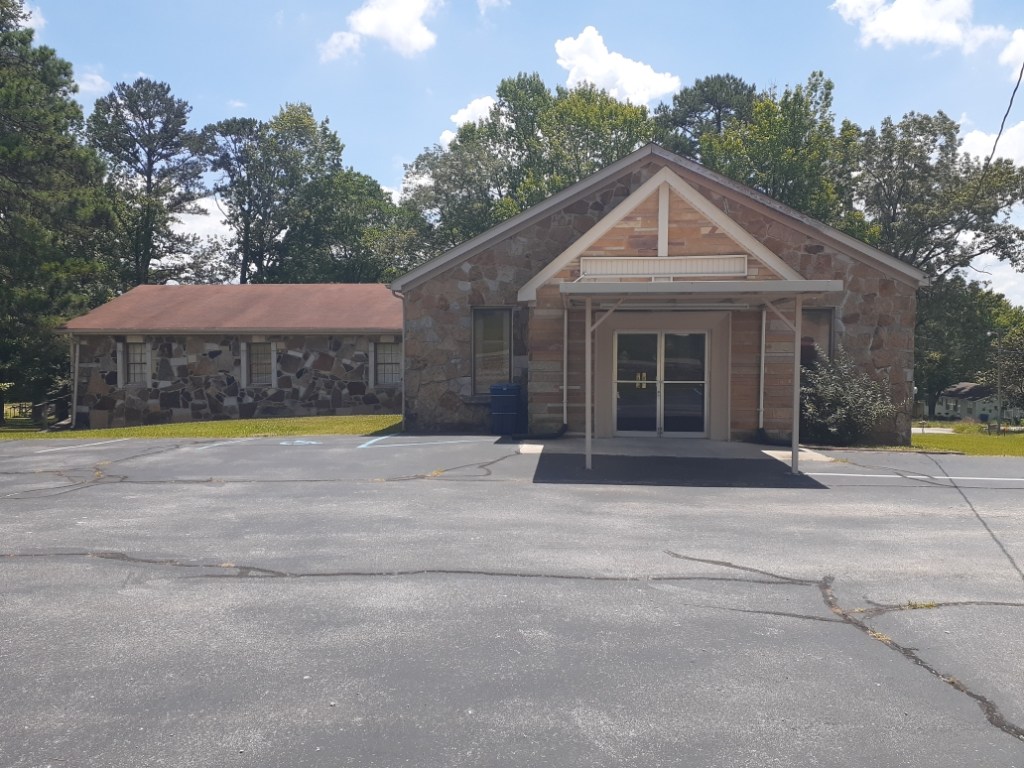
My home church, Littleville Church of Christ, Littleville, Alabama
It’s a complex emotion, often blending warm memories with a bittersweet awareness of time’s passage. Far from being purely personal, nostalgia is often collective, rooted in shared experiences and cultural touchstones like family recipes, cherished traditions, or the familiar strains of an old song. In my writing, nostalgia becomes a guide for exploration. Stories about homeplace and family lead me to reflections of broader themes, such as the importance of community, civility, and the pace of modern life. Nostalgia isn’t a destination where we can remain lost in the preferred past; for me, it’s like wrapping myself in an old quilt, offering warmth as I navigate the here and now. You can’t linger too long, though, because living means stepping into the day with clarity and intention.
The Front Porch as a Space for Reflection and Stories
The front porch, in this context, is both a literal and metaphorical space—a place where complex ideas meet honest, accessible conversation. It’s where intellectual rigor mingles with the warmth of shared stories, and where connections are formed through curiosity and reflection. This is the balance I strive for: nostalgia not as an escape but as a framework for growing and learning.
The front porch is open to anyone willing to join the conversation, to explore what place, the South, and our shared histories mean in today’s world. And if you aren’t Southern, you might still have a good time and make connections, too. Together, we can find clarity, joy, and meaning in the stories we tell. I believe we have a responsibility to one another to make the world a better place–a place where we indeed have the liberty to pursue the happiness of a gratifying life. Taking care of our neighbors has never been as important as it is now. It feels like not only have we forgotten how, but we have forgotten that we ought to in the first place. That’s another reason front porches are important. I hope you will join me.
After fourteen years maintaining my blog Just Keep Swimming, I decided it was time for a change. When I started blogging those years ago, blogs, shorthand for “weblogs,” (remember that?) were fairly new, and I was deep into building a career by writing articles for academic journals. I knew that autobiographical narrative Curriculum Theory (my professional writing) would not be a lucrative venture. It wouldn’t earn money or attract thousands of readers. I determined that I would use the blog as a journal. I wrote personal essays in memoir style that might later be crafted into journal articles–a sort of pre-writing holding station. I also told myself that my blog was really only for me. I thought this would lessen my disappointment at having no readers. That part was sad because I really wanted somebody to read what I was writing.
Logo for Just Keep Swimming Blog
So, the blog was a patchwork of ideas and topics with loose themes and frameworks pulling them together. Not surprisingly, then, I had difficulty giving it a name. Sarah helped. The more I obsessed over finding just the right name for a blog nobody would read, the more I secretly hoped someone would. The more I obsessed, the more she tried to help me get centered. She tried to help me find some resilience somewhere. “Just keep swimming,” she said, as much a suggestion for my state of mind as for the blog title. It fit. For almost a decade, I have worked on justkeepswimming.life–mostly sporadically. During those same ten years, my career evolved from faculty member to department chair to college dean. As a small-town girl from Littleville, Alabama, I wanted to see just how far I could go. I told myself I didn’t have the time to write regularly. I did well to just keep swimming.
This Spring I will once again be a faculty member in the college, without an administrative role of any kind. I’ve been thinking about this change a lot, and I reckon it will be a good move. I am looking forward to teaching again. I am also eager to have some autonomy over my time. Faculty generally work more than 40 hours per week, but oftentimes, when and where we work is up to us. This kind of flexibility will take away an important excuse for not posting regularly—that’s the goal. Updating the blog’s purpose and branding reflects the updates going on in my life. What is my new identity–who am I now that my decades-long professional identity has changed? What kind writing do I want to do, and what will I write about? What do I, as one white Southern professor with blue collar roots, have to say?
Heading Out To the Front Porch
I reflected on what I wanted the blog to be. I asked myself why I started blogging. It isn’t to have a journal to springboard into professional papers. Nor do I write to make money or achieve celebrity status as a blogger. I write blog posts because it brings me joyful engagement. This engagement gives me purpose. It also provides an immediate connection to you, and you to me. And somewhere among the joy, purpose, and connection, there is also the urgency of needing to tell.
In her book, Why I Write, Joan Didion wrote, “I write entirely to find out what I’m thinking, what I’m looking at, what I see and what it means. What I want and what I fear” (“Why I Write.” The White Album, Farrar, Straus and Giroux, 1979, pp. 192–194.). Her quote has been shortened over the years to “I never know what I think until I read what I write,” which is unfortunate since it leaves out the part about what one wants and fears. When I write I am participating in the world around me and putting meaning on what I see and experience. And yes, desire and fear are part of it, just like they are ever-present in one’s consciousness. What anything means to me won’t be what it means to you, for you are participating from your consciousness, your home place. And that’s what I’d like to evoke with my stories–for both me and you.
New Logo for The Front Porch Professor that includes a rocking chair, antique typewriter, and Mazda Miata.
In essence, then, I am re-claiming my identity as a writer. Who am I? I value education, so I got a PhD and became a professor. I am a Southerner to my soul, and my perspectives for writing are shaped–and shape–that identity. I write about the South, my particular anchor of homeplace. Homeplace is a treasured concept for me, one that encompasses family, food, religion, politics, music, sexuality, culture–it is the landscape on which my life has been written. I view the landscape through a lens–a veil, as I like to think of it–of nostalgia. As I write, I hold the present up, looking backwards to the past—my recollection and understanding of it—with a questioning eye toward the future. To symbolize the space from which I can observe and cast a critical eye on Southern place, I chose the front porch.
A front porch is more than just a place—it’s a state of mind. It’s where stories are told, where folks sit and hang around together. It’s a place where the world slows down just enough to reflect on what truly matters to me. With The Front Porch Professor, my goal is to bring the warmth and depth of this space into the stories I share. I work through the tensions between issues that matter to readers today. I also offer honest, insider critiques of the South. Sound idyllic? It can be, but just like the South, the front porch can also be a troubled and complicated place where anguish, heartbreak, disappointment, and violence take place. Every few days, I have to sweep the porch to clear dust and cobwebs to make sure it is an inviting place for myself and others.
Who Should Read It?
The intended audience for The Front Porch Professor are folks who appreciate stories that resonate on both a personal and universal level, blending the warmth of lived experience with the relevance of today’s challenges. My readers might be older adults, reflecting on their own life journeys and drawn to narratives that echo their experiences. They might be educators or seekers who appreciate the intersection of storytelling with deeper ideas about culture, family, and identity.
This blog also speaks to those who find meaning in the everyday—the simple joys of a shared meal, the comfort of homeplace, or the peace found while sitting in the shade in a back yard. I believe there is also value for people who can’t recollect joy from their homes. There may be appeal here for them as well. Home for some–if it means anything at all–are places of atrocities, hurt, and darkness. Home may be a place of utter ambivalence. If this is you, then I invite you, too. In this blog, I look for the mysteries to be found in simplifying the complex and complicating the simple.
Why Does It Matter?
Our world is a noisy place, and it feels to me like we are distracted by it–not just distracted but affected in other ways. Noisy politics, for example, has polarized some of us to the point of violence. It has also created animosity with friends and family. We seem to have lost focus on the things that matter, which is always others. I hope my stories can balance out some of the clutter. I hope that together we can pause and look for grounding–the kind that I find from recollecting and observing what happens around me and to me.
Alternate Logo for The Front Porch Professor that includes ukelele and typewriter with no Miata.
Maybe you, like me, want to have a deeper engagement with life around us and with others in it. Maybe you, like me, want to nourish a homeplace of the heart, our own personal touchstone where inward reflection points us out-ward toward purpose. A safe and joyful place of our making–whatever that might look like for you–where we contemplate how our own sense of belonging connects us to others. I hope The Front Porch Professor is engaging and entertaining; still, I do not consider life merely to entertain. As you read, I invite you to actively participate with me as we pause, surmise, and make meaning. Don’t just read. Come along with me on our shared journey.
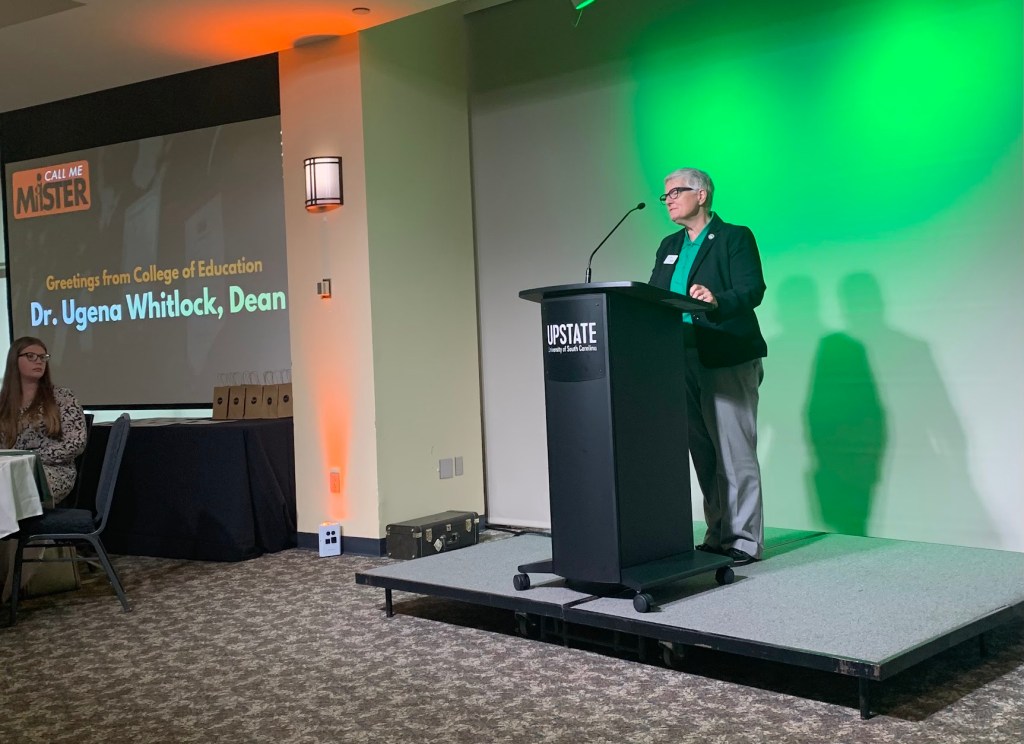
Introducing Dr. Ugena Whitlock, The Front Porch Professor!
Note: The following essay was submitted in draft form for a collection to which I was invited to contribute called “Letters to the Field” (of curriculum studies). The call was in 2021, and the theme of the book was to be reflections on the dumpster fire that was the year 2020. Each piece was to be handwritten in the author’s preferred style and format. The book may be in production. If so, here’s what my entry will be. If not, here’s what it would have been. Enjoy.
Hello, Field.
I hope you are well. As I write, we are mid-way through 2021, which seems incredible. Time has been “out of joint” since March 2020. I sat in my office and watch seasons pass; each time I stepped outside, I was stepping into a different season. It was nearly a year and a half before I traveled to see my family, and I still have not seen my grandchildren. How did I fare? Well, I’m introverted, so for a long while, the virtual/remote situation was ideal. Like most everyone, I enjoyed pajama Zooms and working at my own pace. After 15 months, I found myself searching for webinars to join during the day, just to feel plugged in professionally. This was most unusual for me. And you? I noticed several calls for works about Covid and race in the U.S. I see that your various conferences made valiant virtual attempts as did others. I suppose, then, it was not an ideal situation for most of us.
Truthfully, I was a spectator to the last two years. Being at home made it easy to self-isolate. And I did not write a word about either pandemic–Covid 19 or Black Lives. I’ve thought about why not. During 2020 I was finishing a Master of Divinity degree from seminary. From March 2020 to March 2021, I followed nothing but Covid until I got my vaccines. I tracked the death toll. In late spring and summer, I watched cities burn as we paid a collective price for the sin of racism. It was also an election year–after 4 years of having Donald J. Trump as the U.S. president. I watched as a dispicable, weak, narcissistic emperor with no clothes attempted a coup–aided and abetted by dispicable, weak, narcissistic congressional and state legislative sycophants.On January 6, I watched, jaw dropped, the coup attempt unfold, when the U.S. Capitol was stormed on live tv as Congress was about to certify the election results anyway. I was weary and suffering from media overload. I tuned in and cried on an Inauguration Day, which was blessedly uneventful.
I cried two other times in 2020. Both took place the first weekend I visited my parents in over a year. We were sitting around having coffee when my daddy–dismissing Mother’s cautioning against it–brought up politics. It’s important to him that we find common ground in his conservative worldview. “The US isn’t a democracy any more. We’re somewhere in the middle of Socialism and Communism.” Now, I’m not going to unpack any of that or sort out the concepts. I replied as long as we have free elections, we have something of a Republic still. Then my mom drove home the point. She said the election was rigged. That was it. I had a meltdown, which I won’t describe, other than to say I began to cry. The conversation, thankfully, ended. Daddy moved on.
The following day, Sunday, I was moved to tears again; however, the context and feeling were entirely different. My parent’s church, the one I grew up in, was still distancing for Covid. A handful went inside the building, yet there was still a “drive-in” option in the parking lot. The Elders had purchased a transmitter, and people were directed to tune their radios to 92.5, where they could hear the service. The rest of my family worshipped inside, but I, now feeling like a full-fledged outsider, changed my dial. Daddy gave the welcome and announcement, and I smiled as his voice came from my car’s speakers. Then the congregation turned in their hymnals to the opening song. Then the old, familiar hymns began, songs for which I did not need a song book. I knew all the verses of all the songs. Then the contentment and peace that comes from losing oneself in music came over me. I didn’t care how I might have looked to those driving in or driving by.
I am sure you’ve received plenty of letters i that are emphatic about our field never having been as relevant and necessary (!) as it is now. We are poised, they will say, to address the contexts of the Age of Pandemics. I know this because at every crisis point since Curriculum Theory has existed, we have made those proclamations. And we are not wrong. Yet, here we are again. So, Field, what are your intentions? I’m reading over my stories above, and have a “more things change more they stay the same” moment. In the years that I’ve worked as an administrator and stepped back from curriculum theory writing, convictions of white Southerners (whites everywhere?) have deepened. As time has passed, the difference is that now they are sanctioned by politicians who court them as their voting base. The implications of radical conservative politics ranges promoting the Big Lie of voter fraud to the All Lives Matter refrain to righteous, nationalistic indignation at being directed to wear a mask to prevent the spread of a highly contaigous and deadly disease. This week, parents are protesting our local school district because a white school board member sent them a video link that features a video with the “real truth” about masks: they don’t work (and neither does the vaccine). The danger, then, of curriculum studies of Southern place is more discernable for me. But so is the necessity of doing it.
Don’t I have anything positive to contribute in terms of being central to the present moment? Same old, same old, I guess. I will continue going to the conferences and publishing in the journals. After all, we have to put our work somewhere. At those conferences, we will continue to look for ways to put our theorizing into activism. I suspect we will write very sternly worded letters and post them on our websites. We will do what we can to advance the field so that there is a place to post the letters. Mostly, we will tell ourselves that ours is the New Fresh Next Voice that will change the world and make it more equitable and inclusive. Why so negative, you ask. I suppose it’s because we’ve been telling ourselves this for all these years. Truth is, I stepped back for 6 years in part because I could not see that I was making any difference with you, dear Field. The biggest difference has been in me. I am changed from the writing and from the politics and social untethering. I am changed by COVID-19. Administration has changed me and so has studying for the ministry. I’m older, more seasoned, and yes, resigned to the way the world keeps turning.
Writing curriculum theory is not so unlike studying for ministry in that both look for ways to connect with the human spirit in a world that cares very little for the spirit. So in the end, the real question for me is not whether there is a place for my curriculum theory at your table but rather for your table in my curriculum theory. Really, it’s not me it’s you.
And that, in the end, is what my divine nudger whispers to me.
When Sam Phillips’ secretary at Sun Records, Marion Keisker, asked Elvis who he sounded like, he replied, “I don’t sound like nobody, ma’am.” Writing can be such an isolating activity, that I’m sure I’m not alone in feeling like I don’t write like anybody else does. I sure don’t feel like my writing is a neat fit in most other places. Blog writing feels right. First, it isn’t traditional academic writing like I’m required to do as a professor. I cheat at that usually–it’s such a formulaic, forced disciplinary exercise. When I do it, I write my narrative first and then sprinkle in the theory. Don’t laugh~~it earned me a Ph.D. and tenure. Thing is, the narrative is all I ever want to write.
For the purpose of categorizing it, I’m going to call it personal essay and memoir writing. It’s personal, and it’s narrative.
It’s not exactly essay, if by essay we prescribe more gatekeeping formulas. Same with memoir. It’s not storytelling exactly either, not like fiction. It is storying, though. For example, here’s a true one. Back in around 2003, Miss Dorothy Allison came to LSU while I was working on a doctorate in education. I just love Dorothy Allison, especially her Skin: Talking About Sex, Class and Literature. I was lucky enough to participate in a writing workshop one evening, lucky because most of the spots were taken by English majors.
One of the exercises was to free write for a few minutes. She asked for volunteers to share, and I, having a huge student crush, shot my hand up. I truly think my writing is not half bad, and have been told as much. So I shared. Did I mention that almost every other participant was an English major? English majors take their critiques of writing very seriously. The most scathing was from a very serious woman who accused me of attempting to replicate Miss Allison’s style, which honest to God, had never crossed my mind. You know how crushing it is to the soul when someone looks at you–and you recognize the look as one of pity? Miss Dorothy Allison looked at me like that.
Still, it’s–this–is the kind of writing I want to do. The kind that, try as I might, is what comes out. I still don’t think it’s half bad. That’s why I’m putting it out here. If not another soul reads it–or if English majors do and snicker like the Prufrockian Eternal Footman–I like seeing it here.
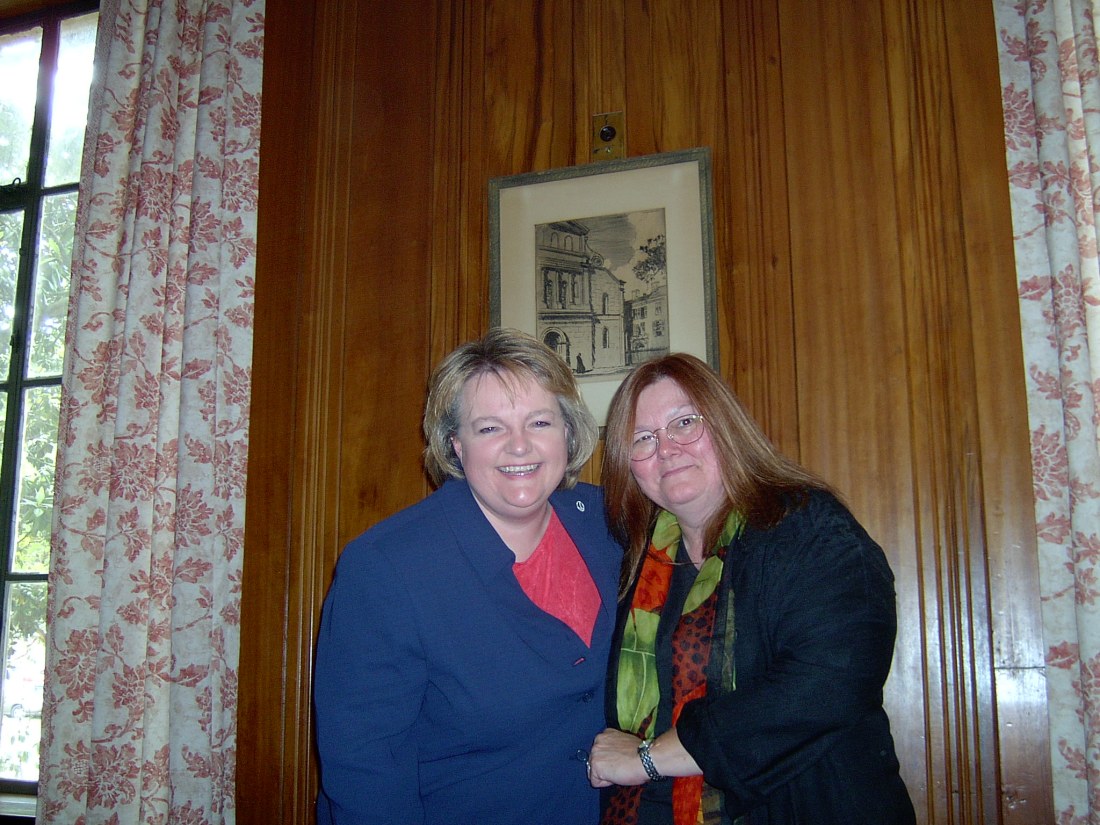
Me and Miss Dorothy Allison, 2003. Before the English majors got a hold of me….
Good company in a journey makes the way seem shorter. — Izaak Walton
This is a place for peaceful contemplation inspired by story.
What is spiritual mindfulness? For me, it is remembering to feed my spirit. This blog is a spiritual practice~~storying the soul, if you will.
Most sites I find on either one of these topics focuses on meditative and wellness practices. Maybe that’s what you are expecting here. I hope you’ll be pleasantly surprised as instead you find a narrative approach to exploring spirituality, mindful of the everyday. That’s what I do–I write. For almost two decades I dedicated my time and energies (a lot of mental energy, i.e. worry) to academic writing. Here’s how I did it: I would write my narrative essays about place, religion, gender, sexuality, white privilege, etc., and then cite the requisite sources (that’s the academic part). But a funny thing kept happening. People would approach me after a panel presentation and say, “You know, you really ought to write a book with just your stories.” Which is exactly what I wanted to be doing. The problem is, I am an academic; thus, the academic writing.
This is a period of discernment and transformation in my life. Of course, that’s part of what you’ll find here too. I started to seminary and had to make some life choices. One was to step back from academic writing and do the kind of writing I really do enjoy–and that’s what you are reading now. I invite you to come along on my journey as I nourish my own spirit through story telling, being mindful of every, every minute, as Emily in Our Town would say. It is my hope that my stories offer you nourishment of some kind too.
The writing here comes from observations that dawn on me as I go about living life with as much intentionality as I can muster. That’s the mindfulness part. What makes it spiritual? Well, that’s the part of me where the words come from—the part that hopes to connect us to, as Paul Tillich would put it, the ground of our being. One.
I don’t blog as much as I would like, so when I return to this site, I read the last post I’ve written. I did that today and thought it wasn’t half bad. I remember writing it, I had intended it to mark the beginning of my commitment toward mindfulness. That was April; this is January. I feel like I’ve failed at it miserably. I get anxious and angry. I get dejected and forget to meditate. I don’t follow through well on activities, such as this one, that are good for me and make me happy.
One of the tenets of mindfulness training is that practicing is succeeding. There is no failure, and so you should be gentle with yourself, compassionate to yourself, when you don’t meet your own expectation. That’s a hard one for me. In a weird way, when I’m disappointed in myself, rather than letting negative thoughts go and moving on, I run the script of–whatever it is–an argument, an embarrassing moment, a disappointment of some sort, over and over in my head. I keep myself in my low place, allow myself to return to it when I get busy doing something else. It is as though by punishing myself like this I am taking an action on whatever the matter is. That thinking is dangerously deceptive for me. So I get the importance of mindfulness. Today is a day of self-compassion as I turn back to it.
At Christmas, Sarah gave me mindfulness: a journal (Price, 2016). You don’t write enough, she said. I replied, yeah, I resolve to be more productive this year (Not exactly lying, but not exactly resolved)! That’s not what I meant. You don’t write enough and you like it, she said. I realize it’s true; I like this kind of writing, reflective essays. I do not like sterile, intellectual-overlaid academic writing–and this kind is not that kind. So I think it is a good idea to every so often take a prompt from the journal and write my reflection here. That way I’m writing and practicing mindfulness. The writing is the practice, and I like the thought of that.
Prompt: What is your intention for this journal? Why are you interested in practicing mindfulness? Between this post and the previous one, I’ve shown why I’ve turned to mindfulness, my hope for what I can accomplish. Thich Nhat Hanh teaches the heart of the Buddha: The wave does not have to die to become water. When I consider these two prompts, my mind turns to water, so to speak. The thought of engaging with myself via this journal feels like putting my hands in a running creek and feeling the water run through and past my outstretched fingers. I can’t think of a more peaceful image, and for the moment, I am the water.
There’s a line in the Indigo Girls song Watershed that goes, Every five years or so I look back on my life, and I have a good laugh. Absolutely worth pausing to enjoy:
The line reminds me of a therapy session I had a little less than a decade ago. I’m a firm believer in therapy. Every few years or so I look at my life, and decide that a little more therapy wouldn’t hurt. Anyway, after hearing me narrate my stories and give account of my life as I understood it, the therapist paused and suggested, Well, you might ask yourself two questions: 1. what do you want? and 2. what do you need? Since then I’ve come to call these the two existential questions. Because when I come to crossroads in my life—when I take an assessment of it—I come back to these questions. Every time—what do I want, and what do I need. Considering them helps me clear away the clutter. And often, I find that clearing away the clutter, all the superfluous options, the unimportant details, all the non-options, all the false urgencies, all the manufactured drama~~ if I can do this, I can get a little clarity.
Now while at least temporarily I have only one good eye with which to look back upon my life, my timeline has been sped up. Thanks to the Bell’s Palsy I went ahead and turned to my existential questions early. As Sarah chauffeured me through Atlanta traffic~~a whole other kind of existential question, and that was pre-I-85 collapse!~~I expressed my hope that my two questions~~what do I want and what do I need~~might come in handy now to remind me to be mindful and set peace-full goals for my home and professional life. Sarah asked, Shouldn’t you also ask, What do you have? I mean, don’t you need to know what you have to start with?
And then I realized something: want and need are words that aim me toward the future. Have is grounded in the present. To be mindful of the present moment, in other words, my existential questions are literally getting me ahead of myself. I started making a mental note of when I continued a conversation with, Yeah, and I need to….or ok, and when we finish this, I want to… They really added up. To start with what I have indicates not only mindfulness but also gratitude for the present moment. It is not about possessions; rather, it is about being. For example, when we were house shopping two years ago, Sarah and I had very different ideas about what sort of home we wanted. I was looking for low maintenance, newish, bells-and-whistles, upgrades—I wanted as much house as we could afford. Sarah, on the other hand wanted a house that wanted our TLC, one that had projects that we could really dig into. She wanted us to live beneath our means in case I decided to stop being a department chair and bum around as a professor writing blogs and books all day.
I was not a project person. I’d rather read or travel. We ended up with a 1973 house that I call the Brady Bunch house. It has a basement that I call the Hot Tub Time Machine Basement—circa 1970s. We ended up with it because it makes her happy, and that makes me happy. She can see the possibilities it holds, and she can see the finished products of our DIY labors. I, on the other hand, approached—I raced through—the projects with a fury. Hurrying to get them done, shopping for new things to replace the old—as often as I could I would bring in a handyman to do them. Look at how great the mudding on the ceiling looks, honey. Yeah, and we need to…..This went on until on day, Sarah helped me understand that working on projects brings her relaxation and joy. That she looks at them as something we can do together. When I hire a handyman, it robs her of some of her joy. When I would looked at the house and saw only years of impossible work—and be not insignificantly depressed by it—I was rejecting opportunities for being—being together, being mindful, being grateful.
In the following jewel of mindfulness teaching, Thich Nhat Hanh, pretty much sums up my perpetual state of mind over the last 50 years: If while washing dishes, we think only of the cup of tea that awaits us, thus hurrying to get the dishes out of the way as if they were a nuisance, then we are not “washing the dishes to wash the dishes.” What’s more, we are not alive during the time we are washing the dishes. In fact we are completely incapable of realizing the miracle of life while standing at the sink. If we can’t wash the dishes, the chances are we won’t be able to drink our tea either. While drinking the cup of tea, we will only be thinking of other things, barely aware of the cup in our hands. Thus we are sucked away into the future -and we are incapable of actually living one minute of life.
― Thich Nhat Hanh, The Miracle of Mindfulness
When I have already moved on to the next activity, or item to purchase, or place to go, or meal—then I am not mindfully grateful for the blessing of being present. Life in the present is gratitude for the miracle of life while standing at the sink. I take on our projects now and work on them in the moment; stirring paint is stirring paint. When I’m sanding a desk, I feel the wood grain and the flecks of paint. When we demolish a portion of the porch, I do not panic to plan exact dates and details of when it will be put back together.
No doubt~~knowing me~~I will have to remind myself of this regularly. Old states of being are hard to move past. I like to have something to look forward to, a curiosity deserving of its own unpacking. But the old tools weren’t working; pushing forward was not working through. I have to work at it, at mindfulness, and it is so much more difficult than I thought. For example, I spent one whole day looking at web sites for mindfulness trainings and retreats–one was in IRELAND!~~I downloaded three mindfulness meditation apps on my phone. Found an online mindfulness course. I was obsessing over mindfulness, an irony Sarah kindly but pointedly noted with a grin. And when you’re learning to face the path at your pace, every choice is worth your while (Watershed). Every choice is the opportunity to actually live one minute of life at a time. And that’s jaw-droppingly incredible to me.
All my brainiac friends don’t get excited. This ain’t about Judith Butler. There is one part of being a professor that I actually don’t mind: the annual review process. I also enjoyed (!) the Tenure & Promotion process a few years ago, which is very similar, just a little bit higher stakes. Am I a glutton for punishment? Do I also enjoy visiting the dentist or gynecologist? No, I think find the review process meaningful because, at least so far, when I have paused to give account of myself professionally, I have come out on the plus side. My friend Nichole, also an academic–and one whose good opinion I value and want to keep–helped me start the process this year. She has told me several times that she ought to hang out a shingle for all the counseling she gives me. I don’t argue with her. This time, I was bemoaning my lack of discipline and motivation for writing. “Whitlock,” she said, “what are you talking about? You spent a year interviewing people for your book. And you had an edited collection published this year!” I guess, I told her, I hadn’t thought about those. I tend to focus on the writing that I don’t get done. I wonder if other academics do that. I wonder if other women academics do it. It is a very prohibitive and debilitating habit. With that in mind, I approached my annual review, which this year must meticulously be entered into an online system. One good thing about having to enter each tiny part of publication information into separate fields is that you can’t miss what you’ve done! In the hope that I won’t lose sight of it this time and thereby break my nasty habit of null productivity (I made that up just now), here is a list of what I have done this year: I was invited to speak at TCU as part of the Green Honors Chair Lecture Series. I was awarded a sabbatical (see previous post). I chaired a dissertation committee and served as external member on two from Georgia Southern. I wrote a book review that I’m now revising, and I have one book chapter in press and one published. I wrote an invited afterword in a special edition of a journal. I was invited by the dean to give a lecture in her speaker series. I gave three conference presentations. I researched for a book. As far as service (the bane of most academics’ existence), I am associate department chair. I served on a department-level tenure and promotion committee and on a college-level one. I taught an online course for the first time (and liked it!). And: I started seminary at Emory’s Candler School of Theology and moved from my apartment into a bungalow in Atlanta. I started back to church and joined the choir. I made new friends and reconnected with old ones. All in all, this has been one of the best years I’ve ever had.
A sabbatical is a powerful thing. At my university, they aren’t actually called sabbaticals; They are “Enhanced Faculty Leave.” They are competitive, awarded based on a research proposal. At universities that honor the writing processes of its faculty, sabbaticals are given about once every six or seven years. Sabbaticals, not Enhanced Faculty Leave. Why can’t my university call a sabbatical a sabbatical? Because it would imply to the voting (Republican) public that we lazy, blood-sucking socialist/communist academics were getting something for nothing. That’s about what folks think of academics. Just once I’d like our leadership to take a break from politicking local legislators for additional funds for things like football programs and inform the public that about once every six or seven years, professors need time. Just time. To let the fields lie fallow, which is what has to happen for re-creation, creativity, and good writing to take place. As an act of resistance, I will call my Enhanced Faculty Leave a Sabbatical. It takes a while to settle in to a sabbatical–I still haven’t completely done it yet. I keep waiting to have to get up and get ready to go somewhere or do something. What I feel beginning to happen is my mind “un-tensing”–relaxing. I’m mentally starting to sort through how I want to approach my various writing projects. I got out a large yellow pad yesterday–the kind people used to hand write dissertations on years ago. I love those yellow pads; you can tell I’m ready to get down to business when I break out an official pad. While I always have top-notch pens, I’ll write on anything. So yesterday I wrote out a list of every project I want to work on this semester. Here’s the list: 1) two conference papers, 2) an essay for a book about my mentor Bill, 2) a book review that’s a year over due, 3) a review of a manuscript for a publisher, 4) my annual review documents, 5) an essay for a new curriculum studies handbook, 6) a book. Thank God I’m on Enhanced Faculty Leave and not a lazy good for nothing sabbatical. Putting everything on a list is helpful to me. Now, I have sense enough to know that these can’t all be 6 separate writing projects. The conference papers will have to have some framing in common. The book will mine from what I write in them, etc. This prevents me from having to start with a blank page, which is self-defeating to me. If I can only cut and paste a little, I can go forth steadily. Usually. First, I’m going to do the mindless work of the annual review documents. I’m not being flip about taking them seriously. I do. But, it’s like filling out a job application when you have a good resume in front of you. You just lift from on document and put it on the other. This will be time consuming, but little thinking is involved. Next, I will finish the book review before I lose a good friend, the long suffering journal editor, Alan Block. I’m giving myself a week and a half to get these projects done. The others will need framing up theoretically. And that gets tricky. More on this later.











 This is a place for peaceful contemplation inspired by story.
What is spiritual mindfulness? For me, it is remembering to feed my spirit. This blog is a spiritual practice~~storying the soul, if you will.
Most sites I find on either one of these topics focuses on meditative and wellness practices. Maybe that’s what you are expecting here. I hope you’ll be pleasantly surprised as instead you find a narrative approach to exploring spirituality, mindful of the everyday. That’s what I do–I write. For almost two decades I dedicated my time and energies (a lot of mental energy, i.e. worry) to academic writing. Here’s how I did it: I would write my narrative essays about place, religion, gender, sexuality, white privilege, etc., and then cite the requisite sources (that’s the academic part). But a funny thing kept happening. People would approach me after a panel presentation and say, “You know, you really ought to write a book with just your stories.” Which is exactly what I wanted to be doing. The problem is, I am an academic; thus, the academic writing.
This is a period of discernment and transformation in my life. Of course, that’s part of what you’ll find here too. I started to seminary and had to make some life choices. One was to step back from academic writing and do the kind of writing I really do enjoy–and that’s what you are reading now. I invite you to come along on my journey as I nourish my own spirit through story telling, being mindful of every, every minute, as Emily in Our Town would say. It is my hope that my stories offer you nourishment of some kind too.
The writing here comes from observations that dawn on me as I go about living life with as much intentionality as I can muster. That’s the mindfulness part. What makes it spiritual? Well, that’s the part of me where the words come from—the part that hopes to connect us to, as Paul Tillich would put it, the ground of our being. One.
This is a place for peaceful contemplation inspired by story.
What is spiritual mindfulness? For me, it is remembering to feed my spirit. This blog is a spiritual practice~~storying the soul, if you will.
Most sites I find on either one of these topics focuses on meditative and wellness practices. Maybe that’s what you are expecting here. I hope you’ll be pleasantly surprised as instead you find a narrative approach to exploring spirituality, mindful of the everyday. That’s what I do–I write. For almost two decades I dedicated my time and energies (a lot of mental energy, i.e. worry) to academic writing. Here’s how I did it: I would write my narrative essays about place, religion, gender, sexuality, white privilege, etc., and then cite the requisite sources (that’s the academic part). But a funny thing kept happening. People would approach me after a panel presentation and say, “You know, you really ought to write a book with just your stories.” Which is exactly what I wanted to be doing. The problem is, I am an academic; thus, the academic writing.
This is a period of discernment and transformation in my life. Of course, that’s part of what you’ll find here too. I started to seminary and had to make some life choices. One was to step back from academic writing and do the kind of writing I really do enjoy–and that’s what you are reading now. I invite you to come along on my journey as I nourish my own spirit through story telling, being mindful of every, every minute, as Emily in Our Town would say. It is my hope that my stories offer you nourishment of some kind too.
The writing here comes from observations that dawn on me as I go about living life with as much intentionality as I can muster. That’s the mindfulness part. What makes it spiritual? Well, that’s the part of me where the words come from—the part that hopes to connect us to, as Paul Tillich would put it, the ground of our being. One.






 The Front Porch Professor