So This Is 61: Notes on Aging From the Inside Out

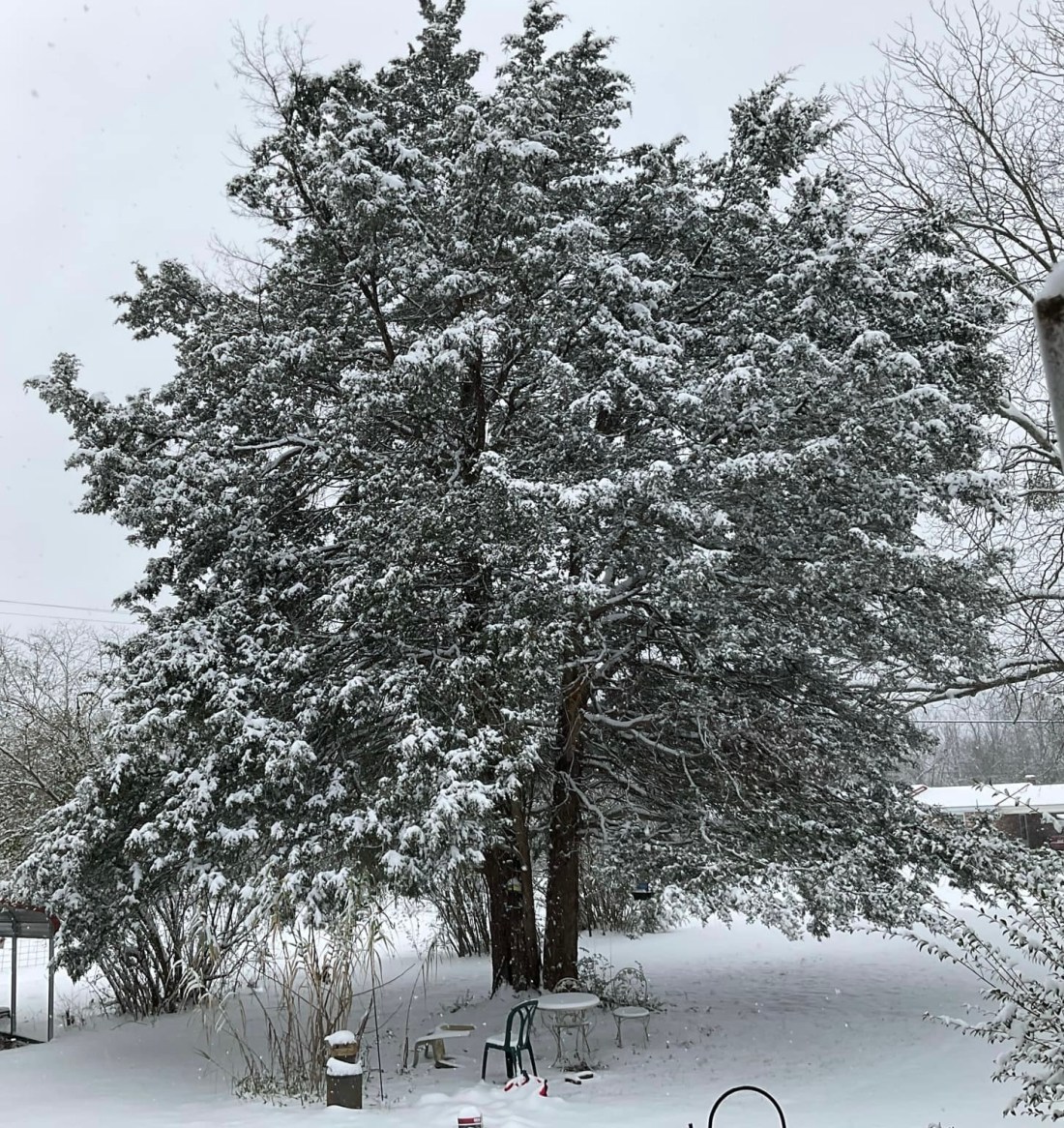
Image of snowy tree, Littleville, Alabama.

So This Is 61: Notes on Aging From the Inside Out

I didn’t expect to notice it all at once. Nobody tells you that one day, getting out of a chair will require a full mental and physical commitment. Or that you’ll avoid driving at night because headlights are now earthly starbursts. Or that the first time you wake up with a stiff neck, you’ll briefly wonder if you also have a brain tumor, because the sharp pain shoots all the way up into your temple. Of course, it’s just how you slept, but the thought still crosses your mind. My neck now cracks so hard I sometimes wonder if others can hear it. This is all new.

These are notes from those realizations—honest reflections of what 61 feels like, from the outside in and the inside out.

Oh. And who IS that old woman staring back at me in the mirror?
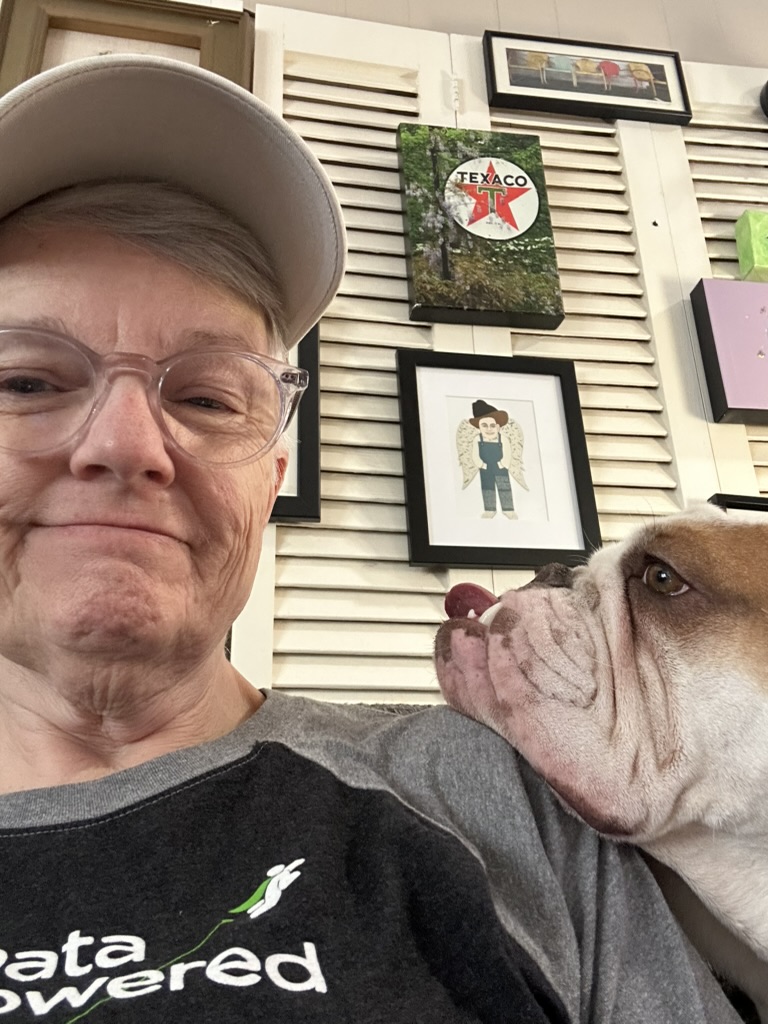
Image of Ugena Whitlock and bulldog.
Who is that old person being lovingly gazed at by Bruno the bulldog?

Aging is full of these little surprises—some unsettling, some mildly amusing, and some that require a good stretch, a heating pad, and a moment of reflection. I am learning, slowly, to embrace it all. I’m slowing down, but not shutting down. Sixty is NOT the new 90, as Sarah likes to suggest to me. If anything, I’m rediscovering the joys of having time to potz around the house, sort through old pictures, take the dogs for walks, and drive my Miata around Spartanburg like it’s my own personal victory lap.

I have less—less urgency, less need to accumulate things—but I also have more. More awareness, more gratitude, more quiet moments of contentment. Don’t get me wrong, I’ll still upgrade to the latest iPhone every couple of years and buy accessories for the Miata and Mini Clubman, but there’s nothing I can think of that I truly need. That’s an unsettling realization, not because it signals loss, but because it signals a kind of peace. I’ve been asked whether this feeling means I’m depressed. I don’t think so. If anything, it feels like clarity, like a settling in—like I’m moving toward a place where I don’t have to chase after the next thing. I haven’t arrived there yet, but I can tell a difference.

Image of people singing in church, Littleville, Alabama.
Blurry picture I snuck while Daddy is leading a song at church on Singing Night.

Aging isn’t just about collecting years; it’s about collecting perspective. There is wisdom in learning what to hold onto and what to let go of and in understanding that urgency is often self-imposed. It is true that contentment is “not about having what you want but wanting what you have”–that is, it’s in perspective. I remember when I was about 9 years old, I stood by eavesdropping, as children do, when Mother and Daddy were visiting with the preacher after Sunday night church. I don’t know how the conversation turned toward me–probably because I tried to join in the adult’s conversation. But I still recall Daddy telling the preacher, “Ugena can’t be content.” Even then, I wanted the next thing, to go to the next place–I just plain wanted. I realize now it’s a quality that must be cultivated. I am working on it.

I’ve learned that not every battle is worth fighting–not every hill is one to die on. Very few are. And against a life of doing otherwise, I’ve come to understand that silence can be more powerful than a quick, clever retort (which, I admit, is a talent of mine). Although Sarah probably say it’s taking too long, I’m also learning to take myself less seriously–to laugh at myself when I can.

And yet, aging isn’t just about accumulating (waiting patiently for?) wisdom—it’s also about watching my body become a stranger to me. The aches, the slower reflexes, the shifting body shape that seems to have a mind of its own. And let’s not even talk about hair loss and the horrifying reality of what gravity does to internal organs. I wonder if everybody, like me, sees someone and thinks “old person,” only to discover that she or he is younger than I am. I die a little on the inside when that happens, and it does regularly.

I’ve inherited certain characteristics from my father—beyond just looking more and more like a little old man every day. If I’m not careful, I can be short-tempered and convinced my way is obviously best. I don’t always filter my thoughts the way I should—not snapping, exactly, but sometimes speaking too bluntly, unaware in the moment of how my words might land. And yet, also like him, I’ve also mellowed. I am more nostalgic, more sentimental, more conscious of time slipping through my fingers like sand. I find joy in familiar places, in the sound of a bird’s song. I think I am figuring out the face in the mirror. It’s starting to look like me. The trick is learning to love the aging face.

When I married at 18, I could imagine “50 years from now.” Now, I understand, in a way I didn’t before, that the time ahead is finite. There’s an end of the road. My parents, whose mortality would have been unimaginable to me 20 years ago, are fading—fragile, frail. My father still has a prolific memory of a shirt he was wearing when he was talking to a particular person at a specific place in 1957 while a specific song played on the radio, but he struggles to remember which channel is which on the TV. My mother, who was heavy-set all my life, is growing thin. It’s probably healthier, but it’s startling to me. Even the house, now 50 years old, is a little less kempt, as houses tend to become when the priority is simply to live in them rather than maintain them. These things are bittersweet to see.

There’s a void where the future used to be. I can’t plan for 50 years down the road anymore. Twenty years, maybe. Ten, certainly (no, not certainly, more…hope-fully). But the open-ended future that once stretched ahead indefinitely has become something else entirely. Maybe the saddest thought—and why do I allow my ruminations to go here—is that one day, not too far into the future, the last people on earth who call me by the nickname that Daddy pronounced upon me when I was born, will be gone. He and Mother call me Miss Bean. I’ll never hear it spoken naturally to me again. This is, by the way, a very Daddy way of thinking, and I have to stop it. It’s dangerous, depressing, and yet, sometimes, it sneaks in anyway.
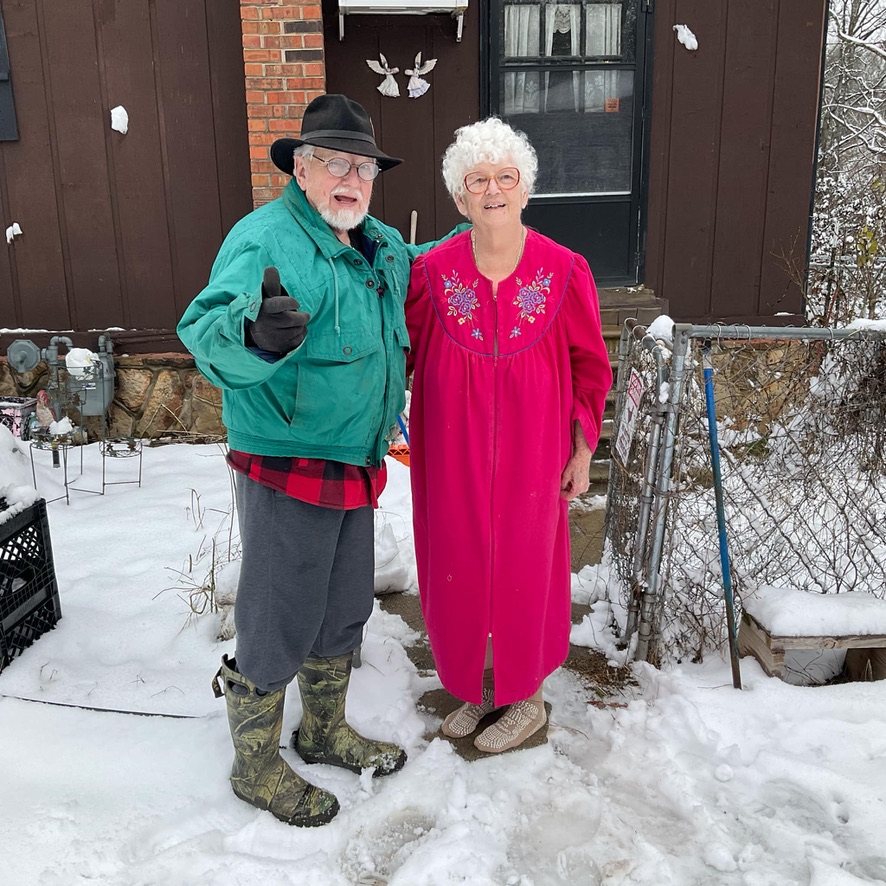
Image of old folks in winter, Littleville, Alabama.
The Whitlocks outside the house to show the snow. Not used with permission, but I’ll take my chances.

And yet, there is joy to be found in all of this. There is humor. There is, finally and blessedly, contentment. There is the deep love I have for my family–and a conviction to see every minute they are in the world as a gift. Time doesn’t march on–that heifer tears out like her tail is on fire. Aging isn’t a slow march toward irrelevance—it’s a shift in focus, a new way of seeing. I am still learning, still growing, still moving—albeit with a few more creaks and groans along the way. And in the meantime, I’ll keep driving my Miata and cracking my neck like like a walnut. I’ll keep striving toward the Big Three attributes of sanity: gratitude, contentment, and humor as I remind myself that I’m still here. And I’m still going.
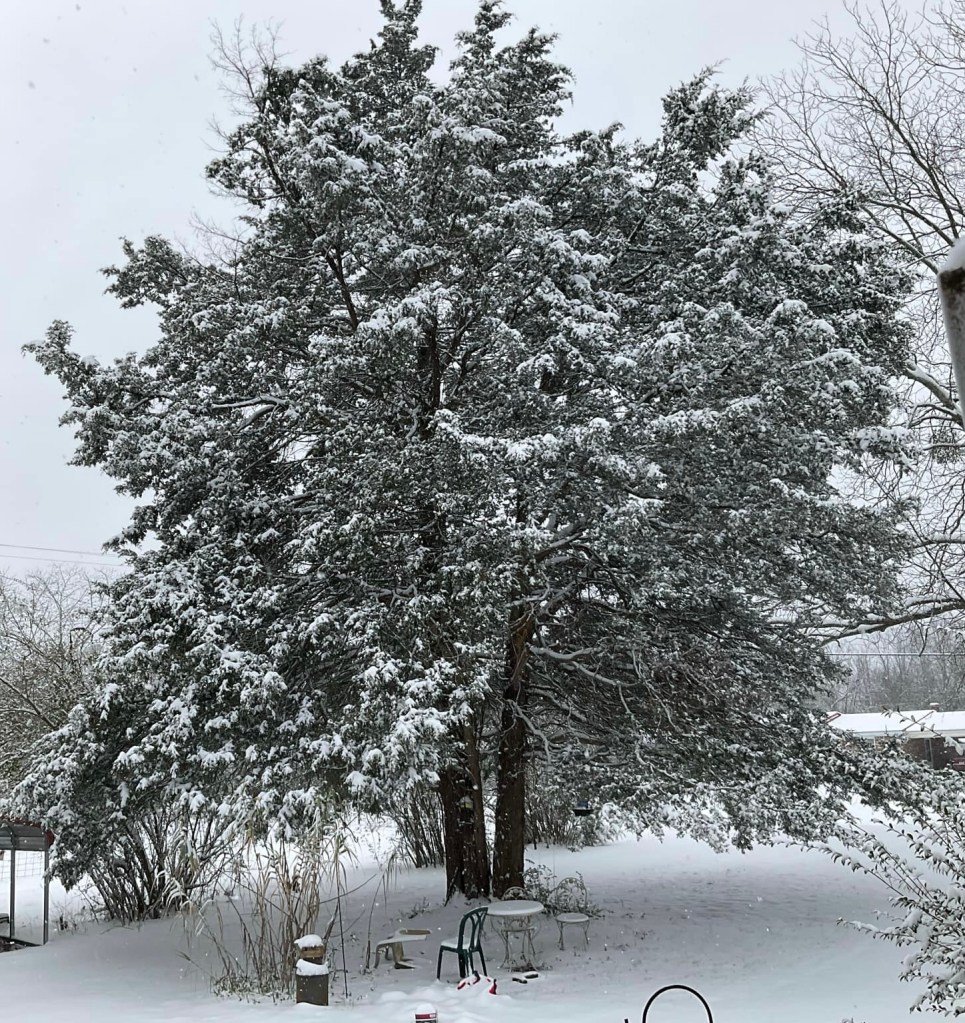

Image of snowy tree, Littleville, Alabama.
Ice and snow on the remains of the old cedar tree at home, Littleville, Alabama.

Exploring Nostalgia, Place and Southern Identity in Writing

Nostalgia, Place, and Feeling Southern

In a recent essay, Evolving From Just Keep Swimming to The Front Porch Professor, I explored the journey of reimagining this blog to reflect my evolving focus on narrative storytelling. At its heart lies the front porch, a symbol that anchors my Southern identity and shapes the lens through which I write. This post builds on that foundation, unpacking the concepts of nostalgia, place, and Southern identity—terms that are complex and intertwined. Sitting on the front porch is an appropriate place from which to give them the careful exploration they deserve.

You may be asking, “Well, when are you going to start writing instead of just writing about your writing?” Good question. The process is a throwback to academic writing, where you have to describe your framework and method for presenting your ideas. In other words, I need to tell you how and why I’m going to tell you what I tell you. Then I can tell you. But you’ll be glad to know I’m about ready to start front porching.

Why The Front Porch Professor?

Claiming the title of professor in my blog name is about more than qualifications; it reflects a blend of storytelling, introspection, and intellectual curiosity. It signals that the reflections here are informed by years of observing and searching for meaning. The image of a professor on a front porch bridges the formality of academia and the warmth of casual conversation. I invite you into a space where lived experience meets thoughtful analysis, encouraging connections and deeper understanding.

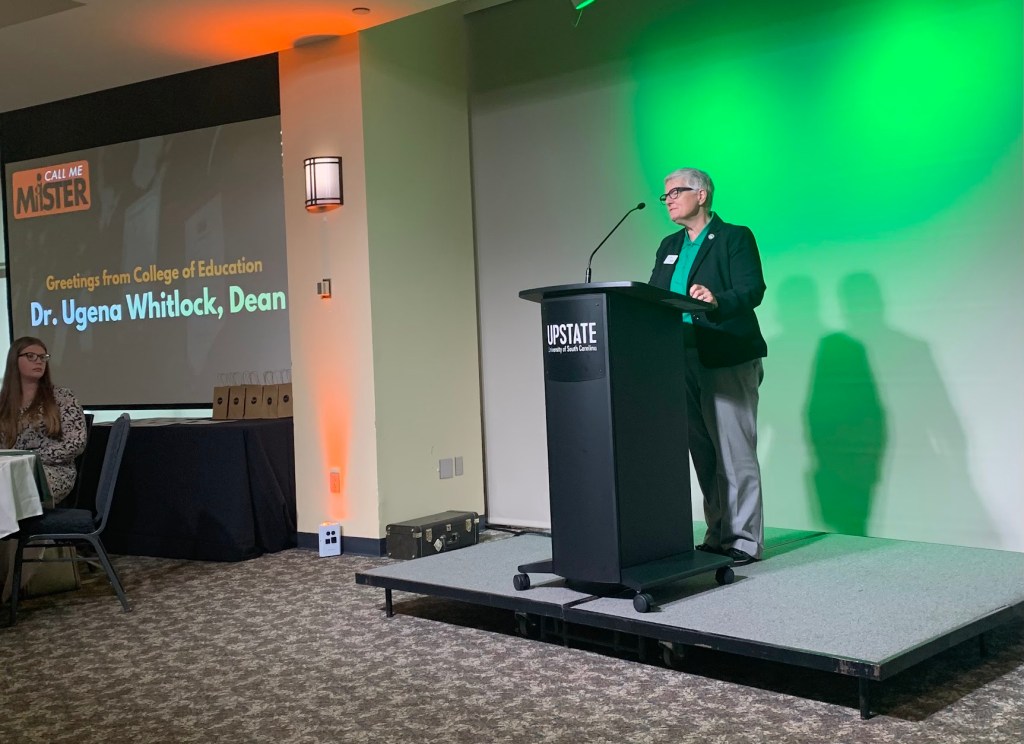
Image of Dr. Ugena Whitlock at USC Upstate
Professor Whitlock

For me, the title is also a tribute. As a small-town girl from rural Alabama, raised by working-class parents, becoming a professor is a point of pride. It’s a testament to their sacrifices and the support of friends and loved ones. They are ever present in my writing, shaping the stories I tell and the perspectives I share. I am both proud of the accomplishment and humbled by the debt and responsibility I owe them.

Place and the Southern Perspective

When I write about place, I’m speaking to more than just geography. Place encompasses the physical environments where life unfolds. Place is the landscape on which contexts of culture, history, and society are painted. It’s where relationships, joys, disappointments, and lessons unfold. All this happens individually and collectively. Place is both a backdrop and a character in our stories, influencing who we are and how we navigate the world.

Image of small downtown Russellville, Alabama, with snow, church, and Roxy theater
Downtown Russellville, Alabama

Being Southern, then, adds layers to this concept. The South is more than a region; it’s a complex web of traditions, histories, and cultural markers. To call oneself Southern is to grapple with the beauty and contradictions of the place. With the South’s ugliness. Can one be proud to be a Southerner, as I am? What does this mean? What am I proud of? And what about the parts of Southern “heritage” that I am not proud of? What is my relationship to those people who claim and celebrate the ignoble parts?

Writing From a Southern Perspective

“Being Southern” is as much a state of mind as it is a physical state. My Southern identity isn’t about celebrating a romanticized version of the South–you know, moonlight and magnolias. Instead, it’s a lens through which I explore themes of home, culture, and identity. The South, for me, is a place of deep connections, shaped by family, history, and the rhythms of everyday life. Southern identity is not monolithic—I don’t assume my identity is exactly like yours, just as your experiences may differ from mine. While we may share certain aspects, identity is deeply individual and uniquely shaped by personal experiences.

Image of dinner with deviled eggs and mashed potatoes
Southern food–note the Thanksgiving Chicken and Dressing

Family and home are central to this perspective, grounding my stories in the relationships and traditions that define Southern life for me. The culture of the place is a tapestry woven through the land, neighbors, communities, histories, food, churches, schools, music, and football. These often appear in my writing, not only offering insights into shared experiences but also helping us understand the world around us and highlighting the relevance of our observations. Yes, there are lessons to be got from SEC football. Roll Tide, y’all.

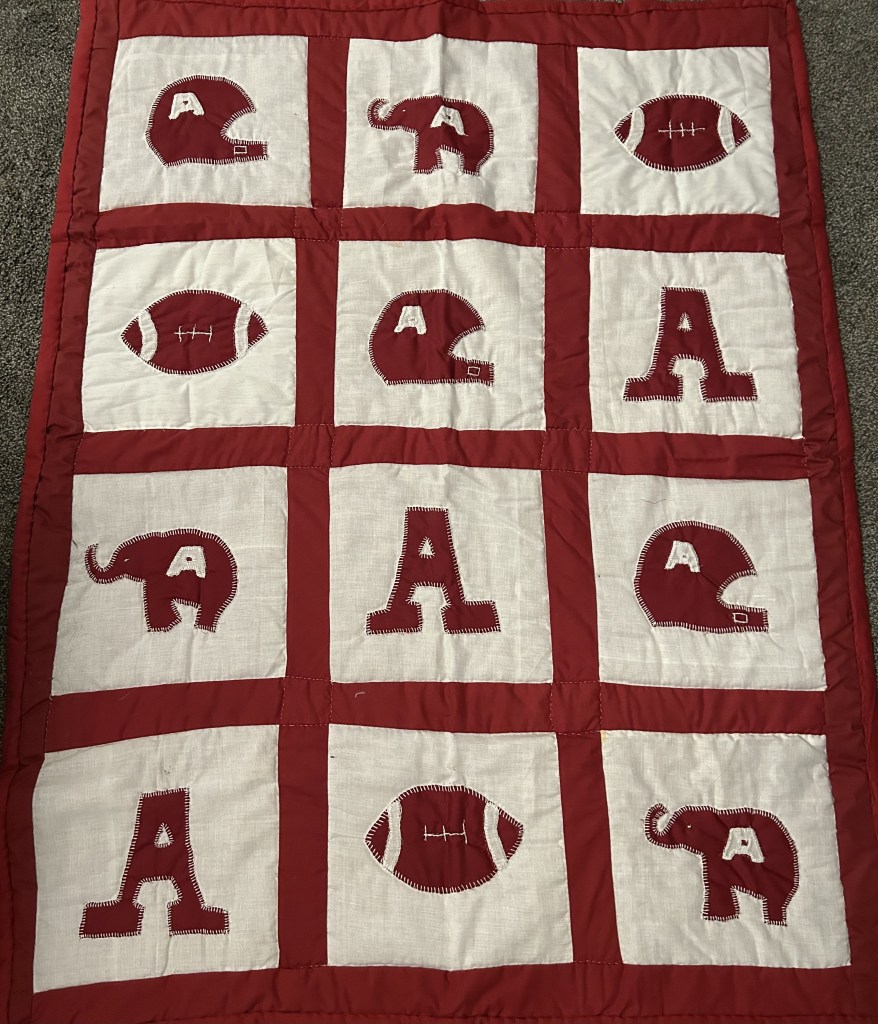
Image of a handmade quilt with a crimson and white Alabama football theme. The quilt features appliqué designs of football helmets, footballs, the letter 'A,' and elephants in alternating squares. Each design is outlined with visible stitching, and the quilt is bordered with a crimson edge, showcasing school spirit and craftsmanship.
Lovingly made Alabama Quilt from my Mother

But writing from a Southern perspective also means wrestling with the region’s complexities. The South is as much about its tensions and contradictions as its traditions. It’s a place where politics, identity, and history converge, challenging us to confront difficult truths while celebrating what makes it unique. Without acknowledging the turmoil and inequalities of its past, any discussion of Southern life, identity, and culture feels inauthentic and incomplete—it’s a Southern writer’s malpractice. As someone who often says, “I love the South,” I can be trusted to both celebrate and critique it. Critique from someone who hasn’t lived it or can’t celebrate it is equally incomplete–and there are plenty of these critics around. This is my not so humble Southern opinion.

Nostalgia: A Lens for Understanding

Nostalgia, as I see it, is not about longing for a bygone era but about connecting the past with the present to find meaning that may inform the future. The word itself comes from the Greek words nostos, meaning “homecoming,” and algos, meaning “pain” or “longing.” It speaks to a deep yearning for the familiarity and comfort of home, even if that home is more an idea than a place. Some homes are not the kind we can long for; rather, we might long to be released from their memory. This etymology captures the duality of nostalgia: it brings remembrances of warmth and connection, yet it also reminds us of what is distant or lost. The dual nature of nostalgia vies for our attention, wrestles for focus, and fights for dominance—keeping many of us in therapy for years.

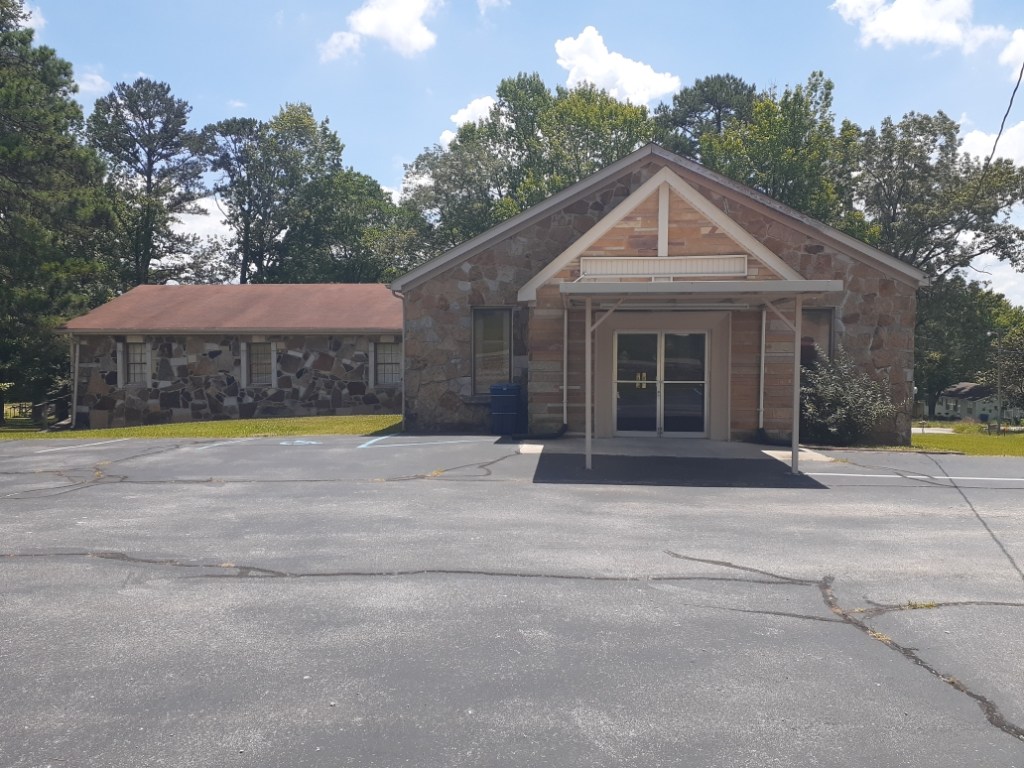
Image of small stone church, Littleville Church of Christ, Littleville, Alabama
My home church, Littleville Church of Christ, Littleville, Alabama

It’s a complex emotion, often blending warm memories with a bittersweet awareness of time’s passage. Far from being purely personal, nostalgia is often collective, rooted in shared experiences and cultural touchstones like family recipes, cherished traditions, or the familiar strains of an old song. In my writing, nostalgia becomes a guide for exploration. Stories about homeplace and family lead me to reflections of broader themes, such as the importance of community, civility, and the pace of modern life. Nostalgia isn’t a destination where we can remain lost in the preferred past; for me, it’s like wrapping myself in an old quilt, offering warmth as I navigate the here and now. You can’t linger too long, though, because living means stepping into the day with clarity and intention.

The Front Porch as a Space for Reflection and Stories

The front porch, in this context, is both a literal and metaphorical space—a place where complex ideas meet honest, accessible conversation. It’s where intellectual rigor mingles with the warmth of shared stories, and where connections are formed through curiosity and reflection. This is the balance I strive for: nostalgia not as an escape but as a framework for growing and learning.

The front porch is open to anyone willing to join the conversation, to explore what place, the South, and our shared histories mean in today’s world. And if you aren’t Southern, you might still have a good time and make connections, too. Together, we can find clarity, joy, and meaning in the stories we tell. I believe we have a responsibility to one another to make the world a better place–a place where we indeed have the liberty to pursue the happiness of a gratifying life. Taking care of our neighbors has never been as important as it is now. It feels like not only have we forgotten how, but we have forgotten that we ought to in the first place. That’s another reason front porches are important. I hope you will join me.