Formed by Certainty, Learning to Wait: An Advent I Didn’t Grow Up With

The Church Without a Christmas Tree

I grew up in the Church of Christ, a tradition shaped as much by its doctrine as by its careful adherence to what we understood as the inspired Word of Truth—New Testament scripture. Christmas—Christ Mass, after all—carried with it echoes of liturgy, ritual, and ecclesial authority that did more than make us uneasy; they were not supported by scripture. It felt too “Catholic.” Nativity scenes, Christmas trees in the sanctuary, pageants, and concerts all felt suspect, as if they edged too close to something we had worked hard to distinguish ourselves from.

Our doctrine emphasized Jesus’s death, resurrection, and promised second coming—the salvation story in its fullest and, to us, most biblically faithful form. That was where the weight belonged. Christmas, when it appeared at all in worship service, seemed secondary. There might be a sermon in December, but it was usually framed as a reminder not to let sentiment distract us from the real celebration: the cross, the empty tomb, and the anticipation of Christ’s return.

Beginning sometime in the 1980s, our monthly church fellowship included a “greedy Santa” party in the fellowship hall—an accommodation that felt almost humorous in its contradiction. At home, though, the birth of Christ was acknowledged and celebrated in quieter, more personal ways. Christmas existed, but it lived more in our houses than in our sanctuaries.

Wonder, Anyway

Even so, Christmas always carried a sense of wonder.

In my family, it was joyful and wonder-full. We celebrated the birth of Christ. We sang the songs, set out nativity scenes, and watched cartoons that made room for the baby Jesus alongside Rudolph and Frosty. I developed a passion for Little Debbie Christmas Tree Cakes that continues to this day. But Christmas was never treated as a central moment of worship. It was present and honored, but it did not occupy the same place in our worship as the cross and the resurrection.

Instead, Christmas lived easily among us. It shared space with Santa Claus and stockings, with family meals and laughter, with the ordinary magic of being together. Faith was there, woven into the fabric of the season rather than standing apart from it or asking to be the center of attention.

We sang Away in a Manger and Have Yourself a Merry Little Christmas with equal sincerity.
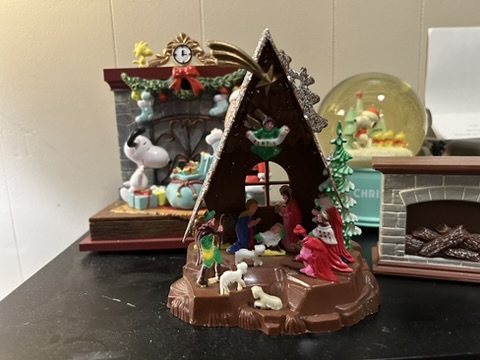
Some of my strongest Christmas memories are of going to town with my mother—just the two of us—walking down Main Street in Russellville, Alabama. We stopped at Elmore’s and White’s, always went to the bank, and did a bit of Christmas shopping. We also made our rounds to TG&Y and Bargain Town U.S.A. Going to town with Mother is one of the memories that has never faded. She loves Christmas. I suspect that is where I get it.
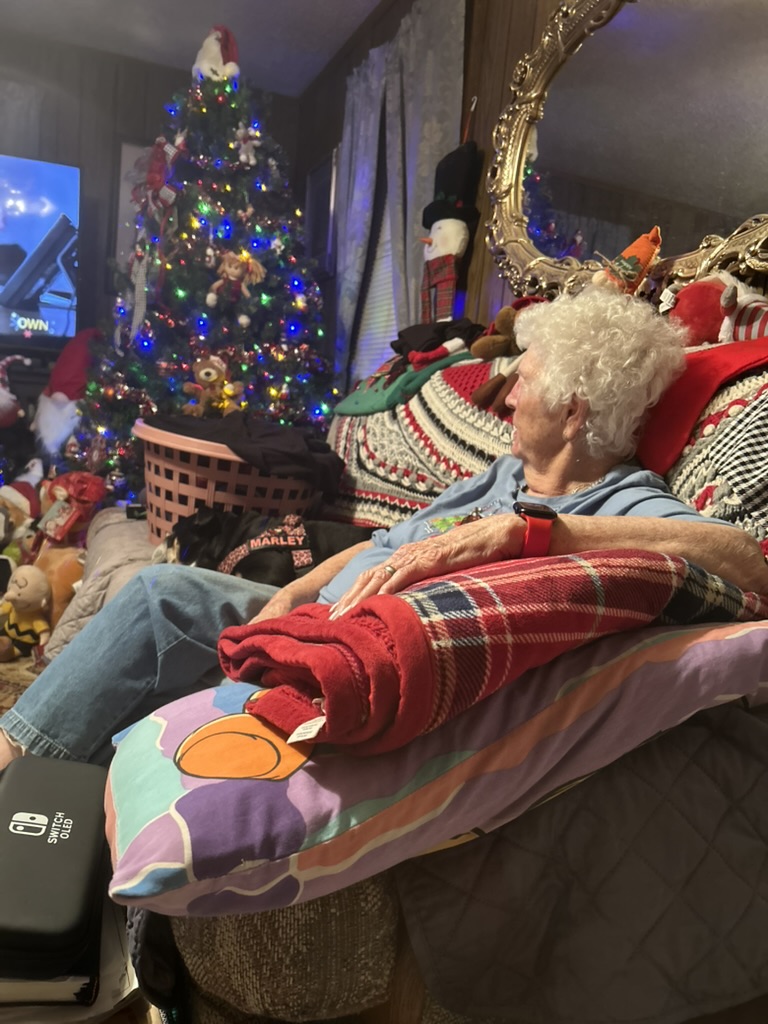
Perhaps the magic was not Christmas itself, but Mother making it all come together. Daddy—God bless him—was assembling bicycles late into the night, helping Santa Claus eat the cookies and drink the milk when no one was awake, and getting up early to turn on the heater before us kids stirred.
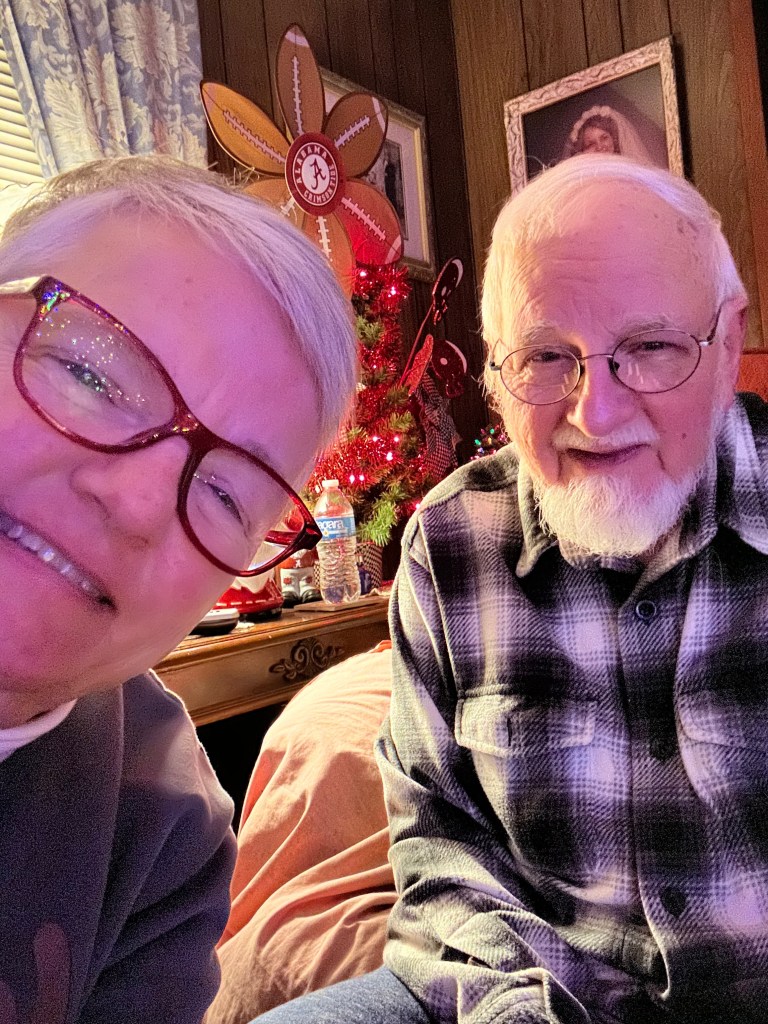
So Christmas has always carried for me the emotions and images of Advent: love, peace, and joy. Yet as I’ve grown older—and as I’ve celebrated Advent more intentionally in churches I joined later—I’ve come to realize something important was missing from my early experience, at least as I have come to understand it now.

Hope.

That missing note, I’ve learned, is at the very heart of Advent: not the anticipation of Christ’s return, but the radical, trembling hope of waiting for Him to come the first time.

Before I go any further, I want to be careful about how this contrast is read. I don’t mean to disparage the Church of Christ or its seriousness about salvation and the life to come. The emphasis on the afterlife was never meant to diminish this one; it was meant to anchor it. There is something steady, even bracing, about a faith formed around the cross and the resurrection, around the somber knowledge of what comes on Friday during Holy Week and the refusal to look away. That certainty shapes the tone. It is sober, resolved, and grounded in knowing how the story ends.

Advent, I am learning, asks for something different. It invites a looking forward that is almost visceral, a waiting marked by anticipation rather than knowledge. During Advent, we do not yet know what is coming, even though we think we do. Christmas and Easter are both joyous occasions, yes, but they are not the same kind of joy. Easter joy comes after suffering we already understand. Advent joy comes before anything has happened at all. It is hope without proof, expectation without resolution.

Perhaps that is why Advent feels so unfamiliar to me. I was formed in a tradition that lingered near the end of the story. Advent asks me to return to the beginning, to wait not with certainty, but with hope.

That difference between certainty and waiting is something I didn’t fully understand until I found myself, almost by accident, living Advent rather than merely knowing about it.

Learning Advent by Living It

Just recently, we joined a church that could not be more different from the one I grew up in.

Trinity United Methodist Church sits at the end of our driveway—practically in our neighborhood—and has been there for over a hundred years. We watched carefully last year as the United Methodist Church faced its painful and very public division. We waited to see whether Trinity would stay or go. They stayed. So we went.

Well—I went first.

Returning to church was part of my larger journey back to music. I wanted to sing again. I wanted a choir. So I showed up, and they welcomed me. Then Sarah came. I can say, without exaggeration, that I have never felt so genuinely welcomed in any congregation.

Of course, in a liturgical church, if you arrive in the fall, you don’t ease into Christmas—you begin preparing for Advent.

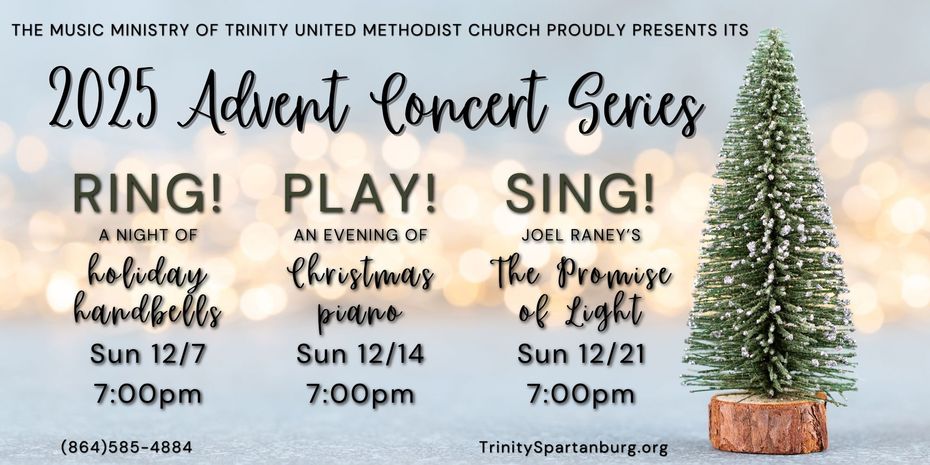
Trinity has all of it: the church calendar, the seasons, the art, the rhythm of the year itself. And it has a gifted music director, Ben Chumley. Music is not ornamental there; it is formative. Part of Trinity’s long tradition includes a concert series—bell ringers, piano recitals—and on the Sunday before Christmas, a full choir cantata, offered as a concert for the community.

I had never sung in an hour-long Christmas cantata before. It is exhausting—poignant and fulfilling, but exhausting.

At the same time, the sermon series centered on the coming of the Christ Child, and Sunday school was immersed in a deep study of Advent, framed by John Wesley’s theology. I knew what Advent was, of course, at least in name. I associated it with calendars and chocolate, with Advent functioning more as a reference point for Christmas than as a practice, something observed from the outside rather than lived. What I had not understood was Advent as a way of inhabiting time itself, a season that asks something of you slowly, deliberately, and in community.

Then one Sunday after service, Ben approached us and said, “I’m planning the lighting of the Advent candles this year, and I want to represent all kinds of families. I wondered if you and Sarah would like to light the first candle.”

So there we were—new members, still learning our way around the sanctuary—and suddenly we were the first family of Advent.

Our candle was peace.

You had better believe Trinity has a children’s Christmas pageant. There were painted backdrops of Bethlehem, shepherds with headgear slightly askew, stars projected onto the ceiling. Children of all ages belted out The First Noel at the top of their lungs. Candles glowed in the windows. The chancel was full.
From the choir loft, I expected—modern church attendance being what it is—that maybe two-thirds of the usual congregation would show up.

Instead, the church was full. This wasn’t novelty. This was a neighborhood showing up for something it clearly understood as theirs.

What struck me most, though, was how hope was being practiced, not merely preached. Alongside the music and liturgy, the church’s auditorium filled with donations for local children—gifts, necessities, abundance. Hope, in this space, was not about someday escaping the world. It was about showing up for it.

That was new for me.

Hope, in my religious formation, was almost always about heaven—and, implicitly, about avoiding hell. I didn’t have language yet for hope as active, communal, and embodied. Wesleyan theology was quietly teaching me something different: hope as something you do.

I should add that this wasn’t ignorance on my part. I had studied the church calendar before and even took a full course on it in seminary at McAfee. Sarah, who grew up in England, seems to have absorbed it almost by osmosis sometime in childhood. But knowing about liturgy and living inside it are not the same thing. What was happening at Trinity was not instruction; it was formation.

I haven’t left fundamentalism. I don’t think that’s possible, any more than it could ever leave me. It formed me. What I am learning now is not replacement, but expansion. This way of waiting, this attention to beginnings rather than endings, is becoming part of my formation too.

On the night of our final choir rehearsal before the cantata, I walked home through the neighborhood in silence. The street was lit only by Christmas lights and the moon, their glow softened by fog hanging in the air. We don’t get much snow here, but the light did the same work. Everything was hushed. All was calm. All was quiet.

I felt joy. Not only for the coming of the Christ Child, but for the possibility that the world could feel like this more often. That peace might be practiced, not just promised. And that, somehow, I could be part of it.


“White Savior Barbie,” Not me!

I really love my seminary, the McAfee School of Theology, Mercer University. Faculty and staff there are committed to issues of justice and spiritual growth. It is also a place where only about 45% of the students are white. I want to support a place like that and more important, learn from the variety of perspectives and experiences of my classmates. It is a place where I can focus on issues important to me, like being a good ally by attending to my white privilege. I am convinced that my anti-racist work as a white Southern academic should also include theological and religious frameworks. I needed to get in touch with my Jesus.

White Savior
White Savior Movie

Part of the institution’s commitment to spiritual formation is the annual faculty, staff, and student weekend retreat, which the founding faculty built into the design of the programs. We just recently had one at the Pinnacle Center in the North Georgia mountains, where we spend two days worshiping together and getting to know one another. We build deeper relationships as classmates at a setting like this, where we pray and take communion together. This year, the dean announced he had been working with friends in Union Point, Georgia, to plan a work day at a historic cemetery near the original location of Mercer University. Here’s what he said:

This summer I learned of a neglected African American cemetery located nearby the Penfield cemetery. I have partnered with African American activists and other leaders to help them with a clean-up effort on October 26. I would very much appreciate it if you would join me as we honor this sacred space and practice remembrance.

He noted that enslaved persons were buried there.

Here is what I wish I had thought: Does it make a difference that the dean is a straight, white, cis-male? Were faculty invited to discuss this topic, welcoming voices from faculty of color? Could groundwork have been laid so that the announcement would have had context for the benefit of the students, most of whom were African American? What is motivating me to want to participate?

What I actually did, though, was volunteer to clean up the cemetery.

A few days later, the dean sent a reminder and included additional information that a filmmaker friend and seminary grad would be filming for a documentary. A few days after that, I learned that a group of African American students had submitted a letter to the dean to express concerns about the project. I have not seen this letter, but the seminary grapevine is real. That was the day I discovered the “Savior Barbie” Instagram account. If you haven’t heard about it, below is a Huff Post article, along with 2 examples of Barbie’s posts.

White Savior Barbie Huff Post

White Savior Barbie

White Savior Barbie pokes fun at people who suffer from “White Savior Complex,” the term used to describe the white Westerners who travel to third world countries and make the entire affair an exercise in self-congratulatory sacrifice. (Huff Post). The account owners, who remain anonymous, point out, “We have both struggled with our own realizations and are definitely not claiming innocence here.” “Barbie Savior, we hope, is an entertaining jumping off point for some very real discussions, debates, and resolves.” It isn’t that there is anything inherently wrong with doing volunteer work to help people. WSB targets the idea that Africa needs saving from itself and white people are the ones who can do it. Barbie Savior is there for a photo op, the ultimate selfie. This kind of thinking supported colonialism, conquest, and slavery. It is white supremacy.

Barbie Savior (@barbiesavior)

White Savior Barbie 3

Let me be clear: I am not suggesting for a minute that the McAfee dean is in error. I have no idea until and unless he discusses it what the process was for bringing this opportunity to the students. For all I know, he brought it to the faculty first for them to unpack together. The letter from students is said to contain references to a diversity strategic plan, which I imagine calls for voice and conversation and inclusion in initiative planning. I have no doubt he is prayerfully and profoundly considering what they have written and will respond appropriately. This is not about him; it is about my own complicity in maintaining racist systems in which the White Savior Complex operates.

So just what was I thinking? My first thought was what a great service project! As a Southern Christian who knows what “Decoration Day” is, I have cleaned old cemeteries for as long as I can remember. My second thought was about the historical significance of the place, for yes, I was in part motivated by it being a very, very old African American cemetery that was the final resting place of former enslaved persons.

My third thought was about my friend Edeltress in Baton Rouge, who had taken me on a detour to her ancestral cemetery one day while we were on a school visit for work. “Do you mind?” she asked me. “It’s been so long since I’ve been here. I was a little girl and my parents brought me.” So we drove to a countryside in Louisiana that I couldn’t find today if I had to. “Here it is,” she said. But looking around, I couldn’t see a graveyard. Just what looked like woods, undergrowth, weeds–way back, about a hundred feet off the side of the road. Edeltress laughed. “Oh, you’re looking for a white cemetery. This is how our cemeteries look.” We tramped around the site, being careful not to step on the graves, and on the way home, she told me stories about her father, who had driven an old broken-down truck so that his white neighbors would not recognize him for a landowner and successful farmer. My people were dangerous. So that is the image I got in my head when the dean asked for volunteers. I thought of paying tribute, in this small way, to my friend.

That is why I am going to acknowledge my white privilege, acknowledge the concerns of my classmates–for they hold us accountable for thinking of and processing these issues before complying–and then go clean up a grave yard. But you won’t see it on Facebook or Twitter. I will not take a selfie with a tombstone. Does this make me admirable? Is this sufficient acknowledgement, or am I assuaging my conscience? Am I asking the right questions? I don’t know, but it gives me something to ponder as I pull weeds.

White Savior Barbie 2

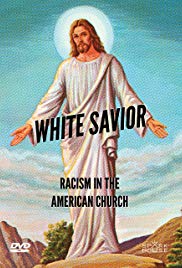
White supremacy can look like skin heads carrying swastikas; it can look like angry white people wearing red hats. It can be masked by well intentioned white people who secretly voted for Trump. And it can be a white seminary student who fails to do the work of problematizing a workday over the graves of enslaved persons. There is another White Savior resource I find relevant here. White Savior: Racism in the American Church (2019). The film “explores the historic relationship between racism and American Christianity, the ongoing segregation of the church in the US, and the complexities of racial reconciliation” (imdb). I recommend it. The film closes with an African American minister from the Bronx discussing being an ally. “Being an ally,” he said, “means asking ‘What do you need? and sometimes that means just shut up and listen.”

At the end of the day, I believe in a place like McAfee. It exemplifies the complexity of racial reconciling and justice. The messiness of it. It is a place where we can make all the mistakes–and there are many–and learn that the sky doesn’t fall when we make them. It is a place where, sometimes, we can just shut up and listen.

The Curious State of Being “Called”

Maybe at some point in your life you have been called by God for some purpose. If you have and you realize it, all I can say is wow. How did you know? Did you hear a voice? Did you have a feeling around your heart or stomach area? Was there only circumstantial evidence?

call is different from a calling. I’ve heard teachers and nurses say that that they felt a calling toward their profession; a calling is a strong urge toward a particular thing, usually a vocation. A call is a divine summons. Let that sink in.

I grew up in a church that did not believe in divine summons or of being led by the Spirit. We were fundamentalist Christians who believe that the Bible is literal, mostly, unless it isn’t. People who talked about being called by God to the ministry were obviously Jesus freaks, most likely Baptists. And then, again, God laughs. Yeah, I was called. I’m not sure if I can stress how hard it is to understand that a call is a call when you don’t believe in calls at all. I think I would compare it to a dog being leashed for a walk for the first time. At first, it’s like, “Hey, wow, what is this I’m feeling?” And then, “Wait a minute….what is this thing?” Next, is pulling back and tugging, followed by flailing around from side to side. Until finally, you’re completely worn out from fighting it. Then you’re ready to walk. This is the first part of a process that is known as discernment.

Have you ever felt like God was just putting things in your way? Not obstacles, more like lit up “Entrance” signs in strange dark rooms. In that situation, what are you going to do but go in? That’s what happened to me. It started when I read the liturgy at church one Sunday morning (nope, I’m not fundamentalist anymore, nor Baptist either). I felt that leash for the first time. I’ll just take a course on Progressive Christianity, I said. I like this course; I’ll see if I can find a really good online program. Then, if the M.A. in Christian Ministry is this rewarding, I want to pursue the twice-the-credit-hours Master of Divinity. What was God putting in the way? Time, opportunity, scholarship support, people who kept saying, “Oh! You’d be so great at ministry!”

So what about the pulling back and flailing around part of this walk? It’s pretty much been ongoing to this point. I mean, I have a job, a doctorate, and an established writing presence in my academic field. I’m at the place where people usually arrive, not where they jump off from. Luckily, the first class you take in seminary is called Spiritual Formation, where you learn that discernment is being still and listening for God. It’s ok not to know what to do, just don’t get tied up in knots over it, which is my default. When I got serious about listening to God, I settled down and started walking.

So here I am: MDiv student at the McAfee School of Theology. I’m still working full-time at a job that is truly not bad. I’ve put academic writing on pause until the next page is revealed to me, no pun intended. That’s the background of it, and I think it’s sufficient for now.