So This Is 61: Notes on Aging From the Inside Out

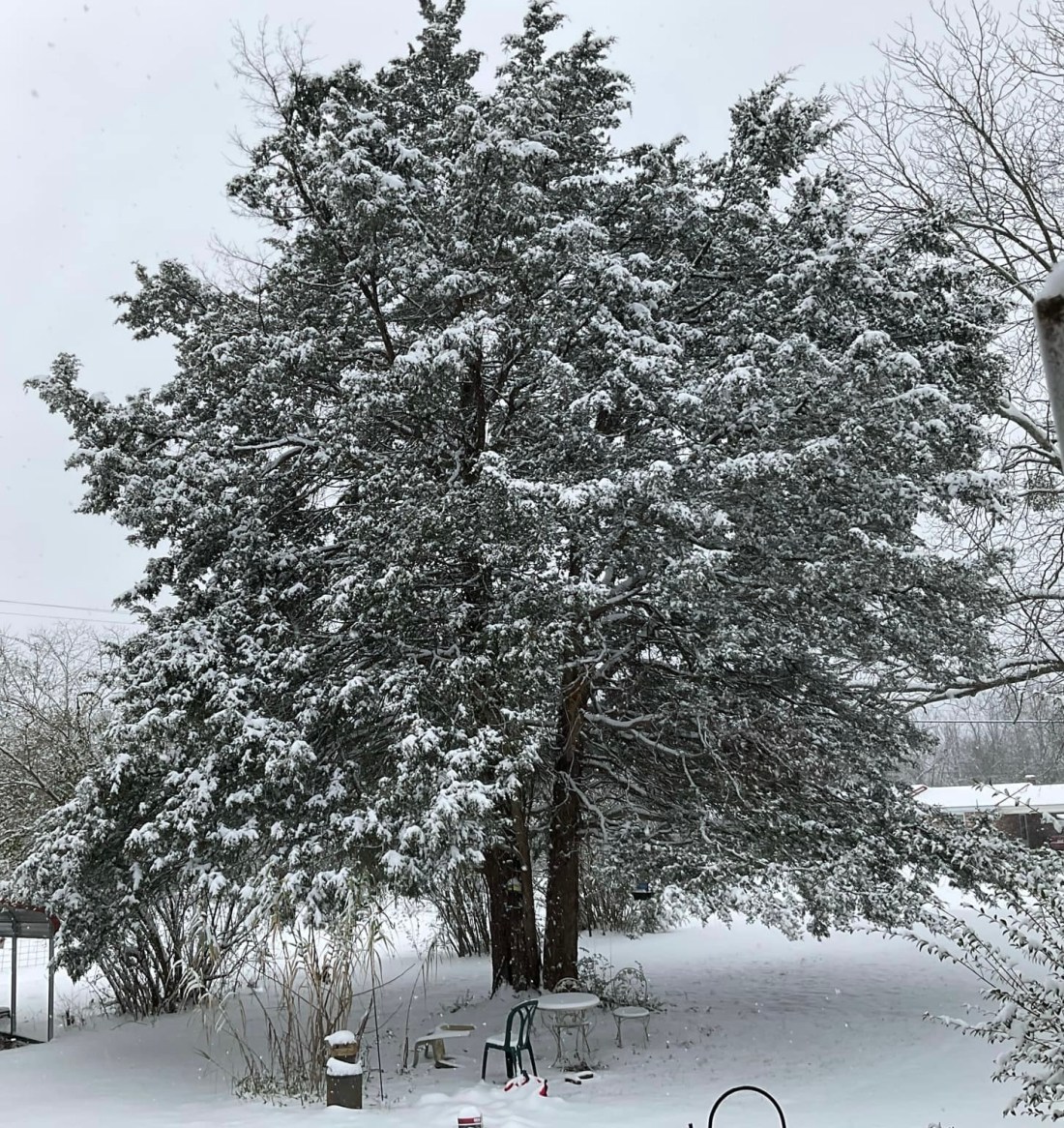
Image of snowy tree, Littleville, Alabama.

So This Is 61: Notes on Aging From the Inside Out

I didn’t expect to notice it all at once. Nobody tells you that one day, getting out of a chair will require a full mental and physical commitment. Or that you’ll avoid driving at night because headlights are now earthly starbursts. Or that the first time you wake up with a stiff neck, you’ll briefly wonder if you also have a brain tumor, because the sharp pain shoots all the way up into your temple. Of course, it’s just how you slept, but the thought still crosses your mind. My neck now cracks so hard I sometimes wonder if others can hear it. This is all new.

These are notes from those realizations—honest reflections of what 61 feels like, from the outside in and the inside out.

Oh. And who IS that old woman staring back at me in the mirror?
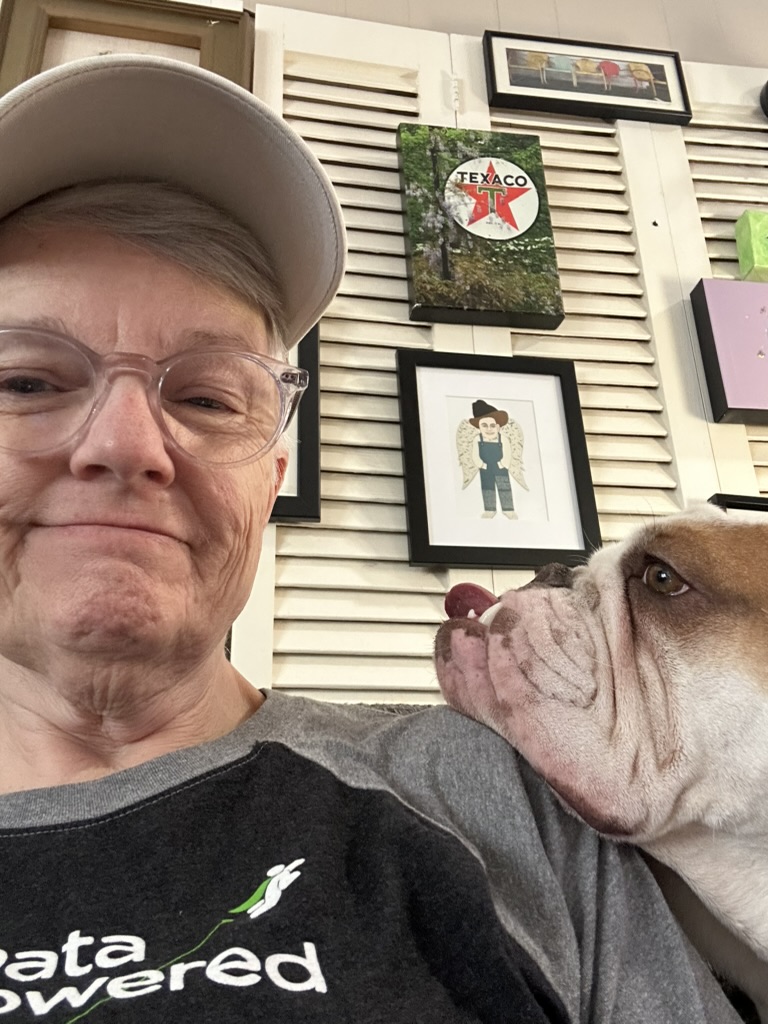
Image of Ugena Whitlock and bulldog.
Who is that old person being lovingly gazed at by Bruno the bulldog?

Aging is full of these little surprises—some unsettling, some mildly amusing, and some that require a good stretch, a heating pad, and a moment of reflection. I am learning, slowly, to embrace it all. I’m slowing down, but not shutting down. Sixty is NOT the new 90, as Sarah likes to suggest to me. If anything, I’m rediscovering the joys of having time to potz around the house, sort through old pictures, take the dogs for walks, and drive my Miata around Spartanburg like it’s my own personal victory lap.

I have less—less urgency, less need to accumulate things—but I also have more. More awareness, more gratitude, more quiet moments of contentment. Don’t get me wrong, I’ll still upgrade to the latest iPhone every couple of years and buy accessories for the Miata and Mini Clubman, but there’s nothing I can think of that I truly need. That’s an unsettling realization, not because it signals loss, but because it signals a kind of peace. I’ve been asked whether this feeling means I’m depressed. I don’t think so. If anything, it feels like clarity, like a settling in—like I’m moving toward a place where I don’t have to chase after the next thing. I haven’t arrived there yet, but I can tell a difference.

Image of people singing in church, Littleville, Alabama.
Blurry picture I snuck while Daddy is leading a song at church on Singing Night.

Aging isn’t just about collecting years; it’s about collecting perspective. There is wisdom in learning what to hold onto and what to let go of and in understanding that urgency is often self-imposed. It is true that contentment is “not about having what you want but wanting what you have”–that is, it’s in perspective. I remember when I was about 9 years old, I stood by eavesdropping, as children do, when Mother and Daddy were visiting with the preacher after Sunday night church. I don’t know how the conversation turned toward me–probably because I tried to join in the adult’s conversation. But I still recall Daddy telling the preacher, “Ugena can’t be content.” Even then, I wanted the next thing, to go to the next place–I just plain wanted. I realize now it’s a quality that must be cultivated. I am working on it.

I’ve learned that not every battle is worth fighting–not every hill is one to die on. Very few are. And against a life of doing otherwise, I’ve come to understand that silence can be more powerful than a quick, clever retort (which, I admit, is a talent of mine). Although Sarah probably say it’s taking too long, I’m also learning to take myself less seriously–to laugh at myself when I can.

And yet, aging isn’t just about accumulating (waiting patiently for?) wisdom—it’s also about watching my body become a stranger to me. The aches, the slower reflexes, the shifting body shape that seems to have a mind of its own. And let’s not even talk about hair loss and the horrifying reality of what gravity does to internal organs. I wonder if everybody, like me, sees someone and thinks “old person,” only to discover that she or he is younger than I am. I die a little on the inside when that happens, and it does regularly.

I’ve inherited certain characteristics from my father—beyond just looking more and more like a little old man every day. If I’m not careful, I can be short-tempered and convinced my way is obviously best. I don’t always filter my thoughts the way I should—not snapping, exactly, but sometimes speaking too bluntly, unaware in the moment of how my words might land. And yet, also like him, I’ve also mellowed. I am more nostalgic, more sentimental, more conscious of time slipping through my fingers like sand. I find joy in familiar places, in the sound of a bird’s song. I think I am figuring out the face in the mirror. It’s starting to look like me. The trick is learning to love the aging face.

When I married at 18, I could imagine “50 years from now.” Now, I understand, in a way I didn’t before, that the time ahead is finite. There’s an end of the road. My parents, whose mortality would have been unimaginable to me 20 years ago, are fading—fragile, frail. My father still has a prolific memory of a shirt he was wearing when he was talking to a particular person at a specific place in 1957 while a specific song played on the radio, but he struggles to remember which channel is which on the TV. My mother, who was heavy-set all my life, is growing thin. It’s probably healthier, but it’s startling to me. Even the house, now 50 years old, is a little less kempt, as houses tend to become when the priority is simply to live in them rather than maintain them. These things are bittersweet to see.

There’s a void where the future used to be. I can’t plan for 50 years down the road anymore. Twenty years, maybe. Ten, certainly (no, not certainly, more…hope-fully). But the open-ended future that once stretched ahead indefinitely has become something else entirely. Maybe the saddest thought—and why do I allow my ruminations to go here—is that one day, not too far into the future, the last people on earth who call me by the nickname that Daddy pronounced upon me when I was born, will be gone. He and Mother call me Miss Bean. I’ll never hear it spoken naturally to me again. This is, by the way, a very Daddy way of thinking, and I have to stop it. It’s dangerous, depressing, and yet, sometimes, it sneaks in anyway.
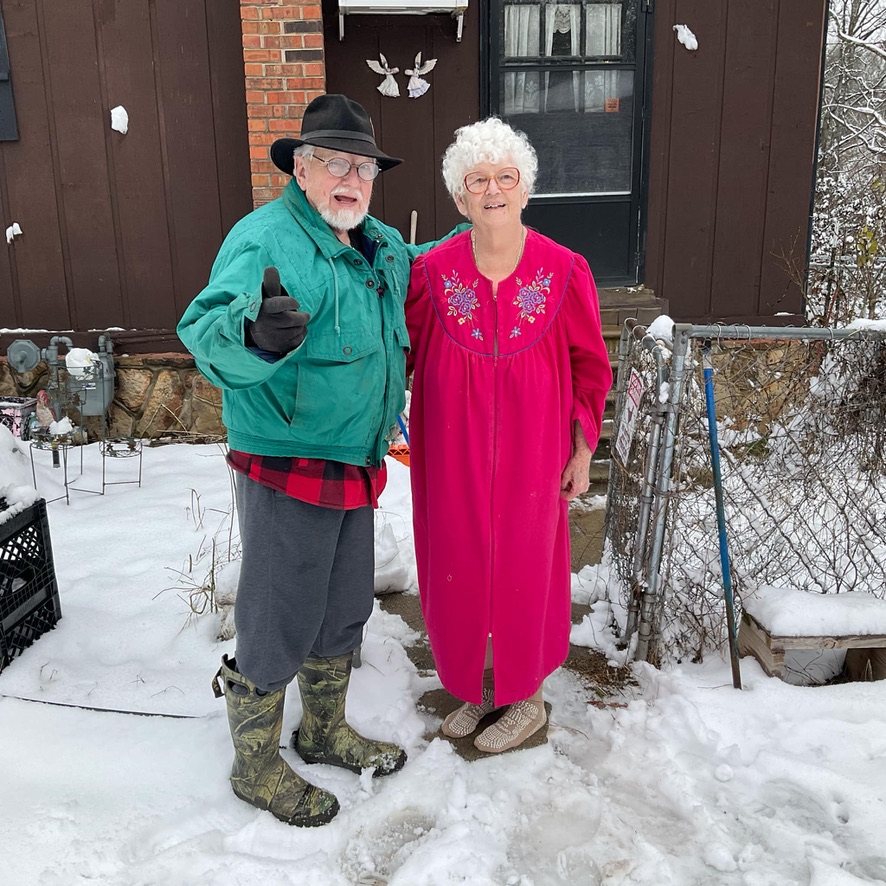
Image of old folks in winter, Littleville, Alabama.
The Whitlocks outside the house to show the snow. Not used with permission, but I’ll take my chances.

And yet, there is joy to be found in all of this. There is humor. There is, finally and blessedly, contentment. There is the deep love I have for my family–and a conviction to see every minute they are in the world as a gift. Time doesn’t march on–that heifer tears out like her tail is on fire. Aging isn’t a slow march toward irrelevance—it’s a shift in focus, a new way of seeing. I am still learning, still growing, still moving—albeit with a few more creaks and groans along the way. And in the meantime, I’ll keep driving my Miata and cracking my neck like like a walnut. I’ll keep striving toward the Big Three attributes of sanity: gratitude, contentment, and humor as I remind myself that I’m still here. And I’m still going.
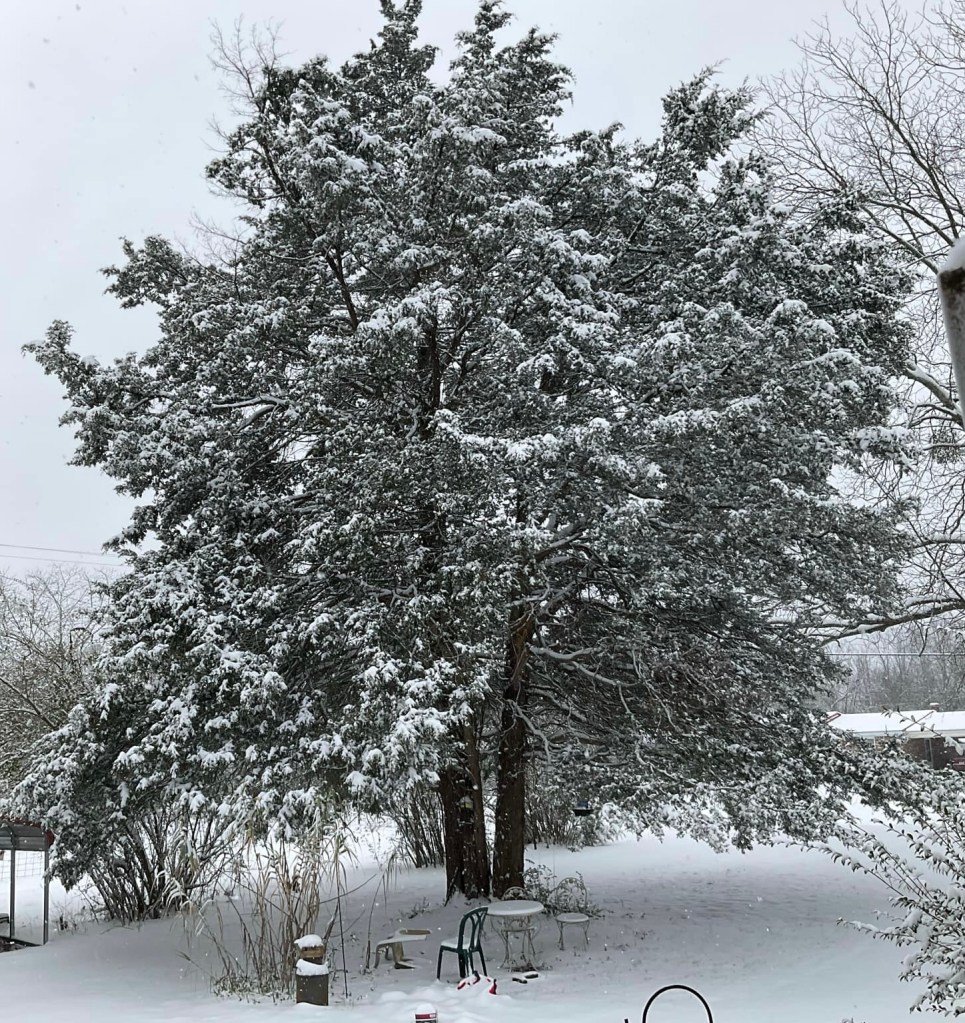
Image of snowy tree, Littleville, Alabama.
Ice and snow on the remains of the old cedar tree at home, Littleville, Alabama.

Evolving from Just Keep Swimming to The Front Porch Professor

Image of Logo for Blog The Front Porch Professor with rocking chair, typewriter, and Mazda Miata..

Time for a Change

After fourteen years maintaining my blog Just Keep Swimming, I decided it was time for a change. When I started blogging those years ago, blogs, shorthand for “weblogs,” (remember that?) were fairly new, and I was deep into building a career by writing articles for academic journals. I knew that autobiographical narrative Curriculum Theory (my professional writing) would not be a lucrative venture. It wouldn’t earn money or attract thousands of readers. I determined that I would use the blog as a journal. I wrote personal essays in memoir style that might later be crafted into journal articles–a sort of pre-writing holding station. I also told myself that my blog was really only for me. I thought this would lessen my disappointment at having no readers. That part was sad because I really wanted somebody to read what I was writing.

Image of blog logo justkeepswimming.com
Logo for Just Keep Swimming Blog

So, the blog was a patchwork of ideas and topics with loose themes and frameworks pulling them together. Not surprisingly, then, I had difficulty giving it a name. Sarah helped. The more I obsessed over finding just the right name for a blog nobody would read, the more I secretly hoped someone would. The more I obsessed, the more she tried to help me get centered. She tried to help me find some resilience somewhere. “Just keep swimming,” she said, as much a suggestion for my state of mind as for the blog title. It fit. For almost a decade, I have worked on justkeepswimming.life–mostly sporadically. During those same ten years, my career evolved from faculty member to department chair to college dean. As a small-town girl from Littleville, Alabama, I wanted to see just how far I could go. I told myself I didn’t have the time to write regularly. I did well to just keep swimming.

This Spring I will once again be a faculty member in the college, without an administrative role of any kind. I’ve been thinking about this change a lot, and I reckon it will be a good move. I am looking forward to teaching again. I am also eager to have some autonomy over my time. Faculty generally work more than 40 hours per week, but oftentimes, when and where we work is up to us. This kind of flexibility will take away an important excuse for not posting regularly—that’s the goal. Updating the blog’s purpose and branding reflects the updates going on in my life. What is my new identity–who am I now that my decades-long professional identity has changed? What kind writing do I want to do, and what will I write about? What do I, as one white Southern professor with blue collar roots, have to say?

Heading Out To the Front Porch

I reflected on what I wanted the blog to be. I asked myself why I started blogging. It isn’t to have a journal to springboard into professional papers. Nor do I write to make money or achieve celebrity status as a blogger. I write blog posts because it brings me joyful engagement. This engagement gives me purpose. It also provides an immediate connection to you, and you to me. And somewhere among the joy, purpose, and connection, there is also the urgency of needing to tell.

In her book, Why I Write, Joan Didion wrote, “I write entirely to find out what I’m thinking, what I’m looking at, what I see and what it means. What I want and what I fear” (“Why I Write.” The White Album, Farrar, Straus and Giroux, 1979, pp. 192–194.). Her quote has been shortened over the years to “I never know what I think until I read what I write,” which is unfortunate since it leaves out the part about what one wants and fears. When I write I am participating in the world around me and putting meaning on what I see and experience. And yes, desire and fear are part of it, just like they are ever-present in one’s consciousness. What anything means to me won’t be what it means to you, for you are participating from your consciousness, your home place. And that’s what I’d like to evoke with my stories–for both me and you.

Image of Logo for Blog The Front Porch Professor with rocking chair, typewriter, and Mazda Miata..
New Logo for The Front Porch Professor that includes a rocking chair, antique typewriter, and Mazda Miata.

In essence, then, I am re-claiming my identity as a writer. Who am I? I value education, so I got a PhD and became a professor. I am a Southerner to my soul, and my perspectives for writing are shaped–and shape–that identity. I write about the South, my particular anchor of homeplace. Homeplace is a treasured concept for me, one that encompasses family, food, religion, politics, music, sexuality, culture–it is the landscape on which my life has been written. I view the landscape through a lens–a veil, as I like to think of it–of nostalgia. As I write, I hold the present up, looking backwards to the past—my recollection and understanding of it—with a questioning eye toward the future. To symbolize the space from which I can observe and cast a critical eye on Southern place, I chose the front porch.

A front porch is more than just a place—it’s a state of mind. It’s where stories are told, where folks sit and hang around together. It’s a place where the world slows down just enough to reflect on what truly matters to me. With The Front Porch Professor, my goal is to bring the warmth and depth of this space into the stories I share. I work through the tensions between issues that matter to readers today. I also offer honest, insider critiques of the South. Sound idyllic? It can be, but just like the South, the front porch can also be a troubled and complicated place where anguish, heartbreak, disappointment, and violence take place. Every few days, I have to sweep the porch to clear dust and cobwebs to make sure it is an inviting place for myself and others.

Who Should Read It?

The intended audience for The Front Porch Professor are folks who appreciate stories that resonate on both a personal and universal level, blending the warmth of lived experience with the relevance of today’s challenges. My readers might be older adults, reflecting on their own life journeys and drawn to narratives that echo their experiences. They might be educators or seekers who appreciate the intersection of storytelling with deeper ideas about culture, family, and identity.

This blog also speaks to those who find meaning in the everyday—the simple joys of a shared meal, the comfort of homeplace, or the peace found while sitting in the shade in a back yard. I believe there is also value for people who can’t recollect joy from their homes. There may be appeal here for them as well. Home for some–if it means anything at all–are places of atrocities, hurt, and darkness. Home may be a place of utter ambivalence. If this is you, then I invite you, too. In this blog, I look for the mysteries to be found in simplifying the complex and complicating the simple.

Why Does It Matter?

Our world is a noisy place, and it feels to me like we are distracted by it–not just distracted but affected in other ways. Noisy politics, for example, has polarized some of us to the point of violence. It has also created animosity with friends and family. We seem to have lost focus on the things that matter, which is always others. I hope my stories can balance out some of the clutter. I hope that together we can pause and look for grounding–the kind that I find from recollecting and observing what happens around me and to me.

Image of logo for the Front Porch Professor with ukelele, typewriter, rocking chair.
Alternate Logo for The Front Porch Professor that includes ukelele and typewriter with no Miata.

Maybe you, like me, want to have a deeper engagement with life around us and with others in it. Maybe you, like me, want to nourish a homeplace of the heart, our own personal touchstone where inward reflection points us out-ward toward purpose. A safe and joyful place of our making–whatever that might look like for you–where we contemplate how our own sense of belonging connects us to others. I hope The Front Porch Professor is engaging and entertaining; still, I do not consider life merely to entertain. As you read, I invite you to actively participate with me as we pause, surmise, and make meaning. Don’t just read. Come along with me on our shared journey.

Image of Dr. Ugena Whitlock, author of The Front Porch Professor.
Introducing Dr. Ugena Whitlock, The Front Porch Professor!